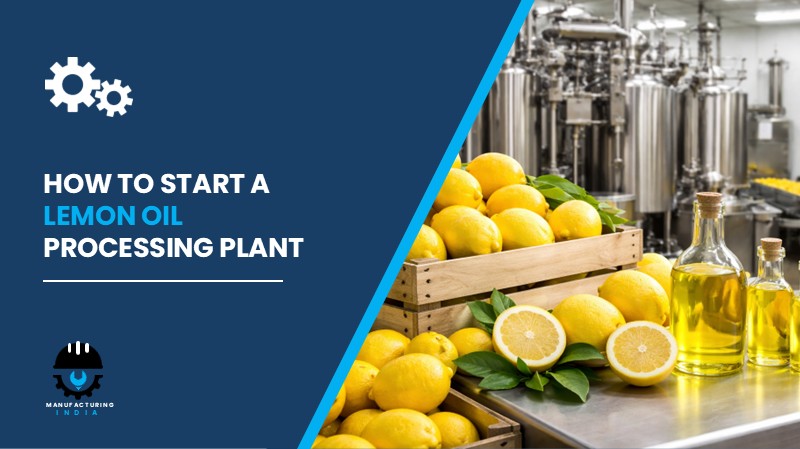
Setting up a lemon oil manufacturing plant in India presents a compelling investment case, driven by surging demand across the food and beverage industry, cosmetics and personal care industry, household cleaning products industry, and the aromatherapy and wellness sector. As consumers increasingly pivot toward natural, plant-derived ingredients, lemon oil has emerged as a high-value essential oil with diverse and growing end-use applications. Its antimicrobial properties, refreshing citrus scent, and versatility as a flavouring, fragrance, and cleaning agent make it indispensable across multiple industrial verticals that are all expanding rapidly within India’s domestic economy.
India’s structural advantages – rapid urbanisation, expanding manufacturing infrastructure, the Make in India initiative, and well-established agricultural hubs in states such as Maharashtra, Gujarat, and Andhra Pradesh – make it a strategically sound location for lemon oil processing. The availability of citrus raw materials, a cost-competitive labour force, and growing domestic consumption of natural personal care and food products further strengthen the investment rationale. With the global market demonstrating consistent upward momentum and Indian consumers increasingly adopting plant-based and holistic wellness products, an investor entering this space today is well-positioned to capture both domestic and export demand.
India’s lemon oil processing sector sits at the intersection of strong policy support, cost-competitive manufacturing, and multi-sector demand. With gross profit margins of 40–50% and a net profit potential of 20–30%, this is a financially viable, strategically timed investment that benefits from the global shift toward natural and plant-based ingredients across food, fragrance, cleaning, and wellness applications.
What is Lemon Oil?
Lemon oil is a natural essential oil obtained through the cold pressing or steam distillation of fresh lemon peels. The product presents a bright citrus scent and contains high levels of limonene along with other fragrant compounds that create its distinctive scent and functional abilities. Known for its fresh fragrance and antimicrobial effects, lemon oil is suitable for use in food seasoning products, scent creation, cleaning solutions, cosmetic items, and aromatherapy treatments.
The oil is characterised by its natural source, delightful smell, and ability to serve multiple industrial purposes. In the food industry, it functions as a flavouring agent in beverages, confectionery, and baked goods. In personal care, it is widely incorporated into soaps, shampoos, perfumes, and skincare products. The primary production method used is cold pressing or steam distillation of lemon peels, with the process encompassing lemon washing and grading, peel extraction, oil separation and filtration, concentration and purification, and packaging and storage.
End-use industries served by this product include the food and beverage industry, cosmetics and personal care industry, household cleaning products industry, and the aromatherapy and wellness sector.
Cost of Setting Up a Lemon Oil Manufacturing Plant in India
The total cost of establishing a lemon oil manufacturing plant depends on several interdependent variables, including plant capacity, chosen technology, geographic location, level of automation, and regulatory compliance requirements. A thorough feasibility analysis must account for both capital and operational expenditure to arrive at a realistic investment estimate.
1. Capital Expenditure (CapEx)
Capital investment in a lemon oil processing facility covers several broad categories:
Land and site development: costs encompass land registration, boundary development, and related infrastructure charges. Investors should consider setting up within designated SEZs or state industrial estates in Maharashtra, Gujarat, or Andhra Pradesh to benefit from incentivised land pricing, faster regulatory approvals, and improved connectivity.
Civil works and construction expenditure: includes the fabrication of the main production shed, laboratory facilities, raw material storage areas, finished goods warehouse, and the administrative block. Proper cold storage provisions are essential given the perishable nature of fresh lemon rinds.
Machinery and equipment: costs represent the largest portion of total capital expenditure. Key machinery required includes:
- Fruit washing machines
- Peel extractors or cold press units
- Centrifuges or oil separators
- Filtration systems
- Storage tanks
- Packaging machines
Other capital costs include effluent treatment plant (ETP) setup, pre-operative expenses, commissioning charges, and any applicable import duties on specialised processing equipment.
Request a Sample Report for In-Depth Market Insights: https://www.imarcgroup.com/lemon-oil-processing-plant-project-report/requestsample
2. Operational Expenditure (OpEx)
The operating cost structure of a lemon oil processing plant is primarily driven by raw material consumption.
Raw material cost – principally fresh lemons (rinds) and cold press extraction inputs – accounts for approximately 65–75% of total operating expenses. Securing long-term supplier contracts with citrus-growing regions can help mitigate price volatility and ensure a consistent supply of quality material.
Utility costs – covering electricity, water, and steam, constitute approximately 15–20% of total OpEx. Additional operating costs include transportation and logistics, packaging materials, salaries and wages, maintenance and repairs, depreciation, and applicable taxes. By the fifth year of operations, the total operational cost is expected to increase substantially due to inflation, market fluctuations, potential rises in the cost of key materials, supply chain disruptions, rising consumer demand, and shifts in the global economy.
3. Plant Capacity
The proposed processing facility is designed with an annual production capacity ranging between 100–500 MT, enabling economies of scale while maintaining operational flexibility. Capacity can be customised per investor requirements, and profitability improves meaningfully with higher capacity utilisation rates, as fixed cost components are absorbed across a larger production volume.
4. Profit Margins and Financial Projections
The lemon oil processing plant project demonstrates healthy profitability potential under normal operating conditions. Gross profit margins typically range between 40–50%, supported by stable demand and value-added applications. Net profit margins are projected at 20–30% on average across a five-year period. The financial model encompasses NPV (net present value), IRR (internal rate of return), payback period analysis, liquidity analysis, and sensitivity analysis to provide a comprehensive view of the project’s financial viability and long-term sustainability.
Why Set Up a Lemon Oil Plant in India?
Rising Demand for Natural Ingredients: The demand for citrus essential oils has increased significantly as consumers prefer plant-based and naturally derived ingredients for their food, cosmetic, and home care product needs. This structural consumer shift is driving sustained volume growth for lemon oil across all its end-use categories.
Expanding Food and Beverage Applications: The use of lemon oil as a natural flavouring agent in beverages, confectionery, and bakery products continues to grow due to its refreshing citrus profile. The food and beverage industry remains the primary market for lemon oil both globally and within India’s rapidly modernising food manufacturing sector.
Growing Personal Care Industry: The cosmetics and personal care industry has experienced consistent market growth, which has driven demand for natural lemon oil as a fragrance material in perfumes, soaps, shampoos, lotions, and skincare products. Indian consumers’ premiumisation of personal care routines is reinforcing this trend domestically.
Aromatherapy and Wellness Sector Momentum: The aromatherapy and wellness market is expanding as people adopt complementary health practices. As per data reported by the MDPI AG Journal of Pharmacy in 2025, studies estimate that 24% to 71% of people worldwide use complementary medicines, reflecting a growing preference for natural and holistic health approaches that directly supports lemon oil demand.
Active Industry Investment: In September 2025, Citrusvil participated in the International Federation of Essential Oils and Aroma Trades (IFEAT) conference, highlighting its portfolio of premium lemon oil and lemon essential oils. The company emphasised stronger traceability systems, improved pesticide monitoring, and sustainable sourcing practices – signalling increasing institutional focus on quality and responsible supply chains.
High Value from Agricultural By-Products: The process of extracting lemon oil from citrus peels, which result from juice production, creates additional value for the citrus industry supply chain. This positions a lemon oil processing unit as an efficient, sustainable operation that captures value from what would otherwise be agricultural waste.
Manufacturing Process – Step by Step
The lemon oil manufacturing process uses cold pressing or steam distillation as the primary production method, applied specifically to fresh lemon peels. The following steps describe the complete production flow:
- Lemon Washing and Grading: Incoming fresh lemons are thoroughly washed to remove surface contaminants and then graded to separate suitable raw material for processing.
- Peel Extraction or Cold Pressing: The lemon peels are subjected to mechanical cold pressing or steam distillation to release and extract the essential oil from the peel cells.
- Oil Separation and Filtration: Centrifuges or oil separators are used to separate the lemon oil from peel solids and water. Filtration systems remove remaining particulates to produce a clean oil stream.
- Concentration and Purification: The extracted oil undergoes concentration and further purification steps to achieve the required grade and potency for commercial applications.
- Packaging and Storage: The finished lemon oil is transferred to storage tanks and then packaged in appropriate containers for dispatch to end-use industries including food and beverage, cosmetics, household cleaning, and aromatherapy sectors.
Key Applications
Lemon oil serves a wide range of industries owing to its natural fragrance, flavouring qualities, antimicrobial properties, and versatility in formulations:
- Food and Beverage Industry: Natural flavouring agent for beverages, confectionery products, bakery products, sauces, and processed foods, delivering refreshing citrus flavour and scent.
- Cosmetics and Personal Care Industry: Used in perfumes, soaps, shampoos, lotions, and skincare products due to its fresh fragrance and skin-refreshing properties.
- Household Cleaning Products Industry: Key ingredient in eco-friendly cleaning products including surface cleaners, dishwashing liquids, and air fresheners, because of its natural fragrance and grease-removing ability.
- Aromatherapy and Wellness Sector: Widely diffused and used in massage oils and therapeutic wellness products for its uplifting scent and natural therapeutic applications.
Leading Manufacturers
The global lemon oil industry is served by several multinational companies with extensive production capacities and diverse application portfolios. Key players in the global market include:
- Citrusvil S.A.
- Symrise AG
- Givaudan SA
- Young Living Essential Oils
- Treatt PLC
- Ultra International B.V.
Timeline to Start the Plant
Establishing a lemon oil processing unit in India follows a structured phased approach:
- Feasibility study and project report preparation
- Land acquisition and site development
- Regulatory approvals and environmental clearances
- Factory licence and fire safety compliance
- Machinery procurement and installation
- Raw material supplier agreements and supply chain setup
- Trial production and quality testing
- Commercial production launch
Licences and Regulatory Requirements
Starting a lemon oil manufacturing unit in India requires several approvals:
- Business registration (Proprietorship, LLP, or Pvt Ltd)
- Factory Licence under the Factories Act
- Environmental Clearance from State Pollution Control Board
- GST Registration
- Fire Safety NOC
- Hazardous/Chemical compliance (relevant to handling concentrated essential oil extracts and solvents)
- Effluent Treatment Plant (ETP) operational clearance
- Occupational Health and Safety compliance
Key Challenges to Consider
High Capital Requirements: The initial capital investment covering land, civil works, cold press and distillation machinery, storage infrastructure, and ETP setup can be substantial, particularly for investors targeting mid-to-large production capacities.
Raw Material Price Volatility: Fresh lemons (rinds) account for approximately 65–75% of total operating costs. Seasonal fluctuations in citrus yield and pricing can materially impact margins, making long-term supplier contracts and inventory management strategies essential.
Regulatory Compliance: Environmental clearances, ETP operations, chemical handling compliance, and factory licensing requirements involve multi-agency coordination and ongoing compliance costs that must be factored into the operational budget.
Competition from Global Players: Established multinational processors including Symrise AG, Givaudan SA, Treatt PLC, and Ultra International B.V. bring scale, technology, and distribution advantages that domestic Indian entrants must strategically navigate through product quality, pricing, and supply chain differentiation.
Technology and Process Optimisation Pressure: Current citrus oil extraction technologies are evolving. Investors must ensure their chosen equipment aligns with scalable and sustainable production methods to remain competitive and meet international quality standards.
Skilled Manpower: Operating cold press units, centrifuges, filtration systems, and quality assurance laboratories requires trained technical personnel, which may be limited in certain industrial locations and must be planned for during ramp-up.
Frequently Asked Questions
1. How much does it cost to set up a lemon oil manufacturing plant in India?
The total cost depends on plant capacity (100–500 MT annually), chosen technology, location, automation level, and regulatory compliance. Detailed CapEx and OpEx figures are available in IMARC Group’s project report.
2. Is lemon oil manufacturing profitable in India in 2026?
Yes. The plant demonstrates gross profit margins of 40–50% and net profit margins of 20–30%, making it a financially viable manufacturing investment under normal operating conditions.
3. What machinery is required for a lemon oil plant in India?
Key equipment includes fruit washing machines, peel extractors or cold press units, centrifuges or oil separators, filtration systems, storage tanks, and packaging machines.
4. What licences and approvals are required to start a lemon oil plant in India?
Required approvals include business registration, Factory Licence, Environmental Clearance, GST Registration, Fire Safety NOC, ETP clearance, chemical compliance, and occupational health and safety certifications.
5. What raw materials are needed for lemon oil manufacturing?
The primary raw materials are fresh lemons (rinds) and cold press extraction inputs, which together account for 65–75% of total operating expenditure.
6. What are the environmental compliance requirements for a lemon oil plant in India?
Environmental clearance from the State Pollution Control Board is mandatory. An operational Effluent Treatment Plant (ETP) must be established and maintained to manage process effluents and ensure compliance with emission standards.
7. What is the best location to set up a lemon oil plant in India?
Ideal locations offer proximity to citrus-growing raw material sources, reliable transportation and utility infrastructure, and access to industrial estates or SEZs. States such as Maharashtra, Gujarat, and Andhra Pradesh are strategically relevant given their citrus agricultural output and manufacturing ecosystems.
8. What is the break-even period for this type of plant in India?
The break-even period depends on capacity utilisation, pricing strategy, and cost management. IMARC Group’s detailed financial projections, including payback period and NPV analysis, are available in the full project report.
9. What government incentives are available for manufacturers in India?
Manufacturers may benefit from incentives under the Make in India initiative, state industrial promotion policies, SEZ benefits, subsidised land in industrial estates, and GST input credit mechanisms applicable to capital goods procurement.
Key Takeaways for Investors
A lemon oil manufacturing plant in India offers a compelling and multi-dimensional investment opportunity, anchored by strong demand across the food and beverage industry, cosmetics and personal care industry, household cleaning products industry, and the aromatherapy and wellness sector. The project demonstrates financial viability across a production capacity range of 100–500 MT annually, with gross margins of 40–50% and net margins of 20–30% making it attractive at multiple scale points. The global lemon oil market was valued at USD 1.97 Billion in 2025 and is projected to reach USD 3.19 Billion by 2034 at a CAGR of 5.5%, providing a robust and sustained demand runway for new entrants. With consumer preferences continuing to shift toward natural, plant-derived, and sustainable ingredients across all major end-use categories, demand sustainability for high-quality lemon oil processing remains a structurally sound long-term thesis.
About the Author