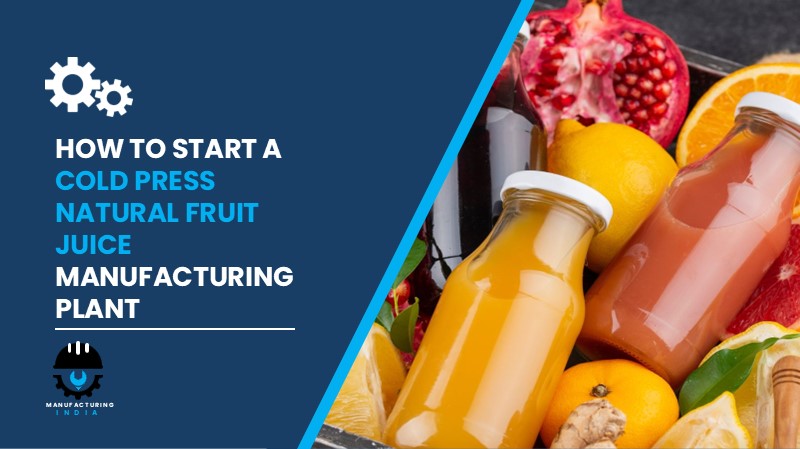
Setting up a cold press natural fruit juice manufacturing plant in India presents a compelling investment case driven by surging consumer appetite across the beverage industry, health and wellness sector, retail chains, and the hospitality industry. As urban Indians shift rapidly towards natural, additive-free drinks, cold-pressed juice has moved from a niche premium product to a mainstream wellness staple. The growing popularity of detox drinks, smoothies, health beverages, and ready-to-drink fruit juices across metro and tier-2 cities is creating sustained demand that makes this category one of the most attractive in the food and beverage manufacturing space today.
India’s structural advantages make it a strategically sound destination for this production. The country’s vast and diverse agricultural base ensures proximity to fresh fruit supplies, keeping input costs competitive. Rapid urbanisation, expanding modern retail infrastructure, and the Government of India’s Make in India initiative collectively create a favourable environment for food processing investment. States such as Maharashtra, Gujarat, Uttar Pradesh, and Andhra Pradesh – all major fruit-producing regions – offer ready access to both raw material supply chains and consumption centres, reducing logistics costs significantly for a cold press natural fruit juice manufacturing plant.
India’s combination of policy support, cost-competitive manufacturing, and a fast-growing health-conscious consumer base makes the cold press natural fruit juice segment financially viable. With gross profit margins of 40–50% and net profit margins of 15–22%, a well-capitalised plant targeting annual capacities of 500–2,000 KL can achieve strong returns and sustainable break-even performance across its financial lifecycle.
What is Cold Press Natural Fruit Juice?
Cold press natural fruit juice is extracted using a hydraulic press, which applies high pressure to extract juice from fruits and vegetables without the use of heat. This cold pressing method preserves the nutrients, enzymes, and flavors of the juice, making it a popular choice for health-conscious consumers. Cold press juices are typically free from additives, preservatives, or artificial flavors, offering a pure and natural beverage. The process involves minimal oxidation, ensuring that the juice retains its natural taste and nutritional profile for longer periods.
The production method – cold pressing, filtration, and bottling – distinguishes this product from conventional heat-treated juices. By avoiding thermal processing, the finished product retains maximum nutritional integrity. Cold press juices are widely used as fresh beverages and are also incorporated into health and wellness programs, making them appealing to athletes, fitness-conscious consumers, and those seeking natural alternatives to sweetened drinks.
The end-use industries served by this facility include the beverage industry, health and wellness, retail, and hospitality. Applications span fresh fruit juices, smoothies, detox drinks, and health beverages – a broad addressable market that gives investors multiple revenue streams within a single plant.
Cost of Setting Up a Cold Press Natural Fruit Juice Manufacturing Plant in India
The cost of establishing this facility depends on capacity, technology choice, plant location, degree of automation, and regulatory compliance requirements.
1. Capital Expenditure (CapEx)
The total capital investment for a cold press natural fruit juice manufacturing plant covers land acquisition, site preparation, civil works, and machinery. Land and site development – including charges for land registration, boundary development, and related expenses – forms a substantial part of the overall investment. Investors can reduce land acquisition costs significantly by choosing an industrial estate or Special Economic Zone (SEZ), which also offer infrastructure benefits and potential tax incentives.
Civil works and construction cover the production shed, raw material storage area, cold storage rooms, quality control laboratory, and administrative block. These structures must comply with food safety and environmental standards, adding to the civil cost base but also ensuring long-term regulatory compliance.
Machinery costs account for the largest portion of total capital expenditure. Key machinery required includes:
- Fruit washers and sorters
- Crushers or pulpers
- Hydraulic or screw-type pressers
- Pasteurizers
- Filtration and clarification systems
- Blending tanks
- Aseptic filling machines
- Cold storage units
Other capital costs include the effluent treatment plant (ETP), pre-operative expenses, trial production costs, and commissioning charges. If certain specialised equipment is imported, applicable customs and import duties must also be factored into the CapEx plan.
Request a Sample Report for In-Depth Market Insights: https://www.imarcgroup.com/cold-press-natural-fruit-juice-manufacturing-plant-project-report/requestsample
2. Operational Expenditure (OpEx)
The operating cost structure of the plant is primarily driven by raw material consumption. Fresh fruits account for approximately 55–65% of total operating expenses, making supplier relationships and procurement strategy a critical lever for profitability. Bottles and cartons represent the second major raw material input. Securing long-term contracts with reliable fresh fruit suppliers – ideally in proximity to the plant – is essential to stabilise input costs and ensure consistent production quality.
Utility costs, including electricity for cold storage and pressing equipment, water, and steam for pasteurization and cleaning operations, account for 10–15% of total OpEx. Other ongoing operating costs include transportation and distribution, packaging, salaries and wages, maintenance, depreciation, taxes, and other miscellaneous expenses.
By the fifth year of operations, total operational costs are expected to increase substantially due to factors such as inflation, market fluctuations, and potential rises in the cost of key materials. Supply chain disruptions, rising consumer demand, and shifts in the broader economy are also expected to contribute to this cost evolution over time.
3. Plant Capacity
The proposed manufacturing facility is designed with an annual production capacity ranging between 500 and 2,000 KL, enabling economies of scale while maintaining operational flexibility. Capacity can be customised per investor requirements based on target market size, available capital, and desired automation level. Profitability improves meaningfully with higher capacity utilisation, making efficient production scheduling a key operational priority from the commissioning stage onwards.
4. Profit Margins and Financial Projections
The project demonstrates healthy profitability potential under normal operating conditions. Gross profit margins typically range between 40–50%, supported by stable demand and value-added applications. Net profit margins range between 15–22%. Financial projections cover NPV (net present value), IRR (internal rate of return), payback period, and a full five-year profit and loss account, providing investors with a comprehensive view of financial viability and long-term sustainability across different capacity and pricing scenarios.
Why Set Up a Cold Press Natural Fruit Juice Plant in India?
Growing Health and Wellness Trend. As consumers in India become more health-conscious, the demand for natural and organic beverages such as cold-pressed juices continues to rise. This positions the cold press juice market for long-term growth across urban and semi-urban consumption centres alike.
High-Value Product with Nutritional Benefits. Cold press juices retain maximum nutrients, enzymes, and flavors, appealing to consumers seeking nutritious, fresh beverages that offer benefits such as detoxification, hydration, and weight management. This nutritional positioning commands a premium price point that supports higher gross margins compared to conventional juice processing.
Rising Demand for Non-GMO and Organic Products. As more Indian consumers adopt organic and non-GMO diets, cold press juice – made from fresh, chemical-free produce – fits perfectly into this growing trend. The absence of additives, preservatives, or artificial flavors is a strong differentiator in the modern retail and health and wellness segments.
Rapid Growth of the Bottled Beverage Sector. The expansion of the bottled beverage sector, driven by consumer demand for ready-to-drink, on-the-go products, supports growth of cold-pressed juice manufacturing. According to FICCI, the Indian food and beverage packaged industry is expected to grow from USD 33.7 billion in 2023 to USD 46.3 billion in 2028, providing a large and expanding addressable market for domestic producers.
Active Industry Investment and Latest Developments. In May 2025, Raw Generation announced the launch of Little Sippers, a new line of nutritionist-designed cold-pressed juices made for kids, each weekly set containing 40 raw fruits and vegetables. Also in May 2025, Soluna announced the launch of Soluna Apple Juice, a cold-pressed juice made exclusively from its signature ANABP 01 apples using cold-pressing technology to ensure maximum nutrient retention and fresh flavor. These launches confirm that the global cold press juice category remains highly active in product innovation.
Cost-Competitive Manufacturing and Local Supply Chain Preference. India’s competitive land and labour costs, combined with the country’s abundant fresh fruit availability across major agricultural states, allow domestic producers to price competitively against imports. Health and wellness retailers, hospitality chains, and beverage brands are increasingly prioritising locally sourced, fresh cold-pressed juice to meet quality, traceability, and supply chain resilience requirements.
Manufacturing Process – Step by Step
The cold press natural fruit juice manufacturing process uses cold pressing, filtration, and bottling as the primary production method. Each stage is designed to preserve the nutritional integrity and natural flavor profile of the final product.
- Raw Material Receipt and Inspection: Fresh fruits and packaging materials (bottles and cartons) are received at the facility and subjected to incoming quality checks for freshness, chemical residue levels, and physical condition.
- Fruit Washing and Sorting: Fruits are cleaned thoroughly in fruit washers and sorters to remove surface contaminants, dirt, and sub-standard produce before processing.
- Crushing or Pulping: Cleaned fruits are fed into crushers or pulpers to break them down into a mash or pulp that facilitates maximum juice extraction in the subsequent pressing stage.
- Hydraulic or Screw-Type Pressing: The fruit pulp is subjected to high-pressure extraction using hydraulic or screw-type pressers, which extract juice without applying heat, preserving enzymes, nutrients, and natural flavors.
- Filtration and Clarification: Extracted juice passes through filtration and clarification systems to remove pulp solids, seeds, and particulate matter, yielding a clean, stable juice product.
- Blending: Juice streams from different fruit varieties may be combined in blending tanks to achieve desired flavor profiles and nutritional specifications for specific product lines.
- Pasteurization (where applicable): Pasteurizers are used where shelf-life extension is required, applying the minimum heat treatment necessary without compromising the core cold-press quality proposition.
- Aseptic Filling and Packaging: The finished juice is filled into bottles or cartons using aseptic filling machines, ensuring hygienic sealing and compliance with food safety standards.
- Cold Storage and Dispatch: Packaged products are held in cold storage units and dispatched under refrigerated conditions to the beverage industry, health and wellness outlets, retail chains, and hospitality end-users.
Key Applications
The cold press natural fruit juice manufacturing plant serves a diverse range of industries and applications, offering multiple channels for revenue realisation.
- Fruit Processing: Extraction, blending, and transfer of fresh fruit juice for beverage brands and contract manufacturers.
- Quality Control: Filtration, clarification, and preservation of natural juice properties for food safety and regulatory compliance purposes.
- Packaging: Bottling, filling lines, and aseptic packaging systems for retail and institutional distribution.
- Cold Chain and Distribution: Refrigerated storage, handling, and transportation of cold-pressed juices to end-use markets including health and wellness retail, hospitality, and e-commerce channels.
Leading Manufacturers
The global cold press natural fruit juice industry is served by several established multinational players with extensive production capacities and diverse application portfolios. Key players operating in this market include:
- Suja Juice
- HPP Fresh
- Naked Juice
- Blueprint Organic
- Evolution Fresh
All of these companies serve end-use sectors including the beverage industry, health and wellness, retail, and hospitality – the same segments that Indian producers can target as domestic demand accelerates.
Timeline to Start the Plant
Investors should plan for a structured pre-production phase covering the following key stages:
- Feasibility study and project report preparation
- Land acquisition and site development
- Regulatory approvals and environmental clearances
- Factory licence and fire safety compliance
- Machinery procurement and installation
- Raw material supplier agreements and supply chain setup
- Trial production and quality testing
- Commercial production launch
Licences and Regulatory Requirements
Starting a cold press natural fruit juice manufacturing unit in India requires several approvals:
- Business registration (Proprietorship, LLP, or Private Limited Company)
- Factory Licence under the Factories Act
- Environmental Clearance from the State Pollution Control Board
- GST Registration
- Fire Safety NOC
- FSSAI (Food Safety and Standards Authority of India) licence and food business operator registration
- Effluent Treatment Plant (ETP) operational clearance
- Occupational Health and Safety compliance
Key Challenges to Consider
High Capital Requirements. Establishing a fully equipped cold press natural fruit juice manufacturing plant – including cold storage, aseptic filling, and an effluent treatment plant – represents a significant upfront investment that requires careful financial planning and access to appropriate funding sources.
Raw Material Price Volatility. Fresh fruits, the dominant raw material input at 55–65% of OpEx, are subject to seasonal price fluctuations, crop failures, and supply chain disruptions. Long-term procurement contracts and a diversified supplier base are essential risk mitigation measures.
Regulatory Compliance. Food processing facilities in India must comply with FSSAI norms, environmental regulations, and state-level factory licensing requirements. Maintaining continuous compliance adds to operational overhead and requires dedicated quality and regulatory management personnel.
Technology and Innovation Pressure. The global cold press juice market is seeing active product innovation, as evidenced by the May 2025 launches by Raw Generation and Soluna. Indian producers must invest in R&D and new product development to stay relevant and competitive in a category that rewards novelty and nutritional claims.
Competition from Global Players. Established global players such as Suja Juice, HPP Fresh, Naked Juice, Blueprint Organic, and Evolution Fresh set high product quality benchmarks. Indian manufacturers entering the market must differentiate on freshness, local fruit variety utilisation, and price competitiveness.
Skilled Manpower. Operating hydraulic pressers, aseptic filling machines, pasteurizers, and cold storage systems requires technically trained personnel. Recruiting, training, and retaining skilled staff – particularly in quality control and cold chain management – is a recurring operational challenge.
Frequently Asked Questions
1. How much does it cost to set up a cold press natural fruit juice manufacturing plant in India?
The total cost depends on plant capacity, location, technology, and automation level. Key cost components include land and site development, civil works, machinery (including hydraulic pressers, filtration systems, and cold storage units), and pre-operative expenses. A detailed feasibility study is recommended for accurate project-specific cost estimation.
2. Is cold press natural fruit juice manufacturing profitable in India in 2026?
Yes. The project demonstrates healthy profitability, with gross profit margins of 40–50% and net profit margins of 15–22% under normal operating conditions. Growing domestic demand across health and wellness, retail, and hospitality segments supports sustained revenue generation.
3. What machinery is required for a cold press natural fruit juice plant in India?
Key equipment includes fruit washers and sorters, crushers or pulpers, hydraulic or screw-type pressers, pasteurizers, filtration and clarification systems, blending tanks, aseptic filling machines, and cold storage units.
4. What licences and approvals are required to start a cold press natural fruit juice plant in India?
Required approvals include business registration, a Factory Licence, FSSAI food business operator registration, Environmental Clearance from the State Pollution Control Board, GST Registration, Fire Safety NOC, ETP operational clearance, and Occupational Health and Safety compliance.
5. What raw materials are needed for cold press natural fruit juice manufacturing?
The primary raw materials are fresh fruits and bottles or cartons for packaging. Fresh fruits account for 55–65% of total operating expenses and are the most critical input in terms of both quality and cost.
6. What are the environmental compliance requirements for a cold press natural fruit juice plant in India?
The plant must obtain Environmental Clearance from the State Pollution Control Board, operate an approved Effluent Treatment Plant (ETP), and comply with all applicable waste management and emission standards. Regular ETP monitoring and documentation are mandatory throughout operations.
7. What is the best location to set up a cold press natural fruit juice plant in India?
Optimal locations are those offering proximity to fresh fruit supply chains, reliable utilities, transportation connectivity, and available industrial land. States such as Maharashtra, Gujarat, Uttar Pradesh, and Andhra Pradesh are strong candidates given their agricultural output and food processing infrastructure.
8. What is the break-even period for this type of plant in India?
The break-even period depends on plant capacity, capital investment, pricing strategy, and capacity utilisation rate. A detailed financial analysis covering NPV, IRR, and payback period – as provided in a comprehensive feasibility report – is the most reliable method for estimating project-specific break-even timelines.
9. What government incentives are available for manufacturers in India?
Indian food processing manufacturers can benefit from a range of central and state government schemes, including the Production Linked Incentive (PLI) scheme for food processing, subsidies under the Pradhan Mantri Kisan Sampada Yojana (PMKSY), and capital subsidy programmes offered by individual state governments for setting up food manufacturing units.
Key Takeaways for Investors
A cold press natural fruit juice manufacturing plant in India offers a well-rounded investment opportunity backed by growing demand across the beverage industry, health and wellness, retail, and hospitality sectors. The project delivers strong financial viability – with gross margins of 40–50% and net margins of 15–22% – across a scalable capacity range of 500 to 2,000 KL per annum, making it accessible to both emerging entrepreneurs and established food processing investors. According to FICCI, India’s packaged food and beverage industry is projected to grow from USD 33.7 billion in 2023 to USD 46.3 billion in 2028, signalling a long structural runway for cold-pressed juice producers entering the market today. With consumer preference for natural, additive-free, and nutritionally dense beverages continuing to strengthen across India’s urban and semi-urban populations, demand sustainability for cold press natural fruit juice is well-supported for the foreseeable future.
About the Author