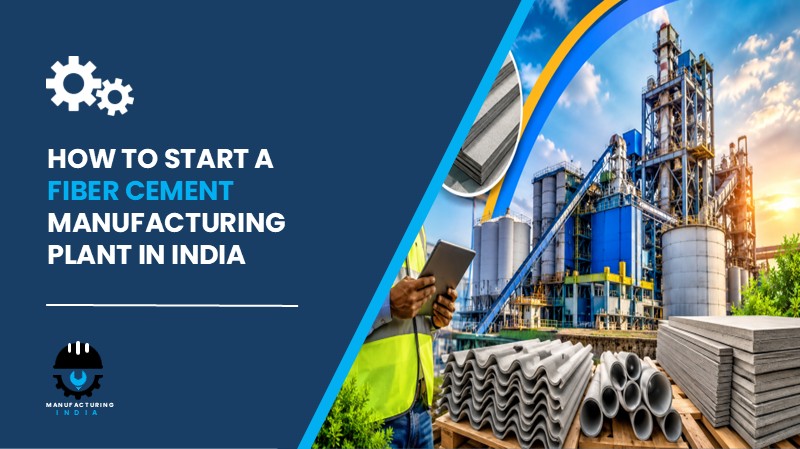
Fiber Cement Plant in India
Setting up a fiber cement manufacturing plant in India presents a compelling investment case driven by surging demand from the construction, real estate, and infrastructure development sectors. Fiber cement’s superior durability, fire resistance, moisture resistance, and low maintenance profile make it indispensable across residential, commercial, and industrial projects. As India’s urban landscape expands at an accelerating pace, the demand for high-performance, eco-friendly building materials including roofing panels, siding, flooring, cladding, and partition systems continues to outpace domestic supply, creating a significant production opportunity.
India’s structural advantages make this one of the most strategically sound manufacturing locations globally. Rapid urbanisation, government-led affordable housing programs, expanding industrial corridors, and the Make in India initiative collectively drive a sustained pipeline of construction activity. States such as Gujarat and Maharashtra, with well-developed industrial estates, reliable logistics, and proximity to raw material sources like cement and silica, offer strong locational advantages. The residential construction industry, which grew at 6.8% during FY2024–25, is poised to reach USD 350 billion by 2030, signalling a long demand runway for products made domestically.
India’s fiber cement market, valued at USD 4.40 Million in 2025 and projected to reach USD 8.01 Million by 2034 at a CAGR of 6.87%, combines policy-backed construction growth with cost-competitive manufacturing and strong sectoral demand making this investment financially viable with gross margins of 30–40% and net margins of 12–18%.
What is Fiber Cement?
Fiber cement is a composite material produced using a combination of cement, silica, cellulose fibers, and other additives. It delivers durability, water-resistance, and fire resistance, and its long shelf life and ability to withstand adverse weather conditions have driven widespread adoption across global construction markets. The material also carries environmentally desirable characteristics due to its non-toxic nature and capacity to be recycled.
The production method encompasses mixing, molding, pressing, curing, and drying as the core sequence, with the fiber cement manufacturing process yielding panels and boards suited to multiple structural applications. End-use industries include construction, real estate, and infrastructure development, with applications spanning roofing, siding, flooring, cladding, and partitions.
Cost of Setting Up a Fiber Cement Manufacturing Plant in India
The total cost of establishing a fiber cement manufacturing plant depends on capacity, technology selection, site location, automation level, and regulatory compliance requirements. Investors must evaluate both one-time capital expenditure and recurring operational expenditure before committing to a project scale.
1. Capital Expenditure (CapEx)
Land and site development including land registration, boundary works, and related infrastructure form a substantial investment component. Locating the unit within a Special Economic Zone (SEZ) or a notified industrial estate can reduce land costs and unlock incentive benefits. Civil construction costs cover the manufacturing shed, quality control laboratory, raw material storage, finished goods warehouse, and administrative block.
Machinery and equipment represent the largest single CapEx component. Key machinery required includes:
- Raw material handling systems
- Fiber cutting and mixing machines
- Slurry preparation units
- High-shear mixers
- De-aeration tanks
- Sheet-forming and pressing machines (Hatschek machines)
- Slurry distribution and forming equipment
- Dewatering and curing chambers
- Curing autoclaves
- High-precision cutting systems
- Surface finishing units
- Drying chambers
- Automated palletizing lines
- Cutting and trimming equipment
- Surface finishing and coating machines
Other capital costs include effluent treatment plant (ETP) installation, pre-operative expenses, commissioning charges, and import duties on specialised equipment.
Request a Sample Report for In-Depth Market Insights: https://www.imarcgroup.com/fiber-cement-manufacturing-plant-project-report/requestsample
2. Operational Expenditure (OpEx)
Raw materials cement, silica (sand), cellulose fibers, water, and additives such as synthetic fibers, clay, and other modifiers account for approximately 50–60% of total operating expenses. Long-term supplier contracts are essential to stabilise pricing and mitigate disruption risk. Utility costs covering electricity, water, and steam supply represent approximately 20–25% of OpEx, with autoclave steam curing and drying operations being the primary energy cost drivers. Other operating costs include transportation, packaging, salaries and wages, routine maintenance, depreciation, and applicable taxes. By year five, total operational cost is expected to increase substantially due to inflation, market fluctuations, and rising input prices.
3. Plant Capacity
The proposed manufacturing facility is designed with an annual production capacity of 80,000–120,000 tons, enabling economies of scale while maintaining operational flexibility. Capacity can be customised based on investor requirements, and profitability improves with higher capacity utilisation rates.
4. Profit Margins and Financial Projections
Gross profit margins typically range between 30–40%, while net profit margins range between 12–18%. The full financial model covers net present value (NPV), internal rate of return (IRR), payback period, and year-on-year projections across a five-year horizon. Break-even typically ranges from 3 to 6 years, depending on scale, raw material pricing, and market demand.
Why Set Up a Fiber Cement Plant in India?
Booming Construction and Real Estate Demand. India’s residential construction industry grew at 6.8% during FY2024–25 and is projected to reach USD 350 billion by 2030. The construction pipeline sustains strong demand for roofing, cladding, siding, and partition systems — core applications for this investment.
Urbanisation and Infrastructure Megatrends. Rapid urbanisation, affordable housing programs, smart city development, and infrastructure expansion drive steady demand across India. Growth in prefabricated construction and non-combustible building systems further accelerates adoption in multi-storey residential and commercial segments.
Policy and Regulatory Tailwinds. Government-led investments in housing, public infrastructure, and industrial corridors directly support demand. Green building codes and fire safety regulations increasingly mandate durable, non-combustible materials, while the Make in India initiative provides additional impetus for domestic capacity expansion.
Cost-Competitive Manufacturing Base. India offers land, civil construction, and labour cost advantages that are difficult to replicate in developed markets. Proximity to cement, silica, and cellulose fiber sources strengthens supply chain reliability for domestic producers.
Active Global Industry Investment. In May 2024, James Hardie Building Products Inc. celebrated the grand opening of the James Hardie Westfield manufacturing plant, demonstrating industry confidence in capacity growth. In October 2025, Etex and Heidelberg Materials Benelux announced the CEMLOOP XL project co-funded by the European Union LIFE Programme to revamp fibre cement recycling in Europe, signalling the sector’s commitment to sustainable production.
Local Supply Chain Preference. Builders, EPC contractors, and developers increasingly prefer local manufacturers for consistent supply, faster project execution, and stable pricing creating durable advantages for domestic producers with reliable sourcing and efficient operations.
Manufacturing Process Step by Step
The fiber cement manufacturing process uses mixing, molding, pressing, curing, and drying as the primary production method. Each stage involves distinct unit operations, material handling, and quality checks.
- Raw Material Preparation: Cement, silica, cellulose fibers, water, and additives are weighed and prepared per product formulation.
- Fiber Cutting and Mixing: Fibers are cut and fed into high-shear mixers with cement, silica, and water to form a uniform slurry.
- De-aeration: The slurry passes through de-aeration tanks to remove trapped air and ensure consistent sheet density.
- Sheet Forming: Slurry is fed into Hatschek machines or sheet-forming and pressing machines to create flat panels.
- Dewatering and Initial Curing: Excess water is removed through pressing and dewatering chambers, followed by ambient curing.
- Autoclave Curing: Panels undergo high-pressure steam curing in autoclaves to enhance durability, fire resistance, and dimensional stability.
- Cutting and Trimming: Cured panels are processed through high-precision cutting systems to specification.
- Surface Finishing and Drying: Surface finishing units apply textures or coatings; drying chambers achieve the target moisture content.
- Packaging and Dispatch: Completed panels are stacked via automated palletizing lines and dispatched to construction, real estate, and infrastructure end-users.
Key Applications
The production unit serves the construction, real estate, and infrastructure development industries across multiple structural and aesthetic applications:
- Roofing: Fire-resistant, durable panels widely used in residential, commercial, and industrial structures.
- Siding: Moisture-resistant exterior wall cladding valued for low maintenance and long service life.
- Flooring: Structural flooring substrate suited to commercial and industrial settings.
- Cladding: Non-combustible façade panels specified for commercial and multi-storey residential developments.
- Partitions: Internal partition systems offering fire resistance and acoustic performance in lightweight panel format.
Leading Manufacturers
The global industry is served by several multinational companies with extensive production capacities across construction, real estate, and infrastructure sectors. Key players include:
- James Hardie Industries
- CSR Limited
- Etex Group
- Daewon
- Knauf
Timeline to Start the Plant
Establishing this type of manufacturing unit in India typically requires 12 to 24 months from project initiation to commercial production:
- Feasibility study and project report preparation
- Land acquisition and site development
- Regulatory approvals and environmental clearances
- Factory licence and fire safety compliance
- Machinery procurement and installation
- Raw material supplier agreements and supply chain setup
- Trial production and quality testing
- Commercial production launch
Licences and Regulatory Requirements
Starting a fiber cement manufacturing unit in India requires several approvals:
- Business registration (Proprietorship, LLP, or Pvt Ltd)
- Factory Licence under the Factories Act
- Environmental Clearance from State Pollution Control Board
- GST Registration
- Fire Safety NOC
- Effluent Treatment Plant (ETP) operational clearance
- Occupational Health and Safety compliance
Key Challenges to Consider
High Capital Requirements. Significant upfront investment is needed for Hatschek lines, autoclaves, and quality control systems. Adequate working capital beyond initial CapEx must be planned.
Raw Material Price Volatility. Cement, silica, and cellulose fiber prices are subject to market fluctuations. Long-term supplier contracts and multi-source procurement are essential risk management tools.
Regulatory Compliance. Environmental clearances, factory licences, ETP approvals, and fire safety certifications require procedural diligence; delays can materially extend the production timeline.
Technology and Innovation Pressure. Stringent product standards, curing technology requirements, and long approval cycles with developers create ongoing pressure to maintain technical capability, as demonstrated by Etex’s CEMLOOP XL recycling initiative in October 2025.
Competition from Global Players. Established manufacturers including James Hardie Industries, Etex Group, CSR Limited, Daewon, and Knauf require domestic investors to compete on quality, pricing, and supply reliability.
Skilled Manpower. Operating autoclaves, Hatschek machines, and precision cutting systems demands trained process engineers and quality control specialists an ongoing workforce challenge.
Frequently Asked Questions
1. How much does it cost to set up a fiber cement manufacturing plant in India? Costs vary by capacity, technology, and location, covering land, civil works, machinery including autoclaves and Hatschek lines, utilities, ETP, and pre-operative expenses. The full breakdown is available in the IMARC project report.
2. Is fiber cement manufacturing profitable in India in 2026? Yes. With gross margins of 30–40% and net margins of 12–18%, and an India market projected at USD 8.01 Million by 2034, the investment is financially compelling.
3. What machinery is required for a fiber cement plant in India? Essential equipment includes Hatschek sheet-forming machines, high-shear mixers, de-aeration tanks, curing autoclaves, high-precision cutting systems, surface finishing units, drying chambers, and automated palletizing lines.
4. What licences and approvals are required to start a fiber cement plant in India? Required approvals include business registration, Factory Licence, Environmental Clearance from the State Pollution Control Board, GST Registration, Fire Safety NOC, ETP clearance, and Occupational Health and Safety compliance.
5. What raw materials are needed for fiber cement manufacturing? Core inputs are cement, silica (sand), cellulose fibers, and water. Synthetic fibers, clay, and other additives may be included to modify structural and performance properties.
6. What are the environmental compliance requirements for a fiber cement plant in India? Plants must obtain Environmental Clearance from the State Pollution Control Board, operate a functional ETP, and continuously monitor emission and effluent discharge against applicable norms.
7. What is the best location to set up a fiber cement plant in India? Ideal locations offer proximity to cement, silica, and cellulose fiber sources, access to construction markets, reliable utilities, and established industrial infrastructure. Gujarat and Maharashtra are strong candidates.
8. What is the break-even period for this type of plant in India? Break-even typically ranges from 3 to 6 years depending on scale, capacity utilisation, raw material pricing, and market demand.
9. What government incentives are available for manufacturers in India? Capital subsidies, tax exemptions, reduced utility tariffs, export benefits, and interest subsidies are available under national and state-level industrial policies, including Make in India.
Key Takeaways for Investors
The investment opportunity in a fiber cement manufacturing plant in India is underpinned by robust and sustained demand from the construction, real estate, and infrastructure development sectors. The investment is financially viable across a range of capacities, with gross margins of 30–40% and net margins of 12–18%, and a break-even window of 3 to 6 years. The India market for this composite building material, valued at USD 4.40 Million in 2025 and projected to reach USD 8.01 Million by 2034 at a CAGR of 6.87%, reflects consistent and predictable growth. With urbanisation, affordable housing mandates, green building adoption, and infrastructure investment all reinforcing demand, the long-term outlook for domestically manufactured panels and boards is well established.
About the Author