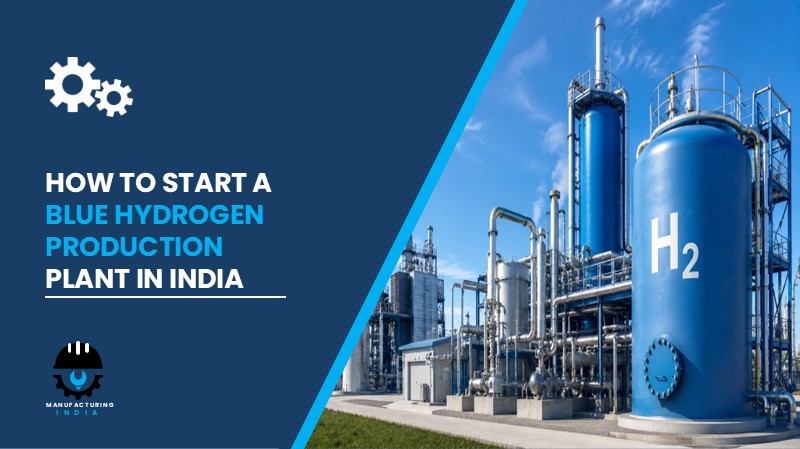
Setting up a blue hydrogen production plant in India presents a compelling investment case driven by the accelerating decarbonisation of hard-to-abate industries such as refining, ammonia, methanol, and steel. These sectors are among India’s most strategically vital, and their need for low-emission hydrogen feedstocks is intensifying as environmental compliance standards tighten and global supply chains shift toward cleaner inputs. Blue hydrogen, produced from natural gas with carbon capture, utilization, and storage (CCUS), offers a proven transition pathway that leverages existing gas infrastructure while meaningfully reducing industrial carbon output.
India’s position as a high-growth manufacturing economy — supported by rapid urbanisation, infrastructure expansion, and the Make in India initiative — makes it an increasingly attractive destination for blue hydrogen production. States such as Gujarat and Maharashtra, with their established petrochemical and refining clusters, offer ready-made industrial ecosystems, reliable natural gas connectivity, and proximity to port infrastructure for potential export. As the government accelerates its clean energy transition agenda and industries seek credible low-carbon hydrogen sourcing, a domestic blue hydrogen production facility is strategically well-timed.
India’s clean energy priorities, cost-competitive production base, and rapidly growing demand from refining, fertilizer, and steel sectors create a compelling case for blue hydrogen investment. With gross profit margins of 25–40% and strong policy tailwinds under Make in India, a blue hydrogen production plant in India offers robust financial viability and multi-sector demand sustainability across a defined payback horizon.
What is Blue Hydrogen?
Blue hydrogen is hydrogen produced from fossil fuels — primarily natural gas — where the carbon dioxide (CO₂) generated during production is captured and permanently stored using carbon capture, utilization, and storage (CCUS). It is typically produced via steam methane reforming (SMR) or autothermal reforming (ATR), both of which are industrially established technologies. Key quality attributes include high hydrogen purity, controlled levels of CO/CO₂, moisture and sulfur compounds, and stable delivery pressure.
The emissions performance of blue hydrogen depends on the capture rate, upstream methane leakage, and the integrity of geological storage. For this reason, project design places strong emphasis on high capture efficiency and robust CO₂ measurement, monitoring, and verification (MMV) across transport and geological storage phases. Unlike green hydrogen — which relies on renewable electricity for electrolysis — blue hydrogen leverages proven reforming technology and existing gas supply chains, making it a faster and more scalable near-term solution for industrial decarbonisation.
End-use industries served by blue hydrogen include refining and petrochemicals, fertilizer and chemicals, steel and industrial heat, and power and gas infrastructure. Each of these sectors represents a substantial and structurally recurring source of hydrogen demand, particularly in the Indian context where these industries operate at significant scale.
Cost of Setting Up a Blue Hydrogen Production Plant in India
The cost of establishing a blue hydrogen production plant in India depends on several interdependent variables: plant capacity, chosen technology (SMR vs ATR), degree of process automation, site location, and the extent of CO₂ capture infrastructure required. Investors must account for both capital expenditure (CapEx) and ongoing operational expenditure (OpEx) when building financial projections for this type of facility.
1. Capital Expenditure (CapEx)
Land and Site Development: Land cost varies significantly depending on whether the facility is located within a Special Economic Zone (SEZ), an established industrial estate, or on privately acquired land. Industrial zones in Gujarat or Maharashtra tend to offer superior utility connectivity and logistical access, which can reduce total infrastructure expenditure. Site preparation costs include boundary development, land registration, and earthwork.
Civil Works and Construction: This covers factory shed construction, administrative blocks, laboratory facilities, utility rooms, raw material and finished goods storage, effluent treatment plant (ETP) infrastructure, and safety zones. For a blue hydrogen facility, additional civil requirements include CO₂ compression buildings, gas handling zones, and reinforced storage infrastructure to meet industrial gas safety standards.
Machinery and Equipment: Key machinery required includes:
- Feed gas treating units
- Furnaces and reactors (SMR or ATR)
- Boilers
- Purification units (PSA — Pressure Swing Adsorption)
- CO₂ capture machines
- CO₂ dehydration and compression equipment
- Compressors (for H₂ and CO₂)
- CO₂ transport infrastructure
- H₂ compression and storage systems
Other Capital Costs: These include effluent treatment plant development, pre-operative expenses (feasibility studies, project management, engineering design), commissioning costs, and any applicable import duties on specialized CCUS or reforming equipment not manufactured domestically.
Request a Sample Report for In-Depth Market Insights: https://www.imarcgroup.com/blue-hydrogen-manufacturing-plant-project-report/requestsample
2. Operational Expenditure (OpEx)
Raw Material Cost: The dominant operating cost driver for a blue hydrogen production plant is natural gas, which accounts for approximately 60–75% of total OpEx. Other raw materials include water and CCS (carbon capture) materials. Securing long-term supplier contracts for natural gas is essential to manage price volatility, particularly given exposure to global LNG market fluctuations. Strategic procurement agreements with domestic gas suppliers or pipeline operators can stabilize input costs significantly over a five-year operating horizon.
Utility Cost: Electricity, water, and steam together account for approximately 15–25% of total operating expenses. Blue hydrogen production is energy-intensive, particularly at the reforming and CO₂ compression stages, making access to reliable and cost-effective power supply a key site-selection criterion.
Other Operating Costs: Additional OpEx components include transportation, packaging, salaries and wages, maintenance, depreciation, and taxes. By the fifth year of operations, total operational costs are expected to increase substantially due to inflation, market fluctuations, and potential rises in the cost of key materials including natural gas. Supply chain disruptions and shifts in global energy markets may further contribute to this upward cost trajectory.
3. Plant Capacity
The proposed blue hydrogen production facility is designed with an annual production capacity ranging between 50,000 and 200,000 metric tonnes, enabling economies of scale while maintaining operational flexibility. Capacity can be customised to suit specific investor requirements and target market volumes. As is common across capital-intensive process industries, profitability improves meaningfully at higher capacity utilisation rates, making ramp-up planning a critical component of the project development timeline.
4. Profit Margins and Financial Projections
The blue hydrogen production plant demonstrates healthy profitability potential under normal operating conditions. Gross profit margins typically range between 25–40%, supported by stable demand and value-added applications across refining, fertilizer, and steel sectors. Net profit margins are projected at 10–20% on an average basis. Full financial projections — including net present value (NPV), internal rate of return (IRR), payback period, and detailed income and expenditure analysis — are developed based on realistic assumptions related to capital investment, operating costs, production capacity utilisation, pricing trends, and demand outlook. These metrics provide investors with a comprehensive view of the facility’s long-term financial viability and return profile.
Why Set Up a Blue Hydrogen Plant in India?
Fast-Track Decarbonisation for Existing Hydrogen Users. Refineries and chemical plants already consume large hydrogen volumes across their operations. Blue hydrogen leverages proven reforming technology while reducing emissions through CCS, enabling a faster industrial transition without requiring large-scale renewable power expansion — a critical consideration in markets where grid reliability remains uneven.
Industrial Cluster Economics. When multiple emitters share CO₂ transport and storage infrastructure, unit costs improve meaningfully. A blue hydrogen facility can anchor demand for shared CCS networks in Indian industrial clusters, helping unlock pipeline and storage capacity utilisation and creating a natural competitive moat for early-mover investors.
Technology Maturity and Scale Advantage. SMR/ATR, PSA purification, and CO₂ capture and compression are all industrially established technologies. Manufacturing at scale focuses on integration, heat recovery, reliability, and emissions measurement — generally less technically complex than first-of-a-kind electrolysis megaplants — reducing both project execution risk and technology adoption uncertainty.
Regional Competitiveness Where Gas and Storage Are Advantaged. Regions with reliable natural gas supply and suitable geology for CO₂ geological storage can develop cost-competitive low-carbon hydrogen hubs. India’s gas pipeline network expansion and its established refining and petrochemical clusters make select states well-positioned to host such hubs, attracting downstream chemicals and heavy industry seeking verifiably lower-emission inputs.
Active International Investment Pipeline. In August 2025, HydrogenXT secured USD 900 million in financing to build its first ten small-scale blue hydrogen production and supply facilities across the U.S., targeting zero-carbon hydrogen for heavy-duty transport, industrial power, and data centres. In March 2025, Saudi Aramco acquired a 50% ownership stake in Blue Hydrogen Industrial Gases Company (BHIG) to develop a hydrogen network in Saudi Arabia’s Eastern Province. These investments signal strong global confidence in blue hydrogen as a commercially viable and scalable low-carbon energy vector.
Growing Demand for Low-Carbon Ammonia and Methanol. The increasing demand for low-carbon ammonia and methanol as exportable energy commodities is boosting the blue hydrogen market globally. India, as a significant producer and exporter of both fertilizers and petrochemicals, stands to benefit directly from establishing domestic blue hydrogen feedstock supply chains that support lower-emission chemical value chains.
Production Process – Step by Step
The blue hydrogen production process uses steam methane reforming (SMR) or autothermal reforming (ATR) as the primary production method, integrated with a carbon capture and geological storage system.
- Natural Gas Pre-Treatment: Feed gas is treated to remove sulfur compounds, moisture, and other impurities that could damage downstream reforming catalysts or contaminate the hydrogen product stream.
- SMR or ATR Reforming: Treated natural gas undergoes catalytic reforming in a high-temperature furnace or reactor, reacting with steam (SMR) or a combination of steam and oxygen (ATR) to produce a synthesis gas (syngas) mixture of H₂ and CO.
- H₂ Purification: Syngas passes through pressure swing adsorption (PSA) purification units to separate high-purity hydrogen from CO, CO₂, and residual methane.
- CO₂ Capture: The CO₂-rich off-gas from the reforming and purification stages is routed to CO₂ capture machines using solvent absorption or other capture technologies to isolate the carbon stream.
- CO₂ Dehydration and Compression: Captured CO₂ is dehydrated to prevent corrosion and compressed to pipeline-ready pressures using dedicated compressor trains.
- CO₂ Transport: Compressed CO₂ is transported via pipeline or other means to geological storage sites, with measurement, monitoring, and verification (MMV) systems ensuring permanent storage integrity.
- Geological Storage: CO₂ is injected into suitable subsurface geological formations for permanent sequestration, completing the carbon capture loop.
- H₂ Compression and Storage: Purified hydrogen is compressed, stored in high-pressure vessels, and prepared for dispatch to end-use industries including refining, fertilizers, steel, and power infrastructure.
Key Applications
Blue hydrogen from a domestic production plant serves a broad range of industrial sectors across India’s economy. Key end-use applications include:
- Refining and Petrochemicals: Blue hydrogen is used for desulfurization and hydrocracking/hydrotreating upgrading processes, substituting grey hydrogen while keeping refinery operations stable and within tightening emission thresholds.
- Fertilizer and Chemicals: Blue hydrogen serves as feedstock for ammonia and methanol production, supporting lower-emission chemical value chains where continuous and high-volume hydrogen demand exists.
- Steel and Industrial Heat: Blue hydrogen is used as a reductant in direct reduced iron (DRI) processes or as a combustion fuel for high-temperature industrial heat in applications where electrification faces technical or economic constraints.
- Power and Gas Infrastructure: Blue hydrogen supports blending into gas networks or turbine co-firing demonstrations in regions building out hydrogen hub ecosystems and CO₂ storage infrastructure.
Leading Producers
The global blue hydrogen market is served by a concentrated group of multinational producers with extensive production capacities, long-standing industrial gas expertise, and diversified application portfolios. Key players in the global blue hydrogen industry include:
- Linde plc
- Shell Group of Companies
- Air Liquide
- Air Products and Chemicals, Inc.
- Engie
- Equinor ASA
Timeline to Start the Plant
Investors planning a blue hydrogen production plant in India should plan for a structured multi-phase development timeline:
- Feasibility study and project report preparation
- Land acquisition and site development
- Regulatory approvals and environmental clearances
- Factory licence and fire safety compliance
- Machinery procurement and installation
- Raw material supplier agreements and supply chain setup
- Trial production and quality testing
- Commercial production launch
Licences and Regulatory Requirements
Starting a blue hydrogen production unit in India requires several approvals:
- Business registration (Proprietorship, LLP, or Pvt Ltd)
- Factory Licence under the Factories Act
- Environmental Clearance from State Pollution Control Board
- GST Registration
- Fire Safety NOC
- Hazardous and Chemical compliance (mandatory given natural gas handling and CO₂ compression at high pressures)
- Effluent Treatment Plant (ETP) operational clearance
- Occupational Health and Safety compliance
Key Challenges to Consider
High Capital Requirements. Establishing a blue hydrogen production facility involves substantial upfront investment across land, civil works, specialized reforming and CO₂ capture equipment, and geological storage infrastructure. The scale required to achieve competitive economics adds to initial funding complexity.
Raw Material Price Volatility. Natural gas — the primary raw material, constituting 60–75% of OpEx — is subject to significant international price fluctuations linked to LNG markets, geopolitical events, and seasonal demand. Managing this exposure through long-term supply agreements and hedging strategies is essential for financial stability.
Regulatory Compliance. Blue hydrogen facilities must navigate environmental clearances, high-pressure gas handling regulations, CO₂ geological storage approvals, and emission monitoring requirements. Regulatory frameworks for CCUS in India are still evolving, which may create permitting uncertainty for early-stage projects.
Technology Integration Pressure. While SMR, ATR, and PSA purification are individually mature, integrating these with high-efficiency CO₂ capture, dehydration, compression, and geological storage into a single operating plant requires sophisticated engineering and experienced project execution teams.
Competition from Established Global Players. The global blue hydrogen market is led by major industrial gas companies including Linde plc, Shell, Air Liquide, Air Products and Chemicals, Engie, and Equinor ASA. Domestic producers will need to demonstrate competitive hydrogen purity, pricing, and reliable delivery to displace established suppliers in key industrial sectors.
Skilled Manpower. Operating a blue hydrogen plant requires specialized expertise across gas processing, CCUS systems, high-pressure equipment management, and emissions monitoring and verification. Building and retaining a qualified technical workforce in India — particularly for CCUS-related roles — remains a meaningful operational challenge.
Frequently Asked Questions
1. How much does it cost to set up a blue hydrogen production plant in India?
The total cost depends on plant capacity (ranging from 50,000 to 200,000 MT per annum), technology choice (SMR vs ATR), automation level, location, and the extent of CO₂ capture infrastructure. Key cost components include land, civil works, feed gas treating units, reforming reactors, purification systems, CO₂ capture and compression equipment, and pre-operative expenses. A detailed CapEx breakdown is available through the IMARC Group project report.
2. Is blue hydrogen production profitable in India in 2026?
Yes. Under normal operating conditions, a blue hydrogen production plant demonstrates gross profit margins of 25–40% and net profit margins of 10–20%, supported by stable demand from refining, fertilizer, steel, and gas infrastructure sectors. Financial viability improves with higher capacity utilisation.
3. What machinery is required for a blue hydrogen plant in India?
Key machinery includes feed gas treating units, furnaces and reactors (SMR/ATR), boilers, PSA purification units, CO₂ capture machines, CO₂ dehydration and compression equipment, compressors for hydrogen and CO₂, CO₂ transport systems, and H₂ compression and storage systems.
4. What licences and approvals are required to start a blue hydrogen plant in India?
Required approvals include business registration, Factory Licence under the Factories Act, Environmental Clearance from the State Pollution Control Board, GST Registration, Fire Safety NOC, hazardous and chemical compliance certifications, ETP operational clearance, and Occupational Health and Safety compliance.
5. What raw materials are needed for blue hydrogen production?
The primary raw materials are natural gas (accounting for 60–75% of OpEx), water, and CCS (carbon capture) materials used in the CO₂ capture and storage stages of the production process.
6. What are the environmental compliance requirements for a blue hydrogen plant in India?
A blue hydrogen facility must obtain Environmental Clearance from the State Pollution Control Board, maintain an operational Effluent Treatment Plant, comply with high-pressure gas handling regulations, and implement a robust CO₂ measurement, monitoring, and verification (MMV) system across all capture, transport, and storage phases.
7. What is the best location to set up a blue hydrogen plant in India?
Ideal locations offer access to reliable natural gas supply, suitable geology for CO₂ geological storage, proximity to end-use industries (refining, fertilizer, steel), established industrial infrastructure, and cost-effective utilities. States such as Gujarat and Maharashtra with existing petrochemical and refining clusters are naturally well-suited for this type of facility.
8. What is the break-even period for this type of plant in India?
Break-even timelines vary by plant capacity, capacity utilisation rate, capital structure, and prevailing hydrogen pricing. A detailed payback period, NPV, and IRR analysis is provided in the IMARC Group project report based on realistic financial assumptions across a multi-year projection horizon.
9. What government incentives are available for manufacturers in India?
Manufacturers can access incentives under the Make in India initiative, production-linked incentive (PLI) schemes for clean energy, SEZ benefits for export-oriented facilities, and state-level industrial promotion policies in key manufacturing states. Emerging national clean hydrogen policies may further enhance incentive frameworks for blue hydrogen production investments.
Key Takeaways for Investors
A blue hydrogen production plant in India represents a high-potential investment opportunity anchored by structural demand from refining and petrochemicals, fertilizer and chemicals, steel and industrial heat, and power and gas infrastructure sectors. The project demonstrates financial viability across a wide range of plant capacities — from 50,000 to 200,000 MT annually — with gross profit margins of 25–40% and net profit margins of 10–20% under normal operating conditions. The global blue hydrogen market, valued at USD 13.92 billion in 2025, is projected to reach USD 35.22 billion by 2034, reflecting a compound annual growth rate of 10.9% from 2026 to 2034, underscoring the long-run demand trajectory that underpins this investment case. With proven reforming and CCUS technologies, growing industrial decarbonisation mandates, and India’s expanding gas infrastructure, demand for domestically produced blue hydrogen is positioned to remain robust and structurally supported well into the next decade.
About the Author