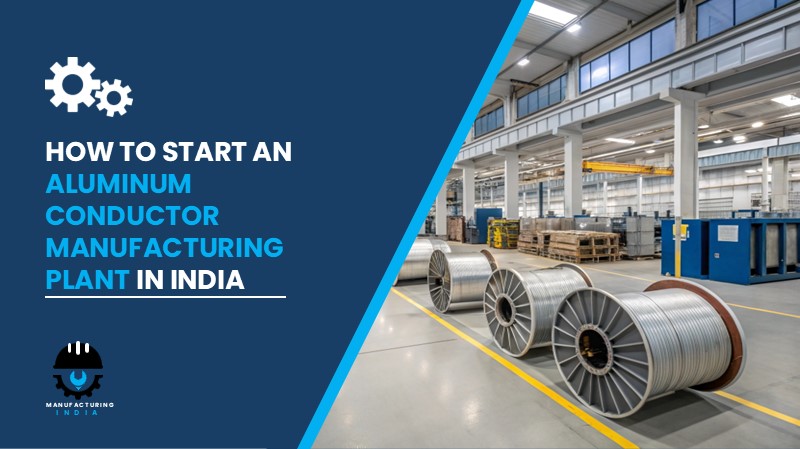
Setting up an aluminum conductor manufacturing plant in India presents a compelling investment case driven by the country’s rapidly expanding power transmission and distribution infrastructure, accelerating urbanisation, and the surging demand for efficient electrical conductors across residential, commercial, and industrial sectors. Aluminum conductors — valued for their excellent conductivity, lighter weight, and lower cost compared to metals such as copper — are an essential component in power grids, electrical motors, appliances, and overhead transmission lines. As India deepens its investment in grid modernisation, renewable energy integration, and large-scale construction activity, the demand for aluminum conductors across the power sector and beyond is set to grow at a sustained and structurally supported pace.
India’s strategic advantages make it a particularly sound location for establishing this production facility. The Make in India initiative actively promotes domestic manufacturing in the electrical and power equipment segment, and the country’s low land and labour costs relative to other emerging economies provide a strong cost-competitive foundation. Industrial states such as Gujarat, Maharashtra, and Uttar Pradesh offer established electrical equipment clusters, proximity to aluminium supply chains, and access to Special Economic Zones (SEZs) and state-supported industrial estates that can materially reduce capital deployment costs. The combination of a large domestic market for power infrastructure, a growing construction sector, and increasing focus on renewable energy transmission makes India one of the most strategically sound destinations globally for aluminum conductor manufacturing.
India’s aluminum conductor sector is positioned at the intersection of infrastructure growth, energy transition, and industrial expansion — three of the most durable investment themes in the country’s economy. A well-structured manufacturing facility benefits from strong downstream demand in power grids, renewable energy projects, and construction, supported by policy tailwinds under Make in India and competitive manufacturing economics that deliver attractive margins and viable break-even outcomes.
What is an Aluminum Conductor?
An aluminum conductor is a type of electrical conductor extensively used in the power transmission and distribution industry. Aluminum is used in these conductors due to its excellent conductivity, lighter weight, and lower cost compared to other metals like copper. These conductors are designed to effectively transmit electricity over long distances with minimal loss of energy, making them an essential component in power grids, residential and commercial buildings, and numerous industrial applications.
Aluminum conductors come in various types, including aluminum conductor steel reinforced (ACSR), all-aluminum alloy conductor (AAAC), and all-aluminum conductor (AAC), each having specific properties suitable for different usage scenarios. Key functional attributes include high conductivity, low electrical los characteristics, durability under varying environmental conditions, and the recyclable nature of aluminium as a base material. The versatility of these conductors underpins their widespread adoption across a broad spectrum of sectors.
The primary production method is the aluminum conductor manufacturing process, which involves wire drawing, stranding, and the assembly of conductor configurations suited to specific transmission and distribution requirements. End-use industries served include power transmission and distribution, residential and commercial construction, industrial electrical installations, renewable energy infrastructure, and electrical motors and appliances.
Cost of Setting Up an Aluminum Conductor Manufacturing Plant in India
The cost of setting up an aluminum conductor manufacturing plant in India depends on plant capacity, technology choice, location, level of automation, and regulatory compliance requirements. A detailed understanding of both capital and operating expenditure structures is essential for sound investment planning.
1. Capital Expenditure (CapEx)
Land and Site Development costs cover land registration, boundary development, site levelling, drainage, and related infrastructure charges. Investors may consider locating within SEZs or designated industrial estates in established electrical equipment clusters to access pre-developed utilities, streamlined regulatory processes, and lower effective land costs.
Civil Works and Construction costs include the main production shed, wire drawing and stranding bays, quality control laboratory, raw material storage areas, finished goods warehouse, and administrative block. The layout must account for separate workflow zones across drawing, stranding, and packaging operations, with space provision for future capacity expansion.
Machinery and Equipment represent the largest single component of total capital expenditure for this facility. Key machinery required includes:
- Wire drawing machines
- Stranding and bunching machines
- Annealing equipment
- Spooling and reeling machines
- Testing and quality assurance instruments
- Material handling and transportation equipment within the plant
Other Capital Costs include the Effluent Treatment Plant (ETP), pre-operative expenses, commissioning charges, and import duties applicable to specialised machinery components sourced internationally.
Request a Sample Report for In-Depth Market Insights: https://www.imarcgroup.com/aluminum-conductor-manufacturing-plant-project-report/requestsample
2. Operational Expenditure (OpEx)
Raw Material Cost constitutes the dominant share of total operational expenditure. The primary raw materials required for aluminum conductor production are aluminum rods or billets and, for ACSR variants, steel core wire. Establishing long-term procurement contracts with reliable domestic aluminium producers and importers will help stabilise input costs and protect production continuity against commodity price swings.
Utility Cost covers electricity for wire drawing, stranding, and annealing equipment, along with water requirements for cooling and process operations. Energy efficiency in the drawing and annealing stages has a material bearing on unit production costs and should be factored into machinery selection decisions.
Other Operating Costs include transportation of finished conductor reels to utilities, power companies, and construction clients; packaging materials including wooden drums and reels; salaries and wages for technical and operational staff; machinery maintenance and routine repairs; depreciation on plant and equipment; and applicable taxes. By the fifth year of operations, total operational costs are expected to increase substantially due to inflation, market fluctuations, and potential rises in the cost of key raw materials. Supply chain disruptions and shifts in the global economy are additional factors expected to contribute to this operational cost escalation.
3. Plant Capacity
Plant capacity for an aluminum conductor manufacturing facility can be customised based on the investor’s requirements, available capital, and target market segments — whether state electricity boards, private power developers, EPC contractors, or renewable energy project developers. Profitability improves significantly with higher capacity utilisation, making phased capacity ramp-up a financially prudent approach for new entrants entering the market alongside established players.
4. Profit Margins and Financial Projections
A comprehensive financial analysis covering NPV, IRR, payback period, gross margin, net margin, liquidity analysis, uncertainty analysis, and sensitivity analysis is integral to any bankable project report for this investment. Income projections, expenditure projections, and break-even timelines should be modelled across a five-year horizon under realistic assumptions related to capital investment, production capacity utilisation, pricing trends, and demand outlook, providing a complete view of the project’s financial viability and long-term sustainability.
Why Set Up an Aluminum Conductor Plant in India?
Escalating Demand for Electricity and Power Infrastructure Expansion. The global aluminum conductors’ market is experiencing substantial growth driven by escalating electricity demand and the continual expansion of power infrastructure. Emerging economies, including India, are investing heavily in developing and upgrading their electricity grids, necessitating large quantities of aluminum conductors for transmission and distribution network buildouts.
Residential and Commercial Construction Growth. The residential and commercial construction sectors are contributing strongly to aluminum conductor demand, as urbanisation and economic growth accelerate the need for robust electrical installations. India’s ongoing urban infrastructure development and housing programmes create a large, sustained domestic market for this production facility’s output.
Renewable Energy Integration Driving New Transmission Requirements. The increasing focus on renewable energy — including solar and wind power — is driving the need for efficient and cost-effective transmission lines to connect generation assets to the grid. Aluminum conductors, with their favourable weight-to-conductivity ratio, are the preferred choice for renewable energy transmission infrastructure, positioning domestic producers to benefit from India’s energy transition.
Energy Efficiency and Sustainability Imperatives. The growing emphasis on energy efficiency and loss reduction in power transmission is reinforcing aluminum conductor demand. The shift towards sustainable and eco-friendly materials is also propelling the use of recyclable aluminum, further strengthening long-term market growth fundamentals for domestic manufacturers.
Cost-Competitive Manufacturing Base. India’s competitive land, labour, and utility cost structure relative to other manufacturing geographies provides a structural cost advantage for domestic aluminum conductor producers. Proximity to large state electricity board procurement programmes and private power sector clients reduces logistics costs and delivery lead times compared to imported conductor supply.
Technological Advancements Supporting Product Development. Ongoing research and development efforts globally are aimed at enhancing the performance and durability of aluminum conductors under varying environmental conditions. Indian manufacturers investing in modern wire drawing, stranding, and annealing equipment can access these technological improvements to produce conductors suitable for a wider and more demanding range of transmission and distribution applications.
Manufacturing Process Step by Step
The aluminum conductor manufacturing process uses wire drawing, stranding, and conductor assembly as the primary production method. Each stage involves dedicated equipment and quality assurance checkpoints to ensure the finished conductor meets applicable electrical and mechanical standards.
- Raw Material Inspection: Incoming aluminum rods or billets are received, inspected for chemical composition and dimensional consistency, and stored in designated raw material bays.
- Wire Drawing: Aluminum rods are fed through wire drawing machines that progressively reduce the rod diameter to the specified wire gauge through a series of drawing dies, achieving the required tensile strength and conductivity properties.
- Annealing: Drawn aluminum wires may be passed through annealing equipment to relieve internal stresses, improve flexibility, and enhance electrical conductivity for specific conductor grades.
- Stranding: Individual drawn wires are fed into stranding and bunching machines that twist multiple wires together in defined lay configurations to form the conductor core, producing ACSR, AAAC, or AAC configurations as required.
- Steel Core Assembly (for ACSR): For aluminum conductor steel reinforced variants, the steel core wire is assembled at the stranding stage, with aluminium wires stranded concentrically around the steel core to provide the required mechanical strength for overhead transmission applications.
- Spooling and Reeling: Finished conductors are wound onto spools or wooden reels using spooling and reeling machines, with each reel length conforming to customer and specification requirements.
- Quality Testing and Dispatch: Finished conductor reels undergo quality assurance testing covering tensile strength, electrical resistance, lay ratio, and dimensional compliance before being labelled, packed, and dispatched to power utilities, EPC contractors, construction firms, and industrial clients.
Key Applications
Aluminum conductors serve a wide range of industries and applications across the power, construction, and industrial sectors.
- Power Transmission and Distribution: Used in overhead transmission lines and distribution network conductors for electricity grid infrastructure, including national and state grid expansion projects.
- Residential and Commercial Buildings: Employed in wiring installations for buildings, housing complexes, commercial properties, and infrastructure projects requiring reliable and cost-effective electrical conductors.
- Industrial Applications: Utilised in numerous industrial electrical installations where high conductivity, low weight, and cost efficiency are required across manufacturing, processing, and logistics facilities.
- Renewable Energy Infrastructure: Used in transmission lines connecting solar and wind energy generation assets to the grid, benefiting from aluminum’s high conductivity-to-weight ratio for long-span overhead applications.
- Electrical Motors and Appliances: Used as winding wires in electrical motors and appliances, with the versatility of aluminum conductors supporting adoption across a spectrum of electrical equipment categories.
Leading Manufacturers
The global aluminum conductor industry comprises several multinational companies with extensive production capacities and diverse application portfolios serving end-use sectors such as power transmission, construction, and industrial electrical. While the source report covers the competitive landscape in detail, the industry includes well-established players across North America, Europe, and Asia-Pacific regions. The full list of key players and their market positioning is covered comprehensively in the IMARC Group project report.
Timeline to Start the Plant
- Feasibility study and project report preparation
- Land acquisition and site development
- Regulatory approvals and environmental clearances
- Factory licence and fire safety compliance
- Machinery procurement and installation
- Raw material supplier agreements and supply chain setup
- Trial production and quality testing
- Commercial production launch
Licences and Regulatory Requirements
Starting an aluminum conductor manufacturing unit in India requires several approvals:
- Business registration (Proprietorship, LLP, or Pvt Ltd)
- Factory Licence under the Factories Act
- Environmental Clearance from State Pollution Control Board
- GST Registration
- Fire Safety NOC
- Hazardous/Chemical compliance where applicable to process chemicals used in drawing and annealing stages
- Effluent Treatment Plant (ETP) operational clearance
- Occupational Health and Safety compliance
Key Challenges to Consider
High Capital Requirements: Establishing an aluminum conductor manufacturing facility requires significant upfront investment in wire drawing machines, stranding and bunching equipment, annealing systems, spooling and reeling infrastructure, and quality testing instruments, alongside land, civil works, and ETP costs.
Raw Material Price Volatility: Aluminum rods and billets are globally traded commodities whose prices are subject to significant fluctuations driven by LME aluminium price movements, energy cost changes at smelters, and currency dynamics. Raw material cost management through hedging and long-term supply contracts is a critical operational discipline.
Regulatory Compliance: Meeting Bureau of Indian Standards (BIS) certification requirements, environmental clearances, and electrical safety standards demands dedicated compliance resources and ongoing regulatory monitoring throughout the plant lifecycle.
Technology and Innovation Pressure: Ongoing global research and development efforts aimed at enhancing the performance and durability of aluminum conductors under varying environmental conditions mean that domestic manufacturers must plan for periodic machinery and process technology upgrades to maintain product competitiveness.
Competition from Established Players: The aluminum conductor market includes well-established domestic and multinational producers with scale, established utility relationships, and long-standing procurement approvals. New entrants must build product quality credentials and certifications to compete effectively for state electricity board and private power sector contracts.
Skilled Manpower: Operating wire drawing, stranding, annealing, and quality testing systems requires trained electrical and mechanical process technicians. Attracting and retaining this workforce in industrial locations requires structured training programmes and competitive compensation frameworks.
Frequently Asked Questions
1. How much does it cost to set up an aluminum conductor manufacturing plant in India?
The total capital investment depends on plant capacity, technology, and location, covering land and site development, civil works, wire drawing and stranding machinery, annealing and reeling equipment, and ETP infrastructure. A detailed CapEx and OpEx breakdown are available in the full IMARC Group project report.
2. Is aluminum conductor manufacturing profitable in India in 2026?
Yes. Demand is structurally supported by grid expansion, renewable energy transmission, and construction sector growth. The project report provides detailed gross and net margin projections, NPV, and IRR analysis based on realistic capacity utilisation and pricing assumptions.
3. What machinery is required for an aluminum conductor plant in India?
Key machinery includes wire drawing machines, stranding and bunching machines, annealing equipment, spooling and reeling machines, and testing and quality assurance instruments.
4. What licences and approvals are required to start an aluminum conductor plant in India?
Required approvals include business registration, a Factory Licence, Environmental Clearance, GST Registration, Fire Safety NOC, ETP clearance, BIS product certification, and Occupational Health and Safety compliance.
5. What raw materials are needed for aluminum conductor manufacturing?
The primary raw materials are aluminum rods or billets and, for ACSR configurations, steel core wire. Long-term procurement contracts with reliable suppliers are recommended to stabilise raw material costs.
6. What are the environmental compliance requirements for an aluminum conductor plant in India?
Compliance requirements include Environmental Clearance from the State Pollution Control Board, ETP operational clearance, and adherence to applicable emission and effluent standards for process chemicals used in wire drawing and annealing stages.
7. What is the best location to set up an aluminum conductor plant in India?
Ideal locations offer proximity to aluminium rod suppliers, reliable power supply for drawing and annealing operations, access to transportation networks for finished conductor despatch, and proximity to target markets including state electricity boards and EPC contractors. Industrial clusters in Gujarat, Maharashtra, and Uttar Pradesh offer strong advantages.
8. What is the break-even period for this type of plant in India?
Break-even timelines are covered in the full financial projections, which include NPV, IRR, payback period, and sensitivity analysis across multiple capacity and pricing scenarios. The report provides a comprehensive view of financial viability under realistic operating assumptions.
9. What government incentives are available for manufacturers in India?
Make in India scheme benefits, state-level industrial promotion subsidies, capital investment incentive schemes for electrical equipment manufacturers, and export promotion benefits where applicable can provide meaningful support. Specific incentives vary by state, plant scale, and product category.
Key Takeaways for Investors
An aluminum conductor manufacturing plant in India represents a strategically sound and financially robust investment opportunity, backed by growing demand from power transmission utilities, renewable energy developers, residential and commercial construction firms, and industrial electrical equipment manufacturers. The project demonstrates strong financial viability across a range of capacity configurations, with detailed NPV, IRR, payback period, gross margin, and net margin projections available in the full feasibility report. The global aluminum conductors market is experiencing substantial growth driven by escalating electricity demand, continual power infrastructure expansion, and the increasing focus on renewable energy — trends that are particularly pronounced in India given the country’s ambitious grid modernisation and clean energy targets. With regulatory support under Make in India, a cost-competitive manufacturing base, and structurally durable downstream demand from multiple high-growth sectors, the long-term sustainability of this investment is underpinned by fundamental drivers rather than short-term cyclical forces alone.
About the Author