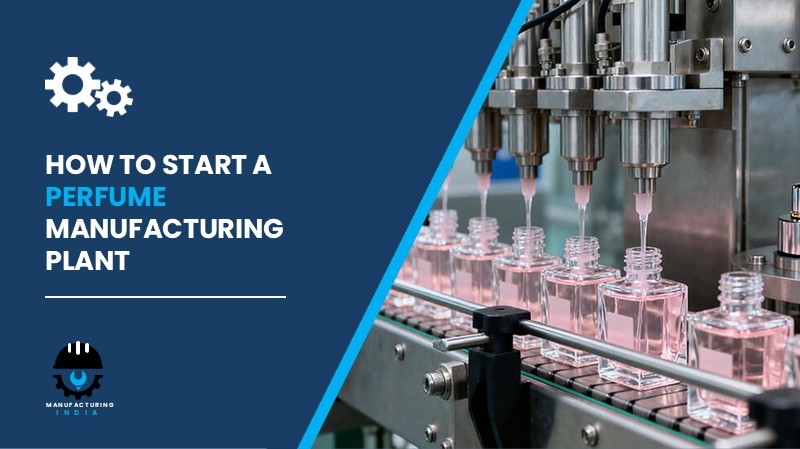
Setting up a perfume manufacturing plant in India presents a compelling investment case anchored in the robust and accelerating demand from the personal care, cosmetics, and luxury goods sectors. As Indian consumers increasingly spend on personal grooming and self-expression, fragrance has evolved from a discretionary luxury to an everyday essential across both mass-market and premium segments. Rapid urbanisation, the growing influence of social media and celebrity endorsements, and an expanding youth demographic are collectively driving perfume consumption to new heights, creating a favourable demand environment for domestic manufacturers.
India’s strategic advantages as a manufacturing destination make the case even stronger. The country’s cost-competitive land and labour ecosystem, combined with the Make in India initiative and state-level industrial incentives – particularly in manufacturing hubs like Gujarat, Maharashtra, and Uttar Pradesh – significantly reduce the barrier to entry for new investors. The expanding e-commerce infrastructure and the entry of global luxury fragrance brands into Indian retail channels further validate the depth of the domestic market, while also opening pathways for contract manufacturing and private-label export partnerships.
Setting up a perfume manufacturing plant in India is a financially viable and strategically sound investment. Strong policy support, cost-competitive operations, and consistent demand from personal care and luxury sectors deliver gross margins of 45–55%, with break-even typically achievable within 3 to 5 years.
What is Perfume?
Perfume refers to a liquid preparation with a pleasant scent that is typically applied to the body or clothes, intended to emit a pleasant and lasting aroma. It is composed of fragrant substances originating from natural essential oils, synthetic aroma chemicals, solvents such as ethanol, and fixatives that contribute to its longevity. The product’s characteristics are governed by factors including volatility, solubility, evaporation rate, and olfactory balance – all of which must be carefully managed during production to ensure scent stability and quality throughout the product’s shelf life.
Perfumes are classified into four main types based on fragrance concentration: parfum, eau de parfum, eau de toilette, and eau de cologne. The primary production method involves fragrance formulation, blending, maturation, filtration, and bottling. End-use industries served include personal care, cosmetics, and luxury goods – sectors that are all experiencing strong growth in India’s current economic environment.
Cost of Setting Up a Perfume Manufacturing Plant in India
The cost of establishing a perfume manufacturing plant depends on several variables including production capacity, technology level, geographic location, degree of automation, and regulatory compliance obligations. Investors should conduct a detailed feasibility study to arrive at a precise capital plan before committing funds.
1. Capital Expenditure (CapEx)
The total capital investment in a perfume manufacturing plant covers several major heads. Land and site development – including land registration charges, boundary development, and related infrastructure – constitutes a substantial portion of the initial outlay. Investors may consider locating the facility within a Special Economic Zone (SEZ) or a state-designated industrial estate to benefit from concessional land rates and regulatory facilitation.
Civil works and construction costs cover the manufacturing shed, quality control laboratory, raw material and finished goods storage areas, an administrative block, and utility infrastructure. These costs vary by state and whether construction is greenfield or brownfield.
Key machinery required includes:
- Mixing tanks
- Stainless steel blending vessels
- Filtration units
- Alcohol storage systems
- Filling and capping machines
- Labelling units
Other capital costs include effluent treatment plant (ETP) installation, pre-operative and commissioning expenses, import duties on specialised equipment, and initial quality assurance setup. Machinery costs account for the largest individual portion of total CapEx.
Request a Sample Report for In-Depth Market Insights: https://www.imarcgroup.com/perfume-manufacturing-plant-project-report/requestsample
2. Operational Expenditure (OpEx)
The operating cost structure of a perfume manufacturing plant is primarily driven by raw material consumption. Raw materials – principally aroma chemicals and alcohol – account for approximately 50–60% of total OpEx. Investors are advised to negotiate long-term supplier contracts to stabilise pricing and ensure a consistent supply of these critical inputs, particularly given the volatility of aroma chemical markets.
Utility costs, covering electricity, water, and steam, account for a further 5–10% of total operating expenses. Other recurring operational costs include transportation and logistics, packaging materials, salaries and wages, equipment maintenance, depreciation, and applicable taxes. By the fifth year of operations, total OpEx is projected to increase substantially due to inflation, market fluctuations, and potential rises in the cost of key materials – factors that investors should model carefully in their long-range financial plans.
3. Plant Capacity
The proposed manufacturing facility is designed with an annual production capacity ranging between 1 and 5 million litres, enabling economies of scale while maintaining operational flexibility. Capacity can be customized based on individual investor requirements, market positioning, and initial funding availability. Profitability improves meaningfully with higher capacity utilisation, making demand forecasting and sales pipeline development a critical priority from the outset.
4. Profit Margins and Financial Projections
The perfume manufacturing plant demonstrates healthy profitability potential under normal operating conditions. Gross profit margins typically range between 45–55%, supported by stable demand and value-added applications. Net profit margins average 18–25% over the operational lifecycle. Key financial metrics including Net Present Value (NPV), Internal Rate of Return (IRR), payback period, and sensitivity analysis are covered in the full project report. The break-even period for a perfume manufacturing business typically ranges from 3 to 5 years, depending on production scale, branding efforts, and distribution reach.
Why Set Up a Perfume Plant in India?
Consumer Demand Consistency: Perfume has become a non-removable item in personal care routines across Indian households, with demand remaining stable and consistent across both mass-market and premium segments. The trend towards self-care, personalisation, and premiumisation has elevated fragrance consumption growth rates.
Increasing Urban and Youth Demographics: Rapid urbanisation, social media influence, and aspirational lifestyles – especially among the younger generation – are the primary drivers of increased perfume adoption in India. These structural demographic shifts create a long-term demand base that is unlikely to reverse.
Branding and Margin Potential: The powerful branding opportunity, distinctive fragrance characteristics, and emotive consumer connection in the perfume category enable manufacturers to add significant value and attract high profit margins. This makes India an attractive location for both domestic-brand and private-label production.
Export and Private Label Partnerships: Growing demand from international brands and private-label manufacturers creates opportunities for Indian contract manufacturers to access global markets. India’s cost competitiveness in both labour and logistics strengthens this export positioning considerably.
Active Industry Investment: The Indian perfume retail landscape is attracting rapid investment. In October 2025, Decoy Perfumes entered offline retail through a partnership with Reliance Smart Bazaar, launching Shop-in-Shop across 8–10 stores in East India. In August 2025, Contraband – founded by Ananya Birla – partnered with Parcos, becoming the first Indian luxury fragrance brand in Parcos stores. In May 2025, Chanel introduced its fragrance portfolio on Nykaa’s digital platform and select Nykaa Luxe stores, with plans to expand to over 10 locations across India.
Local Supply Chain Preference: As global fragrance leaders invest in Indian retail channels and domestic brands expand rapidly, local manufacturing units are better positioned to serve these buyers with faster turnaround, lower logistics costs, and greater supply chain reliability than import-dependent models.
Manufacturing Process – Step by Step
The perfume manufacturing process uses fragrance formulation, blending, maturation, filtration, and bottling as the primary production method. Each stage is a critical unit operation that requires precise quality control and material handling.
- Raw Material Sourcing and Extraction: Essential oils and aroma chemicals are sourced and extracted or procured from verified suppliers; alcohol is stored in dedicated alcohol storage systems.
- Fragrance Formulation: Aroma chemicals and essential oils are blended in stainless steel blending vessels according to precise formulation recipes to achieve the target fragrance profile.
- Blending and Mixing: The formulated fragrance concentrate is combined with alcohol and water in mixing tanks to achieve the correct concentration for the specific perfume category (parfum, eau de parfum, eau de toilette, or eau de cologne).
- Maturation (Maceration): The blended mixture is allowed to age and mature to allow the fragrance components to fully integrate and stabilise.
- Filtration: The matured mixture passes through filtration units to remove impurities and ensure clarity and product consistency.
- Filling and Capping: The filtered perfume is transferred to filling and capping machines for precise volume fills into designated bottles.
- Labelling: Labelling units apply brand and regulatory labels, completing the finished product presentation.
- Quality Control and Testing: Analytical testing checks for fragrance concentration, purity, stability, and safety compliance before products are cleared for dispatch.
- Packaging and Dispatch: Finished products are packaged and dispatched to personal care, cosmetics, luxury goods, hospitality, and gifting industry customers.
Key Applications
The perfume manufacturing plant serves a broad range of industries, each with distinct application requirements.
- Personal Care and Cosmetics Industry: Incorporated in high-end perfumes, deodorants, body sprays, and scented skincare products.
- Fashion and Luxury Industry: Incorporated into perfumes and limited luxury fragrance collections of artistically designed brands.
- Hospitality Industry: Employed in ambient scenting in hotels, spas, and upscale retail spaces.
- Gifting and Lifestyle Products Industry: Utilised in personalised fragrances, gifting sets, and niche lifestyle fragrance products.
Leading Manufacturers
The global perfume market is served by several multinational companies with extensive production capacities and diverse application portfolios. Key players in the global perfume industry include:
- Revlon
- CHANEL
- Coty Inc.
- The Estée Lauder Companies
- The Avon Company
- LVMH Moet Hennessy-Louis Vuitton
These companies serve end-use sectors including personal care, cosmetics, and luxury goods, and represent the competitive benchmark for any new entrant establishing a perfume manufacturing plant in India.
Timeline to Start the Plant
- Feasibility study and project report preparation
- Land acquisition and site development
- Regulatory approvals and environmental clearances
- Factory licence and fire safety compliance
- Machinery procurement and installation
- Raw material supplier agreements and supply chain setup
- Trial production and quality testing
- Commercial production launch
The overall timeline from project initiation to commercial launch typically ranges from 12 to 18 months, depending on regulatory approvals, equipment procurement lead times, and raw material supply chain establishment.
Licences and Regulatory Requirements
Starting a perfume manufacturing unit in India requires several approvals:
- Business registration (Proprietorship, LLP, or Private Limited Company)
- Factory Licence under the Factories Act
- Environmental Clearance from the State Pollution Control Board
- GST Registration
- Fire Safety NOC
- Hazardous/Chemical compliance (applicable given use of ethanol and aroma chemicals)
- Effluent Treatment Plant (ETP) operational clearance
- Occupational Health and Safety compliance
State-level incentives and industrial policy benefits may also require separate registration under relevant state government schemes.
Key Challenges to Consider
High Capital Requirements: Establishing a perfume manufacturing plant involves significant upfront investment across land, civil works, machinery, and pre-operative costs, requiring careful financial planning and access to long-term funding.
Raw Material Price Volatility: Aroma chemicals and alcohol – the two primary raw materials – are subject to global price fluctuations. Long-term supplier contracts are recommended to manage this risk and protect OpEx projections.
Regulatory Compliance: Navigating environmental clearances, factory licensing, chemical handling regulations, and ETP requirements demands dedicated compliance management and can extend timelines if not planned proactively.
Technology and Innovation Pressure: Innovation in synthetic aroma chemicals and sustainable natural extracts is reshaping fragrance formulation. Staying current with process technology and formulation trends is essential to remain competitive.
Competition from Established Players: The global market is dominated by Revlon, CHANEL, Coty Inc., The Estée Lauder Companies, The Avon Company, and LVMH Moet Hennessy-Louis Vuitton. Domestic manufacturers must differentiate through niche positioning, private-label offerings, or cost leadership.
Skilled Manpower: Perfume formulation requires trained chemists and quality control professionals with expertise in fragrance chemistry – a specialised talent pool that must be planned for during the hiring and training phase.
Frequently Asked Questions
1. How much does it cost to set up a perfume manufacturing plant in India?
Capital requirements include land acquisition, civil construction, machinery procurement, installation, pre-operative expenses, and initial working capital. Total investment varies with plant capacity, technology level, and location.
2. Is perfume manufacturing profitable in India in 2026?
Yes. Gross profit margins of 45–55% and net margins of 18–25% indicate strong profitability, particularly as capacity utilisation and brand equity improve over time.
3. What machinery is required for a perfume plant in India?
Key machinery includes mixing tanks, stainless steel blending vessels, filtration units, alcohol storage systems, filling and capping machines, and labelling units, alongside quality control laboratory equipment.
4. What licences and approvals are required to start a perfume plant in India?
Requirements include business registration, a Factory Licence, Environmental Clearance, GST Registration, Fire Safety NOC, chemical compliance certification, ETP clearance, and occupational health and safety compliance.
5. What raw materials are needed for perfume manufacturing?
The primary raw materials are aroma chemicals and alcohol. Natural essential oils (from flowers, fruits, and woods), fixatives such as musk and resins, and water are also used depending on the fragrance formulation.
6. What is the break-even period for this type of plant in India?
The break-even period typically ranges from 3 to 5 years, depending on production scale, branding and marketing investment, and distribution reach.
7. What government incentives are available for manufacturers in India?
Governments may offer capital subsidies, tax exemptions, reduced utility tariffs, export benefits, or interest subsidies under national and state-level industrial promotion policies, including schemes aligned with the Make in India initiative.
Key Takeaways for Investors
A perfume manufacturing plant in India represents a high-margin investment opportunity driven by consistent demand from the personal care, cosmetics, luxury goods, hospitality, and gifting industries. The project demonstrates financial viability across a range of plant capacities from 1 to 5 million litres annually, with gross margins of 45–55% and net margins of 18–25% achievable under normal operating conditions. The global perfume market was valued at USD 41.6 billion in 2025 and is projected to reach USD 64.30 billion by 2034, at a CAGR of 4.7% – a growth trajectory that bodes well for Indian producers targeting both domestic consumption and export markets. With active investment by Indian fragrance brands, growing retail partnerships, and expanding omnichannel distribution, demand for domestically manufactured perfume in India is poised for sustained long-term growth.
About the Author