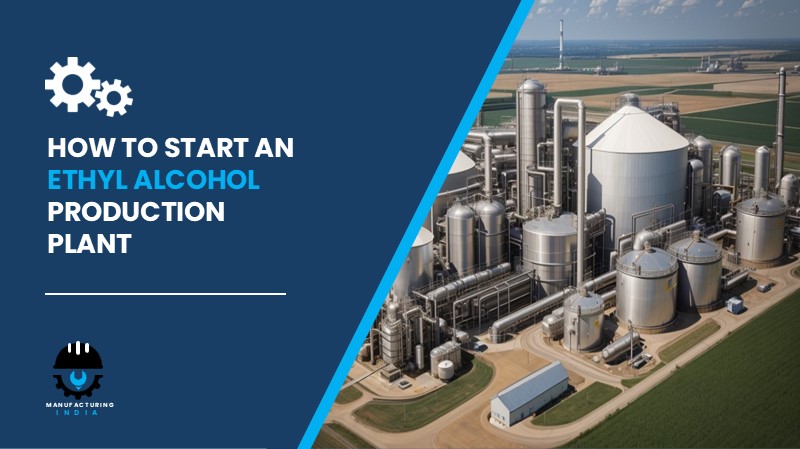
Setting up an ethyl alcohol manufacturing plant in India presents a compelling investment case underpinned by one of the broadest multi-sector demand profiles of any chemical in commercial production – spanning food and beverages, pharmaceuticals and healthcare, personal care and cosmetics, industrial and chemical manufacturing, and automotive and energy applications. Ethyl alcohol, also known as ethanol, is a clear, colourless liquid that serves simultaneously as a critical solvent, a key ingredient in alcoholic beverages, a pharmaceutical disinfectant, a personal care base, a fuel and fuel additive, and an industrial chemical intermediate – making it one of the most versatile and demand-resilient manufacturing investments available in India’s chemicals and processing sector. The global ethyl alcohol market was valued at USD 104.80 billion in 2025 and is projected to reach USD 158.45 billion by 2034 at a CAGR of 4.5%, providing investors with a large, stable, and diversified demand foundation across both domestic and export markets.
India’s structural advantages make it an exceptionally competitive location for establishing an ethyl alcohol production facility. The country’s vast sugarcane cultivation belt – which is among the world’s largest – provides abundant, cost-competitive molasses as the primary fermentation feedstock, particularly across Uttar Pradesh, Maharashtra, Karnataka, and Tamil Nadu. India’s national ethanol blending program, which targets 20% ethanol blending in petrol by 2030, is creating an additional large-volume, policy-secured domestic demand channel for bioethanol that runs in parallel to pharmaceutical, industrial, and beverage sector consumption. The government’s active support through FAME incentives, sugarcane price linkage to ethanol procurement, and state-level distillery expansion subsidies collectively reinforce the investment case for new ethyl alcohol manufacturing entrants at this stage of India’s industrial and energy transition development.
An ethyl alcohol manufacturing plant in India combines a global market valued at USD 104.80 billion in 2025 growing at 4.5% CAGR toward USD 158.45 billion by 2034, India’s policy-secured bioethanol blending mandate creating guaranteed domestic demand, and one of the world’s most competitive molasses-based fermentation feedstock supply chains. With gross profit margins of 25–35% and net margins of 12–20% achievable across a production capacity of 10 to 30 million litres per annum, this investment delivers strong returns across multiple revenue channels.
What is Ethyl Alcohol?
Ethyl alcohol, also known as ethanol, is a clear, colourless liquid that is widely used as a solvent, in the manufacture of alcoholic beverages, and as a fuel and fuel additive. It is produced through the fermentation of sugars by yeast or through petrochemical processes. Ethyl alcohol has a broad range of applications – from its role in the food and beverage industry as an ingredient in alcoholic drinks such as beer, wine, and spirits, to its use in pharmaceuticals as a disinfectant and solvent for drug formulation, to its application as a fuel additive (bioethanol) for transportation, and in industrial processes for cleaning, extraction, and as a chemical intermediate.
The primary production method involves fermentation of sugars, distillation, dehydration, purification, quality control and testing, and packaging – a multi-stage chemical process that can be applied to a range of agricultural feedstocks including molasses, grains, sugarcane, corn, wheat, beets, potatoes, and wood and crop residues. End-use industries served include food and beverages, pharmaceuticals and healthcare, personal care and cosmetics, industrial and chemical manufacturing, and automotive and energy sectors – providing the multi-channel revenue diversification that makes ethyl alcohol manufacturing particularly robust to single-sector demand volatility.
Cost of Setting Up an Ethyl Alcohol Manufacturing Plant in India
The total investment required to establish an ethyl alcohol manufacturing plant in India depends on plant capacity, feedstock selection, production grade (industrial, pharma, or fuel-grade), geographic location, level of automation, and compliance with excise, environmental, and industrial safety regulatory requirements. Investors must plan comprehensively for both one-time capital expenditure and recurring operational costs when preparing a feasibility study or detailed project report (DPR).
1. Capital Expenditure (CapEx)
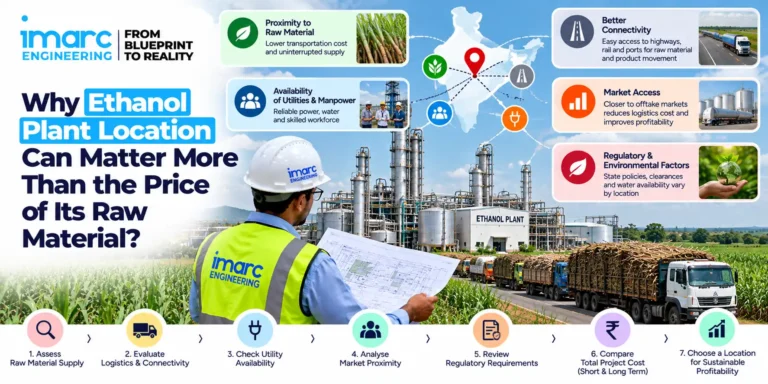
Land and Site Development constitutes a substantial foundational investment. Costs for land registration, boundary wall construction, internal road layout, drainage and effluent management infrastructure, and site levelling are influenced by whether the facility is located within a sugar industrial cluster, a notified distillery zone, an industrial estate, or on privately acquired agricultural or industrial land. Locations in states with large sugarcane crushing industries – such as Uttar Pradesh, Maharashtra, and Karnataka – benefit from proximity to molasses supply and established distillery infrastructure, reducing both raw material logistics costs and pre-development timelines.
Civil Works and Construction encompasses the fermentation hall accommodating multiple large-volume fermentation tanks, the distillation column building requiring height clearance for multi-stage column installations, rectification and purification areas, spent wash and effluent treatment infrastructure, quality control laboratory, finished product storage tank farm, and administrative block. The flammable liquid handling requirements throughout the production process mandate fire-safety-compliant civil construction – including explosion-proof electrical installations, earthing and bonding systems, and fire-suppression infrastructure – which adds to civil works expenditure relative to non-hazardous manufacturing facilities.
Machinery and Equipment represent the single largest component of capital expenditure. Key machinery required includes:
- Fermentation tanks
- Distillation columns
- Boilers
- Mash tanks
- Centrifuges
- Storage tanks
- Filtration units
- Condensers
- Pumps and heat exchangers
- Dryers
- Filtration and purification systems
- Bottling and packaging lines
- Quality testing equipment
Other Capital Costs include the effluent treatment plant (ETP) for managing spent wash, which is a high-volume, high-organic-load effluent stream requiring specialised treatment, pre-operative expenses covering regulatory filings and feasibility study preparation, plant commissioning charges, utility connection fees for steam, electricity, and water, and import duties applicable to specialised distillation column internals or purification systems sourced internationally.
Request a Sample Report for In-Depth Market Insights: https://www.imarcgroup.com/ethyl-alcohol-manufacturing-plant-project-report/requestsample
2. Operational Expenditure (OpEx)
Raw Material Cost is the dominant driver of operating expenditure, accounting for approximately 70–80% of total OpEx. The primary inputs are molasses or grains, yeast, and water. Molasses – the residual syrup from sugarcane or sugar beet refining – is the most commonly used fermentation feedstock for Indian ethyl alcohol producers, given the country’s large sugar industry that generates molasses as a by-product. Molasses prices are linked to sugarcane crushing volumes, sugar market dynamics, and competing demand from the cattle feed and chemical industries. Grain-based feedstocks including corn and wheat are used for higher-grade ethanol production. Investors are advised to negotiate long-term supply contracts with sugar mills and grain processors to stabilise input costs and ensure production continuity across seasonal crop cycles.
Utility Costs – covering steam from boilers for distillation column operation, electricity for fermentation temperature control, pumps, centrifuges, and packaging lines, and process water for fermentation and cooling – account for approximately 10–15% of total OpEx. Distillation is a steam-intensive process, and optimising heat integration across the multi-column distillation system is a critical engineering priority for managing utility costs at scale. Captive boiler capacity using bagasse – the fibrous by-product of sugarcane crushing available from co-located sugar mills – can partially self-supply steam requirements at reduced cost for plants located within sugar industrial complexes.
Other Operating Costs include outbound transportation to pharmaceutical manufacturers, beverage producers, personal care companies, industrial solvent buyers, and fuel blending facilities; packaging materials for pharmaceutical and beverage grade ethanol in drums, IBCs, and tankers; employee salaries and wages; equipment maintenance; quality assurance and purity testing for grade-specific product specifications; spent wash treatment and disposal; depreciation on civil and machinery assets; central excise and state-level alcohol regulatory compliance costs; and applicable taxes. By the fifth year of operations, total operational costs are expected to increase substantially due to inflation, market fluctuations, rising molasses and grain procurement costs, and growing demand across fuel blending and pharmaceutical sectors.
3. Plant Capacity
The proposed ethyl alcohol production facility is designed with an annual production capacity ranging between 10 and 30 million litres, enabling economies of scale while maintaining operational flexibility across different product grades and market channels. This capacity range serves the requirements of pharmaceutical manufacturers, beverage producers, industrial chemical buyers, personal care companies, and fuel blending programme offtakers across India’s domestic market and export corridors. Capacity can be customised based on investor requirements, feedstock procurement network, and target market mix. The break-even period typically ranges from 3 to 6 years, depending on scale, regulatory compliance costs, raw material pricing, and market demand. Profitability improves consistently with higher capacity utilisation and product grade mix optimisation toward higher-value pharmaceutical and beverage-grade ethanol.
4. Profit Margins and Financial Projections
The ethyl alcohol manufacturing plant demonstrates strong profitability potential under normal operating conditions across its multi-sector demand channels. Gross profit margins typically range between 25–35%, supported by stable and diversifying demand and the value-added, grade-differentiated nature of pharmaceutical, beverage, and industrial-grade ethanol products. Net profit margins range between 12–20%, reflecting the raw material intensity and utility cost burden of the fermentation and distillation production model. A comprehensive financial analysis should include income projections, expenditure forecasts, gross and net margin tracking across Years 1 through 5, net present value (NPV), internal rate of return (IRR), payback period, and a full profit and loss account. Sensitivity analysis covering molasses and grain price variability, ethanol blending program pricing, and pharmaceutical grade ethanol demand is recommended for investment-grade financial planning.
Why Set Up an Ethyl Alcohol Manufacturing Plant in India?
India’s Ethanol Blending Programme Creating Guaranteed Large-Volume Domestic Demand. India’s national target of 20% ethanol blending in petrol by 2030 represents one of the most significant policy-driven demand creation mechanisms for ethyl alcohol globally. This mandate creates a structurally guaranteed, volume-predictable off-take channel for bioethanol producers that runs independently of commercial market dynamics, substantially de-risking the revenue model for new plant investors. The growing demand for bioethanol as a renewable fuel alternative is a major market driver, as increasing concerns about climate change and sustainability position bioethanol as an eco-friendly transportation fuel alternative.
Massive Global Consumption Base Sustaining Multi-Sector Demand. Approximately 2.3 billion people globally regularly consume alcoholic beverages, with an average of nearly 6 litres of ethanol per person per year – a substantial consumption base in the food and beverage industry that drives consistent, large-volume demand for ethyl alcohol as a key ingredient in beer, wine, and spirits production. This stable, recurring demand from the beverage sector provides a reliable commercial revenue floor that supplements bioethanol and pharmaceutical market channels.
Growing Pharmaceutical and Healthcare Applications. Ethyl alcohol’s use as a solvent in the formulation of drugs, and in the production of antiseptic and disinfectant products, positions it as an essential pharmaceutical and healthcare input. The COVID-19 pandemic significantly accelerated demand for ethyl alcohol-based products including hand sanitizers, and healthcare sector demand has remained elevated as hygiene product adoption expanded beyond the acute pandemic period. India’s rapidly growing pharmaceutical manufacturing sector – the world’s largest supplier of generic medicines – represents a large and proximate buyer base for pharmaceutical-grade ethanol.
Personal Care and Cosmetics Sector Driving High-Value Demand. The growing use of ethyl alcohol in personal care products – including hand sanitizers, perfumes, and other cosmetics – driven by rising consumer spending on personal hygiene and grooming products across India’s expanding urban middle class, is creating a high-value, premium-grade ethanol demand channel that rewards producers capable of meeting cosmetic-grade purity specifications.
Active Technology Innovation Improving Production Economics. In January 2025, RCM Thermal Kinetics introduced its New Ethanol eXpansion Technology (NEXT) program – an innovative solution aimed at transforming ethanol plant expansion projects by boosting production capacity and energy efficiency without requiring expensive and lengthy equipment replacements. In June 2025, Praj Industries of India partnered with Enersur S.A. of Paraguay to establish a biorefinery project producing co-products including maize oil, biogas, bio-bitumen, ethanol, and sustainable aviation fuel (SAF) – demonstrating the expanding application portfolio and technology evolution of India’s ethanol industry. These developments signal both the active innovation pipeline and India’s growing global positioning in bioethanol technology and project development.
Cost-Competitive Fermentation Feedstock Access. India’s position as one of the world’s largest sugarcane producers – with annual sugarcane crushing generating large volumes of molasses as a by-product across Uttar Pradesh, Maharashtra, and Karnataka – provides ethyl alcohol manufacturers with access to fermentation feedstock at globally competitive prices. This raw material cost advantage, combined with competitive land, construction, utility, and labour costs, makes India one of the most commercially attractive locations globally for establishing large-scale ethanol fermentation capacity.
Manufacturing Process – Step by Step
The ethyl alcohol manufacturing process uses fermentation of sugars, distillation, dehydration, purification, quality control and testing, and packaging as the primary production method. Below are the main stages involved in the ethyl alcohol production process flow:
- Raw Material Preparation: Molasses, grains, or other fermentation feedstocks are received, tested for sugar content and purity, and prepared for fermentation through cleaning, grinding, and mash preparation in mash tanks.
- Sugar Extraction: Sugars are extracted from the prepared feedstock – through enzymatic hydrolysis for grain-based production, or direct dilution for molasses-based production – and the sugar-rich solution is conditioned to the optimal temperature, pH, and nutrient level for fermentation.
- Fermentation: The sugar solution is transferred to fermentation tanks where yeast converts fermentable sugars into ethyl alcohol and carbon dioxide under controlled temperature and anaerobic conditions over a defined fermentation cycle, producing a fermented wash typically containing 8–12% ethanol by volume.
- Distillation: Distillation columns separate ethyl alcohol from the fermented wash by applying steam heat to vaporise ethanol preferentially and condense it at higher concentration in successive column stages. Multiple distillation column configurations – including analyser and rectifier columns – are used to achieve the required ethanol concentration for the target product grade.
- Rectification and Purification: Rectification columns further concentrate and purify the distilled ethanol to the specified grade – industrial (95% v/v), extra neutral alcohol (ENA) for beverages and personal care, or absolute ethanol for pharmaceutical and fuel applications – with filtration units and purification systems removing residual impurities and congeners.
- Dehydration: For anhydrous or absolute ethanol production (above 99.5% v/v), dehydration processes – typically using molecular sieves or azeotropic distillation – remove residual water to achieve fuel-grade or pharmaceutical-grade purity specifications.
- Quality Control and Testing: Analytical instruments and quality testing equipment verify ethanol concentration, purity, methanol content, acidity, colour, and compliance with applicable product grade standards – including BIS, pharmacopoeia, and food-grade specifications – before batch release.
- Storage: Finished ethyl alcohol is transferred to storage tanks under controlled conditions, with different grade products segregated to prevent cross-contamination and maintain purity integrity pending dispatch.
- Bottling, Packaging, and Dispatch: Bottling and packaging lines fill ethanol into drums, intermediate bulk containers (IBCs), and tanker vehicles appropriate to the product grade and buyer specifications. Finished product is dispatched to food and beverage manufacturers, pharmaceutical companies, personal care product producers, industrial solvent buyers, and fuel blending facilities.
Key Applications
Ethyl alcohol produced at this type of facility serves five primary end-use sectors, each requiring specific product grades, purity standards, and packaging formats:
- Food and Beverages: Used in the production of alcoholic beverages including beer, wine, and spirits – the single largest global ethanol end-use application, with approximately 2.3 billion regular consumers worldwide driving consistent, large-volume demand.
- Pharmaceuticals and Healthcare: Used as a solvent in the formulation of drugs, as well as in the production of antiseptic and disinfectant products including hand sanitizers and surgical spirit, requiring pharmaceutical-grade purity compliant with Indian Pharmacopoeia standards.
- Personal Care and Cosmetics: Used in perfumes, fragrances, hand sanitizers, and other personal care products due to its antiseptic and solvent properties, requiring extra neutral alcohol (ENA) or cosmetic-grade purity specifications.
- Industrial and Chemical Manufacturing: Used as a solvent in various chemical processes and applications, including cleaning agents, paints, coatings, and as a chemical intermediate in the synthesis of acetaldehyde, ethyl acetate, and other industrial chemicals.
- Automotive and Energy: Used as a fuel additive in petrol to reduce tailpipe emissions and promote sustainability under India’s ethanol blending mandate, as well as in the production of sustainable aviation fuel (SAF) as an emerging application pathway.
Leading Ethyl Alcohol Producers
The global ethyl alcohol industry is served by several large-scale producers with diversified feedstock bases and multi-sector application portfolios. Key players include:
- ADM
- POET LLC
- Valero Energy Corporation
- Green Plains Inc.
- Koch Industries
- Raizen Energia
- Cargill Inc.
- Alto Ingredients Inc.
Timeline to Start the Plant
Investors planning to establish an ethyl alcohol manufacturing plant in India should anticipate the following project development phases, with an overall timeline typically ranging from 12 to 24 months:
- Feasibility study and project report preparation
- Land acquisition and site development
- Regulatory approvals and environmental clearances
- Factory licence and fire safety compliance
- Machinery procurement and installation
- Raw material supplier agreements and supply chain setup
- Trial production and quality testing
- Commercial production launch
Licences and Regulatory Requirements
Starting an ethyl alcohol manufacturing unit in India requires several approvals:
- Business registration (Proprietorship, LLP, or Private Limited Company)
- Factory Licence under the Factories Act
- State Excise Licence for distillery operation and ethanol production – issued by the State Excise Department and governed by state-specific Excise Acts
- Central Excise registration for industrial and denatured alcohol supply under CETA
- Environmental Clearance from the State Pollution Control Board – including spent wash management plan approval
- GST Registration
- Fire Safety NOC – including flammable liquid storage and handling compliance
- Effluent Treatment Plant (ETP) operational clearance with bio-composting or bio-methanation facility for spent wash disposal
- Drug Licence from the State Drug Controller where pharmaceutical-grade ethanol is manufactured for pharma sector supply
- Occupational Health and Safety compliance covering flammable chemical handling and distillation operations
Key Challenges to Consider
Complex Multi-Authority Regulatory Framework. Ethyl alcohol manufacturing in India operates under one of the most complex regulatory frameworks in the chemicals sector, combining state excise licensing, central excise regulation, environmental compliance for spent wash management, drug licensing for pharmaceutical grade, and food-grade certification for beverage applications. Navigating this multi-authority compliance landscape requires dedicated regulatory affairs expertise and ongoing documentation discipline.
Spent Wash Management as a Critical Environmental Obligation. Spent wash – the high-volume, high-organic-load effluent generated from the fermentation and distillation process – is one of the most environmentally challenging waste streams in Indian industrial processing. Regulatory requirements mandate treatment through bio-composting, bio-methanation, or incineration before discharge, requiring significant additional CapEx for ETP infrastructure and ongoing operational costs for waste management compliance.
Raw Material Price Volatility. Molasses and grains – accounting for 70–80% of total OpEx – are subject to seasonal crop cycle variability and competing demand from the cattle feed and chemical industries. Molasses availability and pricing are directly linked to sugarcane production volumes and sugar market dynamics, creating correlated supply and cost risks that investors must manage through procurement diversification and long-term supply contracts.
Excise and Regulatory Compliance Complexity. State Excise regulations governing distillery operation in India vary significantly across states in licensing requirements, production tracking obligations, ethanol movement permit requirements, and pricing controls on certain product grades. The complexity of maintaining compliance across multi-state distribution channels requires dedicated compliance management systems.
Competition from Established Large-Scale Producers. The Indian ethanol market includes large, established distillery operators with long-standing supply relationships across pharmaceutical, beverage, and fuel blending channels. New entrants must differentiate through product grade specialisation, reliable supply chain execution, or cost competitiveness in the fuel ethanol segment to build market share against established producers with scale advantages.
Technology and Efficiency Improvement Requirements. As demonstrated by RCM Thermal Kinetics’ January 2025 launch of the NEXT program targeting capacity and energy efficiency improvements without equipment replacement, the industry is actively evolving toward higher energy efficiency and lower production costs per litre. New plant investors should design facilities with modern energy integration and heat recovery systems to remain cost-competitive as industry productivity benchmarks advance.
Frequently Asked Questions
1. How much does it cost to set up an ethyl alcohol manufacturing plant in India?
The total cost depends on plant capacity (10–30 million litres per annum), feedstock selection, product grade, location, and automation level. CapEx covers land, flammable-liquid-compliant civil construction, and machinery including fermentation tanks, distillation columns, boilers, mash tanks, centrifuges, storage tanks, filtration and purification systems, and packaging lines, along with excise licensing and pre-operative costs.
2. Is ethyl alcohol manufacturing profitable in India in 2026?
Yes. With gross margins of 25–35% and net margins of 12–20%, supported by demand across food and beverages, pharmaceuticals, personal care, industrial solvents, and India’s bioethanol blending mandate, and a global market growing at 4.5% CAGR toward USD 158.45 billion by 2034, the investment presents a strong multi-channel profitability case.
3. What machinery is required for an ethyl alcohol manufacturing plant in India?
Key equipment includes fermentation tanks, distillation columns, boilers, mash tanks, centrifuges, storage tanks, filtration units, condensers, pumps, heat exchangers, dryers, purification systems, bottling and packaging lines, and quality testing equipment.
4. What licences and approvals are required to start an ethyl alcohol manufacturing plant in India?
Required approvals include business registration, State Excise distillery licence, Central Excise registration, Environmental Clearance with spent wash management plan, GST Registration, Fire Safety NOC, ETP operational clearance, Drug Licence for pharmaceutical-grade production, and Occupational Health and Safety compliance.
5. What raw materials are needed for ethyl alcohol production?
The primary raw materials are molasses or grains, yeast, and water. Additional feedstocks can include sugarcane, corn, wheat, beets, potatoes, and wood or crop residues depending on the production method and product grade targeted.
6. What are the environmental compliance requirements for an ethyl alcohol manufacturing plant in India?
An operational effluent treatment plant with bio-composting, bio-methanation, or incineration capability for spent wash management is mandatory, along with Environmental Clearance from the State Pollution Control Board, compliance with spent wash zero liquid discharge norms, and ambient air quality standards for distillery emissions.
7. What is the best location to set up an ethyl alcohol manufacturing plant in India?
States with large sugar industries generating abundant molasses as a by-product — including Uttar Pradesh, Maharashtra, Karnataka, and Tamil Nadu — offer the best combination of feedstock access at competitive prices, established distillery infrastructure, proximity to pharmaceutical and beverage buyer clusters, and state-level distillery expansion incentive frameworks.
8. What is the break-even period for this type of plant in India?
The break-even period typically ranges from 3 to 6 years, depending on scale, regulatory compliance costs, molasses and grain procurement pricing, and product grade mix. Efficient production, fuel ethanol blending program contracts, and pharmaceutical grade sales can help accelerate returns.
9. What government incentives are available for ethyl alcohol manufacturers in India?
India’s national ethanol blending programme provides guaranteed procurement pricing for fuel-grade bioethanol. State-level distillery expansion subsidies, sugar industry linkage policies, FAME scheme support for bioethanol fuel use, and general chemicals manufacturing incentives under Make in India provide meaningful financial and market access support for qualifying ethyl alcohol manufacturing investments.
Key Takeaways for Investors
An ethyl alcohol manufacturing plant in India represents one of the most commercially resilient investment opportunities in the chemicals and processing sector – combining a global market valued at USD 104.80 billion in 2025 and growing at 4.5% CAGR toward USD 158.45 billion by 2034 with multi-sector domestic demand across food and beverages, pharmaceuticals, personal care, industrial manufacturing, and India’s guaranteed bioethanol blending programme. Financial viability is demonstrated across a production capacity range of 10 to 30 million litres per annum, with gross margins of 25–35% and net margins of 12–20% achievable under competitive feedstock procurement and efficient distillation operations. India’s cost-competitive molasses supply base, active technology innovation – exemplified by RCM Thermal Kinetics’ January 2025 NEXT program and Praj Industries’ June 2025 biorefinery partnership with Enersur – and the country’s growing global positioning in bioethanol project development all reinforce the long-term commercial sustainability of ethyl alcohol manufacturing investment in India for the decade ahead.
About the Author