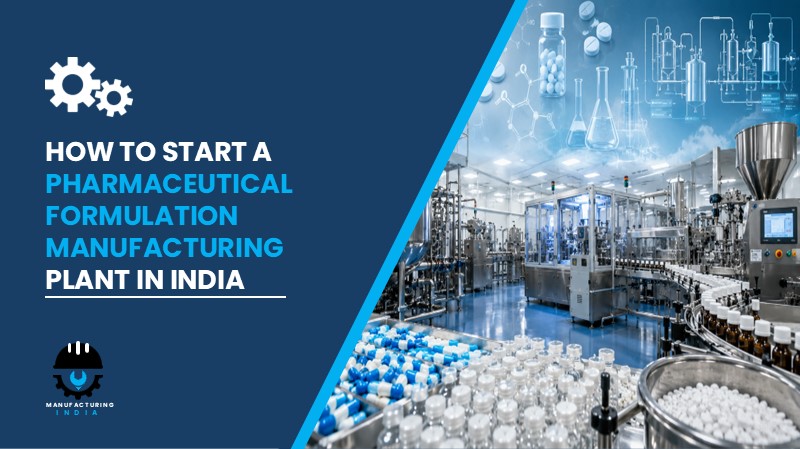
Setting up a pharmaceutical formulation manufacturing plant in India presents a compelling investment case anchored by the growing prevalence of chronic diseases, the rising demand for patient-centric dosage forms, and continuous innovation in drug delivery systems across both regulated and emerging markets. Hospitals, retail pharmacies, and contract manufacturing organizations (CMOs) represent the primary off-take channels, all of which depend on a steady supply of high-quality finished medicinal products—from tablets and capsules to syrups, injectables, and topical preparations. As India’s healthcare infrastructure deepens and domestic consumption of generic and specialty drugs accelerates, the case for investing in organised pharmaceutical formulation production has never been stronger.
India’s pharmaceutical sector offers a rare combination of policy support, export competitiveness, and cost-effective manufacturing that makes it a globally preferred hub for formulation production. The Make in India initiative, coupled with domestic drug manufacturing incentives and export promotion programmes, has reinforced India’s position as a critical pillar of the global healthcare supply chain. According to the India Brand Equity Foundation (IBEF), India’s pharmaceutical industry was estimated at around USD 55 billion in 2025 and is expected to reach approximately USD 120–130 billion by 2030. States such as Gujarat, Telangana, Himachal Pradesh, and Maharashtra host established pharmaceutical clusters with GMP-compliant infrastructure, reliable API supply chains, and skilled technical workforces—making them preferred locations for new formulation investments.
A pharmaceutical formulation manufacturing plant in India combines exceptional gross margins of 60–75%, strong policy tailwinds, and robust demand from hospitals, retail pharmacies, and CMOs. With India’s pharmaceutical industry projected to reach USD 120–130 billion by 2030, the investment offers compelling financial viability and sustained long-term demand across chronic disease, acute care, and specialty drug segments.
What is Pharmaceutical Formulation?
Pharmaceutical formulations are finished medicinal products developed by combining active pharmaceutical ingredients (APIs) with suitable excipients to ensure safety, efficacy, stability, and patient compliance. The formulations create different dosage options which include tablets, capsules, syrups, suspensions, injectables, creams, and ointments—each engineered to deliver a specific therapeutic outcome with precision and reproducibility.
The formulation process involves precise blending, granulation, drying, compression, coating, or filling operations, all of which adhere strictly to Good Manufacturing Practices (GMP) standards. Pharmaceutical formulations control drug release, increase bioavailability, extend shelf life, and produce specific therapeutic results—making process consistency and quality assurance central to every production run.
End-use industries served include hospitals requiring acute and chronic care therapies, retail pharmacies distributing over-the-counter and prescription medicines, and contract manufacturing organizations (CMOs) that produce formulations on behalf of branded pharmaceutical companies. Applications span treatment of chronic diseases, acute care therapies, preventive medicines, and specialty drugs.
Cost of Setting Up a Pharmaceutical Formulation Manufacturing Plant in India
The cost of establishing a pharmaceutical formulation manufacturing plant depends on plant capacity, chosen technology, site location, automation level, and the extent of GMP and regulatory compliance infrastructure required.
1. Capital Expenditure (CapEx)
Land and Site Development costs cover land registration, boundary development, and site preparation charges. Investors should evaluate options within established pharmaceutical Special Economic Zones (SEZs) or dedicated drug manufacturing clusters in Gujarat, Telangana, or Himachal Pradesh, which offer duty advantages, pre-approved zoning, and access to API supplier networks.
Civil Works and Construction encompasses the GMP-compliant manufacturing shed, clean room construction, quality control laboratory, raw material dispensing suite, finished goods warehouse, and administrative block. Pharmaceutical construction standards mandate controlled environments, HVAC systems, and segregated production zones for different dosage form categories, adding to civil cost intensity.
Machinery and Equipment represent the largest single component of CapEx for a pharmaceutical formulation plant. Key machinery required includes:
- Rapid mixers
- Fluid bed dryers
- Tablet presses
- Coating pans
- Liquid filling lines
- Blister packaging machines
Other Capital Costs include installation of an Effluent Treatment Plant (ETP), validation and commissioning expenses, pre-operative costs such as feasibility studies and regulatory filing fees, and import duties on specialised GMP-certified equipment where applicable.
Request a Sample Report for In-Depth Market Insights: https://www.imarcgroup.com/pharmaceutical-formulation-manufacturing-plant-project-report/requestsample
2. Operational Expenditure (OpEx)
Raw Material Cost is the dominant OpEx driver, anchored by APIs (active pharmaceutical ingredients), excipients, and packaging materials, which together account for approximately 35–45% of total operating expenses. API pricing is globally benchmarked and subject to international supply dynamics; long-term procurement contracts with domestic API manufacturers—particularly those based in Gujarat and Andhra Pradesh—help mitigate price volatility and ensure supply continuity.
Utility Cost — covering electricity, water, and steam required for GMP-grade HVAC systems, purified water generation, and processing equipment — accounts for approximately 10–15% of OpEx. Energy management is a significant operational lever given the continuous environmental control requirements of a cleanroom facility.
Other Operating Costs include transportation of raw materials and finished goods, blister and secondary packaging costs, salaries and wages for qualified persons (QPs), production pharmacists, quality assurance staff and line operators, routine maintenance and equipment calibration, depreciation on machinery and civil assets, and applicable taxes. By the fifth year of operations, total operational costs are expected to increase substantially due to inflation, rising API prices, supply chain disruptions, and shifts in the broader global economy.
3. Plant Capacity
The proposed manufacturing facility is designed with an annual production capacity ranging between 1–5 billion tablets/capsules, enabling economies of scale while maintaining operational flexibility across product families. Capacity can be customised per investor requirements—whether targeting domestic generics, regulated export markets, or contract manufacturing mandates from CMO clients. Profitability and margin realisation improve significantly with higher capacity utilisation, as fixed overheads including clean room infrastructure, validation costs, and regulatory compliance expenditure are absorbed across a larger output base.
4. Profit Margins and Financial Projections
The pharmaceutical formulation manufacturing plant demonstrates exceptional profitability potential relative to most manufacturing categories. Gross profit margins typically range between 60–75%, supported by the high value-added nature of finished dosage forms and stable demand from chronic disease and acute care therapy segments. Net profit margins range between 25–45%, reflecting the regulatory cost intensity of the sector but also the pricing power available to GMP-certified producers with approved product portfolios. A complete financial analysis—including NPV, IRR, payback period, liquidity ratios, sensitivity analysis, and a detailed profit and loss account across five years—is available in the full project report.
Why Set Up a Pharmaceutical Formulation Plant in India?
Growing Prevalence of Chronic and Lifestyle Diseases. Rising incidence of diabetes, cardiovascular disorders, respiratory conditions, and oncology cases across India’s population is driving sustained growth in prescription and OTC medicine consumption. This demand is structural and long-cycle, providing formulation producers with predictable volume growth across oral solid, liquid, and topical dosage form segments.
Expanding Generic and Specialty Drug Markets. Pharmaceutical companies are increasing investments in advanced formulation technologies to address the rising need for patient-friendly dosage forms including modified-release tablets, oral liquids, and fixed-dose combinations. The growth of the generic drug market—both domestically and in regulated export markets—creates high-volume production opportunities for GMP-certified Indian manufacturers.
Policy and Export Promotion Support. The Indian pharmaceutical sector benefits from domestic drug manufacturing initiatives, export incentive programmes, and pharmaceutical self-reliance policies that collectively strengthen the investment environment. North America holds the largest share of the global pharmaceutical formulation market at over 38%, and India’s GMP-certified producers are well-positioned to supply this export corridor. These policy frameworks reduce effective investment risk for new entrants.
Growing Contract Manufacturing Outsourcing. The rising demand for contract manufacturing and formulation development services from global innovator companies creates new revenue paths for Indian CMO operators. Manufacturers who maintain GMP compliance and product development capabilities can access long-term supply agreements with multinational pharmaceutical clients, ensuring revenue visibility beyond domestic markets.
Active Industry Investment. In February 2026, Piramal Pharma Solutions expanded its pharmaceutical formulation capabilities through the successful development and commercialisation of a tablet-in-capsule dosage form at its Pithampur and Ahmedabad facilities in India, demonstrating coordinated technology transfer and scale-up expertise. In May 2025, Persist AI launched its Cloud Lab platform—raising USD 12 million in a Series A round—designed to accelerate pharmaceutical formulation development by enabling remote access to AI-driven robotic laboratories, reducing development timelines from years to months.
Cost-Competitive, Skilled Manufacturing Base. India offers a compelling combination of lower land and construction costs within established pharmaceutical clusters, a large pool of pharmacy graduates and GMP-trained production staff, and a mature domestic API supply chain that reduces raw material lead times and import exposure. These structural cost advantages underpin the 60–75% gross margin range achievable at scale.
Manufacturing Process – Step by Step
The pharmaceutical formulation manufacturing process uses weighing and dispensing, granulation, blending, drying, compression/filling, coating, and packaging as the primary production method. Each stage of the pharmaceutical formulation manufacturing process is governed by GMP protocols, with in-process quality checks at every critical control point to ensure batch consistency and regulatory compliance.
- Weighing and Dispensing: APIs and excipients are accurately weighed in a dedicated dispensing suite under controlled environmental conditions, with full batch documentation for GMP traceability.
- Granulation: Weighed materials are processed through rapid mixers to achieve uniform granule size, improving flow properties and compressibility for downstream tableting or capsule filling.
- Blending: Granulated materials are blended with lubricants and other functional excipients to produce a homogeneous blend ready for compression or filling.
- Drying: Wet granules are processed through fluid bed dryers to achieve target moisture levels, ensuring product stability and shelf life compliance.
- Compression / Filling: Dried blends are fed into tablet presses for compression into tablets, or into capsule filling machines for hard gelatin or HPMC capsule production. Liquid formulations are processed through liquid filling lines.
- Coating: Tablets are coated in coating pans using film or sugar coating systems to improve appearance, mask taste, modify drug release, or provide moisture protection.
- Packaging: Finished dosage forms are passed through blister packaging machines for primary packaging, followed by cartoning, labelling, and batch coding for dispatch to hospitals, retail pharmacies, and CMO clients.
Key Applications
The pharmaceutical formulation manufacturing plant serves a wide range of therapy areas and end-use customers across the healthcare value chain.
- Oral Solid Dosage Forms: Tablets and capsules used for chronic disease management and acute care therapies, representing the highest-volume output category.
- Liquid Formulations: Syrups, suspensions, and oral solutions for paediatric, geriatric, and therapy-specific applications requiring non-solid dosage forms.
- Topical Preparations: Creams, gels, and ointments for dermatological, analgesic, and anti-inflammatory applications supplied to hospitals and retail pharmacy chains.
Leading Manufacturers
The global pharmaceutical formulation industry is served by multinational companies with extensive production capacities, diversified product portfolios, and strong regulatory approvals across major markets. Key players include:
- Pfizer Inc.
- Johnson & Johnson
- Novartis AG
- Merck & Co., Inc.
- Sanofi
- AstraZeneca
- Bristol-Myers Squibb
- AbbVie Inc.
- Moderna, Inc.
- Gilead Sciences, Inc.
- Bayer AG
- Takeda Pharmaceutical Company
- Biogen Inc.
- Regeneron Pharmaceuticals, Inc.
- Teva Pharmaceuticals
Timeline to Start the Plant
- Feasibility study and project report preparation
- Land acquisition and site development
- Regulatory approvals and environmental clearances
- Factory licence and fire safety compliance
- Machinery procurement and installation
- Raw material supplier agreements and supply chain setup
- Trial production and quality testing
- Commercial production launch
Licences and Regulatory Requirements
Starting a pharmaceutical formulation manufacturing unit in India requires several approvals:
- Business registration (Proprietorship, LLP, or Pvt Ltd)
- Factory Licence under the Factories Act
- Drug Manufacturing Licence from the State Drug Controller under the Drugs and Cosmetics Act
- Environmental Clearance from State Pollution Control Board
- GST Registration
- Fire Safety NOC
- GMP Certification (Schedule M compliance under the Drugs and Cosmetics Act)
- Effluent Treatment Plant (ETP) operational clearance
- Occupational Health and Safety compliance
Key Challenges to Consider
High Capital Requirements. Establishing a GMP-compliant pharmaceutical formulation plant — with rapid mixers, fluid bed dryers, tablet presses, coating pans, liquid filling lines, and blister packaging machines – requires substantial upfront investment in both equipment and clean room civil infrastructure. Regulatory validation and commissioning add further to pre-revenue expenditure.
Raw Material Price Volatility. APIs (active pharmaceutical ingredients), excipients, and packaging materials collectively account for 35–45% of OpEx. API prices are globally benchmarked and sensitive to international supply chain disruptions, making procurement strategy and long-term supplier contracts critical cost management tools.
Regulatory Compliance Intensity. The pharmaceutical sector is among the most heavily regulated manufacturing categories, requiring Schedule M GMP compliance, State Drug Controller licencing, ongoing batch release documentation, and periodic regulatory inspections. Any compliance lapse carries the risk of production suspension or product recall.
Technology and Innovation Pressure. Continuous advancement in drug delivery systems—including modified-release tablets, fixed-dose combinations, and AI-accelerated formulation development as demonstrated by Persist AI’s Cloud Lab platform—creates pressure to invest in process innovation and technology upgrades to maintain product competitiveness.
Competition from Global Players. Established multinational operators including Pfizer Inc., Johnson & Johnson, Novartis AG, AstraZeneca, and Teva Pharmaceuticals bring significant capital, regulatory approvals, and brand equity to the markets they serve. Domestic producers must build competitive moats through GMP certification, niche therapy focus, or CMO service capabilities.
Skilled Manpower Requirements. Pharmaceutical formulation operations demand qualified pharmacists, GMP-trained production technicians, validated analytical chemists, and regulatory affairs specialists. Attracting and retaining this skilled talent pool represents an ongoing operational cost and human capital management priority.
Frequently Asked Questions
1. How much does it cost to set up a pharmaceutical formulation manufacturing plant in India?
Total capital investment depends on plant capacity (1–5 billion tablets/capsules per year), technology selection, GMP compliance level, location, and automation. The full cost breakdown covering land, civil works, machinery, and other capital costs is available in the project report.
2. Is pharmaceutical formulation manufacturing profitable in India in 2026?
Yes. The production unit demonstrates gross margins of 60–75% and net margins of 25–45% under normal operating conditions, making it one of the highest-margin manufacturing categories available to investors in India.
3. What machinery is required for a pharmaceutical formulation plant in India?
Essential equipment for the pharmaceutical formulation manufacturing process includes rapid mixers, fluid bed dryers, tablet presses, coating pans, liquid filling lines, and blister packaging machines.
4. What licences and approvals are required to start a pharmaceutical formulation plant in India?
Key approvals include business registration, Factory Licence, Drug Manufacturing Licence from the State Drug Controller, Environmental Clearance, GST Registration, Fire Safety NOC, GMP Certification, ETP clearance, and Occupational Health and Safety compliance.
5. What raw materials are needed for pharmaceutical formulation manufacturing?
The primary inputs are APIs (active pharmaceutical ingredients), excipients, and packaging materials, which together account for approximately 35–45% of total operating expenses.
6. What are the environmental compliance requirements for a pharmaceutical formulation plant in India?
Operators must secure Environmental Clearance from the State Pollution Control Board, maintain an operational ETP, adhere to pharmaceutical effluent discharge standards, and comply with emission norms applicable to pharmaceutical manufacturing facilities.
7. What is the best location to set up a pharmaceutical formulation plant in India?
Established pharmaceutical clusters in Gujarat, Telangana, Himachal Pradesh, and Maharashtra offer GMP-infrastructure readiness, proximity to API suppliers, access to skilled pharmaceutical workforces, and faster regulatory processing — making them preferred investment destinations.
8. What is the break-even period for this type of plant in India?
Break-even depends on plant capacity, capacity utilisation rate, product pricing, and secured customer agreements. The full report provides NPV, IRR, and detailed payback period calculations based on realistic demand and cost assumptions.
9. What government incentives are available for manufacturers in India?
India offers domestic drug manufacturing incentives, export promotion programmes, pharmaceutical self-reliance initiatives, state-level industrial subsidies within pharmaceutical clusters, and potential Production Linked Incentive (PLI) scheme benefits for qualifying formulation manufacturers.
Key Takeaways for Investors
A pharmaceutical formulation manufacturing plant in India represents one of the most financially attractive manufacturing investment opportunities available, driven by sustained demand from hospitals, retail pharmacies, and contract manufacturing organizations across chronic disease, acute care, and specialty drug segments. The investment demonstrates exceptional financial viability at the 1–5 billion tablets/capsules per year capacity range, with gross margins of 60–75% and net margins of 25–45% underpinned by high-value finished dosage form pricing and stable end-user demand. India’s pharmaceutical industry, estimated at USD 55 billion in 2025 and projected to grow to USD 120–130 billion by 2030, provides a decade-long expansion runway that strongly supports long-term capital commitment. Rising chronic disease prevalence, expanding generic and specialty drug markets, growing CMO outsourcing demand, and continuous regulatory alignment with global GMP standards ensure that formulation manufacturing in India will remain structurally robust well beyond the initial break-even horizon.
About the Author