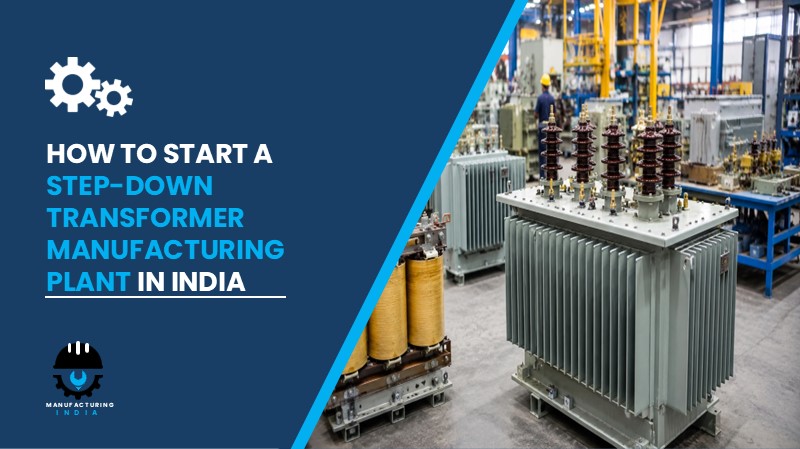
Setting up a step down transformer manufacturing plant in India presents a compelling investment case for entrepreneurs and industrial groups looking to serve power generation and transmission utilities, heavy industries, commercial infrastructure projects, renewable energy installations, and residential power distribution networks. These devices protect against high transmission or distribution voltages by lowering them to levels safe for industrial, commercial, and residential use, making this equipment critical to any economy that depends on reliable electricity supply. As grid expansion, renewable energy integration, and rapid industrialization accelerate demand, this type of facility is positioned to serve a steady, recurring stream of orders from utilities and infrastructure developers.
India’s expanding electricity consumption and ongoing modernization of ageing distribution networks make the country a strategically sound base for this production. Rising urbanisation is a core demand driver worldwide, and with nearly 45% of the global population residing in urban areas per the United Nations’ World Urbanization Prospects 2025, pressure on distribution infrastructure is only expected to grow. Industrialization, urban development, and renewable energy rollout all point toward sustained requirement for power transformation equipment, giving this investment long-term structural tailwinds.
This investment is supported by rising electricity demand, grid modernization, and renewable energy integration, with gross margins of 25–35% and net margins of 12–20% indicating healthy break-even viability across a wide range of plant capacities.
What is a Step Down Transformer?
A step down transformer is an electric device that protects against high transmission or distribution voltages by lowering them to levels safe for industries, commercial purposes, and residents. It works on electromagnetic principles, with the primary coil having more turns than the secondary coil to reduce voltage while retaining efficiency. It forms an integral part of electrical substations, industrial plants, renewable energy systems, commercial buildings, and local distribution systems.
Varieties include oil-immersed types and dry types, customized by voltage level, load-carrying capability, insulator material, cooling system, and application requirement. The step down transformer manufacturing process uses core cutting and stacking, coil winding, insulation and assembly, tank fabrication, oil filling or resin casting, vacuum drying, and testing and quality inspection as its core stages. These units minimize loss and maintain steady voltages, serving power generation and transmission utilities, heavy industries, commercial infrastructure projects, renewable energy installations, and residential power distribution networks.
Cost of Setting Up a Step Down Transformer Manufacturing Plant in India
The cost of this facility depends on capacity, technology, location, automation level, and regulatory compliance.
1. Capital Expenditure (CapEx)
Capital investment depends on capacity, technology, and location, covering land acquisition, site preparation, and infrastructure — investors can evaluate industrial estates or dedicated zones to optimize this outlay. Civil works cover production sheds, testing and quality-control labs, storage, and the administrative block. Machinery costs represent the largest portion of total capital expenditure, since equipment selection directly determines production quality.
Key machinery required includes:
- Core cutting machines
- Coil winding machines
- Vacuum drying ovens
- Oil filtration and filling units
- Welding systems for tank fabrication
- Advanced electrical testing panels
Other capital costs include land registration and boundary development charges, along with pre-operative and commissioning expenses tied to bringing the unit online.
Request a Sample Report for In-Depth Market Insights: https://www.imarcgroup.com/step-down-transformer-manufacturing-plant-project-report/requestsample
2. Operational Expenditure (OpEx)
Raw material cost is the dominant component of operating expenditure, with CRGO steel (core), copper/aluminum wire, insulation oil, and tank material together accounting for approximately 70–80% of total OpEx. Reliable suppliers must be secured, with long-term supply contracts recommended to stabilize pricing.
Utility costs, covering electricity, water, and steam, account for approximately 5–10% of OpEx. Other operating costs include transportation, packaging, salaries, depreciation, taxes, and maintenance, factored into the first-year cost projection. By the fifth year, total operational cost is expected to rise due to inflation, market fluctuations, and supply chain shifts.
3. Plant Capacity
The proposed facility is designed with an annual production capacity ranging between 50,000 and 200,000 units, enabling economies of scale while maintaining flexibility. Capacity can be customized to an investor’s requirements, and profitability generally improves as capacity utilisation rises, since fixed costs spread across a larger production base.
4. Profit Margins and Financial Projections
Financial projections are built on capital investment, operating costs, capacity utilization, pricing trends, and demand outlook, covering NPV, internal rate of return (IRR), payback period, and profit and loss analysis. Gross profit margins typically range between 25–35%, while net profit margins range between 12–20%, pointing toward a financially viable investment with a reasonable payback period.
Why Set Up a Step Down Transformer Plant in India?
Expanding Grid Infrastructure: Steady investment in power transmission and distribution systems creates a constant requirement for power transformation equipment, supporting long-term order visibility.
Growth in Renewable Energy Projects: The rise of solar and wind energy projects necessitates special transformer designs for voltage regulation and grid connections, making renewable installations one of the fastest-growing segments.
Industrial and Urban Development: Rapid developments in industries and urban infrastructure generate consistent demand for electrical distribution equipment, and with nearly 45% of the global population now living in urban areas, this driver is expected to persist for years.
Cost-Competitive Manufacturing: Locating production close to raw material sources for CRGO steel, copper/aluminum wire, insulation oil, and tank material helps minimize transportation costs and supports a cost-competitive operating structure.
Active Industry Investment: In February 2026, GE Vernova Inc. completed the acquisition of the remaining 50% stake in Prolec GE from joint venture partner Xignux, valued at USD 5.275 billion, with Prolec GE operating as a transformer manufacturer within GE Vernova’s Electrification segment. This signals continued global confidence in transformer manufacturing.
Long Product Lifecycle: Step down transformers offer extended operational life and generate recurring revenue through maintenance, upgrades, and replacement cycles, giving repeat orders well beyond the initial sale.
Manufacturing Process – Step by Step
The step down transformer manufacturing process uses core cutting and stacking, coil winding, insulation and assembly, tank fabrication, oil filling or resin casting, vacuum drying, and testing as the primary method.
- Core Cutting and Stacking: CRGO steel is cut and stacked using core cutting machines to build the magnetic core of the transformer.
- Coil Winding: Copper/aluminum wire is wound onto the core using coil winding machines to form the primary and secondary windings.
- Insulation and Assembly: Insulation materials are applied and the wound core assembly is prepared for housing.
- Tank Fabrication: Welding systems are used to fabricate the tank that will house and protect the core and winding assembly.
- Oil Filling or Resin Casting: Depending on the design, insulation oil is filled using oil filtration and filling units, or resin casting is applied instead.
- Vacuum Drying: The assembly is processed in vacuum drying ovens to remove moisture and ensure insulation integrity.
- Testing and Quality Inspection: Advanced electrical testing panels are used to verify performance against technical and quality assurance criteria.
- Final Assembly: Units are finished, packaged, and dispatched to utilities, industrial customers, commercial infrastructure projects, renewable energy developers, and residential distribution networks.
Key Applications
This production unit serves end-use sectors that depend on safe, stable voltage conversion.
- Power Transmission and Distribution Utilities: Deployed at substations to step down high transmission voltages to distribution levels suitable for industrial, commercial, and residential users while ensuring grid reliability.
- Industrial Manufacturing Units: Provide steady and controlled voltage that powers heavy machinery, automated systems, and production lines, improving operational safety and equipment effectiveness.
- Commercial Infrastructure Projects: Commercial buildings, hospitals, data centers, and shopping complexes rely on step down transformers to maintain a consistent and secure electricity supply.
- Renewable Energy Installations: Solar and wind power facilities use transformers to adjust generated voltage to grid-compatible levels for seamless power integration.
Leading Manufacturers
Leading manufacturers in the global industry operate with extensive production capacities and diverse application portfolios. Key players include:
- Technova Control System
- ADM Instrument Engineering
- Wilson Power Solutions
- Tesla Industries
- Procon Controls
Timeline to Start the Plant
- Feasibility study and project report preparation
- Land acquisition and site development
- Regulatory approvals and environmental clearances
- Factory licence and fire safety compliance
- Machinery procurement and installation
- Raw material supplier agreements and supply chain setup
- Trial production and quality testing
- Commercial production launch
Licences and Regulatory Requirements
Starting this unit in India requires several approvals:
- Business registration (Proprietorship, LLP, or Pvt Ltd)
- Factory Licence under the Factories Act
- Environmental Clearance from State Pollution Control Board
- GST Registration
- Fire Safety NOC
- Effluent Treatment Plant (ETP) operational clearance
- Occupational Health and Safety compliance
Key Challenges to Consider
High Capital Requirements: Machinery costs account for the largest portion of total capital expenditure, meaning significant upfront investment is needed before revenue generation begins.
Raw Material Price Volatility: CRGO steel, copper/aluminum wire, and insulation oil together make up 70–80% of operating expenditure, so fluctuation in these costs has an outsized impact on profitability.
Regulatory Compliance: Environmental impact assessments, safety protocols, and effluent treatment requirements must be managed continuously to stay compliant.
Technology and Innovation Pressure: Advances in basic materials, insulation materials, and energy-efficient design mean manufacturers must keep upgrading processes to remain competitive on performance and losses.
Competition: Established players such as Technova Control System, ADM Instrument Engineering, Wilson Power Solutions, Tesla Industries, and Procon Controls set a high bar on capacity and application diversity.
Skilled Manpower: Core cutting, coil winding, insulation, tank fabrication, and electrical testing all require trained technical staff, making training and retention an ongoing priority.
Frequently Asked Questions
1. How much does it cost to set up a step down transformer manufacturing plant in India?
The investment depends on plant capacity, machinery, automation level, land, infrastructure, and working capital requirements.
2. Is step down transformer manufacturing profitable in India in 2026?
Yes. Rising demand from the power, industrial, and infrastructure sectors creates strong business opportunities for manufacturers.
3. What machinery is required for a step down transformer plant in India?
Core cutting machines, coil winding machines, vacuum drying equipment, oil filtration units, testing equipment, and assembly machinery are commonly required.
4. What licences and approvals are required to start a step down transformer plant in India?
Factory registration, pollution control approvals, fire safety clearance, and applicable quality certifications are generally required.
5. What raw materials are needed for step down transformer manufacturing?
Key raw materials include CRGO steel, copper or aluminium conductors, transformer oil, insulation materials, transformer tanks, and electrical components.
6. What are the environmental compliance requirements for a step down transformer plant in India?
Manufacturers must comply with waste management, pollution control, transformer oil handling, and workplace safety regulations.
7. What is the best location to set up a step down transformer plant in India?
An industrial area with reliable utilities, good transport connectivity, skilled labour, and easy access to raw materials is ideal.
8. What is the break-even period for this type of plant in India?
The break-even period varies based on investment, production capacity, operating costs, and market demand.
9. What government incentives are available for manufacturers in India?
Eligible manufacturers may benefit from capital subsidies, tax incentives, and state or central government support schemes.
Key Takeaways for Investors
This investment is well positioned to serve power transmission and distribution utilities, industrial manufacturing units, commercial infrastructure projects, and renewable energy installations, all structural, recurring demand sources. Financial viability holds across capacities ranging from 50,000 to 200,000 units per year, with gross margins of 25–35% and net margins of 12–20% supporting a reasonable payback period. The global market, valued at USD 9.09 billion in 2025, is projected to reach USD 14.22 billion by 2034 at a CAGR of 5.1%, underlining a durable growth runway. With grid modernization, renewable energy integration, and rising urbanisation pointing in the same direction, demand for this investment is set to remain sustained well into the next decade.
About the Author