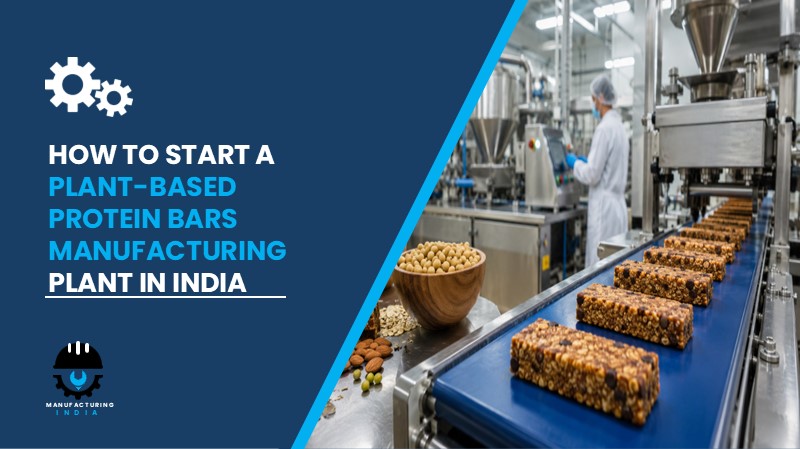
Setting up a plant-based protein bars manufacturing plant in India presents a compelling investment case driven by the country’s rapidly expanding health-conscious consumer base, surging gym and fitness culture, and a decisive shift toward plant-forward nutrition across urban and semi-urban populations. The food and beverages sector, the health and wellness industry, and the sports nutrition segment are all generating sustained demand for convenient, high-protein snack products that are clean-label, vegan, and free of animal-derived ingredients. As Indian consumers increasingly seek functional foods that support muscle recovery, weight management, and on-the-go nutrition, plant-based protein bars have moved from a niche export-facing product into a mainstream domestic growth category.
India’s structural advantages position the country as an especially sound manufacturing base for this product. The Make in India initiative, rising disposable incomes among the urban middle class, rapid expansion of organised retail and e-commerce channels, and growing interest in preventive health practices all support domestic production at scale. States such as Maharashtra, Gujarat, Karnataka, and Uttar Pradesh offer well-developed food processing industrial estates, reliable cold chain logistics, and access to a large pool of food technology graduates and trained production workers. The combination of cost-competitive manufacturing, abundant plant protein raw material supply chains, and a fast-growing domestic addressable market makes India a strategically compelling location for this facility.
A plant-based protein bars manufacturing plant in India offers investors gross margins of 45–55% and net profit margins of 20–30%, backed by a product that accounts for over 35% share in the plant-based bars market globally. With policy tailwinds, a cost-competitive supply chain, and rising demand from food and beverages, health and wellness, and sports nutrition sectors, this investment delivers both near-term profitability and long-term demand sustainability.
What is Plant-Based Protein Bars?
Plant-based protein bars are nutritional snack products formulated entirely from plant-derived protein sources — including pea, soy, rice, chickpea, lentil, and hemp proteins — combined with nuts, seeds, grains, fibres, natural sweeteners, and functional additives to deliver balanced nutrition, high protein content, and sustained energy. Because these bars contain no animal-based components, they are marketed as vegan, dairy-free, lactose-free, and allergen-free products, making them suitable for a wide range of dietary preferences and restrictions.
These products are designed to support muscle recovery, weight management, and general health maintenance while offering the convenience of a portable, long shelf-life format. The plant-based protein bars manufacturing process begins with controlled mixing of ingredients, proceeds through extrusion or moulding and a bar-setting stage, and concludes with cutting, optional chocolate or compound coating, and packaging. The production process covers ingredient blending, bar forming and extrusion, setting, cutting, coating, and packaging as the core sequential operations.
The facility primarily serves three end-use industries: food and beverages, health and wellness, and sports nutrition. Core applications include protein supplementation, meal replacement, post-workout recovery snacking, and on-the-go nutrition solutions for active consumers and working professionals.
Cost of Setting Up a Plant-Based Protein Bars Manufacturing Plant in India
The total cost of establishing a plant-based protein bars manufacturing plant in India depends on plant capacity, chosen technology, geographic location, degree of automation, and the scope of regulatory compliance requirements. Investors must model both capital expenditure and ongoing operational costs to build a sound project feasibility framework.
1. Capital Expenditure (CapEx)
Land and Site Development costs cover land registration, boundary development, drainage, and related site preparation expenses. Investors should evaluate food processing Special Economic Zones (SEZs) and industrial estates in Maharashtra, Gujarat, or Karnataka, where infrastructure is well-established and proximity to ingredient suppliers reduces logistics costs significantly.
Civil Works and Construction include the main production shed built to food-grade standards, a raw material storage area with controlled-temperature sections for nuts, seeds, and syrups, a quality control laboratory, a finished goods warehouse, and an administrative block. Food safety regulations in India require that production areas meet specific hygiene construction standards.
Machinery and Equipment account for the largest single component of total CapEx. Key machinery required includes:
- Mixers
- Extruders or slab formers
- Cooling tunnels
- Cutting machines
- Enrobing units
- Automated packaging lines
Other Capital Costs encompass effluent treatment plant (ETP) installation, pre-operative expenses, commissioning charges, and any import duties applicable on specialised extrusion or enrobing equipment sourced from international suppliers.
Request a Sample Report for In-Depth Market Insights:https://www.imarcgroup.com/plant-based-protein-bars-manufacturing-plant-project-report/requestsample
2. Operational Expenditure (OpEx)
Raw Material Cost is the dominant driver of operating expenditure, accounting for 65–75% of total OpEx. The primary raw materials are plant protein in the form of pea protein and brown rice protein, along with nuts and seeds, syrups, and chocolate. Given the price sensitivity of specialty plant proteins and the seasonal variability of nut and seed costs, investors should negotiate long-term procurement contracts with reliable suppliers to stabilise input costs and ensure consistent production throughput.
Utility Cost — covering electricity for mixers, extruders, cooling tunnels, and packaging lines, along with water and steam — represents a further 5–10% of total operating expenditure. Energy efficiency investments in cooling and extrusion equipment can materially reduce this category over the plant’s operating life.
Other Operating Costs include transportation and logistics for raw material inbound and finished goods outbound movements, packaging material procurement, salaries and wages for production and quality control staff, routine maintenance of food-grade machinery, depreciation on fixed assets, and applicable taxes. By the fifth year of operations, total OpEx is projected to increase substantially due to inflation, market fluctuations, potential rises in the cost of key plant protein ingredients, and supply chain disruptions.
3. Plant Capacity
The proposed facility is designed with an annual production capacity ranging between 500 and 2,000 MT, enabling economies of scale while maintaining operational flexibility. This range allows investors to commence at a smaller, capital-efficient scale and expand as retail distribution, gym supply contracts, and e-commerce channels generate reliable revenue. Profitability improves meaningfully with higher capacity utilisation, making a disciplined ramp-up plan a critical element of financial planning.
4. Profit Margins and Financial Projections
Financial projections for this unit are built on realistic assumptions relating to capital investment, operating costs, production capacity utilisation, pricing trends, and demand outlook. Gross profit margins typically range between 45% and 55%, reflecting the strong value-added nature of functional nutrition products and the premium pricing they command in organised retail and sports nutrition channels. Net profit margins range between 20% and 30% under normal operating conditions. A complete financial analysis incorporating Net Present Value (NPV), Internal Rate of Return (IRR), payback period analysis, liquidity assessment, and sensitivity analysis is essential for securing project finance and structuring investor returns.
Why Set Up a Plant-Based Protein Bars Plant in India?
Rising Demand for Functional Nutrition. The increasing need for convenient, high-protein functional foods is driving strong demand for plant-based protein bars among athletes, millennials, and working professionals across India’s growing urban centres. The surge in gym memberships, home fitness trends, and preventive health practices has significantly boosted the market for protein-rich snack formats that are clean-label and plant-derived.
Alignment with Global Food Trends. The global plant-based protein bars market is being reshaped by the mainstream adoption of plant-based diets, flexitarian eating patterns, and protein fortification preferences. According to the Good Food Institute (GFI), the U.S. retail plant-based foods market was valued at approximately USD 8.1 billion in 2024, and nearly six in ten U.S. households purchased plant-based food products that year — signalling the scale of consumer behaviour shift that is now spreading into Asia-Pacific markets including India.
Opportunities for Private Label and Export Growth. Demand from retail chains, gyms, and e-commerce platforms creates significant business opportunities for contract manufacturing and international market development. India-based producers can serve domestic private label buyers while also targeting export markets in the Middle East, Southeast Asia, and beyond, leveraging competitive production costs.
Asia-Pacific as a High-Growth Region. Asia-Pacific is emerging as a high-growth region for plant-based nutrition, supported by urbanisation, expanding middle-class populations, and growing awareness of the health benefits of plant protein. India is central to this growth trajectory, with its large young population, rising disposable incomes, and rapid shift toward health-conscious food choices.
Active Industry Investment. In June 2025, RXBAR introduced RXBAR High Protein — an 18g-protein clean-label bar using six recognisable ingredients and positioned as a simpler alternative to heavily processed protein snacks. In April 2025, TREK unveiled a new high-protein, low-sugar range made entirely from plant-based ingredients, delivering 12–15g of protein per bar and targeting the sports nutrition segment. These product launches by global brands confirm the accelerating investment in the plant-based protein bars category.
Cost-Competitive Manufacturing Base. India offers cost-competitive land, a large skilled food-technology workforce, well-developed ingredient supply chains for nuts, seeds, and plant proteins, and efficient rail and road logistics connecting manufacturing clusters to major retail and export hubs.
Manufacturing Process – Step by Step
The plant-based protein bars manufacturing process uses ingredient blending, bar forming and extrusion, setting, cutting, coating, and packaging as the primary production method. Each stage involves specific unit operations, material handling protocols, and quality control checkpoints.
- Ingredient Receiving and Pre-Processing: Plant protein (pea/brown rice), nuts, seeds, syrups, and chocolate are received, inspected for quality, and prepared for blending through weighing and pre-conditioning.
- Ingredient Blending: All formulation components are combined in precision mixers to achieve a homogenous, consistent dough or mass with the target protein content, texture, and moisture level.
- Bar Forming / Extrusion: The blended mass is fed into extruders or slab formers that shape it into the desired bar dimensions and density profile.
- Setting: Formed bars pass through a temperature-controlled setting stage that firms texture and stabilises structure before further processing.
- Cutting: Continuous slab or extruded bars are cut to individual portion sizes using precision cutting machines calibrated to target weight specifications.
- Enrobing / Coating (Optional): Bars requiring a chocolate or compound coating are passed through enrobing units that apply an even layer of coating and then through a cooling tunnel for rapid setting.
- Cooling: Finished bars — coated or uncoated — move through cooling tunnels to achieve the final texture and packaging-ready temperature.
- Quality Control and Packaging: Bars undergo weight, texture, and labelling checks before being sealed on automated packaging lines and dispatched to food and beverages retailers, health and wellness outlets, gyms, and e-commerce fulfilment centres.
Key Applications
A plant-based protein bars manufacturing plant in India serves diverse end-use markets across consumer nutrition, sports performance, and convenience food segments.
- Sports and Fitness Nutrition: Post-workout recovery bars, muscle-support snacks, and endurance nutrition products for athletes and gym-goers.
- Health and Wellness: Weight management products, balanced nutrition bars, and functional snacking options for health-conscious consumers.
- Vegan and Plant-Based Diets: Protein supplementation bars for vegetarian and vegan consumers seeking animal-free nutrition formats.
- Convenience and Retail Foods: Ready-to-eat snacks for busy urban professionals and students with active, on-the-go lifestyles.
Leading Manufacturers
The global plant-based protein bars industry is served by several multinational companies with extensive production capacities and diverse product portfolios targeting mainstream retail, specialty health channels, and e-commerce platforms. Key players operating in this space include:
- Kellogg’s
- Greens Gone Wild, LLC.
- General Mills Inc. (LÄRABAR)
- 88 ACRES
- GNC Holdings, LLC
- Rise Bar
- MadeGood
- Växa Bars
- Clif Bar & Company
- GoMacro, LLC
Timeline to Start the Plant
- Feasibility study and project report preparation
- Land acquisition and site development
- Regulatory approvals and environmental clearances
- Factory licence and fire safety compliance
- Machinery procurement and installation
- Raw material supplier agreements and supply chain setup
- Trial production and quality testing
- Commercial production launch
Licences and Regulatory Requirements
Starting a plant-based protein bars manufacturing unit in India requires several approvals:
- Business registration (Proprietorship, LLP, or Private Limited Company)
- Factory Licence under the Factories Act
- Environmental Clearance from State Pollution Control Board
- GST Registration
- Fire Safety NOC
- FSSAI (Food Safety and Standards Authority of India) licence for food manufacturing
- Effluent Treatment Plant (ETP) operational clearance
- Occupational Health and Safety compliance
Key Challenges to Consider
High Capital Requirements. Establishing a plant-based protein bars manufacturing plant involves substantial upfront investment in food-grade production infrastructure, precision mixing and extrusion equipment, automated packaging lines, and quality control laboratories — which can create barriers for investors without access to structured project finance.
Raw Material Price Volatility. The primary raw materials — plant protein (pea/brown rice), nuts and seeds, syrups, and chocolate — are subject to global commodity price fluctuations and seasonal supply variability, which can compress gross margins if procurement is not managed through long-term supplier contracts.
Regulatory Compliance. Meeting FSSAI food safety standards, label claim regulations, environmental clearance requirements, and effluent treatment norms adds to ongoing compliance costs and demands dedicated quality management resources throughout operations.
Technology and Innovation Pressure. The category is evolving rapidly, with global brands like RXBAR and TREK continuously launching new formulations with higher protein content, lower sugar profiles, and novel flavour variants — requiring domestic producers to invest continuously in product development capabilities.
Competition from Established Global Players. Companies such as Clif Bar & Company, General Mills (LÄRABAR), GNC Holdings, GoMacro, and others already operate at significant scale, creating competitive pressure on pricing, brand positioning, and retail shelf space that new entrants must navigate strategically.
Skilled Manpower. Operating food-grade extrusion, enrobing, and automated packaging equipment at consistent quality standards requires trained food technology and engineering personnel, and attracting and retaining qualified production staff remains a challenge in many Indian manufacturing locations.
Frequently Asked Questions
1. How much does it cost to set up a plant-based protein bars manufacturing plant in India?
The total setup cost depends on plant capacity, technology choice, location, and automation level. The proposed facility is designed for an annual capacity of 500–2,000 MT. A detailed CapEx breakdown covering land, civil works, machinery, and other capital costs is available in the full project report.
2. Is plant-based protein bars manufacturing profitable in India in 2026?
Yes. Gross profit margins typically range between 45% and 55%, and net profit margins between 20% and 30%, demonstrating strong profitability potential driven by premium product positioning and stable demand across health, wellness, and sports nutrition channels.
3. What machinery is required for a plant-based protein bars plant in India?
Key equipment includes mixers, extruders or slab formers, cooling tunnels, cutting machines, enrobing units, and automated packaging lines.
4. What licences and approvals are required to start a plant-based protein bars plant in India?
Required approvals include business registration, Factory Licence, Environmental Clearance, GST Registration, Fire Safety NOC, FSSAI licence, ETP clearance, and Occupational Health and Safety certification.
5. What raw materials are needed for plant-based protein bars manufacturing?
The primary raw materials are plant protein (pea/brown rice), nuts and seeds, syrups, and chocolate, supported by functional additives and natural sweeteners.
6. What are the environmental compliance requirements for a plant-based protein bars plant in India?
Investors must obtain Environmental Clearance from the State Pollution Control Board, operate a certified Effluent Treatment Plant, and comply with applicable food industry effluent and solid waste management standards.
7. What is the best location to set up a plant-based protein bars plant in India?
Ideal locations are states with well-developed food processing infrastructure such as Maharashtra, Gujarat, Karnataka, and Uttar Pradesh, which offer industrial estates, logistics connectivity, and proximity to plant protein ingredient suppliers.
8. What is the break-even period for this type of plant in India?
The break-even period is determined by plant capacity, capital investment, operating cost structure, and realised selling prices. A detailed payback period, NPV, and IRR analysis is available in the project’s financial projections section.
9. What government incentives are available for manufacturers in India?
Food processing manufacturers in India may benefit from the Production Linked Incentive (PLI) scheme for food processing, MSME subsidies, state-level industrial promotion policies, and Make in India investment facilitation programmes that support capital investment in this sector.
Key Takeaways for Investors
A plant-based protein bars manufacturing plant in India represents a high-margin investment opportunity anchored in durable demand from the food and beverages, health and wellness, and sports nutrition sectors — all of which are growing rapidly in India’s urbanising economy. Financial projections confirm strong viability across the 500–2,000 MT annual capacity range, with gross margins of 45–55% and net profit margins of 20–30% providing an attractive return profile across investment scales. Global market data reinforces this outlook: plant-based protein bars already account for over 35% share in the plant-based bars market, and the U.S. retail plant-based foods segment alone reached USD 8.1 billion in 2024 with nearly six in ten households purchasing such products — a demand wave now migrating strongly into Asia-Pacific markets. With India’s growing middle class, expanding fitness culture, clean-label consumer preferences, and cost-competitive manufacturing base, the long-term demand sustainability for this facility is firmly established and structurally growing.
About the Author