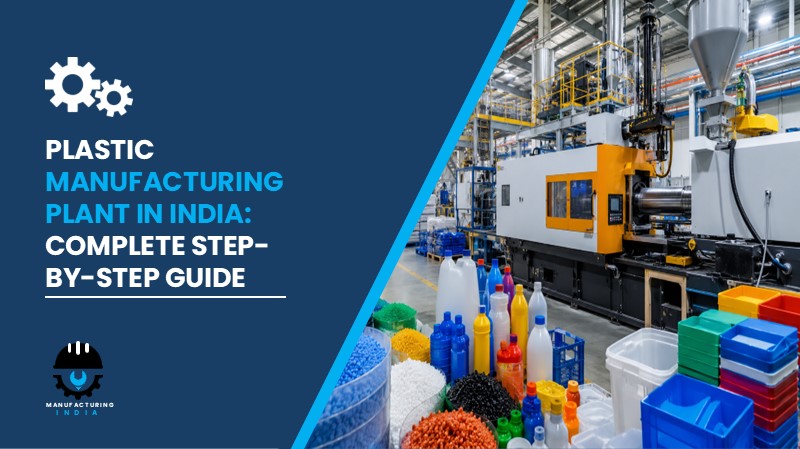
Setting up a plastic manufacturing plant in India presents a compelling investment case rooted in the country’s booming consumption economy and rapid industrial expansion. Demand from packaging, automotive, construction, electronics, and healthcare sectors is accelerating at a pace that domestic supply capacity is yet to fully meet, creating significant opportunity for new investors. Urbanisation, a growing middle class, and the rapid scale-up of e-commerce and food processing are amplifying the need for polymer-based components across every segment of the economy, from PVC pipes in infrastructure projects to sterile packaging in hospitals.
India’s manufacturing ecosystem offers structural cost and policy advantages that make it one of the most attractive destinations globally for this type of facility. The Make in India initiative, state-level industrial incentives, and the availability of large, competitively priced zones in Gujarat, Maharashtra, and Tamil Nadu collectively lower barriers to entry. Proximity to petrochemical suppliers in the Middle East and Southeast Asia, combined with a cost-competitive labour force and improving logistics infrastructure, ensures that a facility established here can serve both domestic demand and regional export markets efficiently.
India’s polymer products opportunity combines robust multi-sector demand, strong government policy support, and a cost-competitive supply chain. With gross margins of 20–30% and a global market projected to reach USD 859.47 Billion by 2034, the financial viability of a well-structured plastic manufacturing plant in India is compelling, and break-even is achievable well within the standard project horizon.
What is Plastic?
Plastic is a versatile, synthetic or semi-synthetic material made from polymers, primarily derived from petrochemicals, gas, or coal. Known for being lightweight, durable, flexible, and inexpensive, it can be moulded into various shapes, making it essential for packaging, construction, and daily household products. Most plastic materials are non-biodegradable and resistant to natural degradation, meaning they persist in the environment for hundreds of years — a factor increasingly shaping production strategy toward recyclable and bio-based alternatives.
The product portfolio spans polypropylene (PP), polyethylene (PE), and polyvinyl chloride (PVC), each suited to distinct industrial end uses. PP is widely used in automotive components and consumer packaging, PE dominates flexible film and pipe applications, while PVC remains the backbone of construction piping, cable insulation, and window profiles. The primary production methods used in the plastic manufacturing process are injection moulding, extrusion, blow moulding, thermoforming, and rotational moulding. End-use industries served include construction, packaging, automotive, electronics, consumer goods, healthcare, and agriculture — a breadth of application that insulates investors from dependence on any single demand source.
Cost of Setting Up a Plastic Manufacturing Plant in India
The total investment required to establish this facility depends on plant capacity, technology choice, location, automation level, and regulatory compliance. A clear breakdown of both capital and operational expenditure is essential before committing funds.
1. Capital Expenditure (CapEx)
Land and Site Development represent a foundational cost, covering land acquisition, boundary development, registration charges, and site preparation. Investors should evaluate industrial estates and special economic zones (SEZs) in Gujarat and Maharashtra, where pre-developed plots and fiscal incentives can meaningfully reduce upfront land costs.
Civil Works and Construction cover production shed construction, raw material storage warehouses, quality control laboratories, finished goods storage, and administrative blocks. Adequate space planning is critical given the diverse machinery footprint of a plastic manufacturing plant operating across multiple forming processes.
Machinery and Equipment account for the largest share of capital expenditure. Key machinery required includes:
- Extrusion lines
- Injection moulding machines
- Blow moulding units
- Granulators
- Compounding lines
- Pelletizers
- Cooling towers
- Material dryers
- Packaging systems
Other Capital Costs include Effluent Treatment Plant (ETP) construction, pre-operative and commissioning expenses, import duties on specialised equipment, and working capital margin for the initial production ramp-up.
Request a Sample Report for In-Depth Market Insights: https://www.imarcgroup.com/plastic-manufacturing-plant-project-report/requestsample
2. Operational Expenditure (OpEx)
Raw Material Cost is the primary driver of ongoing operational expenditure, accounting for approximately 80–85% of total OpEx. Core inputs are polymer resin (PP/PE/PVC), additives, and masterbatch. Resin is the dominant cost item, and long-term supply contracts with domestic and Middle Eastern petrochemical producers are critical for price stability throughout the production cycle.
Utility Cost — covering electricity, water, and steam — accounts for approximately 5–10% of OpEx. Processing operations are moderately energy-intensive, particularly during extrusion, injection moulding, and blow moulding, making proximity to reliable and competitively priced power infrastructure a key site selection factor.
Other Operating Costs include transportation, packaging, salaries and wages, maintenance, depreciation, taxes, and other recurring expenses. By the fifth year, total costs are projected to increase substantially due to inflation, market fluctuations, and rising input prices. Supply chain disruptions, rising consumer demand, and shifts in the global economy are expected to contribute further to this escalation.
3. Plant Capacity
The proposed facility is designed with an annual production capacity of 20,000 to 100,000 metric tonnes, enabling economies of scale while maintaining operational flexibility. Capacity within this range can be customised to match investor capital availability and target market size. Profitability improves meaningfully with higher utilisation rates, and investors should plan for a structured and phased ramp-up to optimal throughput within two to three years of initiating commercial operations. Entry at a mid-range capacity allows a production unit to test market fit while retaining clear headroom to expand.
4. Profit Margins and Financial Projections
This investment demonstrates healthy profitability under normal operating conditions. Gross profit margins typically range between 20–30%, supported by stable and diversified end-market demand. Net profit margins average 8–15% over the five-year projection period. Investors should assess Net Present Value (NPV), Internal Rate of Return (IRR), payback period, and a detailed profit and loss account before finalising decisions. A sensitivity analysis covering raw material price volatility is essential given that feedstock accounts for 80–85% of OpEx.
Why Set Up a Plastic Plant in India?
Packaging Industry Expansion. The packaging sector is the single largest plastic demand driver, particularly flexible packaging for food, beverages, and e-commerce distribution. According to IBEF, India’s packaging industry is projected to reach Rs. 29,563 crore (USD 3.4 Billion) by 2027, creating sustained demand for locally produced containers, films, and flexible packaging materials across the plastic value chain.
Automotive and Lightweight Material Substitution. Increasing automotive output and the shift toward lighter materials to improve fuel efficiency and electric vehicle range are driving plastic component demand. Interior trim, dashboards, bumpers, fluid reservoirs, and under-the-hood parts represent high-volume applications underpinning this growth in India’s automotive sector.
Urbanisation and Infrastructure-Led Demand. Rapid urbanisation and infrastructure development are stimulating consumption of PVC pipes, insulation materials, and construction-grade polymer products across India’s housing, commercial real estate, and public works programmes. This government-backed stream is a long-duration tailwind for plastic plant investors across the country.
Healthcare and Consumer Goods Growth. Growth in healthcare services is increasing demand for disposable medical-grade polymer materials and sterile packaging solutions. Expanding consumer goods production is simultaneously driving requirements for plastic casings, containers, and housings across electronics, appliances, and FMCG categories.
Active Industry Investment. In December 2025, Avient Corporation launched its Hiformer Non-PFAS Process Aid with Antioxidants in Latin America, expanding non-fluorinated processing options for polyethylene and polypropylene producers. In April 2025, Amcor plc completed its all-stock combination with Berry Global, creating a global leader in consumer and healthcare packaging with enhanced material science and innovation capabilities. Both developments signal continued global capital deployment across the plastic industry.
Circular Economy and Policy Alignment. Government policies promoting domestic manufacturing and infrastructure expansion are contributing to plastic market growth. Growing emphasis on recycling technologies, biodegradable polymers, and extended producer responsibility (EPR) policies is creating strategic opportunities for sustainable production. As regulatory frameworks tighten around single-use plastic products and packaging waste, producers who invest early in recyclable polymer lines and EPR-compliant operations will gain both compliance resilience and a meaningful commercial advantage in the transition now underway across India and global markets.
Manufacturing Process – Step by Step
The plastic manufacturing process uses injection moulding, extrusion, blow moulding, thermoforming, and rotational moulding as its primary production methods. Most facilities combine these processes to serve multiple end markets. The key stages in the plastic manufacturing process flow are:
- Raw Material Receipt and Storage: Resin (PP/PE/PVC), additives, and masterbatch are received, quality-inspected, and stored in controlled conditions.
- Drying and Pre-processing: Material dryers remove moisture from hygroscopic feedstocks before forming to ensure consistent melt quality.
- Compounding: Compounding lines blend resin with additives and masterbatch to achieve target mechanical, thermal, and colour properties.
- Pelletizing: Pelletizers convert compounded material into uniform pellets for consistent downstream feed.
- Forming Operations: Extrusion lines, injection moulding machines, blow moulding units, or thermoforming equipment shape melted polymer into finished products.
- Cooling: Cooling towers stabilise the dimensions and surface quality of freshly formed plastic components.
- Granulating: Granulators reprocess trim waste and rejects into usable feedstock, improving overall yield.
- Quality Control and Testing: Products are tested against dimensional, mechanical, and visual criteria before packaging clearance.
- Packaging and Dispatch: Finished goods are packaged and dispatched to construction, automotive, packaging, electronics, healthcare, and agricultural end-users.
Key Applications
Products from this type of facility serve a wide range of industrial and consumer sectors:
- Construction: Piping systems, PVC pipes and fittings, insulation panels, window frames, flooring, and protective barriers.
- Packaging: Flexible packaging containers, films, and rigid packaging for food, beverages, and e-commerce.
- Automotive: Interior trim components, dashboards, bumpers, fluid reservoirs, and under-the-hood plastic parts.
- Electronics: Insulated housings, cable jackets, connectors, and protective casings.
- Healthcare: Disposable medical-grade products and sterile packaging solutions.
- Agriculture: Agricultural films and protective covering materials.
- Telecommunication: Cable insulation, conduit systems, device enclosures, and fibre-optic protective tubing.
Leading Manufacturers
The global plastic industry is led by several multinational companies with extensive production capacities and diverse application portfolios serving construction, packaging, automotive, electronics, consumer goods, healthcare, and agriculture. Key players include:
- BASF SE
- Dow Inc.
- LyondellBasell Industries N.V.
- SABIC
- ExxonMobil Chemical Company
- INEOS Group
Timeline to Start the Plant
Investors planning to set up a plastic manufacturing plant should anticipate the following phases:
- Feasibility study and project report preparation
- Land acquisition and site development
- Regulatory approvals and environmental clearances
- Factory licence and fire safety compliance
- Machinery procurement and installation
- Raw material supplier agreements and supply chain setup
- Trial production and quality testing
- Commercial production launch
Licences and Regulatory Requirements
Starting a plastic manufacturing unit in India requires several approvals:
- Business registration (Proprietorship, LLP, or Pvt Ltd)
- Factory Licence under the Factories Act
- Environmental Clearance from State Pollution Control Board
- GST Registration
- Fire Safety NOC
- Hazardous and chemical compliance for polymer processing and solvent-based additives
- Effluent Treatment Plant (ETP) operational clearance
- Occupational Health and Safety compliance
Key Challenges to Consider
High Capital Requirements. Establishing this type of facility demands significant upfront investment in multi-process machinery — including extrusion lines, injection moulding machines, and blow moulding units — alongside civil infrastructure suited to large-tonnage material handling.
Raw Material Price Volatility. Resin (PP/PE/PVC), additives, and masterbatch are petrochemical derivatives whose prices fluctuate with crude oil markets and global supply conditions. Since raw materials account for 80–85% of OpEx, even modest price rises materially compress plastic plant margins.
Regulatory Compliance. Pressures related to single-use plastic materials and environmental sustainability are reshaping production strategy toward recyclable and bio-based alternatives. Compliance with EPR policies and evolving plastic waste management regulations adds ongoing cost and administrative complexity.
Technology and Innovation Pressure. Advancements in polymer engineering, recycling technologies, and bio-based materials require manufacturers to continuously invest in process and product upgrades to remain competitive in the plastic industry.
Competition from Established Players. Global manufacturers including BASF SE, Dow Inc., LyondellBasell Industries N.V., SABIC, ExxonMobil Chemical Company, and INEOS Group maintain substantial scale, technology, and supply chain advantages that new entrants must plan to navigate.
Skilled Manpower. Operating multi-process equipment requires trained process engineers, quality technicians, and maintenance personnel. Recruiting and retaining qualified staff in competitive industrial clusters is an ongoing operational challenge.
Frequently Asked Questions
1. How much does it cost to set up a plastic manufacturing plant in India?
Setup cost depends on capacity, technology, location, and automation level. It covers land, civil works, machinery such as extrusion lines and injection moulding machines, ETP infrastructure, and pre-operative expenses.
2. Is plastic manufacturing profitable in India in 2026?
Yes. Gross margins range between 20–30% and net margins between 8–15%, supported by diversified demand from packaging, construction, automotive, and healthcare sectors.
3. What machinery is required for a plastic manufacturing plant in India?
Key machinery includes extrusion lines, injection moulding machines, blow moulding units, granulators, compounding lines, pelletizers, cooling towers, material dryers, and packaging systems.
4. What licences and approvals are required to start a plastic plant in India?
Required approvals include business registration, Factory Licence, Environmental Clearance, GST Registration, Fire Safety NOC, ETP clearance, and Occupational Health and Safety compliance.
5. What raw materials are needed for plastic manufacturing?
Core raw materials are resin (PP/PE/PVC), additives, and masterbatch. Resin is the highest-cost input, accounting for 80–85% of total OpEx.
6. What are the environmental compliance requirements for a plastic plant in India?
Requirements include Environmental Clearance from the State Pollution Control Board, an operational ETP, EPR compliance, and adherence to plastic waste management rules.
7. What is the best location to set up a plastic plant in India?
States with strong petrochemical supply chains — such as Gujarat, Maharashtra, and Tamil Nadu — offer the best combination of raw material access, infrastructure, and policy incentives.
8. What is the break-even period for this type of plant in India?
Break-even depends on capacity utilisation, pricing, and cost structure. A detailed payback period analysis alongside NPV and IRR projections is available in IMARC Group’s full project report.
9. What government incentives are available for manufacturers in India?
The Make in India initiative, Production Linked Incentive schemes for chemicals and materials, SEZ fiscal benefits, and state-level capital subsidies are available to investors setting up production units in India.
Key Takeaways for Investors
This type of production facility in India represents one of the most diversified industrial investment opportunities available today, with demand anchored across construction, packaging, automotive, electronics, healthcare, and agriculture. The financial profile is attractive at scale, with gross margins of 20–30% and net margins of 8–15% providing a credible return basis for investors who operate at appropriate capacity and utilisation levels. The global plastic market — valued at USD 671.51 Billion in 2025 — is projected to reach USD 859.47 Billion by 2034 at a CAGR of 2.78%, underpinning a long, steady demand runway that domestic Indian producers are ideally positioned to capture. With Make in India policy backing, a maturing petrochemical supply chain, and growing circular economy investment reshaping production toward recyclable and bio-based materials, demand sustainability for polymer products manufactured in India remains structurally strong through the decade ahead.
About the Author