Setting up an egg powder manufacturing plant in India presents a compelling investment case driven by rapidly growing demand across the food and beverage industry, nutraceuticals and supplements, pharmaceuticals, and cosmetics and personal care. Egg powder – a dehydrated form of eggs produced by removing moisture through a drying process – retains the nutritional profile of fresh eggs, including proteins, fats, vitamins, and minerals, but in a more convenient, shelf-stable, and easy-to-transport form. As consumer awareness of high-protein diets accelerates globally and within India, and as the food processing, bakery, instant foods, and sports nutrition industries continue to scale, the demand for a versatile, long-shelf-life protein ingredient like egg powder is structurally positioned for sustained growth.
India’s structural advantages reinforce the investment case strongly. The country’s vast and well-established poultry industry provides direct access to fresh eggs – the dominant raw material in egg powder production – creating a domestically integrated supply chain that reduces import dependency and transportation costs. Nearly half of consumers (48%) once viewed high-protein diets as exclusive to athletes, but 43% have since increased their protein intake, according to a study by Ocado and Savanta – with 62% of people between 16 and 34 years old reporting increased protein intake. This shift toward protein-conscious consumption, combined with rising demand for convenience foods and instant meals, positions India’s expanding bakery, instant food, and nutraceutical sectors as strong and durable demand anchors for a domestic egg powder manufacturing plant in India.
India’s integrated poultry and egg supply chain, the global shift toward high-protein diets – with 43% of consumers increasing protein intake according to Ocado and Savanta – and rising demand for convenient, shelf-stable protein ingredients make an egg powder manufacturing plant a financially sound and forward-looking investment. With gross margins of 20–30%, net margins of 8–15%, and a global market growing from USD 2,093.29 million in 2025 to USD 2,900.43 million by 2034, the demand foundation is structurally durable and commercially compelling.
What is Egg Powder?
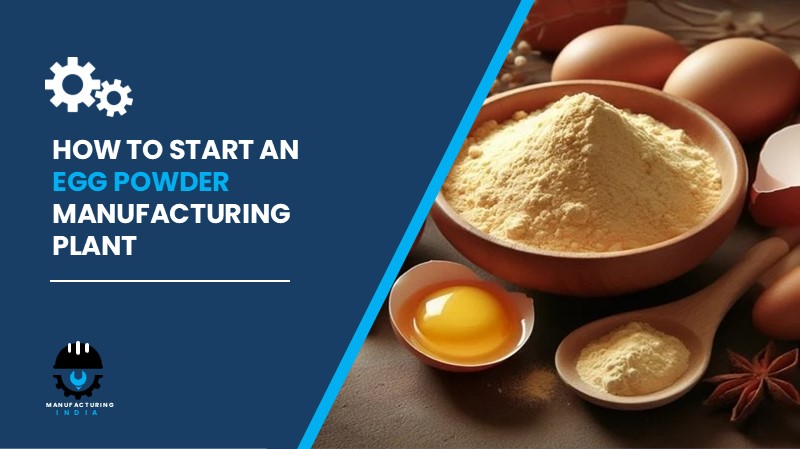
Egg powder is a dehydrated form of eggs, produced by removing the moisture from eggs through a drying process, which extends their shelf life and makes them easier to store and transport. Egg powder is available in various types, including whole egg powder, egg white powder, and egg yolk powder. It retains the nutritional profile of fresh eggs, including proteins, fats, vitamins, and minerals, but in a more convenient and stable form.
Egg powder is widely used in baked goods, instant foods, confectionery, and nutritional supplements due to its functional properties and ease of use. Its emulsifying, binding, and foaming properties make it a valuable functional ingredient across multiple food categories, while its high-quality protein content and long shelf life make it an increasingly attractive ingredient for nutraceutical, pharmaceutical, and cosmetic formulations.
The primary production method is egg selection and preparation, breaking and separation, pasteurization, spray drying, cooling and grinding, and packaging – a multi-stage process that converts fresh eggs into a stable, food-grade powder ready for distribution. End-use industries served include food and beverage, nutraceuticals and supplements, pharmaceuticals, and cosmetics and personal care.
Cost of Setting Up an Egg Powder Manufacturing Plant in India
The cost of establishing this facility depends on capacity, technology selection, plant location, degree of automation, and regulatory compliance requirements.
1. Capital Expenditure (CapEx)
Total capital investment for an egg powder manufacturing plant in India covers land acquisition, site preparation, civil construction, machinery, and pre-operative expenses. The cost of land and site development – including charges for land registration, boundary development, and other related expenses – forms a substantial part of the overall investment. This allocation ensures a solid foundation for safe and efficient plant operations. Investors can reduce land acquisition costs by locating the unit in a food processing zone, poultry-integrated agro-industrial cluster, or Special Economic Zone (SEZ), which also provide shared infrastructure and potential state-level fiscal incentives.
Civil works and construction cover the main egg breaking, pasteurisation, and spray drying production building, raw material receiving and cold storage areas for fresh eggs, finished product storage with humidity control, a quality control laboratory, and an administrative block. Given that the facility handles a perishable raw material and food-grade powder products, civil infrastructure must incorporate cold chain capability, sanitary design standards, and pest control provisions throughout the production process.
Machinery costs account for the largest portion of total capital expenditure. Key machinery required includes:
- Spray dryers
- Freeze dryers
- Milling equipment
- Packaging machines
Other capital costs include the effluent treatment plant (ETP), advanced process monitoring systems, pre-operative expenses, trial production costs, and commissioning charges. All machinery must comply with industry standards for safety, efficiency, and reliability applicable to corrosion-resistant, food-grade egg powder manufacturing equipment.
Request a Sample Report for In-Depth Market Insights: https://www.imarcgroup.com/egg-powder-manufacturing-plant-project-report/requestsample
2. Operational Expenditure (OpEx)
The operating cost structure of an egg powder manufacturing plant is primarily driven by raw material consumption. Fresh eggs – the dominant feedstock – account for approximately 80–85% of total operating expenses (OpEx), making egg procurement strategy the single most critical determinant of production economics and margin protection. Gas-flushed packaging is the secondary raw material input. Securing long-term supply agreements with reliable poultry farms and egg suppliers located in proximity to the plant is essential to mitigate price volatility, minimise transportation costs, and ensure consistent raw material quality and supply continuity.
Utility costs – comprising electricity for spray dryers, freeze dryers, milling equipment, and packaging machines, as well as water and steam consumed throughout the pasteurisation and drying process – account for 10–15% of total OpEx. Other ongoing operating costs include transportation, packaging, salaries and wages, depreciation, taxes, equipment repairs and maintenance, and other miscellaneous expenses.
By the fifth year of operations, the total operational cost is expected to increase substantially due to factors such as inflation, market fluctuations, and potential rises in the cost of key materials. Additional factors including supply chain disruptions, rising consumer demand, and shifts in the global economy are expected to contribute to this increase.
3. Plant Capacity
The proposed manufacturing facility is designed with an annual production capacity ranging between 2,000 and 10,000 MT, enabling economies of scale while maintaining operational flexibility. Capacity can be customised per investor requirements based on target food and beverage, nutraceutical, pharmaceutical, or cosmetics markets, available capital, and degree of automation. Profitability improves materially with higher capacity utilisation, making domestic off-take agreements with bakery manufacturers, instant food producers, and nutraceutical brands a commercial priority from the commissioning stage.
4. Profit Margins and Financial Projections
The project demonstrates healthy profitability potential under normal operating conditions. Gross profit margins typically range between 20–30%, supported by stable demand and value-added applications. Net profit margins range between 8–15%. A comprehensive financial model covering NPV (net present value), IRR (internal rate of return), payback period, liquidity analysis, uncertainty analysis, sensitivity analysis, and a full five-year profit and loss account provides investors with a rigorous analytical framework for assessing financial viability and long-term sustainability across different capacity and pricing scenarios.
Why Set Up an Egg Powder Plant in India?
Increased Demand for Convenience Foods. The growing demand for convenience foods and instant meals is driving the need for egg powder, as it simplifies the preparation of products like instant noodles, instant soups, and ready-to-cook meals. India’s rapidly expanding organised food retail and e-commerce grocery channels are accelerating the penetration of convenience food formats, creating a growing and recurring procurement channel for egg powder as a functional ingredient.
Health and Protein Awareness Driving Consumer Demand. With increasing consumer awareness of the importance of protein in the diet, especially in sports nutrition and weight management, egg powder is gaining popularity due to its high-quality protein content relative to other protein sources. A study by Ocado and Savanta found that 43% of consumers have increased their protein intake, with 62% of people aged 16 to 34 reporting increased protein consumption – a demographic and consumption shift that directly expands the addressable market for egg-derived protein ingredients in India’s growing health and wellness retail sector.
Sustainability and Shelf Life Advantages. Egg powder is more sustainable than fresh eggs in terms of storage and transportation. It has a longer shelf life, reducing food waste, and is less susceptible to spoilage, making it ideal for global distribution. This shelf-stability advantage is particularly valuable in India, where cold chain infrastructure gaps in fresh egg distribution can be circumvented entirely through powder-format products that require only ambient or moderate storage conditions.
Versatility and Product Innovation Opportunities. Egg powder is highly versatile and can be used in a wide range of food products, from baked goods to beverages and dairy alternatives. Egg powder manufacturers are developing innovative products that cater to changing tastes, including organic, gluten-free, and plant-based options – providing Indian producers with multiple avenues for product differentiation and premium positioning across both domestic and export markets.
Technological Advancements Improving Production Economics. Advancements in drying technologies, such as spray drying and freeze-drying, have made egg powder production more efficient, cost-effective, and scalable. These technology improvements are reducing the capital and operating cost barriers to entry for new producers while improving product quality consistency – making the 2,000–10,000 MT annual capacity range increasingly accessible and commercially viable for Indian investors.
Active Global Industry Investment Confirming Market Momentum. In March 2025, Onego Bio – a food ingredient company that produces egg protein powder via precision fermentation – became the second tenant at Jefferson County’s Food and Beverage Innovation Campus, with the site focused on producing Bioalbumen, a fermentation-derived egg protein with the taste and functionality of conventional eggs, expected to be operational by 2028. In November 2024, VEOS Group acquired the operations of OvaInnovations, a U.S. producer of dried inedible egg proteins, as part of a strategic move to strengthen its presence in the U.S. and enhance its ACTIPRO brand by increasing production efficiency and broadening its product offerings to better serve customers worldwide. These developments confirm that the global egg protein and egg powder category is actively expanding through both technology innovation and consolidation, validating long-term commercial confidence in this ingredient category.
Manufacturing Process – Step by Step
The egg powder manufacturing process uses egg selection and preparation, breaking and separation, pasteurization, spray drying, cooling and grinding, and packaging as the primary production method. Each stage is designed to preserve the nutritional profile of the egg while producing a consistent, food-grade powder that meets the purity, microbiological, and functional quality standards required by food and beverage, nutraceutical, pharmaceutical, and cosmetics customers.
- Raw Material Receipt and Inspection: Fresh eggs and gas-flushed packaging materials are received at the facility and subjected to incoming quality checks for freshness, shell integrity, and microbiological compliance before entering the production line.
- Egg Selection and Preparation: Fresh eggs are inspected, cleaned, and sorted to remove cracked, dirty, or sub-specification eggs, ensuring only quality-compliant eggs proceed to the breaking stage.
- Breaking and Separation: Selected eggs are mechanically broken, and the contents are separated as required into whole egg, egg white, or egg yolk streams – depending on the target product type – using automated breaking and separation equipment.
- Pasteurization: Separated egg liquid is pasteurised under controlled time and temperature conditions to eliminate pathogenic microorganisms while preserving the functional and nutritional properties of the egg proteins – a critical food safety step before drying.
- Spray Drying: Pasteurised egg liquid is atomised and processed through spray dryers, where hot air rapidly evaporates moisture to produce egg powder particles. Spray drying parameters are controlled to achieve the target moisture content, particle size, and functional properties – such as solubility and whipping performance – for whole egg, egg white, or egg yolk powder grades. Freeze dryers may be used as an alternative drying method for specific premium product applications.
- Cooling and Grinding: Dried egg powder is cooled to ambient temperature and processed through milling equipment to achieve the required particle size distribution and powder consistency for the target end-use application.
- Quality Inspection and Testing: Finished egg powder is subjected to analytical testing for moisture content, protein content, microbiological compliance, solubility, and functional properties before release for packaging and dispatch.
- Packaging and Dispatch: Approved egg powder is filled into gas-flushed packaging using packaging machines to preserve product quality and extend shelf life, and dispatched to end-use customers across food and beverage, nutraceuticals and supplements, pharmaceuticals, and cosmetics and personal care sectors.
Key Applications
The egg powder manufacturing plant serves a diverse and commercially significant range of industries across India’s food, healthcare, and consumer economy.
- Food and Beverage Industry: The largest segment for egg powder is in the food and beverage industry, where it is used extensively in baked goods like cakes and cookies, as well as confectionery and snack foods. In sauces and dressings, egg powder provides smoothness and emulsifying properties.
- Nutraceuticals and Supplements: Egg white powder, a key source of high-quality protein, is increasingly used in protein supplements and sports nutrition products – a fast-growing segment aligned with India’s rising health and wellness retail market.
- Pharmaceuticals: In the pharmaceutical industry, egg powder is used in medical foods or nutritional products tailored to specific health conditions or recovery periods, supporting clinical nutrition applications across India’s expanding healthcare delivery infrastructure.
- Cosmetics and Personal Care: Egg powder is used in products such as shampoos, conditioners, facial masks, and moisturisers for its beneficial effects on hair and skin health – a high-value application segment growing within India’s premium personal care market.
- Sports Nutrition and Protein Supplements: Applied in protein powders and functional nutrition formulations targeting muscle recovery, weight management, and overall health, reflecting the broader consumer shift toward high-protein diets confirmed by Ocado and Savanta research.
- Processed Foods: Used across instant noodles, instant soups, and ready-to-cook meal formulations where egg powder’s convenience, shelf stability, and functional binding properties simplify product formulation and extend product shelf life.
Leading Manufacturers
The global egg powder industry is served by several established multinational producers with extensive production capacities and diverse application portfolios. Key players operating in this market include:
- Rose Acre Farms, Inc.
- Ovostar Union N.V.
- Rembrandt Enterprises, Inc.
- Sanovo Egg Group
- Kewpie Corporation
- Bouwhuis Enthoven BV
- Eierhandel Wulro B.V.
All of these producers serve end-use sectors including food and beverage, nutraceuticals and supplements, pharmaceuticals, and cosmetics and personal care – the same markets that a domestic Indian egg powder manufacturing plant can target as local and export demand accelerates.
Timeline to Start the Plant
Investors should plan for a structured pre-production and commissioning phase covering the following key stages:
- Feasibility study and project report preparation
- Land acquisition and site development
- Regulatory approvals and environmental clearances
- Factory licence and fire safety compliance
- Machinery procurement and installation
- Raw material supplier agreements and supply chain setup
- Trial production and quality testing
- Commercial production launch
Licences and Regulatory Requirements
Starting an egg powder manufacturing unit in India requires several approvals:
- Business registration (Proprietorship, LLP, or Private Limited Company)
- Factory Licence under the Factories Act
- Environmental Clearance from the State Pollution Control Board
- GST Registration
- Fire Safety NOC
- FSSAI food business operator licence for egg-based food products
- Effluent Treatment Plant (ETP) operational clearance
- Occupational Health and Safety compliance
Key Challenges to Consider
High Capital Requirements. Establishing a fully equipped egg powder manufacturing plant – with spray dryers, freeze dryers, milling equipment, cold storage for fresh egg receiving, and packaging machines – at the 2,000–10,000 MT annual capacity range requires significant upfront capital investment. Access to food processing sector financing under MSME credit-linked schemes and state government investment promotion grants can help bridge funding requirements.
Raw Material Price Volatility. Fresh eggs – accounting for 80–85% of total OpEx – are highly perishable and subject to significant price fluctuations driven by seasonal poultry production cycles, feed cost movements, and disease outbreaks in the poultry sector. Long-term supply contracts with reliable poultry farms and a diversified procurement network across multiple egg suppliers are essential risk mitigation measures for maintaining production cost stability and supply continuity.
Regulatory Compliance. Egg powder manufacturing facilities must comply with FSSAI food safety standards, including pasteurisation validation, microbiological testing protocols, and traceability documentation for egg-based food products. Maintaining continuous regulatory compliance and quality assurance documentation throughout the production process adds materially to ongoing operational overhead.
Perishability and Cold Chain Dependency. Fresh eggs are highly perishable, requiring robust cold chain logistics from poultry farms to the processing facility to prevent spoilage and maintain microbiological safety. Any disruption in cold chain integrity can compromise raw material quality, making investment in reliable refrigerated transportation and storage infrastructure a non-negotiable operational requirement.
Competition from Global Players. Established international producers – including Rose Acre Farms Inc., Ovostar Union N.V., Rembrandt Enterprises Inc., Sanovo Egg Group, Kewpie Corporation, Bouwhuis Enthoven BV, and Eierhandel Wulro B.V. – set high benchmarks for product purity, functional performance, and brand equity in global food ingredient markets. Indian producers must differentiate through locally sourced fresh eggs, competitive pricing, and the ability to serve domestic bakery, instant food, and nutraceutical customers with consistent, FSSAI-compliant product quality.
Skilled Manpower. Operating spray dryers, freeze dryers, milling equipment, and pasteurisation systems in a food-grade manufacturing environment while maintaining quality control and documentation for regulatory compliance requires trained food processing personnel. Recruiting, training, and retaining qualified production operators and quality assurance technicians is a recurring operational challenge in India’s food processing sector.
Frequently Asked Questions
1. How much does it cost to set up an egg powder manufacturing plant in India?
Total setup cost depends on plant capacity, location, machinery selection, and automation level. Key cost components include land and site development, food-grade civil construction with cold chain capability, machinery (spray dryers, freeze dryers, milling equipment, packaging machines), and pre-operative expenses. A detailed feasibility study is recommended to generate accurate project-specific cost estimates.
2. Is egg powder manufacturing profitable in India in 2026?
Yes. The project delivers healthy financial performance, with gross margins of 20–30% and net profit margins of 8–15% under normal operating conditions. The global egg powder market was valued at USD 2,093.29 million in 2025 and is projected to reach USD 2,900.43 million by 2034 at a CAGR of 3.7% according to IMARC Group, with India’s growing demand for convenience foods, protein-rich diets, and functional ingredients representing strong domestic demand drivers.
3. What machinery is required for an egg powder plant in India?
Essential equipment includes spray dryers, freeze dryers, milling equipment, and packaging machines.
4. What licences and approvals are required to start an egg powder plant in India?
Required approvals include business registration, Factory Licence, Environmental Clearance from the State Pollution Control Board, GST Registration, Fire Safety NOC, an FSSAI food business operator licence for egg-based food products, ETP operational clearance, and Occupational Health and Safety compliance.
5. What raw materials are needed for egg powder manufacturing?
The primary raw materials are fresh eggs and gas-flushed packaging. Fresh eggs are the dominant cost driver, accounting for 80–85% of total operating expenses, and must be sourced from reliable poultry suppliers meeting freshness and microbiological specification requirements.
6. What are the environmental compliance requirements for an egg powder plant in India?
The facility must obtain Environmental Clearance from the State Pollution Control Board, operate an approved ETP, and install advanced monitoring systems to detect leaks or deviations in the process. Effluent treatment systems are necessary to minimise environmental impact and ensure compliance with emission standards applicable to food processing operations.
7. What is the best location to set up an egg powder plant in India?
Locations offering proximity to fresh egg supply from established poultry farming clusters, reliable cold chain infrastructure, and access to food and beverage, nutraceutical, and pharmaceutical end-user markets are preferred. The site must have robust infrastructure including reliable transportation, utilities, and waste management systems, and must comply with local zoning and FSSAI food business environment standards.
8. What is the break-even period for this type of plant in India?
The break-even period depends on plant capacity, total capital investment, product selling price, and capacity utilisation rate. A comprehensive financial analysis covering NPV, IRR, payback period, and uncertainty and sensitivity analysis is the most reliable method for generating project-specific break-even timelines.
9. What government incentives are available for manufacturers in India?
Egg powder manufacturers in India can access food processing sector support under MSME credit-linked capital subsidy schemes, state government investment promotion subsidies in agro-processing and food parks, and export promotion incentives under schemes administered by the Ministry of Commerce and Industry for qualifying food ingredient exporters.
Key Takeaways for Investors
An egg powder manufacturing plant in India offers a well-grounded investment opportunity anchored by growing demand across the food and beverage industry, nutraceuticals and supplements, pharmaceuticals, and cosmetics and personal care – all of which are seeking convenient, shelf-stable, high-protein ingredients. The project is financially viable across the 2,000 to 10,000 MT annual capacity range, with gross margins of 20–30% and net margins of 8–15% providing a consistent return framework for investors at multiple capital scales. According to IMARC Group estimates, the global egg powder market is set to grow from USD 2,093.29 million in 2025 to USD 2,900.43 million by 2034 at a CAGR of 3.7%, driven by rising demand for convenience foods and a clear consumer shift toward high-protein diets – with research by Ocado and Savanta showing 43% of consumers increasing protein intake, and 62% of those aged 16 to 34 doing the same. With India’s well-established poultry industry providing a reliable domestic supply of fresh eggs, and with global industry activity – including March 2025’s Onego Bio fermentation-based egg protein expansion and November 2024’s VEOS-OvaInnovations acquisition – confirming sustained innovation and consolidation in this ingredient category, the long-term demand sustainability for domestically produced egg powder is structurally sound across all investment planning horizons.
About the Author