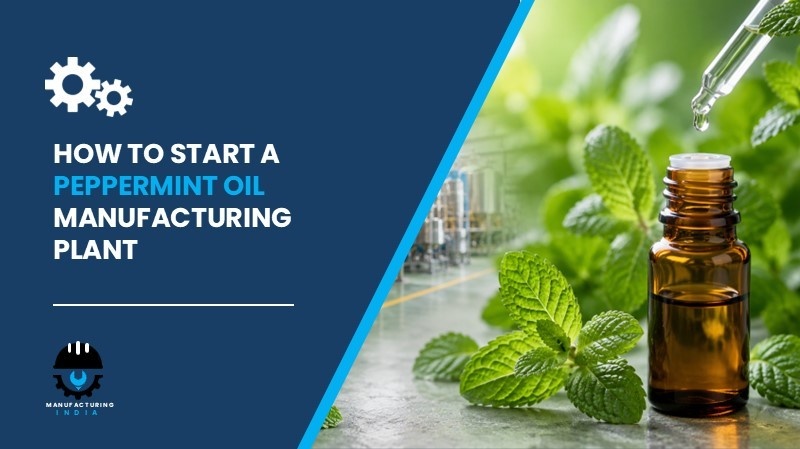
Setting up a peppermint oil manufacturing plant in India presents a compelling investment case for entrepreneurs seeking entry into the natural ingredients economy. Demand for peppermint oil is being driven by the food & beverage, pharmaceuticals, cosmetics & personal care, and aromatherapy & wellness sectors, all of which depend on this essential oil for flavoring, fragrance, and therapeutic applications. As a critical natural input across these industries, peppermint oil has become a high-utility commodity with diversified and resilient demand, making it an important component of India’s broader natural ingredients and agro-processing economy.
India’s growing focus on natural and plant-based products, combined with government initiatives supporting medicinal and aromatic plants such as the National AYUSH Mission and agro-processing incentives, creates a favorable backdrop for this industry. States with strong agricultural bases and access to fresh peppermint herb cultivation are well positioned for such facilities, supported by India’s expanding infrastructure, export promotion programs, and the broader Make in India push toward domestic value addition. Together, these factors make India a strategically sound location for peppermint oil production aimed at both domestic consumption and export markets.
Establishing a peppermint oil manufacturing plant in India is backed by strong policy support for medicinal and aromatic plants, cost-competitive access to raw peppermint herb, and consistent demand from pharmaceuticals, food & beverage, cosmetics, and aromatherapy sectors. With gross profit margins ranging between 20-40% and net profit margins of 10-20%, the investment offers healthy profitability potential supported by stable demand and value-added applications.
What is Peppermint Oil?
Peppermint oil is a natural essential oil extracted from the leaves and stems of the peppermint plant (Mentha × piperita). It contains high concentrations of menthol and menthone, which provide a characteristic cooling sensation, refreshing aroma, and therapeutic benefits. The oil is valued for its antimicrobial, analgesic, digestive soothing, and aromatic properties, making it suitable for flavoring, fragrance, and medicinal use.
The production process for a peppermint oil manufacturing plant relies on steam distillation, fractional condensation, and winterization of peppermint shoots and leaves, yielding a concentrated oil. This process is central to the manufacturing plant’s operations and determines the quality and purity of the final product.
The end-use industries for peppermint oil include food & beverage, pharmaceuticals, cosmetics & personal care, aromatherapy, agriculture, and household products, reflecting the wide-ranging applicability of this natural ingredient across both consumer and industrial segments.
Cost of Setting Up a Peppermint Oil Manufacturing Plant in India
The cost of setting up a peppermint oil manufacturing plant in India depends on capacity, technology, location, automation level, and regulatory compliance requirements.
1. Capital Expenditure (CapEx)
Capital expenditure for a peppermint oil manufacturing plant in India covers several major components. Land and site development costs include land registration, boundary development, and other related expenses, and investors can evaluate options within Special Economic Zones (SEZs) or established industrial estates to optimize this allocation. Civil works and construction costs cover the production shed, quality control laboratory, raw material and finished goods storage areas, and the administrative block, all designed to support efficient plant operations.
Machinery represents the largest portion of total capital expenditure for this type of plant. Key machinery required includes:
- Herb choppers
- Steam distillation units
- Oil separators
- Bottling machines
Other capital costs for the facility include effluent treatment plant (ETP) installation, pre-operative expenses, and commissioning costs associated with bringing the plant into operational readiness.
Request a Sample Report for In-Depth Market Insights: https://www.imarcgroup.com/peppermint-oil-manufacturing-plant-project-report/requestsample
2. Operational Expenditure (OpEx)
The operating cost structure of a peppermint oil manufacturing plant in India is primarily driven by raw material consumption. Fresh peppermint herb is the principal raw material, accounting for approximately 65-75% of total operating expenses, making supplier relationships and long-term contracts critical to stabilizing pricing and ensuring a consistent supply of materials for the production process.
Utility costs, covering electricity, water, and steam required for the distillation process, account for approximately 15-25% of OpEx. Other operating costs for the facility include transportation, packaging, salaries and wages, depreciation, taxes, and repairs and maintenance, all of which form part of the first-year operating cost structure.
By the fifth year, the total operational cost of the plant is expected to increase substantially due to inflation, market fluctuations, potential rises in the cost of key materials, supply chain disruptions, rising consumer demand, and shifts in the global economy.
3. Plant Capacity
The proposed peppermint oil manufacturing plant is designed with an annual production capacity ranging between 20-50 MT of oil, enabling economies of scale while maintaining operational flexibility. Plant capacity for the facility can be customized based on investor requirements, and profitability of the unit generally improves with higher capacity utilization.
4. Profit Margins and Financial Projections
Financial projections for the plant are developed based on realistic assumptions related to capital investment, operating costs, production capacity utilization, pricing trends, and demand outlook, providing a comprehensive view of the project’s financial viability, return on investment (ROI), profitability, and long-term sustainability.
Under normal operating conditions, the facility demonstrates healthy profitability potential. Gross profit margins for the plant typically range between 20-40%, supported by stable demand and value-added applications, while net profit margins range between 10-20%. The financial analysis for this type of plant also covers net present value (NPV), internal rate of return (IRR), and payback period as part of the overall feasibility assessment.
Why Set Up a Peppermint Oil Plant in India?
Essential Ingredient Across Multiple Industries: Peppermint oil is a critical natural input used widely in pharmaceuticals, food & beverages, cosmetics, oral care, aromatherapy, and wellness products. This diversified demand base makes it a high-utility commodity with resilient consumption patterns across multiple end-use sectors.
Megatrend Alignment with Natural and Clean-Label Products: Rising consumer preference for natural, plant-based, and clean-label ingredients, along with growth in herbal medicine, wellness, functional foods, and natural personal care products, is driving sustained global demand for peppermint oil. A plant established in India can directly tap into this megatrend.
Policy and Regulatory Tailwinds: Government initiatives supporting medicinal and aromatic plants, farmer linkages, export promotion, and domestic value addition-including the National AYUSH Mission and agro-processing incentives-indirectly strengthen the ecosystem for peppermint oil manufacturing in India.
Moderate but Defensible Entry Barriers: While not as capital-intensive as heavy chemical plants, peppermint oil manufacturing requires access to quality raw peppermint leaves, agronomic know-how, efficient distillation technology, stringent quality control, and compliance with food, pharma, and export regulations. These requirements create barriers that favor experienced, quality-focused producers establishing operations in India.
Active Industry Investment: In February 2024, doTERRA introduced a new premium peppermint essential oil line, emphasizing purity and sustainable sourcing to meet growing natural wellness demands-demonstrating continued global investment activity and innovation within the peppermint oil category that a new facility can align with.
Local Supply Chain Preference: Global buyers increasingly prefer traceable, locally sourced, and dependable suppliers to ensure consistent quality, reduce supply volatility, and meet sustainability standards. This creates strong opportunities for regional peppermint oil manufacturers in India with integrated sourcing and processing capabilities serving food & beverage, pharmaceutical, and cosmetics companies.
Manufacturing Process – Step by Step
The peppermint oil manufacturing process uses steam distillation, fractional condensation, and winterization as the primary production methods.
- Raw Material Receiving and Handling: Fresh peppermint herb is received at the facility and prepared for processing, forming the starting point of the unit operations involved in the plant.
- Herb Chopping: The peppermint herb is processed using herb choppers to prepare the material for efficient steam distillation.
- Steam Distillation: The chopped peppermint material undergoes steam distillation in dedicated distillation units, where steam vaporizes the volatile oil compounds from the plant material.
- Fractional Condensation: The vapor mixture is passed through condensation systems to separate the oil and water fractions.
- Oil Separation: Oil separators are used to isolate the peppermint oil from the condensed water (hydrosol) fraction.
- Winterization: The separated oil undergoes winterization to refine its composition and improve quality consistency.
- Quality Assurance and Technical Testing: The oil is subjected to quality assurance criteria and technical tests to verify concentration, purity, and stability before further processing.
- Bottling and Packaging: The finished peppermint oil is filled using bottling machines and packaged for dispatch to end-use industries including food & beverage, pharmaceuticals, cosmetics & personal care, and aromatherapy.
Key Applications
Peppermint oil produced at the plant serves a range of industries that rely on its flavoring, fragrance, and therapeutic properties.
- Pharmaceuticals: Used as an active ingredient in cough syrups, topical analgesics, and digestive aids.
- Food & Beverages: Serves as a flavoring agent in confectionery, chewing gum, beverages, and baked goods.
- Cosmetics & Personal Care: Incorporated into toothpaste, mouthwash, shampoos, soaps, and skincare products.
- Aromatherapy & Wellness: Used as an essential oil for stress relief, respiratory support, and therapeutic formulations.
Leading Manufacturers
The global peppermint oil industry includes several multinational companies with extensive production capacities and diverse application portfolios. Key players include:
- Young Living Essential Oils LLC
- doTERRA International LLC
- Lebermuth Inc.
- Citrus and Allied Essences Ltd
- Kelvin Natural Mint Pvt. Ltd.
Timeline to Start the Plant
- Feasibility study and project report preparation
- Land acquisition and site development
- Regulatory approvals and environmental clearances
- Factory licence and fire safety compliance
- Machinery procurement and installation
- Raw material supplier agreements and supply chain setup
- Trial production and quality testing
- Commercial production launch
Licences and Regulatory Requirements
Starting a peppermint oil manufacturing unit in India requires several approvals:
- Business registration (Proprietorship, LLP, or Pvt Ltd)
- Factory Licence under the Factories Act
- Environmental Clearance from State Pollution Control Board
- GST Registration
- Fire Safety NOC
- Effluent Treatment Plant (ETP) operational clearance
- Occupational Health and Safety compliance
Key Challenges to Consider
High Capital Requirements: Machinery costs, including herb choppers, steam distillation units, oil separators, and bottling machines, account for the largest portion of total capital expenditure, requiring significant upfront investment for the plant.
Raw Material Price Volatility: Since fresh peppermint herb accounts for approximately 65-75% of operating expenses, fluctuations in herb prices can substantially affect the profitability of the facility, making long-term supplier contracts important for price stability.
Regulatory Compliance: The plant must comply with food, pharma, and export regulations along with environmental, safety, and quality assurance requirements throughout its operations.
Competition from Established Global Players: The industry includes established multinational companies such as Young Living Essential Oils LLC, doTERRA International LLC, Lebermuth Inc., Citrus and Allied Essences Ltd, and Kelvin Natural Mint Pvt. Ltd., requiring new entrants to differentiate on quality and sourcing.
Quality Assurance and Technical Standards: Maintaining product concentration, purity, and stability through analytical instruments and documentation for traceability is essential for meeting buyer and regulatory expectations.
Skilled Manpower: The plant requires trained personnel for distillation operations, quality control, and compliance management, and human resource requirements form a key part of overall project planning.
Frequently Asked Questions
1. How much does it cost to set up a peppermint oil manufacturing plant in India?
The total cost depends on capacity, technology, location, and automation level. Capital expenditure for the unit covers land and site development, civil works, machinery (herb choppers, steam distillation units, oil separators, and bottling machines), and other capital costs such as ETP installation, pre-operative expenses, and commissioning. Detailed CapEx figures are available in the full feasibility report.
2. Is peppermint oil manufacturing profitable in India in 2026?
Yes, the facility demonstrates healthy profitability potential under normal operating conditions, with gross profit margins ranging between 20-40% and net profit margins between 10-20%, supported by stable demand and value-added applications across pharmaceuticals, food & beverages, cosmetics, and aromatherapy.
3. What machinery is required for a peppermint oil plant in India?
Key machinery required for the peppermint oil manufacturing process includes herb choppers, steam distillation units, oil separators, and bottling machines. All machinery must be corrosion-resistant and comply with industry standards for safety, efficiency, and reliability.
4. What licences and approvals are required to start a peppermint oil plant in India?
Requirements for this investment include business registration (Proprietorship, LLP, or Pvt Ltd), a Factory Licence under the Factories Act, Environmental Clearance from the State Pollution Control Board, GST Registration, Fire Safety NOC, Effluent Treatment Plant (ETP) operational clearance, and Occupational Health and Safety compliance.
5. What raw materials are needed for peppermint oil manufacturing?
Primary raw material is fresh peppermint herb, which accounts for approximately 65-75% of total operating expenses. Securing reliable suppliers and long-term contracts is essential to ensure consistent quality and stable pricing.
6. What are the environmental compliance requirements for a peppermint oil plant in India?
The facility requires an Effluent Treatment Plant (ETP) to manage process waste, along with environmental clearance from the State Pollution Control Board. Safety protocols and monitoring systems must also be in place to detect leaks or process deviations and ensure compliance with emission standards.
7. What is the best location to set up a peppermint oil plant in India?
The site should offer easy access to fresh peppermint herb, proximity to target markets to minimize distribution costs, robust infrastructure including transportation, utilities, and waste management systems, and compliance with local zoning laws and environmental regulations.
Key Takeaways for Investors
A peppermint oil manufacturing plant in India represents a strong investment opportunity, supported by consistent demand from pharmaceuticals, food & beverages, cosmetics & personal care, and aromatherapy & wellness sectors. With gross profit margins of 20-40% and net profit margins of 10-20%, the facility demonstrates financial viability across a production capacity range of 20-50 MT annually, with capacity scalable to investor requirements. The global peppermint oil market, valued at USD 409.64 Million in 2025, is expected to reach USD 663.54 Million by 2034, growing at a CAGR of 5.51% from 2026 to 2034-underscoring the long-term demand sustainability for this investment.
About the Author