Setting up a vinyl fabric production plant in India represents a highly attractive investment proposition underpinned by robust and structurally growing demand from the automotive, furniture and furnishings, and marine industries, expanding adoption of vinyl fabric as a cost-effective and durable alternative to genuine and synthetic leather, rising demand for easy-to-clean, hygienic upholstery surfaces across hospitality and healthcare settings, and continued innovation in eco-friendly plasticizer and topcoat technologies. As consumer preference shifts toward low-maintenance, weather-resistant, and animal-free materials, and industries seek versatile substrates that combine design flexibility with long service life, vinyl fabric available in coated, laminated, and embossed forms occupies an increasingly important position across automotive interiors, residential and commercial upholstery, marine and outdoor applications, bags and accessories, and architectural surfaces. This growth trajectory, combined with well-established PVC compounding technology, flexible production scale-up, and strong design and colour customisation potential, creates a highly favourable manufacturing environment for new entrants with efficient coating, finishing, and quality systems.
What is Vinyl Fabric?
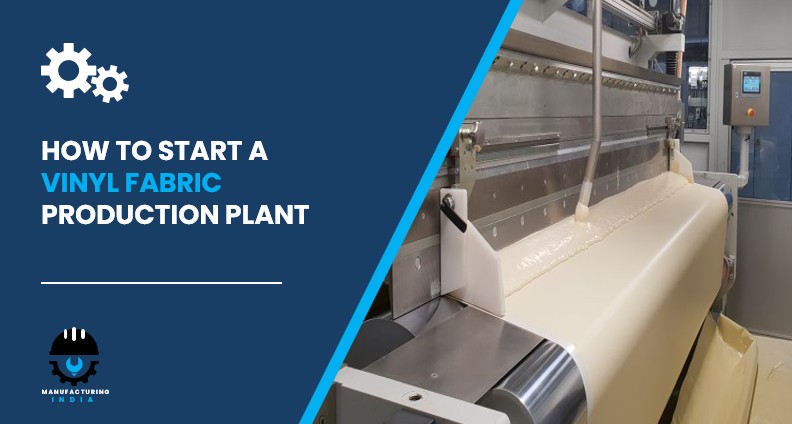
Vinyl fabric is a composite textile material produced by coating, laminating, or calendering a layer of polyvinyl chloride (PVC) compound onto a woven, knitted, or non-woven base fabric, typically polyester, cotton, or nylon. The PVC layer, formulated with plasticizers, stabilisers, pigments, and fillers, gives the fabric its characteristic flexibility, surface texture, and resistance to moisture, abrasion, and ultraviolet exposure, while the underlying textile substrate provides tensile strength, dimensional stability, and tear resistance. Vinyl fabric is widely used as a cost-effective and durable alternative to genuine leather and other coated textiles across automotive, furniture, marine, fashion, and industrial applications.
The fabric is available in a wide range of thicknesses, finishes, and surface textures including smooth, grained, embossed leather-look, and patterned finishes, and can be engineered with additional functional properties such as flame retardancy, antimicrobial protection, anti-fungal resistance, and enhanced abrasion or stain resistance through specialised topcoats and additive packages. Beyond traditional upholstery applications, vinyl fabric increasingly finds use in healthcare and hospitality settings where hygienic, easy-to-wipe surfaces are essential, as well as in bags, footwear, apparel, and architectural wallcoverings.
The global vinyl fabric (PVC-coated fabric) market was valued at several billion US dollars in 2025 and is expected to expand at a steady CAGR through the next decade, supported by sustained demand from the automotive and furniture industries, growing preference for vegan and cruelty-free leather alternatives, and continued product innovation in bio-based plasticizers and low-emission coating formulations.
Cost of Setting Up a Vinyl Fabric Production Plant
The total capital investment required to establish a vinyl fabric production plant is shaped by several key parameters: annual production capacity (typically ranging from 8 to 25 million linear metres, or approximately 4,000–12,000 MT, per annum), the coating technology adopted (direct knife-over-roll or rotary screen coating versus calendering and lamination), the degree of automation across compounding, coating, curing, embossing, and finishing sections, facility specification, base fabric sourcing strategy, and applicable regulatory and environmental compliance requirements. Below is a structured breakdown of the major cost components.
1. Capital Expenditure (CapEx)
Total capital investment in a vinyl fabric production plant covers the following major heads:
Land and Site Development
This encompasses land acquisition or lease, site preparation, boundary development, and utilities connectivity. Site selection should prioritise proximity to base fabric and PVC resin suppliers, petrochemical or plasticizer distribution hubs, and key end-use clusters such as automotive component manufacturers, furniture manufacturing zones, and ports for marine and export-oriented production. Access to reliable power for coating, curing, and embossing equipment, road and rail infrastructure for inbound raw materials and outbound finished rolls, availability of process water for cooling operations, and a trained local workforce are critical site selection criteria. Compliance with industrial zoning regulations, pollution control norms applicable to PVC processing and coating operations (volatile organic compound emissions, particulate matter), and waste management frameworks must be assessed from project initiation.
Civil Works and Construction
Building costs cover the main processing facility including the raw material and resin storage area, compounding and mixing section, base fabric preparation and unwind area, coating or calendering line, curing oven enclosure, embossing and finishing section, lacquering and topcoat area, quality control laboratory, finished goods warehouse, administrative block, and utility infrastructure including power supply, water systems, volatile organic compound abatement systems, and effluent management. Construction must comply with applicable factory act requirements, pollution control board clearances, and local building regulations, with particular attention to fire-resistant construction given the flammability characteristics of PVC compounding and curing operations.
Machinery and Equipment
Machinery represents the single largest CapEx component. Key equipment required for a vinyl fabric production plant includes:
- Raw Material Storage and Handling Systems: Silos and storage tanks for PVC resin, plasticizer storage tanks, and dedicated storage for pigments, stabilisers, and other additives, with automated dosing and conveying systems to the compounding section.
- Compounding and Mixing Units: High-speed dissolvers, planetary or ribbon mixers, and vacuum degassing tanks to prepare homogeneous PVC plastisol or compound by blending resin, plasticizers, stabilisers, pigments, and fillers to precise formulation specifications.
- Base Fabric Preparation Equipment: Unwind stands, fabric inspection and tensioning units, and pre-treatment systems to ensure the substrate textile is clean, properly tensioned, and free of defects before coating.
- Coating Line: Knife-over-roll coaters or rotary screen coaters for direct application of PVC plastisol onto the base fabric, enabling precise control of coating weight and thickness.
- Calendering and Lamination Units: Multi-roll calenders to form PVC compound into continuous film, with lamination rollers to bond the film onto the base fabric for transfer-coated or calendered vinyl fabric products.
- Curing and Fusing Ovens: Hot-air convection or infrared ovens to gel and fuse the applied PVC layer into a continuous, defect-free film under controlled temperature profiles.
- Embossing Units: Heated embossing rollers or calenders to impart leather-grain, textile, or custom surface patterns onto the coated fabric while the PVC layer remains thermoplastic.
- Cooling Section: Chill rolls and cooling drums to stabilise the embossed pattern and fabric structure before further processing.
- Lacquering and Topcoat Line: Gravure or spray application systems for protective polyurethane or acrylic topcoats, with dedicated curing zones to enhance abrasion, stain, and ultraviolet resistance.
- Printing Unit (Optional): Rotogravure or digital printing systems for decorative patterns and branded finishes on selected product lines.
- Volatile Organic Compound Abatement Systems: Thermal oxidisers or regenerative thermal oxidisers to capture and treat solvent and process emissions from coating and curing operations, ensuring environmental compliance.
- Inspection, Slitting, and Rewinding Equipment: Automated defect detection systems, slitting machines to cut fabric to specified widths, and rewinding units to produce finished rolls.
- Quality Control Laboratory Equipment: Instruments for tensile strength, tear strength, abrasion resistance (Martindale or Taber testing), colourfastness, cold-crack resistance, flame retardancy, and coating adhesion testing to verify compliance with product quality standards.
- Material Handling and Warehousing: Roll handling equipment, conveyors, and finished goods warehousing with appropriate fire prevention measures for PVC-coated fabric roll storage.
Other Capital Costs
These include pre-operative expenses, commissioning charges, staff training and competency development for compounding, coating, and quality management operations, initial raw material and consumable inventory for production commissioning, regulatory compliance setup including Pollution Control Board clearances, Factory License, environmental impact assessment compliance, and quality management system establishment costs.
Request a Sample Report for In-Depth Market Insights: https://www.imarcgroup.com/vinyl-fabric-manufacturing-plant-project-report/requestsample
2. Operational Expenditure (OpEx)
Raw materials principally PVC resin, plasticizers, and base fabric constitute the dominant operating cost, typically representing 50–60% of total OpEx given the petrochemical-linked pricing of PVC resin and plasticizers. Utility costs, driven primarily by electricity and thermal energy consumption of curing ovens, embossing units, and volatile organic compound abatement systems, account for 12–18% of OpEx. Labour, maintenance, quality control, packaging materials, transportation, depreciation, taxes, and overhead costs constitute the remainder of the operating cost base.
3. Plant Capacity
The proposed vinyl fabric production facility is designed with an annual production capacity ranging between 8–25 million linear metres (approximately 4,000–12,000 MT), enabling economies of scale while maintaining operational flexibility. This capacity range supports a diversified product portfolio of standard PVC-coated upholstery fabric, embossed leather-look vinyl, marine and automotive-grade vinyl, and specialty flame-retardant or antimicrobial vinyl fabric, serving domestic automotive, furniture, marine, and healthcare markets as well as export channels.
4. Profit Margins and Financial Projections
The project demonstrates healthy profitability potential under normal operating conditions. Financial projections encompass capital investment, operating costs, capacity utilisation ramp-up schedule, product mix between standard, embossed, and specialty vinyl fabric grades, and forward demand outlook underpinned by sustained automotive and furniture industry growth and rising preference for vegan leather alternatives. A comprehensive feasibility analysis includes sensitivity analysis, Net Present Value (NPV), Internal Rate of Return (IRR), and Payback Period calculations.
Why Set Up a Vinyl Fabric Production Plant?
Rising Demand from the Automotive Industry
Sustained global automotive production and the growing trend toward synthetic and vegan interior trims are driving robust demand for vinyl fabric in seat covers, door panels, dashboards, and headliners. Vinyl fabric’s combination of durability, ease of cleaning, design flexibility, and lower cost relative to genuine leather makes it a preferred material for both mass-market and premium vehicle interiors, particularly as automakers increasingly offer animal-free upholstery options to meet evolving consumer preferences and sustainability commitments.
Growing Furniture and Upholstery Market
The expanding global furniture and furnishings industry, spanning residential, commercial, and hospitality segments, continues to generate strong demand for vinyl-upholstered seating, particularly in restaurants, healthcare facilities, educational institutions, and commercial offices where durability and ease of maintenance are prioritised over the premium positioning of genuine leather. Growing demand for outdoor and patio furniture, where weather and UV resistance are essential, further reinforces this demand channel.
Marine and Outdoor Applications
Vinyl fabric’s resistance to moisture, salt exposure, and ultraviolet degradation makes it the material of choice for boat upholstery, convertible top covers, awnings, and other marine and outdoor applications. Growth in recreational boating and outdoor leisure markets across North America, Europe, and parts of Asia Pacific continues to support demand for marine-grade vinyl fabric with enhanced mildew resistance and colour retention.
Cost-Effective and Cruelty-Free Leather Alternative
Rising consumer awareness of animal welfare and growing demand for vegan and cruelty-free materials are accelerating adoption of vinyl fabric and other synthetic leather alternatives across fashion, accessories, and furnishings. Combined with its significant cost advantage over genuine leather and increasingly sophisticated grain, texture, and finish replication technology, vinyl fabric is well positioned to capture incremental market share from traditional leather across multiple end-use categories.
Increasing Demand from Healthcare and Hospitality Sectors
Heightened emphasis on hygiene and infection control has accelerated demand for easy-to-clean, antimicrobial upholstery surfaces in hospitals, clinics, hotels, and food service environments. Vinyl fabric’s non-porous, wipeable surface and compatibility with disinfectant cleaning protocols make it a preferred material for healthcare seating, examination tables, and hospitality furnishings, creating a structurally growing and relatively recession-resistant demand channel.
Innovation in Eco-Friendly and Bio-Based Formulations
Growing environmental and regulatory scrutiny of conventional phthalate plasticizers is driving innovation in bio-based and non-phthalate plasticizer systems, recyclable PVC formulations, and lower-emission coating technologies. Manufacturers that invest in these next-generation formulations are positioned to access premium, sustainability-conscious customer segments and comply with tightening regulatory frameworks in key export markets such as the European Union.
North America and Asia Pacific as Key Demand Centres
North America represents the largest established market for vinyl-coated fabric, underpinned by deep automotive, marine, and furniture manufacturing bases, while Asia Pacific is the fastest-growing region, driven by expanding automotive and furniture production in China and India, rising disposable incomes, and growing domestic consumption of upholstered furniture and vehicles. This dual dynamic of established demand in mature markets and accelerating volume growth in emerging markets provides manufacturers with multiple regional growth avenues.
Scalable Operations and Phased Investment Flexibility
The vinyl fabric value chain, spanning compounding, coating, embossing, and finishing, allows investors to begin operations at a moderate scale with basic direct-coating capability and progressively add calendering, lamination, advanced embossing, and specialty topcoat capacity as volumes and customer relationships develop. This phased investment approach reduces initial capital commitment while enabling market entry, with subsequent process upgrades improving margin capture through higher-value, specialty product segments.
Manufacturing Process Overview
The vinyl fabric manufacturing operation transforms base textile fabric and PVC compound into finished coated, embossed, and lacquered vinyl fabric through a sequence of compounding, coating, curing, finishing, and packaging operations. The key process stages are:
- Raw Material Receipt and Storage: PVC resin, plasticizers, stabilisers, pigments, and base fabric received from suppliers are inspected, sampled for quality verification, and transferred to dedicated storage areas. Inventory management ensures a consistent buffer stock to maintain uninterrupted production.
- Compounding (Plastisol Preparation): PVC resin, plasticizers, stabilisers, pigments, and fillers are blended in high-speed mixers to form a homogeneous PVC plastisol or compound, followed by vacuum degassing to remove entrapped air and ensure a defect-free coating.
- Base Fabric Preparation: The substrate textile is unwound, inspected, and tensioned to ensure consistent feed into the coating line, with any necessary pre-treatment applied to promote adhesion of the PVC layer.
- Coating or Calendering: PVC compound is applied directly onto the base fabric using knife-over-roll or rotary screen coating (direct coating), or calendered into film and laminated onto the fabric (transfer coating or calender lamination), with coating weight and thickness controlled to product specifications.
- Curing and Fusing: The coated fabric passes through hot-air or infrared ovens at controlled temperature profiles to gel and fuse the PVC layer into a continuous, homogeneous film bonded securely to the base fabric.
- Embossing: While the fused PVC layer remains thermoplastic, heated embossing rollers impart leather-grain, textile-weave, or custom surface patterns to achieve the desired aesthetic finish.
- Cooling: The embossed fabric passes over chill rolls or cooling drums to stabilise the surface pattern and structure before further processing.
- Lacquering and Topcoating: A protective polyurethane or acrylic topcoat is applied and cured to enhance abrasion resistance, stain resistance, ultraviolet stability, and surface gloss or matte finish according to customer specifications.
- Printing (Optional): Selected product lines undergo rotogravure or digital printing to apply decorative patterns or branded finishes.
- Quality Control: Finished vinyl fabric is tested for tensile strength, tear strength, abrasion resistance, colourfastness, cold-crack resistance, coating adhesion, and flame retardancy (where applicable) to verify compliance with product quality specifications and customer requirements.
- Slitting and Rewinding: Inspected fabric is slit to specified widths and rewound into rolls of standard or customer-specified lengths.
- Packaging and Dispatch: Finished rolls are wrapped, labelled with quality specifications, and dispatched to domestic and export markets via appropriate transportation arrangements.
Key Applications of Vinyl Fabric
The vinyl fabric market serves several major end-use segments across transportation, furnishings, and consumer goods sectors:
- Automotive Upholstery and Interiors: Vinyl fabric is extensively used in seat covers, door panels, dashboards, headliners, and other interior trim components across mass-market and premium vehicle segments, valued for its durability, ease of cleaning, and design flexibility relative to genuine leather.
- Furniture and Residential or Commercial Upholstery: Sofas, chairs, and seating in homes, restaurants, hospitality venues, and commercial offices increasingly use vinyl fabric for its durability, stain resistance, and lower maintenance requirements compared to fabric or leather upholstery.
- Marine and Outdoor Applications: Boat upholstery, seat covers, convertible tops, and awnings rely on marine-grade vinyl fabric engineered for resistance to moisture, salt exposure, and ultraviolet degradation.
- Healthcare and Hospitality Furnishings: Hospital seating, examination tables, and hospitality furniture increasingly specify vinyl fabric for its hygienic, easy-to-disinfect, non-porous surface properties.
- Bags, Luggage, and Footwear: Vinyl fabric serves as a cost-effective synthetic leather alternative in handbags, wallets, luggage, belts, and footwear applications.
- Apparel and Fashion Accessories: Jackets, rainwear, and fashion accessories utilise vinyl fabric for its water resistance, design versatility, and distinctive visual finish.
- Architectural Wallcoverings: Commercial and institutional interiors use vinyl fabric wallcoverings for their durability, ease of maintenance, and wide range of decorative finishes.
- Tarpaulins, Banners, and Industrial Covers: Heavier-grade coated vinyl fabric is used in truck covers, tents, banners, and protective industrial covers requiring weather resistance and tear strength.
Global Vinyl Fabric Market Outlook
The global vinyl fabric market is on a sustained growth trajectory, driven by multiple structural demand drivers spanning the automotive, furniture, marine, healthcare, and fashion sectors. North America and Europe represent well-established, mature demand centres anchored by deep automotive and furniture manufacturing bases, while Asia Pacific is emerging as the fastest-growing region, supported by expanding automotive and furniture production, rising disposable incomes, and growing domestic consumption across China, India, and Southeast Asia. The market benefits from the following structural growth drivers:
- Sustained global automotive production growth and rising adoption of synthetic, animal-free interior trims across vehicle segments
- Expansion of the global furniture and furnishings industry, including growing demand for outdoor and patio furniture requiring weather-resistant upholstery
- Rising consumer preference for vegan, cruelty-free leather alternatives across fashion, accessories, and furnishings
- Heightened hygiene and infection control requirements in healthcare and hospitality settings favouring easy-to-clean vinyl surfaces
- Growth in recreational boating and outdoor leisure markets supporting demand for marine-grade vinyl fabric
- Innovation in bio-based and non-phthalate plasticizer formulations and low-emission coating technologies expanding the addressable market among sustainability-conscious customers
- Expanding automotive and furniture manufacturing capacity in China, India, and Southeast Asia driving regional demand growth
- Growing export demand for cost-competitive, quality-certified vinyl fabric from established and emerging manufacturing hubs
Major players in the global vinyl fabric and coated fabric industry include established textile coating companies, automotive interior material suppliers, and furniture upholstery fabric manufacturers operating across North America, Europe, and Asia Pacific. End-use sectors served include the automotive industry, furniture and furnishings industry, marine and outdoor leisure industry, healthcare and hospitality sector, and fashion and accessories industry.
Licenses and Regulatory Requirements
Establishing a vinyl fabric production unit requires a range of approvals and certifications, which may vary by country and jurisdiction, including:
- Business registration and company incorporation under applicable company law
- Factory License under applicable state Factories Act provisions for manufacturing operations
- Pollution Control Board Clearances Consent to Establish (CTE) and Consent to Operate (CTO) for manufacturing operations involving PVC compounding, coating, and volatile organic compound emissions
- Environmental clearance under applicable environmental impact assessment regulations, depending on plant scale and category classification
- Fire Safety No-Objection Certificate from competent fire safety authority, given the fire risk associated with PVC compounding, curing, and solvent-based coating operations
- REACH compliance and restricted substances documentation (phthalate plasticizer limits) for products intended for European and other regulated export markets
- Bureau of Indian Standards (BIS) certification or equivalent regional certification for coated fabric products, where applicable
- Oeko-Tex Standard 100 or equivalent textile safety certification, increasingly required by automotive and furniture brand customers
- ISO 9001:2015 Quality Management System Certification for quality management infrastructure compliance
- ISO 14001:2015 Environmental Management System Certification, increasingly required by export market buyers and industrial customers seeking environmental supply chain compliance
- Occupational Health and Safety management compliance (ISO 45001 / Factories Act provisions) for worker safety in compounding, coating, and curing environments
- Weights and Measures (Legal Metrology) registration for packaged commodity labelling and net quantity declaration
- Export-Import Code (IEC) for international market access and export sales
- Trademark and Brand Registration for proprietary branded product launch
Key Challenges to Consider
Raw Material Price Volatility
PVC resin and plasticizers are petrochemical derivatives whose prices are closely linked to crude oil and naphtha price movements, creating significant input cost volatility. Securing favourable long-term supply contracts, maintaining strategic raw material inventory, and building flexible formulation capability to substitute between plasticizer types are important risk mitigation strategies for manufacturers seeking to protect margins through commodity price cycles.
Environmental and Regulatory Scrutiny
PVC-based products face growing environmental and regulatory scrutiny related to phthalate plasticizer use, end-of-life recyclability, and volatile organic compound emissions during processing. Tightening restrictions in key export markets, particularly the European Union, require sustained investment in low-emission coating technology, non-phthalate plasticizer formulations, and environmental compliance infrastructure to maintain market access and customer confidence.
Competition from Alternative Materials
Vinyl fabric faces ongoing competition from polyurethane (PU) synthetic leather, genuine leather, and emerging bio-based leather alternatives derived from materials such as mushroom mycelium, cactus, and pineapple fibre. While vinyl fabric retains a durability and cost advantage in most applications, manufacturers must continue to innovate in texture, finish, and sustainability credentials to defend market share against these alternative materials.
Coating Quality Consistency
Achieving consistent coating weight, thickness, adhesion, and embossing pattern quality requires disciplined process control across compounding, coating, and curing operations. Variation in base fabric quality, PVC compound viscosity, and curing temperature profiles can affect product consistency, requiring rigorous in-process quality monitoring and operator training to maintain output quality within customer specification limits.
Volatile Organic Compound Emissions and Worker Safety
Coating and curing operations generate volatile organic compound emissions and require careful management of fire and dust risks associated with PVC compounding and solvent-based topcoat application. Effective management requires investment in emission abatement infrastructure, fire prevention systems, and comprehensive occupational health and safety training for all plant personnel.
Capital Intensity of Advanced Finishing Capability
While basic direct-coating operations can be established at moderate capital investment, adding integrated calendering, lamination, advanced embossing, and specialty topcoat lines to upgrade product value represents a substantial incremental capital commitment. New entrants must carefully evaluate the phasing of investment, starting with direct-coating operations serving standard upholstery markets, then progressively adding advanced finishing capability as volumes and customer relationships develop.
Frequently Asked Questions (FAQs)
1. How much does it cost to set up a vinyl fabric production plant?
The total investment depends on plant capacity (8–25 million linear metres or approximately 4,000–12,000 MT per annum), the coating technology adopted (direct coating versus calendering and lamination), automation level, facility specification, location, and target market certifications. Costs cover land, civil construction (compounding section, coating line, curing ovens, embossing and finishing area, emission control systems, storage, quality laboratory, utilities), machinery (mixers, coaters or calenders, curing ovens, embossing units, lacquering lines, slitting and packaging equipment), quality certifications, working capital, and regulatory compliance. A comprehensive feasibility study from IMARC Group provides detailed, capacity-specific cost estimates covering all CapEx and OpEx components.
2. Is vinyl fabric manufacturing a profitable business in 2026?
Yes. Sustained demand from the automotive industry, furniture and furnishings sector, marine and outdoor leisure market, and healthcare and hospitality segment, combined with gross profit margins of 25–35% and net profit margins of 12–18%, make vinyl fabric manufacturing financially attractive. Well-established compounding and coating technology provides a mature, scalable manufacturing platform, while product mix optimisation through embossing, specialty topcoats, and value-added finishes enables margin enhancement.
3. What machinery and equipment are required for a vinyl fabric production plant?
Key equipment includes raw material storage and handling systems, compounding and mixing units, base fabric preparation equipment, coating lines (knife-over-roll or rotary screen coaters) or calendering and lamination units, curing and fusing ovens, embossing units, cooling sections, lacquering and topcoat lines, optional printing units, volatile organic compound abatement systems, inspection and slitting equipment, and quality control laboratory equipment for tensile strength, abrasion resistance, colourfastness, and adhesion testing.
4. What licenses and approvals are required?
Required approvals include company registration, Factory License, Pollution Control Board Consent to Establish and Consent to Operate for PVC processing and coating operations, environmental clearance under applicable regulations, Fire Safety NOC, ISO 9001:2015 and ISO 14001:2015 certifications (often required by automotive and export market buyers), and REACH compliance documentation for products intended for European markets. Export-Import Code registration is required for international market access.
5. How long does it take to commission a vinyl fabric production plant?
Typically 9–18 months from project initiation to commercial production launch, depending on project scale, facility construction timeline, equipment procurement lead times for coating and curing systems, regulatory approval timelines, and Pollution Control Board clearance processing, which should be initiated early in the project to avoid delays to commercial launch.
6. What are the key raw materials for vinyl fabric manufacturing?
The primary raw materials are PVC resin (suspension or paste grade), plasticizers (phthalate or increasingly non-phthalate and bio-based alternatives), stabilisers, pigments, fillers such as calcium carbonate, and base fabric typically polyester, cotton, or nylon woven, knitted, or non-woven textile. Other key inputs include polyurethane or acrylic resins for lacquer topcoats, flame retardant and antimicrobial additives for specialty grades, and packaging materials including protective wrapping and shipping cores.
7. What is the break-even period for a vinyl fabric production plant?
The break-even period depends on capacity utilisation ramp-up trajectory, the product mix between standard, embossed, and specialty vinyl fabric grades, raw material supply consistency, and product offtake arrangements with automotive, furniture, and marine industry buyers. Securing long-term supply agreements for PVC resin and base fabric, alongside stable offtake contracts with automotive component manufacturers and furniture producers, significantly improves revenue predictability and supports faster break-even achievement.
8. What are the main product forms of vinyl fabric and their applications?
The principal product forms include standard smooth-finish PVC-coated fabric (for general upholstery and industrial applications), embossed leather-look vinyl fabric (for automotive, furniture, and fashion applications), marine-grade vinyl fabric with enhanced mildew and UV resistance (for boat upholstery and outdoor applications), and specialty flame-retardant or antimicrobial vinyl fabric (for transportation, healthcare, and hospitality applications). Advanced embossing and topcoat technology significantly increases product value and unlocks premium application segments.
9. What government incentives are available for vinyl fabric manufacturers?
Manufacturers may benefit from state-level industrial investment incentives and capital subsidies for textile and chemical processing units, export promotion benefits for coated fabric exports, infrastructure support under textile and industrial park schemes, and incentive frameworks supporting investment in low-emission and non-phthalate plasticizer technology. Evolving environmental compliance requirements are also creating supportive regulatory environments for manufacturers investing in sustainable formulation technology.
10. How does vinyl fabric manufacturing compare to other coated fabric and synthetic leather materials?
Compared to polyurethane (PU) coated fabric, vinyl fabric typically offers a lower-cost, more abrasion- and chemical-resistant alternative, making it well suited for high-traffic automotive, marine, and commercial upholstery applications. However, PU coated fabric generally offers a softer hand-feel, better breathability, and is often perceived as more premium and environmentally favourable, which can limit vinyl fabric’s positioning in certain fashion and premium furniture segments. Effective product differentiation through advanced embossing, topcoat technology, and bio-based formulation innovation is important to maintain competitive positioning against PU and other emerging synthetic leather alternatives.
Key Takeaways for Investors
The vinyl fabric production industry represents a structurally resilient and financially attractive investment opportunity positioned at the convergence of sustained global automotive and furniture industry growth, rising consumer preference for vegan and cruelty-free leather alternatives, and expanding demand for hygienic, easy-to-clean upholstery surfaces across healthcare and hospitality settings. Gross profit margins of 25–35% and net profit margins of 12–18% make the business fundamentals compelling, while well-established PVC compounding and coating technology provides a mature, scalable manufacturing platform with proven process reliability.
North America and Europe’s established demand base, combined with Asia Pacific’s accelerating growth driven by expanding automotive and furniture manufacturing capacity in China and India, presents significant volume and revenue growth opportunities for manufacturers with quality-certified products and reliable supply infrastructure. The scalable, modular nature of compounding and coating operations allows investors to begin at moderate scale and progressively add higher-value capabilities advanced embossing, specialty topcoats, and bio-based formulation systems as operational experience and market positioning develop, managing capital deployment risk while building long-term competitive advantage.
The convergence of growing automotive and furniture industry demand, rising vegan and sustainability-conscious consumer preferences, expanding healthcare and hospitality sector hygiene requirements, and continued innovation in low-emission and non-phthalate plasticizer technology creates multiple simultaneous demand growth drivers across different end-use segments, providing resilience against single-sector demand volatility. For investors seeking a commercially viable, technologically mature manufacturing opportunity with proven processes, diverse end-use markets, and multiple growing demand channels, vinyl fabric production represents a compelling and well-timed investment proposition.
About the Author