B2B Sourcing Services in India
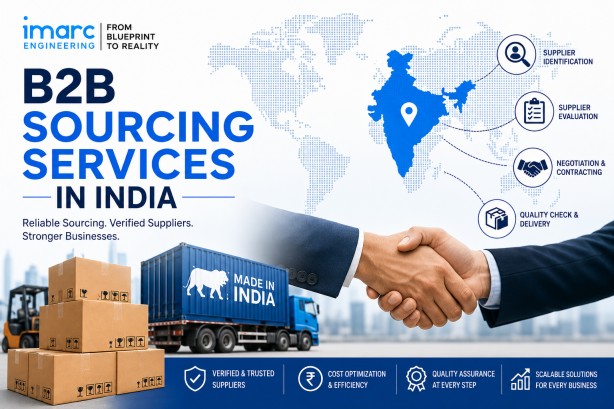
India has emerged as a global sourcing hub, driven by its manufacturing capabilities, competitive cost structures, and expanding supplier ecosystem. In 2026, procurement is no longer simply a transactional function but a strategic lever that influences profitability, product quality, and operational resilience.
As businesses diversify supply chains and strengthen sourcing strategies, demand for structured supplier identification, vendor evaluation, procurement and B2B sourcing services in India continues to grow. Organizations increasingly require sourcing frameworks that improve supplier reliability, quality performance, and supply chain visibility.
This article examines India’s evolving sourcing landscape and how a structured procurement approach enables measurable business outcomes.
From Cost Arbitrage to Strategic Value: India’s Evolving Sourcing Position
India has emerged as a global sourcing hub, driven by its manufacturing capabilities, competitive cost structures, and expanding supplier ecosystem. In 2026, procurement is no longer simply a transactional function but a strategic lever that influences profitability, product quality, and operational resilience.
As businesses diversify supply chains and strengthen sourcing strategies, demand for structured supplier identification, vendor evaluation, and procurement advisory services in India continues to grow. Organizations increasingly require sourcing frameworks that improve supplier reliability, quality performance, and supply chain visibility.
This article examines India’s evolving sourcing landscape and how a structured procurement approach enables measurable business outcomes.
Why Sourcing from India Remains Complex
The opportunity is real , but so are the operational challenges. Organizations sourcing from India for the first time, or expanding their Indian supplier base, consistently encounter the following barriers:
- Fragmented supplier landscape: India’s manufacturing ecosystem spans hundreds of thousands of SMEs with highly variable capabilities, certifications, and quality systems. Identifying genuinely capable vendors requires extensive on-the-ground market research.
- Inconsistent quality standards: While Tier-1 Indian manufacturers often meet international standards, quality consistency across production runs remains an area requiring active monitoring and supplier development.
- Limited pricing transparency: Cost structures in Indian manufacturing can be opaque, making it difficult for buyers to assess whether quoted prices reflect genuine value or inflated margins.
- Regulatory and compliance complexity: Industry-specific compliance requirements — GMP for pharmaceuticals, REACH for chemicals, BIS for electronics — require specialist knowledge to navigate.
- Coordination and communication gaps: Time zone differences, cultural communication styles, and varying levels of digital maturity among suppliers can create friction in day-to-day procurement management.
Without a structured sourcing framework and experienced local advisory support, these challenges frequently result in delayed deliveries, substandard product quality, and unplanned cost overruns.
IMARC Engineering’s Strategic Sourcing Framework
IMARC Engineering takes a lifecycle-based approach to procurement and supplier management — treating sourcing not as a one-time vendor search but as an ongoing process aligned with client business objectives.
Stage 1: Requirement Analysis and Category Assessment
Every engagement begins with a structured analysis of client needs: product specifications, target pricing, required certifications, supply volumes, and delivery timelines. This stage also identifies key cost drivers and compliance requirements that will shape the sourcing strategy.
Stage 2: Supplier Identification and Pre-Qualification
Using a combination of industry databases, manufacturing cluster intelligence, and established supplier networks, IMARC identifies potential vendors across India. Pre-qualification screening assesses financial stability, production capacity, quality certifications, and relevant export experience — filtering out suppliers that cannot meet baseline requirements before any client time is invested.
Stage 3: Supplier Evaluation and Benchmarking
Shortlisted suppliers undergo detailed evaluation including factory audits, technical capability assessments, and comparative benchmarking against quality, price, and delivery parameters. This stage provides clients with a clear, evidence-based picture of each supplier’s strengths, limitations, and risk profile.
Stage 4: Commercial Negotiation and Contract Structuring
IMARC conducts price negotiations grounded in market benchmarks, ensuring clients achieve competitive terms without compromising supplier relationships. Contracts are structured to include appropriate service-level agreements, quality guarantees, and risk allocation provisions.
Stage 5: Quality Assurance and Production Monitoring
Quality control is embedded throughout the production cycle — not applied only at the point of shipment. IMARC implements inspection protocols at critical production stages, tracks supplier performance against agreed metrics, and provides clients with regular reporting.
Stage 6: Logistics Coordination and Supply Chain Integration
IMARC manages the coordination of shipping schedules, documentation, and customs compliance, ensuring seamless handover to client supply chain systems. Logistics cost optimisation is treated as part of the total landed cost equation, not an afterthought.
End-to-End Sourcing Lifecycle at a Glance
| Stage | Key Activities | IMARC Engineering’s Role | Business Outcome |
| Requirement Analysis | Product specs, volume planning, cost drivers | Defines sourcing strategy aligned to business goals | Clear procurement roadmap |
| Supplier Identification | Market research, pre-qualification screening | Identifies verified, capable suppliers across India | Access to reliable vendor base |
| Supplier Evaluation | Factory audits, benchmarking, risk profiling | Conducts technical and commercial evaluation | Reduced supplier risk |
| Commercial Negotiation | Pricing, contract terms, SLAs | Secures competitive pricing and favourable terms | Cost optimisation (10-25%) |
| Quality Assurance | In-process inspections, quality monitoring | Ensures adherence to agreed quality standards | Consistent product quality |
| Production Monitoring | Timeline tracking, issue resolution | Tracks supplier performance in real time | On-time delivery assurance |
| Logistics & Delivery | Shipping coordination, landed cost optimisation | Manages end-to-end logistics integration | Reduced delays and logistics costs |
| Continuous Improvement | Performance review, supplier development | Builds long-term, high-performing supplier relationships | Scalable and resilient supply chain |
Sector-Specific Sourcing Considerations
Procurement priorities and complexity factors vary meaningfully across industries. IMARC Engineering applies sector-specific knowledge to each engagement.
Pharmaceuticals
Supplier selection must align with stringent regulatory frameworks including GMP compliance, Schedule M requirements, and international pharmacopoeial standards. Quality traceability, batch documentation, and regulatory audit readiness are non-negotiable. IMARC’s evaluation process includes assessment of regulatory inspection history and quality management systems.
Specialty Chemicals
Sourcing in this sector demands careful evaluation of process safety standards, environmental compliance (including effluent treatment and emissions controls), and handling capabilities for hazardous materials. Supply chain continuity planning is particularly important given the concentration of chemical manufacturing in specific industrial clusters.
Engineering and Industrial Manufacturing
Cost efficiency and production scalability are primary drivers, but technical precision — measured tolerances, material certifications, and machining capabilities — is equally critical. Supplier evaluation must assess equipment capabilities, workforce technical skills, and production lead times.
Electronics and Components
Rapid product iteration cycles require suppliers capable of adapting quickly to design changes and managing component sourcing sub-tiers effectively. Supply chain agility, component traceability, and anti-counterfeit controls are key evaluation criteria.
Business Outcomes of Structured Strategic Sourcing
Organisations that transition from ad hoc vendor identification to structured procurement advisory consistently report improvements across multiple performance dimensions:
- Procurement cost savings of 10-25% through optimised sourcing strategies, supplier consolidation, and benchmark-based negotiation (McKinsey Global Procurement Report, 2025)
- Improved product quality and reduced defect rates through embedded quality assurance processes
- Higher supplier on-time delivery performance through contractual SLAs and active production monitoring
- Greater supply chain resilience through diversified, pre-qualified supplier bases
- Stronger regulatory compliance across product lines, reducing audit risk and recall exposure
Beyond these operational gains, strategic sourcing also creates the foundation for supplier-led innovation where long-term vendor partnerships generate collaborative improvements in design, materials, and production efficiency.
Strategic Sourcing as a Competitive Differentiator in 2026
The businesses that will lead their categories over the next decade are not necessarily those with the lowest cost base , they are those with the most resilient, transparent, and scalable supply chains. In an environment of persistent geopolitical uncertainty, tightening ESG disclosure requirements, and accelerating product cycles, procurement capability has become a genuine source of competitive advantage.
India’s expanding role in global supply chains makes it a critical component of any resilient sourcing strategy. But capturing that value requires more than identifying a list of suppliers — it requires a structured, intelligence-led approach to vendor evaluation, relationship management, and continuous performance improvement.
Ready to build a more resilient supply chain? Speak with an IMARC Engineering sourcing expert to discuss your procurement requirements: https://www.imarcengineering.com/contact?service=sourcing
Conclusion
India’s sourcing ecosystem offers substantial advantages — competitive manufacturing costs, a diverse supplier base, and an improving regulatory and infrastructure environment. However, realising these advantages at scale requires a structured approach that spans the full procurement lifecycle: from initial supplier identification through to ongoing quality assurance and supplier development.
IMARC Engineering’s end-to-end sourcing framework is designed to help organisations move beyond fragmented, transactional procurement toward integrated supply chain systems that deliver consistent quality, measurable cost efficiency, and long-term operational resilience. Businesses that invest in structured sourcing today are building the supply chain capabilities that will sustain competitive advantage tomorrow.
Frequently Asked Questions
1. What are B2B sourcing services in India?
B2B sourcing services help businesses systematically identify, evaluate, and manage Indian suppliers — covering supplier qualification, commercial negotiation, quality assurance, and logistics coordination to ensure cost efficiency, product quality, and supply chain reliability.
2. Why is India a preferred sourcing destination in 2026?
India combines competitive manufacturing costs with a rapidly improving infrastructure base, government-backed sector incentives (PLI schemes), a large and diverse supplier ecosystem, and growing export-oriented manufacturing capacity across sectors including electronics, chemicals, pharmaceuticals, and engineering goods.
3. How long does the sourcing process typically take?
Timelines vary by product complexity and supply market conditions. For standard industrial products, the process from requirement analysis to confirmed supplier typically takes 4–8 weeks. Complex or highly regulated products may require 10–14 weeks.
4. Which industries benefit most from sourcing in India?
Manufacturing, pharmaceuticals, specialty chemicals, electronics, and engineering components are among the sectors with the most mature Indian supplier ecosystems. Each sector requires a tailored approach to supplier evaluation and compliance management.
5. What are the primary risks in sourcing from India, and how are they managed?
Key risks include supplier quality inconsistency, reliability issues, and regulatory non-compliance. These are mitigated through rigorous pre-qualification, factory audits, embedded quality control processes, and contractual performance safeguards — all core elements of IMARC Engineering’s sourcing framework.
6. How can businesses ensure product quality when sourcing from India?
Quality assurance must be embedded throughout the production cycle ,not applied only at final inspection. This includes supplier capability audits, in-process quality checks at critical production stages, and ongoing supplier performance monitoring with agreed metrics and reporting.
IMARC Engineering
Supplier Identification | Procurement Advisory | Vendor Evaluation | Quality Inspection | Supply Chain Optimization
📞 +91 120 433 0800
📧 sales@imarcengineering.com
📍 C–130, Sector 2, Noida, Uttar Pradesh 201301
🌐 imarcengineering.com/contact
🔗 LinkedIn
About the Author