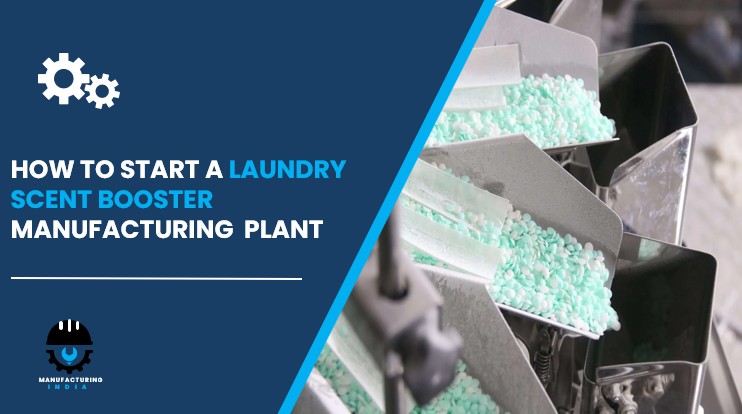
Setting up a laundry scent booster manufacturing plant in India represents a highly attractive investment proposition underpinned by robust and structurally growing demand from premium home care consumers, the expanding fabric care and detergent industry, the hospitality and commercial laundry sector, and organised retail and e-commerce channels. As urbanisation accelerates, disposable incomes rise, and consumer preference for long-lasting, customisable fragrance experiences grows, laundry scent boosters available in bead, crystal, and liquid forms occupy an increasingly important position across household retail, hospitality, and commercial laundry applications. This growth trajectory, combined with continuous innovation in fragrance encapsulation and strong integration with existing detergent distribution networks, creates a highly favourable manufacturing environment for new entrants with efficient formulation, processing, and quality systems.
What is Laundry Scent Booster?
Laundry scent boosters are fragrance-enhancing additives designed to be used during the washing process to impart long-lasting freshness to fabrics. Typically available in bead, crystal, or liquid forms, these products are composed of fragrance oils encapsulated in carriers such as polymers or salts. They are engineered to dissolve or disperse in water, releasing scent gradually during washing and wear. Laundry scent boosters are compatible with various fabric types and washing conditions, including cold water cycles.
Laundry scent boosters are processed and sold in three principal forms bead, crystal, and liquid depending on the encapsulation and formulation route adopted. Beyond household laundry care, the products are used extensively in home care formulations for detergents and fabric softeners, in hospitality and commercial laundry operations requiring consistent bulk fragrance performance, and in the textile industry for imparting long-lasting fragrance during fabric processing.
The global laundry scent booster market was valued at approximately USD 380.00 Million in 2025 and is expected to reach USD 528.35 Million by 2034, exhibiting a CAGR of 3.73% from 2026 to 2034, supported by rising consumer preference for long-lasting fragrance, increasing demand for premium laundry care products, and growing urbanisation.
Cost of Setting Up a Laundry Scent Booster Manufacturing Plant
The total capital investment required to establish a laundry scent booster manufacturing plant is shaped by several key parameters: annual production capacity (typically ranging from 2,000 to 8,000 tons per annum), the process route adopted (dry mixing, agglomeration, and coating, with or without integrated encapsulation), the level of automation across mixing, agglomeration, and packaging sections, facility specification, raw material sourcing strategy, and applicable regulatory and safety compliance requirements. Below is a structured breakdown of the major cost components.
1. Capital Expenditure (CapEx)
Total capital investment in a laundry scent booster manufacturing plant covers the following major heads:
Land and Site Development
This encompasses land acquisition or lease, site preparation, boundary development, and utilities connectivity. Site selection should prioritise proximity to fragrance oil suppliers and carrier material sources to ensure a steady, low-transport-cost supply of key raw materials. Access to reliable power and utility infrastructure for mixing, agglomeration, and coating processes, strong road logistics for inbound raw materials and outbound finished product, availability of process water of suitable quality, and a trained workforce for plant operations and quality control are critical site selection criteria. Compliance with industrial zoning regulations, product safety manufacturing standards, fire safety norms applicable to fragrance oil handling, and effluent and emission compliance frameworks must be assessed from project initiation.
Civil Works and Construction
Building costs cover the main processing facility including the raw material reception and storage section, dry mixing and agglomeration house, granulation and coating area, drying and screening section, automated packaging and dispatch infrastructure, quality control laboratory, administrative block, and utility infrastructure including power backup, dust collection systems, and effluent treatment plant. Construction must comply with applicable factory act requirements, product safety manufacturing standards, fire safety norms for fragrance oil storage areas, and relevant infrastructure guidelines.
Machinery and Equipment
Machinery represents the single largest CapEx component. Key equipment required for a laundry scent booster manufacturing plant includes:
- Raw Material Reception and Storage Systems: Storage tanks and containers for fragrance oils, carrier beads (PVA/starch), binders, and colorants, along with receiving and handling equipment to preserve raw material quality prior to processing
- Fragrance Oil Handling Systems: Dosing pumps, metering systems, and enclosed transfer lines designed to handle volatile fragrance oils safely and minimise product loss during formulation
- Dry Mixing Systems: High-speed ribbon or paddle mixers used to blend carrier beads, binders, and colorants into a homogenous base prior to fragrance application
- Agglomeration Systems: Agglomerators that bind fine particles and fragrance oil into uniform granules or beads, forming the core structure of the finished scent booster product
- Granulation and Sizing Systems: Granulators and sizing equipment to achieve consistent particle size distribution, supporting uniform dissolution and fragrance release performance
- Coating Drums: Rotating coating drums that apply protective or fragrance-retaining coatings to agglomerated beads, controlling release rate and improving storage stability
- Drying Systems: Fluid bed or rotary dryers used to remove residual moisture from coated beads, ensuring product stability and preventing clumping during storage
- Screening and Classification Systems: Vibratory screens and classifiers to separate finished beads by size and remove oversized or undersized particles before packaging
- Dust Collection and Extraction Systems: Cyclone separators, bag filters, and ventilation systems to capture fine particulates and fragrance vapours generated during mixing, coating, and screening operations
- Colorant and Binder Dosing Systems: Precision dosing equipment for accurate addition of colorants and binders, ensuring consistent product appearance and structural integrity across batches
- Quality Control Laboratory Equipment: Equipment for fragrance intensity, moisture content, particle size, dissolution rate, and other analytical tests to verify compliance with product quality standards
- Automated Packaging Lines: Filling, sealing, labelling, and cartoning lines for retail pouches, bottles, and tubs, along with bulk packaging facilities for institutional and commercial laundry customers
- Material Handling and Warehousing: Conveyors, bucket elevators, storage silos for raw materials and finished beads, and finished goods warehousing with FIFO stock management
- Utility and Support Systems: Compressed air systems, power backup, water treatment, and HVAC systems supporting stable processing conditions across mixing, coating, and drying operations
Other Capital Costs
These include pre-operative expenses, commissioning charges, import duties on specialised mixing, agglomeration, and coating equipment, staff training and competency development, initial raw material and consumable inventory for production commissioning, regulatory compliance setup, and quality management system establishment costs.
Request a Sample Report for In-Depth Market Insights: https://www.imarcgroup.com/laundry-scent-booster-manufacturing-plant-project-report/requestsample
2. Operational Expenditure (OpEx)
Raw materials principally fragrance oils, along with carrier beads (PVA/starch), binders, and colorants constitute the dominant operating cost, typically representing 55–65% of total OpEx. Utility costs, driven primarily by electricity consumption of mixing, agglomeration, and drying equipment, account for 10–15% of OpEx. Labour, maintenance, quality control, packaging, transportation, depreciation, taxes, and overhead costs constitute the remainder of the operating cost base.
3. Plant Capacity
The proposed laundry scent booster manufacturing facility is designed with an annual production capacity ranging between 2,000–8,000 tons, enabling economies of scale while maintaining operational flexibility. This capacity range supports a diversified product portfolio of bead, crystal, and liquid scent boosters, serving household retail markets, hospitality and commercial laundry customers, and export channels.
4. Profit Margins and Financial Projections
The project demonstrates healthy profitability potential under normal operating conditions. Financial projections encompass capital investment, operating costs, capacity utilisation ramp-up schedule, product mix between bead, crystal, and liquid formats, and forward demand outlook underpinned by rising premiumisation in laundry care. A comprehensive feasibility analysis includes sensitivity analysis, Net Present Value (NPV), Internal Rate of Return (IRR), and Payback Period calculations. Gross profit margins for laundry scent booster manufacturing typically range from 40–50%, supported by stable demand, value-added fragrance positioning, and efficient raw material utilisation. Net profit margins of 20–28% are achievable with disciplined cost management, optimal capacity utilisation, and effective distribution partnerships.
Why Set Up a Laundry Scent Booster Manufacturing Plant?
Growing Consumer Demand for Premium Fragrance Experience
Consumers increasingly prefer value-added laundry products that offer enhanced sensory benefits such as long-lasting fragrance, driving sustained demand for scent boosters. As urban, experience-driven consumers increasingly seek out home care products perceived to offer differentiated sensory appeal, laundry scent boosters are transitioning from a niche premium add-on toward a mainstream household and institutional laundry care choice, supporting steady volume growth across retail and hospitality channels.
Product Differentiation and Brand Positioning Opportunity
Manufacturers can innovate with unique fragrances and formulations, enabling strong brand positioning in a competitive laundry care market. Effective differentiation through proprietary scent profiles and encapsulation technology materially enhances brand equity and supports premium pricing, improving blended margins beyond what standard detergent sales alone would generate.
Expanding Hospitality and Commercial Laundry Demand
Growth in hotels, resorts, healthcare facilities, and commercial laundry operations is driving consistent institutional demand for laundry scent boosters. Their ability to deliver consistent, fresh fragrance across large volumes of linens and garments makes them particularly suitable for bulk laundry operations, where fragrance performance directly affects guest and patient experience, brand perception, and repeat business, positioning laundry scent boosters favourably as a value-added component of institutional laundry programmes.
Strong Integration with Existing Detergent and Fabric Care Distribution Networks
Laundry scent boosters complement detergents and fabric softeners, allowing manufacturers to leverage existing distribution networks and retail relationships. This structural fit with established fabric care categories provides new entrants with efficient access to supermarket, hypermarket, and e-commerce shelf space, reducing the cost and complexity of building an independent distribution channel from scratch.
Continuous Innovation in Fragrance Encapsulation Technology
Advancements in fragrance encapsulation enhance product performance, improving scent longevity and consumer satisfaction. The laundry scent booster value chain spanning dry mixing, agglomeration, and coating allows processors to begin operations at a moderate scale and expand capacity or add advanced microencapsulation capabilities as volumes grow, improving margin capture by enabling premium, longer-lasting fragrance formats.
Urbanisation and Rising Disposable Incomes
Approximately 45% of the world’s 8.2 billion people resided in urban areas in 2025, according to the United Nations World Urbanization Prospects 2025 report by UN DESA. Rising urban lifestyles, increasing reliance on premium home care products, and growing disposable incomes among urban consumers are supporting higher consumption of branded laundry scent boosters in city-based households and hospitality channels, providing a structural demand tailwind for manufacturers with strong retail and institutional distribution.
Favourable E-Commerce and Organised Retail Expansion
The expansion of organised retail and e-commerce platforms has improved product accessibility globally. The value of Indian e-commerce was USD 46.2 Billion in 2020 and is expected to grow at 18.29% to USD 136.47 Billion by 2026, according to the International Trade Administration. Combined with continued direct-to-consumer and subscription-based sales models gaining traction in fragrance-enhanced laundry additives, the retail and digital distribution landscape supports new entrants seeking to establish accessible, scalable go-to-market operations.
Manufacturing Process Overview
The laundry scent booster manufacturing operation transforms fragrance oils, carrier beads, binders, and colorants into finished bead, crystal, or liquid scent booster products through a sequence of mixing, agglomeration, coating, and packaging operations. The key process stages are:
- Raw Material Reception and Quality Check: Fragrance oils, carrier beads (PVA/starch), binders, and colorants received from suppliers are inspected and tested to verify quality parameters including fragrance concentration, moisture content, and particle characteristics prior to release for production.
- Fragrance Oil Preparation and Blending: Fragrance oils are formulated and blended according to proprietary scent profiles, with precise dosing to achieve the desired fragrance intensity and consistency across production batches.
- Dry Mixing: Carrier beads, binders, and colorants are blended in high-speed mixers to form a homogenous base, ensuring uniform distribution of ingredients prior to fragrance application and agglomeration.
- Agglomeration: The blended base is processed through agglomeration equipment, where fragrance oil is bound into the carrier matrix, forming uniform granules or beads that constitute the core finished product.
- Granulation and Sizing: Agglomerated material passes through granulators and sizing equipment to achieve consistent particle size distribution, which is critical for uniform dissolution and controlled fragrance release during washing.
- Coating: Sized beads are treated in rotating coating drums, where a protective or fragrance-retaining coating is applied to control release rate, improve storage stability, and enhance visual appeal.
- Drying: Coated beads pass through fluid bed or rotary dryers to remove residual moisture, preventing clumping and preserving fragrance stability during storage and transport.
- Screening and Classification: Dried beads are screened and classified to separate finished product by size, with oversized or undersized particles recycled back into the process or removed as reject material.
- Dust Collection and Recovery: Fine particulates and fragrance vapours generated during mixing, coating, and screening are captured through cyclone separators, bag filters, and ventilation systems, supporting workplace safety and minimising material loss.
- Quality Control: Finished beads are tested for fragrance intensity, moisture content, particle size, and dissolution performance to verify compliance with applicable product quality and safety standards before release for packaging.
- Packaging and Dispatch: Finished laundry scent boosters are packed in retail pouches, bottles, and tubs for household and institutional sale, or dispatched in bulk containers and drums to hospitality operators, commercial laundry customers, and distribution partners.
Key Applications of Laundry Scent Booster
The laundry scent booster market serves several major end-use segments across household, hospitality, commercial laundry, and textile sectors:
- Laundry Care: Laundry scent boosters are widely utilised for enhancing fragrance in washing machines and during rinse cycles, providing consumers with long-lasting freshness and odour neutralisation across everyday household laundry routines.
- Home Care Products: Scent boosters are incorporated into detergents, fabric softeners, and scent additives, allowing home care manufacturers to differentiate their product lines through customisable fragrance intensity and controlled release performance.
- Textile Industry: The textile industry uses laundry scent boosters to impart long-lasting fragrance to fabrics during processing, supporting value-added finishing for garments and household textile products.
- Hospitality and Commercial Laundries: Hotels, resorts, healthcare facilities, and commercial laundry operators use laundry scent boosters to provide consistent, fresh scent in bulk laundry operations, enhancing guest and patient experience across large-scale linen and garment processing.
- Retail and Direct-to-Consumer Channel: Growing organised retail and e-commerce distribution, supported by subscription-based and direct-to-consumer sales models, is expanding consumer access to premium and customised laundry scent booster formats.
Global Laundry Scent Booster Market Outlook
The global laundry scent booster market was valued at approximately USD 380.00 Million in 2025. According to IMARC Group estimates, the market is expected to reach USD 528.35 Million by 2034, exhibiting a CAGR of 3.73% from 2026 to 2034. The laundry scent booster market benefits from multiple structural demand drivers:
- Rising consumer preference for long-lasting fragrance and premium sensory benefits in laundry care across urban populations globally
- Continued urbanisation, with approximately 45% of the world’s population residing in urban areas as of 2025, supporting higher consumption of branded, premium home care products in city-based households
- Expanding hospitality, healthcare, and commercial laundry sectors creating sustained institutional demand for products with consistent, bulk fragrance performance
- Strengthening integration with existing detergent and fabric softener distribution networks, improving retail shelf access and consumer visibility for new entrants
- Growing innovation in fragrance microencapsulation technology, enabling longer-lasting scent release and enhanced product differentiation
- Favourable e-commerce and organised retail expansion, including direct-to-consumer and subscription-based sales models, improving product accessibility across markets
- Rising demand for eco-friendly and biodegradable scent booster formulations, reflecting growing consumer sustainability awareness
- Continued investment by established fragrance and consumer goods companies in expanding encapsulation and fragrance production capacity, reflecting confidence in long-term category growth
Major players in the global laundry scent booster manufacturing industry include Procter & Gamble (P&G), Unilever, Henkel AG & Co. KGaA, Church & Dwight Co., Inc., Reckitt Benckiser Group plc, and S. C. Johnson & Son, Inc., serving end-use sectors including household consumer goods, hospitality, commercial laundry, textile care, and retail.
Latest Industry Developments
- November 2025: Givaudan expanded its biodegradable PlanetCaps fragrance encapsulation portfolio with the launch of a patent-pending laundry serum featuring a high fragrance load and microplastic-free technology, designed to deliver long-lasting freshness while meeting evolving regulatory sustainability requirements, reflecting continued innovation investment in the encapsulation segment of the category.
- May 2025: Unilever announced an approximately £80 million investment to build in-house fragrance capabilities in the UK, including a new fragrance facility in Port Sunlight along with expanded digital capabilities and fragrance talent recruitment, reflecting continued large-scale investment confidence in the fragrance and laundry care segment.
Licenses and Regulatory Requirements
Establishing a laundry scent booster manufacturing unit requires a range of approvals and certifications, which may vary by country and jurisdiction, including:
- Business registration and company incorporation under applicable company law
- Factory License under applicable state Factories Act provisions for manufacturing operations
- GST registration and trade license for manufacturing and sale of home care products
- BIS (Bureau of Indian Standards) certification for detergent and home-care chemical products where applicable
- Compliance under applicable Hazardous Chemicals Rules for facilities handling and storing fragrance oils
- Fire and safety No Objection Certificate (NOC) for storage and handling of flammable fragrance ingredients
- Pollution Control Board Clearances Consent to Establish (CTE) and Consent to Operate (CTO) for manufacturing operations
- ISO 9001:2015 Quality Management System Certification for quality management infrastructure compliance
- ISO 22716 Good Manufacturing Practice compliance for cosmetic and home-care-grade formulations, where applicable
- Weights and Measures (Legal Metrology) registration for packaged commodity labelling and net quantity declaration
- REACH or equivalent chemical ingredient safety compliance for fragrance formulations intended for export markets
- Export-Import Code (IEC) for international market access
- Trademark and Brand Registration for proprietary branded product launch
- Occupational Health and Safety management compliance (ISO 45001 / Factories Act provisions) for manufacturing worker safety, particularly in fragrance oil handling areas
Key Challenges to Consider
Fragrance Oil Price Volatility and Supply Dependence
Fragrance oils, which account for 55–65% of total operating costs, are subject to global commodity price cycles, import duty structures, and supply chain disruptions affecting essential oil and aroma chemical availability. Periods of elevated fragrance oil pricing can compress margins, requiring processors to manage long-term supplier contracts and diversified sourcing to maintain cost stability.
Regulatory and Ingredient Safety Compliance
Fragrance formulations are subject to evolving allergen disclosure requirements, chemical safety regulations, and industry standards such as IFRA guidelines governing fragrance ingredient use. Maintaining compliance across multiple jurisdictions requires ongoing investment in formulation review, testing, and documentation, and any compliance lapse can disrupt market access and damage brand reputation.
Competitive Intensity from Established Multinational Brands
The laundry scent booster market is dominated by large multinational consumer goods companies with extensive distribution networks and marketing budgets. New entrants must differentiate through proprietary fragrance profiles, niche positioning, or private label partnerships to compete effectively against well-established brands with strong retail shelf presence.
Consumer Preference Shifts and Fragrance Trend Sensitivity
Consumer fragrance preferences evolve continuously, with shifting demand across floral, fresh, fruity, and woody scent profiles. Manufacturers must maintain continuous product development and fragrance innovation capabilities to stay aligned with changing consumer tastes, requiring sustained investment in research and development.
Encapsulation Technology and Quality Consistency
Achieving consistent controlled fragrance release across production batches depends on precise agglomeration, coating, and drying process control. Inconsistent encapsulation quality can result in premature fragrance loss or product clumping, requiring disciplined process control and quality assurance to protect brand reputation and repeat purchase behaviour.
Retail Shelf Space and Distribution Access
Securing adequate retail shelf space and e-commerce visibility alongside established detergent and fabric care brands is a significant go-to-market challenge for new entrants. Building distribution relationships with supermarkets, hypermarkets, and online platforms requires sustained investment in trade marketing and channel partnerships.
Frequently Asked Questions (FAQs)
1. How much does it cost to set up a laundry scent booster manufacturing plant?
The total investment depends on plant capacity (2,000–8,000 tons per annum), the process route adopted (dry mixing, agglomeration, and coating, with or without advanced microencapsulation), automation level, facility specification, location, and target market certifications. Costs cover land, civil construction (mixing and agglomeration house, coating and drying section, storage tank farm, quality laboratory, utilities), machinery (mixers, agglomerators, granulators, coating drums, dryers, packaging lines), quality certifications, working capital, and regulatory compliance. A comprehensive feasibility study from IMARC Group provides detailed, capacity-specific cost estimates covering all CapEx and OpEx components.
2. Is laundry scent booster manufacturing a profitable business in 2026?
Yes. Sustained demand from premiumisation in laundry care, the expanding hospitality and commercial laundry sectors, and continued innovation in fragrance encapsulation combined with gross margins of 40–50% and net profit margins of 20–28% make laundry scent booster manufacturing financially attractive. Strong integration with existing detergent distribution networks offers meaningful go-to-market efficiency beyond what standalone product launches would achieve.
3. What machinery and equipment are required for a laundry scent booster manufacturing plant?
Key equipment includes raw material reception and storage systems, dry mixers, agglomerators, granulators, coating drums, fluid bed or rotary dryers, screening and classification systems, dust collection and extraction systems, quality control laboratory equipment, and automated packaging lines for retail and bulk dispatch.
4. What licenses and approvals are required?
Required approvals include company registration, Factory License, GST registration, BIS certification for home-care chemical products where applicable, compliance under applicable Hazardous Chemicals Rules for fragrance oil handling, Pollution Control Board clearances, and ISO 9001:2015 Quality Management System certification. Compliance with fragrance ingredient safety standards such as IFRA guidelines is also a key operational requirement.
5. How long does it take to commission a laundry scent booster manufacturing plant?
Typically, 9–15 months from project initiation to commercial production launch, depending on project scale, facility construction timeline, equipment procurement lead times for mixing and coating systems, and regulatory approvals. The absence of complex solvent extraction or refining infrastructure generally supports a shorter commissioning timeline relative to more capital-intensive process industries.
6. What are the key raw materials for laundry scent booster manufacturing?
The primary raw materials are fragrance oils, which represent the dominant cost component, along with carrier beads made from PVA or starch, binders, and colorants. Reliable, long-term supplier relationships for fragrance oils are critical given their share of total operating costs and exposure to commodity price cycles.
7. What is the break-even period for a laundry scent booster manufacturing plant?
The break-even period generally depends on capacity utilisation ramp-up trajectory, the product mix between bead, crystal, and liquid formats, fragrance oil supply consistency, and distribution partnership arrangements. Securing long-term supply agreements for fragrance oils and stable offtake arrangements with detergent brands, retailers, or hospitality customers significantly improves revenue predictability and supports faster break-even achievement.
8. What are the main forms of laundry scent booster and their applications?
The three principal forms are bead, crystal, and liquid scent boosters. Beads are widely used across household retail due to their convenience and compatibility with standard washing machines, crystals are often positioned as a premium format with slow-release fragrance technology, and liquid formats are valued for uniform fragrance dispersion and compatibility with fabric softener dispensers.
9. What government incentives are available for laundry scent booster manufacturers?
Manufacturers may benefit from home care and consumer goods sector incentive schemes, state-level industrial investment incentives and capital subsidies for manufacturing units, infrastructure support under industrial park schemes, and export promotion benefits for fragrance and home care product exports.
10. How does laundry scent booster manufacturing compare to other home care product processing in terms of setup?
Compared to detergent or fabric softener manufacturing, laundry scent booster production benefits from a relatively simpler dry-processing route centred on mixing, agglomeration, and coating rather than complex liquid formulation and surfactant chemistry. However, it requires specialised encapsulation and coating expertise to achieve controlled fragrance release, allowing processors with experience in granulation or agglomeration technologies to adapt existing technical capabilities to laundry scent booster manufacturing with targeted investment in fragrance dosing and coating infrastructure.
Key Takeaways for Investors
The laundry scent booster manufacturing industry represents a structurally resilient and financially attractive investment opportunity positioned at the intersection of rising global premiumisation in laundry care, expanding hospitality and commercial laundry sectors, and continuous innovation in fragrance encapsulation technology. Stable demand from household retail, hospitality, commercial laundry, and textile channels provides resilience against single-segment demand volatility, while strong integration with existing detergent and fabric softener distribution networks offers meaningful go-to-market efficiency beyond standalone product launches alone. Fragrance encapsulation innovation provides differentiated, longer-lasting scent performance that supports premium positioning and brand loyalty, while the expansion of organised retail and e-commerce channels improves accessibility for both established manufacturers and new entrants. The scalable nature of the value chain from basic dry mixing and agglomeration operations to fully integrated microencapsulation and coating capabilities allows investors to phase capital deployment according to risk appetite and target market positioning, while continued investment by established fragrance and consumer goods players in expanding encapsulation and production capacity reflects strong confidence in the long-term growth and profitability of the category.
About the Author