Setting up a bakery plant in India presents a compelling investment case driven by robust and rising consumer demand for convenient, ready-to-eat, and value-added bakery products across mass-market and specialised dietary segments. As changing dietary habits push households and institutions toward packaged bread, cakes, pastries, and biscuits, industrial bakeries are positioned at the intersection of food security and scalable manufacturing. The bakery industry plays a pivotal role in the global food supply chain, and in India its significance is amplified by a large and youthful population, deepening retail penetration, and the rapid expansion of quick-service restaurants that depend on consistent, high-volume bakery output.
India’s structural strengths make it a strategically sound location for this investment. Rapid urbanisation is expanding the middle-class consumer base for packaged baked products, while sustained infrastructure development in states such as Maharashtra, Gujarat, and Uttar Pradesh provides reliable logistics corridors and access to agricultural raw material supply chains. The Make in India initiative supports food processing as a priority sector, offering policy-level encouragement for greenfield plant establishment and modernisation. Together, these advantages create conditions in which a well-planned bakery plant can achieve economies of scale, efficient market distribution, and long-term operational sustainability.
India’s bakery manufacturing sector benefits from strong policy tailwinds under Make in India, a cost-competitive land and labour environment, and multi-sector demand from retail chains, quick-service restaurants, institutional buyers, and health-conscious consumers seeking specialty baked products. The combination of automation-driven efficiency, product diversification, and expanding distribution networks makes break-even a realistic near-term target for well-capitalised investors.
What is a Bakery?
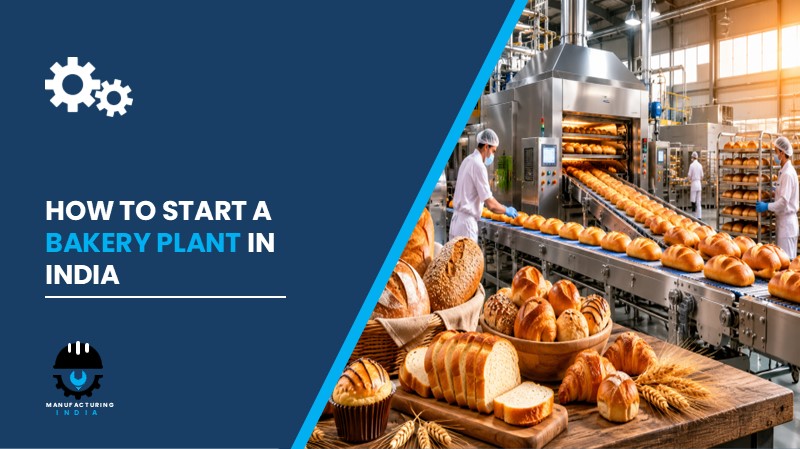
A bakery is an industrial facility dedicated to the systematic production of bread, cakes, pastries, and biscuits through controlled processes involving mixing, fermentation, proofing, baking, and cooling. Modern bakery plants employ advanced machinery and automation technologies to ensure high-volume output, uniform product quality, and adherence to stringent hygiene and safety standards. Essential raw materials including flour, water, yeast, and fats are precisely measured and processed to achieve specific sensory and structural attributes in the finished product.
The bakery industry caters to both mass-market and specialised dietary demands. As consumer preferences evolve, industrial bakeries are progressively adopting sustainable practices, energy-efficient systems, and innovative formulations to enhance operational efficiency and product diversification. Key product variants produced at the facility include bread, cakes, pastries, biscuits, and confectioneries, enabling manufacturers to serve a broad spectrum of consumer segments from everyday staples to premium and specialty offerings.
The primary production method is a sequential baking process encompassing ingredient mixing, dough fermentation, proofing, baking in controlled ovens, cooling, and automated packaging. End-use industries and channels served include mass-market retail, quick-service restaurants, institutional food service, and the growing health-conscious consumer segment seeking gluten-free, low-sugar, and fortified baked items.
Cost of Setting Up a Bakery Plant in India
The total cost of establishing a bakery manufacturing plant depends on plant capacity, technology selection, geographic location, level of automation, and regulatory compliance requirements. Investors should evaluate both capital and operational components thoroughly before committing to a project structure.
1. Capital Expenditure (CapEx)
Land and Site Development forms a substantial portion of the total capital investment, covering land registration charges, boundary development, site levelling, and related infrastructure preparation. Investors may consider locating the unit within a dedicated food processing special economic zone (SEZ) or an agro-industrial estate to benefit from fiscal incentives and streamlined approvals.
Civil Works and Construction encompasses the main production shed, quality control laboratory, raw material storage warehouse, finished goods storage area, cold chain infrastructure where applicable, and the administrative block. The layout must designate separate zones for ingredient intake, production, quality assurance, packaging, and dispatch to ensure workflow efficiency and food safety compliance.
Machinery and Equipment represent the largest single component of CapEx. Key machinery required includes:
- Industrial dough mixers
- Fermentation and proofing chambers
- Tunnel ovens and rotary rack ovens
- Cooling conveyors and cooling tunnels
- Slicing and cutting machines
- Automated packaging systems
- Quality testing and inspection equipment
Other Capital Costs include pre-operative expenses, plant commissioning charges, effluent treatment plant (ETP) installation, energy-efficient utility systems, and any import duties on specialised baking equipment sourced from overseas.
Request a Sample Report for In-Depth Market Insights: https://www.imarcgroup.com/bakery-plant-project-report/requestsample
2. Operational Expenditure (OpEx)
Raw Material Cost is the dominant driver of operating expenditure for the unit. Core raw materials required for production include flour, water, yeast, and fats, which must be precisely measured and processed to achieve the required sensory and structural attributes. Securing long-term supply contracts with reliable domestic agricultural and food ingredient suppliers is essential to stabilise pricing and ensure production continuity across seasonal fluctuations.
Utility Cost covers electricity for ovens, mixers, cooling conveyors, and automated packaging lines, along with water for dough preparation and plant hygiene, and any steam requirements for proofing chambers. Establishing the unit in a location with stable power infrastructure and access to clean water significantly reduces downtime risk and product quality issues.
Other Operating Costs encompass outbound transportation and logistics, product packaging materials, salaries and wages for production staff and quality personnel, routine equipment maintenance, depreciation on machinery and civil assets, and applicable statutory taxes. By the fifth year of operations, total operational costs are projected to increase substantially due to inflation, potential rises in the cost of key ingredients such as flour and fats, supply chain disruptions, and shifts in the broader food economy.
3. Plant Capacity
Plant capacity for a bakery plant is customisable based on investor requirements, target market, product mix, and available capital. Profitability and unit economics improve meaningfully at higher capacity utilisation rates, making scale planning a critical element of the feasibility study. A well-optimised facility integrating the automated steps of the bakery manufacturing process — mixing, proofing, baking, and packaging — significantly reduces manual labour and production time, supporting cost-effective manufacturing and swift market distribution.
4. Profit Margins and Financial Projections
The project demonstrates healthy profitability potential under normal operating conditions, supported by stable consumer demand across retail, food service, and institutional supply channels. The financial model covers net present value (NPV), internal rate of return (IRR), payback period analysis, gross margin and net margin projections, sensitivity analysis, and a full profit and loss account – providing investors with a comprehensive view of the project’s long-term financial viability and return on investment (ROI).
Why Set Up a Bakery Plant in India?
Rising Demand for Convenient and Ready-to-Eat Products. Increasing consumer demand for convenient, ready-to-eat, and value-added bakery products is the primary growth driver for the bakery industry. Changing dietary habits across urban and semi-urban India have made packaged bread, pastries, and biscuits daily essentials, creating a deep and dependable order base for domestic producers at scale.
Health-Conscious Consumer Behaviour and Specialty Products. The rise in health-conscious consumer behaviour is encouraging the development of specialty bakery products such as gluten-free, low-sugar, and fortified baked items, thereby diversifying production lines and improving per-unit realisations. This trend opens a premium product segment for investors willing to invest in flexible formulation capabilities.
Expansion of Retail Chains and Quick-Service Restaurants. The expanding presence of retail chains and quick-service restaurants is accelerating demand for large-scale, flexible bakery processing facilities. Indian retail modernisation and the growth of quick-service and casual dining formats are creating consistent institutional procurement channels that favour local, high-volume producers.
Policy and Regulatory Tailwinds. Regulatory support promoting food safety and hygiene standards further bolsters the establishment and modernisation of the facility. The Make in India initiative identifies food processing as a priority manufacturing sector, offering greenfield investors access to capital subsidies, land development incentives, and streamlined environmental clearance processes in designated food processing zones.
Automation and Advanced Baking Technologies. Changing production requirements and consumer quality expectations have led manufacturers to invest heavily in automation and advanced baking technologies. This capital-intensive shift improves output consistency, reduces labour dependency, and enhances product shelf life — all critical advantages for capturing organised retail and export markets.
Sustainable Practices and Energy-Efficient Systems. A notable trend shaping the bakery manufacturing investment landscape is the integration of energy-efficient systems and sustainable packaging solutions, aligning operations with global sustainability objectives. In India, this direction aligns with increasing regulatory attention to industrial energy consumption and packaging waste, making early adoption a competitive advantage for new entrants.
Manufacturing Process – Step by Step
The bakery manufacturing process uses a sequential baking method as the primary production approach, encompassing ingredient preparation, dough development, thermal processing, and finished goods packaging. Each stage of the bakery manufacturing process is governed by strict quality assurance criteria to ensure product consistency and food safety compliance throughout.
- Raw Material Intake and Quality Inspection: Flour, water, yeast, fats, and other ingredients are received, weighed, and inspected against quality assurance criteria before entering production.
- Ingredient Mixing: Precisely measured raw materials are loaded into industrial dough mixers to achieve a homogeneous dough or batter with the required texture and consistency.
- Fermentation: The mixed dough undergoes controlled fermentation in dedicated chambers, allowing yeast activity to develop flavour, structure, and volume.
- Proofing: Portioned dough pieces are transferred to proofing chambers where controlled temperature and humidity conditions allow final volume development before baking.
- Baking: Proofed dough is conveyed into tunnel ovens or rotary rack ovens, where precise temperature profiling ensures uniform colour, crust formation, and internal structure across all product types.
- Cooling: Freshly baked products pass through cooling conveyors or cooling tunnels to bring temperature to safe packaging levels while preserving texture and moisture.
- Slicing and Cutting: Products such as bread undergo automated slicing and cutting operations to achieve uniform portion sizes for retail and food service formats.
- Quality Inspection: Each batch undergoes quality testing covering product dimensions, weight, moisture content, and sensory attributes to ensure adherence to safety and quality standards.
- Packaging and Dispatch: Finished items are packed using automated packaging systems into retail or bulk formats and dispatched to mass-market retail, quick-service restaurants, institutional food service channels, and specialty health-focused outlets.
Key Applications
The production facility serves a diverse range of end-use industries and consumer segments across India:
- Mass-Market Retail: Bread, biscuits, and packaged pastries are distributed through supermarkets, kirana stores, and e-commerce platforms, representing the largest volume channel for bakery output.
- Quick-Service Restaurants: Burger buns, sandwich bread, and specialty rolls are supplied in bulk to quick-service and casual dining restaurant chains operating across urban centres.
- Institutional Food Service: Baked goods are procured in large quantities by offices, hospitals, educational institutions, railways catering services, and commercial canteens.
- Health and Specialty Segment: Gluten-free, low-sugar, and fortified baked items serve health-conscious consumers through modern trade and direct-to-consumer channels.
- Confectionery and Pastry Sector: Cakes and pastries serve the celebration, gifting, and premium food service market, supporting higher realisations per unit.
Leading Manufacturers
The global bakery industry is served by a broad range of players spanning multinational corporations with extensive production capacities to regional specialists focused on local and specialty product lines. The bakery market structure encompasses both large-scale automated facilities serving mass-market retail and smaller artisanal operations targeting premium segments, all of which compete across product quality, distribution reach, and innovation in health-oriented formulations.
Timeline to Start the Plant
Investors should plan for the following eight phases to bring a bakery manufacturing plant from concept to commercial production:
- Feasibility study and project report preparation
- Land acquisition and site development
- Regulatory approvals and environmental clearances
- Factory licence and fire safety compliance
- Machinery procurement and installation
- Raw material supplier agreements and supply chain setup
- Trial production and quality testing
- Commercial production launch
Licences and Regulatory Requirements
Starting a bakery manufacturing unit in India requires several approvals:
- Business registration (Proprietorship, LLP, or Pvt Ltd)
- Factory Licence under the Factories Act
- Environmental Clearance from the State Pollution Control Board
- GST Registration
- Fire Safety NOC
- FSSAI (Food Safety and Standards Authority of India) licence for food manufacturing
- Effluent Treatment Plant (ETP) operational clearance
- Occupational Health and Safety compliance
Key Challenges to Consider
High Capital Requirements. Establishing an automated production facility with tunnel ovens, dough mixers, proofing chambers, cooling conveyors, and packaging systems requires substantial upfront investment in both machinery and civil infrastructure, which can be a barrier for smaller investors.
Raw Material Price Volatility. The cost of core inputs — particularly flour, yeast, and edible fats — is subject to agricultural commodity cycle fluctuations and global supply dynamics, which can significantly compress operating margins if not hedged through long-term procurement contracts and diversified sourcing strategies.
Regulatory Compliance. Obtaining FSSAI food manufacturing licences, environmental clearances, and ETP operational approvals requires dedicated compliance management, and any delay in securing these can push back the commercial production launch and add to pre-operative costs.
Technology and Innovation Pressure. Rapidly evolving consumer preferences for specialty products such as gluten-free, low-sugar, and fortified baked items require ongoing investment in formulation capabilities and flexible production line configurations to remain competitive in the market.
Competition. The bakery industry encompasses both large-scale multinational producers with significant distribution advantages and a large base of established regional and local players, requiring new entrants to differentiate on product quality, supply reliability, and innovation in specialty segments.
Skilled Manpower. Operating advanced baking machinery including automated mixing, proofing, and packaging systems requires trained food technologists and production engineers, necessitating ongoing investment in workforce training, retention, and safety compliance.
Frequently Asked Questions
1. How much does it cost to set up a bakery manufacturing plant in India?
The total setup cost depends on plant capacity, level of automation, machinery selection, product mix, and geographic location. A detailed feasibility report covering CapEx, OpEx, NPV, and financial projections is recommended before committing capital to the project.
2. Is bakery manufacturing profitable in India in 2026?
Yes. This investment demonstrates healthy profitability potential driven by stable and growing consumer demand for convenient, ready-to-eat products, the expanding quick-service restaurant sector, and rising institutional procurement volumes across India’s food service industry.
3. What machinery is required for a bakery plant in India?
Key equipment includes industrial dough mixers, fermentation and proofing chambers, tunnel ovens and rotary rack ovens, cooling conveyors and cooling tunnels, slicing and cutting machines, automated packaging systems, and quality testing and inspection equipment.
4. What licences and approvals are required to start a bakery plant in India?
Required approvals include business registration, Factory Licence, Environmental Clearance, GST Registration, Fire Safety NOC, FSSAI food manufacturing licence, ETP operational clearance, and Occupational Health and Safety compliance.
5. What raw materials are needed for bakery manufacturing?
Core raw materials include flour, water, yeast, and fats, which are precisely measured and processed to achieve the required sensory and structural attributes in finished products.
6. What are the environmental compliance requirements for a bakery plant in India?
Manufacturers must obtain Environmental Clearance from the State Pollution Control Board, operate a compliant Effluent Treatment Plant, and maintain Occupational Health and Safety standards throughout production.
7. What is the best location to set up a bakery plant in India?
States such as Maharashtra, Gujarat, and Uttar Pradesh offer established food processing ecosystems, reliable logistics infrastructure, proximity to agricultural raw material supply, and access to large urban consumer markets. Dedicated food processing SEZs and agro-industrial estates provide additional fiscal incentives.
8. What is the break-even period for this type of plant in India?
The break-even period depends on plant capacity, product pricing, raw material cost management, and market offtake. A detailed financial analysis including payback period, NPV, and IRR is provided in the full project report.
9. What government incentives are available for manufacturers in India?
The Make in India initiative, Production Linked Incentive (PLI) schemes for food processing, SEZ benefits, and state-level food processing promotion schemes offer a range of fiscal and operational incentives for producers in this sector.
Key Takeaways for Investors
A bakery plant in India offers a strategically sound investment opportunity, underpinned by sustained demand from mass-market retail, quick-service restaurants, institutional food service, and the fast-growing health-conscious consumer segment seeking specialty products such as gluten-free, low-sugar, and fortified items. The bakery manufacturing plant delivers financial viability across a range of capacities, with profitability improving significantly at higher utilisation rates through the operational advantages of automated mixing, proofing, baking, and packaging systems. The bakery industry’s growth is structurally supported by changing dietary habits, retail chain expansion, and regulatory emphasis on food safety modernisation — all of which favour well-capitalised, compliance-ready domestic bakery producers. As India’s urbanisation deepens and quick-service and institutional food channels expand further, demand for consistent, high-volume production is set to remain durable across market cycles.
About the Author