Setting up a copper cable manufacturing plant in India presents a compelling investment case driven by the country’s rapidly expanding power generation and distribution sector, accelerating construction and infrastructure development, growing industrial manufacturing base, expanding telecommunications and data networks, and rising demand for electrical wiring solutions in residential and commercial buildings. Copper cables – insulated conductive assemblies containing copper conductors, insulating compounds, shielding materials, and protective jackets – are the foundational electrical component that enables power transmission and data connectivity across virtually every segment of India’s modern economy. As India accelerates its electrification agenda, smart grid development, and renewable energy installations, copper cable is the indispensable material at the heart of every connection – from high-voltage transmission lines to last-mile residential wiring.
India’s structural advantages make this investment strategically compelling. The country’s organised infrastructure development and government-led electrification programmes have made standardised, durable copper cable products more widely deployed across all regions and project categories. Copper cable already accounts for over 32.2% share in the global copper wire and cable market according to IMARC Group – a dominant position within one of the world’s most essential electrical component categories. The Government of India’s Make in India initiative, the National Infrastructure Pipeline, and the rapid expansion of data centres, renewable energy installations, and smart grid projects are simultaneously creating multi-sector demand that a domestic copper cable manufacturing plant in India is structurally positioned to serve at competitive cost and with supply reliability advantages over imported product.
India’s government-led electrification and infrastructure programmes, the global copper cable category’s 32.2% share of the copper wire and cable market, and the rapid expansion of renewable energy, data centres, and smart grid projects make a copper cable manufacturing plant a commercially sound and strategically well-timed industrial investment. With gross margins of 15–25% and net margins of 5–10% across a capacity of 30,000–60,000 MT annually, the project offers consistent returns anchored by one of the most structurally durable demand categories in Indian manufacturing.
What is Copper Cable?
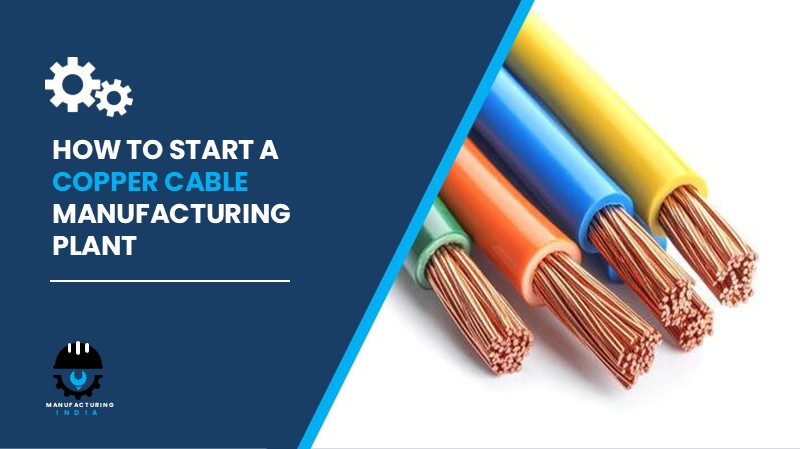
Copper cable is an insulated conductive assembly manufactured in advance containing copper conductors, insulating compounds, shielding materials, and protective jackets that are necessary to transmit electricity efficiently and safely. In their purchase and application, these cables offer exactly the same degree of conductivity, safety, and transmission performance, with the least time taken for installation and variance in system design. Different varieties of copper cable available in the market include power, control, instrumentation, coaxial, fibre-hybrid, and specialty types such as fire-resistant or armoured cables.
Copper cables have a longer useful service life, are easy to handle, and are compatible with both high-voltage and low-voltage electrical systems. Due to the consistent nature of their construction, they offer the same performance during very large-scale industrial installations as well as in small-scale commercial and household uses. Innovative products such as low-smoke, halogen-free, and fire-resistant cables are further supporting market growth and enabling copper cable manufacturers to serve increasingly specialised and safety-critical application environments.
The primary production method is copper rod drawing, stranding and conductor formation, insulation extrusion, sheathing and armouring, testing and quality inspection, and packaging and labelling – a multi-stage precision manufacturing process that converts copper rods and PVC insulation materials into specification-grade cable products for power, industrial, telecommunications, and building wiring applications. End-use industries served include the power generation and distribution sector, the construction and infrastructure industry, the industrial manufacturing sector, telecommunications and data networks, and residential and commercial buildings.
Cost of Setting Up a Copper Cable Manufacturing Plant in India
The cost of establishing this facility depends on capacity, technology selection, plant location, degree of automation, and regulatory compliance requirements.
1. Capital Expenditure (CapEx)
Total capital investment for a copper cable manufacturing plant in India covers land acquisition, site preparation, civil construction, machinery, and pre-operative expenses. The cost of land and site development – including charges for land registration, boundary development, and other related expenses – forms a substantial part of the overall investment. This allocation ensures a solid foundation for safe and efficient plant operations. Investors can reduce land acquisition costs by locating the unit in an industrial estate, electronics manufacturing cluster, or Special Economic Zone (SEZ), which also provide shared utility infrastructure and potential state-level fiscal incentives aligned with India’s electrical and electronics manufacturing push.
Civil works and construction cover the main rod drawing, stranding, and extrusion production building, raw material storage areas for copper rods and PVC, a finished goods warehouse with cable drum storage, a quality control laboratory, and an administrative block. Given the high-volume and precision-intensive nature of copper cable manufacturing, civil infrastructure must incorporate adequate floor load capacity for heavy cable manufacturing machinery and drum storage facilities, as well as appropriate ventilation for PVC extrusion operations.
Machinery costs account for the largest portion of total capital expenditure. Key machinery required includes:
- Copper rod breakdown machines
- Wire drawing and stranding lines
- Insulation extrusion units
- Armoring and sheathing machines
- Testing and inspection systems
- Packaging and coiling equipment
Other capital costs include the effluent treatment plant (ETP), advanced process monitoring systems, pre-operative expenses, trial production costs, and commissioning charges. All machinery must comply with industry standards for safety, efficiency, and reliability applicable to copper cable production.
Request a Sample Report for In-Depth Market Insights: https://www.imarcgroup.com/copper-cable-manufacturing-plant-project-report/requestsample
2. Operational Expenditure (OpEx)
The operating cost structure of a copper cable manufacturing plant is primarily driven by raw material consumption. Copper rods – the dominant input material – account for approximately 80–85% of total operating expenses (OpEx), making copper rod procurement strategy the single most critical determinant of production economics and margin protection. PVC and other insulating and jacketing materials are the secondary raw material inputs. Securing long-term supply agreements with reliable domestic copper rod producers and PVC compounders is essential for cost stability and production continuity. Minimising transportation costs by selecting suppliers in proximity to the plant is a key procurement planning criterion.
Utility costs – comprising electricity for copper rod breakdown machines, wire drawing and stranding lines, insulation extrusion units, and armoring machines, as well as water – account for 5–10% of total OpEx. Other ongoing operating costs include transportation, packaging, salaries and wages, depreciation, taxes, equipment repairs and maintenance, and other miscellaneous expenses.
By the fifth year of operations, the total operational cost is expected to increase substantially due to factors such as inflation, market fluctuations, and potential rises in the cost of key materials. Additional factors including supply chain disruptions, rising consumer demand, and shifts in the global economy are expected to contribute to this increase.
3. Plant Capacity
The proposed manufacturing facility is designed with an annual production capacity ranging between 30,000 and 60,000 MT, enabling economies of scale while maintaining operational flexibility. Capacity can be customised per investor requirements based on target power sector, construction, or industrial end-use markets, available capital, and degree of automation. Profitability improves materially with higher capacity utilisation, making domestic OEM supply agreements with power distribution companies, construction contractors, and industrial project developers a commercial priority from the commissioning stage. Break-even in a copper cable manufacturing business typically ranges from 3 to 5 years, depending on initial investment, production capacity, market demand, and operating cost management.
4. Profit Margins and Financial Projections
The project demonstrates healthy profitability potential under normal operating conditions. Gross profit margins typically range between 15–25%, supported by stable demand and value-added applications. Net profit margins range between 5–10%. A comprehensive financial model covering NPV (net present value), IRR (internal rate of return), payback period, liquidity analysis, uncertainty analysis, sensitivity analysis, and a full five-year profit and loss account provides investors with a rigorous analytical framework for assessing financial viability and long-term sustainability across different capacity and pricing scenarios.
Why Set Up a Copper Cable Plant in India?
Growing Demand for Reliable Power Infrastructure. The usage of copper cable runs in tandem with the global and domestic trend towards stable and safe electrical networks, as copper cables ensure efficiency in power transmission with reduced energy loss during operation. India’s National Infrastructure Pipeline and government-led rural and urban electrification programmes are driving large and consistent institutional procurement of power and distribution cables – creating a government-backed demand channel that domestic manufacturers can access through utility and EPC contractor supply agreements.
Expanding Construction and Industrial Sector. The increasing number of infrastructure projects, factories, data centres, and commercial buildings arising from India’s growing construction and industrial sectors is creating demand for copper cable and other standard electrical components. Quick installation, low maintenance requirements, and operational reliability of copper cables are major advantages in construction and infrastructure applications – driving consistent specification of copper cable across project categories from real estate to industrial parks and logistics warehouses.
Consistency and Quality Control Advantage for Domestic Producers. Manufacture of copper cables allows precise control over the quality of conductors and insulation standards, enabling electrical performance and safety compliance to be consistent between batches. Domestic producers who establish robust quality management systems and BIS-certified product portfolios are well-positioned to serve both private sector project developers and government infrastructure procurement agencies seeking standardised, traceable, and reliably sourced cable products.
Renewable Energy and Smart Grid Expansion. The increase in renewable energy installations and smart grid projects in India has increased the demand for high-performance and durable cabling products. Solar parks, wind farms, and grid interconnection projects all require significant cable volumes – particularly armoured power cables and control cables – creating a large and growing project-based demand channel aligned with India’s 500 GW renewable energy target.
Product Customisation Driving Value-Added Opportunities. Firms are allowed to bring individually formulated products which could be voltage-specific or application-oriented, or even specialty-grade – including low-smoke halogen-free (LSOH), fire-resistant, and armoured variants – which attract customers with variant technical requirements. This product customisation capability enables domestic manufacturers to differentiate from commodity imports and command improved pricing in specialised industrial, data centre, and renewable energy cable applications.
Active Global Industry Developments Confirming Market Momentum. In October 2025, Marvell Technology Inc. expanded its connectivity portfolio by adding active copper cable linear equalizers designed to support longer reach and power-efficient copper interconnects for high-speed data centre environments – strengthening copper cable performance for 800G and 1.6T scale-up interconnects by improving signal integrity, airflow efficiency, and cost-effective in-rack connectivity for advanced AI workloads. In April 2025, Amphenol Communications Solutions (ACS) and Semtech introduced a 1.6T Active Copper Cable at OFC 2025, including a 1.6T OSFP ACC featuring Semtech’s CopperEdge 224G/lane linear equalizer/redriver ICs, supporting next-generation AI/ML and data centre infrastructure by enabling high-bandwidth, extended-reach copper cable connectivity between adjacent racks using 200G/lane switches and xPUs. These developments confirm that copper cable remains a preferred, actively innovated connectivity medium across both power and high-speed data applications globally.
Manufacturing Process – Step by Step
The copper cable manufacturing process uses copper rod drawing, stranding and conductor formation, insulation extrusion, sheathing and armouring, testing and quality inspection, and packaging and labelling as the primary production method. Each stage is precision-controlled to ensure dimensional accuracy, electrical performance, mechanical strength, and compliance with the safety and quality standards required by power, construction, industrial, and telecommunications customers.
- Raw Material Receipt and Inspection: Copper rods and PVC and other insulating/jacketing materials are received at the facility and subjected to incoming quality checks for copper purity, rod diameter, PVC compound grade, and dimensional specification compliance before entering the production flow.
- Copper Rod Drawing: Copper rod coils are fed through copper rod breakdown machines to reduce the rod diameter progressively through a series of drawing dies, producing copper wire of the precise diameter required for the target cable specification.
- Stranding and Conductor Formation: Drawn copper wires are twisted together on wire drawing and stranding lines to produce stranded conductors of the required cross-sectional area, flexibility class, and lay length specification for the target cable design.
- Insulation Extrusion: Stranded copper conductors are passed through insulation extrusion units where PVC or other insulating compound is extruded uniformly around the conductor to the specified insulation thickness, colour coding, and dielectric performance standard.
- Sheathing and Armouring: For multi-core and armoured cable types, insulated cores are assembled, steel wire or tape armouring is applied on armoring and sheathing machines, and an outer PVC or LSOH jacket is extruded over the assembly to the specified outer diameter and sheath thickness.
- Testing and Quality Inspection: Finished cable lengths are subjected to comprehensive electrical and mechanical testing on testing and inspection systems – including conductor resistance, insulation resistance, high-voltage withstand, armour continuity, and dimensional compliance – before release for packaging.
- Packaging and Labelling: Approved cable is coiled onto drums or reels using packaging and coiling equipment, labelled with the cable specification, length, and traceability information, and prepared for dispatch to end-use customers.
- Dispatch: Packaged copper cable is dispatched to customers across the power generation and distribution sector, construction and infrastructure industry, industrial manufacturing sector, telecommunications and data networks, and residential and commercial buildings.
Key Applications
The copper cable manufacturing plant serves a diverse and commercially critical range of end-use sectors across India’s electrical and industrial economy.
- Power and Energy Sector: Copper cables are employed at the main transmission and distribution level where systems are defined by stable conductivity, safety, and reliability – including power cables for substations, transformer connections, and underground distribution networks.
- Construction and Infrastructure Sector: Quick installation, low maintenance requirements, and reliability of operation are the major advantages in construction applications, where copper building wiring systems serve residential complexes, commercial office developments, hospitals, schools, and public infrastructure projects.
- Industrial Manufacturing Sector: The integration of machinery wiring and automated power solutions for industrial operations is made possible by copper control and instrumentation cables – essential for factory automation, motor connections, control panels, and process instrumentation in manufacturing plants and industrial facilities.
- Telecommunications and Data Networks: Coaxial and data-grade copper cables support communication network infrastructure, including structured cabling in data centres, enterprise networks, and broadband connectivity – a segment being actively extended by high-speed active copper cable developments for AI and data centre applications.
- Household and Commercial Sector: Copper cable makes it possible for customers to create safe and efficient electrical connections using standardised installation methods and effective power transmission, without requiring specialised technical expertise – serving India’s large and growing residential building wiring and commercial fit-out market.
- Renewable Energy Installations: High-performance and durable copper cables are deployed across solar parks, wind farms, and grid interconnection projects – a fast-growing application segment aligned with India’s 500 GW renewable energy deployment target.
Leading Manufacturers
The global copper cable industry is served by several established multinational manufacturers with extensive production capacities and diverse application portfolios. Key players operating in this market include:
- Belden Inc.
- Cords Cable Industries Ltd.
- Fujikura Ltd.
- Furukawa Electric Co., Ltd.
- KEI Industries Ltd.
All of these manufacturers serve end-use sectors including the power generation and distribution sector, the construction and infrastructure industry, the industrial manufacturing sector, telecommunications and data networks, and residential and commercial buildings – the same markets that a domestic Indian copper cable manufacturing plant can target at competitive landed cost advantage relative to imports.
Timeline to Start the Plant
Investors should plan for a structured pre-production and commissioning phase covering the following key stages:
- Feasibility study and project report preparation
- Land acquisition and site development
- Regulatory approvals and environmental clearances
- Factory licence and fire safety compliance
- Machinery procurement and installation
- Raw material supplier agreements and supply chain setup
- Trial production and quality testing
- Commercial production launch
The timeline to start a copper cable manufacturing plant typically ranges from 12 to 18 months, depending on factory size, machinery procurement, installation, staff training, and regulatory approvals. Smaller setups may be quicker, while larger, fully automated plants can take longer to become operational.
Licences and Regulatory Requirements
Starting a copper cable manufacturing unit in India requires several approvals:
- Business registration (Proprietorship, LLP, or Private Limited Company)
- Factory Licence under the Factories Act
- Environmental Clearance from the State Pollution Control Board
- GST Registration
- Fire Safety NOC
- BIS (Bureau of Indian Standards) product certification for copper cable grades supplied to power sector and government infrastructure projects
- Effluent Treatment Plant (ETP) operational clearance
- Occupational Health and Safety compliance
Key Challenges to Consider
High Capital Requirements. Establishing a fully equipped copper cable manufacturing plant – with copper rod breakdown machines, wire drawing and stranding lines, insulation extrusion units, armoring and sheathing machines, testing and inspection systems, and packaging and coiling equipment – at the 30,000–60,000 MT annual capacity range requires significant upfront capital investment. Access to MSME credit-linked subsidy schemes, state government investment promotion grants, and electronics manufacturing cluster infrastructure support can help manage this capital requirement.
Raw Material Price Volatility. Copper rods – accounting for 80–85% of total OpEx – are directly linked to the London Metal Exchange (LME) copper price, which is one of the most actively traded and price-volatile industrial commodity benchmarks globally. Copper price movements can significantly impact production cost and finished cable selling price in the short term, making price risk management through forward procurement, hedging, and long-term supply contracts with domestic copper refiners an essential operational priority.
Regulatory Compliance. Copper cable manufacturing facilities must comply with BIS certification requirements for cable grades supplied to power utilities and government projects, factory safety norms, and environmental compliance for PVC extrusion operations including fume extraction and effluent treatment. Maintaining continuous regulatory compliance and quality system documentation adds materially to ongoing operational overhead, particularly for producers targeting power sector and government institutional procurement channels.
Competition from Global and Domestic Players. Established multinational manufacturers – including Belden Inc., Fujikura Ltd., and Furukawa Electric Co. Ltd. – and domestic Indian players including KEI Industries Ltd. and Cords Cable Industries Ltd. set high benchmarks for product quality, BIS certification coverage, supply reliability, and pricing. New domestic entrants must compete through localisation, competitive cost structures, rapid delivery, and the ability to secure long-term OEM and utility supply approvals.
Copper Price Pass-Through Complexity. While copper price movements are typically passed through to customers via indexed pricing in long-term supply contracts, managing the timing mismatch between raw material cost increases and finished cable price adjustments requires robust working capital management and active inventory optimisation – particularly for producers operating at the 30,000–60,000 MT annual capacity scale.
Skilled Manpower. Operating copper rod breakdown machines, wire drawing and stranding lines, PVC extrusion units, and electrical testing systems in a precision manufacturing environment requires trained electrical engineering technicians, process operators, and quality assurance personnel. Recruiting, training, and retaining qualified cable manufacturing staff – particularly for high-voltage cable testing and quality certification – is a recurring operational challenge in India’s competitive electrical manufacturing labour market.
Frequently Asked Questions
1. How much does it cost to set up a copper cable manufacturing plant in India?
Total setup cost depends on plant capacity, location, technology selection, and automation level. Key cost components include land and site development, civil construction, machinery (copper rod breakdown machines, wire drawing and stranding lines, insulation extrusion units, armoring and sheathing machines, testing and inspection systems, packaging and coiling equipment), and pre-operative expenses. A detailed feasibility study is recommended to generate accurate project-specific cost estimates.
2. Is copper cable manufacturing profitable in India in 2026?
Yes. The project delivers healthy financial performance, with gross margins of 15–25% and net profit margins of 5–10% under normal operating conditions. Copper cable accounts for over 32.2% share of the global copper wire and cable market according to IMARC Group, and India’s accelerating power sector development, infrastructure build-out, and renewable energy installation targets position domestic producers for a large and growing share of regional demand.
3. What machinery is required for a copper cable plant in India?
Essential equipment includes copper rod breakdown machines, wire drawing and stranding lines, insulation extrusion units, armoring and sheathing machines, testing and inspection systems, and packaging and coiling equipment.
4. What licences and approvals are required to start a copper cable plant in India?
Required approvals include business registration, Factory Licence, Environmental Clearance from the State Pollution Control Board, GST Registration, Fire Safety NOC, BIS product certification for power sector supply, ETP operational clearance, and Occupational Health and Safety compliance.
5. What raw materials are needed for copper cable manufacturing?
The primary raw materials are copper rods and PVC. Copper rods are the dominant cost driver, accounting for 80–85% of total operating expenses, and are subject to LME copper price movements that directly impact production cost and finished cable pricing.
6. What are the environmental compliance requirements for a copper cable plant in India?
The facility must obtain Environmental Clearance from the State Pollution Control Board, operate an approved ETP, and install fume extraction systems for PVC extrusion operations. Advanced monitoring systems must be in place to detect deviations in the process, and regular effluent monitoring and emission reporting are mandatory throughout operations.
7. What is the best location to set up a copper cable plant in India?
Locations offering proximity to copper rod and PVC raw material suppliers, reliable industrial-grade utilities, and power sector, construction, and industrial end-user clusters are preferred. States such as Gujarat, Maharashtra, Tamil Nadu, Uttar Pradesh, and Rajasthan – which host major copper refining, electrical manufacturing, and infrastructure development ecosystems – are strong candidates for plant location.
8. What is the break-even period for this type of plant in India?
Break-even in a copper cable manufacturing business typically ranges from 3 to 5 years, depending on initial investment, production capacity, market demand, operating costs, and pricing strategies. Efficient management and steady sales can help reach break-even faster.
9. What government incentives are available for manufacturers in India?
Copper cable manufacturers in India can access MSME credit-linked capital subsidy schemes, state government investment promotion subsidies in electrical and electronics manufacturing clusters, export promotion incentives for qualifying cable products under schemes administered by the Ministry of Commerce and Industry, and benefits available within the PLI scheme for White Goods and Electronics which provides financial incentives for electrical component manufacturing. Governments may also offer capital subsidies, tax exemptions, reduced utility tariffs, and interest subsidies to promote manufacturing under national or regional industrial policies.
Key Takeaways for Investors
A copper cable manufacturing plant in India offers a well-grounded investment opportunity anchored by growing demand across the power generation and distribution sector, construction and infrastructure industry, industrial manufacturing sector, telecommunications and data networks, and residential and commercial buildings – all of which depend on copper cable as a critical, non-substitutable electrical component. The project is financially viable across the 30,000–60,000 MT annual capacity range, with gross margins of 15–25% and net margins of 5–10% providing a consistent return framework supported by a break-even horizon of 3 to 5 years at efficient capacity utilisation. Copper cable accounts for over 32.2% share of the global copper wire and cable market according to IMARC Group, positioning this product category as the dominant segment in its larger industry – a structural position that ensures deep and diversified demand across infrastructure, power, and industrial channels. With global industry innovation accelerating – evidenced by Marvell Technology’s October 2025 high-speed data centre copper cable expansion and Amphenol-Semtech’s April 2025 1.6T Active Copper Cable launch at OFC 2025 – and India’s power sector, renewable energy, and smart infrastructure investment driving long-term cable consumption growth, the demand sustainability for domestically produced copper cable is structurally sound across all investment planning horizons.
About the Author