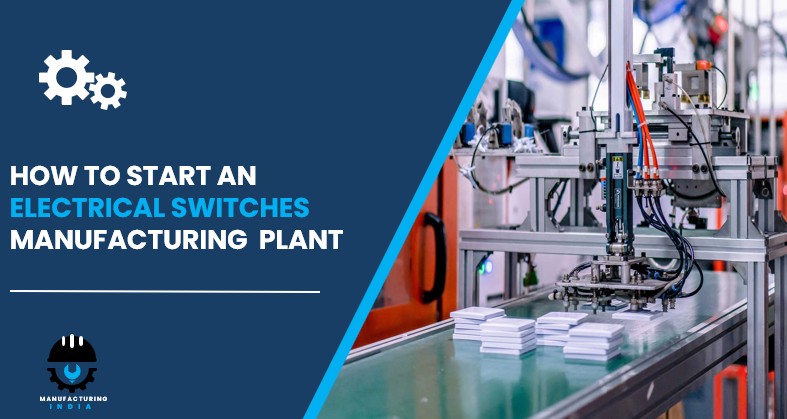
Setting up an electrical switches manufacturing plant in India represents a highly attractive investment proposition underpinned by robust and structurally growing demand from residential construction, commercial infrastructure development, industrial automation, automotive electrification, and renewable energy system integration. As urbanisation accelerates, smart home adoption expands, and India’s infrastructure pipeline continues to scale, electrical switches encompassing toggle, modular, push-button, rotary, and intelligent Wi-Fi-enabled variants occupy an indispensable position at the intersection of safety, automation, and energy efficiency across virtually every constructed environment. This growth trajectory, combined with expanding end-use sectors including housing, commercial real estate, smart cities, electric vehicles, and industrial process control, creates a highly favourable manufacturing environment for new entrants with robust quality systems and competitive cost structures.
What are Electrical Switches?
Electrical switches are electromechanical or electronic devices used to control the flow of electrical current within a circuit by establishing or interrupting continuity between two or more terminals. They are manufactured in a wide range of configurations including toggle, push-button, rocker, rotary, slide, modular, and smart (Wi-Fi/Zigbee-enabled) switches to serve the full spectrum of residential, commercial, industrial, and automotive applications. Key functional properties include durability under repeated mechanical cycling, dielectric strength, current and voltage rating compliance, fire resistance, and ingress protection (IP) ratings for outdoor and industrial use.
Advanced intelligent switch variants integrate wireless communication protocols (Wi-Fi, Zigbee, Z-Wave), energy monitoring sensors, touch-sensitive interfaces, and voice assistant compatibility (Amazon Alexa, Google Home, Apple HomeKit), enabling seamless integration into home automation, building management, and smart city infrastructure ecosystems. Electrical switches are manufactured primarily from engineering-grade thermoplastics (ABS, polycarbonate), stamped and plated metals (brass, silver alloys), and ceramic or thermoset materials for high-temperature industrial applications.
The global electrical switches market is driven by accelerating smart home adoption, rising infrastructure investment, electrification of the automotive sector, and energy efficiency mandates across all major economies. India’s electrical switches market size was valued at USD 629.40 Million in 2025 and is expected to reach USD 1,258.10 Million by 2034, exhibiting a CAGR of 7.8% from 2026 to 2034.
Cost of Setting Up an Electrical Switches Manufacturing Plant
The total capital investment required to establish an electrical switches manufacturing plant is shaped by several key parameters: annual production capacity (measured in millions of units), product mix complexity (standard modular switches versus smart/Wi-Fi-enabled switches), automation and assembly line configuration, facility specification, raw material sourcing strategy, tooling and mould investments, and applicable regulatory and quality compliance requirements. Below is a structured breakdown of all major cost components.
1. Capital Expenditure (CapEx)
Total capital investment in an electrical switches manufacturing plant covers the following major heads:
Land and Site Development
This encompasses land acquisition or lease, site preparation, boundary development, and utilities connectivity. Site selection should prioritise proximity to plastic raw material suppliers (ABS/PC resin producers), brass and silver contact material suppliers, and mould manufacturing vendors to minimise inbound logistics costs. Access to reliable power supply for injection moulding and automated assembly lines, strong road and logistics infrastructure for both inbound materials and outbound finished goods dispatch to distributor networks, and availability of a trained electromechanical and quality control workforce are critical site selection criteria. Compliance with industrial zoning regulations, electrical and electronics manufacturing standards, fire safety regulations, and environmental compliance frameworks governing plastic processing waste must be assessed from project initiation.
Civil Works and Construction
Building costs cover the main production facility including injection moulding shop, metal stamping and plating section, sub-assembly and final assembly areas, automated testing and quality control zones, finished goods warehousing and dispatch infrastructure, tool room and mould maintenance workshop, administrative block, and utility infrastructure including power backup, compressed air systems, cooling water, and effluent treatment plant. Construction must comply with applicable factory act requirements, electrical safety regulations, fire safety norms, and quality management system infrastructure standards for IS and international certification compliance.
Machinery and Equipment
Machinery represents the single largest CapEx component. Key equipment required for an electrical switches manufacturing plant includes:
- Injection Moulding Machines: High-speed servo-driven injection moulding machines for producing switch bodies, rocker arms, face plates, and frame components from ABS, polycarbonate, and nylon resins in multi-cavity precision moulds
- Precision Moulds and Tooling: Multi-cavity progressive and family moulds for producing switch body housings, rockers, frames, and decorative covers to tight dimensional tolerances; mould maintenance and repair infrastructure
- Metal Stamping and Forming Presses: Progressive die stamping presses for producing brass and phosphor-bronze electrical contact components, terminal strips, and earth continuity clips
- Electroplating and Surface Finishing Lines: Silver and nickel electroplating systems for contact components to achieve target contact resistance, corrosion resistance, and arc erosion performance specifications
- Automated Assembly Lines: Semi-automatic or fully automatic switch assembly lines integrating robotic pick-and-place, screw insertion, spring loading, contact assembly, and clip-fit operations for high-volume modular switch assembly
- Automated Electrical Testing Equipment: High-voltage dielectric withstand testers, contact resistance meters, insulation resistance testers, endurance cycling test rigs, and temperature rise test chambers for 100% outgoing quality verification
- PCB Assembly and SMT Lines (for Smart Switches): Surface mount technology (SMT) pick-and-place machines, reflow soldering ovens, automated optical inspection (AOI) systems, and Wi-Fi module programming and test fixtures for intelligent switch variants
- Ultrasonic Welding Machines: Ultrasonic plastic welding systems for hermetically sealing switch enclosures and IP-rated outdoor switch assemblies
- Pad Printing and Marking Systems: Automated pad printing machines for applying regulatory markings, brand logos, current/voltage ratings, and CE/BIS certification marks on finished switch face plates
- Material Handling and Warehousing: Automated conveyor systems, bin-feeding hoppers, FIFO racking systems, and finished goods palletizing equipment
Other Capital Costs
These include pre-operative expenses, commissioning charges, import duties on specialised automated assembly and testing equipment, mould procurement lead times and tooling validation costs, staff training and competency development, initial raw material and consumable inventory for production commissioning, regulatory compliance setup including BIS (Bureau of Indian Standards) IS 3854 certification for switches for domestic purposes, CE Marking for export market access, and ISO 9001 quality management system establishment costs.
Request a Sample Report for In-Depth Market Insights: https://www.imarcgroup.com/electrical-switches-manufacturing-plant-project-report/requestsample
2. Operational Expenditure (OpEx)
Raw materials principally engineering thermoplastics (ABS, polycarbonate, nylon) for housing components and brass, silver alloys, and phosphor bronze for electrical contacts constitute the dominant operating cost, typically representing 65–75% of total OpEx. Utility costs, driven primarily by the high electrical energy consumption of injection moulding machines, electroplating systems, and automated assembly and testing lines, account for 5–10% of OpEx. Labour, maintenance, quality control, tooling consumables, packaging, transportation, and overhead costs constitute the remainder of the operating cost base.
3. Plant Capacity
The proposed electrical switches manufacturing facility is designed with an annual production capacity ranging between 10–50 million units, enabling economies of scale while maintaining operational flexibility. This capacity range supports a diversified product portfolio of standard modular switches, decorative switches, industrial-grade switches, and smart Wi-Fi-enabled switches serving residential, commercial, and industrial end-use segments across domestic and export markets.
4. Profit Margins and Financial Projections
The project demonstrates strong profitability under normal operating conditions. Financial projections encompass capital investment, operating costs, capacity ramp-up schedule, product mix between standard and premium smart switch variants, and forward demand outlook underpinned by India’s infrastructure pipeline and smart home adoption trajectory. A comprehensive feasibility analysis includes sensitivity analysis, Net Present Value (NPV), Internal Rate of Return (IRR), and Payback Period calculations. Gross margins for electrical switches manufacturing typically range from 35–45%, supported by stable structural demand, improving product mix toward higher-value smart switches, and the cost advantages of vertically integrated plastic and metal component manufacturing. Net profit margins of 18–25% are achievable with disciplined cost management, optimal capacity utilisation, and a strong branded or OEM supply chain positioning.
Why Set Up an Electrical Switches Manufacturing Plant?
Accelerating Smart Home and Building Automation Adoption
The global smart home market is undergoing rapid structural expansion, with approximately 54 million households in the US alone equipped with at least one smart device. Smart switches represent the most visible and frequently interacted-with smart home hardware interface, making them a primary product category for smart home ecosystem growth. Wi-Fi-enabled, touch-sensitive, and voice-controlled switches are transitioning from premium luxury products to mainstream consumer electronics as platform costs decline, installation becomes simpler, and consumer awareness of energy monitoring and remote control capabilities grows. This transition is creating sustained demand for technologically advanced switch variants with significantly higher average selling prices and gross margins than conventional mechanical switches.
Robust Infrastructure Development and Urbanisation Pipeline
India’s massive infrastructure development pipeline spanning residential housing under the Pradhan Mantri Awas Yojana, commercial real estate, smart city development, metro rail and airport expansion, industrial corridor development, and renewable energy infrastructure is creating sustained, volume-driven demand for electrical switches across all product categories. Each residential unit requires an average of 15–30 electrical switch points, and commercial and industrial buildings require substantially higher switch counts per square metre of constructed space. Infrastructure-led demand provides a predictable, volume-stable revenue base for manufacturers supplying builder and contractor channels alongside retail brand-driven consumer channels.
Safety and Regulatory Compliance Driving Product Upgrades
Increasingly stringent electrical safety standards, BIS mandatory certification requirements, and growing consumer and institutional awareness of electrical safety hazards are driving replacement of substandard, uncertified switch products with compliant, quality-certified alternatives across all market segments. The Bureau of Indian Standards IS 3854 certification requirement for domestic switches, combined with rising enforcement of electrical installation safety standards in commercial and industrial buildings, is accelerating market formalisation and creating competitive advantage for manufacturers with robust quality management systems and certified product portfolios. Regulatory compliance and product safety certification represent a sustainable competitive moat against informal sector competition.
Sustainability Focus and Energy Efficiency Integration
Smart switches with integrated energy monitoring, occupancy sensor compatibility, and programmable scheduling capabilities enable measurable reductions in residential and commercial electrical energy consumption a priority for building developers, facility managers, and energy-conscious consumers. As India and major global economies implement increasingly ambitious energy efficiency standards for buildings and appliances, switches that enable intelligent load management and energy optimisation are becoming specification requirements rather than optional upgrades. Manufacturers positioned in the energy-efficient and smart switch segment can access green building certification programmes, institutional procurement tenders, and premium brand positioning that supports superior margin realisation versus commodity mechanical switch products.
Automotive and EV Charging Application Growth
The rapid electrification of the automotive sector is creating entirely new switch application categories including EV charging station control switches, battery management system interfaces, high-voltage safety interlock switches, and automotive-grade power distribution switches. India’s accelerating EV adoption, underpinned by government purchase incentives, charging infrastructure investment programmes, and declining EV total cost of ownership, is creating substantial incremental demand for specialised high-reliability switch components serving EV manufacturing and EV charging infrastructure deployment. Manufacturers with capabilities in high-current, high-reliability switch manufacturing are well-positioned to capture this structurally growing and technically differentiated demand segment.
Renewable Energy System Integration
Solar and wind energy system deployments require specialised disconnect switches, transfer switches, and DC-rated photovoltaic isolation switches for safe and code-compliant system installation and maintenance. India’s ambitious renewable energy capacity expansion target targeting 500 GW of non-fossil fuel electricity generation capacity is driving massive deployment of rooftop solar, utility-scale solar, and wind energy systems, each requiring multiple switch components for safe operation. This renewable energy-driven demand channel is additional and incremental to conventional construction and industrial switch demand, providing manufacturers with sustained multi-decade volume growth driven by independent macroeconomic forces.
Export-Oriented Demand Across High-Growth Markets
India has emerged as a competitive global manufacturing base for electrical switches, serving export markets across the Middle East, Africa, Southeast Asia, and developed markets in Europe and North America. Indian switch manufacturers with internationally recognised certifications CE Marking, CB Scheme, IEC compliance, UL Listing are well positioned to access global OEM supply chains, international construction projects, and branded product export channels. The combination of cost-competitive manufacturing economics, improving product quality and design capabilities, and proximity to high-growth emerging market export destinations creates a compelling case for export-oriented manufacturing investment in India.
Make in India and PLI Policy Support
India’s Production Linked Incentive (PLI) scheme for White Goods and Electronic Components, the government’s push for domestic manufacturing of electrical and electronics products, and state-level industrial investment incentives provide meaningful financial support for qualified electrical switch manufacturers. Policies aimed at reducing import dependence on switch components from China particularly for smart switch PCBs, wireless modules, and precision metal contacts are creating protected domestic demand opportunities and import substitution investment incentives for vertically integrated Indian manufacturers investing in component-level manufacturing capabilities.
Manufacturing Process Overview
The electrical switches manufacturing process transforms engineering thermoplastics, metal alloys, and electronic components into finished, certified switch products through a sequence of precision forming, sub-assembly, automated assembly, quality testing, and packaging operations. The key process stages are:
- Material Selection and Procurement: Material Selection and Procurement: Engineering thermoplastics (ABS, polycarbonate, nylon 66) for housing components; brass and phosphor-bronze for electrical contact components; silver and nickel alloys for contact plating; springs, screws, and hardware; PCB substrates and SMT components for smart switch variants. Material quality conformance to IS/IEC specifications is verified on receipt.
- Injection Moulding: Injection Moulding: ABS, PC, and nylon resin pellets are injection-moulded in high-speed servo-driven machines using precision multi-cavity moulds to produce switch bodies, rocker arms, face plates, frames, and cover components to tight dimensional and surface finish specifications. Colour matching and aesthetics are controlled through master batch pigment systems.
- Metal Stamping and Contact Manufacturing: Metal Stamping and Contact Manufacturing: Brass and phosphor-bronze strip is progressively stamped and formed into terminal blades, contact strips, earth continuity clips, and current-carrying metal parts. Contact surfaces are electroplated with silver or nickel to achieve target contact resistance and arc erosion resistance specifications.
- PCB Assembly (Smart Switches): PCB Assembly (Smart Switches): Surface mount technology (SMT) lines place and solder microcontrollers, Wi-Fi or Zigbee modules, power supply components, and indicator LEDs onto PCB substrates. Automated optical inspection (AOI) and in-circuit testing (ICT) verify PCB assembly quality before integration into switch sub-assemblies.
- Sub-Assembly and Component Integration: Sub-Assembly and Component Integration: Contact mechanisms, actuator rockers, terminal blocks, and internal springs are assembled into switch mechanism sub-assemblies on semi-automatic assembly fixtures. PCB sub-assemblies are integrated into smart switch bodies with appropriate electrical connections and mechanical fixings.
- Final Assembly: Final Assembly: Switch mechanisms are assembled into front plate housings, back boxes, and face frames on automated assembly lines incorporating robotic pick-and-place, ultrasonic welding, and automated clip-fit assembly operations. Modular multi-gang switch assemblies are configured and verified against product specifications.
- Electrical Testing and Quality Control: Electrical Testing and Quality Control: 100% outgoing quality inspection subjects every finished switch unit to high-voltage dielectric withstand testing (typically 2 kV AC for 1 minute), contact resistance measurement, mechanical endurance cycling, and insulation resistance verification to IS 3854 / IEC 60669 specification requirements. Smart switches undergo Wi-Fi connectivity, firmware programming, and app pairing functional testing.
- Finishing and Marking: Finishing and Marking: Finished switches undergo surface inspection, pad printing of regulatory markings, BIS/CE certification marks, and brand identification on face plates. Aesthetic inspection for scratch, flash, and colour consistency compliance is performed before packaging release.
- Packaging: Packaging: Switches are packed in individual consumer retail cartons with installation instructions, in multi-pack trade boxes for contractor channels, or in bulk export packaging. Finished goods are warehoused in FIFO-controlled storage and dispatched through distributor or direct OEM supply chain channels.
Key Applications of Electrical Switches
The electrical switches market serves several major end-use segments across construction, industrial, automotive, and energy sectors:
- Residential: Residential: Electrical switches control lighting, ceiling fans, air conditioning, and all other fixed electrical installations in homes and apartments. Smart switches offer remote control via smartphone apps, voice assistant integration, energy consumption monitoring, and automated scheduling, enabling significant energy savings and user convenience in modern smart homes.
- Commercial: Commercial: Office buildings, retail complexes, hotels, hospitals, and educational institutions deploy switches as integral components of lighting control systems, HVAC control interfaces, building management systems, and emergency power systems. Commercial applications increasingly require aesthetically premium, slim-profile modular switches with energy monitoring and building automation integration capabilities.
- Industrial: Industrial: Manufacturing plants, process industries, and utility installations use heavy-duty industrial switches for machinery control, process automation systems, motor control centres, and power distribution panels. Industrial switches must meet stringent IP protection, temperature rating, and mechanical durability requirements for reliable operation in harsh industrial environments.
- Automotive and EV: Automotive and EV: Automotive-grade switches control vehicle lighting, windows, HVAC systems, and infotainment interfaces. EV charging stations use high-current switches to control power delivery and ensure safe, code-compliant charging operations. The rapid growth of EV adoption in India is creating structurally growing demand for EV-specific switch components.
- Renewable Energy: Renewable Energy: Solar PV and wind energy systems require specialised DC-rated disconnect switches, transfer switches, and isolation switches for safe installation, maintenance, and operation. India’s solar energy deployment scale is creating large and growing demand for photovoltaic-rated switch components.
Global Electrical Switches Market Outlook
India’s electrical switches market was valued at USD 629.40 Million in 2025. According to IMARC Group estimates, the market is expected to reach USD 1,258.10 Million by 2034, exhibiting a CAGR of 7.8% from 2026 to 2034. Globally, the electrical switches market benefits from multiple structural demand drivers:
- Rising urbanisation and residential construction activity in India, Southeast Asia, the Middle East, and Africa driving sustained volume demand growth across all switch product categories
- Structural shift from conventional mechanical switches to smart, Wi-Fi-enabled modular switches driven by smart home platform adoption, declining IoT component costs, and growing consumer awareness of energy efficiency benefits
- Increasing infrastructure investment in commercial real estate, smart cities, metro rail, airports, data centres, and healthcare facilities creating high-value specification-driven switch demand channels
- Regulatory environment tightening through mandatory BIS certification, enhanced building safety code enforcement, and energy efficiency standards driving market formalisation and quality upgrades
- EV charging infrastructure deployment creating incremental demand for specialised high-current and high-reliability switch components
- India’s solar energy expansion programme creating sustained demand for DC-rated photovoltaic isolation switches and renewable energy system control components
- Make in India policy support, PLI scheme incentives, and import substitution initiatives supporting domestic electrical and electronics manufacturing investment
Major players in the global and Indian electrical switches market include Schneider Electric, Legrand, Havells India, ABB, Siemens, Panasonic India, Anchor Electricals (Panasonic Group), Philips (Signify), Finolex Cables, Wipro Consumer Care, GM Modular, Crabtree India, and Goldmedal Electricals, serving residential, commercial, industrial, automotive, and renewable energy end-use sectors.
Licenses and Regulatory Requirements
Establishing an electrical switches manufacturing unit requires a range of approvals and certifications, which may vary by country and jurisdiction, including:
- Business registration and company incorporation under applicable company law
- Factory License under applicable state Factories Act provisions for manufacturing operations
- BIS (Bureau of Indian Standards) Compulsory Registration / IS 3854 Certification for switches for domestic purposes under the Electrical Wiring Accessories Quality Control Order
- ISO 9001:2015 Quality Management System Certification for quality management infrastructure compliance
- ISO 14001 Environmental Management System Certification for environmental compliance in plastics and metal processing operations
- Pollution Control Board Clearances Consent to Establish (CTE) and Consent to Operate (CTO) for manufacturing operations involving plastic processing, electroplating waste, and surface treatment effluent
- CE Marking and LVD (Low Voltage Directive) compliance for export to European Union markets
- CB Scheme Certification (IEC 60669) for access to international OEM supply chain and export markets
- UL Listing or ETL/CSA certification for North American market access
- RoHS (Restriction of Hazardous Substances) compliance certification for export market access
- REACH compliance documentation for chemical substance management in plastics and surface treatment processes
- Export-Import Code (IEC) for international market access
- Trademark and Brand Registration for proprietary branded product launch
- Occupational Health and Safety management compliance (ISO 45001 / Factories Act provisions) for manufacturing worker safety
Key Challenges to Consider
Raw Material Price Volatility Polymer Resin and Metal Inputs
Engineering thermoplastics (ABS, polycarbonate) account for 65–75% of total operating costs, and their prices are directly linked to petrochemical feedstock (benzene, propylene, bisphenol-A) and crude oil price cycles. Brass and silver contact material costs are subject to non-ferrous metal commodity price volatility. These combined raw material price fluctuations can significantly compress gross margins if not actively managed through forward purchasing arrangements, long-term supplier contracts, and product reformulation to alternative materials where technically feasible. Effective procurement strategy and raw material cost hedging are critical operational competencies for electrical switch manufacturers.
Tooling Investment and Mould Lifecycle Management
Precision injection moulds for switch components represent a significant upfront capital investment and require ongoing maintenance to maintain dimensional and surface quality specifications over production lifecycles of typically 500,000–2,000,000 shots. Mould damage, wear, and obsolescence driven by product design changes require active mould lifecycle management, preventive maintenance protocols, and budgeted mould refurbishment and replacement programmes. New product introductions require substantial tooling investment with lead times of 8–16 weeks for complex multi-cavity moulds, requiring careful product development pipeline planning and tooling capital budget management.
Smart Switch Technology Integration and R&D Requirements
The transition from conventional mechanical switches to smart switches incorporating Wi-Fi, Zigbee, or Bluetooth connectivity requires manufacturers to develop substantially new competencies in PCB design, firmware development, RF compliance testing, cybersecurity, and over-the-air firmware update management. Smart switch product development requires investment in electronics engineering teams, software development capabilities, EMC/RF testing laboratory infrastructure, and ongoing app development and cloud platform maintenance. The pace of technology change in home automation protocols (Matter, Thread, Zigbee 3.0) requires continuous R&D investment to maintain product compatibility and competitiveness with global smart switch platforms.
Competition from Unorganised and Import Sources
The electrical switches market particularly in the lower-price, builder and contractor supply segments faces intense price competition from unorganised domestic manufacturers producing uncertified or sub-specification products, and from low-cost imports from China. Competing with non-compliant product on pure price is structurally unviable for certified manufacturers with regulatory-compliant quality systems. Effective market positioning must emphasise BIS certification, safety compliance, product quality, and warranty reliability to justify price premiums over informal sector competition. Distribution channel depth, brand equity investment, and after-sales service support are critical competitive differentiators in price-sensitive market segments.
Distribution Channel Development and Brand Building
The electrical switches market is served by a complex multi-tier distribution structure encompassing national distributors, regional dealers, electrical retailers, electrical contractors, project supply chains, OEM supply channels, and e-commerce platforms. Building effective distribution coverage across this multi-channel landscape requires significant investment in sales team development, dealer network establishment, trade marketing, and after-sales service infrastructure. New entrants without established brand recognition face substantial challenges in securing premium shelf space in electrical retail outlets and winning specification approval from architects, consultants, and developers for commercial project supply channels.
Quality Certification and Compliance Maintenance
Maintaining BIS certification, IS 3854 compliance, and international export certifications requires ongoing investment in quality management systems, laboratory infrastructure, and surveillance audit preparedness. Producing switches that consistently meet high-voltage dielectric withstand, contact resistance, mechanical endurance, and temperature rise requirements across all production batches requires disciplined statistical process control, incoming material quality management, and systematic process monitoring. Any quality system lapse resulting in BIS certification suspension can close domestic distribution channels and damage brand reputation with severe commercial consequences.
Frequently Asked Questions (FAQs)
1. How much does it cost to set up an electrical switches manufacturing plant?
The total investment depends on plant capacity (10–50 million units per annum), product mix complexity (standard mechanical switches versus smart Wi-Fi-enabled switches), automation level of assembly and testing operations, facility specification, tooling investment, location, and target market certifications. Costs cover land, civil construction (moulding shop, assembly hall, quality laboratory, warehousing, utilities), machinery (injection moulding machines, metal stamping presses, plating lines, assembly automation, testing equipment), precision tooling and moulds, quality certifications, working capital, and regulatory compliance. A comprehensive feasibility study from IMARC Group provides detailed, capacity-specific cost estimates covering all CapEx and OpEx components.
2. Is electrical switches manufacturing a profitable business in 2026?
Yes. Sustained and structurally growing demand from residential construction, commercial infrastructure, industrial automation, EV charging, and smart home adoption combined with gross margins of 35–45% and net profit margins of 18–25% makes electrical switches manufacturing financially attractive. The ongoing product mix transition toward premium smart switches offers margin expansion opportunities above conventional mechanical switch economics. Break-even periods of 4–6 years are achievable with disciplined capacity ramp-up, strong brand or OEM channel positioning, and efficient cost management.
3. What machinery and equipment are required for an electrical switches manufacturing plant?
Key equipment includes servo-driven injection moulding machines with multi-cavity precision moulds, progressive die metal stamping presses, silver and nickel electroplating systems, semi-automatic and automated switch assembly lines, ultrasonic plastic welding machines, pad printing and marking systems, high-voltage dielectric withstand test equipment, contact resistance meters, mechanical endurance cycling test rigs, and for smart switch production, SMT assembly lines, reflow soldering ovens, automated optical inspection (AOI) systems, and Wi-Fi programming test fixtures.
4. What licenses and approvals are required?
Required approvals include company registration, Factory License, BIS certification under IS 3854 (mandatory for domestic switches in India), ISO 9001 quality management certification, Pollution Control Board clearances for plastics processing and electroplating waste, and export market certifications including CE Marking, CB Scheme (IEC 60669), and RoHS compliance. UL Listing or ETL certification is required for North American market access. BIS compulsory registration is a legal prerequisite for domestic market supply of electrical switches under the Electrical Wiring Accessories Quality Control Order.
5. How long does it take to commission an electrical switches manufacturing plant?
Typically, 18–30 months from project initiation to commercial production launch, depending on project scale, facility construction timeline, injection moulding machine and tooling procurement lead times (moulds typically require 8–16 weeks), assembly automation procurement, regulatory approvals, product certification timelines, and OEM customer qualification requirements. BIS certification typically requires 3–6 months for initial product type approval including laboratory testing and factory audit, and should be initiated early in the project timeline to avoid delay to commercial launch.
6. What are the key raw materials for electrical switches manufacturing?
Primary raw materials include ABS (acrylonitrile-butadiene-styrene) resin, polycarbonate resin, and nylon 66 resin for housing and component injection moulding; brass strip and sheet for electrical contact and terminal components; phosphor-bronze strip for spring contacts; silver and nickel compounds for contact electroplating; master batch pigments for colour matching; steel screws, springs, and hardware; and for smart switches, PCB substrates, SMT components (microcontrollers, wireless modules, MOSFETs), and LED indicators. Packaging materials include individual retail cartons, multi-pack trade boxes, and protective inner packaging.
7. What is the break-even period for an electrical switches manufacturing plant?
The break-even period generally ranges from 4–6 years for well-positioned plants, depending on capacity utilisation ramp-up trajectory, product mix between standard and smart switch variants, brand versus OEM channel positioning, operating efficiency, and distribution channel development pace. Securing long-term supply agreements with residential developers, electrical contractors, institutional buyers, or OEM brand partners significantly improves revenue predictability and accelerates break-even achievement.
8. What are the main types of electrical switches and their applications?
Primary product categories include standard modular switches (for residential and commercial wiring installation), decorative and premium modular switches (for premium residential and hospitality specification), industrial-grade switches (for machinery and process control applications), smart Wi-Fi switches (for home automation and energy management), EV charging control switches (for EV charging station infrastructure), and DC-rated photovoltaic switches (for solar energy system installation). Each category serves distinct market segments with different quality specifications, certification requirements, regulatory standards, and price realisation profiles.
9. What government incentives are available for electrical switches manufacturers?
Manufacturers may benefit from Production Linked Incentive (PLI) schemes for White Goods and Electronic Components under the Ministry of Electronics and Information Technology (MeitY), state industrial investment incentives and capital subsidies for electronics manufacturing, export promotion benefits through the Electronics and Computer Software Export Promotion Council (ESC), technology upgrade fund schemes for electronics manufacturing modernisation, and infrastructure support in designated Electronic Manufacturing Clusters (EMCs) and Special Economic Zones (SEZs). Import substitution policy support and customs duty structures favouring domestic manufacturing of electrical components provide additional competitive advantage to Indian manufacturers over imported products.
10. How does electrical switches manufacturing compare to other electronics manufacturing in terms of setup?
Compared to semiconductor or PCB manufacturing, electrical switches manufacturing has lower technology barriers and more accessible capital requirements conventional mechanical switch manufacturing does not require cleanroom environments or complex electronics manufacturing infrastructure. However, smart switch manufacturing requires meaningful investment in SMT assembly, RF compliance testing, and firmware development capabilities. The manufacturing infrastructure for conventional mechanical switches supports high production volumes from relatively modest facilities, while smart switch variants require progressively more sophisticated electronics and software capabilities. Vertical integration of plastic moulding and metal contact manufacturing provides significant cost advantages and supply chain control compared to an assembly-only operation dependent on component suppliers.
Key Takeaways for Investors
The electrical switches manufacturing industry represents a high-growth, structurally defensive, and financially compelling investment opportunity positioned at the intersection of India’s urbanisation megatrend, smart home technology revolution, renewable energy transition, and industrial automation expansion. Robust and diversified demand from residential construction, commercial infrastructure, industrial automation, EV charging, and renewable energy applications provides resilience against single-sector demand volatility and multiple simultaneous revenue growth pathways. Ongoing product mix transition toward smart Wi-Fi-enabled switches offers margin expansion beyond conventional mechanical switch economics, with smart switches commanding 3–8x the average selling price of comparable conventional modular switches. India’s infrastructure development pipeline including housing programmes, smart city development, renewable energy deployment, and EV charging infrastructure provides sustained, policy-supported volume demand growth across all switch product categories. BIS certification requirement and regulatory compliance frameworks create meaningful competitive barriers protecting certified manufacturers against unorganised and non-compliant competition in domestic market channels, India’s cost-competitive manufacturing economics, improving design and quality capabilities, and strategic position for export market supply to the Middle East, Africa, and Southeast Asia create a compelling case for export-oriented manufacturing investment, Make in India PLI scheme support, Electronic Manufacturing Cluster infrastructure, and import substitution policies provide financial incentives and protected domestic demand opportunities for qualified electrical switch manufacturers.
About the Author