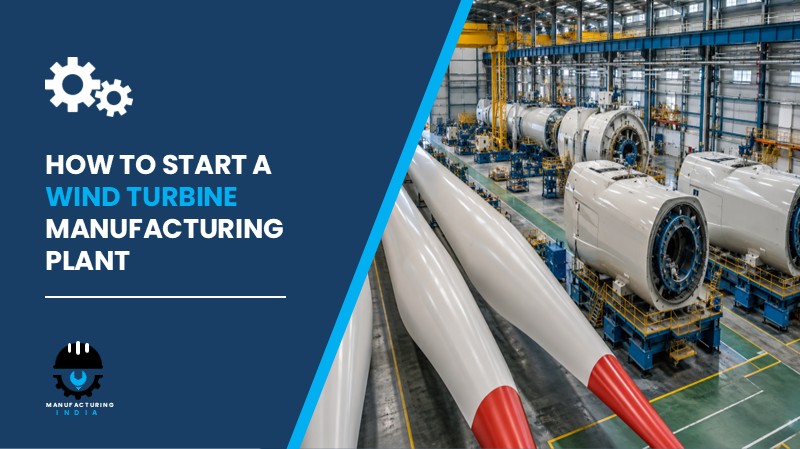
Setting up a wind turbine manufacturing plant in India presents a compelling investment case driven by the country’s accelerating renewable energy transition, surging electricity demand, and robust policy ecosystem. India’s power generation utilities, renewable energy developers, industrial energy consumers, offshore energy infrastructure, and government energy projects are all creating sustained demand for domestically manufactured wind turbines. As one of the world’s top wind energy markets – recording 3.4 GW of new installations in 2024 – India’s need for a strong, localised turbine manufacturing base has never been more strategically urgent.
India’s structural advantages make it an ideal location for wind turbine production. The country’s ongoing urbanisation, expanding infrastructure development, and the government’s Make in India initiative collectively create an enabling environment for capital-intensive manufacturing. States with strong industrial ecosystems – Gujarat, Tamil Nadu, Maharashtra, and Rajasthan – offer proximity to coastal wind zones, logistics corridors, and established component supplier networks. Combined with cost-competitive land and labour, these factors position India as a globally competitive hub for renewable energy equipment manufacturing.
Establishing a wind turbine manufacturing plant in India is financially viable across a wide range of capacities, supported by strong policy tailwinds, growing demand across power and industrial sectors, gross profit margins of 25-35%, and a market expanding from USD 2.58 Billion in 2025 toward USD 5.65 Billion by 2034. The investment case is underpinned by long-term power purchase agreements and India’s legally binding decarbonisation commitments.
What is a Wind Turbine?
A wind turbine is a renewable energy generation device that converts kinetic energy from wind into mechanical energy, which is then transformed into electricity using a generator. Wind turbines consist of key components including rotor blades, nacelle, gearbox, generator, tower, and control systems. They are categorised into onshore and offshore variants, and further into horizontal-axis and vertical-axis designs – with horizontal-axis turbines being the most widely deployed globally.
Modern wind turbines incorporate advanced aerodynamics, composite materials, and digital monitoring systems to enhance efficiency, durability, and energy output. The production process encompasses blade design and composite material fabrication, mould preparation and resin infusion for blades, nacelle assembly, tower fabrication, surface coating and corrosion protection, final assembly and integration, quality inspection, and packaging. Wind turbines serve end-use industries including power generation utilities, renewable energy developers, industrial energy consumers, offshore energy infrastructure, and government energy projects.
Cost of Setting Up a Wind Turbine Manufacturing Plant in India
The total cost of establishing a wind turbine manufacturing plant depends on plant capacity, technology selection, geographic location, degree of automation, and regulatory compliance requirements.
1. Capital Expenditure (CapEx)
Capital investment in a wind turbine manufacturing facility covers several major cost heads:
Land and site development: including land registration, boundary development, and related site preparation charges – forms a substantial part of the total capital investment, and Indian investors may consider locating within Special Economic Zones or state-notified industrial estates to benefit from reduced land costs and single-window approvals.
Civil works and construction: include factory sheds, quality control laboratories, raw material storage areas, finished goods warehouses, effluent treatment infrastructure, and an administrative block – all sized to handle the scale of turbine component manufacturing.
Machinery and equipment cost: represent the largest portion of total capital expenditure. Key machinery required includes:
- Blade moulding and resin infusion equipment
- CNC machining tools
- Tower rolling and welding machines
- Assembly cranes and lifting equipment
- Testing and calibration systems
- Surface coating and painting systems
Other capital costs include effluent treatment plant installation, pre-operative expenses, commissioning charges, and import duties applicable to specialised machinery.
Request a Sample Report for In-Depth Market Insights: https://www.imarcgroup.com/wind-turbine-manufacturing-plant-project-report/requestsample
2. Operational Expenditure (OpEx)
Raw material cost: is the dominant driver of operational expenses, accounting for 70-80% of total OpEx. The primary raw materials required are blades (fiberglass/epoxy), tower (steel), and nacelle components (gearbox, generator). Investors should negotiate long-term procurement contracts with reliable domestic and international suppliers to mitigate price volatility and ensure production continuity.
Utility costs: covering electricity, water, and steam – represent approximately 10-15% of total OpEx, reflecting the energy-intensive nature of blade infusion, welding, and surface treatment operations.
Other operating cost: include transportation, packaging, salaries and wages, depreciation, taxes, and repairs and maintenance. By the fifth year of operations, total operational costs are projected to increase substantially due to inflation, market fluctuations, potential rises in the cost of key materials such as fiberglass and steel, supply chain disruptions, and shifts in the global economy.
3. Plant Capacity
The proposed manufacturing facility is designed with an annual production capacity ranging between 500 MW and 2,000 MW, enabling economies of scale while maintaining operational flexibility. Capacity can be customized to suit individual investor requirements and target market size. Profitability improves significantly with higher capacity utilisation, as fixed costs are spread across a larger production volume.
4. Profit Margins and Financial Projections
The wind turbine manufacturing plant project demonstrates healthy profitability potential under normal operating conditions. Gross profit margins typically range between 25-35%, supported by stable demand and value-added applications across the renewable energy sector. Net profit margins range between 12-20%. Detailed five-year financial projections covering NPV, IRR, payback period, gross margin, and net margin are available in the full feasibility report from IMARC Group.
Why Set Up a Wind Turbine Manufacturing Plant in India?
Rising renewable energy adoption across India: The global shift toward clean energy is directly stimulating investments in wind power, with India recording 3.4 GW of new wind turbine installations in 2024. As India advances its renewable purchase obligations and carbon reduction commitments, domestic manufacturers are best positioned to capture supply chain value.
Strong policy and subsidy support: Governments at both central and state levels provide incentives, renewable purchase obligations, and long-term offtake frameworks for wind energy projects. The Make in India initiative actively encourages domestic turbine and component manufacturing, reducing reliance on imports and improving local supply chain depth.
High energy output potential and long asset lifecycle: Modern turbines deliver large-scale electricity generation capacity, while long-term power purchase agreements provide predictable revenue streams over the turbine’s operational life. This makes investment in wind turbine manufacturing especially attractive for investors seeking stable, long-duration returns.
Cost-competitive manufacturing environment: India offers cost-competitive land, skilled engineering labour, and an increasingly mature component supplier base across states such as Gujarat, Tamil Nadu, and Maharashtra. These factors combine to reduce both capital and operational costs relative to comparable facilities in Western markets.
Active industry investment and global momentum: In September 2025, Petrobras, in partnership with WEG SA and Norway’s Statkraft AS, unveiled Brazil’s most powerful onshore wind turbine – a 7-megawatt unit installed in Bahia state – signalling continued global investment in advanced turbine technology and raising the bar for turbine manufacturing capabilities worldwide.
Local supply chain preference by energy developers: Power generation utilities, renewable energy developers, and government infrastructure project agencies are increasingly prioritising locally manufactured turbines to reduce logistics costs, customs duties, and lead times – creating a direct commercial advantage for India-based manufacturers.
Manufacturing Process – Step by Step
The wind turbine manufacturing process uses blade design and composite material fabrication as the primary production method, integrated with nacelle assembly, tower fabrication, and systems integration.
- Blade design and composite material fabrication: Engineering and preparation of rotor blade designs using fiberglass/epoxy composite materials
- Mould preparation and resin infusion for blades: Precision moulds are prepared and resin infusion processes are executed to form structural blade laminates
- Nacelle assembly: Gearbox, generator, and control systems are assembled within the nacelle housing
- Tower fabrication: Steel tower sections are rolled, welded, and treated for structural integrity
- Surface coating and corrosion protection: All components receive protective coatings and anti-corrosion surface treatments
- Final assembly and integration: Blades, nacelle, and tower sections are integrated and aligned
- Quality inspection: Comprehensive testing and calibration of all systems against industry standards
- Packaging and dispatch: Finished turbine components are packaged and dispatched to power generation utilities, renewable energy developers, offshore energy projects, and government infrastructure sites
Key Applications
Wind turbines manufactured in India serve a broad range of industrial and infrastructure sectors:
- Utility-Scale Power Generation: Deployed in large wind farms to supply electricity to national grids
- Renewable Energy Developers: Used by independent power producers for long-term clean energy projects
- Industrial Energy Consumers: Adopted by industries for captive power generation and operational cost reduction
- Offshore Energy Sector: Offshore turbines generate high-capacity renewable power in coastal regions
- Government Infrastructure Projects: Installed under renewable energy expansion and climate transition programs
- Hybrid Renewable Power Systems: Integrated into hybrid energy systems combining wind with solar or storage
Leading Manufacturers
The global wind turbine industry is served by several multinational companies with extensive production capacities and diverse application portfolios. Key players include:
- Arkema
- ENERCON Global GmbH
- Siemens Gamesa Renewable Energy, S.A.U.
- GE VERNOVA
- Goldwind Americas
- Guodian United Power Technology Co., Ltd.
- Mingyang Smart Energy Group Co., Ltd.
- Sinovel Wind Group Co., Ltd.
Timeline to Start the Plant
- Feasibility study and project report preparation
- Land acquisition and site development
- Regulatory approvals and environmental clearances
- Factory licence and fire safety compliance
- Machinery procurement and installation
- Raw material supplier agreements and supply chain setup
- Trial production and quality testing
- Commercial production launch
Licences and Regulatory Requirements
Starting a wind turbine manufacturing unit in India requires several approvals:
- Business registration (Proprietorship, LLP, or Pvt Ltd)
- Factory Licence under the Factories Act
- Environmental Clearance from State Pollution Control Board
- GST Registration
- Fire Safety NOC
- Hazardous/Chemical compliance for fiberglass, epoxy resin, and surface coating chemicals used in blade manufacturing
- Effluent Treatment Plant (ETP) operational clearance
- Occupational Health and Safety compliance
Key Challenges to Consider
High Capital Requirements: Establishing a wind turbine manufacturing plant involves significant upfront investment in land, civil infrastructure, and specialised equipment such as blade moulding systems, CNC machining tools, and tower fabrication machinery – requiring robust financial planning and investor commitments.
Raw Material Price Volatility: Key inputs – including blades (fiberglass/epoxy), tower (steel), and nacelle components (gearbox, generator) – are subject to global commodity price fluctuations, making supplier contract strategy and hedging critical to cost stability.
Regulatory Compliance: Meeting environmental clearances, ETP requirements, and occupational health and safety standards requires dedicated compliance infrastructure, adding to both capital and operational costs.
Technology and Innovation Pressure: Technological advancements in turbine efficiency, blade size, and offshore installation capabilities are continuously raising performance benchmarks, requiring ongoing R&D investment to remain competitive.
Competition from Established Players: Domestic manufacturers will compete with globally established players including Siemens Gamesa Renewable Energy, GE VERNOVA, ENERCON Global GmbH, and Goldwind Americas – all with mature supply chains and proven technology portfolios.
Skilled Manpower: Wind turbine manufacturing demands specialised engineering and technical skills across blade composites, electrical systems, and precision machining – making talent acquisition and retention a key operational challenge in India’s evolving manufacturing labour market.
Key Takeaways for Investors
Investing in a wind turbine manufacturing plant in India represents a high-potential, long-duration opportunity driven by surging demand from power generation utilities, renewable energy developers, offshore energy infrastructure, and government energy projects. The project demonstrates financial viability across a wide capacity range, with gross margins of 25-35% and net margins of 12-20%, supported by a diversified revenue base. The India wind turbine market – valued at USD 2.58 Billion in 2025 – is projected to reach USD 5.65 Billion by 2034 at a CAGR of 9.1%, providing investors with a long runway of structural demand growth. With global decarbonisation commitments deepening, India’s renewable energy targets expanding, and domestic supply chain preferences strengthening, demand sustainability for locally manufactured wind turbines is well secured over the medium and long term.
About the Author