India’s manufacturing sector is evolving rapidly through industrial expansion, export growth, digital transformation, production modernization, and increasing pressure to improve efficiency.
Manufacturers today are not only expected to increase output—they are expected to do it while maintaining profitability, controlling operational costs, managing investments carefully, and improving long-term financial sustainability.
As competition grows and capital decisions become larger, businesses are increasingly focusing on structured financial planning through Capex and Opex management.
From manufacturing plants and industrial facilities to food processing units, engineering companies, pharmaceutical manufacturers, and infrastructure projects—businesses are increasingly adopting capex and opex planning support in India to strengthen financial decision-making.
Businesses that manage investment decisions strategically often improve operational resilience and long-term business performance.
What Is Capex and Opex Management?
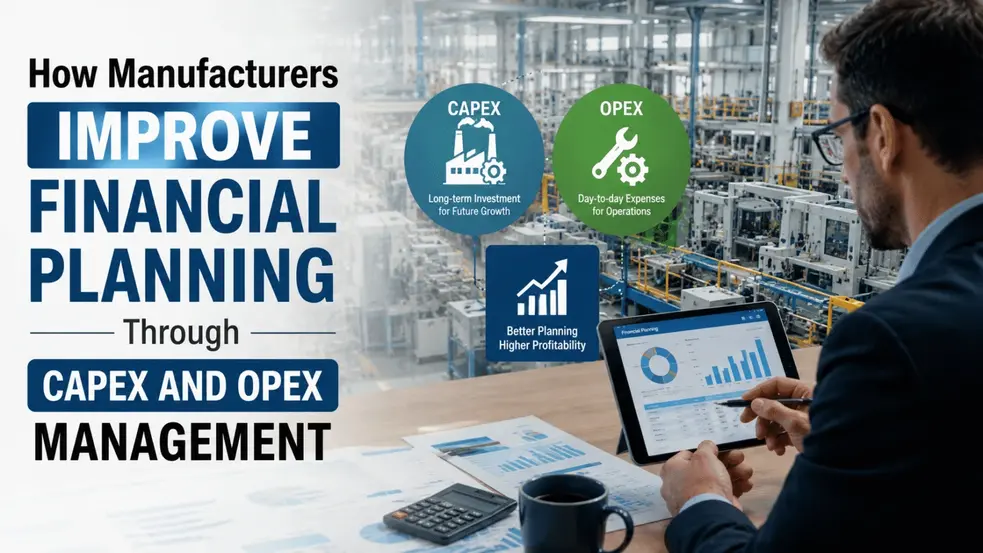
Capex (Capital Expenditure) and Opex (Operational Expenditure) represent two different but closely connected parts of business spending.
Capex refers to long-term investments made to build or improve business capabilities.
Examples include:
- factory setup
- plant expansion
- machinery procurement
- automation systems
- industrial infrastructure
- production equipment
- technology implementation
Opex refers to recurring expenses required to operate daily business activities.
Examples include:
- labor costs
- maintenance
- utilities
- logistics expenses
- software systems
- energy consumption
- operational overheads
Manufacturers that balance both effectively often create more sustainable growth models.
Need support with Capex and Opex planning : https://www.imarcengineering.com/contact?service=capex-opex-planning-support
Why Financial Planning Is Becoming More Important for Manufacturers
Manufacturing decisions have become more complex than before.
Earlier, investment decisions were often based mainly on production expansion.
Today businesses evaluate:
- cost efficiency
- investment returns
- operational sustainability
- scalability potential
- market uncertainty
- long-term profitability
Without proper planning—
high investment can sometimes create financial pressure instead of growth.
That is why manufacturers increasingly integrate financial analysis before major investment decisions.
Why Capex and Opex Must Work Together
One of the most common financial planning mistakes manufacturers make is evaluating Capex independently from operating costs.
At first—
lower investment may appear attractive.
But long-term operating expenses often tell a different story.
For example:
Option A:
Lower equipment cost.
Option B:
Higher initial investment but lower operating expenses.
Businesses evaluating only acquisition cost may select Option A.
However—
when maintenance, energy, productivity, and operating expenses are considered—
Option B may deliver better financial performance.
This is why integrated cost planning is becoming increasingly important.
How Manufacturers Improve Financial Planning Through Capex and Opex Management
Manufacturers improving financial performance usually follow a structured planning approach.
Demand Forecasting Before Investment
Investment decisions become stronger when demand assumptions are realistic.
Businesses analyze:
- production requirements
- customer demand
- market growth opportunities
- utilization expectations
- expansion forecasts
This improves investment discipline.
Capital Allocation Planning
Not all investments generate equal business value.
Manufacturers often classify investments into:
Essential Investments
Required for continuity.
Growth Investments
Focused on expansion.
Strategic Investments
Designed to improve competitiveness.
This improves financial prioritization.
Total Cost Evaluation
Successful financial planning rarely focuses only on purchase cost.
Manufacturers evaluate:
- installation costs
- operating expenses
- lifecycle cost
- maintenance requirements
- productivity impact
- replacement cycles
Total cost analysis improves investment visibility.
Operational Cost Optimization
Managing Opex does not necessarily mean reducing expenses.
It often means improving operational efficiency.
Manufacturers evaluate:
- utility efficiency
- preventive maintenance
- production performance
- inventory management
- workforce productivity
Small operational improvements frequently create significant financial gains.
Building Financial Flexibility
Business conditions continue changing.
Financial planning increasingly includes:
- phased investments
- scalable infrastructure
- flexible production capacity
- cost scenario modeling
This improves business resilience.
Financial Planning Challenges Manufacturers Commonly Face
Despite strong growth opportunities, manufacturers frequently face financial planning challenges.
Common issues include:
Overestimating Growth
Demand projections become unrealistic.
Ignoring Operating Costs
Investment receives attention while operational spending is underestimated.
Weak Cost Visibility
Businesses fail to understand complete ownership costs.
Delayed Infrastructure Planning
Expansion costs increase unexpectedly.
Limited Cross-Functional Alignment
Finance, operations, and production decisions become disconnected.
Addressing these challenges early improves investment outcomes.
Role of Financial Planning Advisory and Cost Evaluation Support
As industrial projects become larger and more investment-intensive, manufacturers increasingly evaluate structured approaches to improve planning accuracy.
Professional planning support may assist businesses through:
- investment analysis
- project budgeting
- financial scenario evaluation
- cost optimization assessment
- operational planning
- business expansion evaluation
Organizations working in industrial planning and project advisory—including IMARC Engineering—support manufacturers in developing more structured investment and operational planning approaches.
The objective is not simply reducing spending.
It is improving decision quality.
Manufacturing Industries That Benefit Most From Capex and Opex Planning
Different industries apply cost planning differently.
Engineering and Industrial Manufacturing
Improve capacity expansion planning.
Food Processing Industry
Optimize production and utility expenses.
Pharmaceutical Manufacturing
Balance compliance investment with operational efficiency.
Automotive Industry
Improve automation and production economics.
Industrial Infrastructure Projects
Strengthen long-term financial sustainability.
Emerging Trends in Manufacturing Financial Planning
Manufacturing financial management is evolving rapidly.
Key trends shaping future planning include:
- AI-driven cost forecasting
- digital budgeting systems
- predictive financial modeling
- operational analytics
- real-time cost monitoring
- integrated investment planning
- data-driven expansion decisions
Businesses increasingly view financial planning as a strategic growth capability rather than a finance activity.
Benefits of Capex and Opex Management
Manufacturers adopting structured financial planning can benefit through:
Better Investment Decisions
Improve capital allocation.
Improved Cost Efficiency
Control operational spending.
Higher Financial Visibility
Improve forecasting accuracy.
Stronger Operational Performance
Support sustainable production.
Long-Term Business Growth
Create scalable business models.
Conclusion
As manufacturing industries continue expanding across India, financial planning is becoming increasingly important for maintaining competitiveness and sustainable growth.
Capex and Opex management help manufacturers evaluate investments more effectively, improve cost visibility, optimize operations, and strengthen long-term business performance.
Businesses that combine investment planning with operational discipline are often better positioned to grow faster, operate smarter, and remain resilient in changing market conditions.
About the Author