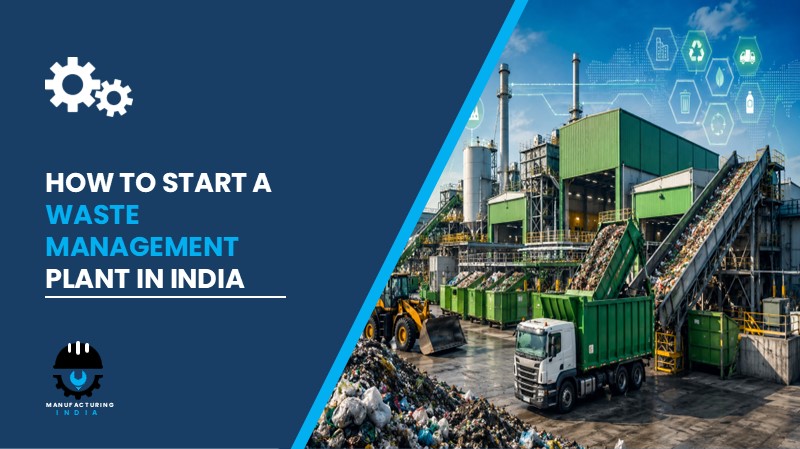
Setting up a waste management plant in India presents a compelling investment case driven by the country’s rapidly expanding urban centres, surging volumes of municipal solid waste (MSW), and the pressing need for organised industrial and residential waste processing. Municipal corporations, industrial waste services, and environmental services companies are among the primary demand drivers, all of which require scalable, technology-driven waste processing infrastructure. As India’s cities continue to grow, the organised handling of solid waste—through sorting, composting, recycling, biogas generation, and safe disposal—has become not just commercially viable but a civic necessity.
India’s demographic and policy landscape makes this a strategically sound sector for investment. The Make in India initiative, combined with rising Extended Producer Responsibility (EPR) obligations—which account for roughly 25–30% of total revenue generated by recycling companies—has created fertile ground for private capital. Industrial states such as Gujarat, Maharashtra, and Uttar Pradesh offer established infrastructure corridors, affordable land in industrial estates, and proximity to urban waste-generation hubs. With the India waste management market currently volumed at 11.93 Million Tons (2025) and projected to reach 17.13 Million Tons by 2034 at a CAGR of 4.1%, this is a sector with long-run demand visibility and strong policy backing.
Setting up this type of processing facility in India rests on policy tailwinds from EPR mandates and Make in India, cost-competitive land and labour, and gross margins of 30–45%. Rising urban waste generation and tightening environmental regulations ensure demand sustainability well beyond the break-even horizon.
What is Waste Management?
Waste management encompasses all activities that involve the collection, processing, recycling, treatment, and final disposal of waste materials originating from residential, commercial, and industrial operations. Current systems utilise four main processes: sorting, composting, recycling, and energy recovery—combined with safe disposal methods—to reduce environmental harm and meet local legal requirements.
Modern facilities are characterised by automated handling systems, material recovery units, and real-time monitoring technologies designed to maintain regulatory compliance and environmentally sustainable operations. The primary production method involves segregation and sorting, recycling, composting, energy recovery, and safe disposal of waste. Depending on incoming waste streams, outputs include compost for agriculture, biogas for energy, and recycled secondary raw materials for commercial resale.
End-use industries served include municipal corporations handling urban solid waste, industrial waste services firms managing hazardous and non-hazardous residues, and environmental services companies producing compost, biogas, and recycled materials for commercial and agricultural buyers.
Cost of Setting Up a Waste Management Plant in India
The cost of establishing this type of plant in India depends on plant capacity, chosen technology, site location, level of automation, and the extent of regulatory compliance infrastructure required.
1. Capital Expenditure (CapEx)
Land and Site Development costs cover land registration, boundary development, and site preparation. Investors should evaluate Special Economic Zones (SEZs) or designated industrial estates, which can offer duty benefits, subsidised infrastructure, and faster regulatory clearances.
Civil Works and Construction encompasses the processing shed, administrative block, quality control laboratory, raw material receiving bay, and finished goods storage. Given the need to segregate receiving, processing, composting, and dispatch zones, the civil footprint for a 100–500 TPD facility is substantial.
Machinery and Equipment represent the largest single component of CapEx. Key machinery required includes:
- Automated sorting lines
- Shredders
- Composting units
- Biogas plants
- Recycling machinery
Other Capital Costs include installation of an Effluent Treatment Plant (ETP), pre-operative expenses such as feasibility studies, licensing fees, commissioning charges, and import duties on specialised equipment.
Request a Sample Report for In-Depth Market Insights: https://www.imarcgroup.com/waste-management-plant-project-report/requestsample
2. Operational Expenditure (OpEx)
Raw Material Cost is anchored by mixed municipal solid waste (MSW), which accounts for approximately 10–20% of total operating expenses. Long-term supply agreements with urban local bodies (ULBs) and registered industrial waste generators help stabilise volumes and manage cost variability.
Utility Cost — covering electricity, water, and steam — constitutes approximately 20–30% of OpEx, making energy efficiency a critical operational lever. Facilities processing higher-calorific waste streams may partially offset utility costs through on-site biogas and energy recovery.
Other Operating Costs include transportation, packaging for compost and recyclate outputs, salaries and wages, routine maintenance, depreciation on machinery and civil assets, and applicable taxes. By the fifth year of operations, total operational costs are expected to increase substantially due to inflation, rising input costs, supply chain disruptions, and broader macroeconomic shifts.
3. Plant Capacity
The proposed facility is designed with a processing capacity of 100–500 tonnes per day (TPD), enabling economies of scale while maintaining operational flexibility. Capacity can be customised per investor requirements, municipal contracts secured, or the scale of industrial waste volumes available in the target geography. Profitability improves with higher capacity utilisation, as fixed overheads are spread across a larger processed volume.
4. Profit Margins and Financial Projections
The unit demonstrates healthy profitability under normal operating conditions. Gross profit margins range between 30–45%, supported by stable demand and value-added outputs including compost, biogas, and recycled material. Net profit margins range between 10–25%, reflecting the capital intensity of the infrastructure and the recurring, contract-backed revenue streams typical of organised operators. A full financial analysis—covering NPV, IRR, payback period, liquidity ratios, and a detailed profit and loss account—is available in the project report.
Why Set Up a Waste Management Plant in India?
Rising Urban Waste Generation. Growing urban populations across India’s Tier 1 and Tier 2 cities have created an acute need for effective collection, recycling, and disposal of rising volumes of MSW. The India waste management market, volumed at 11.93 Million Tons in 2025, underscores the structural demand that organised processing infrastructure can serve across Indian urban centres.
Expanding Industrial Waste Streams. Industrial growth across manufacturing, pharmaceuticals, chemicals, and electronics sectors generates increasing volumes of hazardous and non-hazardous waste requiring organised treatment and safe disposal. This creates a diversified revenue opportunity for facilities capable of handling both MSW and industrial waste.
Policy and Regulatory Tailwinds. Environmental regulations have grown more stringent, with government programmes now supporting recycling, composting, and waste-to-energy conversion. EPR charges—representing roughly 25–30% of total revenue for recycling companies—create a commercially structured incentive framework favouring organised, registered operators.
Cost-Competitive Manufacturing. India offers significant advantages in land acquisition within industrial estates, competitive labour rates, and an emerging domestic supply chain for machinery and ancillary equipment. These cost advantages directly support the 30–45% gross margin range achievable at operational scale.
Active Industry Investment. In June 2025, Puducherry launched a Rs 110 crore integrated solid waste management project, with a 60-tonne-per-day pyrolysis unit producing 12–15 tonnes of refuse derived fuel (RDF) daily. In April 2025, the UNDP ICPSD SDG AI Lab applied AI and GIS to identify over 1,200 high-risk illegal dumping sites globally, reflecting growing technology investment in the sector.
Local Supply Chain Preference. Municipal corporations and industrial waste generators strongly prefer local processing partners to minimise transportation costs and meet compliance timelines. India currently has 569 authorised recyclers registered with the Central Pollution Control Board (CPCB), with a combined annual processing capacity of 1.79 million tonnes—indicating an organised base alongside a substantial gap that new entrants can fill.
Manufacturing Process – Step by Step
The waste management manufacturing process uses segregation and sorting, recycling, composting, energy recovery, and safe disposal as the primary production method. Understanding each stage of the waste management manufacturing process is essential for investors planning capacity, machinery procurement, and quality assurance systems.
- Waste Reception and Weighing: Incoming mixed municipal solid waste (MSW) is received at the tipping floor, weighed, and logged for traceability.
- Automated Sorting: Automated sorting lines segregate waste into organics, recyclables (paper, plastic, metal, glass), and residuals using mechanical and optical technologies.
- Shredding: Bulky waste items are processed through shredders to reduce particle size and improve downstream handling efficiency.
- Composting: Segregated organic fractions are directed to composting units for controlled biological decomposition, producing stabilised compost for agricultural use.
- Biogas Generation: High-moisture organic fractions are channelled into biogas plants for anaerobic digestion, generating energy for on-site recovery or external supply.
- Recycling: Recyclable fractions—plastics, paper, metals—are processed through recycling machinery to produce secondary raw materials for resale.
- Residue and Safe Disposal: Non-recyclable residues are handled via safe disposal methods, including refuse derived fuel (RDF) production where applicable.
- Quality Testing and Dispatch: Finished outputs are tested against quality parameters before dispatch to municipal bodies, agricultural buyers, and industrial off-takers.
Key Applications
The production facility serves industries that rely on organised waste processing infrastructure to meet operational and compliance requirements.
- Municipal Corporations: Efficient handling and disposal of urban solid waste generated by residential and commercial areas under municipal jurisdiction.
- Industrial Sector: Recycling and treatment of hazardous and non-hazardous waste from manufacturing, pharmaceutical, and chemical industries.
- Environmental Services: Production of compost, biogas, and recycled materials for commercial and agricultural use, serving environmental services companies and agri-input distributors.
Leading Manufacturers
The global waste management industry is served by several multinational companies with extensive processing capacities and diverse application portfolios across municipal, industrial, and environmental services segments. Key players include:
- Veolia
- SUEZ Group
- Waste Management, Inc.
- Republic Services, Inc.
- Clean Harbors, Inc.
- Biffa plc
- Remondis SE & Co. KG
- Renewi plc
- Stericycle, Inc.
- Covanta Holding Corporation
Timeline to Start the Plant
- Feasibility study and project report preparation
- Land acquisition and site development
- Regulatory approvals and environmental clearances
- Factory licence and fire safety compliance
- Machinery procurement and installation
- Raw material supplier agreements and supply chain setup
- Trial production and quality testing
- Commercial production launch
Licences and Regulatory Requirements
Starting a waste management manufacturing unit in India requires several approvals:
- Business registration (Proprietorship, LLP, or Pvt Ltd)
- Factory Licence under the Factories Act
- Environmental Clearance from State Pollution Control Board
- GST Registration
- Fire Safety NOC
- Hazardous and Chemical Waste Authorisation under the Hazardous Waste Management Rules
- Effluent Treatment Plant (ETP) operational clearance
- Occupational Health and Safety compliance
Key Challenges to Consider
High Capital Requirements. Establishing this type of processing facility—with automated sorting lines, shredders, composting units, biogas plants, and recycling machinery—requires substantial upfront investment. Securing long-term municipal contracts before commissioning is critical to justifying the CapEx outlay.
Raw Material Price Volatility. While mixed municipal solid waste (MSW) is broadly available, consistent inflow of quality-sorted material depends on upstream collection efficiency and municipal body cooperation. Variability in waste composition can affect processing yields and output quality.
Regulatory Compliance. The sector is subject to multi-layered compliance—environmental clearances, hazardous waste authorisations, ETP operations, and EPR obligations—requiring dedicated management resources and periodic regulatory audits.
Technology and Innovation Pressure. Automated sorting technology, smart waste tracking systems, and modern recycling equipment are reshaping operational benchmarks. Investors must plan for technology refresh cycles to remain competitive and compliant with evolving standards.
Competition from Established Players. Global operators including Veolia, SUEZ Group, Waste Management Inc., Republic Services Inc., and Covanta Holding Corporation bring significant capital and operational experience. Domestic positioning through municipal tenders and localised service networks is key to competing effectively.
Skilled Manpower. Operating automated sorting lines, biogas plants, and composting units requires trained technical personnel. Recruitment, retention, and upskilling represent an ongoing operational cost and management priority.
Frequently Asked Questions
1. How much does it cost to set up a waste management plant in India?
Total capital investment depends on plant capacity (100–500 TPD), technology, location, and automation level. The full cost breakdown—covering land, civil works, machinery, and other capital costs—is detailed in the project report.
2. Is waste management profitable in India in 2026?
Yes. The production facility demonstrates gross profit margins of 30–45% and net profit margins of 10–25% under normal operating conditions, supported by stable municipal and industrial demand.
3. What machinery is required for a waste management plant in India?
Essential equipment includes automated sorting lines, shredders, composting units, biogas plants, and recycling machinery.
4. What licences and approvals are required to start a waste management plant in India?
Key approvals include business registration, Factory Licence, Environmental Clearance, GST Registration, Fire Safety NOC, Hazardous Waste Authorisation, ETP clearance, and Occupational Health and Safety compliance.
5. What raw materials are needed for waste management manufacturing?
The primary input is mixed municipal solid waste (MSW), which accounts for approximately 10–20% of total operating expenses.
6. What are the environmental compliance requirements for a waste management plant in India?
Operators must secure Environmental Clearance from the State Pollution Control Board, maintain an operational ETP, comply with Hazardous Waste Management Rules, and adhere to emission standards throughout the processing cycle.
7. What is the best location to set up a waste management plant in India?
The site must offer easy access to MSW supply, proximity to target markets, robust transportation and utility infrastructure, and compliance with local zoning and environmental regulations. States with high urban waste generation and strong industrial activity are preferred.
8. What is the break-even period for this type of plant in India?
Break-even depends on capacity utilisation, local tariff structures, and secured off-take agreements. The full report provides NPV, IRR, and detailed payback period calculations.
9. What government incentives are available for manufacturers in India?
India’s policy environment includes Make in India incentives, EPR compliance frameworks, state-level industrial subsidies, and potential integration within smart city and Swachh Bharat Mission programmes for qualifying projects.
Key Takeaways for Investors
A waste management plant in India represents a structurally sound opportunity, and establishing a well-capitalised waste management manufacturing plant anchored by demand from municipal corporations, industrial waste services, and environmental services companies, all of which require organised, scalable processing infrastructure. The investment demonstrates financial viability across the 100–500 TPD capacity range, with gross margins of 30–45% and net margins of 10–25% achievable under standard operating conditions. India’s market, currently at 11.93 Million Tons in 2025 and projected to reach 17.13 Million Tons by 2034 at a CAGR of 4.1%, provides a decade-long expansion runway that justifies long-term capital commitment. Rising urbanisation, EPR mandates, and tightening environmental regulation ensure that demand for organised waste processing services will remain structurally sustained well beyond the initial investment and break-even horizon.
About the Author