Setting up a rock wool insulation manufacturing plant in India presents a compelling investment case driven by the country’s construction boom, accelerating industrial expansion, and the growing mandate for energy-efficient and fire-safe building materials. Demand from the construction, industrial, HVAC systems, and marine and transportation sectors is intensifying as India builds new residential complexes, commercial towers, warehousing facilities, data centres, and industrial parks at scale. According to UNEP, the building and construction industry accounts for 32% of the world’s energy consumption and 34% of total global CO₂ emissions – a statistic that has made high-performance insulation materials like rock wool central to India’s green building agenda.
India’s position as one of the world’s fastest-growing construction markets, combined with the Make in India initiative, government-backed green building codes, and proximity to abundant mineral raw material reserves, creates a strategically sound foundation for domestic production. States such as Tamil Nadu, Gujarat, Maharashtra, and Rajasthan offer attractive industrial land, strong logistics infrastructure, access to basalt and dolomite mineral belts, and expanding networks of construction activity that underpin reliable end-user demand. Global players are already taking note: in September 2025, Rockwool Group announced a manufacturing facility in Cheyyar, Tamil Nadu, with an investment of INR 550 crores, expected to be operational by Q2 of 2026 – a clear signal that India is emerging as a priority destination for rock wool insulation production.
India’s rock wool insulation manufacturing sector is at a structural inflection point, with policy support for energy-efficient construction, cost-competitive mineral inputs, and surging demand across construction, HVAC, and industrial sectors combining to deliver gross margins of 35–45% and net margins of 18–25% for well-positioned plants. The global market, valued at USD 5.43 billion in 2025 and projected to reach USD 9.97 billion by 2034, offers investors a compelling, long-duration demand runway.
What is Rock Wool Insulation?
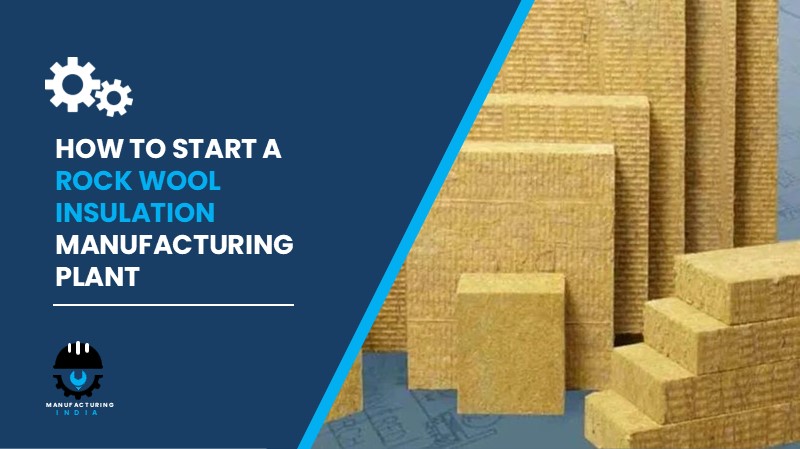
Rock wool insulation, also known as stone wool, is a type of insulation material made from basalt rock or dolomite. It is produced by melting these raw materials at high temperatures and then spinning them into fibres. The resulting fibres are compressed into mats or batts and can also be formed into loose-fill insulation suitable for a range of application formats. Rock wool insulation is known for its high thermal resistance, soundproofing qualities, and fire resistance, making it an ideal choice for residential, commercial, and industrial buildings.
The material is non-combustible, moisture-resistant, and offers superior durability in harsh environmental conditions, including high temperatures and humidity – properties that distinguish it from many competing insulation materials. The primary production method is the melting and spinning process, which encompasses raw material selection, melting and spinning, fibre formation, cooling and cutting, and quality control. End-use industries served include construction, industrial facilities, HVAC systems, and the marine and transportation sector.
Cost of Setting Up a Rock Wool Insulation Manufacturing Plant in India
The total investment required for a rock wool insulation manufacturing plant depends on plant capacity, technology selection, location, degree of automation, and regulatory compliance requirements. Both capital and operational expenditure must be carefully modelled against production targets and market pricing to determine financial viability.
1. Capital Expenditure (CapEx)
Land and Site Development is a substantial upfront commitment. Locating the facility within a Special Economic Zone or state-notified industrial estate can reduce acquisition costs and unlock capital subsidy benefits. Sites in mineral-rich corridors – particularly those with proximity to basalt and dolomite reserves in states such as Tamil Nadu, Rajasthan, or Gujarat – can meaningfully reduce raw material logistics costs and strengthen supply chain stability.
Civil Works and Construction include the main production shed housing furnaces and spinning equipment, fibre formation and cooling zones, cutting and packaging halls, raw material storage yards, a quality control laboratory, an effluent treatment facility, utility block, and an administrative building. Fire-resistant construction materials are mandatory for facilities handling molten material.
Machinery and Equipment represent the largest single capital cost item. Key machinery required includes:
- Furnaces (for melting basalt/dolomite and slag at high temperatures)
- Centrifugal spinning machines (for converting molten material into fibres)
- Molding machines (for compressing fibres into mats, batts, or boards)
- Cutting machines (for sizing finished insulation products to specification)
- Packaging machines (for baling, wrapping, and preparing finished goods for dispatch)
Other Capital Costs include effluent treatment plant commissioning, pre-operative expenses, safety and fire suppression systems, grid connection infrastructure, and any applicable import duties on specialised furnace or spinning equipment not available domestically.
Request a Sample Report for In-Depth Market Insights: https://www.imarcgroup.com/rock-wool-insulation-manufacturing-plant-project-report/requestsample
2. Operational Expenditure (OpEx)
Raw Material Cost is the dominant recurring expenditure driver. The primary raw materials – basalt/dolomite, slag, and binder (resin) – collectively account for approximately 40–50% of total operating expenses. Establishing long-term supply contracts with domestic mineral processors and chemical resin suppliers is essential for protecting cost stability and ensuring uninterrupted throughput. Minimising transportation costs by selecting suppliers in proximity to the plant site is a key procurement strategy.
Utility Cost covers electricity for furnace operation, spinning equipment, cooling systems, and plant-wide services, alongside water for cooling processes and steam where required. Utilities account for approximately 30–40% of total operating expenses, reflecting the energy-intensive nature of the high-temperature melting process – a factor that makes access to reliable, competitively priced industrial power a critical site selection criterion. Other Operating Costs include inbound transportation of raw materials, outbound logistics to construction and industrial customers, packaging materials, salaries and wages for furnace operators and quality technicians, preventive maintenance, depreciation on plant and machinery, and applicable taxes. A five-year cost projection should account for annual escalation in electricity tariffs, potential inflation in resin binder prices, and rising labour costs as the facility scales.
3. Plant Capacity
The proposed manufacturing configuration supports an annual production capacity ranging between 50,000 and 150,000 metric tonnes, enabling economies of scale while maintaining operational flexibility. This capacity range can be fully customised based on investor requirements, target market segments, and available capital. Profitability improves materially with higher capacity utilisation – a function of securing sufficient order pipelines from construction contractors, industrial facility operators, and HVAC system integrators prior to commissioning.
4. Profit Margins and Financial Projections
A detailed financial model for a rock wool insulation plant covers Net Present Value (NPV), Internal Rate of Return (IRR), payback period, gross margin, and net margin across a multi-year projection horizon. The project demonstrates healthy profitability potential under normal operating conditions: gross profit margins typically range between 35–45%, supported by stable end-user demand and value-added product applications. Net profit margins of 18–25% are achievable at mature capacity utilisation levels. Full financial analysis in the IMARC report includes liquidity analysis, profitability analysis, payback period, sensitivity analysis, uncertainty analysis, and a profit and loss account across a five-year period.
Why Set Up a Rock Wool Insulation Plant in India?
Increasing Demand for Energy Efficiency. As energy costs rise and governments implement stricter building codes, the demand for energy-efficient materials like rock wool insulation is growing rapidly across the construction and industrial sectors. India’s Bureau of Energy Efficiency (BEE) and national green building rating frameworks are mandating higher insulation standards in new commercial and residential projects, creating durable structural demand for certified thermal insulation materials.
Sustainability and Green Building Materials. With a decisive shift towards environmentally friendly building practices, rock wool insulation is increasingly used in sustainable construction due to its recyclable nature and low environmental impact. India’s expanding green building footprint – driven by GRIHA and IGBC-rated projects across major cities – is placing high-performance, low-carbon insulation materials at the centre of procurement specifications for developers and contractors.
Fire Safety Regulations. Rock wool’s non-combustible properties make it a highly desirable material in building applications that require fire-resistant insulation, supporting its demand in high-risk environments including industrial plants, residential high-rises, and commercial complexes. India’s evolving National Building Code and state-level fire safety regulations are progressively mandating non-combustible insulation in multi-storey construction – a direct demand catalyst for the facility.
Soundproofing and Acoustics. The growing need for noise reduction in urban environments, as well as in residential and commercial buildings, is fuelling demand for rock wool’s excellent soundproofing qualities. India’s rapidly densifying urban cores and the proliferation of mixed-use developments are intensifying the acoustic insulation requirement at the design stage.
Active Industry Investment Confirming India’s Potential. In September 2025, Rockwool Group announced its upcoming manufacturing facility in Cheyyar, Tamil Nadu, with an investment of INR 550 crores, expected to be operational by Q2 of 2026. Separately, in May 2025, Saint-Gobain announced the commencement of a low-carbon stone wool insulation manufacturing facility in the UK with an initial capacity of 50,000 tons per year. These commitments by two of the industry’s largest players – ROCKWOOL International A/S and Saint-Gobain S.A. – underscore the confidence global manufacturers have in the long-term demand trajectory for rock wool insulation.
Cost-Competitive Manufacturing Base. India offers competitive land acquisition costs, lower civil construction costs, a large skilled and semi-skilled workforce, and proximity to domestic basalt, dolomite, and slag sources that reduce the landed cost of primary raw materials. These structural cost advantages make Indian-manufactured rock wool insulation price-competitive against both imported product and regional alternatives.
Manufacturing Process – Step by Step
The rock wool insulation manufacturing process uses the melting and spinning method as the primary production approach, transforming mineral raw materials into high-performance fibre insulation through a controlled sequence of thermal and mechanical operations.
- Raw Material Selection and Preparation: Basalt/dolomite and slag are sourced, inspected for mineral composition, and sized for furnace loading. Binder (resin) is prepared for injection at the fibre formation stage.
- Melting: The mineral charge of basalt/dolomite and slag is fed into high-temperature furnaces, where the materials are melted into a homogenous molten mineral stream at temperatures exceeding 1,400–1,600°C.
- Spinning (Fibre Formation): The molten mineral stream is directed onto centrifugal spinning machines – rapidly rotating drums with perforated surfaces – which fling the melt outward to form fine, elongated mineral fibres. Binder (resin) is simultaneously sprayed onto the nascent fibres to bind the structure.
- Fibre Collection and Mat Formation: The airborne fibres are collected onto a moving conveyor to form a continuous primary mat. The mat is layered and compressed to achieve the target density and thickness for the intended product format (batt, slab, or loose-fill).
- Curing: The binder-impregnated fibre mat passes through a curing oven to set the resin and stabilise the product structure, achieving the required mechanical strength and thermal performance characteristics.
- Cooling and Cutting: The cured mat is cooled and then passed through cutting machines that trim it to the specified dimensions – length, width, and thickness – for the target product range.
- Molding: For shaped products such as pipe sections, acoustic boards, or marine insulation components, molding machines press the fibre mat into the required form prior to curing.
- Quality Control: Finished products undergo testing for thermal conductivity, fire resistance, acoustic performance, dimensional accuracy, and moisture resistance against applicable national and international standards.
- Packaging: Approved finished goods are compressed, wrapped, and packaged by packaging machines into bales or palletised rolls for dispatch.
- Dispatch: Finished rock wool insulation products are loaded and distributed to construction contractors, industrial facility operators, HVAC system integrators, and marine and transportation end users.
Key Applications
Rock wool insulation serves a wide range of end-use sectors, each benefiting from its combined thermal, acoustic, and fire-resistant properties:
- Construction: Used in residential and commercial buildings for thermal insulation in walls, roofs, ceilings, and floors, contributing to energy efficiency and noise reduction in line with green building standards.
- Industrial: Applied for insulation of pipes, boilers, and storage tanks in industrial facilities, ensuring heat retention and energy conservation during manufacturing processes.
- HVAC Systems: Installed as insulation for air ducts, ventilation systems, and pipework in HVAC installations to reduce energy loss and maintain precise temperature and humidity control.
- Marine and Transportation: Provides thermal insulation and fire resistance for ships, trains, and vehicles, enhancing operational safety and passenger comfort in demanding environments.
Leading Manufacturers
The global rock wool insulation sector is served by several multinational companies with extensive production capacities and diverse application portfolios. Key players include:
- ROCKWOOL International A/S
- Johns Manville Corporation
- Knauf Insulation
- Owens Corning
- Saint-Gobain S.A.
- TechnoNICOL Corporation
Timeline to Start the Plant
Establishing a rock wool insulation manufacturing unit in India requires careful sequencing of approvals, procurement, and construction:
- Feasibility study and project report preparation
- Land acquisition and site development
- Regulatory approvals and environmental clearances
- Factory licence and fire safety compliance
- Machinery procurement and installation
- Raw material supplier agreements and supply chain setup
- Trial production and quality testing
- Commercial production launch
Licences and Regulatory Requirements
Starting a rock wool insulation manufacturing unit in India requires several approvals:
- Business registration (Proprietorship, LLP, or Pvt Ltd)
- Factory Licence under the Factories Act
- Environmental Clearance from State Pollution Control Board
- GST Registration
- Fire Safety NOC
- Hazardous and chemical compliance (applicable to resin binder handling under the Manufacture, Storage and Import of Hazardous Chemical Rules)
- Effluent Treatment Plant (ETP) operational clearance
- Occupational Health and Safety compliance
Key Challenges to Consider
High Capital Requirements. Establishing a rock wool insulation plant demands significant upfront investment in high-temperature furnace infrastructure, centrifugal spinning equipment, curing ovens, and cutting and packaging machinery – a capital-intensive profile that typically requires structured project financing alongside equity contribution.
Raw Material Price Volatility. The primary raw materials – basalt/dolomite, slag, and binder (resin) – are subject to price fluctuation driven by mining output cycles, energy costs in mineral processing, and petrochemical feedstock trends affecting resin pricing. Long-term supply contracts with domestic mineral processors and resin suppliers are essential to stabilising the 40–50% raw material share of OpEx.
Regulatory Compliance. Operating a high-temperature manufacturing facility with mineral fibre dust generation and resin chemical handling requires rigorous compliance with air emission standards, effluent discharge norms, occupational health regulations for dust exposure, and fire safety codes – each with associated monitoring and reporting obligations.
Technology and Innovation Pressure. Advances in electric furnace technology (as deployed by Saint-Gobain in its new low-carbon facility) and in binder chemistry are progressively reducing the energy intensity and carbon footprint of rock wool production. Technology selection must balance capital cost against long-term efficiency and the ability to meet evolving green procurement standards.
Competition from Established Players. The presence of globally scaled producers including ROCKWOOL International A/S, Owens Corning, Knauf Insulation, and Saint-Gobain S.A. – several of whom are now investing directly in Indian or regional production – means new entrants must differentiate on product quality, customer service, lead time reliability, or specific application expertise to secure and retain market share.
Skilled Manpower. Operating high-temperature furnaces, centrifugal spinning machines, and automated cutting and packaging lines requires trained technical personnel. Building internal capabilities through structured recruitment, operator training, and safety certification programmes is a critical investment at the pre-commissioning stage.
Frequently Asked Questions
1. How much does it cost to set up a rock wool insulation manufacturing plant in India?
Total setup cost depends on production capacity, technology choices, plant location, and automation level. The capital investment covers land and site development, civil works, furnaces, centrifugal spinning machines, molding machines, cutting machines, and packaging machines, alongside pre-operative and working capital requirements. A detailed feasibility study and project report is the recommended starting point for any capacity.
2. Is rock wool insulation manufacturing profitable in India in 2026?
Yes, the segment offers strong profitability, with gross profit margins typically ranging between 35–45% and net profit margins of 18–25% at normal operating conditions. India’s expanding construction sector, tightening fire safety codes, and rising green building activity support sustained demand and pricing power for domestic producers.
3. What machinery is required for a rock wool insulation plant in India?
The key equipment comprises furnaces for high-temperature mineral melting, centrifugal spinning machines for fibre formation, molding machines for shaping products, cutting machines for dimensional accuracy, and packaging machines for finished goods preparation. All machinery must comply with industry standards for safety, efficiency, and reliability.
4. What licences and approvals are required to start a rock wool insulation plant in India?
Required approvals include business registration, Factory Licence under the Factories Act, Environmental Clearance from the State Pollution Control Board, GST Registration, Fire Safety NOC, hazardous chemical compliance certification for resin handling, ETP operational clearance, and Occupational Health and Safety compliance.
5. What raw materials are needed for rock wool insulation manufacturing?
The three primary raw materials are basalt/dolomite (the primary mineral input), slag (a co-input that adjusts melt chemistry and reduces cost), and binder or resin (applied during fibre formation to bind the mat structure). Reliable, cost-competitive sourcing of all three inputs is essential for stable production and margin management.
6. What are the environmental compliance requirements for a rock wool insulation plant in India?
The facility must obtain Environmental Clearance from the State Pollution Control Board, operate a compliant ETP, manage mineral fibre dust emissions from spinning and cutting operations within permissible limits, and comply with hazardous chemical handling regulations applicable to resin binders. Regular monitoring and reporting to statutory authorities is mandatory.
7. What is the best location to set up a rock wool insulation plant in India?
Ideal locations combine proximity to basalt/dolomite and slag sources, access to industrial-grade power infrastructure, and closeness to major construction and industrial markets. Tamil Nadu (with Rockwool Group’s own Cheyyar facility as a reference), Gujarat, Maharashtra, and Rajasthan are among the most strategically attractive states given their mineral availability, industrial infrastructure, and construction activity.
8. What is the break-even period for this type of plant in India?
The payback period depends on plant capacity, capital structure, raw material cost management, and market pricing. A detailed project economics report – covering NPV, IRR, payback period, profitability analysis, and sensitivity analysis – is essential for accurately forecasting break-even for any specific plant configuration.
9. What government incentives are available for rock wool insulation manufacturers in India?
Potential incentives include capital subsidy schemes under state industrial policies, reduced land costs in notified industrial estates and SEZs, GST input credit on machinery and raw material procurement, MSME credit guarantee schemes for smaller units, and benefits under the Production Linked Incentive (PLI) framework where applicable to building materials categories.
Key Takeaways for Investors
A rock wool insulation manufacturing plant in India represents a well-timed investment opportunity, with structural demand being driven by construction sector growth, mandatory fire safety upgrades, expanding HVAC system deployments, and the country’s accelerating transition toward energy-efficient and green building standards. The investment delivers strong financial viability across the 50,000–150,000 MT annual capacity range, with gross margins of 35–45% and net margins of 18–25% achievable under normal operating conditions. The global rock wool insulation market, valued at USD 5.43 billion in 2025 and projected to reach USD 9.97 billion by 2034 at a CAGR of 7.0%, provides a growing international benchmark that reinforces long-term domestic demand sustainability. With global leaders such as Rockwool Group already committing INR 550 crores to a Tamil Nadu facility, the investment thesis for Indian production is being validated at the highest level of industry confidence.
About the Author