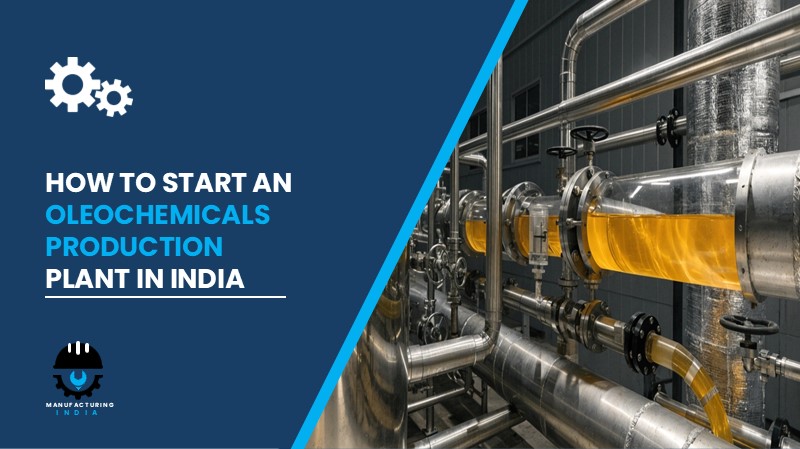
Setting up an oleochemicals production plant in India presents a compelling investment case for entrepreneurs and industrial investors seeking sustainability-driven returns. Oleochemicals are pivotal substances derived from natural fats and oils, and their demand is surging across pharmaceuticals, personal care, detergents, food additives, and bio-lubricants. As India’s consumer goods, cosmetics, and specialty chemicals sectors expand, domestic production of oleochemicals is becoming strategically critical to the country’s industrial value chain.
India offers a uniquely advantageous environment for this type of production. The country’s strong agricultural base ensures consistent availability of vegetable-derived feedstocks such as palm oil, coconut oil, and soybean oil. With the Make in India initiative driving local chemical production, coupled with industrial clusters in Gujarat, Maharashtra, Andhra Pradesh, and Tamil Nadu, investors benefit from competitive land costs, skilled technical labour, and well-developed logistics. India’s position as a growing exporter of specialty chemicals further strengthens the rationale for setting up an oleochemicals production plant here.
India’s oleochemicals sector is at a structural inflection point — backed by policy support, cost-competitive production, and accelerating demand from pharmaceuticals, personal care, and green chemistry industries, an oleochemicals production plant in India offers strong profitability potential, break-even viability within 3 to 5 years, and a renewable, bio-based product portfolio aligned with global sustainability goals.
What Are Oleochemicals?
Oleochemicals are chemical compounds derived from natural biological fats and oils — primarily from vegetable oils or animal fats — representing a renewable and biodegradable alternative to petrochemicals. Key properties include high biodegradability, low environmental toxicity, strong emulsifying capability, and effective surface-active behaviour, making them indispensable in formulations that demand both performance and sustainability.
Primary derivatives produced through oleochemical processing include fatty acids, glycerol, fatty alcohols, and esters. These serve as building blocks for surfactants, emulsifiers, lubricants, plasticisers, and specialty chemical formulations. The oleochemicals production process involves chemical transformation through hydrolysis, transesterification, hydrogenation, and fractionation. End-use industries served include pharmaceuticals, personal care and cosmetics, cleaning products and detergents, food processing, bioplastics, biofuels, and industrial bio-lubricants.
Cost of Setting Up an Oleochemicals Production Plant in India
The total investment to establish this type of plant depends on production capacity, technology selection, geographic location, level of automation, and regulatory compliance. A detailed feasibility study is essential before committing capital.
1. Capital Expenditure (CapEx)
Land and Site Development represent the first major cost component. Investors can consider locating within a Special Economic Zone (SEZ) or designated industrial estate in Gujarat, Maharashtra, Andhra Pradesh, or Tamil Nadu to benefit from infrastructure support, reduced stamp duty, and streamlined regulatory processes.
Civil Works and Construction include the production shed, utilities infrastructure, quality control laboratory, raw material and finished goods storage, effluent treatment plant (ETP) structure, and administrative offices.
Machinery and Equipment represent the largest CapEx line item. Key machinery required includes:
- Oil pretreatment systems
- Hydrolysis reactors
- Distillation columns
- Fractionation units
- Hydrogenation reactors
- Heat exchangers
- Separators
- Storage tanks
- Boilers
- Chillers
- Laboratory testing equipment
Other Capital Costs include effluent treatment plant installation, pre-operative and commissioning expenses, import duties on specialised equipment, and initial working capital provisioning.
Request a Sample Report for In-Depth Market Insights: https://www.imarcgroup.com/oleochemicals-manufacturing-plant-project-report/requestsample
2. Operational Expenditure (OpEx)
Raw Material Cost is typically the dominant OpEx component. Key raw materials — palm oil, coconut oil, soybean oil, and animal fats — are chemically processed to yield fatty acids, glycerol, fatty alcohols, and esters. Investors should establish long-term supplier contracts with plantation-linked aggregators to manage feedstock price volatility and ensure supply continuity.
Utility Costs — primarily electricity, industrial water, and steam — are significant given the energy-intensive nature of hydrolysis, distillation, and hydrogenation operations. India’s improving industrial power infrastructure helps moderate this cost. Other operating costs include transportation and logistics, packaging, salaries, plant maintenance, depreciation, and applicable GST. A 5-year cost model should account for raw material inflation, wage escalation, and utility tariff revisions.
3. Plant Capacity
Plant capacity can be fully customised to match investor targets, capital availability, and distribution strategy. Profitability improves substantially with higher capacity utilisation rates, as fixed costs are spread over greater output volume. Investors should model multiple scenarios when preparing the feasibility study.
4. Profit Margins and Financial Projections
A detailed financial analysis of an oleochemicals plant should cover Net Present Value (NPV), Internal Rate of Return (IRR), payback period, gross margin progression, and net margin evolution as utilisation ramps up. Break-even in an oleochemicals production business typically ranges from 3 to 5 years, with value-added product lines — specialty fatty alcohols and esters for pharmaceutical and premium personal care markets — and export opportunities capable of shortening this timeline.
Why Set Up an Oleochemicals Plant in India?
Surging Demand from Personal Care and Pharmaceuticals. India’s fast-growing cosmetics, personal care, and pharmaceutical sectors are major consumers of oleochemical derivatives such as fatty acids, glycerol, and esters. As consumer spending on premium products rises across urban and semi-urban India, demand for high-quality, bio-based inputs is accelerating with long-term structural momentum.
Green Chemistry and Sustainability Transition. The shift toward green chemistry — replacing petrochemicals with bio-based alternatives — is a central driver for the oleochemicals industry globally and in India. Stringent environmental regulations and consumer preference for natural, sustainable products are compelling manufacturers across detergents, cosmetics, and food processing to reformulate with oleochemical inputs.
Bioplastics and Biofuels as New Growth Frontiers. The increasing use of oleochemicals in bioplastics and biofuels development highlights their role in reducing fossil fuel dependence. India’s bioenergy and bioplastics policy frameworks are creating additional downstream demand, opening new revenue channels for domestic producers beyond traditional personal care and detergent markets.
Policy and Regulatory Tailwinds. The Make in India initiative, along with government schemes promoting domestic chemical production and import substitution, provides tangible policy backing. Industrial estate and SEZ infrastructure in key chemical production states reduce both entry costs and regulatory complexity for new investors setting up oleochemicals production facilities.
Cost-Competitive Production Base. India offers lower land acquisition costs, competitive labour rates relative to Southeast Asian peers, and a well-developed domestic supply chain for vegetable oil feedstocks. This combination enables Indian producers to achieve competitive cost structures for domestic supply and export markets alike.
Advancements in Processing Technology. Advancements in biotechnology and chemical processing technologies are enabling more efficient and cost-effective oleochemicals production, broadening the application scope of derivative products and improving the economics of new plant investments.
Production Process – Step by Step
The oleochemicals production process uses hydrolysis and transesterification as the primary production methods, transforming raw fats and oils through a sequence of controlled unit operations.
- Oil Pretreatment: Raw feedstock — palm oil, coconut oil, soybean oil, or animal fats — is received, tested, and subjected to degumming, bleaching, and deodorisation to remove impurities.
- Hydrolysis or Transesterification: Pretreated oil undergoes high-pressure hydrolysis using water, or transesterification with alcohol, to produce free fatty acids and glycerol, or fatty acid methyl esters respectively.
- Separation and Purification: The reaction mixture is processed through separators to isolate fatty acid fractions from glycerol or ester phases.
- Distillation or Fractionation: Fatty acid streams pass through distillation columns and fractionation units to yield distinct commercial product grades by chain length and saturation.
- Hydrogenation: Selected streams are subjected to catalytic hydrogenation in hydrogenation reactors to produce fatty alcohols or hardened fatty acid derivatives.
- Quality Control and Packaging: Final products undergo laboratory testing and are packed into bulk tankers, drums, or IBCs for dispatch to end-use industries.
Key Applications
Oleochemicals serve a broad spectrum of industries, making the facility an investment with diversified revenue exposure. The oleochemicals production process yields derivatives that are integral to the following sectors:
- Pharmaceuticals: Used as excipients, emollients, and solubilisers in drug formulations and medical-grade topical preparations.
- Personal Care and Cosmetics: Fatty alcohols, glycerol, and esters serve as emulsifiers, moisturisers, and conditioning agents in skincare and haircare products.
- Cleaning Products and Detergents: Surfactants derived from oleochemical processing are core active ingredients in household and industrial cleaning formulations.
- Food Processing: Oleochemical derivatives function as emulsifiers, release agents, and food-grade lubricants in processed food applications.
- Bioplastics: Used as plasticisers and bio-based polymer components in sustainable packaging solutions.
- Biofuels: Fatty acid methyl esters (FAME) serve as biodiesel feedstocks, supporting India’s renewable energy targets.
- Bio-lubricants: Industrial lubricants formulated from oleochemical bases offer superior biodegradability in environmentally sensitive applications.
Leading Producers
The global oleochemicals market is served by a group of well-capitalised multinational producers with integrated refining and distribution capabilities. Key players in the global industry include:
- Emery Oleochemicals
- Evonik
- Evyap Sabun Malaysia Sdn Bhd
- IOI Oleochemical
- Kao Chemicals
- KLK OLEO
- Oleon NV
Timeline to Start the Plant
- Feasibility study and project report preparation
- Land acquisition and site development
- Regulatory approvals and environmental clearances
- Factory licence and fire safety compliance
- Machinery procurement and installation
- Raw material supplier agreements and supply chain setup
- Trial production and quality testing
- Commercial production launch
The timeline for an oleochemicals production plant typically ranges from 12 to 24 months, depending on project scale, regulatory speed, and equipment procurement lead times.
Licences and Regulatory Requirements
Starting an oleochemicals production unit in India requires several approvals:
- Business registration (Proprietorship, LLP, or Pvt Ltd)
- Factory Licence under the Factories Act
- Environmental Clearance from State Pollution Control Board
- GST Registration
- Fire Safety NOC
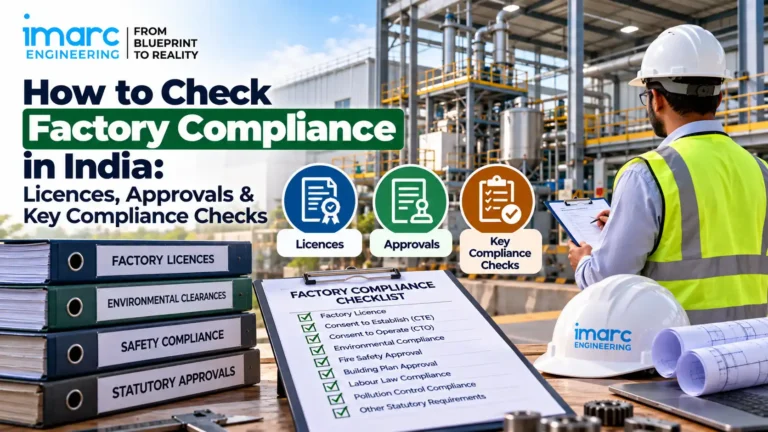
- Hazardous/Chemical compliance under applicable rules (relevant given reactive agents used in hydrolysis and hydrogenation)
- Effluent Treatment Plant (ETP) operational clearance
- Occupational Health and Safety compliance
Key Challenges to Consider
High Capital Requirements. The oleochemicals production plant demands significant upfront investment across land, civil construction, and specialised equipment. Securing project finance and managing working capital through the ramp-up phase are critical success factors.
Raw Material Price Volatility. Primary feedstocks — palm oil, coconut oil, soybean oil, and animal fats — are globally traded commodities subject to price swings. Long-term supplier contracts and procurement hedging strategies are essential to protect margins.
Regulatory Compliance. Oleochemicals production involves chemical processing operations attracting environmental, safety, and hazardous materials regulations at both state and central levels in India, requiring dedicated regulatory management.
Technology and Innovation Pressure. Advancements in chemical processing technologies continuously raise efficiency benchmarks. New entrants must invest in modern process technology to remain competitive and meet evolving quality requirements.
Competition from Global Players. Established producers including KLK OLEO, IOI Oleochemical, Evonik, and Emery Oleochemicals operate large-scale, highly optimised facilities. Indian producers must leverage domestic cost advantages and proximity to local markets to compete.
Skilled Manpower. Operating hydrolysis reactors, distillation columns, and hydrogenation systems requires chemical engineers with specialised training — recruiting and retaining technical staff is a persistent operational challenge.
Frequently Asked Questions
1. How much does it cost to set up an oleochemicals production plant in India?
The total investment depends on plant capacity, technology, location, and automation, covering land, civil construction, machinery, utilities, and working capital. A detailed project feasibility report is recommended for accurate estimates.
2. Is oleochemicals production profitable in India in 2026?
Yes — strong and growing domestic demand from pharmaceuticals, personal care, detergents, and biofuels supports long-term revenue visibility, with margins improving as capacity utilisation and product mix shift toward higher-value derivatives.
3. What machinery is required for an oleochemicals plant in India?
Key equipment includes oil pretreatment systems, hydrolysis reactors, distillation columns, fractionation units, hydrogenation reactors, heat exchangers, separators, storage tanks, boilers, chillers, and laboratory testing equipment.
4. What licences and approvals are required to start an oleochemicals plant in India?
Required approvals include business registration, Factory Licence, Environmental Clearance, GST Registration, Fire Safety NOC, hazardous chemical compliance, ETP clearance, and occupational health and safety certification.
5. What raw materials are needed for oleochemicals production? The primary raw materials are palm oil, coconut oil, soybean oil, and animal fats, processed to yield fatty acids, glycerol, fatty alcohols, and esters.
6. What are the environmental compliance requirements for an oleochemicals plant in India?
Compliance covers State Pollution Control Board clearance, ETP operation, hazardous chemical handling, and maintaining air and water quality standards under central and state environmental regulations.
7. What is the best location to set up an oleochemicals plant in India? Gujarat, Maharashtra, Andhra Pradesh, and Tamil Nadu are well-suited due to industrial estate availability, port access for feedstock imports, skilled labour, and supportive state industrial policies.
8. What is the break-even period for this type of plant in India?
Break-even typically ranges from 3 to 5 years, influenced by capital investment, raw material cost management, production efficiency, and access to export markets or premium product segments.
9. What government incentives are available for manufacturers in India?
Incentives may include capital subsidies, tax exemptions, reduced utility tariffs, export benefits, and interest subsidies under national and state-level industrial promotion policies applicable to chemical and bio-based production units.
Key Takeaways for Investors
An oleochemicals production plant in India represents a strategically sound investment, with robust demand from pharmaceuticals, personal care, cleaning products, bioplastics, and biofuels sectors providing diversified and growing revenue streams. The investment is financially viable across a range of plant capacities, with profitability improving as utilisation rates increase and the product portfolio shifts toward higher-value fatty alcohols and esters. The global and Indian shift from petrochemicals to bio-based alternatives — driven by tightening environmental regulation, consumer preference for sustainable products, and advancements in chemical processing — ensures that demand sustainability for domestically produced oleochemicals is firmly intact for the decade ahead.
About the Author