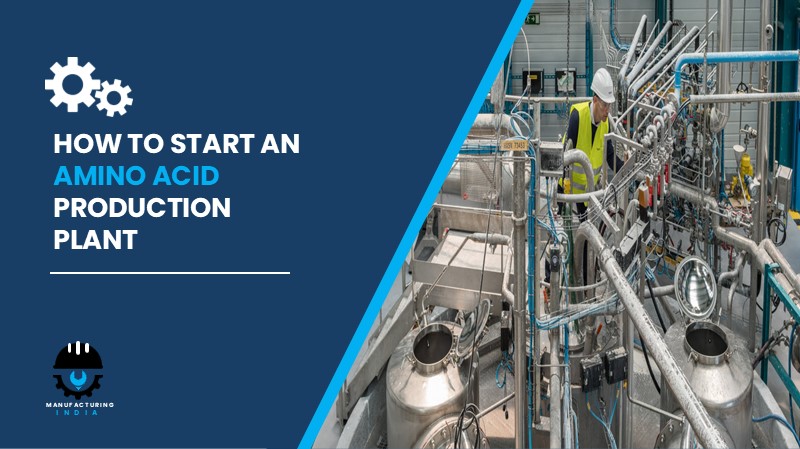
Setting up an amino acid production plant in India presents a compelling investment case driven by rising demand across the animal feed industry, food and beverage sector, pharmaceuticals, and cosmetics and personal care. Amino acids are organic compounds that combine to form proteins and play a key role in metabolism, enzyme function, and the synthesis of proteins across living systems. They are crucial inputs in improving livestock productivity, supporting sports and functional nutrition, enabling parenteral nutrition in clinical settings, and enhancing the performance of cosmetic and personal care formulations. As India’s poultry, aquaculture, and livestock industries scale rapidly to meet rising domestic protein consumption, and as the country’s nutraceuticals, pharmaceutical, and personal care sectors continue their structural expansion, the demand for high-purity, consistently available amino acids is growing across multiple high-value industrial verticals.
India’s structural advantages reinforce the investment case strongly. The country’s large agricultural and agro-processing base provides access to glucose and corn syrup feedstocks essential for fermentation-based amino acid production – the dominant commercial production route globally. The Government of India’s Make in India initiative and its Production Linked Incentive frameworks for food processing and pharmaceuticals create a supportive policy environment for specialty biochemical production. Global meat consumption is projected to increase by 47.9 million tons, with per capita consumption rising by 0.9 kg from 2025 to 2034 according to the OECD – a trajectory that directly underpins rising demand for essential amino acids such as lysine, methionine, and threonine in animal feed formulations, making an amino acid production plant in India a strategically timed and financially compelling industrial investment.
India’s expanding animal protein demand, growing health and wellness consumer base, active pharmaceutical and cosmetics production sectors, and policy support for specialty biochemical production make an amino acid production plant a financially viable and structurally well-supported investment. With gross margins of 30–40%, net margins of 15–25%, and a global market growing from 12.34 million tons in 2025 to 17.43 million tons by 2034, the demand outlook is broad-based and durable.
What is an Amino Acid?
An amino acid is an organic compound that combines to form proteins. Amino acids consist of an amino group (–NH₂), a carboxyl group (–COOH), and a distinctive side chain that determines each amino acid’s unique biochemical properties and functional role. There are 20 standard amino acids that are essential for the body, categorised into essential amino acids – those the body cannot synthesise and must obtain through diet or supplementation – and non-essential amino acids, which the body can produce internally.
Amino acids play a key role in metabolism, enzyme function, and the synthesis of proteins across human, animal, and microbial systems. They are found in both animal and plant-based foods and are crucial across a wide range of industrial applications including animal feed, food supplements, pharmaceuticals, and cosmetic products. The growing trend toward personalised nutrition and the increasing popularity of plant-based proteins are contributing to the expanding demand for amino acids in food, dietary supplements, and functional food and beverage products globally and within India.
The primary production method is raw material selection, fermentation process, chemical synthesis, purification, and drying and packaging – a multi-stage biotechnological and chemical production process that converts glucose/corn syrup and nitrogen sources into specification-grade amino acid products for animal feed, food and beverage, pharmaceutical, and cosmetics end-uses.
Cost of Setting Up an Amino Acid Production Plant in India
The cost of establishing this facility depends on capacity, technology selection, plant location, degree of automation, and regulatory compliance requirements.
1. Capital Expenditure (CapEx)
Total capital investment for an amino acid production plant in India covers land acquisition, site preparation, civil construction, process machinery, and pre-operative expenses. The cost of land and site development – including charges for land registration, boundary development, and other related expenses – forms a substantial part of the overall investment. This allocation ensures a solid foundation for safe and efficient plant operations. Investors can reduce land acquisition costs by locating the unit in a food processing zone, pharmaceutical cluster, Special Economic Zone (SEZ), or biotechnology park, which also provide shared utility infrastructure and potential state-level fiscal incentives.
Civil works and construction encompass the main fermentation and processing building, raw material storage for glucose/corn syrup, ammonia, precursors, and fermentation media, a finished product warehouse, a quality control laboratory, and an administrative block. Given that fermentation-based amino acid production involves biological processes, temperature-controlled environments, and chemical handling, civil and structural infrastructure must incorporate appropriate ventilation, containment provisions, and sanitary design standards applicable to food-grade and pharmaceutical-grade biochemical production.
Machinery costs account for the largest portion of total capital expenditure. Key machinery required includes:
- Fermentation tanks
- Chemical reactors
- Separation and filtration units
- Dryers
- Packaging machines
Other capital costs include the effluent treatment plant (ETP), advanced process monitoring systems, sterilisation units, temperature control systems, pre-operative expenses, trial production costs, and commissioning charges. All machinery must comply with industry standards for safety, efficiency, and reliability applicable to food-grade and pharmaceutical-grade amino acid production.
Request a Sample Report for In-Depth Market Insights: https://www.imarcgroup.com/amino-acid-production-plant-project-report/requestsample
2. Operational Expenditure (OpEx)
The operating cost structure of an amino acid production plant is primarily driven by raw material consumption. Glucose/corn syrup – the dominant fermentation feedstock – accounts for approximately 50–60% of total operating expenses (OpEx), making carbohydrate feedstock procurement strategy the most critical determinant of production economics and margin protection. Ammonia, precursors, and fermentation media are the secondary raw material inputs. Securing long-term supply agreements with reliable domestic glucose, ammonia, and mineral salt producers is essential for cost stability and continuous production at target purity specifications. Minimising transportation costs by selecting suppliers in proximity to the facility is a key cost management consideration at the procurement stage.
Utility costs – comprising electricity for fermentation tanks, chemical reactors, sterilisation units, dryers, and packaging equipment, as well as water and steam consumed throughout the fermentation and purification process – account for 25–35% of total OpEx. This is a materially elevated utility cost proportion reflecting the energy-intensive nature of large-scale aerobic fermentation, sterilisation, and thermal drying operations. Other ongoing operating costs include transportation, packaging, salaries and wages, depreciation, taxes, equipment repairs and maintenance, quality control, and other miscellaneous expenses.
By the fifth year of operations, the total operational cost is expected to increase substantially due to factors such as inflation, market fluctuations, and potential rises in the cost of key materials. Additional factors including supply chain disruptions, rising consumer demand, and shifts in the global economy are expected to contribute to this increase.
3. Plant Capacity
The proposed production facility is designed with an annual production capacity ranging between 10,000 and 50,000 MT, enabling economies of scale while maintaining operational flexibility. Capacity can be customised per investor requirements based on target animal feed, pharmaceutical, food and beverage, or cosmetics markets, available capital, and chosen production technology. Profitability improves materially with higher capacity utilisation, making off-take agreements with domestic animal feed manufacturers, nutraceutical companies, and pharmaceutical formulators a commercial priority from the commissioning stage. Break-even in an amino acid production business typically ranges from 3 to 6 years, depending on plant capacity, operational efficiency, raw material costs, production scale, and market demand.
4. Profit Margins and Financial Projections
The project demonstrates healthy profitability potential under normal operating conditions. Gross profit margins typically range between 30–40%, supported by stable demand and value-added applications. Net profit margins range between 15–25%. A comprehensive financial model covering NPV (net present value), IRR (internal rate of return), payback period, liquidity analysis, uncertainty analysis, sensitivity analysis, and a full five-year profit and loss account provides investors with a rigorous analytical framework for assessing financial viability and long-term sustainability across different capacity and pricing scenarios.
Why Set Up an Amino Acid Plant in India?
Rising Demand for Animal Feed Driving Volume Growth. Amino acids are crucial in animal feed, where they are used to balance protein content and meet the nutritional requirements of livestock – with essential amino acids like lysine, methionine, and threonine commonly added to poultry, swine, and cattle feed to optimise performance. According to the OECD, global meat consumption is projected to increase by 47.9 million tons, with per capita consumption rising by 0.9 kg from 2025 to 2034. This growth directly drives India’s demand for animal feed amino acids, as poultry, aquaculture, and livestock industries scale to meet rising domestic and export protein demand.
Health and Wellness Megatrend Expanding Functional Nutrition Demand. The growing health-consciousness among Indian consumers is driving demand for functional foods, sports nutrition, and dietary supplements – all of which rely on amino acids including glutamine, glycine, and citrulline to promote recovery, improve muscle function, and support overall health. As the trend toward personalised nutrition gains momentum, amino acid supplementation is being increasingly tailored to specific health needs including muscle recovery, weight management, and immune support, creating growing domestic procurement channels for high-purity amino acid producers.
Expanding Pharmaceutical and Clinical Nutrition Applications. Amino acids are used in pharmaceutical formulations for metabolic disorders and conditions related to amino acid deficiencies. They are also a key ingredient in parenteral nutrition (PN) solutions for patients requiring intravenous feeding due to chronic illness or surgical recovery – a growing clinical nutrition segment aligned with India’s expanding hospital infrastructure and healthcare delivery capacity. This pharmaceutical application requires consistent, high-purity amino acid production with full traceability and regulatory compliance.
Sustainability and Plant-Based Diet Alignment. Amino acids derived from non-animal sources are increasingly used to meet the nutritional requirements of those following vegan and vegetarian diets, further expanding market opportunities for domestic producers. The increased popularity and consumption of plant-based food, coupled with amino acid consumption trends, contribute to increased demand for amino acid-enriched plant-based food products – a consumer segment growing rapidly in India’s urban and semi-urban health food retail channels.
Technological Advancements Improving Fermentation Economics. Advances in biotechnology and fermentation processes are improving the efficiency and scalability of amino acid production, reducing costs and enhancing product quality. Increased cost-effectiveness and eco-friendliness of production technologies such as fermentation technology and biotechnology make this a progressively more accessible production investment with improving return economics at scale.
Active Global Industry Developments Confirming Market Momentum. In December 2025, Croda International partnered with Amino GmbH, a German manufacturer of pharmaceutical-grade amino acids – combining Croda’s scientific expertise and global reach with Amino’s precision production capabilities, targeting acceleration of biopharma product development, improved process efficiency, and support for advanced therapy production. In December 2025, Orffa launched its Elovital amino acids and vitamins portfolio for the South Asia feed and livestock industry, including essential amino acids and both fat-soluble and water-soluble vitamins used in poultry, aquaculture, and livestock production – directly targeting the Indian subcontinent’s rapidly growing animal nutrition market, which validates the commercial scale and urgency of regional amino acid demand.
Production Process – Step by Step
The amino acid production process uses raw material selection, fermentation process, chemical synthesis, purification, and drying and packaging as the primary production method. Each stage is precision-controlled to ensure biological yield, product purity, and compliance with the food-grade, feed-grade, and pharmaceutical-grade quality standards required by animal feed, food and beverage, pharmaceutical, and cosmetics customers.
- Raw Material Receipt and Inspection: Glucose/corn syrup, ammonia, precursors, and fermentation media are received at the facility and subjected to incoming quality checks for purity, concentration, and microbiological specification compliance before entering the process flow.
- Raw Material Selection and Preparation: Carbohydrate feedstocks – glucose or corn syrup – are prepared at the correct concentration for fermentation. Nitrogen sources including ammonia or ammonium salts, and mineral salts required for microbial nutrition, are formulated into the fermentation medium according to the target amino acid specification.
- Fermentation Process: Prepared fermentation medium is sterilised and inoculated with selected microorganisms optimised for the target amino acid in fermentation tanks operating under controlled temperature, pH, aeration, and agitation conditions. The aerobic fermentation process converts glucose and nitrogen into the target amino acid over the required batch or continuous fermentation cycle.
- Biomass Separation: At the end of fermentation, microbial biomass is separated from the fermentation broth using centrifuges or filtration systems, producing a clarified amino acid-containing liquor suitable for downstream purification.
- Extraction and Purification: The clarified fermentation liquor passes through separation and filtration units – including ion exchange columns, activated carbon treatment, and membrane filtration steps – to concentrate and purify the target amino acid to the required grade specification, removing colour bodies, impurities, and residual nutrients.
- Drying and Crystallisation: Purified amino acid solution is concentrated and crystallised, then processed through dryers to produce the final product in the required physical form – crystalline powder, granules, or liquid concentrate – meeting the moisture content, particle size, and purity specifications of the target end-use grade.
- Quality Inspection and Testing: Finished amino acid product is analytically tested for purity, moisture, heavy metal content, microbiological compliance, and grade specification compliance before release for packaging and dispatch.
- Packaging and Dispatch: Approved amino acid product is filled into bags, drums, or bulk containers using packaging machines and dispatched to end-use customers across animal feed production, food and beverage processing, pharmaceutical formulation, and cosmetics and personal care production.
Key Applications
The amino acid production plant serves a diverse and commercially critical range of industries and applications across India’s food, healthcare, and consumer economy.
- Animal Feed Industry: Amino acids are crucial in animal feed to balance protein content and meet the nutritional requirements of livestock – with lysine, methionine, and threonine commonly added to poultry, swine, and cattle feed formulations to optimise growth performance, feed efficiency, and animal health outcomes.
- Food and Beverages: Amino acids including glutamine, glycine, and citrulline are added to functional foods, energy drinks, and sports supplements to promote recovery, improve muscle function, and support overall health – a fast-growing consumer segment aligned with India’s rising health and wellness retail market.
- Pharmaceuticals: Amino acids are used in pharmaceutical formulations for metabolic disorders and conditions related to amino acid deficiencies, as well as in parenteral nutrition (PN) solutions for patients requiring intravenous feeding due to chronic illness or surgical recovery.
- Cosmetics and Personal Care: Amino acids including keratin, collagen, and hyaluronic acid derivatives are used in anti-ageing products, moisturisers, and haircare products to improve skin hydration, elasticity, and hair strength – a high-value application segment growing rapidly within India’s expanding premium personal care market.
- Sports Nutrition and Dietary Supplements: Applied in personalised nutrition formulations targeting muscle growth, metabolism, immune support, and weight management – a segment with strong growth momentum across India’s organised fitness and wellness retail channels.
- Plant-Based Food Formulations: Amino acids derived from non-animal sources are used to meet the nutritional requirements of vegan and vegetarian diets, enriching plant-based food products to achieve complete protein profiles comparable to animal-based foods.
Leading Manufacturers
The global amino acid industry is served by several established multinational producers with extensive production capacities and diverse application portfolios. Key players operating in this market include:
- ADM
- Ajinomoto Co., Inc.
- AMINO GmbH
- MartinBauer
- CJ CheilJedang Corp.
- DAESANG
- dsm-firmenich
All of these producers serve end-use sectors including animal feed, food and beverage, pharmaceuticals, and cosmetics – the same markets that a domestic Indian amino acid production plant can target as local and export demand accelerates.
Timeline to Start the Plant
Investors should plan for a structured pre-production and commissioning phase covering the following key stages:
- Feasibility study and project report preparation
- Land acquisition and site development
- Regulatory approvals and environmental clearances
- Factory licence and fire safety compliance
- Machinery procurement and installation
- Raw material supplier agreements and supply chain setup
- Trial production and quality testing
- Commercial production launch
The timeline to start an amino acid production plant typically ranges from 12 to 36 months, depending on site development, equipment installation, process optimisation, trial runs, staff training, and regulatory approvals.
Licences and Regulatory Requirements
Starting an amino acid production unit in India requires several approvals:
- Business registration (Proprietorship, LLP, or Private Limited Company)
- Factory Licence under the Factories Act
- Environmental Clearance from the State Pollution Control Board
- GST Registration
- Fire Safety NOC
- FSSAI food business operator licence for food-grade and feed-grade amino acid products
- Effluent Treatment Plant (ETP) operational clearance
- Occupational Health and Safety compliance
Key Challenges to Consider
High Capital Requirements. Establishing a fully equipped amino acid production plant – with fermentation tanks, chemical reactors, separation and filtration units, sterilisation systems, dryers, and an ETP – at the 10,000–50,000 MT annual capacity range requires significant upfront capital investment. Access to biotechnology sector financing, food processing PLI scheme incentives, and MSME credit-linked subsidy schemes can help investors manage this capital requirement effectively.
Raw Material Price Volatility. Glucose/corn syrup – accounting for 50–60% of total OpEx – is subject to seasonal price fluctuations linked to domestic maize and sugarcane production cycles and global agricultural commodity markets. Ammonia prices are linked to natural gas and nitrogen fertiliser production dynamics. Long-term procurement contracts with reliable domestic feedstock suppliers are the primary hedging strategies for managing input cost variability.
High Utility Cost Intensity. Utilities – at 25–35% of total OpEx – represent a materially elevated cost component driven by the energy demands of large-scale aerobic fermentation, sterilisation, and thermal drying operations. Securing reliable and cost-competitive electricity and steam supply is a critical site selection and operating cost management criterion for any amino acid production facility.
Regulatory Compliance. Food-grade and pharmaceutical-grade amino acid production requires FSSAI compliance, Good Production Practice (GMP) certification, and full batch traceability documentation. Pharmaceutical-grade products require additional WHO-GMP or Schedule M compliance under India’s Drugs and Cosmetics Act. Environmental compliance for fermentation effluent – which carries high biological oxygen demand (BOD) – requires an approved ETP with active biological treatment throughout operations.
Competition from Global Players. Established multinational producers – including Ajinomoto Co. Inc., ADM, CJ CheilJedang Corp., DAESANG, dsm-firmenich, and AMINO GmbH – hold dominant positions in global amino acid supply for both animal feed and pharmaceutical markets. Indian manufacturers must compete through domestic supply security, import-substitution pricing advantages, and FSSAI-compliant product grades tailored to domestic animal feed, functional food, and nutraceutical customer requirements.
Skilled Manpower. Operating fermentation tanks, chemical reactors, separation and filtration units, and quality testing laboratories in a food-grade and pharmaceutical-grade production environment requires certified fermentation engineers, bioprocess technicians, and quality assurance personnel. Recruiting, training, and retaining qualified technical staff – particularly in fermentation process control and analytical quality testing – is an ongoing operational challenge in India’s growing biotechnology and specialty biochemical production sector.
Frequently Asked Questions
1. How much does it cost to set up an amino acid production plant in India?
Total setup cost depends on plant capacity, location, technology selection, and automation level. Key cost components include land and site development, civil construction, process machinery (fermentation tanks, chemical reactors, separation and filtration units, dryers, packaging machines), and pre-operative expenses. A detailed feasibility study is recommended to generate accurate project-specific cost estimates.
2. Is amino acid production profitable in India in 2026?
Yes. The project delivers healthy financial performance, with gross margins of 30–40% and net profit margins of 15–25% under normal operating conditions. The global amino acid market was valued at 12.34 million tons in 2025 and is projected to reach 17.43 million tons by 2034 at a CAGR of 3.9% according to IMARC Group, with India’s expanding animal feed, pharmaceutical, and functional food sectors representing fast-growing domestic demand drivers.
3. What machinery is required for an amino acid plant in India?
Essential equipment includes fermentation tanks, chemical reactors, separation and filtration units, dryers, and packaging machines. Supporting equipment includes sterilisation units, temperature control systems, centrifuges, and quality control laboratories.
4. What licences and approvals are required to start an amino acid plant in India?
Required approvals include business registration, Factory Licence, Environmental Clearance from the State Pollution Control Board, GST Registration, Fire Safety NOC, FSSAI food business operator licence for food-grade and feed-grade products, ETP operational clearance, and Occupational Health and Safety compliance.
5. What raw materials are needed for amino acid production?
Primary raw materials are glucose/corn syrup, ammonia, precursors, and fermentation media. Glucose/corn syrup is the dominant cost driver, accounting for 50–60% of total operating expenses, and must be sourced from suppliers meeting food-grade or feed-grade carbohydrate specification requirements.
6. What are the environmental compliance requirements for an amino acid plant in India?
The facility must obtain Environmental Clearance from the State Pollution Control Board and operate an approved ETP with active biological treatment capable of managing high-BOD fermentation effluent. Regular effluent monitoring, batch traceability documentation, and waste management records are mandatory throughout operations.
7. What is the best location to set up an amino acid plant in India?
Locations offering proximity to glucose/corn syrup and ammonia raw material suppliers, reliable industrial-grade utilities including steam, and access to animal feed, pharmaceutical, and food processing end-user clusters are preferred. States such as Uttar Pradesh, Maharashtra, Andhra Pradesh, and Gujarat – which host major sugar, maize, and pharmaceutical production ecosystems – are strong candidates for plant location.
8. What is the break-even period for this type of plant in India?
Break-even in an amino acid production business typically ranges from 3 to 6 years, depending on plant capacity, operational efficiency, raw material costs, production scale, and market demand in sectors such as animal feed, pharmaceuticals, and food additives.
9. What government incentives are available for manufacturers in India?
Amino acid manufacturers in India can access the Production Linked Incentive (PLI) scheme for food processing and pharmaceuticals, MSME credit-linked capital subsidy schemes, state government investment promotion subsidies in food processing and biotechnology zones, and export promotion incentives under schemes administered by the Ministry of Commerce and Industry. Governments may also offer capital subsidies, tax exemptions, reduced utility tariffs, and interest subsidies to promote specialty biochemical production under national or regional industrial development policies.
Key Takeaways for Investors
An amino acid production plant in India offers a well-grounded investment opportunity anchored by growing demand across the animal feed industry, food and beverage sector, pharmaceuticals, and cosmetics and personal care – four large and structurally expanding industries that depend on amino acids as critical nutritional, therapeutic, and functional inputs. The project is financially viable across the 10,000–50,000 MT annual capacity range, with gross margins of 30–40% and net margins of 15–25% providing a strong return framework for investors at multiple capital scales, with a break-even horizon of 3 to 6 years. According to IMARC Group estimates, the global amino acid market is set to grow from 12.34 million tons in 2025 to 17.43 million tons by 2034 at a CAGR of 3.9%, underpinned by OECD projections of a 47.9-million-ton increase in global meat consumption through 2034 – a demand trajectory that directly anchors India’s animal feed amino acid consumption growth. With December 2025 launches by both Croda-Amino GmbH targeting biopharma acceleration and Orffa’s Elovital portfolio entering the South Asia feed market confirming active global investment focus on this region, the long-term demand sustainability for domestically produced amino acids is structurally sound across all investment planning horizons.
About the Author