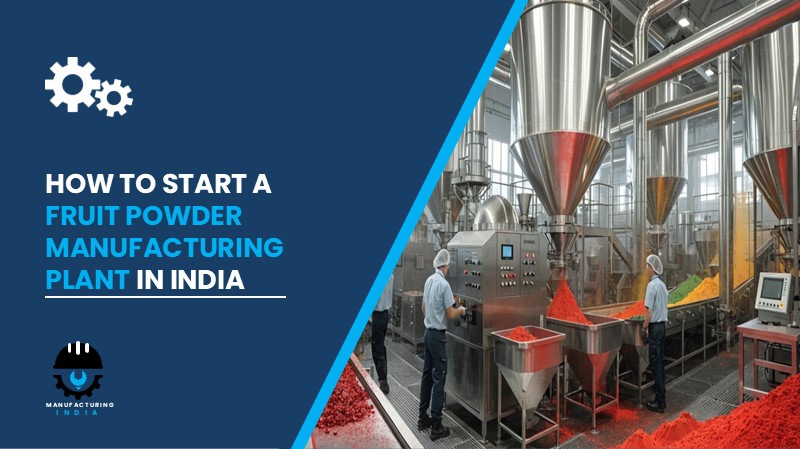
Setting up a fruit powder manufacturing plant in India presents a compelling investment case driven by surging demand across the food and beverage, nutraceutical, bakery, confectionery, cosmetics, and pharmaceutical formulation sectors. As India’s consumer base increasingly gravitates toward natural, clean-label, and immunity-boosting products, fruit powders have emerged as indispensable ingredients across industrial-scale processing. The combination of rising urban consumption, expanding export markets, and India’s vast horticultural output creates a uniquely favourable environment for investors looking to establish a high-value processing facility in the country.
India’s strategic advantages-including an abundant supply of tropical fruits, a rapidly urbanising population, cost-competitive land and labour, and the central government’s Make in India initiative—position it as one of the most attractive destinations globally for fruit powder production. States such as Maharashtra, Gujarat, Uttar Pradesh, and Andhra Pradesh offer the dual advantage of proximity to agricultural raw material belts and well-developed industrial infrastructure. For investors seeking scalable, export-oriented manufacturing, India’s regulatory environment and growing domestic demand make this investment strategically sound on every dimension.
Setting up a fruit powder manufacturing plant in India offers exceptional financial promise, with gross margins of 35–45% and net margins of 15–25%, backed by strong policy support under Make in India, cost-competitive inputs, and robust demand from food, nutraceutical, and cosmetic industries. With a globally growing market and strong domestic tailwinds, the break-even viability of this investment is well within reach for both mid-scale and large-scale operators.
What is Fruit Powder?
Fruit powder is a dehydrated product that results from the extraction of moisture from fresh fruits, while all their natural flavour, colour, aroma, and nutritional properties remain intact. The production process uses different methods – including spray drying, freeze drying, and drum drying — to match specific quality standards and product usage requirements. The food industry uses fruit powders because they provide natural flavour and colour, products that contain essential vitamins and minerals, antioxidants, and dietary fibre.
Available powder variants include mango and banana, strawberry and apple, pineapple and citrus, berry, and mixed fruit powders. These powders display two key advantages: extended shelf life and ease of storage, while maintaining consistent quality that makes them suitable for industrial-scale processing. Fruit powders dissolve easily in liquids and blends, enabling their application in a wide range of product formulations. The combination of clean-label appeal and versatile usage makes them crucial components in contemporary food and nutrition products.
The production process involves fruit selection and washing, peeling and pulping, concentration, drying, milling, sieving, quality inspection, and packaging and labelling. End-use industries served include the food and beverage industry, nutraceuticals and dietary supplements, bakery and confectionery, cosmetics and personal care, and pharmaceutical formulations.
Cost of Setting Up a Fruit Powder Manufacturing Plant in India
The cost of establishing a fruit powder manufacturing plant depends on capacity, technology, location, automation level, and regulatory compliance. Investors must account for both one-time capital expenditure and recurring operational expenses to build an accurate financial model.
1. Capital Expenditure (CapEx)
Capital investment is the foundation of any viable manufacturing venture, and the fruit powder manufacturing plant setup cost is primarily driven by land, civil construction, and machinery procurement.
Land and site development costs, including land registration charges, boundary development, and related infrastructure, form a substantial part of the total CapEx outlay. Locating the facility within an SEZ or a designated industrial estate in states like Gujarat or Maharashtra can yield significant benefits in terms of land cost, utility connectivity, and regulatory fast-tracking. Civil works costs include construction of the production shed, quality control laboratory, raw material storage facilities, finished goods warehouse, and administrative block — all of which must comply with applicable factory and safety norms.
Machinery and equipment costs represent the single largest component of capital expenditure. Key machinery required includes:
- Fruit washers
- Pulpers
- Dryers (spray, freeze, or drum drying systems)
- Pulverizers
- Sieves
- Packaging machines
Other capital costs include the effluent treatment plant (ETP), pre-operative expenditure, commissioning charges, and any applicable import duties on specialised equipment.
Request a Sample Report for In-Depth Market Insights: https://www.imarcgroup.com/fruit-powder-manufacturing-plant-project-report/requestsample
2. Operational Expenditure (OpEx)
The operating cost structure of the fruit powder manufacturing plant is primarily driven by raw material consumption. Raw material costs account for approximately 65–75% of total OpEx, with the principal inputs being fresh or frozen fruit pulp, maltodextrin (carrier), and packaging materials. Investors are advised to negotiate long-term contracts with regional fruit pulp suppliers to mitigate price volatility and ensure supply chain continuity throughout production cycles.
Utility costs — covering electricity, water, and steam — represent 15–20% of total operating expenditure, reflecting the energy-intensive nature of drying and milling operations. Other operating costs include transportation, packaging, salaries and wages, maintenance, depreciation, and applicable taxes. By the fifth year of operations, total operational costs are expected to increase substantially due to inflation, market fluctuations, and potential rises in the cost of key raw materials. Supply chain disruptions, rising consumer demand, and shifts in the global economy are additional factors expected to contribute to this escalation.
3. Plant Capacity
The proposed manufacturing facility is designed with an annual production capacity ranging between 1,000 and 5,000 MT, enabling economies of scale while maintaining operational flexibility. Capacity can be customised based on individual investor requirements and target markets. Profitability improves meaningfully with higher capacity utilisation, making it essential for investors to plan production ramp-up strategies from the trial phase onward.
4. Profit Margins and Financial Projections
The fruit powder manufacturing plant demonstrates healthy profitability potential under normal operating conditions. Gross profit margins typically range between 35–45%, supported by stable demand and value-added applications across multiple industries. Net profit margins range between 15–25%, reflecting controlled operating costs and strong market realisations. Financial projections covering NPV, IRR, payback period, liquidity analysis, sensitivity analysis, and a full profit and loss account are developed based on realistic assumptions related to capital investment, operating costs, production capacity utilisation, pricing trends, and demand outlook.
Why Set Up a Fruit Powder Plant in India?
Rising Demand for Natural Ingredients. The market for fruit powders is expanding rapidly as Indian consumers prefer natural flavours and clean-label products. Growing health and wellness awareness is driving demand for fruit-based ingredients in packaged foods, beverages, and functional nutrition products across urban and semi-urban markets.
Extended Shelf Life and Reduced Post-Harvest Waste. India loses significant quantities of fruits post-harvest due to inadequate cold chain infrastructure. The drying process to create fruit powders from fresh fruits eliminates post-harvest waste while providing access to fresh fruit nutrition throughout the year, creating a strong commercial and sustainability case for establishing processing units.
Wide Application Across Multiple Industries. Fruit powders serve multiple sectors simultaneously — food, nutrition, cosmetics, and pharmaceuticals — enabling manufacturers to generate revenue from diverse market channels and reduce dependence on any single industry vertical.
High Value Addition Potential. The process of transforming raw fruits into finished powders creates high-value products that far exceed the worth of unprocessed fruits. This value chain uplift makes the investment particularly attractive for agri-entrepreneurs and institutional investors alike.
Active Industry Investment and Global Market Development. In February 2025, Givaudan signed an agreement to distribute an upcycled Green Banana Powder from Dole Specialty Ingredients, expanding clean-label emulsification solutions and cutting 30–40% banana waste. In October 2024, Fruit d’Or introduced Blue d’Or Vitality, blending organic wild blueberry and cranberry powders for vitality, recovery, and wellness — targeting athletes and wellness consumers through protein powders, superfood mixes, and energy bars. These developments reflect the accelerating investment pace in the global fruit powder sector.
Scalable and Export-Oriented Production. India’s growing horticultural production base, combined with competitive manufacturing costs and improving port connectivity, positions domestically produced fruit powders strongly for export to Europe, North America, and the Middle East — markets with high demand for clean-label, natural ingredients.
Manufacturing Process – Step by Step
The fruit powder manufacturing process uses spray drying, freeze drying, and drum drying as the primary production methods, selected based on specific quality standards and product usage requirements.
- Fruit Selection and Washing: Fresh fruits are inspected for quality, graded, and washed thoroughly to remove field contaminants and surface residues.
- Peeling and Pulping: Washed fruits undergo peeling and pulping using pulpers to separate the edible fraction and produce a uniform fruit pulp or slurry.
- Concentration: The fruit pulp is concentrated to reduce moisture content prior to the drying stage, improving energy efficiency downstream.
- Drying: The concentrated pulp is subjected to spray drying, freeze drying, or drum drying, depending on the target product quality and end-use application.
- Milling: Dried fruit cake or flakes are passed through pulverizers to achieve the desired particle size and powder consistency.
- Sieving: Milled powder is passed through sieves to ensure uniform particle size distribution and remove oversized particles.
- Quality Inspection: The finished powder undergoes rigorous analytical testing for concentration, purity, moisture content, microbial load, and stability, supported by comprehensive documentation for traceability and regulatory compliance.
- Packaging and Labelling: Inspected powder is filled into appropriate packaging using automated packaging machines, labelled, and dispatched to end-use industries across food and beverage, nutraceutical, cosmetic, and pharmaceutical sectors.
Key Applications
Fruit powders serve a broad spectrum of industries, each leveraging the product’s natural properties, extended shelf life, and formulation versatility.
- Food and Beverage Industry: Used for stable flavouring, colouring, and nutritional improvement in beverages, bakery products, dairy products, and packaged foods.
- Nutraceutical and Dietary Supplements: Function as natural sources of vitamins and antioxidants in capsules, tablets, protein blends, and wellness products.
- Bakery and Confectionery Industry: Enhance the flavour, aroma, and visual characteristics of cakes, fillings, chocolates, and dessert mixes.
- Cosmetics and Personal Care Industry: Serve as skincare, haircare, and cosmetic ingredients, providing antioxidant and exfoliating benefits.
- Pharmaceutical Formulations: Used in formulations requiring natural fruit-derived actives for nutritional and therapeutic applications.
Leading Manufacturers
The global fruit powder market is served by several multinational companies with extensive production capacities and diverse application portfolios. Key players in the industry include:
- Kanegrade Ltd.
- Paradiesfrucht GmbH
- European Freeze Dry Ltd.
- Döhler Group SE
- Nutrydry
These companies serve end-use sectors including food and beverage, nutraceutical, cosmetic, pharmaceutical, and functional food segments.
Timeline to Start the Plant
- Feasibility study and project report preparation
- Land acquisition and site development
- Regulatory approvals and environmental clearances
- Factory licence and fire safety compliance
- Machinery procurement and installation
- Raw material supplier agreements and supply chain setup
- Trial production and quality testing
- Commercial production launch
Licences and Regulatory Requirements
Starting a fruit powder manufacturing unit in India requires several approvals:
- Business registration (Proprietorship, LLP, or Pvt Ltd)
- Factory Licence under the Factories Act
- Environmental Clearance from State Pollution Control Board
- GST Registration
- Fire Safety NOC
- Food Business Operator (FBO) licence under FSSAI for food processing units
- Effluent Treatment Plant (ETP) operational clearance
- Occupational Health and Safety compliance
Key Challenges to Consider
High Capital Requirements. Establishing a fruit powder manufacturing plant demands substantial upfront investment in land, civil works, and specialised drying and milling machinery, which can be a barrier for smaller investors without access to institutional financing.
Raw Material Price Volatility. The primary inputs — fresh or frozen fruit pulp and maltodextrin (carrier) — are subject to seasonal price fluctuations and supply disruptions. Without long-term supplier contracts, raw material costs can erode margins significantly.
Regulatory Compliance. Operating a food-grade manufacturing facility in India requires ongoing adherence to FSSAI standards, environmental clearances, ETP compliance, and factory safety norms. Non-compliance can result in production stoppages and financial penalties.
Technology and Innovation Pressure. The fruit powder sector is evolving rapidly, with new clean-label, upcycled, and additive-free formulations gaining market preference, requiring continuous investment in process upgrades and product development to remain competitive.
Competition from Global Players. Established manufacturers such as Kanegrade Ltd., Döhler Group SE, and European Freeze Dry Ltd. maintain significant competitive advantages through scale, global supply chains, and established customer relationships, which domestic entrants must strategically navigate.
Skilled Manpower. Operating spray drying, freeze drying, and quality control systems requires technically trained personnel. Attracting and retaining skilled workers in processing and food technology disciplines remains an ongoing operational challenge.
Frequently Asked Questions
1. How much does it cost to set up a fruit powder manufacturing plant in India?
The total cost depends on plant capacity (ranging between 1,000–5,000 MT annually), technology chosen, location, and level of automation. The investment covers land, civil construction, machinery including fruit washers, pulpers, dryers, pulverizers, sieves and packaging machines, plus pre-operative and utility costs.
2. Is fruit powder manufacturing profitable in India in 2026?
Yes. The project demonstrates gross profit margins of 35–45% and net profit margins of 15–25% under normal operating conditions, supported by stable demand and value-added applications across multiple end-use industries.
3. What machinery is required for a fruit powder plant in India?
Key equipment includes fruit washers, pulpers, dryers (spray, freeze, or drum), pulverizers, sieves, and packaging machines.
4. What licences and approvals are required to start a fruit powder plant in India?
Required approvals include business registration, Factory Licence, Environmental Clearance, FSSAI FBO licence, GST registration, Fire Safety NOC, ETP clearance, and Occupational Health and Safety compliance.
5. What raw materials are needed for fruit powder manufacturing?
Primary raw materials are fresh or frozen fruit pulp, maltodextrin (carrier), and packaging materials.
6. What are the environmental compliance requirements for a fruit powder plant in India?
The unit must obtain Environmental Clearance from the State Pollution Control Board, install and operate an Effluent Treatment Plant, and comply with emission standards and waste management norms.
7. What is the best location to set up a fruit powder plant in India?
Ideal locations offer proximity to fresh fruit supply belts and have robust infrastructure for transportation, utilities, and waste management. Industrial estates in Maharashtra, Gujarat, Uttar Pradesh, and Andhra Pradesh are strategically well-positioned for this type of plant.
8. What is the break-even period for this type of plant in India?
Break-even is determined through detailed financial analysis including NPV, IRR, payback period, and sensitivity analysis as part of a full feasibility study, factoring in capacity utilisation, pricing trends, and operating cost trajectories.
9. What government incentives are available for manufacturers in India?
India’s Make in India initiative, production-linked incentive schemes, SEZ tax benefits, and state-level industrial promotion policies offer financial and regulatory advantages to new manufacturing investors in the food processing sector.
Key Takeaways for Investors
The fruit powder manufacturing plant in India represents a compelling opportunity for investors seeking exposure to the rapidly growing natural ingredients, nutraceutical, and functional food sectors, all of which are experiencing sustained demand growth in both domestic and export markets. The investment demonstrates strong financial viability across plant capacities ranging from 1,000 to 5,000 MT per annum, with gross margins of 35–45% and net margins of 15–25% making this among the more attractive food processing investment categories available today. The global fruit powder market was valued at USD 21.1 billion in 2025 and is projected to reach USD 29.10 billion by 2034, exhibiting a CAGR of 3.5% from 2026 to 2034, underscoring the long-term demand sustainability of this investment. With India’s positioning as a leading horticultural producer, a cost-competitive manufacturing destination, and a fast-growing consumer market for clean-label nutrition products, the demand outlook for domestically produced fruit powders remains exceptionally strong over the coming decade.
About the Author