Electric Vehicle Component Manufacturing Plant Setup in India
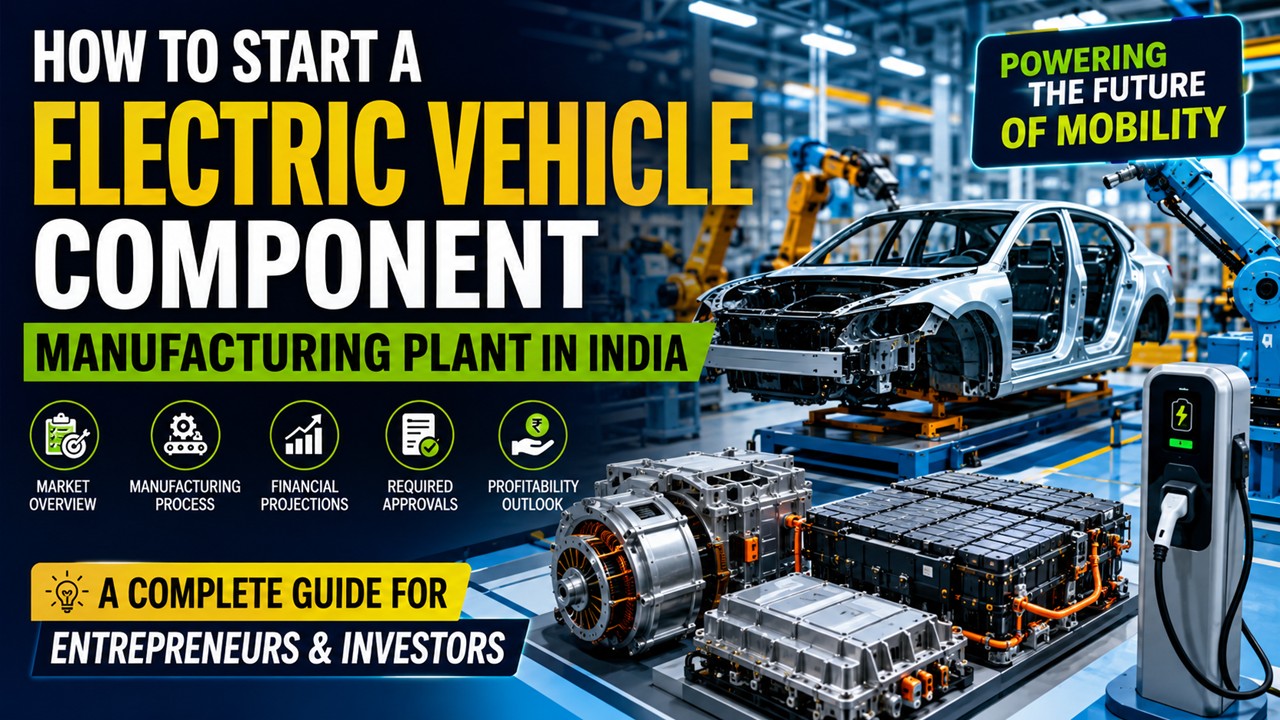
Setting up an electric vehicle component manufacturing plant in India presents a compelling investment case, driven by the accelerating global shift toward electric mobility and the rising demand for critical EV parts. The electric vehicle component market is driven by rising global EV adoption, government incentives for electrification, advancements in battery technologies, and expanding charging infrastructure investments. These components including battery packs, electric motors, power electronics, inverters, onboard chargers, battery management systems (BMS), thermal management systems, and drivetrain assemblies are essential to India’s economy as they enable energy storage, power conversion, propulsion, and vehicle control, forming the backbone of the country’s rapidly evolving automotive industry.
India’s accelerated push toward electric mobility, combined with the government’s “Make in India” initiative and ambitious electrification targets, provides strong tailwinds for domestic manufacturing. Key manufacturing states such as Tamil Nadu, Maharashtra, Gujarat, and Karnataka have established automotive ecosystems and are emerging as EV manufacturing hubs. With the India electric vehicle component market valued at USD 4.70 Billion in 2025 and projected to reach USD 18.60 Billion by 2034, exhibiting a remarkable CAGR of 16.4% from 2026 to 2034, India offers a strategically sound environment for establishing an electric vehicle component manufacturing facility.
India’s electric vehicle component market presents exceptional investment potential, bolstered by government electrification policies, the Make in India initiative, and surging EV adoption. With gross margins typically ranging between 25-35% and net margins of 12-20%, investors can achieve strong profitability and a viable break-even timeline.
What is an Electric Vehicle Component?
Electric vehicle components comprise the essential mechanical, electrical, and electronic parts used in the manufacturing and operation of battery electric vehicles (BEVs), plug-in hybrid electric vehicles (PHEVs), and hybrid electric vehicles (HEVs). Key components include battery packs, electric motors, power electronics, inverters, onboard chargers, battery management systems (BMS), thermal management systems, and drivetrain assemblies. These components enable energy storage, power conversion, propulsion, and vehicle control. Designed for high efficiency, lightweight performance, and durability, EV components rely on advanced materials such as lithium-ion cells, rare earth magnets, semiconductors, and aluminum alloys. They are critical to achieving improved vehicle range, safety, and overall performance. The electric vehicle component manufacturing process uses raw material sourcing, battery cell manufacturing and module assembly, electric motor winding and assembly, power electronics fabrication, thermal system integration, quality testing, final component assembly, and packaging as the primary production method. Key end-use industries served include automotive OEMs, electric bus and commercial vehicle manufacturers, two-wheeler and three-wheeler manufacturers, energy storage system manufacturers, and aftermarket service providers.
Cost of Setting Up an Electric Vehicle Component Manufacturing Plant in India
The total cost of setting up an electric vehicle component manufacturing plant in India depends on several critical factors, including plant capacity, technology, location, automation levels, and regulatory compliance requirements.
1. Capital Expenditure (CapEx)
The total capital investment required for establishing an electric vehicle component manufacturing plant covers land acquisition, site preparation, and necessary infrastructure. The location must offer easy access to key raw materials such as copper, electrical steel, magnets, and aluminum housings, with proximity to target markets to help minimize distribution costs. The site must have robust infrastructure, including reliable transportation, utilities, and waste management systems. Machinery costs account for the largest portion of the total capital expenditure. The cost of land and site development, including charges for land registration, boundary development, and other related expenses, forms a substantial part of the overall investment.
Key machinery required includes:
- Battery cell production lines
- Motor winding machines
- PCB assembly equipment
- Semiconductor fabrication systems
- Robotic assembly lines
- Thermal testing chambers
- Quality inspection systems
Other capital costs include civil works (production shed, quality control lab, raw material and finished goods storage, administrative block), effluent treatment systems, and pre-operative and commissioning expenses.
Request a Sample Report for In-Depth Market Insights: https://www.imarcgroup.com/electric-vehicle-component-manufacturing-plant-project-report/requestsample
2. Operational Expenditure (OpEx)
The operating cost structure of an electric vehicle component manufacturing plant is primarily driven by raw material consumption, particularly copper, which accounts for approximately 70-80% of total operating expenses (OpEx). Raw materials required include copper, electrical steel, magnets, and aluminum housings. Implementing long-term contracts with reliable suppliers helps mitigate price volatility and ensure a consistent supply of materials. Utilities (electricity, water, steam) account for 5-10% of OpEx. Other OpEx components include transportation costs, packaging costs, salaries and wages, repairs and maintenance, depreciation, and taxes. By the fifth year, the total operational cost is expected to increase substantially due to factors such as inflation, market fluctuations, and potential rises in the cost of key materials.
3. Plant Capacity
The proposed manufacturing facility is designed with an annual production capacity ranging between 150,000 – 300,000 units, enabling economies of scale while maintaining operational flexibility. Plant capacity can be customized per investor requirements. Profitability improves significantly with higher capacity utilization.
4. Profit Margins and Financial Projections
The project demonstrates healthy profitability potential under normal operating conditions. Gross profit margins typically range between 25-35%, supported by stable demand and value-added applications. Net profit margins are projected at 12-20%. Financial analysis includes comprehensive projections of net present value (NPV), internal rate of return (IRR), payback period, income projections, expenditure projections, and profit and loss accounts.
Why Set Up an Electric Vehicle Component Plant in India?
Accelerating EV Adoption: Rising electric vehicle sales increase demand for critical components. With electric car sales surpassing 17 million units in 2024, marking a 25% increase and an additional 3.5 million vehicles compared to 2023, demand for EV components such as batteries, motors, and power electronics continues to accelerate.
Government Electrification Policies: Governments worldwide are implementing stricter emission standards and offering subsidies to promote electric mobility. The Indian government’s incentives and emission regulations promote EV manufacturing, creating a favorable policy environment for component production.
High Technological Innovation Potential: Opportunities in battery efficiency and semiconductor development drive continuous innovation in the EV component sector. Advancements in lithium-ion battery technology improve vehicle range and cost efficiency.
Expanding Charging Infrastructure: Investments in charging infrastructure support long-term EV ecosystem growth, ensuring sustained demand for EV components.
Supply Chain Localization Initiatives: Countries aim to reduce import dependency for critical EV parts. Emerging markets are investing in domestic manufacturing ecosystems to secure supply chains and reduce reliance on imports, strengthening long-term market growth.
Active Industry Investment: In May 2025, Belrise Industries Ltd announced it is setting up three new manufacturing plants in India as part of its strategy to expand capacity and strengthen its presence in the fast-growing electric vehicle (EV) sector. The facility in Chennai will produce metal components, while the Pune plant will manufacture EV hub motors and chargers. The Pune unit is scheduled to commence operations in the first quarter of FY26, further enhancing the company’s mechanical systems capabilities.
Cost-Competitive Manufacturing: India offers competitive advantages in land, labour, and supply chain costs. The shift toward lightweight materials and high-efficiency semiconductors further supports innovation in domestic manufacturing.
Manufacturing Process – Step by Step
The electric vehicle component manufacturing process uses raw material sourcing, battery cell manufacturing and module assembly, electric motor winding and assembly, power electronics fabrication, thermal system integration, quality testing, final component assembly, and packaging as the primary production method.
- Raw Material Sourcing: Reliable suppliers must be secured for raw materials like copper, electrical steel, magnets, and aluminum housings to ensure consistent production quality. Minimizing transportation costs by selecting nearby suppliers is essential. Sustainability and supply chain risks must be assessed, and long-term contracts should be negotiated to stabilize pricing and ensure a steady supply.
- Battery Cell Manufacturing and Module Assembly: Battery cells are manufactured and assembled into modules, forming the core energy storage system of the electric vehicle.
- Electric Motor Winding and Assembly: Electric motors are wound and assembled, converting electrical energy into mechanical propulsion.
- Power Electronics Fabrication: Power electronics, including inverters and onboard chargers, are fabricated to manage energy flow between the battery and the motor.
- Thermal System Integration: Thermal management systems are integrated to regulate temperature and ensure optimal performance and safety.
- Quality Testing: A comprehensive quality management system is implemented across all stages of operations to ensure consistent product and service standards. Appropriate testing, monitoring, and validation processes are established to evaluate performance, safety, reliability, and compliance with applicable regulatory and industry requirements.
- Final Component Assembly: All components are assembled into finished EV components ready for integration into vehicles.
- Packaging: Finished components are packaged and dispatched to end-use industries including automotive OEMs, electric bus and commercial vehicle manufacturers, two-wheeler and three-wheeler manufacturers, energy storage system manufacturers, and aftermarket service providers.
Key Applications
Electric vehicle components serve a diverse range of industries and applications:
- Passenger Vehicle Manufacturing: EV components power electric cars through integrated battery and motor systems.
- Commercial Vehicle Sector: Used in electric buses, delivery vans, and heavy-duty trucks for sustainable transport.
- Two-Wheeler Segment: High demand for battery packs and compact motor systems in e-scooters and motorcycles.
- Energy Storage Industry: Battery modules and power electronics adapted for stationary storage solutions.
- Aftermarket Services: Replacement and upgrade of battery systems and electronic components.
Leading Manufacturers
Leading manufacturers in the global electric vehicle component industry include several multinational companies with extensive production capacities and diverse application portfolios. Key players include:
- Tesla
- BYD
- TOYOTA BOSHOKU CORPORATION
- Suzuki Motor Corporation
- Mitsubishi Electric Corporation
- BMW
- Robert Bosch GmbH
- Volkswagen Group
- AUDI AG
These key players serve end-use sectors such as automotive OEMs, electric bus and commercial vehicle manufacturers, two-wheeler and three-wheeler manufacturers, energy storage system manufacturers, and aftermarket service providers.
Timeline to Start the Plant
- Feasibility study and project report preparation
- Land acquisition and site development
- Regulatory approvals and environmental clearances
- Factory licence and fire safety compliance
- Machinery procurement and installation
- Raw material supplier agreements and supply chain setup
- Trial production and quality testing
- Commercial production launch
Licences and Regulatory Requirements
Starting an electric vehicle component manufacturing unit in India requires several approvals:
- Business registration (Proprietorship, LLP, or Pvt Ltd)
- Factory Licence under the Factories Act
- Environmental Clearance from State Pollution Control Board
- GST Registration
- Fire Safety NOC
- Effluent Treatment Plant (ETP) operational clearance
- Occupational Health and Safety compliance
Key Challenges to Consider
- High Capital Requirements: Machinery and infrastructure investments represent significant upfront costs. Equipment costs for battery cell production lines, motor winding machines, PCB assembly equipment, semiconductor fabrication systems, robotic assembly lines, thermal testing chambers, and quality inspection systems represent a significant portion of capital expenditure.
- Raw Material Price Volatility: Fluctuations in prices of copper, electrical steel, magnets, and aluminum housings directly impact margins. Raw materials account for 70-80% of operating expenses.
- Regulatory Compliance: Navigating environmental clearances, factory licences, and pollution control board regulations requires careful planning. Effluent treatment systems are necessary to minimize environmental impact and ensure compliance with emission standards.
- Technology and Innovation Pressure: Continuous advancements in battery technology, semiconductor development, and lightweight materials require ongoing capital reinvestment to remain competitive.
- Competition: The market includes established global players such as Tesla, BYD, Toyota Boshoku Corporation, Suzuki Motor Corporation, Mitsubishi Electric Corporation, BMW, Robert Bosch GmbH, Volkswagen Group, and AUDI AG.
- Skilled Manpower: Access to skilled workers for battery cell production, motor winding, power electronics fabrication, and quality control is essential.
Frequently Asked Questions
- How much does it cost to set up an electric vehicle component manufacturing plant in India?
The total capital investment depends on plant capacity, technology, and location, covering land acquisition, site preparation, infrastructure, and machinery costs. - Is electric vehicle component manufacturing profitable in India in 2026?
Yes, gross profit margins typically range between 25-35%, with net profit margins of 12-20%, indicating healthy profitability potential. - What machinery is required for an electric vehicle component plant in India?
Essential equipment includes battery cell production lines, motor winding machines, PCB assembly equipment, semiconductor fabrication systems, robotic assembly lines, thermal testing chambers, and quality inspection systems. - What licences and approvals are required to start an electric vehicle component plant in India?
Required approvals include business registration, Factory Licence under the Factories Act, Environmental Clearance from State Pollution Control Board, GST Registration, Fire Safety NOC, and ETP operational clearance. - What raw materials are needed for electric vehicle component manufacturing?
Raw materials required include copper, electrical steel, magnets, and aluminum housings. - What are the environmental compliance requirements for an electric vehicle component plant in India?
Facilities must implement effluent treatment systems, obtain environmental clearance from the State Pollution Control Board, and comply with emission standards. - What is the best location to set up an electric vehicle component plant in India?
The location must offer easy access to key raw materials such as copper, electrical steel, magnets, and aluminum housings, with proximity to target markets. Key manufacturing states include Tamil Nadu, Maharashtra, Gujarat, and Karnataka. - What is the break-even period for this type of plant in India?
Financial projections including break-even analysis are provided in detailed feasibility reports, with timelines varying based on capacity, utilization rates, and operating efficiencies. - What government incentives are available for manufacturers in India?
Investors benefit from the “Make in India” initiative, state-level industrial policies, and government incentives and emission regulations that promote EV manufacturing.
Key Takeaways for Investors
Setting up an electric vehicle component manufacturing plant in India offers a compelling investment opportunity, driven by strong demand from automotive OEMs, electric bus and commercial vehicle manufacturers, two-wheeler and three-wheeler manufacturers, energy storage system manufacturers, and aftermarket service providers. The project demonstrates healthy financial viability across various plant capacities (150,000 – 300,000 units annually), with gross profit margins ranging between 25-35% and net margins of 12-20%. The India electric vehicle component market was valued at USD 4.70 Billion in 2025 and is expected to reach USD 18.60 Billion by 2034, exhibiting a CAGR of 16.4% from 2026 to 2034, reflecting sustained long-term demand for critical EV components. With ongoing EV adoption, government electrification policies, and supply chain localization initiatives, the electric vehicle component industry is poised for continued expansion, making now an opportune time for investors to enter this dynamic market.
About the Author