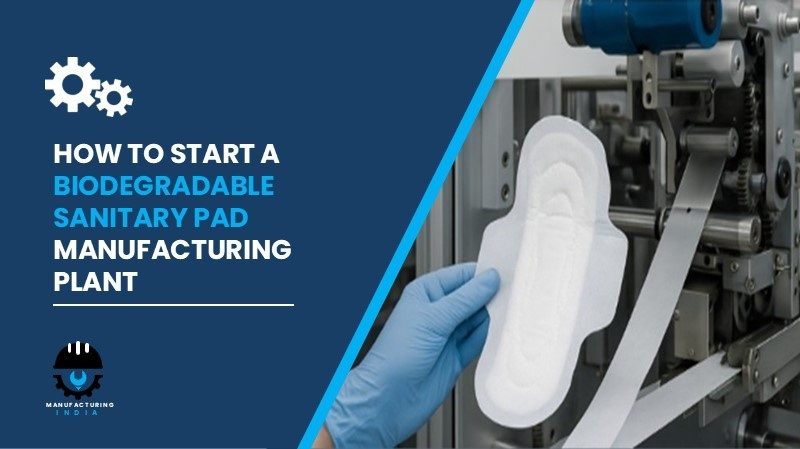
A biodegradable sanitary pad manufacturing plant setup in India presents a compelling investment case at a time when environmental consciousness and menstrual hygiene awareness are converging to reshape consumer demand. The women’s hygiene segment, eco-friendly consumer market, and organic retail sector are all driving unprecedented interest in plant-based menstrual products. India’s large, underserved feminine hygiene market, combined with a growing middle class increasingly aware of the environmental harm caused by conventional synthetic pads, creates fertile ground for manufacturers willing to invest in sustainable alternatives.
India offers powerful structural advantages for this type of production – affordable land in manufacturing hubs such as Gujarat and Maharashtra, a cost-competitive labour force, and a government policy environment anchored by the Make in India initiative that actively incentivises domestic production in healthcare and consumer goods. As stringent plastic regulations tighten globally and government incentives for organic and eco-friendly products multiply, establishing this unit in India positions investors at the intersection of regulatory tailwinds and accelerating consumer demand.
The global biodegradable sanitary napkin (pad) market was valued at USD 2,972.50 million in 2025 and is projected to reach USD 12,700.10 million by 2034 at a CAGR of 17.0%, making this one of the fastest-growing sustainable hygiene segments. A well-configured facility in India can achieve gross margins of 40-50% and net margins of 20-25%, supported by strong policy backing, cost-competitive manufacturing, and a demand base spanning women’s hygiene, eco-friendly retail, and commercial hospitality sectors.
What is a Biodegradable Sanitary Pad?
Biodegradable sanitary pads are menstrual hygiene products made from natural, plant-based materials that decompose more easily than conventional synthetic products. These eco-friendly alternatives are engineered to deliver the same absorbency and comfort as traditional sanitary products while significantly minimising environmental impact. Common materials used in their production include organic cotton, bamboo, cornstarch, and biodegradable polymers. Unlike plastic-based products, they break down more quickly in landfills, helping to reduce long-term waste accumulation and serving environmentally conscious consumers seeking to reduce their carbon footprint.
The manufacturing process follows a multi-stage production sequence involving raw materials sourcing, cleaning and processing raw fibres, compaction, bonding, shaping, sealing, and packaging. End-use industries served include women’s hygiene, the eco-friendly consumer market, organic retail, and commercial applications such as hotels, spas, and health clubs focused on sustainability.
Cost of Setting Up a Biodegradable Sanitary Pad Manufacturing Plant in India
The total investment required to establish this facility depends on several variables including plant capacity, production technology, geographic location, degree of automation, and regulatory compliance obligations.
1. Capital Expenditure (CapEx)
Capital investment in the facility covers land and site development, civil construction, machinery procurement, and other pre-operative costs. Land and site development charges – including land registration, boundary development, and related infrastructure – form a substantial component of total capital outlay. Investors may consider Special Economic Zones (SEZs) or established industrial estates in states like Gujarat or Maharashtra to benefit from subsidised land rates and streamlined approvals. Civil works encompass production sheds, laboratory space, raw material storage, finished goods warehousing, and an administrative block.
Machinery costs represent the largest single portion of total CapEx. Key machinery required includes:
- Fermentation reactors
- Blending equipment
- Pelletizing machines
- Cutting machines
- Packaging machines
Other capital costs include effluent treatment plant (ETP) installation, pre-operative and commissioning expenses, and import duties on specialised equipment where applicable.
Request a Sample Report for In-Depth Market Insights: https://www.imarcgroup.com/biodegradable-sanitary-pad-manufacturing-plant-project-report/requestsample
2. Operational Expenditure (OpEx)
The operating cost structure of this production unit is primarily driven by raw material consumption. Raw materials – including bamboo fibre, corn starch, banana fibre, absorbents, and adhesives – account for 55-65% of total operating expenses. Negotiating long-term contracts with reliable suppliers is a recommended strategy to mitigate price volatility and ensure a consistent supply chain. Utility costs covering electricity, water, and steam represent a further 10-15% of OpEx.
Other operating costs include transportation, packaging, salaries and wages, maintenance, depreciation, and taxes. By the fifth year of operations, total operational costs are expected to increase substantially due to inflation, market fluctuations, and potential rises in the cost of key input materials such as bamboo fibre. Supply chain disruptions and rising consumer demand are additional factors projected to contribute to this cost escalation.
3. Plant Capacity
The proposed facility is designed with an annual production capacity ranging between 100 and 500 million units, enabling economies of scale while maintaining operational flexibility. Capacity can be customized to suit the investment scale and target market of individual entrepreneurs and corporate investors. Profitability improves meaningfully at higher capacity utilisation rates, as fixed costs are distributed across a greater volume of output.
4. Profit Margins and Financial Projections
The facility demonstrates healthy profitability potential under normal operating conditions. Gross profit margins typically range between 40-50%, supported by stable demand and value-added applications across hygiene and eco-friendly retail sectors. Net profit margins are projected at 20-25%. A comprehensive financial analysis – encompassing Net Present Value (NPV), Internal Rate of Return (IRR), payback period, income projections, and sensitivity analysis – is incorporated in the detailed project report to aid funding decisions and strategic planning.
Why Set Up a Biodegradable Sanitary Pad Plant in India?
Environmental Crisis Driving Demand: The annual disposal of 12.3 billion pads globally generates 113,000 tonnes of menstrual waste, with 98% ending up in landfills. This alarming statistic is compelling eco-conscious consumers to switch to biodegradable alternatives, creating a large and growing demand base for manufacturers producing plant-based menstrual products.
Surging Global Market Growth: The global biodegradable sanitary napkin (pad) market was valued at USD 2,972.50 million in 2025 and is forecast to reach USD 12,700.10 million by 2034 at a CAGR of 17.0%. This trajectory positions India-based producers to capture export demand alongside a rapidly expanding domestic market.
Sustainability and Health Awareness: Consumers are increasingly choosing products free from synthetic chemicals and plastics, as eco-friendly pads are gentler on the skin and reduce the risk of irritation and allergic reactions. Rising eco-conscious consumerism, combined with ongoing product innovation improving absorbency and cost-effectiveness, is reinforcing long-term demand fundamentals.
Policy and Regulatory Tailwinds: Government incentives for organic and eco-friendly products, along with stringent plastic regulations at the national and state level, are accelerating the market shift toward biodegradable alternatives. The Make in India initiative provides additional impetus for setting up domestic production capacity in the hygiene and personal care segment.
Cost-Competitive Manufacturing: India offers significant advantages in land costs, labour availability, and proximity to natural raw material sources such as bamboo and banana fibre. These structural cost advantages enable India-based producers to compete effectively on price in both domestic and export markets.
Active Industry Investment: In December 2025, the Baghpat District Administration, in collaboration with UNICEF and the Indian Red Cross Society, launched NIRA – an initiative providing eco-friendly, reusable cotton menstrual pads to women and girls across the district. This public-sector investment signals strong institutional commitment to scaling sustainable menstrual hygiene infrastructure in India.
Manufacturing Process – Step by Step
The biodegradable sanitary pad manufacturing process uses a multi-stage production method involving raw material sourcing, fibre processing, compaction, bonding, shaping, sealing, and packaging as the primary production sequence.
- Raw Material Sourcing and Inspection: Bamboo fibre, corn starch, banana fibre, absorbents, and adhesives are procured from verified suppliers and inspected for quality compliance.
- Cleaning and Processing of Raw Fibres: Sourced fibres are cleaned to remove impurities, then processed to achieve the required texture and absorbency profile.
- Compaction: Processed fibres are compacted into the required pad core dimensions using pelletizing machines, ensuring uniform density and absorbency.
- Bonding: Adhesives and biodegradable polymers are applied using blending equipment to bind the fibre layers, creating a structurally stable pad core.
- Shaping: Cutting machines trim and shape the compacted and bonded material to final product dimensions.
- Sealing: The shaped pads are sealed, locking in the absorbent core and forming the outer protective layer to meet hygiene and safety standards.
- Quality Testing: Technical tests and quality assurance checks verify absorbency, structural integrity, and compliance with product safety standards.
- Packaging and Dispatch: Finished products are packaged using automated packaging machines and dispatched to retailers, organic stores, and commercial clients such as hotels and spas.
Key Applications
This product serves a diverse range of end-use industries centred on sustainable hygiene and eco-conscious consumption.
- Women’s Hygiene: Used for managing menstrual flow, offering a sustainable, comfortable, and chemical-free alternative to conventional plastic-based products.
- Eco-Friendly Consumer Market: Rising demand from consumers seeking to reduce environmental footprints drives uptake in eco-conscious retail channels, where these products are positioned as plastic-free alternatives.
- Organic Retail: Bio-based sanitary pads are stocked in organic markets catering to customers committed to sustainable living and eco-friendly hygiene solutions.
- Commercial Applications: Hotels, spas, and health clubs focused on sustainability use these pads as part of their commitment to providing eco-friendly products for clients.
- Postpartum Care: These products serve an important role in postpartum hygiene for new mothers, offering gentle, chemical-free absorbency during the recovery period.
Leading Manufacturers
The global biodegradable sanitary pad industry features a competitive landscape of producers serving the women’s hygiene, eco-friendly consumer, organic retail, and commercial segments. Key players include:
- Saathi Eco Innovations Pvt Ltd
- Carmesi
- Natracare
- Organyc
- Eco Femme
Timeline to Start the Plant
- Feasibility study and project report preparation
- Land acquisition and site development
- Regulatory approvals and environmental clearances
- Factory licence and fire safety compliance
- Machinery procurement and installation
- Raw material supplier agreements and supply chain setup
- Trial production and quality testing
- Commercial production launch
Licences and Regulatory Requirements
Starting a production unit of this type in India requires several approvals:
- Business registration (Proprietorship, LLP, or Pvt Ltd)
- Factory Licence under the Factories Act
- Environmental Clearance from State Pollution Control Board
- GST Registration
- Fire Safety NOC
- Effluent Treatment Plant (ETP) operational clearance
- Occupational Health and Safety compliance
Key Challenges to Consider
High Capital Requirements: Establishing a biodegradable sanitary pad manufacturing plant demands significant upfront investment in land, civil construction, and specialised machinery such as fermentation reactors, pelletizing machines, and cutting machines. Securing project financing and managing working capital are critical early-stage challenges.
Raw Material Price Volatility: Core inputs including bamboo fibre, corn starch, banana fibre, absorbents, and adhesives are subject to price fluctuations driven by agricultural cycles and global supply chain disruptions. Long-term supplier contracts are essential to mitigate this risk.
Regulatory Compliance: Meeting environmental clearances, ETP operational requirements, factory licensing, and safety regulations requires sustained administrative effort and investment, particularly for new entrants unfamiliar with India’s regulatory landscape.
Technology and Innovation Pressure: Ongoing product innovation in eco-friendly pad performance – covering absorbency, comfort, and cost-effectiveness – means producers must stay current with advances in biodegradable polymer science and fibre processing technology.
Competition: The market features established players including Saathi Eco Innovations Pvt Ltd, Carmesi, Natracare, Organyc, and Eco Femme, all of whom serve overlapping end-use segments with recognised brand presence among eco-conscious consumers.
Skilled Manpower: Operating fermentation reactors, blending equipment, and quality assurance systems requires trained technical staff. Recruiting and retaining skilled personnel in tier-2 and tier-3 manufacturing locations can be challenging without structured training programmes.
Frequently Asked Questions
1. How much does it cost to set up a biodegradable sanitary pad manufacturing plant in India?
The total cost depends on capacity, location, technology, and automation. Capital investment covers land and site development, civil construction, and machinery including fermentation reactors, pelletizing machines, cutting machines, and packaging machines. A detailed breakdown is available in the IMARC Group project report.
2. Is biodegradable sanitary pad manufacturing profitable in India in 2026?
Yes. The unit demonstrates strong profitability with gross margins of 40-50% and net margins of 20-25%, supported by a market projected to grow from USD 2,972.50 million in 2025 to USD 12,700.10 million by 2034 at a CAGR of 17.0%.
3. What machinery is required for a biodegradable sanitary pad plant in India?
Essential equipment includes fermentation reactors, blending equipment, pelletizing machines, cutting machines, and packaging machines.
4. What licences and approvals are required to start a biodegradable sanitary pad plant in India?
Required approvals include business registration, Factory Licence under the Factories Act, Environmental Clearance from the State Pollution Control Board, GST Registration, Fire Safety NOC, ETP operational clearance, and Occupational Health and Safety compliance.
5. What raw materials are needed for biodegradable sanitary pad manufacturing?
Key raw materials include bamboo fibre, corn starch, banana fibre, absorbents, and adhesives.
6. What are the environmental compliance requirements for a biodegradable sanitary pad plant in India?
The unit must obtain Environmental Clearance from the State Pollution Control Board, install and operate an Effluent Treatment Plant (ETP), and implement advanced monitoring systems. Compliance with emission standards and waste disposal norms is mandatory throughout operations.
7. What is the best location to set up a biodegradable sanitary pad plant in India?
Ideal locations offer proximity to raw material sources such as bamboo and banana fibre, reliable utility infrastructure, and strong transportation access. Industrial estates and SEZs in states such as Gujarat and Maharashtra provide cost advantages and streamlined regulatory processes.
8. What is the break-even period for this type of plant in India?
The break-even period is detailed in the full financial analysis covering NPV, IRR, payback period, and sensitivity analysis. With gross margins of 40-50% and stable demand, the facility is structured for viable returns within a commercially standard investment horizon.
9. What government incentives are available for manufacturers in India?
The Make in India initiative, government incentives for organic and eco-friendly products, and state-level industrial development schemes support manufacturers in the sustainable hygiene segment. Stringent plastic regulations further strengthen the competitive position of producers in this space.
Key Takeaways for Investors
This investment opportunity in India finds demand driven by the women’s hygiene sector, eco-friendly consumer market, organic retail, and commercial applications. The facility demonstrates financial viability across the 100-500 million units annual capacity range, delivering gross margins of 40-50% and net margins of 20-25%. The global market, valued at USD 2,972.50 million in 2025, is forecast to reach USD 12,700.10 million by 2034 at a CAGR of 17.0%, underpinning long-term demand sustainability. With raw material costs representing 55-65% of OpEx and policy tailwinds from Make in India and global plastic regulations, the economics and strategic rationale for establishing this production unit in India remain compelling through the decade ahead.
About the Author