Setting up a specialty chemicals production plant in India presents a compelling investment case driven by surging demand across pharmaceuticals, agrochemicals, electronics, water treatment, oil and gas, specialty coatings, and advanced materials. Specialty chemicals – or “effect chemicals” – are high-value, low-volume products engineered for specific applications rather than general use, valued for their targeted performance, functionality, and composition. Unlike mass-produced commodity chemicals, they serve as vital ingredients or processing aids that improve the quality, durability, or efficiency of final consumer and industrial products. India is already a significant force in this category: specialty chemicals are a highly R&D-intensive segment, accounting for over 50% of the total chemical exports from India, and constitute around USD 40 to 45 billion of market consumption as per NITI Aayog – a scale that firmly establishes India as both one of the world’s most important specialty chemicals producing nations and one of its fastest-growing consumption centres.
India’s structural advantages reinforce the investment case strongly. The market is driven by sustainability, with customers across all end-use sectors seeking bio-based ingredients, low-VOC coatings, recyclable additives, water-treatment solutions, and safer alternatives to restricted substances – a transition that is accelerating investment in specialty chemical production capacity where India’s growing technical expertise and competitive cost base offer a compelling combination. Government initiatives promoting domestic production, chemical value-chain expansion, import substitution, and industrial self-reliance are encouraging investments in specialty chemical manufacturing facilities and innovation capabilities. The global specialty chemicals market was valued at USD 805.5 billion in 2025 and is expected to reach USD 1,078.8 billion by 2034 at a CAGR of 3.13% according to IMARC Group estimates – and a well-capitalised specialty chemicals production plant in India is positioned to capture a growing share of both domestic industrial demand and global chemical export flows.
India’s position as a country where specialty chemicals account for over 50% of chemical exports and USD 40–45 billion of domestic market consumption per NITI Aayog, combined with a global market growing from USD 805.5 billion in 2025 to USD 1,078.8 billion by 2034, makes a specialty chemicals production plant a financially sound, policy-supported, and structurally well-timed industrial investment. With gross margins of 26–35% and net margins of 15–22% at a 10,000 MT annual capacity, the return profile is robust and the demand outlook durable.
What are Specialty Chemicals?
Specialty chemicals, or “effect chemicals,” are high-value, low-volume products engineered for specific applications rather than general use. Unlike mass-produced commodity chemicals, they are valued for their targeted performance, functionality, and composition rather than just their basic chemical makeup. They can be unique molecules or specialised formulations. These chemicals act as vital ingredients or processing aids to improve the quality, durability, or efficiency of final consumer and industrial products.
Common examples include adhesives, lubricants, catalysts, agrochemicals, cosmetic additives, and coatings. The market is driven by sustainability, with customers seeking bio-based ingredients, low-VOC coatings, recyclable additives, water-treatment solutions, and safer alternatives to restricted substances. Specialty chemicals compete on functionality, formulation expertise, and customer-specific value – which helps producers protect margins despite raw material volatility and cyclical demand pressures, making this a structurally more resilient category than commodity chemical production.
The primary production method is precision chemical synthesis, catalytic purification, and ultra-fine filtration – a multi-stage, technically demanding production process that converts intermediates, solvents, surfactants, and polymers into high-purity, specification-grade specialty chemical products. Applications include high-purity solvent production, catalyst preparation, reagent-grade intermediary synthesis, corrosion-inhibiting formulations, and ultra-clean process fluids for semiconductor and battery production. End-use industries served include pharmaceuticals, agrochemicals, electronics, water treatment, oil and gas, specialty coatings, and advanced materials.
Cost of Setting Up a Specialty Chemicals Production Plant in India
The cost of establishing this facility depends on capacity, technology selection, plant location, degree of automation, and regulatory compliance requirements.
1. Capital Expenditure (CapEx)
Total capital investment for a specialty chemicals production plant in India covers land acquisition, site preparation, civil construction, process machinery, and pre-operative expenses. The cost of land and site development – including charges for land registration, boundary development, and other related expenses – forms a substantial part of the overall investment. This allocation ensures a solid foundation for safe and efficient plant operations. Investors can reduce land acquisition costs by locating the unit in a Chemical Zone, PCPIR (Petroleum, Chemicals and Petrochemicals Investment Region) cluster, or Special Economic Zone (SEZ), which also provide shared utility infrastructure and potential state-level fiscal incentives aligned with India’s specialty chemicals investment agenda.
Civil works and construction encompass the main synthesis and processing building, raw material storage areas for intermediates, solvents, surfactants, and polymers, a quality control laboratory, a finished goods warehouse, and an administrative block. Given that specialty chemicals production involves precision chemical synthesis and may require handling of corrosive, flammable, or hazardous chemical intermediates depending on the product sub-segment, civil and structural infrastructure must incorporate appropriate containment, ventilation, explosion-proof construction where required, and sanitary design standards appropriate for the target product grade.
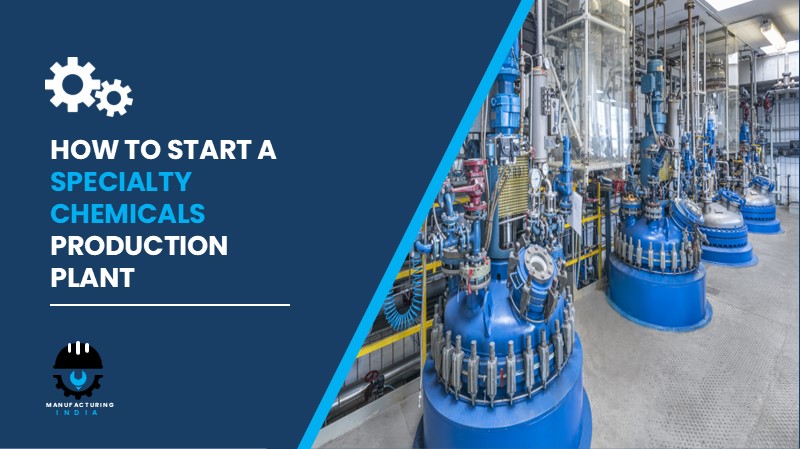
Machinery costs account for the largest portion of total capital expenditure. Key machinery required includes:
- Feedstock pretreatment units
- Hydrolysis reactors
- Esterification vessels
- Distillation columns
- Hydrogenation systems
- Bleaching filters
- Deodorising modules
- Final-product filling lines
All machinery must be high-quality and corrosion-resistant, tailored for specialty chemicals production, and must comply with industry standards for safety, efficiency, and reliability. Other capital costs include the effluent treatment plant (ETP), advanced process monitoring systems, pre-operative expenses, trial production costs, and commissioning charges.
Request a Sample Report for In-Depth Market Insights: https://www.imarcgroup.com/specialty-chemicals-manufacturing-plant-project-report/requestsample
2. Operational Expenditure (OpEx)
The operating cost structure of a specialty chemicals production plant is primarily driven by raw material consumption, particularly raw materials that vary by product – intermediates, solvents, surfactants, and polymers – which account for approximately 50–60% of total operating expenses (OpEx). Securing long-term supply agreements with reliable domestic and international chemical intermediate suppliers is essential to mitigate price volatility and ensure a consistent supply of materials. Minimising transportation costs by selecting nearby suppliers is essential at the procurement planning stage, and sustainability and supply chain risks must be assessed, with long-term contracts negotiated to stabilise pricing and ensure a steady supply.
Utility costs – comprising electricity for reactors, distillation columns, hydrogenation systems, and filling lines, as well as water and steam – account for 8–12% of total OpEx. Other ongoing operating costs include transportation, packaging, salaries and wages, depreciation, taxes, equipment repairs and maintenance, quality control, and other miscellaneous expenses.
In the first year of operations, the operating cost for the specialty chemicals production plant is projected to be significant, covering raw materials, utilities, depreciation, taxes, packing, transportation, and repairs and maintenance. By the fifth year, the total operational cost is expected to increase substantially due to factors such as inflation, market fluctuations, and potential rises in the cost of key materials. Additional factors, including supply chain disruptions, rising consumer demand, and shifts in the global economy, are expected to contribute to this increase.
3. Plant Capacity
The proposed production facility is designed with an annual production capacity of 10,000 MT, enabling economies of scale while maintaining operational flexibility. Capacity can be customised per investor requirements based on target pharmaceutical, agrochemical, electronics, or advanced materials market segments, available capital, and chosen production technology. Profitability improves materially with higher capacity utilisation, making domestic off-take agreements with pharmaceutical API manufacturers, agrochemical formulators, electronics component producers, and water treatment companies a commercial priority from the commissioning stage.
4. Profit Margins and Financial Projections
The project demonstrates healthy profitability potential under normal operating conditions. Gross profit margins typically range between 26–35%, supported by stable demand and value-added applications. Net profit margins range between 15–22%. A comprehensive financial model covering NPV (net present value), IRR (internal rate of return), payback period, liquidity analysis, uncertainty analysis, sensitivity analysis, and a full five-year profit and loss account provides investors with a rigorous analytical framework for assessing financial viability and long-term sustainability across different capacity and pricing scenarios.
Why Set Up a Specialty Chemicals Plant in India?
High-Value Industrial Building Blocks Underpinning Multi-Sector Demand. Specialty chemicals serve as critical inputs across pharmaceuticals, agrochemicals, personal care, electronics, construction, water treatment, coatings, and performance materials industries, positioning them as indispensable products for modern production and industrial innovation. This breadth of end-use demand ensures diversified and resilient revenue streams for domestic specialty chemicals producers, reducing dependency on any single industrial sector.
India’s USD 40–45 Billion Market and Export Leadership. Specialty chemicals account for over 50% of the total chemical exports from India and constitute around USD 40 to 45 billion of market consumption as per NITI Aayog – making India one of the most significant specialty chemicals markets in Asia. This scale of domestic industrial demand, combined with India’s existing export competitiveness in specialty chemical sub-segments, creates a large and commercially validated addressable market for new domestic production capacity at the 10,000 MT annual scale.
Strong Technical and Regulatory Entry Barriers Creating Sustainable Margins. Unlike commodity chemicals, specialty chemical production requires advanced formulation expertise, stringent quality control, regulatory compliance, intellectual property capabilities, and extensive customer qualification processes. These barriers create sustainable competitive advantages for technically capable and compliant manufacturers – enabling specialty chemicals to compete on functionality and formulation value rather than price alone, and protecting gross margins in the 26–35% range even during periods of raw material volatility.
Megatrend Alignment Driving Robust Long-Term Demand. Rapid growth in healthcare, electric vehicles, semiconductors, sustainable agriculture, clean energy, and advanced materials is driving robust demand for high-performance specialty chemicals. Global industries increasingly require customised formulations that enhance efficiency, durability, safety, and environmental performance – a product development imperative that favours technically sophisticated domestic producers with strong R&D and application development capabilities.
Policy and Industrial Development Support Accelerating Investment. Government initiatives promoting domestic production, chemical value-chain expansion, import substitution, renewable energy, electronics production, and industrial self-reliance are encouraging investments in specialty chemical manufacturing facilities and innovation capabilities. India’s PCPIR cluster infrastructure and chemical SEZ frameworks provide physical and fiscal support for specialty chemicals investment that reduces effective land and utility costs for qualifying investors.
Active Global Industry Developments Confirming Market Momentum. In June 2026, Boardwalktech Software Corp. announced that three existing customers – including Levi Strauss & Co., SiTime Corporation, and Sekisui Specialty Chemicals – have expanded their use of Boardwalktech’s Velocity platform and have adopted newly introduced AI capabilities designed to accelerate automation, improve visibility, and increase operational efficiency in specialty chemical supply chains. In May 2026, Praana Group announced the completion of its acquisition of Multi-Chem, currently operating as Sterling MultiChem within the Sterling Specialty Chemicals platform – a transaction that strengthened Praana Group’s specialty chemicals platform and expanded its energy-sector capabilities, confirming that the global specialty chemicals industry is actively consolidating and investing in platform expansion across end-use sectors.
Production Process – Step by Step
The specialty chemicals production process uses precision chemical synthesis, catalytic purification, and ultra-fine filtration as the primary production method. Each stage is precision-controlled to ensure product purity, performance specification compliance, and full traceability documentation required by pharmaceutical, agrochemical, electronics, and advanced materials customers.
- Raw Material Receipt and Inspection: Intermediates, solvents, surfactants, and polymers – varying by target specialty chemical product – are received at the facility and subjected to incoming quality checks for grade specification, purity, and moisture content before entering the process flow.
- Feedstock Pretreatment: Raw material feedstocks are processed through feedstock pretreatment units to achieve the required purity, particle size, moisture content, and chemical composition specification for the downstream synthesis reactions – a preparatory step critical to downstream reaction yield and product quality consistency.
- Precision Chemical Synthesis: Pretreated feedstocks are charged into hydrolysis reactors or esterification vessels under controlled temperature, pressure, catalyst loading, and residence time conditions. The synthesis reaction converts the feedstock mixture into the target specialty chemical intermediate or finished product through precisely controlled chemical transformation.
- Hydrogenation: Where the product specification requires reduction of unsaturation or functional group transformation, the intermediate is processed through hydrogenation systems under controlled hydrogen pressure and catalyst conditions to achieve the target chemical structure and physical properties.
- Catalytic Purification: Crude product streams are processed through catalytic purification stages to remove reaction by-products, catalyst residues, and impurities that would compromise the performance specification of the finished specialty chemical product.
- Distillation: Product streams are separated and purified in distillation columns – using fractional, vacuum, or thin-film distillation techniques as required – to achieve the purity, boiling point specification, and colour standards demanded by pharmaceutical, electronics, and advanced materials customers.
- Bleaching and Deodorising: Colour bodies, odour compounds, and residual impurities are removed through bleaching filters and deodorising modules to achieve the colour and odour specification required for cosmetics, personal care, food contact, and high-purity electronics-grade products.
- Ultra-Fine Filtration: Finished specialty chemical product is processed through ultra-fine filtration to achieve the particle size and cleanliness specification required for semiconductor-grade, pharmaceutical-grade, or battery-grade product applications.
- Quality Inspection and Testing: Finished product is analytically tested for purity, concentration, colour, odour, particle size, and application-specific performance parameters before release for filling and dispatch.
- Final-Product Filling and Dispatch: Approved specialty chemical product is filled into drums, IBCs, or bulk containers using final-product filling lines and dispatched to end-use customers across pharmaceuticals, agrochemicals, electronics, water treatment, oil and gas, specialty coatings, and advanced materials sectors.
Key Applications
The specialty chemicals production plant serves a diverse and commercially critical range of industries and applications across India’s industrial economy.
- Agrochemicals: Used for crop protection formulations, adjuvants, pesticide intermediates, and specialty agricultural solutions – a large and growing demand segment aligned with India’s expanding agrochemical production and export base.
- Pharmaceuticals: Serves as active pharmaceutical ingredient intermediates, excipients, drug formulations, and fine chemical synthesis inputs – a high-purity, high-specification segment where Indian pharmaceutical manufacturers require consistent, traceable, and regulatory-compliant specialty chemical inputs.
- Personal Care and Cosmetics: Supplies surfactants, emollients, preservatives, specialty additives, and formulation ingredients for personal care and cosmetics manufacturers – a growing consumer segment aligned with India’s rapidly expanding premium personal care market.
- Paints, Coatings, and Adhesives: Provides performance additives, resins, curing agents, dispersants, and specialty formulation chemicals for paint and coatings manufacturers – serving both industrial and decorative coatings applications across India’s expanding construction and automotive sectors.
- Electronics and Semiconductors: Delivers ultra-clean process fluids, high-purity solvents, and specialty materials for semiconductor processing and battery production – a fast-growing application segment aligned with India’s electronics PLI-driven production expansion.
- Water Treatment: Supplies specialty chemical formulations for industrial and municipal water treatment – an essential and growing application aligned with India’s expanding water infrastructure development and industrial effluent management requirements.
Leading Manufacturers
The global specialty chemicals industry is served by several established multinational producers with extensive production capacities and diverse application portfolios. Key players operating in this market include:
- BASF SE
- DOW Inc.
- Nouryon
- LANXESS AG
- Evonik Industries AG
- Huntsman Corporation
All of these producers serve end-use sectors including pharmaceuticals, agrochemicals, electronics, water treatment, oil and gas, specialty coatings, and advanced materials – the same markets that a domestic Indian specialty chemicals production plant can target as local industrial demand and export competitiveness accelerates.
Timeline to Start the Plant
Investors should plan for a structured pre-production and commissioning phase covering the following key stages:
- Feasibility study and project report preparation
- Land acquisition and site development
- Regulatory approvals and environmental clearances
- Factory licence and fire safety compliance
- Machinery procurement and installation
- Raw material supplier agreements and supply chain setup
- Trial production and quality testing
- Commercial production launch
Licences and Regulatory Requirements
Starting a specialty chemicals production unit in India requires several approvals:
- Business registration (Proprietorship, LLP, or Private Limited Company)
- Factory Licence under the Factories Act
- Environmental Clearance from the State Pollution Control Board
- GST Registration
- Fire Safety NOC
- Hazardous chemical compliance for storage and handling of chemical intermediates, solvents, and reactive materials under the Manufacture, Storage and Import of Hazardous Chemical Rules
- Effluent Treatment Plant (ETP) operational clearance
- Occupational Health and Safety compliance
Key Challenges to Consider
High Capital Requirements. Establishing a fully equipped specialty chemicals production plant – with feedstock pretreatment units, hydrolysis reactors, esterification vessels, distillation columns, hydrogenation systems, bleaching filters, deodorising modules, and final-product filling lines – at the 10,000 MT annual capacity scale requires significant upfront capital investment. Access to chemical sector term financing, MSME credit-linked subsidies, and PCPIR cluster infrastructure support can help investors manage this capital requirement.
Raw Material Price Volatility. Intermediates, solvents, surfactants, and polymers – accounting for 50–60% of total OpEx and varying by product sub-segment – are subject to global petrochemical feedstock price cycles, supply concentration risks, and logistics disruptions. Long-term procurement contracts with reliable domestic and international chemical intermediate suppliers and a diversified sourcing strategy are the primary risk mitigation measures for managing this dominant cost driver.
Strong Technical and Regulatory Entry Barriers. Specialty chemical production requires advanced formulation expertise, stringent quality control, regulatory compliance, and extensive customer qualification processes. While these barriers create competitive advantages for established producers, they represent a significant pre-commercial investment in technical capability, IP development, and customer qualification that new entrants must plan for carefully as part of the overall investment programme.
Regulatory Compliance. Specialty chemicals production involving reactive, corrosive, or flammable intermediates is subject to India’s Hazardous Chemicals Rules. Compliance obligations include safety audits, emergency response plans, process hazard analyses, and ongoing ETP monitoring. Depending on the target product sub-segment, additional regulatory frameworks – including CDSCO drug intermediate regulations, FSSAI food contact standards, or REACH equivalents for export markets – may apply. Dedicated environmental, health, and safety management resources are non-negotiable operational requirements.
Competition from Global Players. Established multinational producers – including BASF SE, DOW Inc., Nouryon, LANXESS AG, Evonik Industries AG, and Huntsman Corporation – hold dominant positions in global specialty chemicals supply across all key end-use sectors. Indian manufacturers must compete through supply chain localisation, technical service differentiation, price competitiveness versus imports, and the ability to customise formulations for India-specific industrial applications.
Skilled Manpower. Operating hydrolysis reactors, distillation columns, hydrogenation systems, and ultra-fine filtration equipment in a precision chemical production environment requires certified chemical engineers, process chemists, and quality assurance specialists. Recruiting, training, and retaining qualified technical staff – particularly in formulation chemistry, process control, and regulatory compliance – is a recurring operational challenge in India’s growing specialty chemicals production sector.
Frequently Asked Questions
1. How much does it cost to set up a specialty chemicals production plant in India?
Total setup cost depends on plant capacity, product sub-segment selection, location, technology, and automation level. Key cost components include land and site development, hazardous-rated civil construction, process machinery (feedstock pretreatment units, reactors, distillation columns, hydrogenation systems, filling lines), and pre-operative expenses. A detailed feasibility study is recommended to generate accurate project-specific cost estimates.
2. Is specialty chemicals production profitable in India in 2026?
Yes. The project delivers healthy financial performance, with gross margins of 26–35% and net profit margins of 15–22% under normal operating conditions. The global specialty chemicals market was valued at USD 805.5 billion in 2025 and is projected to reach USD 1,078.8 billion by 2034 at a CAGR of 3.13% according to IMARC Group, with specialty chemicals already accounting for over 50% of India’s total chemical exports and USD 40–45 billion of domestic market consumption per NITI Aayog.
3. What machinery is required for a specialty chemicals plant in India?
Essential equipment includes feedstock pretreatment units, hydrolysis reactors, esterification vessels, distillation columns, hydrogenation systems, bleaching filters, deodorising modules, and final-product filling lines.
4. What licences and approvals are required to start a specialty chemicals plant in India?
Required approvals include business registration, Factory Licence, Environmental Clearance from the State Pollution Control Board, GST Registration, Fire Safety NOC, hazardous chemical compliance for chemical intermediate and solvent handling, ETP operational clearance, and Occupational Health and Safety compliance.
5. What raw materials are needed for specialty chemicals production?
Primary raw materials vary by product and include intermediates, solvents, surfactants, and polymers. These collectively account for 50–60% of total operating expenses and must be sourced from suppliers meeting the purity, grade, and specification requirements of the target specialty chemical product sub-segment.
6. What are the environmental compliance requirements for a specialty chemicals plant in India?
The facility must obtain Environmental Clearance from the State Pollution Control Board, operate an approved ETP, and comply with the Hazardous Chemicals Rules for chemical intermediate storage and handling. Advanced monitoring systems must be installed to detect leaks or process deviations, and regular effluent monitoring, air emission reporting, and safety audit documentation are mandatory throughout operations.
7. What is the best location to set up a specialty chemicals plant in India?
Locations offering access to chemical intermediate raw material supply chains, reliable industrial-grade utilities, and proximity to pharmaceutical, agrochemical, electronics, and coatings end-user clusters are preferred. PCPIR clusters in Gujarat, Andhra Pradesh, Odisha, and Rajasthan, along with chemical zones in Maharashtra, provide the most developed specialty chemicals production infrastructure and supply chain ecosystems in India.
8. What is the break-even period for this type of plant in India?
The break-even period depends on plant capacity, total capital investment, product pricing across target specialty chemical sub-segments, and capacity utilisation rate. A comprehensive financial analysis covering NPV, IRR, payback period, and uncertainty and sensitivity analysis is the most reliable method for generating project-specific break-even timelines.
9. What government incentives are available for manufacturers in India?
Specialty chemicals manufacturers in India can access PLI scheme incentives for chemicals and advanced chemistry cells, MSME credit-linked capital subsidy schemes, state government investment promotion subsidies within Chemical and PCPIR Zone locations, and export promotion incentives under schemes administered by the Ministry of Commerce. Digitalization and AI-enabled process improvement – as demonstrated by the June 2026 Boardwalktech-Sekisui Specialty Chemicals collaboration – can also qualify for technology adoption incentives under state industrial development schemes.
Key Takeaways for Investors
A specialty chemicals production plant in India offers a well-grounded and commercially sophisticated investment opportunity anchored by growing demand across pharmaceuticals, agrochemicals, electronics, water treatment, oil and gas, specialty coatings, and advanced materials – all of which depend on specialty chemicals as critical, high-performance industrial inputs that cannot be easily substituted with commodity chemical alternatives. The project is financially viable at the 10,000 MT annual production scale, with gross margins of 26–35% and net margins of 15–22% providing a strong return framework that reflects the higher functional value and customer-specific differentiation that specialty chemicals command over commodity products. According to IMARC Group estimates, the global specialty chemicals market is set to grow from USD 805.5 billion in 2025 to USD 1,078.8 billion by 2034 at a CAGR of 3.13%, and India’s position as a country where specialty chemicals account for over 50% of chemical exports and USD 40–45 billion of market consumption per NITI Aayog confirms the scale and depth of domestic demand supporting new production capacity investment. With global supply chain localisation trends, active industry consolidation – including Praana Group’s May 2026 acquisition of Sterling MultiChem – and AI-driven operational efficiency adoption accelerating across the sector, the long-term demand sustainability for domestically produced specialty chemicals is structurally sound across all investment planning horizons.
About the Author