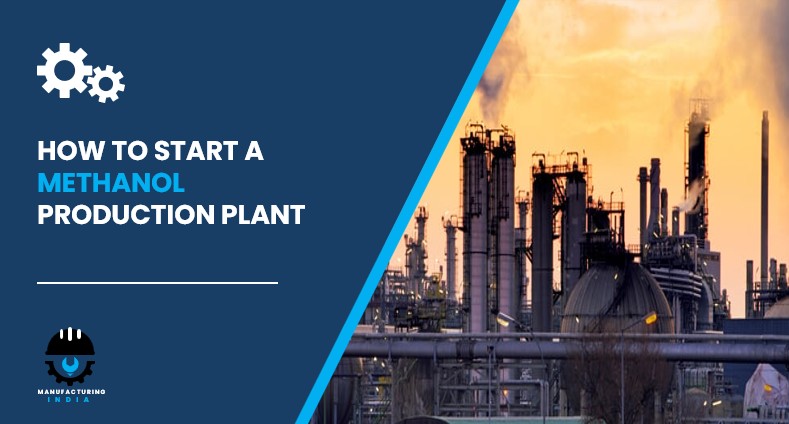
Setting up a methanol production plant in India represents a highly attractive investment proposition underpinned by robust and structurally growing demand from the chemicals, automotive, construction, energy, and pharmaceutical industries. The accelerating global transition toward cleaner fuels, the expanding adoption of methanol as a feedstock for formaldehyde, acetic acid, and olefins, and rising interest in green methanol derived from renewable hydrogen and captured carbon dioxide create multiple simultaneous demand growth drivers across industrial and energy markets. Combined with well-established steam methane reforming technology, scalable production infrastructure, and growing export market opportunities, methanol manufacturing presents a compelling and commercially mature investment opportunity for new entrants with efficient synthesis, purification, and quality systems.
What is Methanol?
Methanol, also recognised as wood alcohol, is a volatile, colourless liquid with the chemical formula CH₃OH. It is the simplest alcohol and is produced primarily from natural gas through steam methane reforming (SMR), though it can also be produced from coal, biomass, and increasingly from green hydrogen combined with captured carbon dioxide in what is known as e-methanol or green methanol. Methanol serves as a foundational industrial chemical and clean-burning fuel, and is a key feedstock in the synthesis of formaldehyde, acetic acid, dimethyl ether, methyl tert-butyl ether (MTBE), and a broad range of plastics, resins, paints, and adhesives.
Beyond its role as a chemical feedstock, methanol is gaining significant traction as a transportation fuel and fuel additive, valued for its clean combustion characteristics and compatibility with existing internal combustion infrastructure. The marine industry is increasingly adopting methanol as a low-emission alternative to conventional bunker fuels. In the energy sector, methanol is used as a hydrogen carrier and as a feedstock for methanol-to-olefins (MTO) and methanol-to-propylene (MTP) conversion processes.
The global methanol market was valued at several billion US dollars in 2025 and is projected to expand at a robust compound annual growth rate over the coming decade, supported by sustained demand from chemical manufacturing, growing adoption as a clean fuel in transportation and marine applications, expanding methanol-to-olefins capacity in China and India, and accelerating investment in green and bio-methanol production infrastructure.
Cost of Setting Up a Methanol Production Plant
The total capital investment required to establish a methanol production plant is determined by several key parameters: annual production capacity (typically ranging from 100,000 to 1,000,000 metric tonnes per annum depending on project scale), the synthesis technology adopted (natural gas-based steam methane reforming versus coal gasification, biomass gasification, or green hydrogen-based routes), the degree of automation across reforming, synthesis, distillation, and utilities sections, facility specifications, feedstock sourcing strategy, and applicable regulatory and environmental compliance requirements. Below is a structured breakdown of the major cost components.
1. Capital Expenditure (CapEx)
Total capital investment in a methanol production plant covers the following major heads:
Land and Site Development
This encompasses land acquisition or lease, site preparation, boundary development, and utilities connectivity. Site selection should prioritise proximity to natural gas pipelines, gas processing infrastructure, and port or rail facilities for methanol export and distribution. Access to reliable power for compression, refrigeration, and utilities systems, road and rail infrastructure for feedstock delivery and product dispatch, availability of process water for steam generation and cooling, and a trained local workforce are critical site selection criteria. Compliance with industrial zoning regulations, environmental impact assessment requirements for large chemical plants, and safety buffer zone requirements around methanol storage and handling infrastructure must be assessed from project initiation.
Civil Works and Construction
Building costs cover the main processing facility including the feed gas treatment area, steam methane reforming section, shift conversion unit, CO₂ removal section, methanol synthesis reactor area, crude methanol storage, distillation section, product methanol storage and loading facility, utility systems including cooling water, steam generation, instrument air, nitrogen supply, and flare system, quality control laboratory, administrative block, control room, and fire and safety infrastructure. Construction must comply with applicable factory act requirements, petroleum and explosives safety regulations, pollution control board clearances, and local building regulations, with particular attention to fire and explosion risk management given the flammable and toxic nature of methanol and synthesis gas.
Machinery and Equipment
Machinery represents the single largest CapEx component. Key equipment required for a methanol production plant includes:
- Feed Gas Desulphurisation Unit: Hydrodesulphurisation reactors and zinc oxide guard beds to remove sulphur compounds from natural gas feedstock that would otherwise poison reforming and synthesis catalysts.
- Steam Methane Reformer: Primary reformer with catalyst-filled tubes operating at high temperature (800–950°C) to convert methane and steam into synthesis gas (a mixture of hydrogen, carbon monoxide, and carbon dioxide), along with pre-reformer and associated burner and flue gas systems.
- Autothermal Reformer (Optional): Used in combination with SMR in large-scale plants to optimise the hydrogen-to-carbon monoxide ratio of synthesis gas through partial oxidation, improving methanol synthesis efficiency.
- Water Gas Shift Converters: High-temperature and low-temperature shift reactors to adjust the hydrogen-to-carbon oxide ratio of synthesis gas to the optimal stoichiometry for methanol synthesis.
- CO₂ Removal System: Absorption columns, regeneration stripper, solvent circulation pumps, and heat exchangers (typically using amine or physical solvent systems) to remove excess carbon dioxide from synthesis gas.
- Synthesis Gas Compression: Multi-stage centrifugal or reciprocating compressors to pressurise synthesis gas to methanol synthesis reactor operating pressure (50–100 bar).
- Methanol Synthesis Reactor: Tubular or adiabatic fixed-bed reactors loaded with copper-zinc-alumina catalyst operating at moderate temperature (200–300°C) and elevated pressure to convert synthesis gas to crude methanol with high selectivity.
- Crude Methanol Storage Tanks: Stainless steel or carbon steel storage tanks for intermediate storage of crude methanol prior to distillation, designed to API or equivalent standards with fire protection systems.
- Methanol Distillation Section: Two- or three-column distillation system (topping column, pressurised column, and atmospheric column) to purify crude methanol to chemical-grade (AA Grade) or fuel-grade specification by removing water, dissolved gases, and higher alcohols.
- Product Methanol Storage and Loading: Large-volume product storage tanks with insulation, blanketing, and secondary containment, along with road tanker loading arms, rail car loading facilities, and ship loading infrastructure for bulk export.
- Cooling Water System: Cooling towers, circulation pumps, and heat exchangers to manage process heat rejection across reforming, synthesis, and distillation sections.
- Boiler and Steam Generation System: High-pressure steam boilers, heat recovery steam generators, and steam distribution systems to supply process steam for reforming and utilities.
- Flare and Pressure Relief System: Closed-drain systems, knock-out drums, and elevated flare stacks to safely combust relief and purge gases in compliance with environmental and safety regulations.
- Distributed Control System (DCS) and Safety Instrumented System (SIS): Advanced process control and safety systems for continuous monitoring and automated management of critical process parameters, gas detection, and emergency shutdown functionality.
- Quality Control Laboratory Equipment: Gas chromatography systems, Karl Fischer titration apparatus, and standard analytical instruments for testing methanol purity, water content, acidity, colour, and contaminant levels to ASTM or equivalent specification.
Other Capital Costs
These include pre-operative expenses, commissioning and start-up charges, catalyst initial fill costs, staff training and competency development for process operations, safety management, and quality control, initial feedstock and chemical inventory for plant commissioning, regulatory compliance setup including environmental impact assessment, Pollution Control Board clearances, Factory License, and petroleum and explosives safety approvals, and quality management system establishment costs.
Request a Sample Report for In-Depth Market Insights: https://www.imarcgroup.com/methanol-manufacturing-plant-project-report/requestsample
2. Operational Expenditure (OpEx)
Natural gas feedstock constitutes the dominant operating cost, typically representing 50–65% of total OpEx given its role as both the primary carbon and hydrogen source for methanol synthesis. Utility costs, driven principally by electricity consumption for gas compression and plant utilities and steam demand for the reforming process, account for 15–20% of OpEx. Labour, catalyst replacement, maintenance, quality control, transportation, depreciation, taxes, and overhead costs constitute the remainder of the operating cost base.
3. Plant Capacity
The proposed methanol production facility is designed with an annual production capacity ranging between 100,000 and 1,000,000 metric tonnes per annum, enabling economies of scale while maintaining operational flexibility. This capacity range supports a diversified product portfolio of chemical-grade (AA Grade) methanol for chemical industry offtake, fuel-grade methanol for transportation and marine blending applications, and high-purity methanol for pharmaceutical and specialty chemical customers, serving both domestic industrial and chemical markets as well as export channels.
4. Profit Margins and Financial Projections
The project demonstrates healthy profitability potential under normal operating conditions. Financial projections encompass capital investment, operating costs, capacity utilisation ramp-up schedule, product mix between chemical-grade, fuel-grade, and specialty methanol, and forward demand outlook underpinned by sustained chemical industry growth and accelerating adoption as a clean fuel and green chemical feedstock. A comprehensive feasibility analysis includes sensitivity analysis, Net Present Value (NPV), Internal Rate of Return (IRR), and Payback Period calculations.
Why Set Up a Methanol Production Plant?
Escalating Demand from the Chemical Industry
Methanol is a foundational chemical feedstock consumed in the production of formaldehyde, acetic acid, dimethyl ether, MTBE, and methyl methacrylate, all of which are key inputs to paints, adhesives, resins, plastics, and construction materials. Growth in global construction activity, expanding automotive production, and increasing demand for packaging and consumer goods continue to drive sustained chemical industry consumption of methanol, creating a resilient and diversified demand base for methanol producers.
Growing Adoption as a Clean Fuel and Marine Fuel
The marine shipping industry’s requirement to reduce sulphur oxide, nitrogen oxide, and particulate emissions under International Maritime Organization regulations is accelerating adoption of methanol as a low-emission alternative to conventional heavy fuel oil. Major shipping lines including Maersk and several Asian carriers have commissioned methanol-dual-fuel vessels, creating growing bunker demand for methanol at major port hubs. In automotive and industrial applications, methanol is increasingly used as a fuel blending component, a direct vehicle fuel in dedicated M85 or M100 vehicles, and a fuel cell feedstock.
Methanol-to-Olefins and Methanol-to-Propylene Demand
The rapid expansion of methanol-to-olefins (MTO) and methanol-to-propylene (MTP) capacity in China and increasingly in India is creating large-scale incremental demand for methanol as a feedstock for ethylene and propylene production, substituting for naphtha cracking in regions where natural gas or coal feedstocks provide a cost advantage. This MTO and MTP demand channel has become a major driver of methanol consumption growth in Asia Pacific, supporting sustained volume offtake for producers with cost-competitive production infrastructure.
Green and Bio-Methanol Investment Momentum
Accelerating investment in green methanol produced from renewable hydrogen and captured carbon dioxide, and bio-methanol produced from biomass gasification, is creating new premium market segments for methanol producers investing in low-carbon production routes. Green methanol commands significant price premiums over conventional methanol in regulated markets, particularly in the European Union, where shipping fuel decarbonisation mandates and chemical industry sustainability commitments are driving demand for certified green chemical feedstocks.
Expanding Asian Demand from China and India
China is the world’s largest methanol producer and consumer, with massive installed production capacity and rapidly growing downstream demand from MTO complexes, formaldehyde plants, and fuel blending programmes. India is emerging as a fast-growing methanol market, with the government’s Methanol Economy Programme targeting blending of 15% methanol in petrol, development of methanol-based cooking fuel as an LPG substitute, and support for new domestic methanol production capacity from coal, natural gas, and biomass feedstocks.
Cost-Competitiveness and Proven Technology
Steam methane reforming combined with methanol synthesis is a mature, commercially proven technology with a well-established global supplier base for catalysts, equipment, and engineering services. The cost structure of natural gas-based methanol production is well understood, and operational efficiency improvement through advanced process control, heat integration, and catalyst optimisation is an active area of performance enhancement for producers seeking to reduce cash costs and improve margin capture.
North America and Middle East as Cost-Competitive Production Hubs
North America benefits from abundant, low-cost natural gas from unconventional production, making it one of the most cost-competitive regions for methanol production globally. The Middle East similarly benefits from associated gas feedstocks at highly competitive prices, supporting large-scale methanol export capacity. These regions supply global markets while new production capacity in South and Southeast Asia serves growing regional demand. This geographic diversity of production provides a resilient global supply base for methanol markets.
Scalable Operations and Phased Investment Flexibility
The methanol value chain, spanning feed gas treatment, reforming, synthesis, distillation, and storage, allows investors to begin with a single-train, moderate-scale SMR-based plant and progressively add synthesis capacity, heat integration improvements, and premium product capability as volumes and offtake agreements develop. This phased investment approach reduces initial capital commitment while enabling market entry, with subsequent process upgrades improving energy efficiency and margin capture.
Manufacturing Process Overview
The methanol manufacturing operation transforms natural gas (or alternative carbon feedstocks) into purified methanol through a sequence of feed treatment, reforming, synthesis, distillation, and storage operations. The key process stages are:
- Feed Gas Receipt and Desulphurisation: Natural gas received via pipeline is metered, pressure-regulated, and passed through a hydrodesulphurisation unit and zinc oxide guard bed to remove sulphur compounds that would deactivate downstream catalysts.
- Pre-Reforming (Optional): Feed gas and steam are passed over an adiabatic pre-reformer to convert higher hydrocarbons to methane and begin initial reforming, reducing thermal duty on the primary reformer.
- Steam Methane Reforming: Feed gas and superheated steam are reacted over nickel catalyst in primary reformer tubes at 800–950°C to produce synthesis gas containing hydrogen, carbon monoxide, and carbon dioxide through the strongly endothermic reforming reaction.
- Shift Conversion: Synthesis gas passes through high-temperature and low-temperature shift reactors to convert carbon monoxide and steam to additional hydrogen and carbon dioxide through the water-gas shift reaction, optimising the synthesis gas composition for methanol synthesis.
- CO₂ Removal: Excess carbon dioxide is absorbed from synthesis gas using an amine or physical solvent system, regenerated in a stripper column, and either vented, sequestered, or recycled to the methanol synthesis reactor to adjust the stoichiometric number.
- Synthesis Gas Compression: Purified synthesis gas is compressed to methanol synthesis reactor operating pressure (50–100 bar) using multi-stage centrifugal or reciprocating compressors.
- Methanol Synthesis: Compressed synthesis gas is fed to a fixed-bed reactor loaded with copper-zinc-alumina catalyst at 200–300°C, where it is converted to crude methanol with water and unreacted gas. Unreacted gas is separated and recycled to maximise conversion efficiency.
- Crude Methanol Separation and Storage: Reactor effluent is cooled, crude methanol and water are condensed and collected, and unreacted synthesis gas is separated and recycled. Crude methanol is stored in intermediate tanks pending distillation.
- Distillation and Purification: Crude methanol is processed through a two- or three-column distillation system to remove dissolved gases (topping column), water and heavy alcohols (main column), and trace impurities to produce chemical-grade AA Grade methanol meeting ASTM D1152 or equivalent specification.
- Quality Control: Purified methanol is tested for purity, water content, acidity, colour, permanganate time, and contaminants using gas chromatography and standard analytical methods to verify compliance with product grade specifications.
- Product Storage and Loading: Grade-compliant methanol is transferred to large-volume product storage tanks equipped with secondary containment, nitrogen blanketing, and fire protection systems. Product is dispatched via road tanker, rail car, or ship loading arm to domestic and export customers.
Key Applications of Methanol
The methanol market serves several major end-use segments across chemical, energy, and industrial sectors:
- Formaldehyde Production: Methanol is the primary feedstock for formaldehyde synthesis, which is consumed in the production of urea-formaldehyde and phenol-formaldehyde resins used in wood panels, adhesives, and moulding compounds for construction and furniture applications.
- Acetic Acid Production: Methanol and carbon monoxide are reacted through carbonylation to produce acetic acid, which is used in the production of vinyl acetate monomer, purified terephthalic acid, and acetic anhydride for plastics, textiles, and pharmaceuticals.
- Dimethyl Ether (DME) Production: Methanol is dehydrated to produce DME, used as a clean-burning LPG substitute for cooking and heating fuel, and as a propellant in aerosol applications.
- MTBE and Gasoline Blending: Methanol reacts with isobutylene to produce MTBE, a gasoline octane enhancer and oxygenate, and is directly blended into gasoline as an oxygenate and octane booster in various fuel standards.
- Methanol-to-Olefins (MTO) and MTP: Large-scale MTO and MTP plants in China and India convert methanol to ethylene and propylene for polyethylene and polypropylene production, representing a major and growing demand channel.
- Marine and Transportation Fuel: Methanol is used as a low-emission alternative to heavy fuel oil in methanol-fuelled ships and as a direct vehicle fuel or fuel blend component in automotive applications.
- Biodiesel Production: Methanol is a key reactant in the transesterification of vegetable oils and animal fats to produce fatty acid methyl esters (FAME biodiesel), accounting for a significant share of methanol demand in biodiesel-producing regions.
- Pharmaceutical and Specialty Chemical Applications: High-purity methanol serves as a solvent, reagent, and feedstock in pharmaceutical manufacturing, laboratory applications, and specialty chemical synthesis.
Global Methanol Market Outlook
The global methanol market is on a sustained growth trajectory, driven by multiple structural demand drivers spanning chemical manufacturing, clean fuel adoption, petrochemical feedstock demand, and the emerging green methanol economy. Asia Pacific, led by China and India, represents the world’s largest and fastest-growing methanol market, supported by massive MTO and MTP capacity, formaldehyde and acetic acid production, and government-supported fuel blending programmes. North America and the Middle East represent highly cost-competitive production hubs serving global export markets. The market benefits from the following structural growth drivers:
- Sustained global chemical industry demand growth for formaldehyde, acetic acid, and methanol-derived plastics and resins
- Rapid expansion of methanol-to-olefins and methanol-to-propylene conversion capacity in China and India substituting naphtha-based ethylene and propylene
- Growing adoption of methanol as a low-emission marine fuel under International Maritime Organization emission regulations
- Government-supported methanol blending programmes in automotive fuels in India, China, and other emerging markets
- Accelerating investment in green methanol from renewable hydrogen and captured CO₂ creating premium market segments
- Rising biodiesel production capacity globally supporting transesterification-linked methanol demand
- Expansion of domestic methanol production capacity in India and Southeast Asia reducing import dependency
- Growing demand for high-purity methanol in pharmaceutical, fuel cell, and specialty chemical applications
Major players in the global methanol industry include SABIC, Methanex Corporation, Proman, Ningxia Baofeng Energy Group, and ZPCIR, operating large-scale facilities and serving end-use sectors including chemicals, automotive, construction, energy, and pharmaceuticals.
Licenses and Regulatory Requirements
Establishing a methanol production plant requires a range of approvals and certifications, which may vary by country and jurisdiction, including:
- Business registration and company incorporation under applicable company law
- Factory License under applicable state Factories Act provisions for hazardous chemical manufacturing operations
- Pollution Control Board Clearances — Consent to Establish (CTE) and Consent to Operate (CTO) for chemical manufacturing operations involving natural gas processing, synthesis gas handling, and methanol production
- Environmental Clearance under applicable environmental impact assessment regulations, which is mandatory given the scale and hazardous chemical classification of methanol plants
- Petroleum and Explosives Safety Organisation (PESO) approval for methanol storage and handling infrastructure, given methanol’s flammable and toxic classification
- Fire Safety No-Objection Certificate from competent fire safety authority for chemical plant and flammable liquid storage
- ISO 9001:2015 Quality Management System Certification for quality management infrastructure compliance, required by most industrial chemical customers
- ISO 14001:2015 Environmental Management System Certification, increasingly required by export market buyers and chemical industry customers seeking environmental supply chain compliance
- Occupational Health and Safety management compliance (ISO 45001 / Factories Act provisions) for worker safety in high-pressure, high-temperature, and toxic chemical process environments
- REACH compliance and hazardous substance documentation for products intended for European chemical and fuel markets
- Export-Import Code (IEC) registration for international market access and methanol export sales
- Weights and Measures (Legal Metrology) registration for packaged commodity labelling and quantity declaration
- Trademark and Brand Registration for proprietary grade or branded product launch
Key Challenges to Consider
Natural Gas Feedstock Price Volatility
Natural gas is the primary feedstock and the dominant operating cost driver for conventional methanol production. Natural gas prices are subject to significant regional and cyclical volatility driven by weather patterns, liquefied natural gas trade flows, geopolitical developments, and domestic supply-demand dynamics. Securing long-term gas supply contracts with price indexation, maintaining feedstock flexibility to adjust production rates through commodity price cycles, and investing in energy efficiency improvements are important risk mitigation strategies for producers seeking margin protection.
Environmental and Regulatory Scrutiny
Methanol plants face environmental scrutiny related to carbon dioxide emissions from the reforming process, flaring, and process vent management, as well as toxic substance handling and spill prevention requirements for methanol’s toxic and flammable properties. Tightening carbon emissions regulations, particularly in the European Union and increasingly in major Asian markets, require sustained investment in emissions monitoring, carbon capture readiness, and transition planning toward green methanol production to maintain regulatory compliance and market access.
Capital Intensity and Construction Complexity
Large-scale methanol plants represent substantial capital investments involving complex high-pressure, high-temperature chemical processing infrastructure with extended engineering, procurement, and construction timelines. Effective project management, early contractor selection, and rigorous procurement planning for long-lead items such as steam methane reformers, synthesis reactors, and compression systems are essential to managing capital cost exposure and schedule risk during project execution.
Catalyst Management
Reforming and synthesis catalysts are high-value consumables that are sensitive to contamination by sulphur, chlorine, and other poisons that reduce activity and selectivity over time. Rigorous feedstock purification, catalyst performance monitoring, and planned catalyst replacement programmes are essential to maintaining plant efficiency and product quality throughout the operating life of the facility.
Competition from Alternative Methanol Production Routes
Natural gas-based methanol production faces increasing competition from coal-based methanol production in China, where coal gasification provides a cost-competitive feedstock route. The emergence of green methanol from renewable hydrogen also introduces a competing production route that may attract regulatory incentives and premium pricing in sustainability-focused markets. Producers must monitor evolving feedstock economics and regulatory frameworks to maintain cost and market competitiveness.
Safety and Hazardous Material Management
Methanol is a toxic, flammable liquid requiring comprehensive safety management across production, storage, loading, and transportation operations. Synthesis gas, containing high concentrations of hydrogen and carbon monoxide, introduces additional explosion and toxic exposure hazards. Effective safety management requires investment in advanced gas detection systems, emergency shutdown infrastructure, personal protective equipment programmes, and comprehensive worker safety training aligned with international chemical industry safety standards.
Frequently Asked Questions (FAQs)
1. How much does it cost to set up a methanol production plant?
The total investment depends on plant capacity (100,000–1,000,000 MT per annum), the production technology adopted (natural gas SMR versus coal gasification or green hydrogen routes), automation level, facility specification, location, and target market certifications. Costs cover land, civil construction (reforming section, synthesis area, distillation, storage, utilities, control room, safety systems), machinery (reformers, compressors, synthesis reactors, distillation columns, storage tanks), quality certifications, working capital, and regulatory compliance. A comprehensive feasibility study from IMARC Group provides detailed, capacity-specific cost estimates covering all CapEx and OpEx components.
2. Is methanol manufacturing a profitable business in 2026?
Yes. Sustained demand from the chemical industry, growing fuel blending and marine fuel applications, rapid MTO and MTP capacity expansion in Asia, and emerging green methanol premium markets, combined with gross profit margins of 25–40% and net profit margins of 12–20% at competitive natural gas cost positions, make methanol manufacturing financially attractive. Well-established SMR and methanol synthesis technology provides a mature, scalable manufacturing platform with proven process economics.
3. What machinery and equipment are required for a methanol production plant?
Key equipment includes feed gas desulphurisation units, steam methane reformers, shift converters, CO₂ removal systems, synthesis gas compressors, methanol synthesis reactors with catalyst loading, crude methanol storage tanks, distillation columns, product methanol storage and loading infrastructure, cooling water systems, steam generation systems, flare and pressure relief systems, distributed control systems, safety instrumented systems, and quality control laboratory equipment for purity, water content, and contaminant testing.
4. What licenses and approvals are required?
Required approvals include company registration, Factory License, Pollution Control Board Consent to Establish and Consent to Operate for chemical manufacturing operations, environmental clearance under applicable environmental impact assessment regulations, PESO approval for flammable liquid storage, Fire Safety NOC, ISO 9001:2015 and ISO 14001:2015 certifications (often required by industrial chemical buyers and export markets), and REACH compliance documentation for products intended for European markets. Export-Import Code registration is required for international market access.
5. How long does it take to commission a methanol production plant?
Typically 24–42 months from project initiation to commercial production launch for a full-scale greenfield plant, depending on project scale, facility construction timeline, equipment procurement lead times for reformers and compression systems, regulatory approval timelines, and Pollution Control Board and environmental clearance processing. Modular or smaller-scale plants may achieve first production in 18–24 months. Environmental clearance and safety approvals should be initiated early to avoid delays to commercial launch.
6. What are the key raw materials for methanol manufacturing?
The primary raw material is natural gas (methane), which serves as both the carbon and hydrogen feedstock for steam methane reforming and methanol synthesis. Process steam is generated on-site from demineralised water using waste heat recovery and auxiliary boilers. Reforming catalyst (nickel-based) and methanol synthesis catalyst (copper-zinc-alumina) are key process consumables. Shift conversion catalysts, CO₂ absorption solvent (amine or physical solvent), and fuel gas for the reformer burners constitute the other principal inputs. Packaging materials including ISO tank containers and bulk tanker loading equipment are required for product dispatch.
7. What is the break-even period for a methanol production plant?
The break-even period depends on capacity utilisation ramp-up trajectory, the product mix between chemical-grade, fuel-grade, and green methanol, natural gas feedstock supply consistency and pricing, and product offtake arrangements with chemical industry buyers and fuel distributors. Securing long-term offtake agreements with formaldehyde producers, acetic acid plants, or fuel blending companies, alongside stable natural gas supply contracts, significantly improves revenue predictability and supports faster break-even achievement.
8. What are the main product grades of methanol and their applications?
The principal product grades include chemical-grade AA Grade methanol (ASTM D1152 specification) for chemical industry offtake in formaldehyde, acetic acid, and MTBE production; fuel-grade methanol for transportation fuel blending, marine fuel, and power generation; high-purity methanol for pharmaceutical, laboratory, and specialty chemical applications; and green or bio-methanol certified as produced from renewable feedstocks, which commands a significant price premium in regulated markets and from sustainability-committed industrial customers.
9. What government incentives are available for methanol manufacturers?
Manufacturers may benefit from state-level industrial investment incentives and capital subsidies for chemical manufacturing units, export promotion benefits for methanol and methanol-derived chemical exports, infrastructure support under chemical and industrial park schemes, and India’s National Methanol Programme which supports domestic methanol production capacity development for fuel blending and cooking fuel applications. Green methanol producers may access carbon credit markets and benefit from regulatory incentives in the European Union and other jurisdictions supporting low-carbon chemical and fuel production.
10. How does natural gas-based methanol compare to coal-based and green methanol?
Natural gas-based methanol via SMR offers the most established and capital-efficient production route at moderate scale, with lower CO₂ emissions per tonne than coal gasification-based methanol. Coal-based methanol is cost-competitive in China where coal prices are favourable but carries a higher carbon footprint. Green methanol from renewable hydrogen and captured CO₂ offers near-zero lifecycle carbon emissions and commands significant price premiums in regulated markets, but requires higher capital investment and the availability of low-cost renewable electricity and a viable CO₂ source. For most new entrants, natural gas SMR remains the optimal starting point, with green methanol capability potentially added in subsequent investment phases.
Key Takeaways for Investors
The methanol production industry represents a structurally resilient and financially attractive investment opportunity positioned at the convergence of sustained global chemical industry demand, accelerating clean fuel adoption in marine and automotive markets, rapid MTO and MTP capacity expansion in Asia Pacific, and the emerging green methanol economy. Gross profit margins of 25–40% and net profit margins of 12–20% at competitive feedstock cost positions make the business fundamentals compelling, while well-established steam methane reforming and methanol synthesis technology provides a mature, scalable manufacturing platform with proven process economics and a well-developed global equipment and catalyst supplier base.
Asia Pacific’s dominant and growing methanol demand driven by massive MTO and MTP capacity, government-supported fuel blending programmes, and expanding formaldehyde and acetic acid production, combined with North America and the Middle East’s cost-competitive natural gas feedstock advantages, presents significant volume and revenue growth opportunities for producers with efficiently operated, quality-certified plants and reliable offtake infrastructure. The scalable nature of SMR-based methanol production allows investors to begin at moderate scale and progressively add synthesis train capacity, heat integration improvements, and green methanol capability as operational experience and offtake relationships develop, managing capital deployment risk while building long-term competitive advantage.
The convergence of growing chemical industry feedstock demand, rising clean fuel requirements, rapid Asian industrialisation, expanding biodiesel production, and the emerging green methanol premium economy creates multiple simultaneous demand growth drivers across different end-use segments, providing resilience against single-sector demand volatility. For investors seeking a commercially viable, technologically mature manufacturing opportunity with proven processes, diverse end-use markets, and multiple growing demand channels, methanol production represents a compelling and well-timed investment proposition.
About the Author