Fiberglass Reinforced Plastic Pipe Manufacturing Plant in Setup India
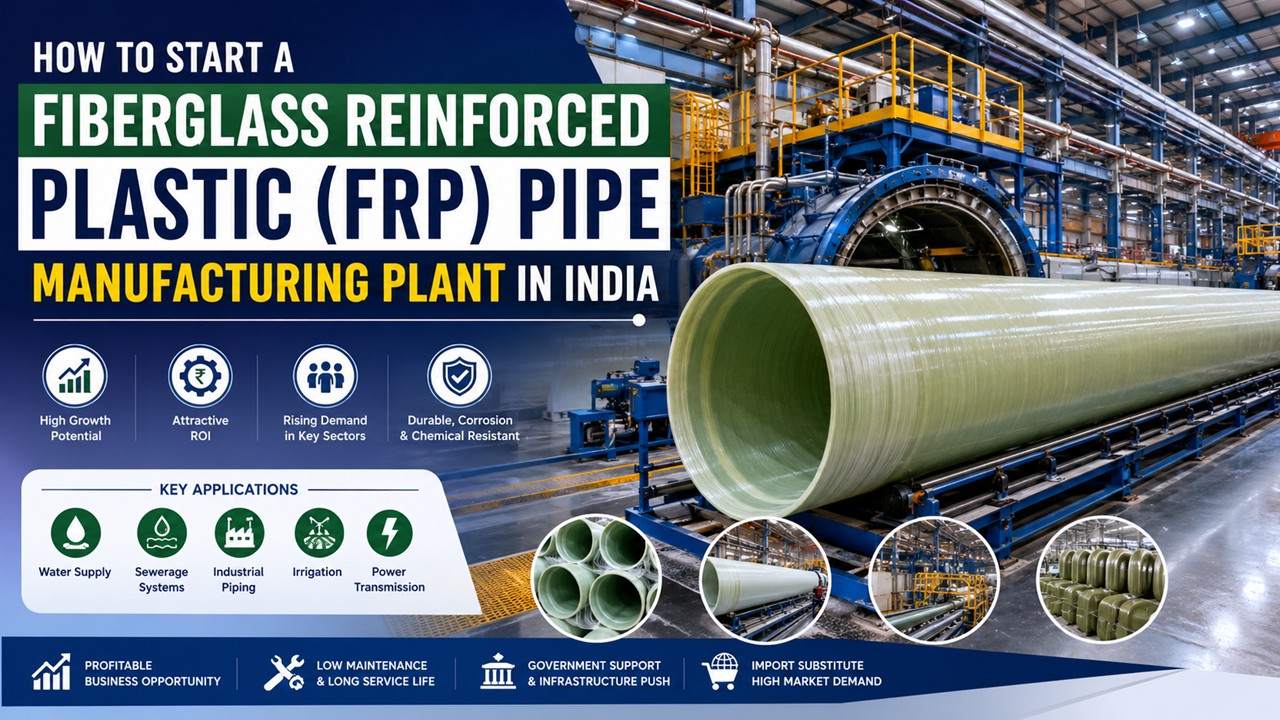
Setting up a fiberglass reinforced plastic pipe manufacturing plant in India presents a compelling investment case, driven by the increased demand for lightweight, high-strength materials in the automotive and aerospace sectors, the rise in infrastructure rehabilitation projects requiring corrosion-resistant solutions, and the continued global transition toward renewable energy. Fiberglass reinforced plastic (FRP) pipes are critical to India’s economy as they provide essential infrastructure for chemical processing, water treatment, oil and gas, and renewable energy sectors industries that form the backbone of the nation’s industrial growth. The high strength-to-weight ratio and corrosion resistance of FRP make it an ideal material for applications where conventional materials like steel and concrete often fail, ensuring long-lasting, cost-effective solutions for India’s expanding industrial and infrastructure landscape.
India’s accelerated urbanization, rapid infrastructure growth, and the government’s “Make in India” initiative provide strong tailwinds for domestic manufacturing of FRP pipes. Key manufacturing states such as Gujarat, Maharashtra, and Tamil Nadu offer established industrial infrastructure, access to raw materials, and proximity to major ports for export opportunities. The Asia Pacific region, particularly India, is emerging as a high-demand market for FRP pipes, driven by increasing investments in water treatment plants, chemical processing facilities, and renewable energy projects. With industries across the globe moving towards more sustainable infrastructural development, the use of FRP pipes is likely to increase manifold in India, especially in sectors such as construction, water treatment, chemical processing, and renewable energy. India offers a strategically sound environment for establishing a fiberglass reinforced plastic pipe manufacturing facility.
India’s FRP pipe market presents strong investment potential, bolstered by policy support like Make in India, rapid urbanization, and growing demand from infrastructure, water treatment, and renewable energy sectors. With gross margins typically ranging between 35-45% and net margins of 18-25%, investors can achieve healthy profitability and a viable break-even timeline.
What is Fiberglass Reinforced Plastic Pipe?
Fiberglass reinforced plastic (FRP) pipe is a high-performance pipe material commonly used in a variety of industries. The FRP pipe is made by soaking glass fibers in resin and then curing the material to create a rigid structure. The high strength-to-weight ratio and corrosion resistance of FRP make it an ideal material for demanding applications. The corrosion resistance of FRP is significantly high compared to other materials, including steel and concrete, making it suitable for use in chemical processing, water treatment, and oil and gas industry applications. FRP pipes provide electromagnetic, thermal, and dimensional stability, which makes them suitable for specialized applications, including high-pressure and high-temperature fluids. The high durability and flexibility of FRP pipes make them the best choice for pipe and tube applications, especially in situations where conventional materials may not last long. The ease of installation and maintenance of FRP pipes makes them suitable for saving costs. The fiberglass reinforced plastic pipe manufacturing process uses filament winding and pultrusion as the primary production methods. Key end-use industries served include building and construction, automotive and transportation, aerospace and defense, renewable energy/wind power, marine, chemical processing, and telecommunications.
Cost of Setting Up a Fiberglass Reinforced Plastic Pipe Manufacturing Plant in India
The total cost of setting up a fiberglass reinforced plastic pipe manufacturing plant in India depends on several critical factors, including plant capacity, technology, location, automation levels, and regulatory compliance requirements.
1. Capital Expenditure (CapEx)
The total capital investment required for establishing a fiberglass reinforced plastic pipe manufacturing plant covers land acquisition, site preparation, and necessary infrastructure. The location must offer easy access to key raw materials such as fiberglass, polyester/epoxy resin, catalyst, and fillers, with proximity to target markets to minimize distribution costs. The site must have robust infrastructure, including reliable transportation, utilities, and waste management systems. Machinery costs account for the largest portion of the total capital expenditure. The cost of land and site development, including charges for land registration, boundary development, and other related expenses, forms a substantial part of the overall investment.
Key machinery required includes:
- Fiber creel systems
- Resin mixing tanks
- Resin impregnation baths
- Preforming guides
- Heated chrome-plated dies
- Reciprocating hydraulic or caterpillar pullers
- Automated flying cut-off saws
Other capital costs include civil works (production shed, quality control lab, raw material and finished goods storage, administrative block), effluent treatment systems, and pre-operative and commissioning expenses.
Request a Sample Report for In-Depth Market Insights: https://www.imarcgroup.com/fiberglass-reinforced-plastic-pipe-manufacturing-plant-project-report/requestsample
2. Operational Expenditure (OpEx)
The operating cost structure of a fiberglass reinforced plastic pipe manufacturing plant is primarily driven by raw material consumption, particularly fiberglass, which accounts for approximately 65-75% of total operating expenses (OpEx). Raw materials required include fiberglass (glass roving or mats), resin matrix materials (polyester, vinyl ester, or epoxy), catalyst, and fillers. Utilities (electricity, water, steam) account for 15-20% of OpEx. Implementing long-term contracts with reliable suppliers helps mitigate price volatility and ensure a consistent supply of materials. Other OpEx components include transportation costs, packaging costs, salaries and wages, repairs and maintenance, depreciation, and taxes. By the fifth year, the total operational cost is expected to increase substantially due to factors such as inflation, market fluctuations, and potential rises in the cost of key materials.
3. Plant Capacity
The proposed manufacturing facility is designed with an annual production capacity ranging between 5,000 – 15,000 MT, enabling economies of scale while maintaining operational flexibility. Plant capacity can be customized per investor requirements. Profitability improves significantly with higher capacity utilization.
4. Profit Margins and Financial Projections
The project demonstrates healthy profitability potential under normal operating conditions. Gross profit margins typically range between 35-45%, supported by stable demand and value-added applications. Net profit margins are projected at 18-25%. Financial analysis includes comprehensive projections of net present value (NPV), internal rate of return (IRR), payback period, income projections, expenditure projections, and profit and loss accounts.
Why Set Up a Fiberglass Reinforced Plastic Pipe Plant in India?
Essential Infrastructure Component: FRP pipes are vital to large-scale global infrastructure projects such as water treatment plants, chemical processing plants, and the energy sector. The processing of raw glass roving and liquid polymer resin into high-performance and engineered FRP pipes presents a high-value add and profit potential.
Lifecycle Cost Resilience: Once the FRP pipe specification is embedded into large-scale infrastructure projects such as industrial fluid transportation systems and wastewater management systems, the suppliers of the materials tend to persist. FRP pipes can offer a service life exceeding 50 years with minimal maintenance, providing substantial lifecycle cost savings compared to traditional materials like steel and concrete in applications such as water and wastewater systems.
Rapidly Diversifying Market: The shift from traditional polyester resin to advanced Epoxy, Vinyl Ester, and Bio-based Resins enables manufacturers to cater to the varying global needs. The shift is especially beneficial to industries that operate in extremely corrosive environments and to projects that seek green building ratings.
Integration with High-Speed Automation: The use of advanced automated systems such as Pultrusion and Filament Winding enables the manufacture of high-strength FRP pipes and tanks without human intervention. The systems ensure high-quality products, high volumes of output, and lower material cost.
Support for Sustainable Infrastructure: The global push to decarbonize transportation and energy sectors presents opportunities for materials that can support the development of sustainable infrastructure. The use of FRP pipes contributes to the development of green infrastructure as they can be used to manufacture durable and long-lasting products for industries such as electric vehicles and wind farms.
Active Industry Investment: In October 2025, Weichai Heavy Machinery Co. Ltd. completed the acquisition of Changzhou FRP Shipyard Co. Ltd. for approximately USD 69 million to strengthen its marine solutions portfolio by integrating advanced fiberglass reinforced plastic vessel manufacturing capabilities. Also in October 2025, National Manufacturing Group acquired Fiber-Tech Inc. to expand its capabilities in fiberglass reinforced plastic molding and custom composite solutions.
Manufacturing Process – Step by Step
The fiberglass reinforced plastic pipe manufacturing process uses filament winding and pultrusion as the primary production methods.
- Procurement of Fiber Reinforcement Materials: Sourcing of glass roving or mats from reliable suppliers.
- Resin Matrix Materials Preparation: Preparation of resin matrix materials including polyester, vinyl ester, or epoxy.
- Impregnation of Fibers (Wet-Out): Fibers are impregnated with resin using resin impregnation baths.
- Pultrusion, Filament Winding, or Infusion: The impregnated fibers are processed using pultrusion or filament winding techniques to form the pipe structure.
- Controlled Curing and Polymerization: The material undergoes controlled curing and polymerization to create a rigid structure.
- Trimming: Finished pipes are trimmed to specified dimensions.
- Application of Special Surface Coatings or Gel Coats: Surface coatings or gel coats are applied for enhanced protection and finish.
- Quality Assurance: A comprehensive quality management system is implemented across all stages of operations to ensure consistent product and service standards. Appropriate testing, monitoring, and validation processes must be established to evaluate performance, safety, reliability, and compliance with applicable regulatory and industry requirements.
- Packaging and Dispatch: Finished FRP pipes are packaged and dispatched to end-use industries including building & construction, automotive & transportation, aerospace & defense, renewable energy (wind power), marine, and chemical processing.
Key Applications
Fiberglass reinforced plastic pipes serve a diverse range of industries and applications:
- Infrastructure & Construction: Extensively used in structural reinforcement, bridge decks, and gratings, particularly where resistance to road salts, moisture, and chemical corrosion is vital. Preferred for extending the lifespan of coastal and industrial structures over traditional steel-reinforced concrete, providing durable solutions for drainage, stormwater management, and sewer systems.
- Renewable Energy (Wind Power): Used in wind power applications for transporting fluids and for structural components in turbine systems. Their strength-to-weight ratio makes them ideal for use in systems requiring lightweight yet durable materials.
- Automotive & Transportation: Increasingly used for fluid systems, fuel lines, and hydraulic components. Lightweight, corrosion-resistant properties are particularly valuable in electric vehicle (EV) systems, where weight reduction plays a crucial role in maximizing battery life and overall range.
- Aerospace & Defense: Used for fluid transport in lightweight internal structures, radomes, and specialized aircraft components. Transparency to electromagnetic signals makes them ideal for safely housing radar and telecommunications systems in both commercial and military aircraft.
- Chemical & Water Treatment: Widely used for piping systems, pressure vessels, and storage tanks. Chemical inertness makes them ideal for transporting corrosive chemicals, acids, alkalis, and wastewater in environments where traditional metal pipes would fail.
Leading Manufacturers
Leading manufacturers in the global fiberglass reinforced plastic pipe industry include several multinational companies with extensive production capacities and diverse application portfolios. Key players include:
- Owens Corning
- Jushi Group Co., Ltd.
- CPIC (China National Bluestar Group)
- Taishan Fiberglass Inc.
- Johns Manville Corporation
- Nippon Electric Glass Co., Ltd.
- Saint-Gobain S.A.
These key players serve end-use sectors such as building & construction, automotive & transportation, aerospace & defense, renewable energy (wind power), marine, and chemical processing.
Timeline to Start the Plant
- Feasibility study and project report preparation
- Land acquisition and site development
- Regulatory approvals and environmental clearances
- Factory licence and fire safety compliance
- Machinery procurement and installation
- Raw material supplier agreements and supply chain setup
- Trial production and quality testing
- Commercial production launch
Licences and Regulatory Requirements
Starting a fiberglass reinforced plastic pipe manufacturing unit in India requires several approvals:
- Business registration (Proprietorship, LLP, or Pvt Ltd)
- Factory Licence under the Factories Act
- Environmental Clearance from State Pollution Control Board
- GST Registration
- Fire Safety NOC
- Effluent Treatment Plant (ETP) operational clearance
- Occupational Health and Safety compliance
Key Challenges to Consider
- High Capital Requirements: Machinery and infrastructure investments represent significant upfront costs. Equipment costs for fiber creel systems, resin mixing tanks, resin impregnation baths, preforming guides, heated chrome-plated dies, reciprocating hydraulic or caterpillar pullers, and automated flying cut-off saws represent a significant portion of capital expenditure.
- Raw Material Price Volatility: Fluctuations in prices of fiberglass, polyester/epoxy resin, catalyst, and fillers directly impact margins. Raw materials account for 65-75% of operating expenses.
- Regulatory Compliance: Navigating environmental clearances, factory licences, and pollution control board regulations requires careful planning. Effluent treatment systems are necessary to minimize environmental impact and ensure compliance with emission standards.
- Competition: The market includes established global players such as Owens Corning, Jushi Group Co., Ltd., CPIC, Taishan Fiberglass Inc., Johns Manville Corporation, Nippon Electric Glass Co., Ltd., and Saint-Gobain S.A.
- Skilled Manpower: Access to skilled workers for pultrusion, filament winding, quality control, and maintenance is essential.
- Technology and Innovation Pressure: Continuous advancements in production technology require ongoing capital reinvestment to remain competitive. The use of Automated Pultrusion, high-speed filament winding, and Digital Twin technologies will improve FRP pipe manufacturing efficiency.
Frequently Asked Questions
- How much does it cost to set up a fiberglass reinforced plastic pipe manufacturing plant in India?
The total capital investment depends on plant capacity, technology, and location, covering land acquisition, site preparation, infrastructure, and machinery costs. - Is fiberglass reinforced plastic pipe manufacturing profitable in India in 2026?
Yes, gross profit margins typically range between 35-45%, with net profit margins of 18-25%, indicating healthy profitability potential. - What machinery is required for a fiberglass reinforced plastic pipe plant in India?
Essential equipment includes fiber creel systems, resin mixing tanks, resin impregnation baths, preforming guides, heated chrome-plated dies, reciprocating hydraulic or caterpillar pullers, and automated flying cut-off saws. - What licences and approvals are required to start a fiberglass reinforced plastic pipe plant in India?
Required approvals include business registration, Factory Licence under the Factories Act, Environmental Clearance from State Pollution Control Board, GST Registration, Fire Safety NOC, ETP operational clearance, and Occupational Health and Safety compliance. - What raw materials are needed for fiberglass reinforced plastic pipe manufacturing?
Raw materials required include fiberglass (glass roving or mats), resin matrix materials (polyester, vinyl ester, or epoxy), catalyst, and fillers. - What are the environmental compliance requirements for a fiberglass reinforced plastic pipe plant in India?
Facilities must implement effluent treatment systems, obtain environmental clearance from the State Pollution Control Board, and comply with emission standards. - What is the best location to set up a fiberglass reinforced plastic pipe plant in India?
The location must offer easy access to key raw materials such as fiberglass, polyester/epoxy resin, catalyst, and fillers, with proximity to target markets. Key manufacturing states include Gujarat, Maharashtra, and Tamil Nadu. - What is the break-even period for this type of plant in India?
Financial projections including break-even analysis are provided in detailed feasibility reports, with timelines varying based on capacity, utilization rates, and operating efficiencies. - What government incentives are available for manufacturers in India?
Investors benefit from the “Make in India” initiative, state-level industrial policies, and potential benefits under various government schemes for manufacturing and infrastructure development.
Key Takeaways for Investors Setting up a fiberglass reinforced plastic pipe manufacturing plant in India offers a compelling investment opportunity, driven by strong demand from building & construction, automotive & transportation, aerospace & defense, renewable energy (wind power), marine, and chemical processing end-use sectors. The project demonstrates healthy financial viability across various plant capacities (5,000 – 15,000 MT annually), with gross profit margins ranging between 35-45% and net margins of 18-25%. The global fiberglass reinforced plastic pipe market was valued at USD 4.50 Billion in 2025 and is expected to reach USD 6.14 Billion by 2034, exhibiting a CAGR of 3.5% from 2026 to 2034, reflecting sustained long-term demand for high-performance piping solutions. With ongoing infrastructure development, renewable energy expansion, and the push for sustainable materials, the FRP pipe industry is poised for continued expansion, making now an opportune time for investors to enter this dynamic market.
About the Author