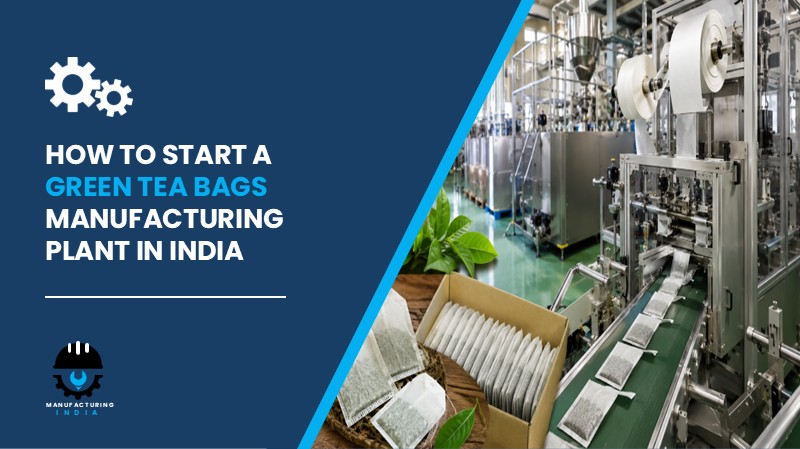
Green Tea Bags Manufacturing Plant
Setting up a green tea bags manufacturing plant in India presents a compelling investment case at a time when the country’s health-conscious consumer base is expanding rapidly, its tea industry is one of the world’s most established and export-competitive, and the global megatrend toward natural, functional, and convenience-format beverages is driving systematic consumer migration from conventional black tea and loose-leaf formats to premium, ready-to-brew green tea bag products. Green tea bags — the convenient, already-portioned filter-paper or biodegradable mesh pouches filled with minimally oxidised green tea leaves (Camellia sinensis) to preserve natural antioxidants, polyphenols, and catechins — are among the fastest-growing beverage product formats in both India’s domestic premium retail market and the global export market. As India’s health, wellness, and functional beverage consumption deepens across its urbanising middle class, and as its government-backed tea export infrastructure continues to strengthen, the domestic requirement for high-quality, branded, and export-ready green tea bags is growing into a commercially attractive and agri-processing investment opportunity with exceptional export dimension.
India’s strategic positioning for green tea bags manufacturing is exceptional and globally validated. According to the India Brand Equity Foundation (IBEF), India accounts for around 10% of global tea exports and ranks among the world’s top five tea-exporting nations, with tea exports valued at USD 750.63 Million in FY 2021–22, reflecting its strong position in the global tea trade. This robust export landscape is expected to support rising demand and sustained growth for value-added products such as green tea bags. Asia-Pacific dominates the global green tea bags market with a 41.2% share — and India, as one of the region’s most significant tea-producing nations alongside China and Japan, is positioned to capture an increasing share of this dominant regional market. Major tea-growing regions in Assam, Darjeeling, Nilgiris, Dooars, and Kangra provide domestic green tea leaf supply at competitive procurement costs, while government tea promotion programmes and the Tea Board of India’s export support infrastructure provide institutional backing for value-added tea product manufacturing.
Investing in a green tea bags manufacturing plant in India today aligns the country’s world-class tea cultivation heritage, 10% global tea export share, growing health-conscious domestic consumer base, and Asia-Pacific’s dominant 41.2% global market position with a global green tea market driven by antioxidant health benefits and convenience consumption. With gross profit margins of 35–45% and net profit margins of 15–20% at an annual capacity of 500 million to 1 billion tea bags, the unit economics are highly attractive, and the investment’s dual domestic-export market strategy supports exceptional long-term revenue potential.
What are Green Tea Bags?
Green tea bags are convenient, already-cut portions of green tea leaves put in filter paper or biodegradable mesh for easy brewing. These bags are made from fresh green tea leaves which are minimally oxidised in order to preserve the natural antioxidants, polyphenols, and catechins that provide health benefits including metabolism boost, heart health, and immunity support. The leaves are processed by either steaming — the Japanese method — or pan-firing — the Chinese method — drying, and cutting at the right stage before being packed into bags, which guarantees consistent taste, aroma, and strength in every cup.
Green tea bags are commonly found in homes, offices, restaurants, and cafes, and are a convenient way to get the benefits of loose-leaf tea without losing quality. Modern green tea bag formulations range from pure green tea variants through wellness-focused blended formats — including green tea with lemon, honey, mint, tulsi, and ginger — to functional variants incorporating bioactive ingredients such as L-Carnitine for weight management, Biotin for beauty benefits, and botanical extracts for targeted wellness applications. The primary production process covers plucking, withering, steaming or pan-firing, rolling, drying, cutting, bagging, and packaging. End-use industries served include beverages, hospitality, retail and FMCG, and wellness and health products.
Cost of Setting Up a Green Tea Bags Manufacturing Plant in India
The cost of establishing a green tea bags manufacturing plant in India depends on plant capacity, product mix across pure green tea, blended, and functional variants, bag format selection between standard filter paper, pyramid mesh, and biodegradable materials, geographic location — particularly proximity to green tea leaf growing regions — degree of automation, and the FSSAI food safety compliance requirements applicable to packaged tea products sold in India and export markets.
1. Capital Expenditure (CapEx)
Land and Site Development forms a foundational component of total capital investment, covering land acquisition charges, site registration, boundary development, drainage infrastructure, and site utilities. The location must offer easy access to key raw materials such as green tea leaves, filter paper (abaca or manila hemp), strings, tags, and packaging boxes. Proximity to target markets will help minimise distribution costs. The site must have robust infrastructure including reliable transportation, utilities, and waste management systems. Compliance with local zoning laws and environmental regulations must also be ensured. Tea-growing states including Assam, West Bengal, Tamil Nadu, Kerala, and Himachal Pradesh offer the best proximity to green tea leaf supply, while food processing parks in these states provide FSSAI-compliant manufacturing infrastructure and export logistics connectivity.
Plant Layout Optimisation is critical for a food-grade green tea bags manufacturing facility. The layout must be optimised to enhance workflow efficiency, hygiene, and minimise material handling between the tea processing, cutting, bagging, sealing, and packaging stages. Separate areas for incoming green tea leaf storage with moisture management, tea processing and cutting operations, bagging and sealing, quality control testing, finished goods warehousing, and dispatch must be designated. Space for future expansion must be incorporated to accommodate business growth as brand presence, retail distribution depth, and export contract volumes develop.
Machinery and Equipment represent the largest single component of total CapEx for a green tea bags manufacturing plant. Essential equipment includes:
- Tea rollers
- Dryers
- Cutters
- Bagging machines
- Sealers
- Packaging units
Other Capital Costs include an effluent treatment plant (ETP) for managing process water from tea washing and cleaning operations, dust collection systems for tea cutting and handling areas, pre-operative expenses, FSSAI licence application costs, Tea Board of India registration costs, commissioning charges, and any import duties on specialised high-speed bagging machines or pyramid mesh bag-forming equipment not available domestically.
Request a Sample Report for In-Depth Market Insights: https://www.imarcgroup.com/green-tea-bags-manufacturing-plant-project-report/requestsample
2. Operational Expenditure (OpEx)
Raw Material Cost is the overwhelmingly dominant operational expense, accounting for approximately 70–80% of total OpEx. The primary raw materials are green tea leaves from the Camellia sinensis plant, and packaging materials including filter paper (abaca or manila hemp), strings, tags, and packaging boxes. Green tea leaves — consumed in the largest volumes as the core product ingredient — drive the vast majority of raw material cost. India’s domestic green tea cultivation in Assam, Darjeeling, Nilgiris, and Kangra provides cost-competitive sourcing options that reduce both raw material cost and supply chain risk compared to imported tea leaf alternatives. Filter paper — the food-grade, heat-sealable abaca or manila hemp paper that forms the bag structure — is the most technically critical packaging material, directly affecting infusion quality, brew strength, and food safety compliance. Long-term contracts with reliable tea leaf suppliers and packaging material producers must be negotiated to stabilise pricing and ensure a steady supply.
Utility Cost is the second-largest OpEx component, representing approximately 10–15% of total operating expenses, covering electricity for dryers, cutting machines, bagging machines, sealers, and packaging units, steam or hot air for tea drying operations, and water for processing and facility hygiene. Drying energy management is the primary utility cost optimisation lever, with efficient dryer operation directly reducing per-unit processing cost at commercial production volumes.
Other Operating Costs include transportation and distribution to modern retail chains, e-commerce platforms, hospitality procurement buyers, FMCG distributors, and export buyers, protective outer carton packaging for retail and export formats, salaries and wages for tea processing and packaging line operators, routine machinery maintenance including bagging machine needle replacement and dryer element servicing, FSSAI and Tea Board compliance costs, depreciation on production equipment, and applicable taxes. By the fifth year, the total operational cost is expected to increase substantially due to factors such as inflation, market fluctuations, and potential rises in the cost of key materials. Additional factors, including supply chain disruptions, rising consumer demand, and shifts in the global economy, are expected to contribute to this increase.
3. Plant Capacity
The proposed manufacturing facility is designed with an annual production capacity ranging between 500 million and 1 billion tea bags, enabling economies of scale while maintaining operational flexibility to serve multiple product lines — from standard green tea bags for the mass retail market through premium single-estate Darjeeling green tea bags, functional wellness variants, and private-label export orders for international retail chains. Plant capacity can be customised per investor requirements and scaled through additional bagging machines and packaging lines as brand development, retail distribution depth, and export contract volumes grow. Profitability improves with higher capacity utilisation, making secured private-label supply agreements with large retail chains, hospitality procurement companies, or export buyers a strategic commercial foundation from the outset.
4. Profit Margins and Financial Projections
The financial projections for a green tea bags manufacturing plant demonstrate healthy profitability potential under normal operating conditions. Gross profit margins typically range between 35–45%, supported by stable demand across beverages, hospitality, retail FMCG, and wellness product customer segments. Net profit margins are projected at 15–20% — commercially attractive returns reflecting the meaningful value-added processing and branding conversion of green tea leaves into a convenience-format, branded, and shelf-ready consumer product. Break-even in a green tea bags manufacturing business typically ranges from 3 to 6 years, depending on scale, regulatory compliance costs, raw material pricing, and market demand. A comprehensive financial analysis covering NPV, IRR, payback period, and five-year projections is essential before committing capital.
Why Set Up a Green Tea Bags Manufacturing Plant in India?
Growing Health-Conscious Consumer Base Driving Green Tea Adoption. The global consumption of green tea is mainly pushed by increased awareness of its health benefits such as antioxidant properties, weight management support, immunity boosting, and cardiovascular health benefits. Rising consumer preference for natural, low-caffeine beverages with functional benefits — antioxidants, anti-inflammatory compounds, and metabolism support — is driving demand for green tea products globally and in India specifically. India’s expanding urban middle class, with its growing health consciousness and increasing discretionary spending on premium wellness beverages, is systematically transitioning from traditional black tea consumption toward green tea and herbal tea formats.
India’s Global Tea Export Leadership Creating Export Demand Foundation. According to IBEF, India accounts for around 10% of global tea exports and ranks among the world’s top five tea-exporting nations, with tea exports valued at USD 750.63 Million in FY 2021–22. This robust export landscape is expected to support rising demand and sustained growth for value-added products such as green tea bags. An Indian green tea bags manufacturer can access the Tea Board of India’s export promotion infrastructure, duty drawback benefits, and established international trade channels to simultaneously serve the domestic retail market and premium export markets in the Middle East, Europe, and North America.
Convenience-Driven Market Accelerating Tea Bag Over Loose-Leaf Adoption. The trend of ready-to-use tea products in homes, workplaces, and cafes is making tea bags the most preferred form of tea over loose leaves, creating continuous demand. The convenience of consistent-dose brewing without requiring additional equipment — strainer, infuser, or pot — positions green tea bags as the natural choice for modern urban consumers with time-constrained lifestyles, growing India’s tea bag market share at the expense of traditional loose-leaf consumption across all retail channels.
Active Product Innovation Confirming Market Vitality. In June 2025, Tetley Green Tea from Tata Consumer Products launched two new functional variants: Slim Care with added L-Carnitine and Beauty Care with Biotin — designed for health-focused consumers, combining proven wellness benefits with great taste, supporting fat metabolism, hair strength, and skin health. In January 2026, The Tea Culture of the World (TCW) launched a Blue Pea Flower Infusion with Green Tea bag format, blending butterfly pea flower with antioxidant-packed green tea to offer a visually appealing and wellness-focused beverage with stress relief, metabolism support, and a striking colour change — packaged in a premium jar for everyday convenience. These innovations from domestic Indian brands confirm that the premium functional green tea bag segment is commercially active and consumer-validated in the Indian market.
Asia-Pacific Market Leadership with India’s Growing Share. Asia-Pacific dominates the green tea bags market with a 41.2% share, driven by the region’s established green tea culture, growing health awareness, and expanding modern retail infrastructure. India’s growing influence within this dominant regional market — supported by its world-class tea cultivation heritage, expanding domestic green tea production, and government export promotion programmes — positions Indian green tea bag producers advantageously within the region’s most commercially significant beverages market.
Government and Policy Support for Tea Industry and Agro-Processing. State-backed initiatives that focus on tea growing and exporting as well as agro-based entrepreneurship set the path for setting up tea processing units. The Tea Board of India provides financial assistance, market development support, and quality certification infrastructure for domestic tea manufacturers. The PMKSY and other Ministry of Food Processing Industries programmes provide capital subsidies for food processing including tea value-addition. Export promotion benefits and duty drawback schemes available to Tea Board-registered exporters further enhance the financial returns from the export revenue channel.
Manufacturing Process — Step by Step
The green tea bags manufacturing process uses plucking, withering, steaming or pan-firing, rolling, drying, cutting, bagging, and packaging as the primary production method. Each stage requires controlled processing parameters — particularly temperature management in the steaming or pan-firing and drying stages — and food-grade hygiene compliance throughout to produce green tea bags meeting the infusion quality, colour, aroma, and microbiological specifications required by retail, hospitality, and export customers.
- Plucking and Incoming Leaf Inspection: Fresh green tea leaves — typically the terminal bud and top two leaves from Camellia sinensis — are received from tea gardens or contract farmers, inspected for freshness, grade, and absence of contamination, and transferred to processing with minimal delay to preserve the leaf’s natural biochemical composition.
- Withering: Freshly plucked leaves are spread on withering troughs under controlled airflow to reduce moisture content from approximately 75–80% to 60–70%, making leaves pliable for rolling and concentrating soluble flavour compounds in the remaining moisture.
- Steaming or Pan-Firing (Kill-Green): Withered leaves are immediately processed through either steam fixation — the Japanese method producing a more vegetal, grassy flavour profile — or pan-firing in rotating drums — the Chinese method producing a more roasted, nutty flavour — at controlled temperature and duration to deactivate oxidative enzymes that would otherwise convert the green tea to black tea, locking in the characteristic green tea polyphenols, catechins, and chlorophyll.
- Rolling: Processed leaves are passed through tea rollers that break cell walls, releasing enzymes and flavour compounds while twisting the leaves into their characteristic curled or needle-shaped form, which improves infusion efficiency and flavour extraction during brewing.
- Drying: Rolled leaves are processed through dryers at controlled temperature profiles to reduce final moisture content to below 5%, developing the characteristic green tea aroma through Maillard reaction chemistry while preserving the catechins and polyphenols that define the product’s health benefit profile.
- Cutting and Grading: Dried green tea is processed through cutters to reduce leaf particle size to the fannings and dust grades required for tea bag filling, with sieving and sorting equipment separating the material by particle size to ensure consistent infusion rate and cup colour across production batches.
- Blending: Where product formulations specify multiple tea grades, origins, or botanical additions — such as dried mint, ginger, tulsi, lemon peel, or functional ingredients like L-Carnitine or Biotin — ingredients are blended in the specified proportions using mixing equipment to achieve the target flavour, colour, and functional ingredient homogeneity.
- Bagging: Cut and blended tea is filled into individual filter paper bags of the specified fill weight using bagging machines that form, fill, and seal the bag in a continuous operation, attaching strings and tags as specified for the target retail format — whether standard square bags, round bags, or premium pyramid mesh bags.
- Sealing and Outer Packaging: Filled tea bags are heat-sealed to ensure freshness retention, then packed into inner foil pouches where specified for premium format freshness protection, and into branded retail cartons or export master cartons using packaging units and sealers for dispatch to beverage retailers, hospitality procurement buyers, FMCG distributors, and export buyers.
- Quality Control: Finished tea bags undergo quality inspection covering fill weight consistency, bag integrity, infusion quality assessment, moisture content, colour, aroma, microbiological compliance, and heavy metal testing against FSSAI and export market specification requirements before release for distribution.
Key Applications
Green tea bags manufactured in India serve commercially diverse and growing applications across beverage, hospitality, retail, and wellness sectors:
- Beverages: Used for ready-to-brew green tea for homes, offices, cafes, and restaurants — the primary mass-market consumption channel driving the largest share of green tea bag demand globally.
- Hospitality: Served in hotels, restaurants, and cafes as part of premium tea offerings, with branded green tea bags providing consistent quality, convenient service, and brand differentiation for hospitality operators targeting wellness-conscious guests.
- Retail and FMCG: Packaged as consumer-ready tea bags for supermarkets, convenience stores, and e-commerce platforms — a fast-growing channel as India’s organised retail expands and online grocery platforms extend premium beverage access to tier-2 and tier-3 cities.
- Wellness and Health Products: Incorporated into wellness kits, detox packages, herbal health supplements, and functional beverage assortments targeting health-conscious consumers seeking nature-based, evidence-backed wellness solutions.
Leading Manufacturers
The global green tea bags industry is served by a group of large multinational beverage and tea companies with extensive production capacities and diverse application portfolios. Key players in the global market include:
- Yogi Tea
- Unilever
- Cape Natural Tea Products
- Celestial Seasonings
- Finlays Beverages Ltd.
- Frontier Natural Products Co-Op.
- Kirin Beverage Corp.
- Metropolitan Tea Company
- Northern Tea Merchants Ltd.
- Numi Organic Tea
- AMORE Pacific Corp
- Arizona Beverage Company
- Associated British Foods LLC
- The Coca-Cola Company
- Tata Global Beverages
Timeline to Start the Plant
Establishing a green tea bags manufacturing plant in India involves a structured multi-phase development sequence. Usually, the timeline can range from 12 to 24 months to start this type of plant, depending on factors like site development, machinery installation, environmental clearances, safety measures, and trial runs. Investors should plan for the following phases:
- Feasibility study and project report preparation
- Land acquisition and site development
- Regulatory approvals and environmental clearances
- Factory licence and fire safety compliance
- Machinery procurement and installation
- Raw material supplier agreements and supply chain setup
- Trial production and quality testing
- Commercial production launch
Licences and Regulatory Requirements
Starting a green tea bags manufacturing unit in India requires several approvals spanning business registration, food safety, tea industry compliance, environmental, and export certification domains:
- Business registration (Proprietorship, LLP, or Pvt Ltd)
- Factory Licence under the Factories Act
- Environmental Clearance from the State Pollution Control Board
- GST Registration
- Fire Safety NOC
- FSSAI (Food Safety and Standards Authority of India) Central or State licence mandatory for commercial manufacture and sale of green tea bags as a packaged food product
- Tea Board of India registration mandatory for tea manufacturers and exporters in India
- Organic certification from an NPOP-accredited certifying body where organic-certified green tea bags are targeted for premium domestic or export markets
- Effluent Treatment Plant (ETP) operational clearance for managing tea processing water
- Occupational Health and Safety compliance
Key Challenges to Consider
Green Tea Leaf Procurement Quality and Seasonal Supply Management. Green tea leaves — accounting for approximately 70–80% of total OpEx — are an agricultural commodity subject to seasonal availability, weather-dependent quality variation, and monsoon cycle-driven price fluctuations. India’s green tea production is concentrated in specific geographic regions with defined plucking seasons, requiring strategic procurement across flush periods, adequate storage infrastructure, and long-term contract farming relationships to maintain consistent supply and product quality year-round.
Catechin and Polyphenol Preservation in Processing. Green tea’s health benefit credentials — the antioxidant, anti-inflammatory, and metabolism-supporting properties that drive consumer purchasing decisions — depend critically on the preservation of catechins and polyphenols through minimal oxidation during processing. Maintaining precise temperature control in steaming or pan-firing and avoiding over-drying requires experienced tea technologists and calibrated processing equipment to consistently produce tea bags with the expected health-functional profile that premium retail and wellness market buyers specify.
FSSAI and Export Market Regulatory Compliance. Green tea bags sold in India must comply with FSSAI regulations covering permitted ingredients, labelling requirements, pesticide residue limits, and microbiological standards. Export market compliance — particularly to the EU, USA, and Japan, which impose strict maximum residue limits for tea pesticides — requires comprehensive pesticide management across the entire tea cultivation and procurement supply chain, including traceability documentation from garden to finished product.
Competition from Established Domestic and Multinational Brands. The Indian green tea bags market is served by established brands including Tata Consumer Products’ Tetley, Hindustan Unilever’s Lipton, and international brands like Yogi Tea, Numi, and Celestial Seasonings — all with significant brand equity, distribution reach, and product development investment. New entrants must differentiate through premium positioning, single-origin provenance, functional ingredient innovation, certified organic status, or private-label supply quality to establish commercially meaningful positions.
Functional Ingredient Regulation and Health Claims. Green tea bags incorporating functional ingredients — such as L-Carnitine, Biotin, or botanical extracts for specific wellness claims — must navigate FSSAI’s functional food and nutraceutical regulatory framework to ensure that health claims are substantiated, ingredient quantities are within permitted limits, and labelling compliance is maintained across all product variants.
Export Market Development and Certification Investment. Accessing premium export markets requires investment in organic certification, fair trade certification where applicable, food safety management system certification, and compliance with importing country regulatory requirements. Building export buyer relationships through trade shows, Tea Board export promotion programmes, and quality demonstration samples requires sustained marketing investment alongside production capacity development.
Frequently Asked Questions
1. How much does it cost to set up a green tea bags manufacturing plant in India?
Capital requirements generally include land acquisition, construction, equipment procurement, installation, pre-operative expenses, and initial working capital. Equipment costs — including tea rollers, dryers, cutters, bagging machines, sealers, and packaging units — represent a significant portion of capital expenditure. The total amount varies with capacity, technology, and location. A detailed project report with full CapEx and OpEx breakdowns is available on request.
2. Is green tea bags manufacturing profitable in India in 2026?
Yes. The project demonstrates gross profit margins of 35–45% and net profit margins of 15–20% under normal operating conditions, supported by growing health-conscious consumer demand, India’s USD 750.63 Million tea export base, and Asia-Pacific’s dominant 41.2% global green tea bags market share. Break-even typically ranges from 3 to 6 years.
3. What machinery is required for a green tea bags manufacturing plant in India?
Key machinery includes tea rollers, dryers, cutters, bagging machines, sealers, and packaging units. Bagging machines are the most production-critical equipment for a finished green tea bags facility, determining output speed, fill weight consistency, and bag format capability across standard, round, and pyramid mesh variants.
4. What licences and approvals are required to start a green tea bags plant in India?
Required approvals include business registration, a Factory Licence under the Factories Act, Environmental Clearance from the State Pollution Control Board, GST registration, a Fire Safety NOC, FSSAI Central or State food safety licence, Tea Board of India registration, organic certification for certified organic product lines, ETP operational clearance, and Occupational Health and Safety compliance.
5. What raw materials are needed for green tea bags manufacturing?
The primary raw materials are green tea leaves from the Camellia sinensis plant, filter paper (abaca or manila hemp), strings, tags, and packaging boxes. Green tea leaves account for approximately 70–80% of total operating expenses, making tea leaf procurement strategy, quality management, and seasonal supply chain management the most critical operational priorities for the investment.
6. What are the environmental compliance requirements for a green tea bags plant in India?
The unit must obtain Environmental Clearance from the State Pollution Control Board, operate a certified ETP for managing tea processing water and cleaning effluents, implement dust collection systems for tea cutting and handling operations, and maintain monitoring systems for wastewater discharge and air emissions in line with applicable state pollution control standards for food processing facilities.
7. What is the best location to set up a green tea bags plant in India?
Optimal locations offer proximity to green tea leaf cultivation zones, reliable utilities, food processing infrastructure, and logistics connectivity for domestic distribution and export. Tea-growing states — Assam, West Bengal, Tamil Nadu, Kerala, and Himachal Pradesh — offer the closest raw material access, while food processing parks in these states provide FSSAI-compliant manufacturing environments. Proximity to export logistics hubs improves export market competitiveness.
8. What is the break-even period for this type of plant in India?
Break-even in a green tea bags manufacturing business typically ranges from 3 to 6 years, depending on scale, regulatory compliance costs, raw material pricing, and market demand. Efficient manufacturing and export opportunities can help accelerate returns beyond base case projections.
9. What government incentives are available for manufacturers in India?
Governments may offer incentives such as capital subsidies, tax exemptions, reduced utility tariffs, export benefits, or interest subsidies to promote manufacturing under various national or regional industrial policies. The Tea Board of India provides financial assistance and export promotion support specifically for tea manufacturers. The PMKSY scheme, Ministry of Food Processing Industries programmes, and state agricultural processing incentives provide additional capital subsidy and infrastructure support.
Key Takeaways for Investors
A green tea bags manufacturing plant in India represents a commercially attractive, export-oriented, and health-megatrend-aligned investment in one of the world’s most widely consumed functional beverages — positioned at the intersection of India’s world-class tea cultivation heritage, its 10% global tea export share confirmed by IBEF at USD 750.63 Million in FY 2021–22, and the global shift toward natural, low-caffeine, antioxidant-rich beverages that is driving structural growth in green tea consumption across all major markets. The project demonstrates strong financial viability at annual production capacities of 500 million to 1 billion tea bags, with gross profit margins of 35–45% and net profit margins of 15–20% confirming highly attractive unit economics supported by the meaningful value-added processing and brand conversion of green tea leaves into a convenience-format, shelf-ready consumer product. Asia-Pacific’s dominant 41.2% global green tea bags market share confirms India’s strategic positioning within the world’s most commercially important green tea consumption region, while domestic product innovation — as evidenced by Tetley’s June 2025 L-Carnitine and Biotin functional green tea launches and TCW’s January 2026 Blue Pea Flower and Green Tea premium format — confirms that India’s green tea bag market is actively advancing into premium and functional segments that command higher margins and stronger brand loyalty. With government support through the Tea Board of India, export promotion infrastructure, and food processing incentive programmes, demand sustainability for India-based green tea bags manufacturing is structurally robust, export-backed, and commercially compelling across the full investment horizon.
About the Author