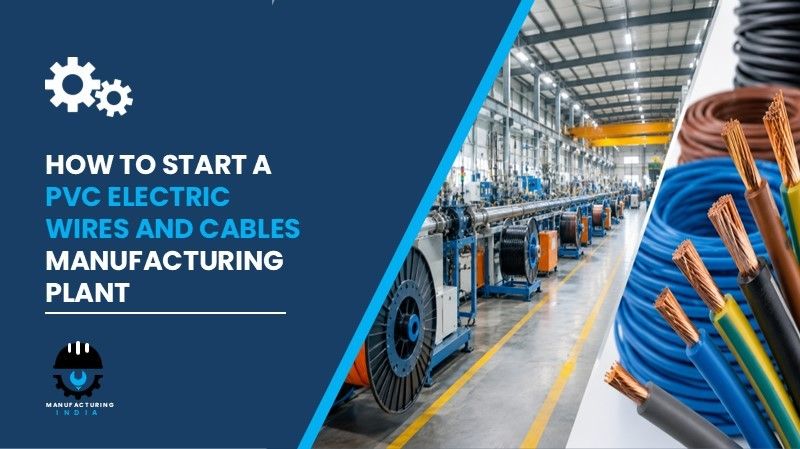
Setting up a PVC electric wires and cables manufacturing plant in India presents a compelling investment case driven by the country’s accelerating electricity infrastructure buildout, rapid urbanisation, and surging demand from construction, industrial installations, power distribution, and renewable energy sectors. PVC electric wires and cables are insulated electrical conductors – the circulatory system of every modern building, factory, and energy grid – and India’s appetite for safe, durable, and efficient wiring solutions has never been stronger. The residential, commercial, and industrial construction boom, combined with India’s aggressive electrification agenda, ensures that demand for these products will remain structurally elevated for years to come.
India offers a uniquely favourable environment for manufacturing these products at scale. The country’s urbanisation trajectory, backed by the government’s Make in India initiative, is creating millions of new homes, offices, and industrial units each year, all of which require certified electrical wiring. Key manufacturing states such as Gujarat and Maharashtra offer established industrial infrastructure, reliable power supply, access to raw material supply chains, and proximity to ports for equipment imports. Setting up a PVC electric wires and cables manufacturing unit in India is therefore not only commercially sound but also strategically timed to capture one of the fastest-growing electrical products markets in Asia.
India’s combination of policy support, cost-competitive manufacturing, and multi-sector demand – spanning construction, power distribution, renewable energy, and telecommunications – makes a PVC electric wires and cables manufacturing plant a highly viable investment with gross profit margins of 25-35% and net margins of 12-18%, offering attractive returns and robust break-even viability.
What are PVC Electric Wires and Cables?
PVC electric wires and cables are insulated electrical conductors primarily made of copper or aluminum and coated with polyvinyl chloride (PVC) to ensure safety, flexibility, and durability. These wires and cables are designed to carry electrical current in residential, commercial, and industrial applications while protecting against heat, moisture, and chemical exposure. PVC insulation offers excellent mechanical strength, flame retardancy, and long service life, making these cables suitable for both indoor and outdoor applications.
Variants produced in a standard facility include single-core, multi-core, flexible, armored, and specialty cables, each designed for specific voltage ratings and environmental conditions. Their wide applicability, reliability, and compliance with international safety standards make them an essential component in modern electrical installations.
The primary production method is a multi-step process involving wire drawing, annealing, insulation extrusion, cabling and twisting, sheathing, armoring (optional), testing, quality inspection, and packaging. End-use industries served include construction, power distribution, industrial installations, electronics, renewable energy, and telecommunications.
Cost of Setting Up a PVC Electric Wires and Cables Manufacturing Plant in India
The cost of establishing a PVC electric wires and cables manufacturing plant in India depends on several factors, including production capacity, technology selection, plant location, degree of automation, and regulatory compliance requirements. Understanding both the capital and operational cost structure is essential for sound investment planning.
1. Capital Expenditure (CapEx)
Capital expenditure forms the foundation of the investment and covers all one-time costs incurred before the plant begins commercial production.
Land and Site Development involves acquisition of an appropriate plot, preferably within an SEZ or designated industrial estate to benefit from tax incentives and shared infrastructure. Land registration, boundary development, levelling, and related civil preparation form a substantial part of the total CapEx, as noted in IMARC Group’s project report.
Civil Works and Construction include the main production shed, quality control laboratory, raw material and finished goods storage areas, utility rooms, and an administrative block. Proper structural design is critical for accommodating heavy machinery and enabling safe operations.
Machinery and Equipment represent the largest single component of capital expenditure. Key machinery required includes:
- Wire drawing machines
- Extruders (for insulation extrusion)
- Cabling machines
- Testing instruments
- Packaging systems
Other Capital Costs include effluent treatment plant (ETP) installation, pre-operative expenses such as project consultancy and trial runs, commissioning charges, and import duties applicable on specialised equipment not available domestically.
Request a Sample Report for In-Depth Market Insights: https://www.imarcgroup.com/pvc-electric-wires-cables-manufacturing-plant-project-report/requestsample
2. Operational Expenditure (OpEx)
Operating expenditure covers all recurring costs of running the manufacturing facility on a day-to-day basis.
Raw Material Cost is the dominant component of OpEx, accounting for approximately 70-80% of total operating expenses. The two primary raw materials are copper or aluminum wire and PVC compound. Given the price sensitivity of these inputs, long-term procurement contracts with reliable suppliers are strongly recommended to manage cost volatility and ensure consistent production quality.
Utility Cost covering electricity, water, and steam – accounts for approximately 10-15% of total OpEx. Wire drawing and extrusion are energy-intensive processes, making utility management a key lever for margin improvement.
Other Operating Costs include transportation and logistics, packaging materials, salaries and wages for production and administrative staff, routine maintenance, depreciation on plant and machinery, and applicable taxes. These costs must be carefully budgeted and reviewed annually. The total operational cost is expected to increase substantially by the fifth year of operations due to inflation, market fluctuations, potential rises in the cost of key materials, supply chain disruptions, and shifts in the global economy.
3. Plant Capacity
The proposed manufacturing facility is designed with an annual production capacity ranging between 500-2,000 tons, with an operational throughput of 1,600 kg per shift, enabling economies of scale while maintaining operational flexibility. Capacity can be customized based on individual investor requirements and market assessments. As a general principle, profitability improves significantly with higher capacity utilisation, making phased scale-up an effective strategy for optimising return on capital.
4. Profit Margins and Financial Projections
The project demonstrates healthy profitability potential under normal operating conditions. Gross profit margins typically range between 25-35%, supported by stable demand and value-added applications across multiple end-use sectors. Net profit margins average 12-18% over a five-year projection horizon. A comprehensive financial analysis – covering NPV, IRR, payback period, liquidity ratios, and sensitivity analysis – is included in IMARC Group’s detailed project report and is essential for securing project financing and formulating an investor-ready business plan.
Why Set Up a PVC Electric Wires and Cables Plant in India?
Growing Demand for Safe and Reliable Wiring: Rising electricity consumption and urbanisation are driving the need for high-quality insulated cables across India. Residential, commercial, and institutional construction projects are multiplying, each requiring certified PVC-insulated wiring to meet safety standards, creating a durable and expanding end-market for domestic manufacturers.
National Electrification at Scale: Under the Pradhan Mantri Sahaj Bijli Har Ghar Yojana (SAUBHAGYA) scheme, over 28.6 crore households across India gained electricity access by early 2026, according to the Ministry of Power. This unprecedented electrification drive directly fuels demand for PVC electric wires and cables, supporting sustained growth in the sector nationwide.
Infrastructure Development Tailwinds: Increased infrastructure spending on renewable energy projects and smart grids further supports demand growth. Rising awareness of electrical safety and a preference for low-maintenance, durable wiring solutions are also driving the adoption of PVC-insulated wires and cables across new and retrofit installations.
Policy and Regulatory Tailwinds: The Make in India initiative provides domestic manufacturers with structural advantages including production-linked incentive schemes, ease-of-doing-business reforms, and access to industrial clusters. These policy frameworks reduce entry barriers and improve the competitive positioning of India-based producers against imports.
Active Industry Investment: In February 2026, Dynamic Cables Limited unveiled new PVC Insulated FR-LSH and HR-FRLSH Green Building Wires targeting the domestic B2B market across residential, commercial, industrial, and infrastructure projects, certified under BIS and compliant with RoHS and REACH standards. In March 2025, Ultracab secured an INR 9.70 crore order from Adani Electricity Mumbai Limited for supplying LT PVC cables of various sizes, following earlier orders totalling INR 10.23 crore from Western Railway, Jain Irrigation Systems, and others. These investments signal strong commercial confidence in the sector.
Asia-Pacific Market Leadership: According to IMARC Group estimates, the Asia-Pacific region – of which India is a pivotal part – holds the largest share of the global PVC electric wires and cables market, accounting for 44.2% of the global market. This regional dominance underlines the strategic advantage of producing within the region to serve both domestic and export demand efficiently.
Manufacturing Process – Step by Step
The PVC electric wires and cables manufacturing process uses wire drawing, annealing, insulation extrusion, cabling, and sheathing as the primary production method. Each stage adds value to the raw material inputs and brings the product closer to its final, certified specification.
- Wire Drawing: Copper or aluminum wire rods are drawn through progressive dies using wire drawing machines to reduce diameter and achieve the required conductor cross-section.
- Annealing: The drawn wire is passed through an annealing process to restore ductility and flexibility lost during drawing, ensuring the conductor meets mechanical performance standards.
- Insulation Extrusion: Extruders apply PVC compound uniformly around the conductor under heat and pressure, forming the primary insulation layer with controlled thickness and dielectric properties.
- Cabling and Twisting: For multi-core cables, individual insulated conductors are twisted or stranded together using cabling machines to form the core assembly, improving flexibility and electrical balance.
- Sheathing: An outer PVC sheath is applied over the cabled core to provide mechanical protection, moisture resistance, and UV stability for outdoor applications.
- Armoring (Optional): For armored cable variants, a steel wire or tape armoring layer is applied between the inner and outer sheaths to provide additional mechanical protection in industrial and underground installations.
- Testing and Quality Inspection: All finished cables are subjected to technical tests – including conductor resistance, insulation resistance, high-voltage dielectric tests, and flame retardancy checks – using testing instruments against applicable BIS and international standards.
- Packaging and Dispatch: Approved cables are wound onto drums or cut to length, packaged, and dispatched to end-use industries including construction, industrial installations, power utilities, and renewable energy project developers.
Key Applications
PVC electric wires and cables serve a broad range of industries, making the product highly resilient to demand fluctuations in any single sector.
- Construction and Building Sector: Extensively used in residential, commercial, and institutional wiring projects, ensuring safety and efficient power distribution throughout buildings.
- Industrial Installations: Support machinery, control systems, and automation equipment, providing durable and flame-retardant wiring solutions for factories and processing plants.
- Renewable Energy Systems: PVC-insulated cables are used in solar and wind energy installations for power transmission and connection to grids.
- Telecommunication and Electronics: Specialised PVC cables enable low-loss data transmission and reliable connectivity in telecom infrastructure and electronic devices.
- Power Distribution: Used in electrical panels, switchgear, and power transmission systems for safe and reliable energy distribution across utility networks.
- Control Systems: Applied in control panels and automated systems across industrial and commercial environments requiring precise, reliable signal and power wiring.
Leading Manufacturers
The global PVC electric wires and cables industry is served by several multinational companies with extensive production capacities and diverse application portfolios across construction, industrial, renewable energy, electronics, and telecommunications sectors. Key players include:
- Prysmian Group
- Nexans
- Southwire Company, LLC
- General Cable Corporation
- Sumitomo Electric Industries
Timeline to Start the Plant
- Feasibility study and project report preparation
- Land acquisition and site development
- Regulatory approvals and environmental clearances
- Factory licence and fire safety compliance
- Machinery procurement and installation
- Raw material supplier agreements and supply chain setup
- Trial production and quality testing
- Commercial production launch
Licences and Regulatory Requirements
Starting a PVC electric wires and cables manufacturing unit in India requires several approvals:
- Business registration (Proprietorship, LLP, or Pvt Ltd)
- Factory Licence under the Factories Act
- Environmental Clearance from State Pollution Control Board
- GST Registration
- Fire Safety NOC
- Hazardous/Chemical compliance (applicable given use of PVC compounds and chemical insulation materials)
- Effluent Treatment Plant (ETP) operational clearance
- Occupational Health and Safety compliance
Key Challenges to Consider
High Capital Requirements: Establishing a PVC electric wires and cables manufacturing plant involves significant upfront investment in land, civil construction, and specialised machinery including wire drawing machines, extruders, and testing instruments, requiring careful financial planning and funding strategy.
Raw Material Price Volatility: The primary raw materials – copper or aluminum wire and PVC compound – together account for 70-80% of total OpEx. Global commodity price fluctuations, particularly in copper markets, can materially impact margins and require active procurement and hedging strategies.
Regulatory Compliance: Obtaining and maintaining BIS certification, environmental clearances, ETP compliance, and adherence to RoHS and REACH standards (as followed by industry players such as Dynamic Cables Limited) requires ongoing investment in quality systems and regulatory management.
Technology and Innovation Pressure: The industry is evolving toward advanced flame-retardant and heat-resistant formulations such as FR-LSH and HR-FRLSH cables, as evidenced by Dynamic Cables Limited’s February 2026 product launch. Keeping pace with these product innovations requires continuous R&D investment.
Competition: The market includes established global players – Prysmian Group, Nexans, Southwire Company, General Cable Corporation, and Sumitomo Electric Industries – alongside domestic manufacturers, requiring new entrants to differentiate on quality, certification, pricing, or niche market focus.
Skilled Manpower: Operating wire drawing machines, extruders, cabling machines, and testing instruments requires trained technical staff, and recruiting and retaining skilled manpower remains a challenge in many industrial locations.
Frequently Asked Questions
1. How much does it cost to set up a PVC electric wires and cables manufacturing plant in India?
The total project cost depends on plant capacity (ranging from 500 to 2,000 tons per annum), location, technology, and automation level. Key cost components include land and site development, civil works, machinery (wire drawing machines, extruders, cabling machines, testing instruments, and packaging systems), utilities, and pre-operative expenses. IMARC Group’s detailed project report provides a full CapEx and OpEx breakdown.
2. Is PVC electric wires and cables manufacturing profitable in India in 2026?
Yes. The project demonstrates healthy profitability with gross profit margins typically ranging between 25-35% and net profit margins of 12-18% under normal operating conditions. Stable demand from construction, power distribution, and renewable energy sectors supports consistent revenue generation.
3. What machinery is required for a PVC electric wires and cables plant in India?
Essential machinery includes wire drawing machines, extruders (for PVC insulation), cabling machines, testing instruments, and packaging systems. Armoring equipment is required for armored cable variants.
4. What licences and approvals are required to start a PVC electric wires and cables plant in India?
Key approvals include business registration, Factory Licence under the Factories Act, Environmental Clearance from the State Pollution Control Board, GST Registration, Fire Safety NOC, chemical/hazardous material compliance, ETP operational clearance, and Occupational Health and Safety compliance.
5. What raw materials are needed for PVC electric wires and cables manufacturing?
The two primary raw materials are copper or aluminum wire (as the conductor) and PVC compound (for insulation and sheathing). These together account for approximately 70-80% of total operating expenditure.
6. What are the environmental compliance requirements for a PVC electric wires and cables plant in India?
The facility must obtain Environmental Clearance from the State Pollution Control Board, operate a compliant Effluent Treatment Plant, and ensure products meet applicable standards including RoHS and REACH compliance, as followed by leading domestic manufacturers.
7. What is the best location to set up a PVC electric wires and cables plant in India?
The ideal location offers proximity to key raw materials such as copper or aluminum wire and PVC compound, access to robust transportation and utility infrastructure, and proximity to target markets. States such as Gujarat and Maharashtra offer established industrial ecosystems suitable for this type of manufacturing unit.
8. What is the break-even period for this type of plant in India?
The break-even period is determined through a detailed financial analysis covering capital investment, operating costs, production capacity utilisation, and pricing trends. IMARC Group’s project report covers payback period, NPV, and IRR analysis. At healthy utilisation rates, the facility is designed to achieve break-even within a commercially viable timeframe.
9. What government incentives are available for manufacturers in India?
Manufacturers can benefit from the Make in India initiative, production-linked incentive (PLI) schemes for electronics and electrical equipment, SEZ benefits for eligible industrial zones, state government capital subsidies, and interest subvention schemes available through SIDBI and state financial corporations.
Key Takeaways for Investors
A PVC electric wires and cables manufacturing plant in India represents a strategically timed opportunity, with demand structurally underpinned by construction, power distribution, industrial installations, renewable energy, and telecommunications sectors all expanding simultaneously. The project is financially viable across a range of plant capacities from 500 to 2,000 tons per annum, with gross margins of 25-35% and net margins of 12-18% offering attractive and predictable returns. The Asia-Pacific region – where India is a key growth driver – already accounts for 44.2% of the global market, and with over 28.6 crore households electrified under SAUBHAGYA by early 2026, the domestic demand pipeline is both deep and durable. As urbanisation accelerates, infrastructure investment intensifies, and safety standards tighten, the demand for certified PVC electric wires and cables in India is positioned for sustained, long-term growth.
About the Author