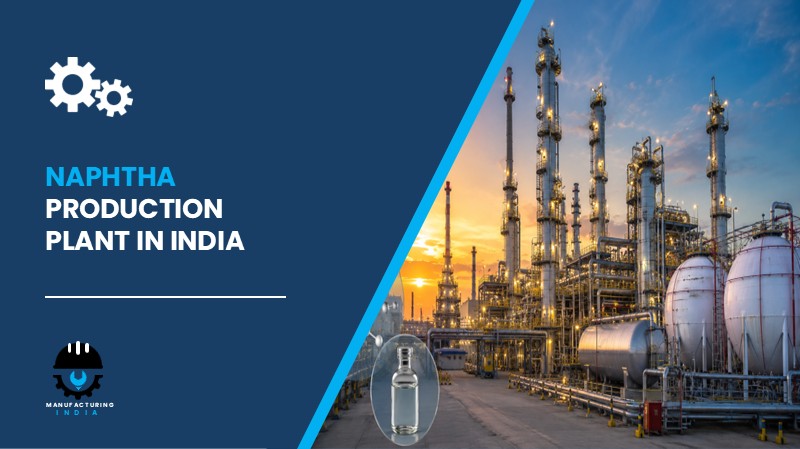
Naphtha Production Plant in India
Setting up a naphtha production plant in India presents a compelling investment case at a time when the country’s petrochemical industry is undergoing a historic capacity expansion, its refining sector is targeting unprecedented scale, and the government’s strategic vision for feedstock self-sufficiency is creating the most favourable policy environment for naphtha production investment in India’s history. Naphtha — the light, volatile combination of hydrocarbons mostly produced during the refining of crude oil and, to a lesser degree, during the processing of natural gas — is one of the most significant intermediate feedstocks in the global petrochemical industry, serving as the primary raw material for steam crackers that produce ethylene, propylene, and other olefins, as well as the catalytic reforming processes that produce benzene, toluene, and xylene. As India’s downstream petrochemical, plastics, synthetic fibre, and chemicals manufacturing sectors expand at a pace that outstrips domestic naphtha supply, the case for new domestic naphtha production capacity has become both commercially compelling and a matter of explicit national policy priority.
India’s government has articulated this opportunity in the clearest possible policy terms. The Ministry of Petroleum & Natural Gas, Government of India, forecasts that the nation’s refining capacity will increase from 258.1 MMTPA to 309.5 MMTPA by 2030, and that ongoing and planned projects will more than quadruple the petrochemical intensity of public-sector refineries. This is a direct, government-sourced confirmation that India’s refining and petrochemical integration expansion will substantially increase domestic naphtha production and consumption simultaneously — creating both the feedstock supply growth and the downstream demand pull that make new naphtha production capacity commercially rational at this specific moment in India’s industrial development. India’s petrochemical industrial corridors in Gujarat (Jamnagar, Dahej, Hazira), Maharashtra, and Odisha (Paradip) provide direct integration opportunities between new naphtha production capacity and the steam cracker and reformer infrastructure that constitutes its primary customer base.
Investing in a naphtha production plant in India today aligns the Ministry of Petroleum & Natural Gas’s confirmed refining capacity expansion from 258.1 MMTPA to 309.5 MMTPA by 2030, quadrupling petrochemical intensity at public-sector refineries, and rising Asia-Pacific petrochemical demand with a global naphtha market growing from USD 180.40 Billion in 2025 to USD 230.30 Billion by 2034 at a 2.80% CAGR. With gross profit margins of 14–20% and net profit margins of 8–13% at an annual production capacity of 200,000 MT, the unit economics are commercially sound, and the investment’s strategic refinery-petrochemical integration role supports durable, policy-anchored returns.
What is Naphtha?
Naphtha is a light, volatile combination of hydrocarbons that is mostly produced during the refining of crude oil and, to a lesser degree, during the processing of natural gas. Because of its high hydrocarbon content and adaptability, it is one of the most significant intermediate feedstocks in the petrochemical industry. Olefins like ethylene and propylene, which are used as building blocks for plastics, synthetic rubber, textiles, and a variety of industrial chemicals, are produced using naphtha in steam crackers. Aromatics like xylene, toluene, and benzene are also produced with it.
Naphtha is an essential part of the worldwide energy and chemicals value chain since, in addition to petrochemicals, it is used in gasoline blending to enhance fuel quality, as an industrial solvent, and as a fuel source in several industrial processes. The production of naphtha gives refineries the option to maximise the utilisation of crude oil by feeding downstream processes in the petrochemical sector, due to its ability to be processed into a variety of valuable petrochemicals — a flexibility that makes naphtha production a strategic value-maximisation lever for any integrated refinery-petrochemical complex.
The primary production process covers crude oil distillation, naphtha fraction separation, hydrotreating/desulfurisation, catalytic reforming, isomerisation, and product blending. End-use industries served include petrochemicals, oil and gas, chemicals, plastics and polymers, transportation fuels, manufacturing, and energy. Applications span feedstock for steam cracking to produce ethylene and propylene, production of aromatics, gasoline blending, industrial solvents, fuel for industrial processes, and raw material for synthetic fibres, plastics, resins, and chemical intermediates.
Cost of Setting Up a Naphtha Production Plant in India
The cost of establishing a naphtha production plant in India depends on production capacity, crude oil source and quality, integration level with downstream steam cracker or reformer units, geographic location — particularly proximity to crude oil supply and petrochemical complex customers — degree of automation, and the safety and environmental compliance requirements applicable to a refinery-scale hydrocarbon processing facility.
1. Capital Expenditure (CapEx)
Land and Site Development forms a foundational component of total capital investment, covering land acquisition charges, site registration, boundary development, and site utilities. The location must offer easy access to key raw materials such as crude oil (atmospheric distillation fraction). Proximity to target markets — particularly India’s petrochemical complexes and steam cracker facilities in Gujarat, Maharashtra, and Odisha — will help minimise distribution costs. The site must have robust infrastructure including reliable transportation, utilities, and waste management systems. Compliance with local zoning laws and environmental regulations must also be ensured. Coastal locations with crude oil import port access — such as Jamnagar, Dahej, and Paradip — offer the most strategically advantaged combination of crude supply logistics and petrochemical customer proximity.
Plant Layout Optimisation is a critical and highly complex engineering investment for a naphtha production facility, given the refinery-scale process integration between distillation, hydrotreating, and catalytic reforming units. The layout should be optimised to enhance workflow efficiency, safety, and minimise material handling. Separate areas for crude oil storage and desalting, atmospheric distillation, hydrotreating and catalytic reforming process units, naphtha and by-product storage tanks, quality control, and loading and dispatch facilities must be designated. Space for future expansion should be incorporated to accommodate business growth.
Machinery and Equipment represent the largest single component of total CapEx for a naphtha production plant. Essential equipment includes:
- Crude oil desalters
- Atmospheric distillation units
- Fractionation/distillation columns
- Heat exchangers
- Fired heaters
- Hydrotreating units
- Catalytic reformers
- Separators
- Storage tanks
- Transfer pumps
- Loading and unloading systems
- Process control and monitoring systems
Other Capital Costs include effluent treatment systems to minimise environmental impact and ensure compliance with emission standards, advanced monitoring systems to detect leaks or deviations in the process, pre-operative expenses, environmental clearance and safety assessment costs, commissioning charges, and import duties on specialised catalytic reforming or hydrotreating equipment not available domestically at the required specification.
Request a Sample Report for In-Depth Market Insights: https://www.imarcgroup.com/naphtha-manufacturing-plant-project-report/requestsample
2. Operational Expenditure (OpEx)
Raw Material Cost is the overwhelmingly dominant operational expense, accounting for approximately 65–75% of total OpEx. The primary raw material is crude oil (atmospheric distillation fraction) — consumed in the largest volumes as the feedstock from which naphtha is separated through distillation, with crude oil pricing tracking global benchmark crude prices and exposed to international crude market volatility, geopolitical supply disruptions, and currency exchange fluctuations given India’s substantial crude oil import dependence. Reliable suppliers must be secured for crude oil to ensure consistent production quality, with long-term contracts negotiated to stabilise pricing and ensure a steady supply, and minimising transportation costs by selecting suppliers and import logistics routes with the most favourable landed cost.
Utility Cost is the second-largest OpEx component, representing approximately 8–12% of total operating expenses, covering electricity, steam, and water for distillation column operation, fired heater fuel consumption, hydrotreating reactor operations, and catalytic reformer process requirements. Naphtha production at refinery scale is energy-intensive, making efficient heat integration between distillation and reforming process stages an important lever for managing the utility cost position of the facility.
Other Operating Costs include transportation and distribution to petrochemical complexes, steam cracker operators, and chemical manufacturers, salaries and wages for refinery process engineers and operations staff, routine machinery maintenance including catalyst regeneration and distillation column servicing, depreciation on high-value refinery process equipment, and applicable taxes. By the fifth year, the total operational cost is expected to increase substantially due to factors such as inflation, market fluctuations, and potential rises in the cost of key materials. Additional factors, including supply chain disruptions, rising consumer demand, and shifts in the global economy, are expected to contribute to this increase.
3. Plant Capacity
The proposed production facility is designed with an annual production capacity of 200,000 MT, enabling economies of scale while maintaining operational flexibility to serve petrochemical, oil and gas, chemicals, plastics and polymers, transportation fuels, manufacturing, and energy end-use customers. Plant capacity can be customised per investor requirements and phased in line with the Ministry of Petroleum & Natural Gas’s projected refining capacity expansion from 258.1 MMTPA to 309.5 MMTPA by 2030, which provides a clear national framework for naphtha production capacity planning aligned with India’s broader refinery and petrochemical integration trajectory.
4. Profit Margins and Financial Projections
The financial projections for a naphtha production plant demonstrate healthy profitability potential under normal operating conditions. Gross profit margins typically range between 14–20%, supported by stable demand and value-added applications across petrochemical, gasoline blending, and industrial solvent end-use sectors. Net profit margins are projected at 8–13% — margins that reflect naphtha’s position as a high-volume, relatively lower-margin intermediate refinery product whose commercial value is realised primarily through downstream petrochemical integration rather than naphtha sales alone. A comprehensive financial analysis covering NPV, IRR, payback period, and five-year projections is essential before committing capital, with projections developed based on realistic assumptions related to capital investment, operating costs, production capacity utilisation, pricing trends, and demand outlook.
Why Set Up a Naphtha Production Plant in India?
Critical Raw Material for Petrochemical Production. Naphtha is used as a crucial raw material in the manufacture of olefinic and aromatic hydrocarbons, which are key raw materials in plastics, synthetic fibre, packaging material, automobile parts, and other products. Due to its extensive application, it is an important component of the chemical industry — making domestic naphtha production capacity a foundational input to India’s entire downstream plastics, packaging, textile, and chemicals manufacturing ecosystem.
Linkage with the Petrochemical Industry Maximising Refinery Value. The production of naphtha gives refineries the option to maximise the utilisation of crude oil by feeding downstream processes in the petrochemical sector, due to its ability to be processed into a variety of valuable petrochemicals. This refinery-petrochemical integration value proposition is precisely the strategic direction that India’s public-sector refineries are pursuing, as confirmed by the Ministry of Petroleum & Natural Gas’s projection that ongoing and planned projects will more than quadruple the petrochemical intensity of public-sector refineries.
Government-Confirmed Refining Capacity Expansion Creating Direct Demand Signal. The Ministry of Petroleum & Natural Gas, Government of India, forecasts that the nation’s refining capacity will increase from 258.1 MMTPA to 309.5 MMTPA by 2030. This is among the most direct and authoritative demand confirmation signals available for any product category in India’s industrial investment landscape — a government ministry explicitly forecasting the exact infrastructure expansion that will require corresponding naphtha production capacity growth.
Compliance with Global Megatrends Across Urbanisation and Industrialisation. Trends such as urbanisation, industrialisation, increased demand for plastic and packaging, increasing production in the automotive sector, and petrochemical plants — especially in the Asia-Pacific and Middle Eastern regions — continue to increase naphtha consumption. India, as one of the world’s most rapidly urbanising and industrialising large economies, sits at the centre of this regional demand growth trajectory, with rising domestic consumption of plastics, packaging, and automotive components all translating into naphtha demand growth through the petrochemical value chain.
Active Asian Petrochemical Investment Confirming Regional Market Strength. In November 2025, Lotte Chemical invested over USD 4 Billion to create Indonesia’s first modern naphtha cracker in almost thirty years. The project will greatly lessen the nation’s need on petrochemical imports by producing about 1 million metric tons of ethylene per year. The trend underscores the increasing significance of naphtha as a crucial feedstock for olefins and downstream chemical production, as well as the expanding investments in naphtha-based petrochemical infrastructure throughout Asia — a regional investment pattern that directly parallels and validates India’s own refinery-petrochemical integration strategy.
Localised Production and Improved Feedstock Security. By producing more domestic naphtha, nations can ensure security of feedstocks for their petrochemical industries while safeguarding themselves from international disruptions. For India — which imports a substantial share of its crude oil and is therefore exposed to global supply chain and geopolitical risk — expanding domestic naphtha production capacity, even while still dependent on imported crude as the upstream feedstock, provides downstream petrochemical manufacturers with greater feedstock supply reliability and reduces exposure to international naphtha trade disruptions.
Production Process — Step by Step
The naphtha production process uses crude oil distillation, naphtha fraction separation, hydrotreating/desulfurisation, catalytic reforming, isomerisation, and product blending as the primary production method. Each stage requires precisely controlled temperature, pressure, and catalyst conditions to deliver naphtha meeting the purity, sulphur content, and octane specifications required by petrochemical, gasoline blending, and industrial solvent customers.
- Crude Oil Desalting: Incoming crude oil is processed through crude oil desalters to remove salt, water, and particulate contaminants that would damage downstream distillation and catalytic equipment, producing a clean crude feed for atmospheric distillation.
- Atmospheric Distillation: Desalted crude oil is heated and processed through atmospheric distillation units and fractionation/distillation columns, where it is separated into different boiling-point fractions based on hydrocarbon chain length, with the naphtha fraction — typically boiling in the range of 30–200°C — drawn off as a distinct product stream alongside other fractions including gases, kerosene, diesel, and residue.
- Naphtha Fraction Separation: The naphtha fraction is further separated through fractionation into light naphtha and heavy naphtha cuts based on carbon chain length and boiling range, with each cut directed toward its optimal downstream processing pathway — light naphtha typically toward steam cracking for olefin production, and heavy naphtha toward catalytic reforming for aromatics production.
- Hydrotreating/Desulfurisation: Separated naphtha fractions are processed through hydrotreating units where catalytic hydrogenation reactions remove sulphur, nitrogen, and other contaminants from the naphtha, producing a cleaner feedstock that meets the stringent purity requirements of downstream steam cracking and catalytic reforming processes while protecting catalyst life in subsequent processing stages.
- Catalytic Reforming: Hydrotreated heavy naphtha is processed through catalytic reformers at controlled temperature and pressure over a platinum-based catalyst, converting naphthenes and paraffins into aromatic compounds — benzene, toluene, and xylene — and increasing the octane number of the reformate product for gasoline blending applications.
- Isomerisation: Light naphtha streams may be processed through isomerisation units to convert straight-chain paraffins into branched-chain isomers, improving the octane rating of the naphtha fraction destined for gasoline blending applications.
- Heat Recovery and Process Integration: Heat exchangers and fired heaters throughout the production sequence recover and reuse process heat across the distillation, hydrotreating, and reforming stages, improving overall energy efficiency and reducing the utility cost burden of the naphtha production process.
- Quality Testing: Finished naphtha streams undergo comprehensive quality testing covering distillation range, sulphur content, octane number, aromatics content, and density, verifying compliance with petrochemical feedstock or gasoline blending specification requirements before release for storage and dispatch.
- Product Blending and Storage: Specification-compliant naphtha fractions are blended to the target product grade in storage tanks, with separators managing any residual water or contaminant separation, and transfer pumps and loading and unloading systems managing the movement of finished naphtha to pipeline, rail, or tanker dispatch for delivery to petrochemical complexes, steam cracker operators, and chemical manufacturers.
Key Applications
Naphtha produced in India serves a commercially critical and structurally essential range of petrochemical and energy applications:
- Petrochemical Raw Material: The primary raw material for steam crackers that produce ethylene, propylene, butadiene, and other olefinic compounds for use in the chemical, rubber, plastics, and synthetic fibre industries.
- Aromatics Manufacturing: Benzene, toluene, and xylene, which are crucial raw ingredients for a variety of polymers, solvents, and chemicals, are produced using catalytic reformers.
- Gasoline Blending Agent: A blending ingredient used in the production of premium gasoline following the reforming and upgrading of the oil through a variety of refining procedures.
- Chemical Raw Material: A crucial chemical feedstock for a range of chemical intermediates, paints, coatings, solvents, cleaning supplies, and adhesives.
- Energy and Industrial Fuels: Light hydrocarbons are used as fuel in power plants and industries.
Leading Producers
The global naphtha industry is served by a group of large multinational energy and petrochemical companies with extensive production capacities and diverse application portfolios. Key players in the global market include:
- Exxon Mobil Corporation
- Formosa Petrochemical Corporation
- Reliance Industries Limited
- LG Chem
Timeline to Start the Plant
Establishing a naphtha production plant in India involves a structured multi-phase development sequence. Investors should plan for the following phases:
- Feasibility study and project report preparation
- Land acquisition and site development
- Regulatory approvals and environmental clearances
- Factory licence and fire safety compliance
- Machinery procurement and installation
- Raw material supplier agreements and supply chain setup
- Trial production and quality testing
- Commercial production launch
Licences and Regulatory Requirements
Starting a naphtha production unit in India requires comprehensive approvals spanning business registration, petroleum refining safety, environmental, and hazardous chemical compliance domains:
- Business registration (Proprietorship, LLP, or Pvt Ltd)
- Factory Licence under the Factories Act
- Environmental Clearance from the State Pollution Control Board, including detailed Environmental Impact Assessment given the refinery-scale hydrocarbon processing involved
- GST Registration
- Fire Safety NOC
- PESO (Petroleum and Explosives Safety Organisation) approval and Petroleum Act compliance for crude oil and naphtha storage and handling
- Hazardous/Chemical compliance under the Manufacture, Storage and Import of Hazardous Chemical (MSIHC) Rules applicable to crude oil, naphtha, and process chemicals
- Consent to Establish and Consent to Operate from the State Pollution Control Board for a major hazard hydrocarbon processing installation
- Effluent treatment systems operational clearance to minimise environmental impact and ensure compliance with emission standards
- Occupational Health and Safety compliance including On-Site and Off-Site Emergency Plans mandatory for major hazard petroleum processing installations
Key Challenges to Consider
Crude Oil Price Volatility and Import Dependence. Crude oil accounts for approximately 65–75% of total OpEx, with India’s substantial reliance on crude oil imports creating direct exposure to global crude price volatility, geopolitical supply disruptions, OPEC+ production decisions, and currency exchange rate fluctuations. Managing this dominant cost exposure requires diversified crude sourcing relationships, hedging strategies, and customer contract pricing mechanisms that allow appropriate feedstock cost pass-through.
High Capital Intensity of Refinery-Scale Process Equipment. Naphtha production at the scale required for competitive unit economics — involving atmospheric distillation, hydrotreating, and catalytic reforming units — represents a capital-intensive refinery-scale investment with long equipment procurement lead times and extended construction-to-commissioning timelines. Investors must plan for substantial pre-revenue capital deployment and sophisticated project financing structures given the scale of investment required.
Comprehensive Environmental and Safety Regulatory Compliance. Naphtha production as a major hazard hydrocarbon processing operation requires extensive Environmental Impact Assessment, PESO and Petroleum Act compliance for flammable liquid storage and handling, and Consent to Establish and Operate approvals that involve detailed safety case documentation and emergency response planning. Navigating this complex, multi-agency regulatory approval process requires experienced environmental and safety compliance expertise from the earliest stages of project planning.
Petrochemical Integration and Customer Off-take Dependency. Naphtha’s commercial value is substantially realised through downstream petrochemical integration — steam cracking and catalytic reforming — rather than through naphtha sales alone, given its relatively modest standalone gross margins of 14–20%. Securing reliable, long-term off-take agreements with petrochemical complexes or steam cracker operators, or pursuing direct integration with downstream petrochemical processing, is critical for the investment’s full commercial value realisation.
Competition from Established Integrated Refinery-Petrochemical Players. The competitive landscape includes major integrated players including Reliance Industries Limited, alongside global majors Exxon Mobil Corporation and Formosa Petrochemical Corporation, which benefit from massive scale, vertical integration across the refining-to-petrochemical value chain, and established crude oil procurement networks. New entrants must evaluate their positioning carefully — typically through integration with existing refinery infrastructure or strategic off-take partnerships with established petrochemical complexes — to compete effectively in a capital and scale-intensive industry.
Skilled Workforce for Refinery Process Operations. Maintaining safe and efficient operation of atmospheric distillation, hydrotreating, and catalytic reforming units requires experienced refinery process engineers, catalyst management specialists, and safety-certified operations personnel — a highly specialised technical workforce requiring ongoing investment in recruitment, training, and safety certification maintenance.
Frequently Asked Questions
1. How much does it cost to set up a naphtha production plant in India?
The total capital investment depends on plant capacity, technology, and location, covering land acquisition, site preparation, and necessary infrastructure. Equipment costs — for crude oil desalters, atmospheric distillation units, fractionation/distillation columns, heat exchangers, fired heaters, hydrotreating units, catalytic reformers, separators, storage tanks, transfer pumps, and loading and unloading systems — represent a significant portion of capital expenditure. A detailed project report with full CapEx and OpEx breakdowns is available on request.
2. Is naphtha production profitable in India in 2026?
Yes. The project demonstrates gross profit margins of 14–20% and net profit margins of 8–13% under normal operating conditions, supported by the Ministry of Petroleum & Natural Gas’s confirmed refining capacity expansion from 258.1 MMTPA to 309.5 MMTPA by 2030 and the quadrupling of petrochemical intensity at public-sector refineries. The global naphtha market’s growth from USD 180.40 Billion in 2025 to USD 230.30 Billion by 2034 at a 2.80% CAGR confirms sustained commercial demand.
3. What machinery is required for a naphtha production plant in India?
Key machinery includes crude oil desalters, atmospheric distillation units, fractionation/distillation columns, heat exchangers, fired heaters, hydrotreating units, catalytic reformers, separators, storage tanks, transfer pumps, loading and unloading systems, and process control and monitoring systems. All machinery must comply with industry standards for safety, efficiency, and reliability given the refinery-scale hydrocarbon processing involved.
4. What licences and approvals are required to start a naphtha production plant in India?
Required approvals include business registration, a Factory Licence under the Factories Act, Environmental Clearance with detailed EIA, GST registration, a Fire Safety NOC, PESO approval and Petroleum Act compliance, MSIHC Rules compliance for crude oil and naphtha handling, Consent to Establish and Operate, and Occupational Health and Safety compliance including On-Site and Off-Site Emergency Plans.
5. What raw materials are needed for naphtha production?
The primary raw material is crude oil (atmospheric distillation fraction). Crude oil accounts for approximately 65–75% of total operating expenses, making crude oil procurement strategy, supplier diversification, and crude price risk management the most critical cost management levers for the investment.
6. What are the environmental compliance requirements for a naphtha production plant in India?
The unit must obtain Environmental Clearance from the State Pollution Control Board with detailed Environmental Impact Assessment, hold Consent to Operate with comprehensive air and water quality compliance, operate effluent treatment systems to minimise environmental impact and ensure compliance with emission standards, install advanced monitoring systems to detect leaks or deviations in the process, and maintain continuous environmental monitoring in line with major hazard installation regulations.
7. What is the best location to set up a naphtha production plant in India?
Optimal locations offer easy access to crude oil supply through coastal import terminals, proximity to petrochemical complexes and steam cracker facilities for naphtha off-take, robust transportation and utility infrastructure, and regulatory environments experienced with large-scale hydrocarbon processing. Petrochemical industrial corridors in Gujarat (Jamnagar, Dahej, Hazira), Maharashtra, and Odisha (Paradip) are among the most strategically relevant options.
8. What is the break-even period for this type of plant in India?
The break-even period depends on plant capacity, capacity utilisation rate, crude oil pricing trends, and demand conditions across petrochemical, gasoline blending, and industrial customer segments. Given the capital intensity and refinery-scale nature of the investment, a detailed financial analysis including payback period, NPV, and IRR projections across an extended horizon is included in the full project report, available via the sample request link.
9. What government incentives are available for manufacturers in India?
Governments may offer incentives such as capital subsidies, tax exemptions, reduced utility tariffs, export benefits, or interest subsidies to promote production under various national or regional industrial policies. The Ministry of Petroleum & Natural Gas’s explicit national strategy to expand refining capacity and quadruple petrochemical intensity at public-sector refineries, the Petroleum, Chemicals and Petrochemicals Investment Region (PCPIR) scheme, and state-level petrochemical investment incentives in Gujarat provide direct policy and financial support for naphtha production investments.
Key Takeaways for Investors
A naphtha production plant in India represents a strategically significant investment anchored directly in the Government of India’s explicitly stated national refining and petrochemical expansion policy — where the Ministry of Petroleum & Natural Gas’s forecast of refining capacity growth from 258.1 MMTPA to 309.5 MMTPA by 2030, combined with the quadrupling of petrochemical intensity at public-sector refineries, provides a level of government-confirmed demand visibility that few other industrial investment categories in India can match. The project demonstrates commercial viability at an annual production capacity of 200,000 MT, with gross profit margins of 14–20% and net profit margins of 8–13% reflecting naphtha’s position as a high-volume, strategically essential intermediate feedstock whose full commercial value is best realised through integration with downstream petrochemical processing. The global naphtha market, valued at USD 180.40 Billion in 2025, is projected to reach USD 230.30 Billion by 2034, growing at a CAGR of 2.80%, with India’s urbanisation, industrialisation, and rising plastics and petrochemical consumption placing the country at the centre of the Asia-Pacific region’s naphtha demand growth. With Lotte Chemical’s USD 4 Billion November 2025 Indonesian naphtha cracker investment confirming the scale of Asian petrochemical infrastructure investment momentum, and India’s own refinery-petrochemical integration strategy providing explicit policy backing, demand sustainability for India-based naphtha production is structurally robust, government-anchored, and strategically essential across the full investment horizon.
About the Author