Setting up a single super phosphate manufacturing plant in India presents a compelling investment case driven by the increasing demand for phosphorus-based fertilizers, the expansion of modern agricultural practices, and government initiatives promoting soil fertility and crop productivity. Single super phosphate (SSP) is the most popular phosphorus fertilizer among farmers throughout the world – a cost-effective, nutrient-rich product that supplies both phosphorus (P₂O₅) and calcium to agricultural soils, supporting root development, crop growth, and comprehensive nutrient management across India’s most important cultivation systems. As India’s agricultural sector intensifies its focus on soil health, yield optimisation, and food security, SSP remains the foundational phosphorus input for wheat, rice, maize, sugarcane, and vegetable crops – ensuring a large, institutionally supported, and structurally durable domestic demand base for domestic producers.
India’s structural advantages make this a strategically sound investment. As of July 2025, more than 25 crore Soil Health Cards had been distributed to farmers across India, with INR 1,706.18 crore allocated to States and UTs for implementation by February 2025 – a government initiative that directly enhances soil nutrient management and is expected to boost demand for fertilizers like SSP across the country’s 140 million-plus cultivated hectares. The global single super phosphate market was valued at USD 19.5 billion in 2025 and is expected to reach USD 24.35 billion by 2034 at a CAGR of 2.5% according to IMARC Group estimates – with India’s large and intensifying agricultural sector representing one of the most significant and reliable regional demand pools globally. The Government of India’s fertiliser subsidy framework, Make in India initiative, and push to distribute SSP through formalised agri-input channels further strengthen the case for domestic single super phosphate manufacturing investment.
India’s Soil Health Card programme with 25 crore cards distributed, government subsidy support for phosphorus fertilizers, and a global SSP market growing from USD 19.5 billion in 2025 to USD 24.35 billion by 2034 make a single super phosphate manufacturing plant a financially sound and policy-backed agricultural investment. With gross margins of 20–30% and net margins of 8–15% across a capacity of 50,000–200,000 MT annually, the project delivers robust returns aligned with India’s food security and agricultural productivity agenda.
What is Single Super Phosphate?
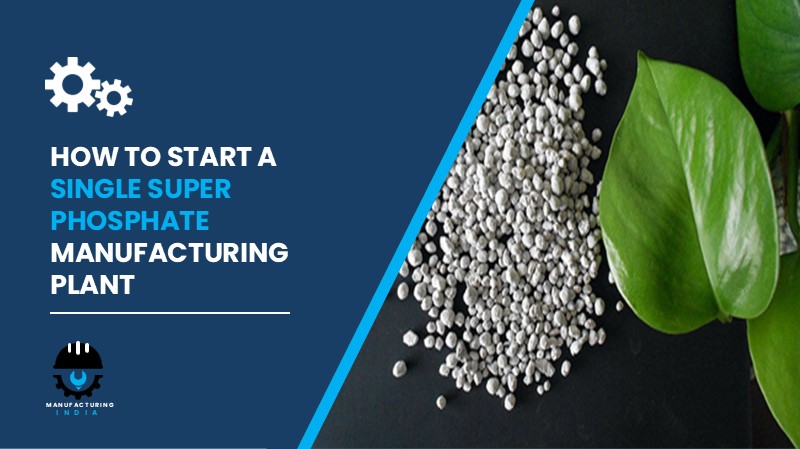
Single super phosphate (SSP) is a widely used phosphorus-rich fertilizer that manufacturers produce through the chemical reaction between phosphate rock and concentrated sulfuric acid. The product supplies essential nutrients because it contains both phosphorus (P₂O₅) and calcium, which help improve soil fertility while supporting root growth and enabling complete crop development. SSP serves as a common fertilizer solution in agricultural fields to support the growth of wheat, rice, maize, sugarcane, and various vegetable crops.
The product enhances soil structure because it works well with other fertilizers as an essential component of complete nutrient management systems. SSP offers two options for distribution – granular and powder forms – to facilitate simple handling, storage, and usage across diverse farm sizes and agri-input distribution channels. SSP stands as the most popular phosphorus fertilizer among farmers throughout the world because of its affordable price, ability to work effectively with various soil types, and capacity to boost crop production consistently across tropical and subtropical agricultural environments.
The primary production method is crushing and grinding of phosphate rocks, reaction with sulfuric acid, granulation, drying, screening, and packaging – a multi-stage chemical manufacturing process that converts phosphate rock and sulfuric acid into a ready-to-apply, specification-compliant granular or powder fertilizer product. End-use industries served include the agriculture sector, horticulture, plantations, and organic farming practices.
Cost of Setting Up a Single Super Phosphate Manufacturing Plant in India
The cost of establishing this facility depends on capacity, technology selection, plant location, degree of automation, and regulatory compliance requirements.
1. Capital Expenditure (CapEx)
Total capital investment for a single super phosphate manufacturing plant in India covers land acquisition, site preparation, civil construction, machinery, and pre-operative expenses. The cost of land and site development – including charges for land registration, boundary development, and other related expenses – forms a substantial part of the overall investment. This allocation ensures a solid foundation for safe and efficient plant operations. Investors can reduce land acquisition costs by locating the unit in an industrial estate, agro-chemical cluster, or Special Economic Zone (SEZ), which also provide shared utility infrastructure and potential state-level fiscal incentives aligned with India’s agricultural input manufacturing development.
Civil works and construction cover the main reaction, granulation, and drying production building, raw material storage areas for phosphate rock and sulfuric acid, a finished goods warehouse, a quality control laboratory, and an administrative block. Given that SSP manufacturing involves handling concentrated sulfuric acid – a highly corrosive material – civil and structural elements must incorporate acid-resistant flooring, secondary containment provisions, appropriate ventilation systems, and emergency response infrastructure throughout the facility.
Machinery costs account for the largest portion of total capital expenditure. Key machinery required includes:
- Crushers
- Ball mills
- Acid reactors
- Granulators
- Dryers
- Sieving machines
- Packing units
Other capital costs include the effluent treatment plant (ETP), advanced process monitoring systems, pre-operative expenses, trial production costs, and commissioning charges. All machinery must comply with industry standards for safety, efficiency, and reliability applicable to chemical fertilizer manufacturing.
Request a Sample Report for In-Depth Market Insights: https://www.imarcgroup.com/single-super-phosphate-manufacturing-plant-project-report/requestsample
2. Operational Expenditure (OpEx)
The operating cost structure of a single super phosphate manufacturing plant is primarily driven by raw material consumption. Phosphate rock – the dominant feedstock – accounts for approximately 70–80% of total operating expenses (OpEx), making phosphate rock procurement strategy the single most critical determinant of production economics and margin protection. Sulfuric acid is the secondary raw material input. Securing long-term supply agreements with reliable phosphate rock importers or domestic miners and with sulfuric acid producers is essential for cost stability and production continuity. Minimising transportation costs by selecting suppliers located in proximity to the plant is a key procurement planning criterion.
Utility costs – comprising electricity for crushers, ball mills, granulators, and dryers, as well as water and steam – account for 10–15% of total OpEx, reflecting the energy demands of phosphate rock grinding and SSP drying operations. Other ongoing operating costs include transportation, packaging, salaries and wages, depreciation, taxes, equipment repairs and maintenance, and other miscellaneous expenses covering quality control testing, environmental compliance, and regulatory documentation.
By the fifth year of operations, the total operational cost is expected to increase substantially due to factors such as inflation, market fluctuations, and potential rises in the cost of key materials. Additional factors including supply chain disruptions, rising consumer demand, and shifts in the global economy are expected to contribute to this increase.
3. Plant Capacity
The proposed manufacturing facility is designed with an annual production capacity ranging between 50,000 and 200,000 MT, enabling economies of scale while maintaining operational flexibility. Capacity can be customised per investor requirements based on target state agricultural market size, available capital, and degree of automation. The production process for SSP allows manufacturers to expand their operations in response to market demand – a scalable production characteristic that supports progressive capital deployment aligned with market penetration timelines. Profitability improves materially with higher capacity utilisation, making domestic supply agreements with state agricultural departments, fertiliser cooperatives, and private agri-input distributors a commercial priority from the commissioning stage.
4. Profit Margins and Financial Projections
The project demonstrates healthy profitability potential under normal operating conditions. Gross profit margins typically range between 20–30%, supported by stable demand and value-added applications. Net profit margins range between 8–15%. A comprehensive financial model covering NPV (net present value), IRR (internal rate of return), payback period, liquidity analysis, uncertainty analysis, sensitivity analysis, and a full five-year profit and loss account provides investors with a rigorous analytical framework for assessing financial viability and long-term sustainability across different capacity and pricing scenarios.
Why Set Up a Single Super Phosphate Plant in India?
Rising Demand for Phosphorus-Based Fertilizers. The increasing population, together with intensive agricultural methods, creates growing needs for phosphorus-based fertilizers – placing SSP at the centre of India’s fertiliser consumption growth. Balanced fertilization methods and integrated nutrient management practices are increasing the use of phosphorus-based fertilizers across India’s diverse crop cultivation systems, creating consistent and growing institutional procurement demand for domestically produced SSP.
Government Soil Health Programme Creating Direct Demand. As of July 2025, more than 25 crore Soil Health Cards had been distributed to farmers across India, with INR 1,706.18 crore allocated to States and UTs for implementation by February 2025. This initiative enhances soil nutrient management and is expected to boost demand for fertilizers like SSP – as farmers armed with soil health data seek affordable, effective phosphorus inputs to address deficiencies identified in their soil test reports, creating a scientifically informed and government-supported demand pull for SSP across India’s agricultural heartlands.
Government Subsidy Support Providing Stable Market Economics. The market expansion for fertilizers receives support through government subsidies, which create orderly policies for fertilizer application and market development. India’s fertiliser subsidy framework covers SSP as a Nutrient Based Subsidy (NBS) product – making it accessible to farmers at affordable prices while ensuring producers receive consistent and policy-backed revenue. This subsidy architecture provides a measure of market stability and demand predictability that is particularly valuable for investors planning large-capacity SSP manufacturing operations.
Consistent Nutrient Supply and Product Reliability. The production of SSP establishes fixed nutrient levels that enable farmers to predict crop yields – a production consistency characteristic that builds farmer loyalty and brand trust for reliable domestic SSP suppliers. SSP’s ability to work effectively with various soil types and its compatibility with organic fertilizers and integrated nutrient management programmes make it a durable procurement staple across India’s diverse agricultural regions.
Expanding Horticulture, Plantation, and Cash Crop Demand. The market growth for SSP continues because horticulture, plantation, and cash crop markets require SSP application to achieve better productivity results. SSP enhances root growth, flower development, and fruit production for different types of crops – including tea, coffee, rubber, sugarcane, and horticultural produce – providing access to high-value commodity crop procurement channels that command premium pricing and consistent supply volumes.
Active Indian Industry Investment Confirming Market Momentum. In August 2025, Brahmaputra Valley Fertilizer Corporation Limited (BVFCL) signed a five-year business-to-business deal with Bhutan’s National Seed Centre to strengthen India-Bhutan agricultural cooperation, facilitating exports of key fertilizers including Single Super Phosphate (SSP), ensuring Bhutanese farmers timely access to essential inputs and supporting regional food security. In June 2024, Hindustan Urvarak & Rasayan Limited (HURL) secured agreements with leading SSP manufacturers – including Agro Phos India, Khaitan Chemicals & Fertilizers, Rama Phosphates, Indian Phosphate, Narmada Bio Chem, Patel Phoschem, and Kisanshakti Fertilizers – to supply 5 Lakh MT of SSP with distribution plans targeting 13 Indian states for FY 2024–25, confirming the scale and institutional depth of SSP demand across India.
Manufacturing Process – Step by Step
The single super phosphate manufacturing process uses crushing and grinding of phosphate rocks, reaction with sulfuric acid, granulation, drying, screening, and packaging as the primary production method. Each stage is designed to ensure consistent phosphorus (P₂O₅) content, granule quality, and compliance with the fertiliser grade specifications required by agricultural, horticultural, and plantation customers.
- Raw Material Receipt and Inspection: Phosphate rock and sulfuric acid are received at the facility and subjected to incoming quality checks for phosphate rock grade (P₂O₅ content), moisture content, and sulfuric acid concentration before entering the production process.
- Crushing: Phosphate rock lumps are fed through crushers to reduce the particle size and prepare the rock for fine grinding – ensuring adequate surface area for the subsequent acidulation reaction.
- Grinding: Crushed phosphate rock is processed through ball mills to achieve the fine particle size specification required for efficient and complete acidulation with sulfuric acid in the reaction stage.
- Acid Reaction (Acidulation): Finely ground phosphate rock is reacted with concentrated sulfuric acid in acid reactors in a controlled exothermic acidulation reaction. The reaction converts the insoluble tricalcium phosphate in the phosphate rock into water-soluble monocalcium phosphate – the primary plant-available phosphorus form in SSP – along with calcium sulfate (gypsum) as a co-product.
- Curing: The reacted SSP mixture is transferred to curing dens where the acidulation reaction continues to completion over a controlled period, ensuring full conversion of phosphate rock to available P₂O₅ specification.
- Granulation: Cured SSP is processed through granulators to form the granular product form preferred for mechanised spreading and convenient storage and handling in the agricultural distribution chain.
- Drying: Granulated SSP is processed through dryers to reduce moisture content to within the specification limit required for shelf life stability and handling performance during storage and distribution.
- Screening: Dried SSP granules are processed through sieving machines to classify particle size, remove oversized and undersized granules, and ensure consistent granule size distribution meeting the target product specification.
- Quality Inspection: Finished SSP – in granular or powder form – is analytically tested for available P₂O₅ content, moisture, free acid, particle size distribution, and physical characteristics before release for packaging.
- Packaging and Dispatch: Approved SSP is filled into bags using packing units and dispatched to end-use customers across the agriculture sector, horticulture, plantations, and organic and integrated farming programmes.
Key Applications
The single super phosphate manufacturing plant serves a broad and commercially significant range of agricultural and horticultural applications across India’s farming economy.
- Agriculture Sector: SSP supplies two vital nutrients – phosphorus and calcium – which enhance crop production and improve soil fertility across India’s major cultivation systems, including wheat, rice, maize, sugarcane, and vegetable crops.
- Horticulture and Plantations: SSP enhances root growth, flower development, and fruit production for different types of crops, making it a valued input in tea, coffee, rubber, sugarcane, and fruit and vegetable horticultural operations.
- Organic and Integrated Farming Systems: SSP permits use in organic fertilizer programmes to boost soil health, and serves as an essential component of integrated nutrient management systems where phosphorus supplementation is required alongside organic matter inputs.
- Soil Improvement Programmes: SSP enables both government and private organisations to boost agricultural productivity through improved soil phosphorus management – aligned with India’s Soil Health Card programme and state-level soil fertility restoration initiatives.
- Fertiliser Subsidy Distribution Channels: Distributed through government-subsidised agricultural input channels under the Nutrient Based Subsidy (NBS) scheme, making SSP accessible to small and marginal farmers who represent the majority of India’s agricultural land users.
- Integrated Nutrient Management Systems: SSP functions as an essential component of complete nutrient management programmes, working compatibly with nitrogen fertilizers, micronutrients, and organic amendments to deliver balanced plant nutrition across diverse crop and soil systems.
Leading Manufacturers
The global single super phosphate industry is served by several established manufacturers with extensive production capacities and diverse application portfolios. Key players operating in this market include:
- Jubilant Industries Ltd.
- Coromandel International Limited (Murugappa Group, EID Parry)
- The Mosaic Company
- Gujarat Narmada Valley Fertilizers & Chemicals
- Madhya Bharat Agro Products Limited
- PCC Group
All of these manufacturers serve end-use sectors including large-scale agricultural operations, government fertilizer programmes, horticulture projects, and retail distribution channels – the same markets that a new Indian single super phosphate manufacturing plant can target as domestic demand from the Soil Health Card programme and government subsidy channels continues to accelerate.
Timeline to Start the Plant
Investors should plan for a structured pre-production and commissioning phase covering the following key stages:
- Feasibility study and project report preparation
- Land acquisition and site development
- Regulatory approvals and environmental clearances
- Factory licence and fire safety compliance
- Machinery procurement and installation
- Raw material supplier agreements and supply chain setup
- Trial production and quality testing
- Commercial production launch
Licences and Regulatory Requirements
Starting a single super phosphate manufacturing unit in India requires several approvals:
- Business registration (Proprietorship, LLP, or Private Limited Company)
- Factory Licence under the Factories Act
- Environmental Clearance from the State Pollution Control Board
- GST Registration
- Fire Safety NOC
- Hazardous chemical compliance for storage and handling of concentrated sulfuric acid under the Manufacture, Storage and Import of Hazardous Chemical Rules
- Effluent Treatment Plant (ETP) operational clearance
- Occupational Health and Safety compliance
Key Challenges to Consider
High Capital Requirements. Establishing a fully equipped single super phosphate manufacturing plant – with crushers, ball mills, acid reactors, granulators, dryers, sieving machines, and packing units – at the 50,000–200,000 MT annual capacity range requires significant upfront capital investment. Access to MSME credit-linked subsidy schemes, fertiliser sector investment promotion grants, and state government agricultural manufacturing incentives can help bridge funding requirements.
Raw Material Price Volatility. Phosphate rock – accounting for 70–80% of total OpEx – is predominantly imported into India and subject to global phosphate commodity price cycles and supply concentration risks from major exporting countries. Sulfuric acid prices are linked to domestic sulphur and sulphur dioxide supply chains. Long-term procurement contracts with reliable phosphate rock importers and sulfuric acid producers are the primary risk mitigation measures for managing this dominant cost driver.
High Utility Cost Intensity. Utilities – at 10–15% of total OpEx – reflect the energy demands of phosphate rock grinding in ball mills and SSP drying operations. Securing reliable and cost-competitive electricity and steam supply is an important site selection criterion for managing operating cost efficiency across the plant’s lifecycle.
Regulatory Compliance. SSP manufacturing involves handling concentrated sulfuric acid under India’s Hazardous Chemicals Rules. Compliance obligations include safety audits, emergency response plans, acid storage tank integrity inspections, and ongoing ETP monitoring for acidic effluent management. Advanced monitoring systems must be installed to detect leaks or deviations in the acidulation process. Dedicated safety management and environmental compliance resources are non-negotiable operational requirements.
Competition from Established Domestic Players. Established Indian SSP manufacturers – including Jubilant Industries Ltd., Coromandel International Limited (Murugappa Group, EID Parry), Gujarat Narmada Valley Fertilizers & Chemicals, and Madhya Bharat Agro Products Limited – hold large market positions across state fertiliser subsidy distribution channels. New entrants must compete through geographic market positioning, competitive pricing under the NBS subsidy framework, and reliable supply relationships with state agricultural departments and private agri-input distributors.
Skilled Manpower. Operating acid reactors, ball mills, granulators, and dryers in a chemical fertilizer manufacturing environment requires trained chemical process operators and quality control personnel. Recruiting, training, and retaining qualified technical staff – particularly for acidulation process control and effluent treatment management – is an ongoing operational challenge in India’s agricultural chemicals manufacturing sector.
Frequently Asked Questions
1. How much does it cost to set up a single super phosphate manufacturing plant in India?
Total setup cost depends on plant capacity, location, technology selection, and automation level. Key cost components include land and site development, acid-resistant civil construction, machinery (crushers, ball mills, acid reactors, granulators, dryers, sieving machines, packing units), and pre-operative expenses. A detailed feasibility study is recommended to generate accurate project-specific cost estimates.
2. Is single super phosphate manufacturing profitable in India in 2026?
Yes. The project delivers healthy financial performance, with gross margins of 20–30% and net profit margins of 8–15% under normal operating conditions. The global SSP market was valued at USD 19.5 billion in 2025 and is projected to reach USD 24.35 billion by 2034 at a CAGR of 2.5% according to IMARC Group, with India’s 25 crore Soil Health Card distribution programme and government NBS subsidy framework providing a large and institutionally supported domestic demand base.
3. What machinery is required for a single super phosphate plant in India?
Essential equipment includes crushers, ball mills, acid reactors, granulators, dryers, sieving machines, and packing units.
4. What licences and approvals are required to start a single super phosphate plant in India?
Required approvals include business registration, Factory Licence, Environmental Clearance from the State Pollution Control Board, GST Registration, Fire Safety NOC, hazardous chemical compliance for concentrated sulfuric acid under the Hazardous Chemicals Rules, ETP operational clearance, and Occupational Health and Safety compliance.
5. What raw materials are needed for single super phosphate manufacturing?
The primary raw materials are phosphate rock and sulfuric acid. Phosphate rock is the dominant cost driver, accounting for 70–80% of total operating expenses, and is predominantly sourced through imports given India’s limited domestic phosphate rock reserves.
6. What are the environmental compliance requirements for a single super phosphate plant in India?
The facility must obtain Environmental Clearance from the State Pollution Control Board, operate an approved ETP for acidic effluent management, and comply with the Hazardous Chemicals Rules for sulfuric acid storage and handling. Advanced monitoring systems must be installed to detect leaks or deviations in the acidulation process, and regular effluent monitoring and safety audit documentation are mandatory throughout operations.
7. What is the best location to set up a single super phosphate plant in India?
Locations offering proximity to phosphate rock import ports and sulfuric acid producers, reliable utility supply, and established agricultural input distribution networks are preferred. Gujarat, Andhra Pradesh, Maharashtra, Madhya Pradesh, and Rajasthan – which combine port access, agricultural demand density, and industrial infrastructure – are strong candidates for SSP plant location.
8. What is the break-even period for this type of plant in India?
The break-even period depends on plant capacity, total capital investment, SSP selling price under the NBS subsidy framework, and capacity utilisation rate. A comprehensive financial analysis covering NPV, IRR, payback period, and uncertainty and sensitivity analysis is the most reliable method for generating project-specific break-even timelines.
9. What government incentives are available for manufacturers in India?
SSP manufacturers in India benefit from the Nutrient Based Subsidy (NBS) scheme administered by the Department of Fertilizers, which provides per-tonne subsidies that make SSP commercially viable at farmer-accessible price points. Additional incentives include MSME credit-linked capital subsidy schemes, state government agricultural manufacturing investment promotion subsidies, and export promotion benefits for qualifying fertilizer products under schemes administered by the Ministry of Commerce and Industry.
Key Takeaways for Investors
A single super phosphate manufacturing plant in India offers a well-grounded investment opportunity anchored by growing demand across the agriculture sector, horticulture, plantations, and organic and integrated farming programmes – all of which depend on SSP as the most affordable and widely applied phosphorus fertilizer in India. The project is financially viable across the 50,000 to 200,000 MT annual capacity range, with gross margins of 20–30% and net margins of 8–15% providing a consistent return framework for investors at multiple capital scales. According to IMARC Group estimates, the global single super phosphate market is set to grow from USD 19.5 billion in 2025 to USD 24.35 billion by 2034 at a CAGR of 2.5%, and India’s unprecedented Soil Health Card programme – with more than 25 crore cards distributed as of July 2025 and INR 1,706.18 crore allocated for implementation – is creating a scientifically driven and government-funded demand acceleration for phosphorus fertilizers that directly expands the addressable market for domestic SSP producers. With institutional supply agreements at the scale of HURL’s 5 Lakh MT SSP procurement across 13 Indian states in FY 2024–25 confirming the depth of organised demand, the long-term demand sustainability for domestically produced single super phosphate is structurally sound across all investment planning horizons.
About the Author