Waste Plastic Pyrolysis Plant in India
Setting up a waste plastic pyrolysis plant in India presents a compelling investment case driven by surging demand from the energy and fuel sector, chemical processing industry, industrial boilers and furnaces, construction materials, and waste management services. India generates enormous volumes of plastic waste annually, a significant proportion of which is non-recyclable through conventional methods, making pyrolysis technology a critical solution for energy recovery, alternative fuel production, and industrial feedstock generation. With the global waste plastic pyrolysis market valued at USD 710.54 million in 2025 and projected to reach USD 1,150.44 million by 2034 at a CAGR of 5.5%, the commercial opportunity for Indian entrepreneurs and industrial investors is substantial and growing.
India offers a uniquely favourable environment for this investment. Rapid urbanisation, expanding infrastructure, rising public consumption patterns, and the Government of India’s Make in India initiative collectively strengthen the case for domestic production of pyrolysis-derived fuels and industrial materials. States with established chemical corridors and waste management infrastructure including Gujarat and Maharashtra provide ready access to mixed plastic waste feedstock, skilled labour, reliable utilities, and well-developed logistics networks. As regulatory pressure on landfilling and incineration intensifies and circular economy adoption becomes a policy priority, the waste plastic pyrolysis process stands at the intersection of environmental responsibility and commercial viability.
Setting up a pyrolysis production unit in India combines strong policy tailwinds, cost-competitive manufacturing conditions, and robust end-use demand across energy recovery, chemical processing, and waste management sectors. With gross profit margins of 30–40% and net margins of 12–18%, the financial profile is compelling, and break-even viability at meaningful capacity scales makes this one of the more attractive waste-to-energy manufacturing investments available in the Indian market today.
What is Waste Plastic Pyrolysis?
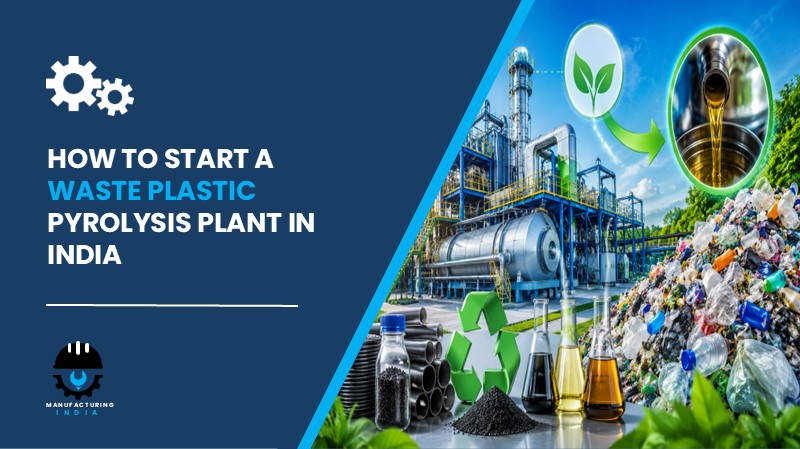
Waste plastic pyrolysis is a thermal decomposition process that converts plastic waste into valuable by-products such as pyrolysis oil, syngas, and carbon char in an oxygen-free environment. The process operates at high temperatures to break down long polymer chains into smaller hydrocarbon fractions. This recovered fuel serves as an alternative energy source that can be refined into diesel-like products, while syngas functions as an additional energy source within the facility itself. Carbon char finds applications in construction materials, pigments, and industrial fillers. This technology provides an effective solution for managing non-recyclable plastics, reducing landfill dependency, lowering environmental pollution, and supporting energy recovery initiatives.
The primary production method is the waste plastic pyrolysis process, which encompasses continuous and batch reactor configurations depending on plant scale and feedstock composition. End-use industries served include the energy and fuel sector, industrial boilers and furnaces, chemical processing industry, construction materials sector, and waste management services making output from the unit commercially diversified and demand resilient.
Cost of Setting Up a Waste Plastic Pyrolysis Plant in India
The total cost of establishing this type of facility depends on capacity, technology selection, site location, level of automation, and regulatory compliance requirements. Investors must account for both one-time capital expenditure and ongoing operational costs to arrive at a realistic financial plan.
1. Capital Expenditure (CapEx)
The capital investment for the production facility covers land and site development, civil construction, machinery, and other pre-operative costs.
Land and Site Development involves acquisition of an appropriate industrial plot, boundary development, land registration, and site grading. Investors may consider locating within Special Economic Zones (SEZs) or designated industrial estates to benefit from concessional land rates, utility connections, and regulatory fast-tracking. Land cost varies significantly across Indian states, with established chemical and industrial clusters offering better infrastructure at competitive rates.
Civil Works and Construction cover the manufacturing shed, reactor housing, laboratory, raw material storage, finished product storage, administrative block, and effluent treatment plant (ETP) infrastructure. Robust civil construction is essential given the high-temperature nature of the pyrolysis process and safety requirements for handling flammable gases and oils.
Machinery and Equipment represent the largest single component of capital expenditure. Key machinery required includes:
- Shredders
- Dryers
- Pyrolysis reactors
- Condensers
- Gas scrubbing systems
- Storage tanks
- Pollution control units
Other Capital Costs include effluent treatment plant installation, pre-operative and pre-production expenses, trial run costs, import duties on specialised reactor components, and commissioning charges.
Request a Sample Report for In-Depth Market Insights: https://www.imarcgroup.com/waste-plastic-pyrolysis-manufacturing-plant-project-report/requestsample
2. Operational Expenditure (OpEx)
Raw Material Cost is the dominant operating expense, accounting for approximately 40–50% of total OpEx. The primary raw material is mixed plastic waste, supplemented by catalyst, fuel for startup operations, and gas cleaning systems. Investors should negotiate long-term procurement contracts with municipal waste aggregators, industrial plastic waste generators, and waste collection networks to stabilise feedstock costs and ensure supply continuity.
Utility Cost covering electricity, water, and steam represents 20–25% of total operational expenditure, reflecting the energy-intensive nature of the high-temperature pyrolysis process. Ensuring reliable grid connectivity or setting up captive power generation is essential for uninterrupted operations.
Other Operating Costs include transportation of plastic waste feedstock and outbound dispatch of recovered fuel and char, product packaging, salaries and wages for plant personnel, routine maintenance and spares, depreciation on plant and machinery, and applicable taxes. By the fifth year of operations, total operational costs are expected to increase substantially due to inflation, potential rises in feedstock costs, supply chain shifts, and rising consumer demand for the facility’s output.
3. Plant Capacity
The proposed manufacturing facility is designed with an annual production capacity ranging between 10,000 and 20,000 MT of plastic waste, enabling economies of scale while maintaining operational flexibility. Capacity can be customised per investor requirements modular plant designs allow for phased expansion as throughput requirements grow. Profitability improves meaningfully with higher capacity utilisation, making early ramp-up planning a key element of financial strategy.
4. Profit Margins and Financial Projections
The financial profile of this production unit demonstrates healthy profitability under normal operating conditions. Gross profit margins typically range between 30–40%, supported by stable demand for recovered fuel across industrial applications. Net profit margins average 12–18%, reflecting a favourable balance between value-added outputs and managed operating costs. Full financial projections — including Net Present Value (NPV), Internal Rate of Return (IRR), payback period analysis, liquidity analysis, and sensitivity analysis — are covered in the detailed project report, providing investors with a comprehensive view of long-term financial viability.
Why Set Up a Waste Plastic Pyrolysis Plant in India?
Rising Plastic Waste Volumes. According to UNEP data reported in 2025, around 19 to 23 million tonnes of plastic waste enter aquatic ecosystems each year, underscoring the severity of unmanaged plastic pollution globally. India’s rapid urbanisation and rising public consumption patterns generate significant plastic waste volumes, increasing the requirement for advanced waste management technologies such as pyrolysis.
Circular Economy Adoption. Pyrolysis enables resource recovery by transforming waste plastics into usable fuels and industrial materials. The packaging, automotive, and consumer goods industries experienced rapid plastic usage growth, which created an increased plastic waste problem that traditional recycling methods could not handle making pyrolysis an increasingly essential solution within the circular economy framework.
Energy Recovery Potential. The process generates multiple energy-rich outputs recovered fuel oil, syngas, and carbon char which improve the overall economic performance of the facility. Industrial boilers, furnaces, and chemical refiners seeking to reduce their dependency on conventional fossil fuels represent a ready and growing off-take market in India.
Regulatory Support. Environmental regulations and landfill restrictions create increasingly favourable conditions for businesses to invest in waste-to-energy technology. Government schemes supporting waste management infrastructure and Make in India manufacturing incentives provide additional tailwinds for investors setting up production facilities in this segment.
Active Industry Investment. The global industry is attracting major capital. In March 2025, Dow secured an equity stake in Xycle alongside ING, Invest-NL, Polestar Capital, and Vopak, supporting the development of Xycle’s first commercial-scale waste plastic pyrolysis plant at the Port of Rotterdam, designed to process 21 kilotons of plastic waste annually. Also in March 2025, BASF Corporation and Braven Environmental signed a supply deal for Braven PyChem, an advanced recycled feedstock from mixed plastic waste, to support BASF’s ChemCycling process for construction and automotive applications. These global investments validate the technology and signal strong commercial confidence in the sector.
Local Supply Chain Preference. India’s industrial buyers in energy recovery, waste management, chemical processing, and construction materials sectors are increasingly seeking locally produced alternative fuel, syngas, and carbon char to reduce import dependency and supply chain risks creating a natural domestic market advantage for Indian producers.
Manufacturing Process Step by Step
The waste plastic pyrolysis process uses thermal decomposition in an oxygen-free environment as the primary production method. Each stage involves precise operational controls to maximise output quality and plant safety.
- Waste Plastic Collection and Segregation: Incoming mixed plastic waste is sorted by type, quality, and contamination level to optimise reactor performance and output composition.
- Shredding: Sorted plastic waste is mechanically shredded into smaller, uniform fragments to improve heat transfer efficiency and throughput consistency in the reactor.
- Drying: Shredded plastic is passed through dryers to remove moisture content, which is critical for achieving clean thermal decomposition and preventing unwanted side reactions.
- Continuous or Batch Pyrolysis: Dried feedstock is fed into the pyrolysis reactor either through a continuous-feed system for high-volume operations or a batch configuration — where high-temperature, oxygen-free thermal decomposition breaks down polymer chains into smaller hydrocarbon fractions.
- Vapour Condensation: Hydrocarbon vapours generated in the reactor pass through condensers, where they are cooled and converted into liquid fuel oil.
- Oil Collection: Condensed fuel oil is collected and directed to storage tanks, ready for quality testing and dispatch as industrial fuel or refining feedstock.
- Gas Recovery: Non-condensable syngas is recovered through gas scrubbing systems, cleaned of impurities, and recycled as an energy source for the plant’s own fuel requirements.
- Char Handling: The solid carbon char residue is collected from the reactor, processed, and prepared for use in construction materials, pigments, and industrial fillers.
- Product Storage and Dispatch: Finished products fuel oil, syngas, and carbon char are stored and dispatched to energy and fuel sector buyers, chemical processors, construction material manufacturers, and waste management customers.
Key Applications
Waste plastic pyrolysis output serves a wide range of industries, making the unit commercially resilient across demand cycles.
- Energy and Fuel Industry: Pyrolysis oil serves as a substitute fuel in industrial boilers and furnaces, reducing operational dependency on conventional fossil fuels.
- Chemical and Refining Sector: Recovered hydrocarbons enable secondary refining and conversion to chemical feedstock for industrial processing applications.
- Waste Management Industry: The technology enables operators to dispose of non-recyclable plastic waste streams while recovering valuable materials through safe and compliant disposal methods.
- Construction and Industrial Materials: The process generates carbon char, which manufacturers use in filler products, pigment materials, and building construction items.
Leading Manufacturers
The global waste plastic pyrolysis industry is served by a range of manufacturers with extensive production capacities and diverse application portfolios spanning energy recovery, waste management, chemical processing, and industrial fuel sectors. Key players include:
- Nexus Circular
- OMV Aktiengesellschaft
- Niutech Environment Technology Corporation
- Klean Industries
- Fortum OyJ
Timeline to Start the Plant
- Feasibility study and project report preparation
- Land acquisition and site development
- Regulatory approvals and environmental clearances
- Factory licence and fire safety compliance
- Machinery procurement and installation
- Raw material supplier agreements and supply chain setup
- Trial production and quality testing
- Commercial production launch
Licences and Regulatory Requirements
Starting a waste plastic pyrolysis plant in India requires several approvals to operate legally and in compliance with environmental and safety standards:
- Business registration (Proprietorship, LLP, or Pvt Ltd)
- Factory Licence under the Factories Act
- Environmental Clearance from State Pollution Control Board
- GST Registration
- Fire Safety NOC
- Hazardous and chemical waste handling compliance under applicable environmental laws
- Effluent Treatment Plant (ETP) operational clearance
- Occupational Health and Safety compliance
Key Challenges to Consider
High Capital Requirements. Establishing a commercially viable pyrolysis facility demands significant upfront investment in reactors, condensers, gas scrubbing systems, and pollution control units, requiring careful financial planning and funding strategy.
Raw Material Price Volatility. The cost and availability of mixed plastic waste, catalyst, fuel for startup, and gas cleaning systems can fluctuate due to supply chain disruptions, municipal policy changes, and competing demand from other recyclers.
Regulatory Compliance. Operating a pyrolysis facility in India involves multi-agency environmental clearances, effluent treatment obligations, emissions monitoring, and ongoing hazardous material compliance, all of which require dedicated regulatory management resources.
Technology and Innovation Pressure. As noted in the latest industry developments, global players such as BASF, Dow, and Braven Environmental are advancing pyrolysis technology and circular feedstock standards, requiring Indian operators to stay current with process efficiency and certification requirements such as ISCC PLUS.
Competition. The global market includes well-resourced players Nexus Circular, OMV Aktiengesellschaft, Niutech Environment Technology Corporation, Klean Industries, and Fortum OyJ who may compete for premium offtake agreements and technology partnerships, underscoring the need for competitive positioning.
Skilled Manpower. Operating a waste plastic pyrolysis plant requires trained chemical engineers, process technicians, and safety officers for high-temperature reactors, gas recovery systems, and quality control laboratories, making talent acquisition and retention a material operational challenge.
Frequently Asked Questions
1. How much does it cost to set up a waste plastic pyrolysis plant in India? The total setup cost depends on plant capacity, technology, location, and automation level. The capital investment covers land, civil construction, machinery including shredders, dryers, pyrolysis reactors, condensers, gas scrubbing systems, storage tanks, and pollution control units, along with pre-operative costs.
2. Is waste plastic pyrolysis profitable in India in 2026? Yes. The unit demonstrates strong profitability potential with gross margins of 30–40% and net margins of 12–18% under normal operating conditions, supported by growing demand for alternative fuels and circular economy mandates.
3. What machinery is required for setting up this production facility in India? Essential machinery includes shredders, dryers, pyrolysis reactors, condensers, gas scrubbing systems, storage tanks, and pollution control units.
4. What licences and approvals are required to start a pyrolysis production unit in India? Mandatory approvals include business registration, Factory Licence, Environmental Clearance from the State Pollution Control Board, GST Registration, Fire Safety NOC, hazardous material compliance certification, ETP clearance, and Occupational Health and Safety compliance.
5. What raw materials are needed for waste plastic pyrolysis? The primary raw materials are mixed plastic waste, catalyst, fuel for startup operations, and gas cleaning systems.
6. What are the environmental compliance requirements for a pyrolysis unit in India? The facility must obtain Environmental Clearance, maintain an operational Effluent Treatment Plant, comply with emission standards, install advanced monitoring systems to detect process deviations, and adhere to hazardous waste handling regulations under applicable State Pollution Control Board norms.
7. What is the best location to set up this type of manufacturing plant in India? Ideal locations offer proximity to plastic waste supply chains, reliable utilities, good transportation infrastructure, and established industrial zoning. Industrial estates and SEZs in chemical manufacturing states provide additional regulatory and cost advantages.
8. What is the break-even period for this type of plant in India? The break-even period depends on plant capacity, capital investment, and operating cost optimisation. The detailed project report includes payback period analysis, NPV, and IRR projections to provide a precise break-even estimate for the specific plant configuration.
9. What government incentives are available for manufacturers in India? Investors may benefit from Make in India scheme support, state industrial promotion policies, SEZ benefits including tax holidays and duty exemptions, capital subsidy schemes for waste-to-energy projects, and government infrastructure support for waste management facilities.
Key Takeaways for Investors
A waste plastic pyrolysis plant offers a well-rounded investment opportunity for Indian entrepreneurs, anchored by proven demand across the energy and fuel sector, chemical processing industry, construction materials, and waste management services. The financial profile is viable across a range of plant capacities, with gross margins of 30–40% and net margins of 12–18% reflecting the value-added nature of pyrolysis outputs compared to feedstock input costs. The global market, valued at USD 710.54 million in 2025 and projected to grow to USD 1,150.44 million by 2034 at a CAGR of 5.5%, provides a strong macroeconomic backdrop for long-term demand sustainability. As regulatory pressure on landfilling and incineration intensifies globally and India accelerates its circular economy commitments, the waste plastic pyrolysis process is positioned to become an increasingly central component of India’s industrial and environmental infrastructure making now an opportune moment for committed investors to establish a domestic production presence.
About the Author