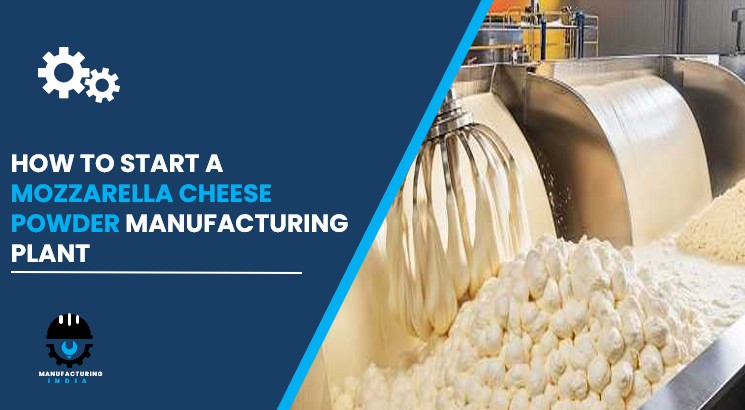
Setting up a mozzarella cheese powder manufacturing plant in India represents a compelling investment opportunity underpinned by robust and structurally growing demand from the food and beverage, foodservice, snack food, and retail sectors. The accelerating global shift toward convenient, shelf-stable, and cost-effective cheese ingredients, rising consumer appetite for processed and ready-to-use foods, and growing commercial adoption of cheese powder across pizza, sauce, seasoning, and frozen-food formulations create multiple simultaneous demand growth drivers. Combined with strong food-industry procurement volumes, proven dairy dehydration technologies, and expanding export market opportunities, mozzarella cheese powder production presents a commercially attractive and scalable investment proposition for new entrants with efficient milk sourcing, cheese-making, and spray-drying systems.
IMARC Group’s comprehensive DPR report, titled “Mozzarella Cheese Powder Manufacturing Plant Project Report 2026: Industry Trends, Plant Setup, Machinery, Raw Materials, Investment Opportunities, Cost and Revenue,” provides a complete roadmap for setting up a mozzarella cheese powder manufacturing unit. The market is driven by increasing demand for convenient cheese ingredients, rising adoption of processed and ready-to-eat food products, and growing food manufacturer preference for shelf-stable dairy ingredients with extended functional utility.
The global mozzarella cheese powder market is on a sustained growth trajectory, driven by expanding food-processing industry scale, rising foodservice consumption, and the broadening application of cheese powder across snack seasonings, instant sauces, pizza toppings, and frozen food categories.
What is Mozzarella Cheese Powder?
Mozzarella cheese powder is a dehydrated, finely ground form of mozzarella cheese designed for easy incorporation into a wide range of food products. It retains the characteristic flavour, functional properties, and essential nutrients of fresh mozzarella, making it a versatile and cost-effective ingredient for food manufacturers, foodservice operators, and retail consumers. The powder offers an extended shelf life compared to fresh cheese, is convenient to store and transport, and can be easily rehydrated or used directly in dry-blend applications.
The product is primarily used in food manufacturing to enhance flavour in snacks, sauces, soups, pizza toppings, seasoning blends, and frozen food formulations. Mozzarella cheese powder typically contains milk solids, dairy fats, and proteins, and is processed with careful control of moisture, fat content, and particle size to achieve consistent functional and sensory performance. Key quality parameters for commercial mozzarella cheese powder production include moisture content, fat-in-dry-matter ratio, protein concentration, solubility, colour consistency, and microbiological safety standards.
Mozzarella cheese powder plants are notable for their requirement for high-quality milk sourcing, precise cheese-making process control, and advanced spray-drying or freeze-drying technology. The spray-drying process, using atomised cheese concentrate under controlled thermal conditions, forms the technological backbone of commercial mozzarella cheese powder production, enabling cost-efficient, large-scale conversion of fresh cheese into stable powder ingredients with consistent quality attributes meeting food-industry specification requirements.
Cost of Setting Up a Mozzarella Cheese Powder Manufacturing Plant
The total capital investment required to establish a mozzarella cheese powder manufacturing plant is determined by several key parameters: annual production capacity (typically ranging from 1,000 to 5,000 metric tonnes per annum depending on project scale), the processing technologies adopted (spray drying, freeze drying, or drum drying routes), the degree of automation across cheese-making, concentration, drying, and packaging sections, facility specifications, milk sourcing strategy, and applicable food-safety regulatory and environmental compliance requirements. Below is a structured breakdown of the major cost components.
1. Capital Expenditure (CapEx)
Total capital investment in a mozzarella cheese powder plant covers the following major heads:
Land and Site Development
This encompasses land acquisition or lease, site preparation, boundary development, and utilities connectivity. Site selection should prioritise proximity to reliable dairy milk supply infrastructure including cattle-farming belts, milk collection networks, and cold-chain logistics; access to reliable power supply for energy-intensive spray-drying, refrigeration, and compressed-air operations; road and rail infrastructure for milk tanker delivery and finished product dispatch; availability of process water for cheese-making, cleaning-in-place (CIP) operations, and utility systems; and a technically skilled workforce with dairy processing, food engineering, and quality management competencies. Compliance with food-processing industrial zoning regulations, FSSAI licensing requirements, environmental impact assessment requirements, and effluent discharge norms must be assessed from project initiation.
Civil Works and Construction
Building costs cover the main processing facility including the milk receiving and chilling area, cheese-making and curd processing section, whey separation and concentration area, spray-drying and powder collection hall, packaging and labelling unit, finished product cold storage and ambient warehousing, utility systems including steam generation, refrigeration, compressed air, and electrical substations, quality control and analytical laboratory, clean room areas for powder handling and packaging, administrative and control block, effluent treatment plant for dairy wastewater, and fire safety and emergency response infrastructure. Construction must comply with food-processing facility hygiene standards, FSSAI food establishment requirements, GMP layout principles for cross-contamination prevention, and appropriate surface finishes, drainage design, and airflow management for powder handling areas.
Machinery and Equipment
Machinery represents the single largest CapEx component. Key equipment required for a mozzarella cheese powder manufacturing plant includes:
- Milk Reception and Chilling Tanks: Insulated stainless-steel silos with automated milk reception, temperature monitoring, and chilling systems maintaining incoming milk at 4°C to preserve quality pending processing, with in-line milk quality testing and weighing systems for supplier payment and batch traceability.
- Pasteurisers and HTST Units: High-temperature short-time (HTST) pasteurisers for thermal treatment of incoming milk to eliminate pathogenic microorganisms while preserving functional dairy proteins and fat components essential for mozzarella cheese-making and powder quality.
- Cheese Vats and Curd Processing Equipment: Stainless-steel jacketed cheese vats with automated starter culture dosing, rennet addition, curd-cutting knives, and whey drainage systems for production of mozzarella curd with controlled moisture and fat content as the primary feedstock for powder production.
- Stretching and Moulding Equipment: Mechanical curd-stretching systems applying hot water or steam treatment to mozzarella curd for development of characteristic elastic texture and fibrous protein structure, followed by moulding, chilling, and brine salting for finished cheese intermediate production.
- Evaporators and Cheese Concentration Systems: Multi-effect falling-film evaporators for concentration of cheese slurry or reconstituted cheese blend to target total solids content prior to spray drying, reducing water load and improving spray-drying efficiency and powder yield.
- Spray Dryers: Industrial spray-drying towers with rotary atomiser or two-fluid nozzle systems converting cheese concentrate into fine powder particles under controlled inlet and outlet air temperatures, with integrated powder cyclone and bag filter collection systems for high product recovery.
- Fluid Bed Dryers and Coolers: Secondary fluid bed drying and cooling systems for moisture equilibration and temperature reduction of spray-dried cheese powder before packaging, improving powder flowability, caking resistance, and storage stability.
- Powder Sifters and Classifiers: Vibrating sifters and air classifiers for particle size classification of mozzarella cheese powder to specification, removal of oversize agglomerates, and quality segregation prior to packaging.
- Automated Packaging Lines: Multi-head weighing and filling systems for packaging mozzarella cheese powder into retail pouches, foodservice containers, industrial bulk bags, and drummed formats, with nitrogen flushing, heat sealing, and automated labelling and batch coding systems.
- CIP Systems: Automated cleaning-in-place systems for hygienic cleaning and sanitisation of all process equipment, piping, and tanks between production runs, meeting dairy GMP and FSSAI food establishment hygiene requirements.
- Quality Control Laboratory Equipment: HPLC analysers, atomic absorption spectrometers, moisture analysers, fat extraction units, protein determination systems, particle size analysers, microbiological testing equipment, and sensory evaluation panels for specification compliance testing of incoming milk, in-process cheese, and finished powder.
Other Capital Costs
These include pre-operative expenses, commissioning and start-up charges, starter culture and initial ingredient inventory for plant commissioning, regulatory compliance setup including FSSAI Central Licence for dairy product manufacturing, state food safety approvals, BIS certification for applicable product categories, food safety management system (ISO 22000 / FSSC 22000) establishment costs, effluent treatment plant commissioning, and staff training and competency development for dairy processing, GMP compliance, food safety management, and quality control operations.
Request a Sample Report for In-Depth Market Insights: https://www.imarcgroup.com/mozzarella-cheese-powder-manufacturing-plant-project-report/requestsample
2. Operational Expenditure (OpEx)
Raw materials principally fresh whole milk and in some cases mozzarella cheese intermediate constitute the dominant operating cost, typically representing 70–80% of total OpEx given their role as the primary input accounting for the largest share of finished powder production cost. Utility costs, driven principally by electricity and thermal energy consumption for spray-drying, refrigeration, steam generation, and compressed-air systems, account for 10–15% of OpEx. Labour, packaging materials, starter cultures and enzymes, transportation, maintenance, quality control, depreciation, taxes, and overhead costs constitute the remainder of the operating cost base.
3. Plant Capacity
The proposed mozzarella cheese powder manufacturing facility is designed with an annual production capacity ranging between 1,000 and 5,000 metric tonnes per annum, enabling economies of scale while maintaining operational flexibility. This capacity range supports a diversified product portfolio of standard mozzarella cheese powder for food manufacturing, retail-grade mozzarella powder for consumer applications, and specialty low-moisture and reduced-fat variants serving premium foodservice and export channels.
4. Profit Margins and Financial Projections
The project demonstrates healthy profitability potential under normal operating conditions, with gross profit margins of 35–45% and net profit margins of 18–25% at efficient operational scale. Financial projections encompass capital investment, operating costs, capacity utilisation ramp-up schedule, product mix across standard and specialty powder grades, and forward demand outlook underpinned by sustained food-industry growth, expanding snack and convenience food markets, and rising export demand for dairy ingredient products. A comprehensive feasibility analysis includes sensitivity analysis, Net Present Value (NPV), Internal Rate of Return (IRR), and Payback Period calculations.
- Gross Profit: 35-45%
- Net Profit: 18-25%
Why Set Up a Mozzarella Cheese Powder Manufacturing Plant?
Growing Global Demand for Convenience and Processed Foods
Consumer preferences across developed and developing markets are shifting decisively toward convenient, shelf-stable, and easy-to-use food ingredients, driving sustained growth in demand for processed dairy ingredients including mozzarella cheese powder. The global expansion of quick-service restaurants, pizza chains, ready-meal manufacturers, and snack food companies creates large-volume, consistent-specification demand for mozzarella cheese powder as a cost-effective and logistics-efficient alternative to fresh cheese in food manufacturing and foodservice applications.
Expanding Snack Food and Seasoning Markets
The global snack food industry one of the fastest-growing segments within the broader food and beverage sector is a primary end-use market for mozzarella cheese powder as a flavour-coating ingredient for potato chips, popcorn, extruded snacks, crackers, and cheese-flavoured products. Growing consumer demand for cheese-flavoured snacks across North America, Europe, and rapidly urbanising Asian markets creates strong and structurally growing demand for mozzarella cheese powder as a key seasoning ingredient, with the North American market alone accounting for approximately 37.6% of global market share.
Value Addition and Superior Shelf Life Over Fresh Cheese
Mozzarella cheese powder manufacturing offers strong value addition through the conversion of fresh, perishable cheese into a stable powder ingredient with a shelf life of 12–24 months under appropriate storage conditions, compared to a shelf life of days to weeks for fresh mozzarella. This extended shelf life dramatically reduces supply-chain waste, enables global distribution and export market access, and allows food manufacturers to carry inventory buffers without quality degradation, creating compelling economic value for both producers and buyers relative to fresh cheese alternatives.
Foodservice, Pizza, and Frozen Food Industry Growth
The global pizza and Italian food market, the frozen food sector, and the broader foodservice industry represent high-volume, consistent-specification demand channels for mozzarella cheese powder across sauce preparation, topping seasoning, cheese dip, and frozen meal formulation applications. The rapid expansion of quick-service restaurant chains, delivery-focused food businesses, and ready-meal manufacturers across Asia Pacific, the Middle East, and Latin America is creating new and growing institutional demand for mozzarella cheese powder as food manufacturing activity scales to serve rising urban consumer food-service expenditure.
Export Market Opportunities and Dairy Ingredient Trade
The global dairy ingredients trade, driven by growing food-manufacturing capacity in emerging markets and their reliance on imported dairy powders to bridge domestic production shortfalls, creates significant export market opportunities for mozzarella cheese powder producers in milk-surplus countries. India’s growing dairy processing sector, supported by rising milk production, expanding cold-chain infrastructure, and competitive processing costs, is well positioned to develop mozzarella cheese powder export capabilities serving food manufacturers across Southeast Asia, the Middle East, and Africa seeking cost-competitive, specification-consistent cheese powder ingredients.
Proven Processing Technology and Scalable Operations
Mozzarella cheese powder production utilises established and commercially proven dairy processing technologies HTST pasteurisation, cheese-making in stainless-steel vats, spray drying, and automated packaging supported by a well-developed global supplier base for dairy processing machinery, starter cultures, and enzyme systems. The availability of proven equipment from established dairy machinery manufacturers reduces technical risk for new entrants, and the modular nature of spray-drying plant designs allows investors to begin with a single production line and progressively expand capacity as market development and financial performance support further investment.
Manufacturing Process Overview
The mozzarella cheese powder production operation transforms fresh dairy milk into stable, flavour-rich powder through a sequential series of cheese-making, concentration, spray-drying, and packaging operations. The key process stages are:
- Milk Selection and Standardisation: Fresh whole milk is received from dairy suppliers, tested for somatic cell count, total plate count, fat, protein, and antibiotic residue content, and standardised to target fat-to-protein ratios using cream separation or skim milk addition to achieve consistent cheese yield and composition in downstream processing.
- Pasteurisation: Standardised milk is processed through HTST pasteurisation systems at 72°C for 15 seconds to eliminate pathogenic microorganisms while preserving functional milk proteins and fat components essential for mozzarella curd formation and powder quality. Milk is held at 4°C pending cheese-making.
- Cheese Making: Pasteurised milk is transferred to cheese vats where starter cultures (thermophilic streptococci and lactobacilli strains) are added for controlled acidification, followed by rennet addition for coagulation, curd cutting, cooking, and whey drainage to produce mozzarella curd with controlled moisture and fat content.
- Stretching and Processing: Drained curd is subjected to mechanical hot-stretching in hot water or steam at 75–85°C to develop the characteristic elastic fibrous protein matrix of mozzarella, followed by moulding, chilling in cold water, and brining for salt incorporation and rind development.
- Draining and Grinding: Chilled mozzarella cheese is drained, cut, and ground into small pieces or slurried for preparation of the cheese concentrate feedstock for the spray-drying circuit, with controlled fat and moisture content at this stage critical for spray-drying performance and powder functionality.
- Concentration: Ground cheese or cheese slurry is blended with emulsifying salts or dairy carriers if required, homogenised, and concentrated in multi-effect evaporators to a target total solids content of 45–55% to optimise spray-drying efficiency and powder yield.
- Spray Drying: Concentrated cheese slurry is pumped to the spray-drying tower and atomised through rotary atomisers or two-fluid nozzles into a hot-air stream at inlet temperatures of 160–200°C, producing fine powder droplets that dry instantaneously, with powder collected through cyclones and bag filters and conveyed pneumatically to powder handling systems.
- Fluid Bed Drying and Cooling: Spray-dried powder is conveyed through secondary fluid bed dryer and cooler stages for final moisture equilibration to target specification levels (typically below 3–4% moisture) and temperature reduction to ambient levels before packaging, improving powder flowability and storage stability.
- Sifting and Classification: Cooled powder passes through vibrating sifters to remove oversize agglomerates and classify product to specification particle size range before transfer to packaging hoppers, with off-specification material returned for reprocessing.
- Quality Control: All intermediate and finished products are tested against specification for moisture content, fat-in-dry-matter, protein, water activity, particle size, colour, solubility, and microbiological compliance before release for packaging and dispatch.
- Packaging and Labelling: Approved powder is filled into retail pouches, foodservice tins, bulk bags, or fibre drums on automated multi-head weighing and filling lines with nitrogen flushing, heat sealing, and automated labelling incorporating product name, batch number, nutritional declaration, allergen information, and FSSAI licence number.
- Storage and Dispatch: Finished products are stored in temperature-controlled or ambient warehouses on pallets with appropriate moisture and pest exclusion measures, pending dispatch to food manufacturers, foodservice distributors, retail buyers, or export freight forwarders.
Key Applications of Mozzarella Cheese Powder
The mozzarella cheese powder market serves several major end-use segments across the food and beverage industry:
- Pizza Toppings and Preparations: Mozzarella cheese powder is used in pizza sauce formulations, cheese topping blends, and pizza-seasoning mixes by food manufacturers and quick-service restaurant chains seeking consistent flavour delivery, extended shelf life, and simplified logistics compared to fresh cheese.
- Sauces and Soups: Food manufacturers incorporate mozzarella cheese powder into white sauces, cream soups, cheese dips, pasta sauces, and instant soup bases for home consumers and foodservice operators, providing authentic cheese flavour, functional thickening properties, and consistent batch-to-batch quality.
- Snack Foods and Seasonings: The snack food industry is a primary growth market for mozzarella cheese powder as a dry-seasoning ingredient for potato chips, popcorn, cheese-puffs, extruded snacks, crackers, and flavoured nuts, delivering intense cheese flavour in dry-coating applications with excellent adhesion and colour stability.
- Seasoning Blends and Dry Mixes: Mozzarella cheese powder is incorporated into dry seasoning blends, recipe mixes, savoury condiments, and table seasonings for retail consumers and foodservice operators seeking convenient cheese flavour without refrigeration requirements.
- Frozen Foods and Ready Meals: Frozen pizza manufacturers, ready-meal producers, and frozen snack companies use mozzarella cheese powder in filling formulations, sauce coatings, and topping blends for products requiring shelf-stable cheese ingredients that withstand freezing, storage, and reconstitution without quality loss.
- Dairy Processing and Ingredient Applications: Dairy processors use mozzarella cheese powder as a functional ingredient in processed cheese, cheese spread, and dairy analogue production, leveraging its consistent composition, long shelf life, and ease of incorporation into heated blending and extrusion processes.
Global Mozzarella Cheese Powder Market Outlook
The global mozzarella cheese powder market is on a sustained growth trajectory, driven by expanding food-processing industry scale, rising foodservice and quick-service restaurant activity, growing snack food consumption, and the broadening application of cheese powder across pizza, sauce, seasoning, and frozen-food categories. North America holds the largest market share at approximately 37.6%, supported by the region’s high per-capita cheese consumption, extensive pizza and snack food manufacturing base, and well-established dairy ingredients supply chain.
The market benefits from the following structural growth drivers:
- Accelerating global demand for convenient, shelf-stable, and easy-to-use cheese ingredients across food manufacturing, foodservice, and retail channels, driven by rising urbanisation, time-poor consumer lifestyles, and the rapid expansion of quick-service restaurant and delivery food businesses
- Growing pizza consumption globally, including rapid expansion of pizza chain restaurants and home-delivery pizza businesses across Asia Pacific, the Middle East, and Latin America creating new large-volume institutional demand for mozzarella cheese powder
- Expanding snack food industry demand for cheese-flavoured coatings, seasonings, and powders across developed and emerging markets, driven by rising consumer snacking frequency and premiumisation of cheese-flavoured snack products
- Rising food-manufacturer preference for shelf-stable dairy ingredients offering consistent specification, 12–24 month shelf life, and supply-chain simplification benefits relative to fresh cheese alternatives
- Growing export market opportunities for dairy ingredient producers in milk-surplus countries serving food manufacturers in Asia Pacific, the Middle East, and Africa with increasing food-processing capacity and demand for imported dairy powder ingredients
- Expanding frozen food and ready-meal market requiring mozzarella cheese powder in sauce, topping, and filling formulations that withstand freeze-thaw cycles and extended frozen storage without quality loss
- Increasing adoption of mozzarella cheese powder in health-oriented and reduced-fat product applications, with food manufacturers developing specialty powder variants with modified fat, salt, or protein content to meet evolving consumer nutritional preferences
- Growing e-commerce and direct-to-consumer retail channels creating new market access opportunities for branded mozzarella cheese powder products targeting home cooks and cooking enthusiasts seeking convenient cheese flavouring ingredients
Major players in the global mozzarella cheese powder market include Lactalis Group, Kraft Heinz Company, Saputo Inc., Fonterra Co-operative Group, Arla Foods, Glanbia PLC, and several regional dairy ingredient specialists, serving end-use sectors including food manufacturing, foodservice, snack production, frozen foods, and retail consumer markets.
Licences and Regulatory Requirements
Establishing a mozzarella cheese powder manufacturing plant requires a range of approvals and certifications, which may vary by country and jurisdiction, including:
- Business registration and company incorporation under applicable company law and industrial licensing requirements for food manufacturing operations
- FSSAI Central Licence under the Food Safety and Standards Act for dairy product manufacturing, mandatory for producers supplying across state boundaries or exporting dairy products from India
- State FSSAI Food Business Operator (FBO) Registration or Licence for food establishment compliance at the manufacturing facility level, covering hygiene infrastructure, GMP compliance, and food safety management
- Factory License under applicable state Factories Act provisions for dairy and food processing manufacturing operations
- Pollution Control Board Clearances Consent to Establish (CTE) and Consent to Operate (CTO) for dairy processing operations generating wastewater (whey, CIP effluent), energy consumption, and noise from processing equipment
- Environmental Clearance under applicable Environmental Impact Assessment regulations for large-scale dairy processing facilities where threshold capacities trigger EIA requirements
- AGMARK Certification for dairy product quality grading where applicable, supporting institutional and government procurement market access
- ISO 22000:2018 Food Safety Management System Certification or FSSC 22000 Certification, increasingly required by major food manufacturer buyers and export market customers as a supply chain food-safety qualification
- BIS Certification for applicable dairy powder product categories where Bureau of Indian Standards mandatory certification requirements apply
- Export-Import Code (IEC) Registration for international market access and dairy ingredient export sales
- APEDA Registration for dairy product export from India under Agricultural and Processed Food Products Export Development Authority requirements
- Weights and Measures (Legal Metrology) Registration for packaged dairy commodity labelling and net quantity declaration compliance
Key Challenges to Consider
Raw Milk Price Volatility and Supply Security
Mozzarella cheese powder production costs are highly sensitive to raw milk price movements, which are driven by seasonal milking patterns, animal feed cost cycles, regional supply-demand imbalances, and government minimum support price interventions. Raw milk typically constitutes the dominant share of total production cost, making cheese powder producers acutely vulnerable to milk price inflation during peak demand seasons and supply-constrained periods. Securing long-term milk supply agreements with dairy cooperatives or established milk procurement networks, investing in backward integration through farmer producer organisations, and building milk chilling and storage capacity to capture off-season supply surpluses are important strategies for managing input cost and supply risk.
Spray-Drying Energy Cost and Efficiency Management
Spray-drying is an energy-intensive process, with thermal energy for air heating and electricity for compressors, fans, and conveying systems accounting for a significant share of operating costs in mozzarella cheese powder manufacturing. Optimising spray-drying efficiency through inlet air temperature management, concentrate total solids maximisation, heat recovery systems, and energy-efficient dryer design is critical for maintaining competitive production costs. Investment in modern, high-efficiency spray-drying equipment from established manufacturers and continuous operational optimisation of drying parameters are essential for achieving target production economics.
Food Safety, Microbiological Compliance, and Recall Risk
Mozzarella cheese powder, as a dairy product with extended shelf life and wide food-manufacturing distribution, carries significant food safety risk if microbiological contamination, post-process recontamination, or inadequate heat treatment occurs during production. Maintaining rigorous GMP standards, validated CIP protocols, environmental monitoring programmes, finished product microbiological testing, and HACCP-based food safety management systems is critical for preventing food safety incidents. A product recall event in the dairy ingredients sector can result in severe financial losses, customer attrition, and brand reputation damage, making investment in robust food safety infrastructure a commercial as well as regulatory priority.
Competition from Established Dairy Ingredient Producers and Imports
The global dairy ingredients market is characterised by large-scale, cost-efficient producers in Europe, Oceania, and the Americas with established customer relationships, certified quality management systems, and competitive pricing built on high-volume milk processing operations. New market entrants in India and Asia face competition from imported European and Oceanian cheese powder products in premium food-manufacturing and export channels. Differentiation through FSSAI and FSSC 22000 certification, competitive pricing based on India’s growing milk production cost advantages, and customer service and customisation capabilities are important competitive positioning strategies for new mozzarella cheese powder plant investors.
Working Capital, Milk Payment, and Seasonal Cash Flow Management
Dairy processing operations require significant working capital investment due to the need for continuous daily milk procurement with weekly or fortnightly payment terms to dairy cooperatives and farmers, combined with the extended receivables cycles typical of food-manufacturer and foodservice buyer relationships. Managing working capital requirements across milk procurement peaks, production scheduling, and inventory build-up ahead of seasonal food-manufacturing demand cycles requires conservative financial planning, adequate revolving credit facilities, and disciplined receivables and inventory management. Building long-term supply agreements with food-manufacturer buyers with defined volume commitments and pricing frameworks significantly improves revenue predictability and cash-flow management.
Regulatory Compliance and Export Market Certification
Accessing premium export markets for mozzarella cheese powder requires compliance with importing country food-safety regulations including EU food law, FDA food facility registration and FSMA compliance for the US market, and SFDA requirements for Gulf Cooperation Council markets. These export market regulatory requirements impose additional costs for laboratory testing, third-party audit and certification, product registration, and ongoing compliance management beyond domestic FSSAI requirements. Building export market compliance capability requires systematic investment in documentation, testing, quality management, and regulatory intelligence to unlock the premium pricing and volume diversification benefits of international cheese powder sales.
Frequently Asked Questions (FAQs)
1. How much does it cost to set up a mozzarella cheese powder manufacturing plant?
The total investment depends on plant capacity (1,000–5,000 MT per annum), the drying technology adopted (spray drying, freeze drying, or drum drying), automation level, facility specifications, and location. Costs cover land, civil construction (processing halls, spray-drying tower, powder handling, cold storage, clean rooms, quality laboratory, administrative block), machinery (pasteurisers, cheese vats, evaporators, spray dryers, packaging lines), regulatory compliance, and working capital. A comprehensive feasibility study from IMARC Group provides detailed, capacity-specific cost estimates covering all CapEx and OpEx components.
2. Is mozzarella cheese powder manufacturing a profitable business in 2026?
Yes. Rising food-industry demand for convenient and shelf-stable dairy ingredients, expanding snack food and pizza market volumes, growing export opportunities, and gross profit margins of 35–45% and net profit margins of 18–25% at efficient operating scale make mozzarella cheese powder manufacturing financially attractive. The strong structural demand from global food-processing and foodservice industries provides a stable revenue base, and the value addition from converting fresh milk into premium cheese powder ingredients provides robust margin capture opportunities for well-managed production operations.
3. What machinery and equipment are required for a mozzarella cheese powder plant?
Key equipment includes milk reception and chilling tanks, HTST pasteurisers, cheese vats with curd-cutting and heating systems, mechanical curd-stretching equipment, multi-effect evaporators, industrial spray-drying towers with atomisers and powder collection systems, fluid bed dryers and coolers, powder sifters and classifiers, automated multi-head packaging lines with nitrogen flushing, CIP systems, cold storage facilities, and quality control laboratory instruments for moisture, fat, protein, particle size, microbiological, and sensory compliance testing.
4. What licences and approvals are required?
Required approvals include company registration, FSSAI Central Licence for dairy product manufacturing, state Factory License, Pollution Control Board Consent to Establish and Consent to Operate, ISO 22000 or FSSC 22000 food safety certification, AGMARK certification where applicable, BIS certification for mandatory product categories, APEDA registration for export market access, and Export-Import Code registration for international sales.
5. How long does it take to commission a mozzarella cheese powder manufacturing plant?
Typically 18–36 months from project initiation to commercial production launch for a moderate-scale greenfield plant, depending on project scale, facility construction timeline, equipment procurement lead times from dairy machinery suppliers, and regulatory approval timelines. FSSAI licensing and Pollution Control Board approvals should be initiated early. Smaller-scale plants with simpler process configurations may achieve first production in 12–18 months. Spray-dryer commissioning and optimisation requires careful scheduling with equipment suppliers to ensure target powder quality is achieved before commercial production launch.
6. What are the key raw materials for mozzarella cheese powder production?
Primary raw materials include fresh whole milk as the main feedstock, starter cultures (thermophilic Streptococcus thermophilus and Lactobacillus delbrueckii subsp. bulgaricus strains) for cheese acidification, microbial or animal rennet for milk coagulation, sodium chloride for brining and flavour, and in some formulations emulsifying salts, dairy carriers, and anti-caking agents for spray-drying and powder stability. Securing reliable, competitively priced daily milk supply from dairy cooperatives or own-collection networks is the most critical commercial priority for plant operability and production cost management.
7. What is the break-even period for a mozzarella cheese powder manufacturing plant?
The break-even period depends on capacity utilisation ramp-up trajectory, the product mix across standard and specialty cheese powder grades, raw milk input price levels, and product offtake arrangements with food manufacturer buyers or export distributors. Securing long-term supply agreements with food-manufacturing buyers, foodservice distributors, or export trading companies with defined volume and pricing terms significantly improves revenue predictability and supports faster break-even achievement. IMARC Group’s detailed feasibility report provides project-specific break-even analysis and sensitivity modelling.
8. What are the main product grades and their applications?
Principal product categories include standard mozzarella cheese powder for food manufacturing applications in sauces, frozen pizza, and ready meals; snack-grade fine-particle cheese powder for seasoning and coating applications on chips, popcorn, and extruded snacks; retail-grade mozzarella powder for consumer cooking and home seasoning applications; and specialty low-moisture, reduced-fat, or organic mozzarella cheese powder variants for premium food-manufacturing and export market channels requiring differentiated product specifications.
9. What government incentives are available for dairy food processing plants?
Producers may benefit from central government schemes including the Production Linked Incentive (PLI) Scheme for Food Processing Industries, which supports capital investment in dairy value-added product manufacturing including cheese and dairy powder production; MOFPI scheme support for cold-chain infrastructure and food processing unit establishment; state-level industrial investment incentives including capital subsidy, electricity tariff concessions, and stamp duty exemptions for food processing units; APEDA export promotion and marketing development assistance for dairy product exporters; and NABARD refinancing schemes for dairy processing plant investment through eligible financial institutions.
10. How does Indian mozzarella cheese powder production compare to global alternatives?
Indian mozzarella cheese powder production benefits from competitive milk procurement costs underpinned by the country’s position as the world’s largest milk producer, strong domestic food-manufacturing demand growth, growing technical capabilities in dairy processing and spray-drying operations, and expanding regulatory compliance infrastructure supporting export market access. Cost competitiveness relative to European and Oceanian producers varies by milk procurement cost, energy cost, and processing efficiency, with Indian producers competitive in regional Asian, Middle Eastern, and African markets where freight cost advantages and competitive product pricing support viable commercial economics relative to imported European and Oceanian cheese powder alternatives.
Key Takeaways for Investors
The mozzarella cheese powder manufacturing industry represents a structurally well-positioned and financially attractive investment opportunity at the convergence of sustained global food-processing industry growth, rising consumer demand for convenience and processed foods, expanding pizza and snack food markets, and the growing preference of food manufacturers for shelf-stable dairy ingredients with consistent specification and simplified supply-chain logistics. Gross profit margins of 35–45% and net profit margins of 18–25% at efficient operating scale reflect the strong value addition potential from converting fresh dairy milk into premium cheese powder ingredients commanding significant price premiums over commodity dairy powder alternatives.
The strategic importance of domestic dairy ingredient manufacturing to national food-processing industry development creates a policy environment supportive of investment through PLI scheme incentives, MOFPI infrastructure support, APEDA export promotion assistance, and NABARD financing facilitation. The availability of proven dairy processing and spray-drying technology from established equipment suppliers reduces technical execution risk and provides a clear pathway to commercial production for new market entrants.
The convergence of rising global food-processing volumes, growing pizza and snack food consumption, rapid foodservice industry expansion across emerging markets, increasing food-manufacturer preference for shelf-stable dairy ingredients, and expanding export market opportunities across Asia, the Middle East, and Africa creates multiple simultaneous demand growth channels across different product grades and geographic markets. For investors seeking a commercially viable, technology-accessible food-manufacturing opportunity with strong margin potential, diverse end-use markets, and structural alignment with global food-industry growth trends, mozzarella cheese powder manufacturing represents a compelling and well-timed investment proposition.
About the Author