Dried Fruits Manufacturing Plant Setup in India
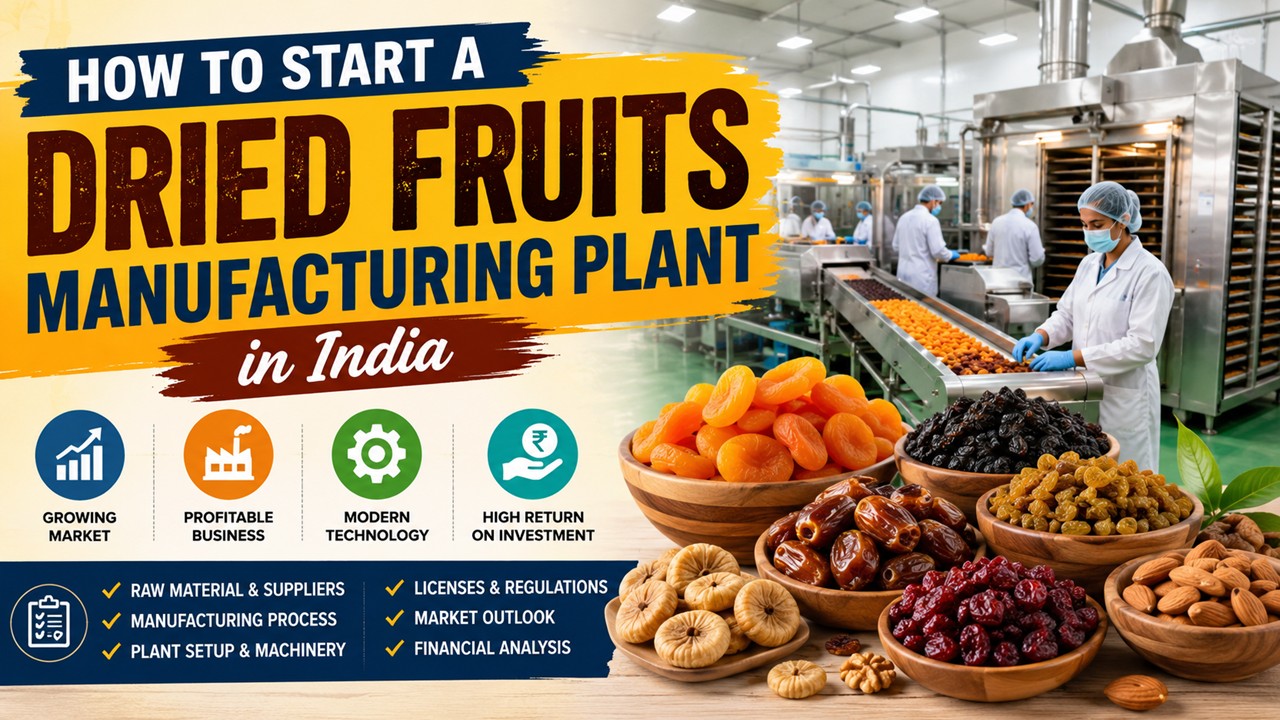
Setting up a dried fruits manufacturing plant in India presents a compelling investment case, driven by the rising demand for shelf-stable, nutrient-dense snacks and the increasing use of dried fruit inclusions in bakery, cereals, and snack bars. Dried fruits are critical to India’s economy as they provide a solution to post-harvest losses, add significant value to the agricultural supply chain, and support the growing packaged food industry. The expansion of the food processing sector, coupled with evolving consumer preferences for clean-label ingredients and convenient ready-to-eat options, is accelerating the need for high-quality dried fruit products.
India’s abundant agricultural production, growing urbanization, and the government’s “Make in India” initiative provide strong tailwinds for domestic manufacturing. Key fruit-growing states such as Maharashtra, Gujarat, Karnataka, and Uttar Pradesh offer easy access to fresh fruit raw materials. Furthermore, positive government initiatives to reduce post-harvest losses and promote the development of the food processing industry are driving market growth. With the global dried fruits market expanding and India’s strategic position as a major fruit producer, the country offers a strategically sound environment for establishing a dried fruits manufacturing facility.
India’s dried fruits market presents strong investment potential, bolstered by policy support for food processing, rising health awareness, and growing demand from bakery, confectionery, and snack food sectors. With gross margins typically ranging between 30-40% and net margins of 15-25%, investors can achieve healthy profitability and a viable break-even timeline.
What are Dried Fruits?
Dried fruits are fruits that have had most of their water removed through natural sun-drying or controlled dehydration, producing a concentrated, shelf-stable food ingredient. By lowering water activity, drying inhibits microbial growth and slows enzymatic spoilage, extending shelf life and improving storage and transport efficiency. Dried fruits typically retain dietary fiber and many minerals, while heat-sensitive vitamins may partially degrade depending on the method (sun, hot-air, vacuum, or freeze drying). Texture ranges from chewy (raisins, dates) to crisp (freeze-dried berries). Products may be unsweetened or processed using osmotic dehydration, and some are treated with antioxidants (e.g., ascorbic acid) or sulfites to limit browning and preserve color. The dried fruits manufacturing process uses raw fruit selection, sorting & grading, peeling & pitting, pretreatment, drying, de-stemming, and packaging as the primary production method. Key end-use industries served include food & beverage processing, bakery & confectionery, dairy & frozen desserts, breakfast cereals & snacks, foodservice, and nutraceuticals & functional foods.
Cost of Setting Up a Dried Fruits Manufacturing Plant in India
The total cost of setting up a dried fruits manufacturing plant in India depends on several critical factors, including plant capacity, technology, location, automation levels, and regulatory compliance requirements.
1. Capital Expenditure (CapEx)
The total capital investment required for establishing a dried fruits manufacturing plant covers land acquisition, site preparation, and necessary infrastructure. The location must offer easy access to key raw materials such as fresh fruits, sugar, sulfur (preservation), and packaging, with proximity to target markets to help minimize distribution costs. The site must have robust infrastructure, including reliable transportation, utilities, and waste management systems. Machinery costs account for the largest portion of the total capital expenditure. The cost of land and site development, including charges for land registration, boundary development, and other related expenses, forms a substantial part of the overall investment.
Key machinery required includes:
- Washers
- Slicers
- Blanchers
- Dryers
- Sorting/Grading machines
- Packaging machines
- Cold storage
Other capital costs include civil works (production shed, quality control lab, raw material and finished goods storage, administrative block), effluent treatment systems, and pre-operative and commissioning expenses.
Request a Sample Report for In-Depth Market Insights: https://www.imarcgroup.com/dried-fruits-manufacturing-plant-project-report/requestsample
2. Operational Expenditure (OpEx)
The operating cost structure of a dried fruits manufacturing plant is primarily driven by raw material consumption, particularly fresh fruits, which accounts for approximately 70-80% of total operating expenses (OpEx). Raw materials required include fresh fruits, sugar, sulfur (preservation), and packaging. Implementing long-term contracts with reliable suppliers will help mitigate price volatility and ensure a consistent supply of materials. Utilities (electricity, water, steam) account for 10-15% of OpEx. Other OpEx components include transportation costs, packaging costs, salaries and wages, repairs and maintenance, depreciation, and taxes. By the fifth year, the total operational cost is expected to increase substantially due to factors such as inflation, market fluctuations, and potential rises in the cost of key materials.
3. Plant Capacity
The proposed manufacturing facility is designed with an annual production capacity ranging between 5,000–20,000 MT, enabling economies of scale while maintaining operational flexibility. Plant capacity can be customized per investor requirements. Profitability improves significantly with higher capacity utilization.
4. Profit Margins and Financial Projections
The project demonstrates healthy profitability potential under normal operating conditions. Gross profit margins typically range between 30-40%, supported by stable demand and value-added applications. Net profit margins are projected at 15-25%. Financial analysis includes comprehensive projections of net present value (NPV), internal rate of return (IRR), payback period, income projections, expenditure projections, and profit and loss accounts.
Why Set Up a Dried Fruits Plant in India?
Value Addition to Perishable Fruit Supply: Drying preserves fruits that are highly perishable, making them shelf-stable and reducing post-harvest losses while increasing year-round availability. This is particularly relevant for India, where a significant portion of fruit production is lost due to inadequate storage and processing infrastructure.
Strong Fit for Convenience and Snacking Demand: Dried fruits address consumer demands for convenient, portable, and longer shelf-life snacks requiring less preparation. With 83% of daily breakfast consumers stating that eating a healthy breakfast gives a strong sense of satisfaction rather than just a source of calories, the demand for convenient ready-to-eat breakfast options is boosting production of bakery products, cereals, and snack bars.
Ingredient Demand from Packaged Food Manufacturers: Food manufacturers use dried fruits to create clean-label products and identifiable inclusions in bakery, cereal, and snack products. The growth in clean-label ingredient adoption is a key driver for the dried fruits market.
Exportability and Logistics Efficiency: Weight and spoilage are reduced compared to fresh fruits, making it easier to ship. This exportability advantage positions Indian manufacturers to tap into growing global trade in processed fruit products.
Policy and Regulatory Tailwinds: Positive government initiatives to reduce post-harvest losses and promote the development of the food processing industry are driving market growth. The “Make in India” initiative and various state-level food processing policies encourage domestic manufacturing and exports.
Product Diversification Opportunities: Manufacturers can expand into different fruits, forms, and drying processes, enabling risk management through portfolio diversification. This flexibility allows investors to adapt to changing market trends and consumer preferences.
Manufacturing Process – Step by Step
The dried fruits manufacturing process uses raw fruit selection, sorting & grading, peeling & pitting, pretreatment, drying, de-stemming, and packaging as the primary production method.
- Raw Fruit Selection: High-quality fresh fruits are selected based on ripeness, size, and variety suitability for drying.
- Sorting & Grading: Fruits are sorted and graded to remove damaged or inferior pieces and ensure uniformity.
- Peeling & Pitting: Fruits are peeled and pitted as required for the specific product type.
- Pretreatment: Fruits may undergo osmotic dehydration or treatment with antioxidants (e.g., ascorbic acid) or sulfites to limit browning and preserve color.
- Drying: Fruits are dried using methods such as sun-drying, hot-air drying, vacuum drying, or freeze drying to achieve the desired moisture content and texture.
- De-stemming: Stems are removed from dried fruits like raisins and dates.
- Quality Assurance: A comprehensive quality management system is implemented across all stages of operations to ensure consistent product and service standards. Appropriate testing, monitoring, and validation processes must be established to evaluate performance, safety, reliability, and compliance with applicable regulatory and industry requirements.
- Packaging and Dispatch: Finished dried fruits are packaged using packaging machines and dispatched to end-use industries including food & beverage processing, bakery & confectionery, dairy & frozen desserts, breakfast cereals & snacks, foodservice, and nutraceuticals & functional foods.
Key Applications
Dried fruits serve a diverse range of industries and applications:
- Food & Beverage Processing: As clean-label fruit inclusions in ready-to-eat meals, sauces, chutneys, meal kits, snack mix, and as ingredients where sweetness, texture, and fruit type are specified.
- Bakery & Confectionery: In doughs, batters, fruit breads, muffins, cookies, pastries, and fillings; also, in chocolate-coated products, energy bars, and high-end confectionery.
- Dairy & Frozen Desserts: Inclusions for yogurts, flavored dairy, and ice creams for fruit flavor and texture delivery.
- Breakfast Cereals & Snack Foods: Specific uses as primary inclusions in granola, muesli, cereal clusters, and snack bars; also, in portion packs for on-the-go consumption and nutritional support.
- Foodservice (HoReCa): In salads, pilafs, bakery goods, desserts, and garnishes.
- Nutraceuticals & Functional Foods: Prepared as fruit pieces, powders, or standardized ingredients for functional blends, fortified snack foods, and specialty products.
Leading Manufacturers
Leading manufacturers in the global dried fruits industry include several multinational companies with extensive production capacities and diverse application portfolios. Key players include:
- Sunbeam Foods, Inc.
- Sun-Maid Growers of California
- AL FOAH
- Bergin Fruit and Nut Company
- Angas Park
- RED RIVER FOODS INC
- Geobres
These key players serve end-use sectors such as the food & beverage processing, bakery & confectionery, dairy & frozen desserts, breakfast cereals & snacks, foodservice, and nutraceuticals & functional foods.
Timeline to Start the Plant
- Feasibility study and project report preparation
- Land acquisition and site development
- Regulatory approvals and environmental clearances
- Factory licence and fire safety compliance
- Machinery procurement and installation
- Raw material supplier agreements and supply chain setup
- Trial production and quality testing
- Commercial production launch
Licences and Regulatory Requirements
Starting a dried fruits manufacturing unit in India requires several approvals:
- Business registration (Proprietorship, LLP, or Pvt Ltd)
- Factory Licence under the Factories Act
- Environmental Clearance from State Pollution Control Board
- GST Registration
- Fire Safety NOC
- Food Safety and Standards Authority of India (FSSAI) License
- Effluent Treatment Plant (ETP) operational clearance
- Occupational Health and Safety compliance
Key Challenges to Consider
- High Capital Requirements: Machinery and infrastructure investments represent significant upfront costs. Equipment costs for washers, slicers, blanchers, dryers, sorting/grading machines, packaging machines, and cold storage represent a significant portion of capital expenditure.
- Raw Material Price Volatility: Fluctuations in prices of fresh fruits, sugar, and sulfur (preservation) directly impact margins. Raw materials account for 70-80% of operating expenses.
- Regulatory Compliance: Navigating environmental clearances, factory licences, and FSSAI regulations requires careful planning and ongoing monitoring.
- Technology and Innovation Pressure: Continuous advancements in drying technology and processing equipment require ongoing capital reinvestment to remain competitive. High-quality, corrosion-resistant machinery tailored for dried fruits manufacturing must be selected.
- Competition: The market includes established global players such as Sunbeam Foods, Sun-Maid Growers of California, AL FOAH, Bergin Fruit and Nut Company, Angas Park, RED RIVER FOODS INC, and Geobres.
- Skilled Manpower: Access to skilled workers for sorting, grading, drying operations, and quality control is essential for maintaining product consistency and food safety standards.
Frequently Asked Questions
- How much does it cost to set up a dried fruits manufacturing plant in India?
The total capital investment depends on plant capacity, technology, and location, covering land acquisition, site preparation, infrastructure, and machinery costs. - Is dried fruits manufacturing profitable in India in 2026?
Yes, gross profit margins typically range between 30-40%, with net profit margins of 15-25%, indicating healthy profitability potential. - What machinery is required for a dried fruits plant in India?
Essential equipment includes washers, slicers, blanchers, dryers, sorting/grading machines, packaging machines, and cold storage. - What licences and approvals are required to start a dried fruits plant in India?
Required approvals include business registration, Factory Licence under the Factories Act, Environmental Clearance from State Pollution Control Board, GST Registration, Fire Safety NOC, FSSAI License, and ETP operational clearance. - What raw materials are needed for dried fruits manufacturing?
Raw materials required include fresh fruits, sugar, sulfur (preservation), and packaging. - What are the environmental compliance requirements for a dried fruits plant in India?
Facilities must implement effluent treatment systems, obtain environmental clearance from the State Pollution Control Board, and comply with emission and waste management standards. - What is the best location to set up a dried fruits plant in India?
The location must offer easy access to key raw materials such as fresh fruits and proximity to target markets. Key fruit-growing states include Maharashtra, Gujarat, Karnataka, and Uttar Pradesh. - What is the break-even period for this type of plant in India?
Financial projections including break-even analysis are provided in detailed feasibility reports, with timelines varying based on capacity, utilization rates, and operating efficiencies. - What government incentives are available for manufacturers in India?
Investors benefit from the “Make in India” initiative, state-level food processing policies, and positive government initiatives to reduce post-harvest losses and promote the development of the food processing industry.
Key Takeaways for Investors
Setting up a dried fruits manufacturing plant in India offers a compelling investment opportunity, driven by strong demand from food & beverage processing, bakery & confectionery, dairy & frozen desserts, breakfast cereals & snacks, foodservice, and nutraceuticals & functional foods sectors. The project demonstrates healthy financial viability across various plant capacities (5,000–20,000 MT annually), with gross profit margins ranging between 30-40% and net margins of 15-25%. The global dried fruits market was valued at USD 7.36 Billion in 2025 and is expected to reach USD 12.12 Billion by 2034, exhibiting a CAGR of 5.7% from 2026 to 2034, reflecting sustained long-term demand for quality dried fruit products. With ongoing health awareness, convenience food trends, and government support for food processing, the dried fruits industry is poised for continued expansion, making now an opportune time for investors to enter this dynamic market.
About the Author