Setting up a pasta manufacturing plant in India presents a compelling investment case driven by rising consumption of ready-to-cook foods, increasing acceptance of international cuisines, expanding urban populations, and growing preference for shelf-stable carbohydrate-based meals. Pasta – one of the most widely consumed staple foods globally – is appreciated for its long shelf life, easy storage, and quick preparation, making it a natural fit for India’s rapidly urbanising, time-pressed, working-professional consumer base. As the country’s organised food retail ecosystem deepens, e-commerce grocery platforms expand, and foodservice operators scale up, the domestic market for consistently produced, branded, and packaged pasta is structurally positioned for sustained long-term growth. The global pasta market was valued at USD 23.81 billion in 2025 and is expected to reach USD 26.74 billion by 2034 at a CAGR of 1.3% from 2026 to 2034 according to IMARC Group estimates.
India’s structural advantages make this investment strategically sound. The growing number of working professionals and changing urban lifestyles are increasing demand for convenient, quick-to-prepare staple foods – with pasta emerging as a category that aligns naturally with meal habits favouring minimal cooking effort. According to Euromonitor International’s 2024 survey, 54% of global respondents claimed to purchase products only from brands and companies they fully trust – a data point that underscores the commercial importance of brand-building and quality certification in the packaged food space, and one that creates an opening for well-positioned domestic pasta brands to capture loyalty in the Indian market. The Government of India’s Make in India initiative, expansion of modern retail formats including supermarkets, hypermarkets, and convenience stores, and the rapid growth of e-commerce grocery platforms are all enhancing product availability and market access for domestic pasta producers across both urban and semi-urban India.
India’s urbanisation-driven demand for convenient staple foods, the rising acceptance of international cuisines, growing modern retail and e-commerce distribution reach, and a global pasta market growing steadily from USD 23.81 billion in 2025 to USD 26.74 billion by 2034 make a pasta manufacturing plant a financially sound and commercially well-supported food processing investment. With gross margins of 25–35% and net margins of 10–15% across a capacity of 10,000–20,000 MT annually, the project delivers consistent returns anchored by one of the most structurally stable food categories globally.
What is Pasta?
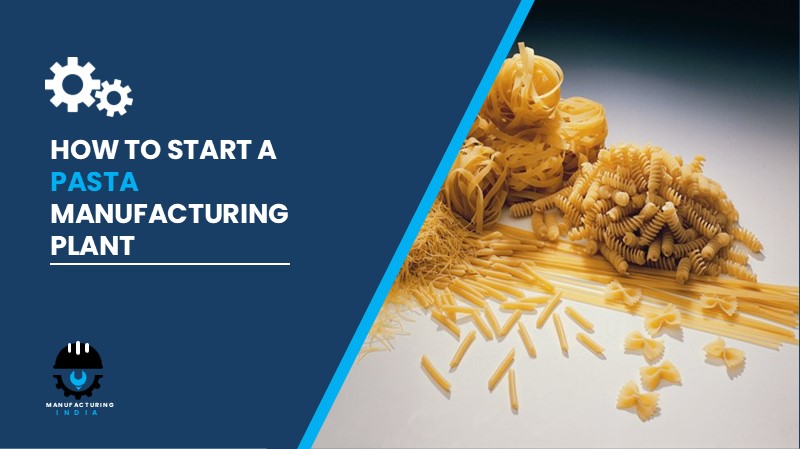
Pasta is a very popular and widely consumed staple food, which is produced by mixing cereal flour with water and then making dough. After that, it is shaped into different forms – including spaghetti, macaroni, penne, fusilli, and shells – and finally dried. It has been traditionally made from durum wheat semolina, but nowadays pasta is also being made from whole wheat, rice, millet, or legume-based flours to cater to changing dietary preferences and nutritional requirements such as gluten-free, high-protein, and high-fibre diets.
Pasta is a very convenient food and is appreciated for its long shelf life, easy storage, and quick preparation – the main reasons why it is used by both households and foodservice operators. Its versatility makes it possible to pair pasta with a wide range of sauces, vegetables, meats, and seasonings across different cuisines. Pasta, with its adaptability, affordability, and consistent quality, continues to be one of the most popular food choices all around the world – and in India specifically, it serves as both an accessible everyday meal and a canvas for premium branded product development targeted at health-conscious urban consumers.
The primary production method is semolina/flour dosing, dough mixing, extrusion or sheeting, cutting and shaping, drying, cooling, quality inspection, and packaging – a multi-stage food manufacturing process. End-use industries served include the food processing industry, the foodservice and HoReCa sector, the ready-to-cook food segment, and retail grocery distribution.
Cost of Setting Up a Pasta Manufacturing Plant in India
The cost of establishing this facility depends on capacity, technology selection, plant location, degree of automation, and regulatory compliance requirements.
1. Capital Expenditure (CapEx)
Total capital investment for a pasta manufacturing plant in India covers land acquisition, site preparation, civil construction, machinery, and pre-operative expenses. The cost of land and site development – including charges for land registration, boundary development, and other related expenses – forms a substantial part of the overall investment. This allocation ensures a solid foundation for safe and efficient plant operations. Investors can reduce land acquisition costs by locating the unit in a food processing zone, agro-industrial park, or Special Economic Zone (SEZ), which also provide shared utility infrastructure and potential state-level fiscal incentives aligned with India’s food processing manufacturing development agenda.
Civil works and construction cover the main dough mixing, extrusion, and drying production building, raw material storage areas for durum wheat semolina and water, a finished goods warehouse with appropriate humidity control, a quality control laboratory, and an administrative block. Given that pasta manufacturing requires precise humidity and temperature control during the drying stage to achieve the required texture, colour, and moisture specification, civil infrastructure must incorporate appropriate climate control provisions throughout the production and finished goods areas.
Machinery costs account for the largest portion of total capital expenditure. Key machinery required includes:
- Mixers
- Pasta extruders or sheeters
- Dryers
- Conveyors
- Cutting systems
- Packaging machines
All machinery must be high-quality and corrosion-resistant, tailored for pasta manufacturing, and must comply with industry standards for safety, efficiency, and reliability. Other capital costs include the effluent treatment plant (ETP), advanced process monitoring systems, pre-operative expenses, trial production costs, and commissioning charges.
Request a Sample Report for In-Depth Market Insights: https://www.imarcgroup.com/pasta-manufacturing-plant-project-report/requestsample
2. Operational Expenditure (OpEx)
The operating cost structure of a pasta manufacturing plant is primarily driven by raw material consumption, particularly durum wheat semolina, which accounts for approximately 70–80% of total operating expenses (OpEx). Water is the secondary raw material input. Securing long-term supply agreements with reliable durum wheat semolina producers and minimising transportation costs by selecting nearby suppliers is essential for cost stability and production continuity. Sustainability and supply chain risks must be assessed, and long-term contracts should be negotiated to stabilise pricing and ensure a steady supply of quality raw material throughout production cycles.
Utility costs – comprising electricity for mixers, extruders or sheeters, dryers, conveyors, cutting systems, and packaging machines, as well as water and steam – account for 10–15% of total OpEx. Other ongoing operating costs include transportation, packaging, salaries and wages, depreciation, taxes, equipment repairs and maintenance, and other miscellaneous expenses.
In the first year of operations, the operating cost for the pasta manufacturing plant is projected to be significant, covering raw materials, utilities, depreciation, taxes, packing, transportation, and repairs and maintenance. By the fifth year, the total operational cost is expected to increase substantially due to factors such as inflation, market fluctuations, and potential rises in the cost of key materials. Additional factors, including supply chain disruptions, rising consumer demand, and shifts in the global economy, are expected to contribute to this increase.
3. Plant Capacity
The proposed manufacturing facility is designed with an annual production capacity ranging between 10,000 and 20,000 MT, enabling economies of scale while maintaining operational flexibility. Pasta manufacturing supports gradual capacity expansion with manageable capital outlay – a scalable production model that allows investors to progress from initial capacity to full-scale operation in line with market penetration timelines. Capacity can be customised per investor requirements based on target retail, foodservice, or export market segments, available capital, and degree of automation. Profitability improves materially with higher capacity utilisation, making domestic supply agreements with organised retail chains, foodservice operators, and e-commerce grocery platforms a commercial priority from the commissioning stage.
4. Profit Margins and Financial Projections
The project demonstrates healthy profitability potential under normal operating conditions. Gross profit margins typically range between 25–35%, supported by stable demand and value-added applications. Net profit margins range between 10–15%. A comprehensive financial model covering NPV (net present value), IRR (internal rate of return), payback period, liquidity analysis, uncertainty analysis, sensitivity analysis, and a full five-year profit and loss account provides investors with a rigorous analytical framework for assessing financial viability and long-term sustainability across different capacity and pricing scenarios.
Why Set Up a Pasta Plant in India?
Rising Demand for Ready-to-Cook Foods Driving Structural Growth. Pasta aligns well with changing meal habits that favour quick preparation and minimal cooking effort. The growing number of working professionals and changing urban lifestyles are increasing demand for convenient, quick-to-prepare staple foods – with pasta emerging as a natural fit across India’s urban and semi-urban meal occasions. This demand driver is structural, not cyclical, and is expected to intensify as India’s working-age urban population continues to grow across major cities and emerging tier-2 markets.
Long Shelf Life and Inventory Efficiency Supporting Distribution Scaling. Dry pasta allows efficient inventory handling with reduced spoilage risk – a commercially valuable characteristic for both manufacturer and distributor that facilitates cost-effective pan-India distribution across supermarkets, hypermarkets, convenience stores, and e-commerce platforms without the cold chain infrastructure requirements of perishable food products. This logistics advantage directly reduces working capital requirements and distribution costs for domestic pasta manufacturers.
Growing Popularity of Global Cuisines Expanding Consumer Base. Increased exposure to Italian and continental foods continues to lift pasta consumption across India’s urban consumer base – driven by restaurant dining, food delivery platforms, travel, and media. This cultural exposure is translating into growing repeat purchase behaviour for packaged pasta in the household segment, creating a steadily expanding and brand-loyal consumer cohort that rewards quality, variety, and innovation from domestic producers.
Product Diversification Opportunities Enabling Premium Positioning. Manufacturers can introduce whole wheat, gluten-free, fortified, or flavoured pasta variants to capture the growing health-aware consumer segment. Increasing health awareness is fuelling demand for healthier pasta alternatives – including whole-wheat, high-fibre, gluten-free, and protein-enriched varieties made from legumes or ancient grains – creating value-added product development opportunities that command premium pricing above standard durum wheat pasta and improve overall portfolio margin profiles.
Modern Retail and E-Commerce Expansion Improving Market Access. The expansion of modern retail formats including supermarkets, hypermarkets, and convenience stores is improving product availability and visibility for packaged pasta brands across India. The rapid growth of e-commerce grocery platforms enhances accessibility, particularly in urban and semi-urban areas – creating a new and cost-effective channel for domestic pasta manufacturers to reach a geographically dispersed consumer base without proportional physical distribution infrastructure investment.
Active Global Industry Developments Confirming Category Innovation Momentum. In July 2025, Hero Bread expanded its portfolio with the launch of a low-carb pasta – available in 8 oz packs, containing 5 grams of net carbs, zero sugar, 32 grams of fibre, and 12 grams of plant-based protein per serving – directly addressing the health-conscious consumer segment that is the fastest-growing buyer of alternative pasta formats globally. In June 2025, Pasta Garofalo launched its “Real Italian Carbs” campaign, emphasising authentic Italian pasta produced in Gragnano since 1789, with a see-through NYC food truck and refreshed packaging to highlight transparency and quality – confirming that the global pasta category is actively investing in both product innovation and brand heritage communication to drive consumer trust and repeat purchase behaviour.
Manufacturing Process – Step by Step
The pasta manufacturing process uses semolina/flour dosing, dough mixing, extrusion or sheeting, cutting and shaping, drying, cooling, quality inspection, and packaging as the primary production method. Each stage is precision-controlled to ensure consistent texture, colour, cooking quality, and full compliance with the food safety and nutritional standards required by retail, foodservice, and institutional customers.
- Raw Material Receipt and Inspection: Durum wheat semolina and water are received at the facility and subjected to incoming quality checks for semolina protein content, moisture, granulometry, and microbiological compliance before entering the production line.
- Semolina/Flour Dosing: Durum wheat semolina – or alternative flour variants including whole wheat, rice, millet, or legume-based flours for specialty product lines – is accurately metered into the production line in the required proportion for the target pasta specification.
- Dough Mixing: Dosed semolina and precisely measured water are combined in mixers under controlled temperature and mixing intensity conditions to produce a uniform pasta dough of the required consistency, hydration level, and gluten development for the target product’s texture and cooking characteristics.
- Extrusion or Sheeting: Mixed dough is either forced through pasta extruders – through die plates shaped to produce spaghetti, macaroni, penne, fusilli, or other tube and string shapes – or processed through pasta sheeters to produce flat dough sheets for lasagne and tagliatelle shapes.
- Cutting and Shaping: Extruded or sheeted pasta is cut to the required length and shape specification by cutting systems at the output of the extruder or sheeter, producing uniform pasta pieces ready for drying.
- Drying: Cut pasta shapes are conveyed through multi-zone dryers operating at controlled temperature and humidity profiles. The drying process removes moisture progressively to achieve the target final moisture content – typically below 12.5% – while preserving the desired texture, colour, and cooking quality of the finished pasta.
- Cooling: Dried pasta is cooled to ambient temperature on conveyors before packaging to prevent condensation inside the packaging material that could compromise product quality and shelf life.
- Quality Inspection: Finished pasta is subjected to quality inspection for moisture content, colour, cooking quality, dimensional compliance, and microbiological specification before release for packaging and dispatch.
- Packaging and Dispatch: Approved pasta is filled into consumer retail packs or bulk institutional packs using packaging machines and dispatched to end-use customers across the food processing industry, the foodservice and HoReCa sector, the ready-to-cook food segment, and retail grocery distribution channels.
Key Applications
The pasta manufacturing plant serves a diverse and commercially significant range of end-use sectors across India’s food and foodservice economy.
- Food Processing and Packaged Foods Industry: Pasta serves as a base ingredient for a wide range of ready meals and sauces – supplied to food manufacturers for inclusion in ready-to-eat meal kits, canned meal products, and packaged convenience food formats.
- Foodservice and HoReCa Sector: Used in restaurants, cafés, and catering kitchens for quick meal preparation – the largest institutional procurement channel where consistent cooking quality, reliable supply, and competitive pricing are the primary supplier selection criteria.
- Ready-to-Cook and Convenience Food Segment: Included in meal kits and instant cooking solutions for time-pressed urban consumers – a fast-growing retail segment aligned with India’s expanding organised meal kit and quick-cook product market.
- Household and Retail Consumption: Preferred for ease of storage, cooking simplicity, and menu versatility – the dominant volume channel accessed through supermarkets, hypermarkets, convenience stores, and e-commerce grocery platforms across India’s urban and semi-urban consumer base.
- Health and Wellness Food Products: Whole wheat, gluten-free, high-fibre, and protein-enriched pasta variants serve the growing health-conscious consumer segment – an emerging premium-priced retail channel aligned with increasing health awareness and demand for nutritional labelling transparency.
- Private Label and Branded Retail: Private-label brands are strengthening market penetration by offering affordable, diverse pasta options through organised retail – creating a procurement channel for domestic manufacturers with FSSAI-certified production and consistent product quality across multiple pasta shapes and formats.
Leading Manufacturers
The global pasta industry is served by several established multinational manufacturers with extensive production capacities and diverse application portfolios. Key players operating in this market include:
- Barilla Group
- F.lli De Cecco di Filippo S.p.A
- Ebro Foods, S.A
- Nestlé S.A.
- Unilever plc
- Armanino Foods-Distinction Inc.
- The Kraft Heinz Company
All of these manufacturers serve end-use sectors including the food processing industry, the foodservice and HoReCa sector, the ready-to-cook food segment, and retail grocery distribution – the same markets that a domestic Indian pasta manufacturing plant can target at competitive landed cost advantage relative to imported product.
Timeline to Start the Plant
Investors should plan for a structured pre-production and commissioning phase covering the following key stages:
- Feasibility study and project report preparation
- Land acquisition and site development
- Regulatory approvals and environmental clearances
- Factory licence and fire safety compliance
- Machinery procurement and installation
- Raw material supplier agreements and supply chain setup
- Trial production and quality testing
- Commercial production launch
Licences and Regulatory Requirements
Starting a pasta manufacturing unit in India requires several approvals:
- Business registration (Proprietorship, LLP, or Private Limited Company)
- Factory Licence under the Factories Act
- Environmental Clearance from the State Pollution Control Board
- GST Registration
- Fire Safety NOC
- FSSAI (Food Safety and Standards Authority of India) food business operator licence for pasta and cereal-based food products
- Effluent Treatment Plant (ETP) operational clearance
- Occupational Health and Safety compliance
Key Challenges to Consider
High Capital Requirements. Establishing a fully equipped pasta manufacturing plant – with industrial mixers, pasta extruders or sheeters, multi-zone dryers, conveyors, cutting systems, and packaging machines – at the 10,000–20,000 MT annual capacity range requires significant upfront capital investment. Access to food processing sector financing under MSME credit-linked schemes, state government agro-processing investment promotion grants, and PLI scheme for food processing can help bridge funding requirements.
Raw Material Price Volatility. Durum wheat semolina – accounting for 70–80% of total OpEx – is subject to global wheat commodity price cycles and domestic agricultural supply variability linked to monsoon patterns and crop harvest outcomes. Long-term procurement contracts with reliable domestic semolina millers and a diversified procurement network are the primary risk mitigation strategies for managing this dominant cost driver and protecting the 25–35% gross margin profile.
Regulatory Compliance. Pasta manufacturing facilities must comply with FSSAI food safety standards applicable to cereal-based food products, including labelling regulations, nutritional declaration requirements, and traceability documentation for all raw materials. For specialty pasta variants claiming gluten-free or high-protein status, additional FSSAI health claim compliance and testing obligations apply. Maintaining continuous regulatory compliance and quality assurance documentation throughout production adds materially to operational overhead.
Competition from Established Domestic and Multinational Players. Established multinational manufacturers – including Barilla Group, Nestlé S.A., Unilever plc, and The Kraft Heinz Company – alongside Indian branded pasta producers hold strong brand equity and distribution positions across modern retail and e-commerce channels. New domestic entrants must compete through product quality consistency, FSSAI-certified manufacturing, competitive pricing in the mass-market retail segment, and differentiation through health-focused product variants in the premium segment.
Consumer Preference Evolution Requiring Continuous Innovation. Increasing health awareness is fuelling demand for healthier pasta alternatives including whole-wheat, high-fibre, gluten-free, and protein-enriched varieties – as confirmed by Hero Bread’s July 2025 low-carb pasta launch with 32 grams of fibre and 12 grams of plant-based protein per serving. Indian manufacturers must invest in product development capabilities to introduce and sustain specialty pasta variants that capture the growing health-conscious consumer segment while managing the more complex ingredient sourcing and production requirements these formats require.
Skilled Manpower. Operating industrial extruders, multi-zone dryers, and automated packaging machines in a food-grade manufacturing environment while maintaining FSSAI quality assurance documentation requires trained food processing technicians and quality control personnel. Recruiting, training, and retaining qualified production and quality staff is a recurring operational challenge in India’s food manufacturing sector.
Frequently Asked Questions
1. How much does it cost to set up a pasta manufacturing plant in India?
Total setup cost depends on plant capacity, location, machinery selection, and automation level. Key cost components include land and site development, food-grade civil construction with humidity control provisions, machinery (mixers, pasta extruders or sheeters, dryers, conveyors, cutting systems, packaging machines), and pre-operative expenses. A detailed feasibility study is recommended to generate accurate project-specific cost estimates.
2. Is pasta manufacturing profitable in India in 2026?
Yes. The project delivers healthy financial performance, with gross margins of 25–35% and net profit margins of 10–15% under normal operating conditions. The global pasta market was valued at USD 23.81 billion in 2025 and is projected to reach USD 26.74 billion by 2034 at a CAGR of 1.3% according to IMARC Group, with India’s urbanisation, rising working-professional population, and expanding modern retail and e-commerce distribution channels providing steady domestic demand growth.
3. What machinery is required for a pasta manufacturing plant in India?
Essential equipment includes mixers, pasta extruders or sheeters, dryers, conveyors, cutting systems, and packaging machines.
4. What licences and approvals are required to start a pasta manufacturing plant in India?
Required approvals include business registration, Factory Licence, Environmental Clearance from the State Pollution Control Board, GST Registration, Fire Safety NOC, an FSSAI food business operator licence for cereal-based pasta products, ETP operational clearance, and Occupational Health and Safety compliance.
5. What raw materials are needed for pasta manufacturing?
The primary raw materials are durum wheat semolina and water. Durum wheat semolina is the dominant cost driver, accounting for 70–80% of total operating expenses. For specialty pasta variants, alternative flours including whole wheat, rice, millet, or legume-based flours may substitute or partially replace durum wheat semolina.
6. What are the environmental compliance requirements for a pasta manufacturing plant in India?
The facility must obtain Environmental Clearance from the State Pollution Control Board, operate an approved ETP, and install advanced monitoring systems to detect leaks or deviations in the manufacturing process. Effluent treatment systems are necessary to minimise environmental impact and ensure compliance with emission standards applicable to food processing operations. FSSAI traceability and quality documentation must be maintained throughout production.
7. What is the best location to set up a pasta manufacturing plant in India?
The location must offer easy access to key raw materials such as durum wheat semolina and water, while proximity to target markets minimises distribution costs. The site must have robust infrastructure including reliable transportation, utilities, and waste management systems. States such as Maharashtra, Punjab, Gujarat, Uttar Pradesh, and Rajasthan – which combine wheat and semolina supply chain proximity with strong food retail distribution infrastructure and urban consumer demand – are strong candidates for plant location.
8. What is the break-even period for this type of plant in India?
The break-even period depends on plant capacity, total capital investment, product selling price across retail and foodservice segments, and capacity utilisation rate. A comprehensive financial analysis covering NPV, IRR, payback period, and uncertainty and sensitivity analysis is the most reliable method for generating project-specific break-even timelines.
9. What government incentives are available for manufacturers in India?
Pasta manufacturers in India can access the Production Linked Incentive (PLI) scheme for food processing, MSME credit-linked capital subsidy schemes, state government agro-processing investment promotion subsidies, and export promotion incentives for qualifying food products under schemes administered by the Ministry of Commerce. FSSAI’s quality certification support and Pradhan Mantri Kisan Sampada Yojana (PMKSY) grants for food processing units located in agro-processing clusters are also available for qualifying applicants.
Key Takeaways for Investors
A pasta manufacturing plant in India offers a financially sound and commercially well-grounded investment opportunity anchored by growing demand across the food processing industry, the foodservice and HoReCa sector, the ready-to-cook food segment, and retail grocery distribution – all of which are expanding at scale as India’s urban population grows and consumer preference for convenient, shelf-stable, and internationally inspired food products deepens. The project is financially viable across the 10,000 to 20,000 MT annual capacity range, with gross margins of 25–35% and net margins of 10–15% providing a consistent return framework for investors at multiple capital scales. According to IMARC Group estimates, the global pasta market is set to grow from USD 23.81 billion in 2025 to USD 26.74 billion by 2034 at a CAGR of 1.3%, and Euromonitor International’s 2024 survey finding that 54% of global respondents purchase only from brands they fully trust confirms that brand credibility and production quality are the primary commercial moats that well-positioned domestic pasta manufacturers can build over time. With active global product innovation – including Hero Bread’s July 2025 low-carb, high-fibre pasta launch and Pasta Garofalo’s June 2025 authenticity-led brand campaign – confirming the category’s ongoing dynamism, the long-term demand sustainability for domestically produced pasta in India is structurally sound across all investment planning horizons.
About the Author