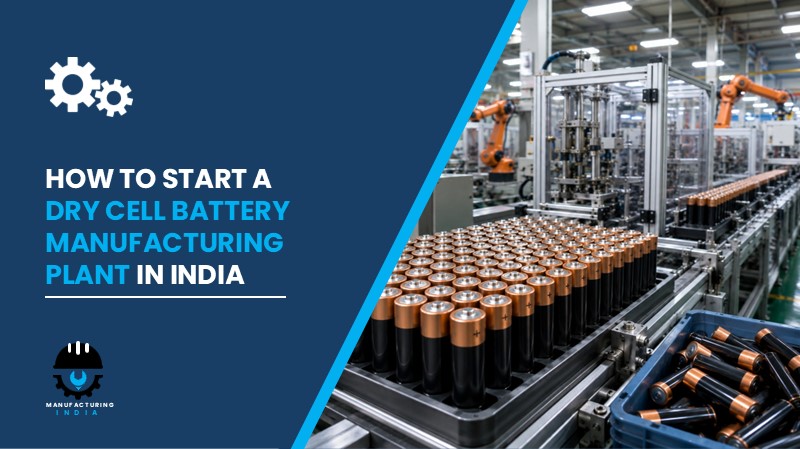
Setting up a dry cell battery manufacturing plant in India presents a compelling investment case, supported by rising demand from consumer electronics, household appliances, industrial tools, emergency power systems, and automotive electronics. Portable devices, torches and lighting, remote controls, and emergency backup systems all rely on dry cells for dependable, low-cost power. These products are critical to India’s economy because they deliver portable and reliable energy to everyday consumer devices and backup systems alike, supporting industrial instruments as well as household appliances.
India’s growing urbanisation, expanding infrastructure, and the Make in India initiative make the country a strategically sound base for this kind of production, with manufacturing hubs across states such as Gujarat and Maharashtra well positioned to serve domestic demand. Urban electricity supply in India already averages around 23.4 hours a day, giving cities almost uninterrupted power, and this reliable supply is boosting demand for dry cells as consumers and businesses turn to portable and backup power to complement steady electrification.
This investment case is built on stable demand from consumer electronics, household appliances, industrial tools, and emergency power systems, supported by India’s policy push toward domestic manufacturing. With gross margins of 30-40% and net margins of 15-22%, the project demonstrates healthy profitability potential, while cost-competitive production and scalable capacity options support a viable break-even path for new entrants.
What is a Dry Cell Battery?
A dry cell battery is an electrochemical device that transforms chemical energy into electrical energy using paste electrolytes instead of liquid electrolytes, allowing it to stay compact, avoid leaks, and support portable applications. Dry cells power household appliances, remote controls, flashlights, toys, and industrial instruments, and are most commonly available in zinc-carbon and alkaline types, offering dependable voltage output, extended shelf life, and consistent operation across environmental conditions. These batteries are designed for single use, after which they can be disposed of or recycled.
The manufacturing process involves raw material preparation, electrode fabrication, electrolyte mixing, cell assembly, sealing, labeling, and quality testing, enabling production scalability for both mass-market and specialised industrial applications. End-use industries served include consumer electronics, household appliances, industrial tools, emergency power systems, and automotive electronics.
Cost of Setting Up a Dry Cell Battery Manufacturing Plant in India
The cost of setting up this manufacturing plant depends on capacity, technology, location, automation level, and regulatory compliance requirements.
1. Capital Expenditure (CapEx)
Capital investment covers land acquisition, site preparation, and infrastructure, and can be planned around industrial estates or designated zones offering ready utility connections and easier clearances. Civil works costs cover construction of production sheds, quality-control labs, storage areas, and the administrative block.
Machinery costs account for the largest portion of total capital expenditure, with the scale of production and level of automation determining the final cost. Key machinery required includes:
- Coating machines
- Mixing tanks
- Pressing machines
- Assembly lines
- Sealing and labeling units
- Testing equipment
- Paste mixers
- Electrode cutters
- Filling machines
- Sealing presses
- Packaging units
- Safety systems
Other capital costs include land and site development charges such as land registration and boundary development, along with pre-operative expenses tied to commissioning and trial production readiness.
Request a Sample Report for In-Depth Market Insights: https://www.imarcgroup.com/dry-cell-battery-manufacturing-plant-project-report/requestsample
2. Operational Expenditure (OpEx)
Raw material cost is the largest component of operating expenses, accounting for roughly 65-75% of total OpEx, driven primarily by zinc consumption. Other raw materials required include manganese dioxide, carbon rods, electrolyte paste made from ammonium chloride and zinc chloride, acetylene black, separators, and sealants. Long-term supplier contracts help mitigate price volatility and ensure steady supply.
Utility cost, covering electricity, water, and steam, makes up around 15-20% of OpEx and is a key factor in site selection. Other operating costs include transportation, packaging, salaries, depreciation, taxes, and maintenance, forming part of the first-year operating cost projection.
By the fifth year, total operational cost is expected to rise substantially due to inflation, market fluctuations, rising material costs, supply chain disruptions, and shifts in the global economy.
3. Plant Capacity
The proposed facility is designed with an annual production capacity ranging between 50 and 200 million units, enabling economies of scale while maintaining operational flexibility. Capacity can be customised to match investor requirements, and profitability generally improves with higher capacity utilisation.
4. Profit Margins and Financial Projections
Financial projections are built on capital investment, operating costs, capacity utilisation, pricing trends, and demand outlook, covering ROI, net present value (NPV), and long-term sustainability. Gross profit margins typically range between 30-40%, while net profit margins range between 15-22%. The payback period depends on plant scale, compliance costs, raw material pricing, and demand, though efficient production and exports can help accelerate returns.
Why Set Up a Dry Cell Battery Plant in India?
Rising Demand for Portable Energy: Growth in consumer electronics, toys, and home appliances is fuelling demand for dry cells across India.
Stable and Reliable Product: Dry cell batteries provide consistent voltage output and long shelf life, ensuring customer satisfaction across consumer and industrial segments.
Expanding Industrial and Household Use: Growth in automation, small electronics, and emergency power solutions is increasing market potential.
Reliable Urban Power Supply: Urban electricity supply in India averages around 23.4 hours per day, giving cities almost uninterrupted power. This steady electrification is boosting demand for dry cells as portable and backup power solutions.
Active Industry Investment: In March 2026, Matthews Engineering, part of Matthews International Corporation, partnered with hs-tumbler GmbH to advance trajectory mixing technologies for electrode manufacturing, improving powder preparation and calender throughput. In November 2025, Sakuu’s Kavian Manufacturing Platform reported a nickel cobalt manganese cell retaining 83 percent capacity after 4,000 charge-discharge cycles, underscoring continued innovation in dry electrode production.
Customisable and Scalable Production: Manufacturers can produce different chemistries and battery sizes to meet varying requirements, and the dry cell battery manufacturing process supports moderate capital investment with scalable operations.
Manufacturing Process – Step by Step
The dry cell battery manufacturing process uses raw material preparation, electrode fabrication, electrolyte mixing, cell assembly, sealing, labeling, and quality testing as the primary stages:
- Preparation and mixing of raw materials: Zinc, manganese dioxide, carbon rods, and electrolyte paste are prepared and measured.
- Coating and drying of electrodes: Electrode fabrication uses coating machines and mixing tanks.
- Assembly and sealing of battery cells: Cells are assembled and sealed using assembly lines and sealing presses.
- Electrolyte filling and performance testing: Filling machines add electrolyte paste, followed by testing equipment checks.
- Labeling, packaging, and final inspection: Sealing and labeling units and packaging units prepare cells for dispatch.
- Quality assurance, storage, and product distribution: Finished batteries are tested, stored, and distributed to end-use industries such as consumer electronics, household appliances, and industrial tools.
Key Applications
Dry cell batteries serve a wide range of consumer and industrial end-use sectors.
- Consumer Electronics: Powers remote controls, toys, and portable gadgets with consistent voltage output.
- Household Appliances: Enables everyday use of torches, clocks, radios, and small electronic devices.
- Industrial Tools: Supports instruments, meters, and equipment requiring reliable and portable power sources.
- Emergency and Backup Systems: Provides energy during power outages and in portable emergency kits.
Leading Manufacturers
Leading manufacturers in the global dry cell battery industry include several multinational companies with extensive production capacities and diverse portfolios.
- Sony
- Fujitsu
- Panasonic
- Energizer
- House of Batteries
Timeline to Start the Plant
- Feasibility study and project report preparation
- Land acquisition and site development
- Regulatory approvals and environmental clearances
- Factory licence and fire safety compliance
- Machinery procurement and installation
- Raw material supplier agreements and supply chain setup
- Trial production and quality testing
- Commercial production launch
Licences and Regulatory Requirements
Starting a dry cell battery unit in India requires several approvals:
- Business registration (Proprietorship, LLP, or Pvt Ltd)
- Factory Licence under the Factories Act
- Environmental Clearance from State Pollution Control Board
- GST Registration
- Fire Safety NOC
- Hazardous/Chemical compliance for zinc chloride and ammonium chloride electrolyte handling
- Effluent Treatment Plant (ETP) operational clearance
- Occupational Health and Safety compliance
Key Challenges to Consider
High Capital Requirements: Land acquisition, machinery procurement, and pre-operative expenses make this a capital-intensive business.
Raw Material Price Volatility: Zinc, manganese dioxide, carbon rods, and electrolyte paste prices can fluctuate, directly affecting operating cost, since raw materials already account for 65-75% of OpEx.
Regulatory Compliance: Securing environmental clearances, factory licences, and safety certifications adds time and cost to project execution.
Competition: Established global players such as Sony, Fujitsu, Panasonic, Energizer, and House of Batteries operate with high-volume production, quality standards, and strong distribution networks.
Skilled Manpower: Recruiting and training labour for precision tasks such as electrode fabrication and cell sealing remains an ongoing challenge.
Frequently Asked Questions
1. How much does it cost to set up a dry cell battery manufacturing plant in India?
Capital requirements include land acquisition, construction, equipment procurement, installation, pre-operative expenses, and working capital, with the total varying by capacity, technology, and location.
2. Is dry cell battery manufacturing profitable in India in 2026?
Profitability depends on market demand, manufacturing efficiency, pricing strategy, and raw material cost management, with gross margins of 30-40% and net margins of 15-22% under normal conditions.
3. What machinery is required for a dry cell battery plant in India?
Typical machinery includes coating machines, mixing tanks, pressing machines, assembly lines, sealing and labeling units, testing equipment, paste mixers, electrode cutters, and filling machines.
4. What licences and approvals are required to start a dry cell battery plant in India?
Requirements include business registration, environmental clearances, factory licences, fire safety certifications, and industry-specific permits.
5. What raw materials are needed for dry cell battery manufacturing?
Key raw materials include zinc, manganese dioxide, carbon rods, electrolyte paste made from ammonium chloride and zinc chloride, acetylene black, separators, and sealants.
6. What are the environmental compliance requirements for a dry cell battery plant in India?
Requirements include environmental clearances from the State Pollution Control Board, effluent treatment systems, and safety protocols.
7. What is the best location to set up a dry cell battery plant in India?
The location should offer easy access to raw materials such as zinc, manganese dioxide, carbon rods, and electrolyte paste, plus proximity to target markets and compliance with zoning regulations.
8. What is the break-even period for this type of plant in India?
Break-even typically ranges from 3 to 6 years, depending on scale, compliance costs, raw material pricing, and demand, with efficient manufacturing and exports helping accelerate returns.
9. What government incentives are available for manufacturers in India?
Incentives may include capital subsidies, tax exemptions, reduced utility tariffs, export benefits, or interest subsidies under various national or regional industrial policies.
Key Takeaways for Investors
This manufacturing plant taps into steady demand from consumer electronics, household appliances, industrial tools, and emergency power systems, backed by rising urban electrification in India. Financial viability holds across plant capacities of 50-200 million units a year, with gross margins of 30-40% and net margins of 15-22% supporting a sound investment case. The global dry cell battery market, valued at USD 28.10 Billion in 2025, is projected to reach USD 39.44 Billion by 2034 at a CAGR of 3.8%, pointing to durable long-term demand. With continued innovation from global players and steady household and industrial consumption, the outlook for new manufacturing capacity in India remains positive.
About the Author