Empty Capsule Manufacturing Plant Setup in India
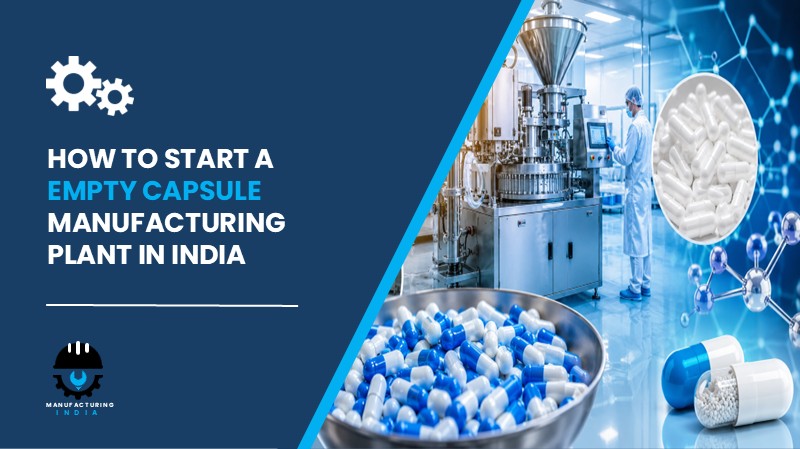
Setting up an empty capsule manufacturing plant in India presents a compelling investment case, driven by the country’s expanding pharmaceutical and nutraceutical sectors. The key growth factors in the empty capsule industry include the increased demand for personalized medicine, the rise in demand for vegetarian and clean‑label capsules in dietary supplements, and the continued need for easy‑to‑swallow and quick‑acting dosage forms. Empty capsules act as effective drug delivery systems, masking unpleasant tastes, protecting formulations from oxidation, and ensuring accurate dosing.
India’s advantages including rapid urbanisation, massive healthcare infrastructure expansion, the “Make in India” initiative, and established pharmaceutical hubs in Gujarat, Maharashtra, and Telangana make it a strategically sound location for setting up an empty capsule manufacturing plant. The nation’s cost‑competitive labour, abundant technical talent, and growing export capabilities further strengthen the investment case.
Supported by government policies, cost‑competitive manufacturing, and rising demand from pharma and nutraceutical companies, an empty capsule manufacturing plant can achieve gross margins of 40‑50% and net margins of 20‑28%. With annual capacities ranging from 500 million to 2 billion capsules, the break‑even period is attainable within a standard financial planning horizon.
What is an Empty Capsule?
An empty capsule is a high‑precision hollow shell used in the pharmaceutical or nutraceutical sector to hold various formulations such as powders, granules, pellets, or liquids. It consists of two parts – the “body” and the “cap” – which are designed to fit together tightly. The main function of the empty capsule is to act as an effective drug delivery system that can mask unpleasant tastes or smells, protect the formulation from oxidation, and deliver the correct dose.
Empty capsules are made using dipping technology, where stainless steel pins are dipped in a gelatin or hypromellose (HPMC) solution at a controlled temperature and then dried and assembled under stringent environmental conditions. The process includes dipping of the gelatin or HPMC solution onto metal pins, drying, stripping, trimming, assembly of the cap and body, followed by high‑speed sorting and printing.
These capsules serve a variety of end‑use industries, including:
- Pharmaceutical – for antibiotic and antibacterial drugs, cardiovascular therapy drugs, antacid formulations, and precision medicine.
- Nutraceutical – for vitamins, mineral supplements, herbal extracts, and proteins.
- Cosmeceutical – for precise dosages of skincare formulations.
- Veterinary – for animal health applications.
- Clinical Research Organisations (CROs) – for double‑blind studies and over‑encapsulation of tablets.
Cost of Setting Up an Empty Capsule Manufacturing Plant in India
The total cost of setting up an empty capsule manufacturing plant in India depends on production capacity, technology choice, plant location, level of automation, and regulatory compliance requirements.
1 Capital Expenditure (CapEx)
Land and site development represent a significant upfront investment. Choosing a location in a pharmaceutical SEZ or an industrial estate can reduce regulatory hurdles and provide infrastructure support. Civil works include construction of a production shed, quality control laboratory, raw material storage, finished goods warehouse, and administrative block.
Key machinery required includes:
- Jacketed melting and mixing vessels for gelatin or HPMC solution preparation
- Automatic dipping machines with high‑precision pin bars
- Controlled‑humidity drying kilns
- Specialized stripping, trimming, and joining units
Other capital costs include effluent treatment plants (ETP), pre‑operative expenses, commissioning charges, and import duties if machinery is sourced from overseas.
Request a Sample Report for In‑Depth Market Insights: https://www.imarcgroup.com/empty-capsule-manufacturing-plant-project-report/requestsample
2 Operational Expenditure (OpEx)
Raw material cost dominates operating expenses. Raw materials required include:
- Gelatin/HPMC (the primary shell‑forming material)
- Water
- Titanium dioxide
- Plasticizers
Raw materials account for approximately 60‑70% of total OpEx. Long‑term contracts with reliable suppliers help mitigate price volatility and ensure consistent quality.
Utilities- electricity, water, and steam make up another 20‑25% of OpEx. Other operating costs include transportation, packaging, salaries and wages, maintenance, depreciation, and taxes. By the fifth year of operations, the total operational cost is expected to increase substantially due to inflation, market fluctuations, and potential rises in the cost of key materials.
3 Plant Capacity
The proposed manufacturing facility can be designed with an annual production capacity ranging between 500 million and 2 billion capsules, enabling economies of scale while maintaining operational flexibility. Capacity can be customised based on the investor’s target markets and funding ability. Higher capacity utilisation directly improves profitability.
4 Profit Margins and Financial Projections
The project demonstrates healthy profitability potential. Under normal operating conditions:
- Gross profit margin: typically, 40‑50%
- Net profit margin: typically, 20‑28%
Financial analysis includes NPV (net present value), IRR (internal rate of return), payback period, profit and loss account, and sensitivity analysis. These projections are based on realistic assumptions regarding capital investment, operating costs, production capacity utilisation, pricing trends, and demand outlook.
Why Set Up an Empty Capsule Plant in India?
Rise in demand for vegetarian and clean‑label capsules
The increase in demand for plant‑based products is encouraging pharmaceutical companies to use HPMC (vegetarian) capsules instead of traditional gelatin capsules, opening a large market for suppliers in India.
Growth of nutraceuticals and dietary supplements
Nutraceuticals and dietary supplements are a preferred choice for vitamins, herbal extracts, and proteins, particularly for “clean‑label” formulations. The swallowability advantage of capsules over large tablets further drives demand.
High switching resistance once qualified
Once a capsule specification has been qualified on a drug programme, suppliers are rarely changed due to the significant cost implications of revalidation. This creates long‑term, stable revenue streams.
Support for chronic disease management
The growing global prevalence of chronic health conditions requires long‑term dosage regimens that are easy to administer. Empty capsules meet this need consistently.
Integration with high‑speed automation
High‑speed automated machinery can produce over 1 million capsules per day with minimal human intervention, keeping labour costs competitive and output consistent.
Policy and regulatory tailwinds
The Indian government’s “Make in India” initiative, production‑linked incentive (PLI) schemes for pharmaceuticals, and state‑level industrial policies provide financial and infrastructure support for new manufacturing units.
Manufacturing Process
The empty capsule manufacturing process uses dipping technology as the primary production method, with raw materials dissolved and precisely controlled to form the two capsule halves.
- Solution preparation: Jacketed melting and mixing vessels are used to prepare a gelatin or HPMC solution at controlled temperature.
- Dipping: Stainless steel pins are dipped into the solution to form a uniform film.
- Drying: The coated pins pass through controlled‑humidity drying kilns to solidify the film.
- Stripping: The dried capsule shells are stripped from the pins.
- Trimming: Each shell is trimmed to precise length.
- Assembly: Caps and bodies are aligned and joined together.
- Sorting & printing: High‑speed sorting machines reject defects, and printing is applied if required.
- Packaging: Finished capsules are packed and dispatched to end‑use industries.
Key Applications
Empty capsules are critical to multiple healthcare and industrial sectors. Key applications include:
- Antibiotic and antibacterial drugs – For immediate release where bioavailability is critical.
- Vitamin and mineral supplements – Preferred for “clean‑label” marketing and ease of swallowing.
- Cardiovascular therapy drugs – Sustained release and enteric‑coated products.
- Antacid formulations – Targeted delivery to the gastrointestinal tract.
- Precision medicine – Multi‑chambered capsules delivering multiple drug regimens tailored to the patient’s genetic profile.
- Clinical trials – Over‑encapsulation of tablets in double‑blind studies.
- Cosmeceuticals – Precise dosages of high‑end skincare formulations.
- Specialty industrial uses – Storing small electronic components or fossils.
Leading Manufacturers
The global empty capsule industry is dominated by several multinational players with extensive production capacities and diverse application portfolios. Key players include:
- Lonza Group AG (Capsugel)
- ACG Worldwide
- Qualicaps (Roquette)
- CapsCanada (Lyfe Group)
- Suheung Co., Ltd.
- Natural Capsules Limited
- Sunil Healthcare Ltd.
These companies serve the pharmaceutical, nutraceutical, cosmeceutical, veterinary, and clinical research organisation sectors.
Timeline to Start the Plant
- Feasibility study and project report preparation
- Land acquisition and site development
- Regulatory approvals and environmental clearances
- Factory licence and fire safety compliance
- Machinery procurement and installation
- Raw material supplier agreements and supply chain setup
- Trial production and quality testing
- Commercial production launch
Licences and Regulatory Requirements
Starting an empty capsule manufacturing unit in India requires several approvals:
- Business registration (Proprietorship, LLP, or Pvt Ltd)
- Factory Licence under the Factories Act
- Environmental Clearance from State Pollution Control Board
- GST Registration
- Fire Safety NOC
- Hazardous/chemical compliance (if handling certain plasticizers or solvents)
- Effluent Treatment Plant (ETP) operational clearance
- Occupational Health and Safety compliance
Key Challenges to Consider
High Capital Requirements
Establishing an empty capsule plant requires substantial investment in land, civil construction, and specialised machinery, which may pose a barrier for smaller investors.
Raw Material Price Volatility
Gelatin and HPMC prices can fluctuate due to global supply chain disruptions, impacting operating costs significantly.
Regulatory Compliance
Stringent quality standards, environmental norms, and pharmaceutical regulations require continuous monitoring and documentation.
Competition
Competing with established global players such as Lonza (Capsugel), ACG Worldwide, and Qualicaps requires differentiation through quality, cost, or specialty offerings.
Skilled Manpower
Operating high‑speed automated machinery and maintaining GMP standards require trained personnel, which may not be readily available in all locations.
Frequently Asked Questions
- How much does it cost to set up an empty capsule manufacturing plant in India?
The cost depends on capacity, automation, and location; detailed CapEx and OpEx figures are provided in the full project report. - Is empty capsule manufacturing profitable in India in 2026?
Yes, the project demonstrates healthy profitability with gross margins of 40‑50% and net margins of 20‑28% under normal operating conditions. - What machinery is required for an empty capsule plant in India?
Essential equipment includes jacketed melting and mixing vessels, automatic dipping machines with high‑precision pin bars, controlled‑humidity drying kilns, and specialised stripping, trimming, and joining units. - What licences and approvals are required to start an empty capsule plant in India?
Factory licence, environmental clearance, GST registration, fire safety NOC, and pollution control board approvals are mandatory. - What raw materials are needed for empty capsule manufacturing?
Gelatin/HPMC, water, titanium dioxide, and plasticizers are the primary raw materials. - What are the environmental compliance requirements for an empty capsule plant in India?
Facilities must install effluent treatment systems, obtain environmental clearance, and comply with emission and discharge standards. - What is the best location to set up an empty capsule plant in India?
Industrial estates in Gujarat, Maharashtra, Telangana, and Tamil Nadu are preferred due to existing pharmaceutical clusters and infrastructure. - What is the break‑even period for this type of plant in India?
The break‑even period is covered in the full financial analysis; typically achievable within 3‑5 years for well‑planned projects. - What government incentives are available for manufacturers in India?
“Make in India,” PLI schemes for pharmaceuticals, and state‑specific subsidies are available for eligible manufacturing units.
Key Takeaways for Investors
The empty capsule manufacturing plant in India offers a strong investment opportunity, driven by rising demand from the pharmaceutical, nutraceutical, and cosmeceutical sectors. The project is financially viable across capacities ranging from 500 million to 2 billion capsules per year, with gross margins between 40‑50% and net margins of 20‑28%. The global empty capsule market was valued at USD 3.5 billion in 2025 and is expected to reach USD 5.8 billion by 2034, growing at a CAGR of 5.8% from 2026 to 2034. With continued innovation in vegetarian capsules, high‑speed automation, and Asia‑Pacific’s emergence as a manufacturing hub, demand for empty capsules is set to remain strong over the coming decade.
About the Author