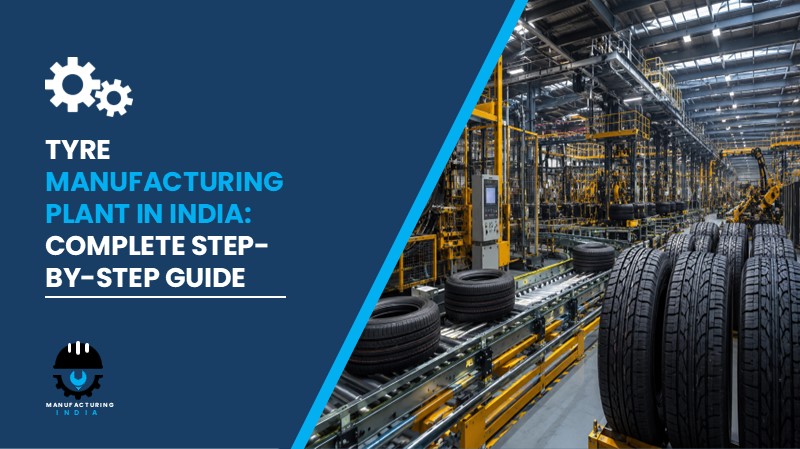
Setting up a tyre manufacturing plant in India presents a compelling investment case driven by robust and diversified demand across automotive, commercial trucking, agriculture, aviation, and off-road industries. Tyres are critically engineered, ring-shaped devices mounted on wheels that provide traction, cushioning, load support, and directional stability — making them an indispensable component across virtually every mobility and transportation segment. As vehicle ownership expands and India’s logistics ecosystem deepens, the sustained consumption of passenger, commercial, and specialty tyres makes this one of the most resilient investment opportunities in the domestic manufacturing sector.
India’s strategic advantages for tyre production are formidable. Rapid urbanisation, infrastructure development across highways and smart cities, rural connectivity programmes, and the Government of India’s Make in India and PLI initiatives for automotive and auto components directly stimulate long-term tyre demand. States such as Gujarat, Maharashtra, Tamil Nadu, and Rajasthan offer industrial estates with established supply chains, access to port infrastructure, and competitive land and labour costs — creating an ideal environment for both greenfield and brownfield tyre manufacturing investments. The country’s expanding replacement market and strong tyre export growth further reinforce India as a strategically sound location for this type of plant.
India’s tyre manufacturing sector sits at the intersection of policy support, rising vehicle parc, and global export momentum. With gross profit margins typically ranging between 25–35% and a break-even horizon of four to seven years, a well-planned tyre plant delivers compelling financial viability across multiple capacity levels. Demand sustainability is underpinned by the country’s EV transition, infrastructure rollout, and OEM localisation preferences – making this investment both timely and defensible.
What is Tyre?
Tyres are critically engineered and ring-shaped devices mounted on wheels that offer traction, cushioning effects, support a vehicle’s load, as well as directional stability for road mobility. Pneumatic tyres — which account for the principal market share within modern vehicle technology — are made of compounded rubber, carbon black, rubber, textiles, and steel, which undergo curing at high temperatures to attain the required rigidity and strength. Key material properties include high tensile strength, durability, chemical resistance, thermal resilience, and fatigue performance under repeated load cycles.
Different models of tyres exist depending on their end application, including those for passenger vehicles, trucks, two-wheelers, and off-road vehicles. Novel tyre models are also emerging for Electric Vehicles to ensure low friction, low rolling resistance, and enhanced durability. The primary production method is cord drawing, heat treatment, and stranding — a multi-stage process that transforms raw materials into finished, road-ready products. End-use industries served include automotive, aviation, agricultural, off-road, and commercial trucking sectors.
Cost of Setting Up a Tyre Manufacturing Plant in India
The total cost of establishing a tyre manufacturing plant depends on plant capacity, technology chosen, location, degree of automation, and regulatory compliance requirements. Below is a structured breakdown of the key cost components.
1. Capital Expenditure (CapEx)
Land and Site Development costs form a substantial portion of the total capital investment and include land registration charges, boundary development, and other related expenses. Investors may consider locating the facility within a Special Economic Zone (SEZ) or a designated automotive industrial estate to benefit from lower stamp duties, pre-approved utilities, and streamlined environmental clearances.
Civil Works and Construction cover the production shed, raw material storage areas, quality control laboratory, effluent treatment plant, and administrative block. The layout must be optimised to enhance workflow efficiency and safety, with separate areas for raw material storage, production, quality control, and finished goods storage — along with provision for future capacity expansion.
Machinery and Equipment represent the largest single component of capital expenditure. Key machinery required includes:
- Banbury mixers (for rubber compounding)
- Calendar machines (for shaping rubber into tread and sidewall components)
- Tyre building drums
- Bead setters
- Curing presses
- Vulcanization units
- Tread moulding systems
- Inspection and balancing machines
Other Capital Costs include Effluent Treatment Plant (ETP) installation, pre-operative and commissioning expenses, advanced safety monitoring systems, and applicable import duties on specialised machinery.
Request a Sample Report for In-Depth Market Insights: https://www.imarcgroup.com/tyre-manufacturing-plant-project-report/requestsample
2. Operational Expenditure (OpEx)
Raw Material Cost is the dominant operating expense, with natural rubber, synthetic rubber, carbon black, and steel accounting for approximately 60–70% of total OpEx. Other raw materials include fabrics such as polyester or nylon for the tyre body, along with chemicals such as sulfur for vulcanization, resins for enhanced grip, and plasticizers to improve flexibility. Securing long-term supplier contracts for natural rubber and carbon black is essential to mitigate price volatility and ensure consistent production quality.
Utility Cost — covering electricity, water, and steam – accounts for approximately 15–20% of total operational expenditure. High-energy processes such as vulcanization and curing are the primary drivers of utility consumption, and energy management systems can materially reduce this cost component over time.
Other Operating Costs include transportation and distribution, packaging, salaries and wages, maintenance, depreciation, taxes, and quality control expenses. Staff training in process safety and tyre testing protocols is critical for managing ongoing operational risk. By the fifth year of operations, total operational costs are expected to increase substantially due to inflation, market fluctuations, and potential rises in the cost of key materials such as natural rubber and carbon black.
3. Plant Capacity
The proposed tyre manufacturing facility is designed with an annual production capacity ranging between 2 and 5 million tyres, enabling economies of scale while maintaining operational flexibility. Plant capacity can be customised per investor requirements, and profitability improves with higher capacity utilisation rates, as fixed costs are spread across a larger volume of finished goods.
4. Profit Margins and Financial Projections
The tyre manufacturing plant project demonstrates healthy profitability potential under normal operating conditions. Gross profit margins typically range between 25–35%, and net profit margins between 10–15%, supported by stable demand and value-added product applications. Financial projections include comprehensive analysis of Net Present Value (NPV), Internal Rate of Return (IRR), payback period (typically four to seven years), gross and net margin trajectories, income and expenditure projections, and sensitivity analysis. These projections are developed based on realistic assumptions related to capital investment, production capacity utilisation, pricing trends, and demand outlook.
Why Set Up a Tyre Plant in India?
Critical Mobility and Transportation Demand. Tyres are fundamental to vehicle safety, performance, fuel efficiency, and ride comfort across passenger vehicles, commercial transport, agriculture, mining, aviation, and industrial mobility. This essential nature of the product insulates demand from economic downturns and creates a reliable revenue base across market cycles.
EV and Megatrend Alignment. Growth in vehicle ownership, electric vehicles, infrastructure development, e-commerce logistics, and off-highway equipment is driving sustained demand for high-performance and specialised tyres. EV adoption specifically increases demand for low-rolling-resistance, high-load, and noise-optimised tyre variants — a rapidly expanding premium segment.
Policy and Regulatory Tailwinds. Government investments in roadways, smart cities, rural connectivity, electric mobility, and domestic manufacturing initiatives including Make in India and PLI for automotive and auto components directly and indirectly support long-term tyre demand across multiple segments. A study by CEEW Centre for Energy Finance identified a USD 206 billion opportunity in the Indian EV sector by 2030, requiring an estimated USD 180 billion investment in vehicle manufacturing and charging infrastructure — a direct long-term demand driver for specialised tyre producers.
Cost-Competitive Manufacturing. India offers competitive land acquisition costs, lower labour costs relative to developed markets, a maturing rubber and chemical supply chain, and proximity to the world’s third-largest automotive market. These factors collectively reduce production costs and shorten payback periods for new entrants.
Active Industry Investment. The tyre industry continues to attract significant innovation investment. In November 2025, Pirelli equipped the new McLaren W1 supercar with tyres manufactured from more than 50% bio-based and recycled materials — signalling a sector-wide shift toward sustainable production. In the same month, JK Tyre & Industries Ltd. announced the launch of India’s first Embedded Smart Tyres for the Passenger Vehicle segment, highlighting India’s growing role as a technology-forward manufacturing destination.
Local Supply Chain Preference. OEMs and fleet operators increasingly prefer local and dependable tyre suppliers to reduce logistics costs, ensure timely availability, manage raw material volatility, and support just-in-time manufacturing. This preference creates strong opportunities for regional producers with efficient operations and robust distribution networks in India.
Manufacturing Process – Step by Step
The tyre manufacturing process uses cord drawing, heat treatment, and stranding as the primary production method. The following steps outline the core unit operations involved:
- Raw Material Preparation and Mixing: Natural rubber, synthetic rubber, carbon black, sulfur, resins, and plasticizers are weighed and blended using Banbury mixers to produce a uniform compound.
- Component Formation: The compounded rubber is shaped into tread, sidewall, and inner liner components using extruders; calendar machines laminate fabric plies and steel belt layers.
- Bead Making: Steel wires undergo cord drawing, heat treatment, and stranding to form bead rings that lock the tyre onto the wheel rim.
- Tyre Building: Tyre building drums assemble all components — plies, belts, bead rings, tread, and sidewall — into a green (uncured) tyre structure, with bead setters positioning the bead rings precisely.
- Curing and Vulcanization: Green tyres are placed in curing presses and vulcanization units where heat and pressure transform the rubber compound into its final shape and structural strength.
- Tread Moulding: Tread moulding systems imprint the pattern geometry on the tyre surface during the curing cycle.
- Inspection, Quality Testing, and Balancing: Finished tyres pass through inspection and balancing machines for dimensional checks, X-ray analysis, endurance testing, and uniformity assessment.
- Trimming, Finishing, Packaging, and Dispatch: Tyres are trimmed, labelled, and dispatched to automotive OEMs, replacement market distributors, commercial fleet operators, and export customers.
Key Applications
Tyres manufactured in India serve a wide range of industries, with each application demanding specific performance characteristics:
- Tyre Reinforcement: Bead wires and belt reinforcement components enhance structural strength and durability across all tyre types.
- Tyre Construction: Carcass plies and cord fabrics provide structural integrity and load-bearing performance for passenger and commercial vehicle tyres.
- Performance Tyres: High-tensile steel or textile cords enable improved handling, stability, and wear resistance for performance-oriented applications.
- Specialty Tyres: Off-road, agricultural, and industrial tyres requiring enhanced flexibility and impact resistance serve aviation, mining, and construction equipment sectors.
Leading Manufacturers
The global tyre market is served by several multinational companies with extensive production capacities and diverse application portfolios. Key players in the industry include:
- Apollo Tyres
- JK Tyre & Industries
- Bridgestone Corporation
- Goodyear Tire & Rubber Company
- Continental AG
Timeline to Start the Plant
Establishing a tyre manufacturing plant in India typically requires 18 to 36 months from project initiation to commercial launch, spanning the following phases:
- Feasibility study and project report preparation
- Land acquisition and site development
- Regulatory approvals and environmental clearances
- Factory licence and fire safety compliance
- Machinery procurement and installation
- Raw material supplier agreements and supply chain setup
- Trial production and quality testing
- Commercial production launch
Licences and Regulatory Requirements
Starting a tyre manufacturing unit in India requires several approvals:
- Business registration (Proprietorship, LLP, or Pvt Ltd)
- Factory Licence under the Factories Act
- Environmental Clearance from State Pollution Control Board
- GST Registration
- Fire Safety NOC
- Hazardous and chemical compliance (applicable given use of sulfur, carbon black, and synthetic rubber compounds)
- Effluent Treatment Plant (ETP) operational clearance
- Occupational Health and Safety compliance
Key Challenges to Consider
High Capital Requirements. Establishing a tyre manufacturing plant is capital-intensive, with machinery such as banbury mixers, curing presses, and vulcanization units representing the largest single CapEx component. Securing debt financing and managing working capital through ramp-up phases requires robust financial planning.
Raw Material Price Volatility. Natural rubber and carbon black — which together account for 60–70% of total OpEx — are subject to global commodity price fluctuations, supply chain disruptions, and climate-related production variability. Long-term supplier contracts are essential to stabilise input costs.
Regulatory Compliance. Tyre manufacturing involves hazardous chemicals including sulfur compounds, carbon black dust, and synthetic rubber processing — requiring stringent environmental monitoring, effluent treatment, and worker safety protocols to meet State Pollution Control Board standards.
Technology and Innovation Pressure. The sector is evolving rapidly toward EV-compatible low-rolling-resistance tyres, eco-friendly materials, and embedded smart tyre technology (as launched by JK Tyre in November 2025). New entrants must invest in R&D capability and quality assurance infrastructure to remain competitive.
Competition from Established Players. Apollo Tyres, JK Tyre & Industries, Bridgestone Corporation, Goodyear, and Continental AG operate large-scale, highly automated facilities with established OEM relationships. New entrants must differentiate on speciality segments, pricing, or regional supply chain advantages.
Skilled Manpower. Operating banbury mixers, curing presses, tyre building drums, and inspection equipment requires trained technical personnel. Recruiting and retaining skilled workers in tyre compounding, quality control, and process engineering remains an ongoing operational challenge.
Frequently Asked Questions
1. How much does it cost to set up a tyre manufacturing plant in India?
The total investment depends on plant capacity, technology, location, and automation level. Cost components include land acquisition, civil construction, machinery (banbury mixers, curing presses, vulcanization units, and inspection machines), utilities, and working capital.
2. Is tyre manufacturing profitable in India in 2026?
Yes. The tyre manufacturing plant project demonstrates healthy profitability with gross profit margins of 25–35% and net profit margins of 10–15% under normal operating conditions, supported by stable replacement demand, OEM supply contracts, and export opportunities.
3. What machinery is required for a tyre manufacturing plant in India?
Essential machinery includes banbury mixers, calendar machines, tyre building drums, bead setters, curing presses, vulcanization units, tread moulding systems, and inspection and balancing machines.
4. What licences and approvals are required to start a tyre plant in India?
Key requirements include business registration, Factory Licence under the Factories Act, Environmental Clearance from the State Pollution Control Board, GST Registration, Fire Safety NOC, ETP operational clearance, and hazardous/chemical compliance certifications.
5. What raw materials are needed for tyre manufacturing?
Primary raw materials include natural rubber, synthetic rubber, carbon black, and steel. Additional inputs include polyester or nylon fabric plies, sulfur for vulcanization, resins for grip, and plasticizers for improved flexibility.
6. What are the environmental compliance requirements for a tyre plant in India?
Plants must obtain Environmental Clearance from the State Pollution Control Board, operate a functional Effluent Treatment Plant, comply with emissions standards for rubber processing, and maintain documentation for hazardous chemical handling under applicable environmental laws.
7. What is the best location to set up a tyre plant in India?
Ideal locations offer access to natural rubber supply chains, proximity to automotive OEM clusters, robust transportation and utility infrastructure, and compliance with local zoning and environmental regulations. States with established automotive corridors are preferred.
8. What is the break-even period for this type of plant in India?
The break-even period for a tyre manufacturing business typically ranges from four to seven years, depending on production scale, raw material costs, market demand, and operational efficiency.
9. What government incentives are available for manufacturers in India?
Governments offer incentives such as capital subsidies, tax exemptions, reduced utility tariffs, export benefits, and interest subsidies under national and state industrial policies, including Make in India and PLI schemes for automotive and auto components.
Key Takeaways for Investors
A tyre manufacturing plant in India represents a high-potential investment anchored in diversified demand from automotive, commercial trucking, aviation, agricultural, and off-road industries – all of which require a steady and growing supply of durable, performance-engineered tyres. The investment demonstrates financial viability across a wide range of plant capacities, with gross margins of 25–35% and net margins of 10–15% achievable under normal operating conditions with disciplined raw material and cost management. The global tyre market was valued at USD 181.11 billion in 2025 and is projected to reach USD 273.82 billion by 2034 at a CAGR of 4.7% from 2026 to 2034, reflecting sustained long-term demand growth. With India’s EV transition accelerating, OEM localisation preferences strengthening, and policy frameworks actively incentivising domestic manufacturing, demand sustainability for tyre producers in India remains structurally robust well into the next decade.
About the Author