Setting up a masterbatch manufacturing plant in India presents a highly compelling investment opportunity as demand for high-performance plastic additives and color solutions continues to grow across packaging, automotive, construction, consumer goods, agriculture, and textile industries. Masterbatch has become an essential component in plastic processing due to its ability to enhance product appearance, improve functional properties, ensure consistent quality, and optimize manufacturing efficiency. With increasing demand for customized plastic products, advanced polymer applications, and value-added material solutions, the masterbatch industry offers strong growth potential supported by expanding industrialization and rising consumption of plastic-based products.
What is Masterbatch?
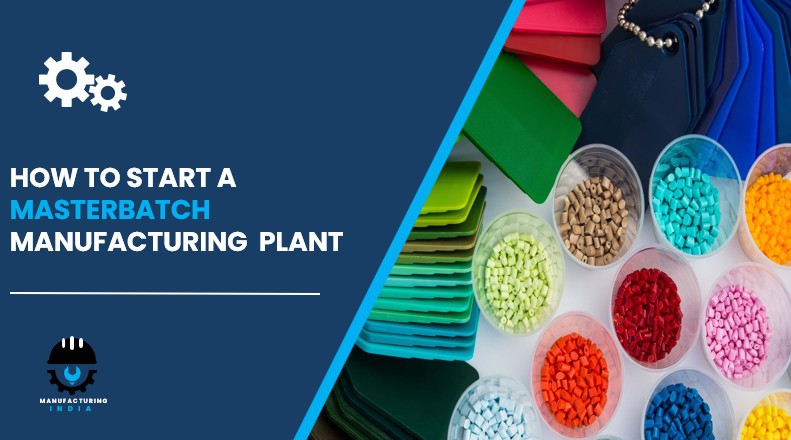
Masterbatch (MB) is a concentrated mixture of pigments, additives, and functional ingredients that are encapsulated within a carrier resin through a heat process, cooled, and cut into uniform granules. It is added to base plastic resins or pellets prior to the extrusion or injection molding process to impart specific colors, optical effects, or performance-enhancing properties to the final plastic product.
Masterbatch is available in several core types color masterbatch, white masterbatch, black masterbatch, filler masterbatch, and additive masterbatch each engineered for specific plastic processing requirements. Additive masterbatches can deliver a wide range of functional properties including UV stabilization, antistatic protection, flame retardancy, anti-fog, anti-blocking, and antimicrobial performance.
As a highly cost-effective, clean, and easily handled coloring and additive delivery system, masterbatch has become the preferred method of modifying plastics across virtually all major industries from packaging and automotive to textiles, agriculture, and healthcare. Its superior color consistency, dispersion uniformity, reduced dust exposure versus pigment powders, and process flexibility make it the industry-standard solution for plastic manufacturers worldwide.
Cost of Setting Up a Masterbatch Manufacturing Plant in India
The masterbatch manufacturing plant cost is influenced by several key parameters including production capacity, product mix (color, white, black, filler, additive), level of automation, plant location, raw material sourcing approach, and local regulatory requirements. Below is a structured breakdown of all major cost components:
1. Capital Expenditure (CapEx)
Total capital investment in a masterbatch manufacturing plant covers the following major heads:
Land and Site Development
This covers land acquisition, boundary development, land registration, and site preparation. Cost varies depending on whether the plant is located in a designated industrial zone, Special Economic Zone (SEZ), chemicals or plastics park, or privately purchased plot. Proximity to polymer resin suppliers, pigment manufacturers, and plastic product customers is a key site selection criterion.
Civil Works and Construction
Building costs include the main production facility, raw material storage warehouses, finished goods storage, quality control laboratory, administrative block, utility area, effluent treatment plant (ETP), and worker amenities. Construction must comply with chemical processing facility standards including fire safety, ventilation, hazardous material handling, and environmental management norms.
Machinery and Equipment
Machinery is the single largest component of CapEx. Key equipment required for a masterbatch manufacturing plant includes:
- Co-rotating Twin-Screw Extruders (TSE) the core processing equipment for compounding and dispersion
- Single-Screw Extruders (for simpler formulations and filler masterbatch)
- Gravimetric and Volumetric Dosing and Feeding Systems
- High-Speed Mixers and Blenders for pre-mixing pigments and additives
- Underwater Pelletizers or Strand Pelletizers
- Vibrating Screens and Classification Equipment
- Drying Ovens and Dehumidifying Dryers
- Cooling Conveyors and Water Baths
- Melt Filtration Systems (screen changers)
- Storage Silos and Raw Material Handling Systems
- Packaging Lines (bags, bulk containers, supersacks)
- Color Matching Spectrophotometers and Quality Control Laboratory Equipment
- Process Control and Automation Systems (PLC/SCADA)
Machinery costs form the dominant share of total capital expenditure, reflecting the precision compounding engineering, dispersion quality standards, and process flexibility required across multiple masterbatch grades.
Other Capital Costs
These include pre-operative expenses, commissioning charges, import duties on specialized machinery sourced internationally, utilities installation (power, water, compressed air), effluent treatment plant (ETP) setup, solvent recovery systems (if applicable), and environmental compliance infrastructure.
Request a Sample Report for In-Depth Market Insights: https://www.imarcgroup.com/masterbatch-manufacturing-plant-project-report/requestsample
2. Operational Expenditure (OpEx)
Once the plant is commissioned, the ongoing cost structure is driven by the following key components:
Carrier polymers (PE, PP, PS, ABS, PET, EVA, and others) and pigments (organic, inorganic, carbon black, titanium dioxide) together constitute the largest operating cost. Additional materials include processing additives, stabilizers, coupling agents, and functional additives such as UV absorbers, flame retardants, and antistatic agents, with the specific mix varying significantly by masterbatch type and end-use application.Utilities include electricity (the primary utility consumed by extruders, heating systems, mixers, and cooling systems), cooling water, compressed air, and steam. Energy consumption in masterbatch manufacturing is significantly lower than in specialty polymer or bioplastics production, providing a favorable cost structure for plant economics.
Other Operating Costs
The remaining budget covers transportation and distribution, packaging materials (bags, bulk containers, supersacks), salaries and wages, maintenance and repairs, depreciation, insurance, quality testing and color certification, regulatory compliance, taxes, and general overhead.
3. Plant Capacity
The proposed manufacturing facility can be designed across a range of production scales:
- Small-Scale Operations: 2,000–8,000 metric tons annually suitable for specialty and custom color masterbatch, additive masterbatch, and regional market supply with flexible batch or semi-continuous twin-screw extrusion lines.
- Mid-Scale Plants: 10,000–30,000 metric tons annually designed for national markets with multiple extrusion lines, diverse product portfolio covering color, white, black, filler, and additive masterbatches.
- Large-Scale Plants: 30,000–100,000+ metric tons annually built for national and export markets with high-throughput continuous extrusion, advanced color management systems, multiple parallel production lines, and comprehensive product portfolio.
Profitability improves significantly with higher capacity utilization. Larger plants benefit from economies of scale in raw material procurement, energy efficiency, and logistics.
4. Profit Margins and Financial Projections
Financial projections should account for capital investment, operating costs, capacity ramp-up schedule, pricing strategy by masterbatch type, and demand outlook. A thorough analysis should include sensitivity analysis, Net Present Value (NPV), Internal Rate of Return (IRR), and Payback Period calculations.
Why Set Up a Masterbatch Manufacturing Plant in India?
Strong Plastics Industry Foundation
India is among the world’s largest and fastest-growing plastic processing markets, with thousands of converters operating injection molding, extrusion, blow molding, and thermoforming lines across the country. This creates a vast and geographically distributed domestic customer base for masterbatch producers, ensuring strong baseline demand with minimal logistics exposure.
Surging Packaging Industry Demand
India’s packaging industry is expanding rapidly driven by organized retail growth, FMCG sector expansion, e-commerce logistics, and food safety regulations requiring upgraded packaging standards. Masterbatch for packaging applications including color, UV barrier, antistatic, and anti-fog grades represents the largest and most consistently growing demand segment.
Automotive Sector Growth
India’s automotive and auto components industry is a significant and growing consumer of specialty masterbatch grades for interior trims, exterior body panels, bumpers, dashboards, and under-hood components. The shift toward lightweight polymer-intensive vehicle designs and the growth of electric vehicles are creating new demand for high-performance masterbatch formulations.
Agricultural Plastics Demand
India’s agricultural sector presents a large and underserved market for specialty masterbatches used in mulch films, greenhouse covers, drip irrigation systems, and crop protection products. UV stabilizer masterbatch and anti-drip additive masterbatch for greenhouse films represent particularly high-value niche markets with strong agricultural demand.
Competitive Raw Material Access
India has well-developed petrochemical and polymer resin production infrastructure, with domestic supply chains for carrier resins including PE, PP, and PS. Access to competitive pigment and chemical additive suppliers both domestic and via established import routes supports a favorable raw material sourcing environment for masterbatch manufacturers.
Policy and Export Opportunity
India’s ‘Make in India’ and ‘Aatmanirbhar Bharat’ policy frameworks provide a range of financial incentives, infrastructure support, and technology facilitation for domestic chemical and plastics manufacturing. Additionally, India’s growing role as a global manufacturing hub creates export opportunities for masterbatch to Southeast Asia, the Middle East, and Africa.
Manufacturing Process Overview
The masterbatch manufacturing process is a polymer compounding operation that blends pigments, additives, and functional ingredients uniformly into a carrier resin to produce a concentrated, processable additive delivery system. The key process stages are:
- Raw Material Preparation and Pre-Mixing: Carrier resins, pigments, and additives are weighed, pre-blended in high-speed mixers to achieve preliminary dispersion and homogeneity before feeding to the extruder.
- Compounding and Dispersion via Twin-Screw Extrusion: Pre-mixed materials are fed into a co-rotating twin-screw extruder via gravimetric dosing systems. The intensive mechanical mixing action of the screws, combined with precise heat zone control, achieves uniform pigment dispersion and additive distribution throughout the carrier melt.
- Melt Filtration: The molten compound passes through screen changers to remove any undispersed particles, gels, or contaminants, ensuring product quality and preventing downstream processing issues in customer operations.
- Pelletization: The filtered melt is pelletized via an underwater pelletizer (UWP) or strand pelletizer and water bath to produce uniform, free-flowing granules.
- Drying and Classification: Pellets are dried to specification moisture levels and passed through vibrating screens to remove fines and oversize particles, ensuring consistent particle size distribution.
- Color Measurement and Quality Control: Samples from each production batch are tested against customer color specifications using spectrophotometers (ΔE color difference measurement), and performance tests are conducted for relevant additive properties.
- Packaging: Approved masterbatch granules are packaged in moisture-barrier polyethylene bags, bulk supersacks, or paper-laminate bags based on customer requirements, and labeled for dispatch.
Key Applications of Masterbatch
Packaging: Color, white, barrier, UV, antistatic, anti-fog, and anti-block masterbatch for flexible films, rigid containers, bottles, caps, closures, and food service packaging.
Automotive: Color and special-effects masterbatch for interior trims, dashboards, door panels, exterior body parts; UV stabilizer and heat stabilizer masterbatch for under-hood and exterior polymer components.
Agriculture: UV stabilizer masterbatch for mulch films, greenhouse covers, and irrigation systems; anti-drip and anti-fog masterbatch for greenhouse film applications.
Construction: Color and additive masterbatch for pipes, fittings, geomembranes, roofing sheets, window profiles, and insulation materials.
Textiles and Fibers: Color and functional additive masterbatch for polyester, nylon, and polypropylene fiber spinning for apparel, carpets, nonwovens, and geotextiles.
Consumer Goods: Color and specialty masterbatch for household products, toys, appliances, furniture, personal care packaging, and stationery.
Healthcare and Pharmaceuticals: Medical-grade color and additive masterbatch for pharmaceutical packaging, medical devices, diagnostic components, and single-use medical products.
Electrical and Electronics: Flame retardant, antistatic, and color masterbatch for wire and cable insulation, electrical enclosures, and electronic device housings.
Global Market Outlook
This growth is driven by the sustained expansion of the global plastics processing industry, increasing demand for functional and sustainable plastic products, growing penetration of plastic in automotive and construction applications, and accelerating adoption of specialty additive masterbatches in emerging markets.
Asia Pacific leads global masterbatch demand, accounting for over 35% of global market volume, with India, China, and Southeast Asia representing the fastest-growing regional markets. India’s domestic masterbatch market benefits from rapid plastics industry growth, infrastructure development demand, agricultural modernization, and expanding organized retail and FMCG sectors.
Timeline to Start a Masterbatch Manufacturing Plant
Setting up a masterbatch manufacturing plant from concept to commercial production typically requires 12 to 18 months. This covers:
- Feasibility study and detailed project report (DPR) preparation
- Land acquisition and site development
- Environmental impact assessment and regulatory approvals
- Plant design and compounding engineering
- Machinery procurement and installation
- Utility infrastructure commissioning
- Raw material and supplier qualification
- Trial production, color matching, and quality system setup
- Customer qualification and commercial production launch
Licenses and Regulatory Requirements
Starting a masterbatch manufacturing unit requires several approvals, which may vary by country and jurisdiction, including:
- Business registration and company incorporation
- Factory License under applicable labor and manufacturing laws
- Environmental Clearance from pollution control authorities (Consent to Establish and Consent to Operate)
- Hazardous Chemicals Handling Authorization (for pigments, solvents, and additives classified as hazardous)
- Fire Safety Certificate and NOC
- Effluent and Wastewater Discharge Authorization
- ISO 9001 Quality Management System Certification
- ISO 14001 Environmental Management System Certification
- REACH Compliance for European export markets
- RoHS Compliance for masterbatch used in electrical and electronic applications
- FDA / Food-Contact Compliance Certification for masterbatch used in food packaging applications
- FSSAI approval for food-contact grade masterbatches (India)
Key Challenges to Consider
Raw Material Price Volatility
Carrier polymer resin prices (PE, PP, PS) are directly linked to petrochemical feedstock and crude oil price cycles. Titanium dioxide (TiO2) and carbon black prices are also subject to supply-demand fluctuations and logistics cost volatility. Managing raw material costs through long-term contracts, supplier diversification, and inventory management is critical for protecting plant economics.
Color Matching and Technical Quality Standards
Masterbatch customers have demanding and application-specific color and performance specifications. Achieving and maintaining precise color match, dispersion quality, and additive performance consistency requires significant investment in color measurement equipment, skilled color technologists, and robust quality management systems.
Customer Qualification Lead Times
New masterbatch suppliers must undergo qualification trials with potential customers, which can involve extended testing periods particularly for automotive, food-contact, and medical-grade applications. Building a customer base requires sustained investment in technical sales support, sampling programs, and application development.
Competitive Market Structure
The Indian masterbatch market features a mix of large multinational producers (Clariant, Cabot, Ampacet, Avient) and well-established domestic players (Plastiblends India, Poddar Pigments, Alok Masterbatches). New entrants must develop a clear differentiation strategy through niche specialty grades, regional supply advantage, custom formulation capability, or specific end-market focus to build a sustainable competitive position.
Sustainability and Regulatory Evolution
Growing regulatory and brand-owner pressure on plastic packaging sustainability is reshaping masterbatch formulations. Demand for bio-based carrier resins, recyclability-compatible pigment and additive packages, and compostable masterbatch grades is increasing. Plants must invest in formulation capability evolution to stay aligned with evolving sustainability requirements.
Frequently Asked Questions (FAQs)
1. How much does it cost to set up a masterbatch manufacturing plant?
The investment depends on plant capacity, product range, level of automation, location, and infrastructure requirements. Costs typically include land, civil construction, machinery (twin-screw extruders, pelletizers, dosing systems), utilities, raw material inventory, and working capital.
2. Is masterbatch manufacturing a profitable business in 2026?
Yes. Strong and growing demand from India’s expanding plastics, packaging, automotive, and agricultural sectors, combined with gross margins of 25–40% for specialty grades, makes masterbatch manufacturing financially attractive. Break-even periods of 3–5 years are achievable with well-managed capacity ramp-up.
3. What machinery and equipment are required for a masterbatch plant?
Key equipment includes co-rotating twin-screw extruders, gravimetric dosing and feeding systems, high-speed mixers, pelletizers (underwater or strand type), drying and classification equipment, color measurement spectrophotometers, and packaging lines.
4. What licenses and approvals are required to start a masterbatch manufacturing facility?
Required approvals generally include company registration, factory license, environmental clearances, fire safety NOC, hazardous chemicals handling authorization, and relevant quality certifications including ISO 9001.
5. How long does it take to commission a masterbatch manufacturing plant?
Typically, 12–18 months from project initiation to commercial production launch, depending on project scale, machinery lead times, regulatory approvals, and customer qualification requirements.
6. What is the best location to set up a masterbatch plant in India?
Locations with proximity to polymer resin suppliers and plastic converters, reliable power supply, good logistics infrastructure, and supportive industrial policy environments are generally preferred. Industrial estates in Gujarat, Maharashtra, Tamil Nadu, and Haryana are popular choices for plastics and chemicals manufacturing.
7. What government incentives are available for masterbatch manufacturers in India?
Manufacturers may benefit from state industrial investment incentives, capital subsidies, power tariff concessions, infrastructure support in designated industrial zones, SEZ benefits, and schemes under national chemicals and petrochemicals policy frameworks.
8. What is the break-even period for a masterbatch manufacturing plant?
The break-even period generally ranges from 3–5 years for well-positioned plants, depending on capacity utilization, product mix between standard and specialty grades, operating efficiency, and market demand growth.
9. What are the key raw materials for masterbatch manufacturing?
Major raw materials include carrier polymer resins (PE, PP, PS, EVA, PET, ABS), pigments (organic, inorganic, titanium dioxide, carbon black), and functional additives (UV absorbers, antistatic agents, flame retardants, processing stabilizers).
10. What are the main types of masterbatch and their applications?
The five primary categories are color masterbatch (decorative and brand color applications), white masterbatch (opacity and whiteness in packaging and films), black masterbatch (UV protection, carbon reinforcement, and pigmentation), filler masterbatch (cost reduction and property modification), and additive masterbatch (UV stabilization, antistatic, flame retardancy, anti-fog, and other functional properties).
Key Takeaways for Investors
The masterbatch manufacturing industry represents a well-established, high-demand, and financially attractive investment opportunity with strong growth dynamics in India and globally. With a global market growing at approximately a well-planned masterbatch manufacturing plant offers reliable financial returns by diversified end-market demand. India’s position as one of the world’s fastest-growing plastics processing markets driven by packaging, automotive, agriculture, construction, and consumer goods expansion creates robust and geographically distributed domestic demand for masterbatch. The convergence of plastics industry growth, sustainability-driven product innovation, and India’s competitive manufacturing advantages creates a compelling and durable investment case for masterbatch producers entering or expanding in this market.
About the Author