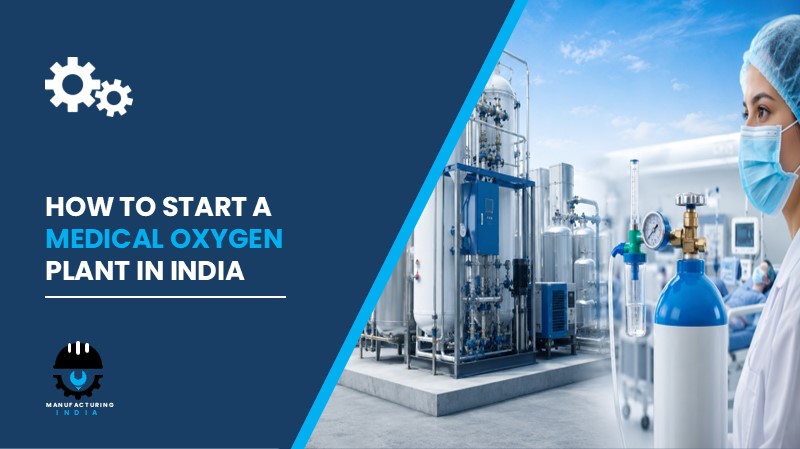
Setting up a medical oxygen plant in India presents a compelling investment case driven by surging demand from hospitals and healthcare facilities, pharmaceutical manufacturers, emergency medical services, and home healthcare providers. Medical oxygen is a WHO-listed essential medicine, making it indispensable to India’s healthcare infrastructure. Rising hospitalisation rates, growing incidence of respiratory and cardiovascular diseases, and rapid expansion of ICU capacity across the country have made uninterrupted, locally produced medical oxygen a strategic national priority.
India’s demographic scale, growing urban middle class, and government-led healthcare expansion through schemes such as Make in India position the country as one of the world’s most attractive manufacturing destinations for medical gases. States such as Gujarat and Maharashtra offer world-class industrial estate infrastructure, SEZ options, reliable power supply, and established pharmaceutical supply chains, making them ideal locations for this investment. The shift toward decentralised, on-site oxygen generation further reduces logistics costs and eliminates supply chain vulnerabilities, adding another layer of strategic soundness to establishing a production unit within India.
India’s medical oxygen sector stands at the intersection of essential healthcare demand and strong policy support. With gross margins of 35–50% and net profit margins of 15–30%, a correctly structured plant backed by stable offtake from hospitals and healthcare facilities can reach commercial viability well within a standard investment horizon. The combination of cost-competitive manufacturing, expanding healthcare infrastructure, and emergency-preparedness mandates makes this one of the most resilient investment opportunities in India’s industrial landscape today.
What is Medical Oxygen?
Medical oxygen is a high-purity oxygen gas, typically at or above 99.5% purity, produced specifically for therapeutic and clinical use. It is a colorless, odorless, non-flammable substance that strongly supports combustion and is used to treat hypoxemia and support patients with respiratory problems. To be suitable for clinical use, medical oxygen must meet pharmacopeial standards including the USP, BP, and IP specifications, which impose strict controls over moisture content, contaminants, and particulate levels.
Medical oxygen is supplied through three primary delivery formats: compressed gas cylinders, cryogenic liquid tanks, and on-site generation systems. The three principal production processes used are the cryogenic air separation process, the pressure swing adsorption (PSA) process, and the vacuum pressure swing adsorption (VPSA) process. The PSA method in particular enables on-site oxygen generation at the point of use, making it highly attractive for hospitals and decentralised facilities.
The product serves four core end-use industries: hospitals and healthcare facilities, pharmaceutical manufacturing, emergency medical services, and home healthcare providers. Its applications include respiratory therapy, anesthesia support, critical care and ICU usage, and emergency and trauma care.
Cost of Setting Up a Medical Oxygen Plant in India
The total cost of establishing a medical oxygen plant depends on several interdependent variables: production capacity, the technology platform chosen, plant location, level of process automation, and the regulatory compliance stack required for medical-grade production. For investors evaluating a medical oxygen manufacturing plant in India specifically, location selection – particularly proximity to major hospital hubs – is a key determinant of both CapEx and long-term offtake security.
1. Capital Expenditure (CapEx)
The largest single component of capital expenditure for this type of plant is machinery, followed by land, site development, and civil construction.
Land and site development costs include land registration charges, boundary development, levelling, drainage, and allied infrastructure. Investors should explore SEZ and MIDC industrial estate options in states such as Gujarat and Maharashtra, which can offer subsidised land rates, pre-approved utility connections, and faster regulatory clearances. Civil works costs cover the main production shed, quality control laboratory, finished goods storage for cylinders and bulk tanks, and the administrative block.
Key machinery required includes:
- Air compressors
- Air dryers and filters
- Pressure swing adsorption (PSA) or vacuum pressure swing adsorption (VPSA) oxygen generators
- Cryogenic distillation units
- Oxygen storage tanks
- Cylinder filling manifolds
- Quality monitoring and analyzers
Other capital costs include the effluent treatment plant (ETP) installation, pre-operative expenses, commissioning charges, and applicable import duties on specialised equipment components not manufactured domestically.
Request a Sample Report for In-Depth Market Insights: https://www.imarcgroup.com/medical-oxygen-plant-project-report/requestsample
2. Operational Expenditure (OpEx)
The operating cost structure of a medical oxygen plant is distinctive: raw material cost accounts for only approximately 5–10% of total OpEx, while utility cost — primarily electricity consumed by compressors and refrigeration units – accounts for the dominant 40–60% share.
Raw materials required for production include ambient air as the primary feedstock, zeolite molecular sieves for nitrogen separation, compressor oil (food-grade where required), cylinders and bulk storage tanks, and packaging materials such as medical-grade labels and caps. Long-term supplier contracts should be negotiated to stabilise input prices and ensure supply chain continuity.
Other operating costs include transportation and distribution, packaging, salaries and wages, maintenance, depreciation, and applicable taxes. By the fifth year of operations, total operational costs are projected to increase substantially due to inflation, market fluctuations, and potential rises in the cost of key inputs. Additional factors, including supply chain disruptions, rising consumer demand, and shifts in the global economy, are expected to contribute to this increase.
3. Plant Capacity
The proposed facility is designed with an annual production capacity ranging between 150,000 and 200,000 cubic meters, enabling economies of scale while maintaining operational flexibility. Capacity can be customised to meet each investor’s specific capital budget, market catchment, and offtake agreements. Profitability improves meaningfully at higher capacity utilisation levels, and investors should target output ramp-up milestones from the first year onward to reach optimal margins.
4. Profit Margins and Financial Projections
The project demonstrates healthy profitability under normal operating conditions. Gross profit margins typically range between 35% and 50%, supported by stable demand and the essential, non-discretionary nature of the product. Net profit margins range between 15% and 30%. A comprehensive financial analysis covering NPV, IRR, payback period, liquidity analysis, sensitivity analysis, and a detailed profit and loss account is essential for investor decision-making and lender due diligence. The financial projections for this type of plant are developed on the basis of realistic assumptions related to capital investment, operating costs, production capacity utilisation, pricing trends, and demand outlook.
Why Set Up a Medical Oxygen Plant in India?
Essential Healthcare Input with Non-Discretionary Demand. Medical oxygen is a life-saving drug listed in the WHO Essential Medicines List, making domestic production critical for healthcare system resilience. Demand is structurally non-cyclical, providing revenue stability that is rare in most manufacturing segments.
Rising Respiratory Disease Burden. Rising cases of COPD, asthma, and pneumonia are driving major demand for medical-grade oxygen production across India. Around 364 million people globally need oxygen for acute medical and surgical conditions annually, including 25 million people with respiratory infections, illustrating the enormous scale of underlying demand.
Healthcare Infrastructure Expansion. New hospitals, oxygen pipeline networks, and ICU expansions directly increase demand for locally manufactured medical oxygen. Government investment to strengthen oxygen availability in public hospitals and rural healthcare centres further supports demand and creates long-term offtake opportunities for domestic producers.
Emergency Preparedness Importance. Pandemics and disaster-response planning have highlighted the strategic requirement for domestic oxygen manufacturing capacity. Emergency preparedness policies following recent global health crises have accelerated the establishment of on-site adsorption-based oxygen production units, particularly in developing economies such as India.
Active Global Industry Investment. In July 2025, Nikkiso Co., Ltd. was selected under a Unitaid-led regional health initiative to install three medical oxygen production plants in Kenya and Tanzania, supported by a USD 7.3 million contribution from the Government of Japan. In June 2025, Inogen Inc. announced the launch of its Voxi 5 stationary oxygen concentrator, developed in collaboration with Yuwell Medical, marking strategic expansion in the stationary oxygen therapy market. These developments signal continued global capital flow into medical oxygen infrastructure.
Decentralised Production Advantage. Adsorption-based plants enable on-site oxygen generation, reducing transportation risks and supply chain disruptions. For Indian investors, this model is particularly attractive when supplying hospital clusters, medical cities, and district-level healthcare centres in Tier 2 and Tier 3 cities where reliable bulk supply from distant facilities remains a persistent challenge.
Manufacturing Process – Step by Step
The medical oxygen manufacturing process uses the cryogenic air separation process, pressure swing adsorption, or vacuum pressure swing adsorption as primary production methods. Understanding the correct process for a given capacity is central to designing an efficient medical oxygen manufacturing plant. The medical oxygen manufacturing process determines plant cost, scale, and purity output.
- Ambient Air Intake: Atmospheric air is drawn in as the primary feedstock through intake filters designed to exclude particulates and contaminants.
- Air Compression: Air compressors pressurise the incoming air stream to the operating pressure required for the separation process.
- Drying and Filtration: Air dryers and filters remove moisture and trace impurities from the compressed air to prevent contamination of downstream equipment.
- Nitrogen Separation: In adsorption-based systems, zeolite molecular sieves selectively adsorb nitrogen from the pressurised air stream, allowing oxygen to pass through and accumulate at high concentration. In distillation-based systems, specialised units separate oxygen from nitrogen and argon using differences in boiling points.
- Oxygen Storage: The separated, high-purity oxygen stream is directed into oxygen storage tanks for buffering and supply management.
- Quality Analysis: Quality monitoring and analyzers continuously test product concentration, purity, moisture levels, and contaminant presence to ensure compliance with USP, BP, and IP pharmacopeial standards.
- Cylinder Filling and Dispatch: Cylinder filling manifolds transfer the verified medical-grade oxygen into compressed gas cylinders or bulk liquid tanks. Finished units are labelled with medical-grade labels and caps, then dispatched to hospitals and healthcare facilities, pharmaceutical manufacturers, emergency medical services, and home healthcare providers.
Key Applications
This product serves a broad range of life-critical industries and clinical environments:
- Hospitals and Healthcare Facilities: Used for ventilators, anesthesia machines, neonatal care units, post-operative recovery, and intensive care units.
- Pharmaceutical Industry: Applied in drug formulation, fermentation processes, oxidation reactions, and maintaining controlled production environments.
- Emergency Medical Services: Supplied in ambulances and mobile care units for trauma management, cardiac emergencies, and accident response.
- Home Healthcare: Used for long-term oxygen therapy for patients suffering from chronic obstructive pulmonary disease (COPD), asthma, and other respiratory disorders.
Leading Manufacturers
The global medical oxygen industry is served by several multinational companies with extensive production capacities and diverse application portfolios. Key players in the market include:
- Linde PLC
- Air Products and Chemicals Inc.
- Air Liquide S.A.
- Taiyo Nippon Sanso Corp.
- Messer SE & Co KGaA
- Keen Compressed Gas Co.
- Atlas Copco Group
- Jubail Gas Plant Co. Ltd.
- Jacko Gases Company
- Aldakheel Industrial Gases Plant (DIGAS)
Timeline to Start the Plant
- Feasibility study and project report preparation
- Land acquisition and site development
- Regulatory approvals and environmental clearances
- Factory licence and fire safety compliance
- Machinery procurement and installation
- Raw material supplier agreements and supply chain setup
- Trial production and quality testing
- Commercial production launch
Licences and Regulatory Requirements
Starting a medical oxygen manufacturing unit in India requires several approvals:
- Business registration (Proprietorship, LLP, or Pvt Ltd)
- Factory Licence under the Factories Act
- Environmental Clearance from State Pollution Control Board
- GST Registration
- Fire Safety NOC
- Hazardous/Chemical compliance under the Manufacture, Storage and Import of Hazardous Chemical Rules (applicable for compressed and liquefied oxygen storage)
- Effluent Treatment Plant (ETP) operational clearance
- Occupational Health and Safety compliance
Key Challenges to Consider
High Capital Requirements. Machinery costs – including air compressors, distillation units, adsorption oxygen generators, and quality analyzers – represent the largest share of CapEx, requiring careful financial structuring and access to long-term debt or equity funding.
Raw Material Price Volatility. While ambient air as the primary feedstock involves no direct procurement cost, the pricing of zeolite molecular sieves, compressor oil (food-grade), cylinders, and bulk storage tanks can be subject to global commodity and supply chain fluctuations.
Regulatory Compliance. Producing a pharmacopeial-grade product demands continuous adherence to USP, BP, and IP standards for purity, moisture, and contaminants, requiring robust quality management systems, skilled QC staff, and periodic audits by drug regulatory authorities.
Technology and Innovation Pressure. Newer formats such as portable oxygen concentrators and stationary home-use devices — evidenced by Inogen’s June 2025 Voxi 5 launch — are reshaping the home healthcare segment. Producers must monitor evolving delivery technology to remain competitive.
Competition from Global Players. The market is dominated by large multinational corporations including Linde PLC, Air Products and Chemicals Inc., Air Liquide S.A., Taiyo Nippon Sanso Corp., and Atlas Copco Group, which operate at scale and hold long-term supply contracts with major hospital systems.
Skilled Manpower. Operating advanced oxygen generation and separation systems, maintaining analytical instruments, and ensuring pharmacopeial compliance requires qualified engineers, chemists, and quality assurance personnel who may be scarce in smaller industrial clusters.
Frequently Asked Questions
1. How much does it cost to set up a medical oxygen manufacturing plant in India?
The total cost depends on plant capacity, production technology selected, location, and automation level. A detailed CapEx breakdown covering land, civil works, machinery, and other capital costs is available in a dedicated feasibility report.
2. Is medical oxygen manufacturing profitable in India in 2026?
Yes. The segment offers gross profit margins of 35–50% and net profit margins of 15–30%, underpinned by essential and non-discretionary demand from hospitals, pharmaceutical manufacturers, and emergency services.
3. What machinery is required for a medical oxygen plant in India?
Essential equipment includes air compressors, air dryers and filters, PSA or VPSA oxygen generators, distillation units, oxygen storage tanks, cylinder filling manifolds, and quality monitoring and analyzers.
4. What licences and approvals are required to start a medical oxygen plant in India?
Required approvals include business registration, a Factory Licence, Environmental Clearance from the State Pollution Control Board, GST registration, Fire Safety NOC, hazardous chemical compliance, ETP operational clearance, and occupational health and safety compliance.
5. What raw materials are needed for medical oxygen manufacturing?
Raw materials include ambient air (primary feedstock), zeolite molecular sieves for nitrogen separation, compressor oil (food-grade, if required), cylinders and bulk storage tanks, and packaging materials such as medical-grade labels and caps.
6. What are the environmental compliance requirements for a medical oxygen plant in India?
The facility must obtain Environmental Clearance from the State Pollution Control Board, operate a compliant ETP, adhere to hazardous chemical storage regulations for compressed oxygen, and install advanced monitoring systems for leak detection and process deviations.
7. What is the best location to set up a medical oxygen plant in India?
States such as Gujarat and Maharashtra offer well-developed industrial estate infrastructure, reliable power supply, proximity to major hospital clusters, and established pharmaceutical supply chains. SEZ and MIDC zones offer additional advantages in terms of cost and regulatory processing time.
8. What is the break-even period for this type of plant in India?
The break-even period depends on plant capacity, utilisation ramp-up rate, and fixed cost structure. A detailed payback period analysis, NPV calculation, and IRR assessment should be conducted as part of a comprehensive feasibility study.
9. What government incentives are available for manufacturers in India?
Manufacturers in India can access incentives under Make in India, state-level industrial promotion schemes, PLI-adjacent healthcare manufacturing programmes, and Export Promotion Capital Goods (EPCG) schemes for import duty concessions on capital equipment.
Key Takeaways for Investors
Establishing a medical oxygen manufacturing plant in India represents a structurally sound investment opportunity, driven by growing and non-discretionary demand from hospitals and healthcare facilities, pharmaceutical manufacturing, emergency medical services, and home healthcare providers. Mastering the medical oxygen manufacturing process — from air compression and nitrogen separation through to quality validation and cylinder filling — is the foundation of operational and regulatory competitiveness. The project demonstrates financial viability across a range of production capacities, with gross margins of 35–50% and net profit margins of 15–30% achievable under realistic operating assumptions. The global medical oxygen market was valued at USD 11.00 billion in 2025 and is projected to reach USD 21.63 billion by 2034 at a CAGR of 7.8%, pointing to sustained long-term demand growth. With India’s healthcare infrastructure expanding rapidly, emergency preparedness mandates placing renewed emphasis on domestic oxygen supply, and on-site generation technology enabling cost-effective decentralised production, the structural demand drivers for this investment are robust and multi-decade in nature.
About the Author