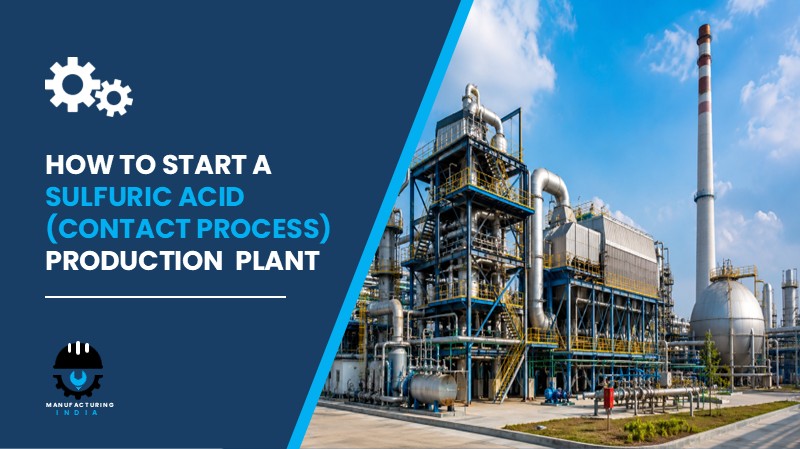
Setting up a sulfuric acid (contact process) production plant in India presents a compelling investment case driven by the country’s strong and growing demand across agriculture, chemicals, energy storage, and mining sectors. Sulfuric acid is one of the most essential industrial chemicals in existence, playing a pivotal role as a key raw material in the production of fertilizers such as ammonium sulfate and phosphoric acid, which are indispensable to India’s vast agricultural economy. Its significance further extends to the manufacture of detergents, dyes, pharmaceuticals, and explosives, making it a cornerstone chemical across multiple high-growth industries. The versatility of this strong, colorless, and highly corrosive acid, combined with its indispensability in modern industrial processes, makes the production opportunity particularly compelling for investors exploring the Indian chemicals and materials sector.
India’s structural advantages make it a strategically sound location for setting up this type of facility. The country’s expanding urbanization, large-scale infrastructure growth, and the Make in India initiative together create a favorable environment for chemical production investment. Industrial hubs in states such as Gujarat, Maharashtra, and Rajasthan – which host established chemical corridors with existing supply chains, utility infrastructure, and skilled labor pools – offer significant locational advantages for a sulfuric acid production unit. With domestic demand rising in the agriculture, automotive battery, and industrial chemical segments, and with environmental regulations increasingly mandating flue gas desulfurization in power plants, the timing for establishing domestic production capacity in India is highly favorable.
India’s policy support under Make in India, combined with cost-competitive land and labor, makes a sulfuric acid (contact process) production plant in India a financially viable proposition. The 200,000 MT/yr capacity benchmark underscores the scale at which gross margins of 20-27% and net profit margins of 11-17% are achievable, with strong demand sustainability driven by agriculture, chemicals, batteries, and environmental compliance requirements.
What is Sulfuric Acid (Contact Process)?
Sulfuric acid is a strong, colorless, and highly corrosive acid that stands as one of the most widely used and essential industrial chemicals across the global economy. The contact process is the predominant and most commercially significant method for its production, involving the catalytic oxidation of sulfur dioxide to sulfur trioxide, followed by its hydration to form sulfuric acid. This production route is valued for its efficiency, scalability, and ability to deliver high-purity output suitable for industrial use.
The acid’s defining properties – its highly corrosive nature, strong acidity, dehydrating capability, and effectiveness as a catalyst – make it irreplaceable across industrial operations. It serves as a vital catalyst and dehydrating agent in numerous chemical reactions. Its applications span the production of fertilizers like ammonium sulfate and phosphoric acid, which are essential for agriculture; the manufacture of detergents, pigments, dyes, and pharmaceuticals; and the reliable energy storage provided by lead-acid batteries in automobiles. The unit also finds application in the mining and metallurgical sectors for extracting and processing metals such as copper, zinc, and nickel. Environmental control applications, specifically flue gas desulfurization to reduce sulfur emissions from power plants, represent a growing end-use category. The production serves the following end-use industries: agriculture, chemical manufacturing, automotive and energy storage, mining and metallurgy, environmental compliance, and laboratory and analytical chemistry.
Cost of Setting Up a Sulfuric Acid (Contact Process) Production Plant in India
The total investment required to establish a sulfuric acid (contact process) production plant in India depends on multiple factors including plant capacity, technology selection, geographic location, level of automation, and the scope of regulatory compliance requirements.
1. Capital Expenditure (CapEx)
The capital investment for this production unit covers several major heads. Land and site development costs will vary based on whether the facility is located within a Special Economic Zone (SEZ), a designated industrial estate, or a private greenfield site. Proximity to raw material sources and sulfur processing hubs in Gujarat or Maharashtra can significantly influence land and logistics costs. Civil works and construction encompass the fabrication shed, quality control laboratory, raw material storage tanks and hazardous chemical storage facilities, utility blocks, effluent treatment plant structure, and the administrative block. These must meet the specifications required for handling a highly corrosive and regulated chemical.
Key machinery required includes:
- Sulfur melting and burning equipment
- Sulfur dioxide gas purification and drying system
- Catalytic converter (contact reactor with vanadium pentoxide catalyst beds)
- Heat exchanger and waste heat recovery units
- Absorption towers (oleum absorption and sulfuric acid absorption towers)
- Sulfuric acid storage tanks and transfer pumps
- Gas handling and scrubbing systems
- Effluent treatment and tail gas scrubbing units
- Instrumentation and process control systems
- Piping, valves, and corrosion-resistant material handling equipment
Other capital costs include effluent treatment plant (ETP) commissioning, pre-operative expenses, import duties on specialized equipment or catalyst materials, and contingency provisions.
Request a Sample Report for In-Depth Market Insights: https://www.imarcgroup.com/sulfuric-acid-contact-process-manufacturing-plant-project-report/requestsample
2. Operational Expenditure (OpEx)
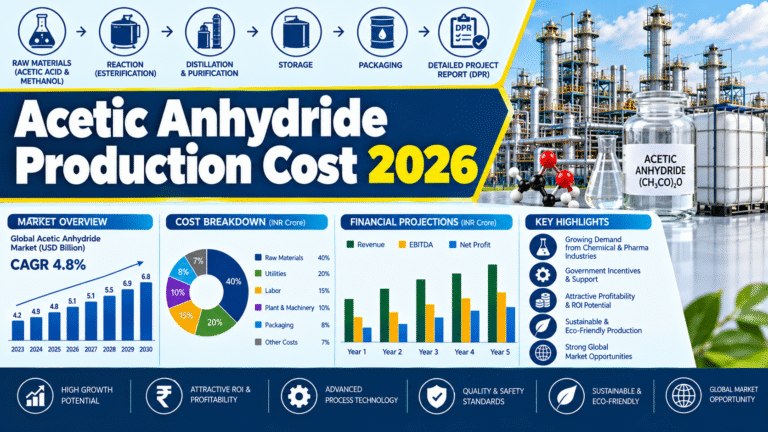
Raw material cost is the dominant component of the operational cost structure, accounting for 45-55% of total OpEx. The primary feedstock is elemental sulfur or sulfur-bearing materials used to generate sulfur dioxide, which then undergoes the catalytic contact process. Securing long-term supplier contracts with domestic petrochemical or smelting operations – key sulfur by-product generators – can stabilize input costs and improve margins over a five-year operating horizon. Utility costs, covering electricity, water, and steam, represent 12-16% of OpEx; this facility is energy-intensive, particularly for maintaining the high-temperature conditions required in catalytic converter beds and heat exchangers. Other operating costs include transportation and packaging of finished acid, salaries and wages for technical and safety personnel, maintenance and repairs for corrosion-prone equipment, depreciation on civil works and machinery, and applicable state and central taxes. Over a five-year projection period, raw material and utility costs are expected to experience moderate incremental increases driven by energy price trends and sulfur commodity market dynamics.
3. Plant Capacity
The benchmark plant capacity referenced for this product is 200,000 MT per year. Investors may, however, customize the plant capacity to align with their specific market access strategy, available capital, and target customers. Profitability improves meaningfully with higher capacity utilization, as fixed costs – including land, civil infrastructure, regulatory compliance, and core machinery – are spread across a larger output volume.
4. Profit Margins and Financial Projections
A sulfuric acid contact process production plant offers an attractive financial profile when operated at or near benchmark capacity. The gross margin for this type of facility is in the range of 20-27%, while net profit margins are projected at 11-17%. Financial analysis covering net present value (NPV), internal rate of return (IRR), payback period, liquidity analysis, and sensitivity analysis is included in the detailed project economics report. These metrics confirm the long-term viability of the investment across varying price and demand scenarios.
Why Set Up a Sulfuric Acid (Contact Process) Production Plant in India?
Agriculture Sector as the Primary Demand Driver: The agriculture sector remains the foremost driver of sulfuric acid demand, as the acid is a crucial component in the production of phosphate and nitrogen-based fertilizers. India, with one of the largest agricultural economies in the world, generates substantial and sustained demand for ammonium sulfate and phosphoric acid, both of which depend directly on sulfuric acid as an upstream input. Domestic production of this acid directly supports India’s food production and fertilizer self-sufficiency objectives.
Chemical Industry Demand Across Multiple Segments: The chemical industry relies on sulfuric acid for a wide array of applications, including the production of detergents, pigments, dyes, and explosives. India’s growing consumer goods, textile, and specialty chemical sectors contribute to consistent demand growth. The acid’s role as a catalyst and dehydrating agent in numerous chemical reactions makes it a recurring input across multiple chemical production chains.
Automotive and Energy Storage Industry: Sulfuric acid is an essential ingredient in lead-acid batteries used in automobiles, ensuring reliable energy storage. India’s expanding automotive production base and the growing installed base of vehicles create ongoing demand for battery-grade sulfuric acid. This segment adds a structurally stable demand pillar to the investment thesis.
Mining and Metallurgical Industry: Sulfuric acid plays a pivotal role in extracting and processing metals such as copper, zinc, and nickel. India’s mining sector and the country’s growing metals processing industry represent an important end-use channel. As metal extraction and refining activity scales up domestically, proximity to a local sulfuric acid production source becomes a competitive advantage for metals producers.
Environmental Regulations Driving Incremental Demand: Environmental regulations mandating flue gas desulfurization to reduce sulfur emissions from thermal power plants contribute directly to sulfuric acid demand in India. As India’s power generation sector continues to expand and as emission norms tighten, this regulatory-driven demand segment will add a growing baseline to overall consumption.
Advances in Production Technology and Sustainability: The trend towards more efficient and sustainable production processes – such as the recovery of sulfuric acid from waste streams – reduces environmental impact and lowers production costs. Advances in production techniques, including improved catalysts and process optimization, enhance production efficiency and output quality. Indian investors who adopt advanced contact process technology at setup will benefit from both lower unit costs and easier regulatory compliance.
Manufacturing Process – Step by Step
The sulfuric acid (contact process) production process uses the contact process as the primary production method, involving the catalytic oxidation of sulfur dioxide to sulfur trioxide followed by hydration.
- Sulfur Melting and Burning: Elemental sulfur is melted and burned in a combustion furnace to produce sulfur dioxide (SO₂) gas, which forms the primary process feedstock.
- Gas Purification and Drying: The sulfur dioxide gas generated is passed through purification and drying systems to remove moisture and impurities, which could otherwise damage or deactivate the catalyst.
- Catalytic Oxidation (Contact Reactor): The purified SO₂ gas is passed through a catalytic converter containing vanadium pentoxide catalyst beds, where it is oxidized to sulfur trioxide (SO₃) at controlled high temperatures.
- Heat Exchange and Waste Heat Recovery: Waste heat generated during the exothermic catalytic reaction is recovered through heat exchangers, improving energy efficiency and reducing utility costs.
- Absorption of SO₃: The sulfur trioxide gas is directed to absorption towers, where it is absorbed in concentrated sulfuric acid or oleum to form the final sulfuric acid product.
- Quality Assurance and Testing: The produced sulfuric acid undergoes quality assurance checks and technical tests to confirm concentration, purity, and compliance with applicable grade standards.
- Storage, Packaging, and Dispatch: The finished acid is stored in corrosion-resistant storage tanks and packaged for dispatch to end-use industries including agriculture, chemicals, automotive, mining, environmental control, and laboratory sectors.
Key Applications
Sulfuric acid (contact process) serves as a critical input across a wide range of industrial and commercial sectors in India and globally.
- Agriculture: Production of phosphate and nitrogen-based fertilizers including ammonium sulfate and phosphoric acid, essential for crop nutrition and food production.
- Chemical Manufacturing: A key raw material and process chemical in the production of detergents, dyes, pigments, and pharmaceuticals.
- Explosives: Used in the manufacture of explosives serving the mining and construction industries.
- Automotive and Energy Storage: An essential component of lead-acid batteries in automobiles, providing reliable energy storage.
- Mining and Metallurgy: Used for extracting and processing metals such as copper, zinc, and nickel from ores and concentrates.
- Environmental Control: Applied in flue gas desulfurization systems at power plants to reduce sulfur dioxide air emissions.
- Laboratory and Analytical Chemistry: Used in scientific research, analytical chemistry procedures, and laboratory applications.
Leading Manufacturers
The global sulfuric acid market features a structured competitive landscape comprising major international chemical companies. The key players operating in this industry are profiled in the detailed project report. Specific company names and competitive benchmarking data are available within the IMARC Group’s full Sulfuric Acid (Contact Process) Production Cost Analysis Report 2026, accessible upon purchase.
Timeline to Start the Plant
- Feasibility study and project report preparation
- Land acquisition and site development
- Regulatory approvals and environmental clearances
- Factory licence and fire safety compliance
- Machinery procurement and installation
- Raw material supplier agreements and supply chain setup
- Trial production and quality testing
- Commercial production launch
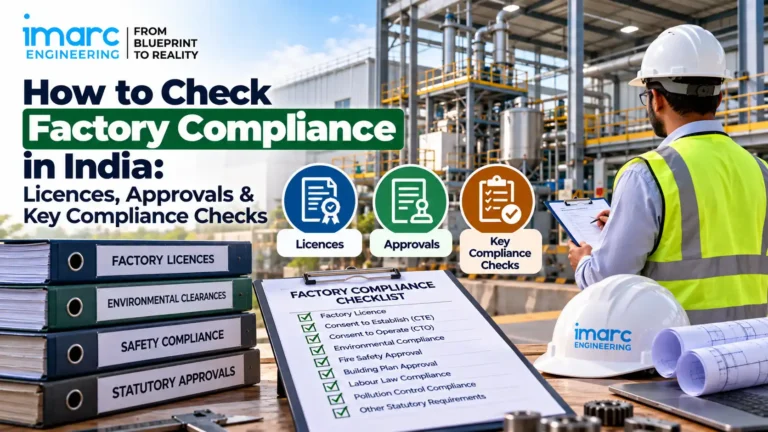
Licences and Regulatory Requirements
Starting a sulfuric acid (contact process) production unit in India requires several approvals:
- Business registration (Proprietorship, LLP, or Pvt Ltd)
- Factory Licence under the Factories Act
- Environmental Clearance from State Pollution Control Board
- GST Registration
- Fire Safety NOC
- Hazardous and chemical handling compliance under the Hazardous Chemicals Rules (given sulfuric acid’s highly corrosive classification)
- Effluent Treatment Plant (ETP) operational clearance
- Occupational Health and Safety compliance
Key Challenges to Consider
High Capital Requirements: Establishing a sulfuric acid contact process production plant demands significant upfront capital investment across land, civil infrastructure, corrosion-resistant plant machinery, and an effluent treatment system. Adequate project funding and phased capital deployment are critical to managing this burden.
Raw Material Price Volatility: The primary feedstock – elemental sulfur and sulfur-bearing materials used to generate sulfur dioxide – is subject to global commodity price fluctuations. Establishing long-term supplier contracts and building strategic input inventory can mitigate this operational risk.
Regulatory Compliance: Sulfuric acid is a highly corrosive and hazardous chemical. Operating this type of production facility in India requires strict adherence to hazardous chemical handling regulations, pollution control board norms, effluent discharge standards, and occupational safety requirements. Non-compliance carries significant operational and financial risk.
Technology and Process Optimization Pressure: The trend towards improved catalysts, process optimization, and waste stream acid recovery means that investors must evaluate technology choices carefully at the outset. Facilities built on outdated process configurations face increasing cost and sustainability disadvantages over time.
Competition from Established Players: The sulfuric acid market is served by established global and domestic chemical companies with entrenched customer relationships and scale advantages. New entrants must plan carefully on pricing, customer acquisition, and product quality differentiation.
Skilled Manpower: Operating a contact process production plant safely and efficiently requires qualified chemical engineers, process technicians, and safety officers with specific competencies in handling corrosive and hazardous chemicals. Recruiting and retaining this talent in the chosen plant location is a key operational consideration.
Frequently Asked Questions
How much does it cost to set up a sulfuric acid (contact process) production plant in India?
The total project cost depends on plant capacity, location, technology selection, automation level, and regulatory requirements. A detailed cost breakdown covering CapEx (land, civil works, machinery) and OpEx (raw materials at 45-55%, utilities at 12-16%) is available in the full project report.
Is sulfuric acid (contact process) production profitable in India in 2026?
Yes, with gross margins of 20-27% and net profit margins of 11-17% at benchmark capacity of 200,000 MT/yr, the facility presents a financially viable and attractive investment proposition given India’s multi-sector demand.
What machinery is required for a sulfuric acid (contact process) production plant in India?
Key equipment includes sulfur melting and burning units, gas purification and drying systems, catalytic converters with vanadium pentoxide beds, heat exchangers, absorption towers, storage tanks, gas scrubbing systems, and effluent treatment units.
What licences and approvals are required to start a sulfuric acid (contact process) production plant in India?
Required approvals include business registration, Factory Licence, Environmental Clearance from the State Pollution Control Board, GST registration, Fire Safety NOC, hazardous chemical compliance certification, ETP clearance, and occupational health and safety compliance.
What raw materials are needed for sulfuric acid (contact process) production?
The primary feedstock is elemental sulfur or sulfur-bearing materials burned to generate sulfur dioxide (SO₂), which is then catalytically oxidized to sulfur trioxide (SO₃) and hydrated to produce sulfuric acid.
What are the environmental compliance requirements for a sulfuric acid (contact process) production plant in India?
The facility requires Environmental Clearance from the State Pollution Control Board, an operational Effluent Treatment Plant, tail gas scrubbing systems to control sulfur dioxide emissions, and compliance with hazardous chemical handling and storage regulations.
What is the best location to set up a sulfuric acid (contact process) production plant in India?
Industrial states such as Gujarat, Maharashtra, and Rajasthan, which have established chemical manufacturing corridors, proximity to sulfur feedstock supply chains, and robust utility and logistics infrastructure, are among the most suitable locations.
What is the break-even period for this type of plant in India?
The payback period depends on plant capacity, product pricing, and capacity utilization. The full project report includes a detailed payback period, NPV, and IRR analysis based on a 200,000 MT/yr capacity benchmark.
What government incentives are available for manufacturers in India?
The Make in India initiative, state-level industrial investment promotion schemes, SEZ benefits, capital subsidy schemes for chemical industries, and export incentives under various central and state government programs may be applicable depending on the plant location and structure.
Key Takeaways for Investors
Setting up a sulfuric acid (contact process) production plant in India is a high-potential investment opportunity underpinned by sustained demand across agriculture, chemical manufacturing, automotive batteries, mining and metallurgy, and environmental compliance applications. The production economics are financially sound across a range of plant capacities, with gross margins of 20-27% and net profit margins of 11-17% achievable at a 200,000 MT/yr benchmark, supported by relatively stable demand drivers that are structurally embedded in India’s industrial economy. Advances in contact process technology, including improved catalysts, process optimization, and waste recovery methods, continue to enhance production efficiency and reduce operating costs, strengthening the long-term competitiveness of new entrants who invest in modern plant configurations. With India’s agricultural demand for fertilizers, industrial chemical consumption, and power sector emission compliance requirements all pointing towards sustained and growing sulfuric acid consumption, this production investment presents strong demand durability for investors with a five-to-ten year horizon.
About the Author