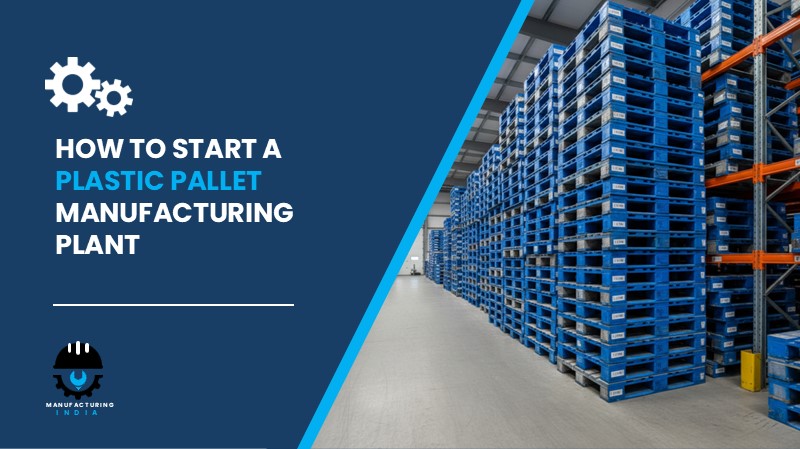
Setting up a plastic pallet manufacturing plant in India presents a compelling investment case driven by the rapid expansion of organised retail, e-commerce fulfillment, logistics and warehousing, food and beverage processing, pharmaceuticals, and the automotive sector. As Indian industry accelerates its shift toward modern supply chain infrastructure, the demand for durable, reusable, and hygienic material handling solutions is growing at a pace that far outstrips domestic production capacity. Plastic pallets are no longer a discretionary logistics accessory- they are a critical input in automated warehouses, cold chain networks, pharmaceutical cleanrooms, and cross-border export packaging across the country.
India’s structural advantages make it a strategically sound destination for this investment. The country’s fast-growing industrial base, combined with the Government of India’s Make in India initiative and its push to develop world-class logistics corridors, creates consistent and predictable demand for standardised pallet solutions. Major manufacturing and industrial states such as Gujarat, Maharashtra, Haryana, and Tamil Nadu host dense concentrations of warehousing, food processing, and pharmaceutical facilities- all primary end-users of plastic pallets. Access to petrochemical raw material supply chains centred on Gujarat and Reliance’s downstream polymer networks further strengthens the cost competitiveness of a domestic plastic pallet manufacturing plant.
India’s policy-driven logistics modernisation, cost-competitive polymer supply chains, and surging demand from food processing, pharmaceuticals, and e-commerce make a plastic pallet manufacturing plant a financially sound and strategically well-timed investment. With gross margins of 25–35% and a global market valued at USD 7.14 billion in 2025, the opportunity for domestic producers to capture an expanding share of Indian industrial demand is compelling and durable.
What is a Plastic Pallet?
Plastic pallets are rigid load-bearing structures designed primarily for the storage and transportation of products through supply chains, manufactured primarily from high-density polyethylene (HDPE) or polypropylene (PP). Compared to wooden pallets, plastic pallets demonstrate superior durability, high tolerance for moisture and chemical exposure, consistent dimensions, and significant hygiene advantages. They are best utilised by industries where contamination control is critical, including food processing, pharmaceutical manufacturing, and chemical handling.
Plastic pallets are available in several structural variants: nestable, rackable, stackable, and export pallets- each designed to serve specific logistics and warehousing requirements. The product is characterised by a considerable service life, full recyclability, and minimal maintenance requirements, making it a cost-effective long-term investment relative to single-use wooden alternatives.
The primary production method is injection molding or structural foam molding, supported by a multi-stage process that includes raw material feeding and drying, molding, cooling and demolding, trimming and finishing, quality inspection, and stacking or dispatch preparation. End-use industries served include logistics and warehousing, the food and beverage industry, pharmaceuticals and healthcare, chemicals, retail and e-commerce distribution, and the automotive sector.
Cost of Setting Up a Plastic Pallet Manufacturing Plant in India
The cost of establishing this facility depends on capacity, technology selection, plant location, degree of automation, and regulatory compliance requirements.
1. Capital Expenditure (CapEx)
Total capital investment for a plastic pallet manufacturing plant covers land acquisition, site preparation, civil construction, machinery, and pre-operative expenses. Land and site development- including land registration charges, boundary development, and related expenses- forms a substantial part of the overall investment. Investors can reduce land costs meaningfully by locating the unit within an industrial estate or Special Economic Zone (SEZ), which also offer access to shared utilities and state-level incentives.
Civil works and construction encompass the main production shed, raw material storage warehouse, finished goods storage area, quality control laboratory, and administrative block. These structures must meet factory safety standards and, where pharmaceutical or food sector customers are targeted, additional cleanroom or hygiene compliance norms.
Machinery costs account for the largest portion of total capital expenditure. Key machinery required includes:
- Resin feeding systems
- Dryers
- Molding machines (injection molding or structural foam molding)
- Cooling systems
- Trimming tools
- Material handling equipment
- Quality testing instruments
Other capital costs include the effluent treatment plant (ETP), pre-operative expenses, trial run costs, and commissioning charges. Where high-tonnage injection molding machines are sourced internationally, applicable customs duties and import charges must be incorporated into the CapEx plan.
Request a Sample Report for In-Depth Market Insights: https://www.imarcgroup.com/plastic-pallet-manufacturing-plant-project-report/requestsample
2. Operational Expenditure (OpEx)
The operating cost structure of this production unit is heavily dominated by raw material consumption. HDPE/PP recycled or virgin granules account for approximately 70–80% of total operating expenses, making polymer procurement strategy the single most important lever for managing cost and protecting margins. Color masterbatch is the secondary raw material input. Securing long-term supply agreements with domestic polymer producers or established recycled granule suppliers is essential to mitigate price volatility and maintain production continuity.
Utility costs- primarily electricity consumed by molding machines and cooling systems- represent 5–10% of total OpEx. Other ongoing operating costs include transportation and distribution, packaging, salaries and wages for plant and quality control personnel, equipment maintenance, depreciation, and applicable taxes.
By the fifth year of operations, total operational costs are expected to increase substantially due to inflation, market fluctuations, and potential rises in the cost of key polymers. Supply chain disruptions, rising consumer demand across end-use sectors, and broader shifts in the global economy are also expected to contribute to this cost progression.
3. Plant Capacity
The proposed manufacturing facility is designed with an annual production capacity ranging between 500,000 and 2 million units, enabling economies of scale while maintaining operational flexibility. Capacity can be customised per investor requirements based on target markets, available capital, and chosen molding technology. Profitability improves significantly with higher capacity utilisation, making efficient production scheduling and demand aggregation across multiple end-use sectors a priority from the outset.
4. Profit Margins and Financial Projections
The project demonstrates healthy profitability under normal operating conditions. Gross profit margins typically range between 25–35%, supported by stable demand across logistics, food and beverage, pharmaceutical, and retail sectors. Net profit margins range between 10–20%. A comprehensive financial model covering NPV (net present value), IRR (internal rate of return), payback period, and a five-year profit and loss account provides investors with the analytical foundation needed to assess financial viability and long-term sustainability across different capacity and pricing scenarios.
Why Set Up a Plastic Pallet Plant in India?
Rising Demand for Modern Logistics Infrastructure. Rapid expansion of warehouses, distribution centres, and automated storage facilities across India is driving consistent demand for durable, standardised pallets. The growth of organised retail chains, third-party logistics providers, and e-commerce fulfillment networks is creating a structural and sustained pull for plastic pallet production at scale.
Shift Toward Sustainable and Reusable Solutions. Plastic pallets offer a longer lifecycle and full recyclability compared to wooden alternatives, making them the preferred choice for companies with sustainability mandates and ESG commitments. Global developments reinforce this trend: in September 2025, Cabka N.V. and Renewi collaborated to introduce the Eco CP3 pallet, crafted from 100% recycled polyethylene plastics, offering durability, cost efficiency, and reusability over 25 cycles- a model increasingly being replicated across Asian markets.
Hygienic and Regulatory Advantages. Industries such as food processing and pharmaceuticals prefer plastic pallets due to their non-porous, easy-to-clean surfaces. India’s growing pharmaceutical export sector and its expanding packaged food industry are two of the most active demand generators for hygienic pallet solutions, making proximity to these clusters a significant commercial advantage.
Compatibility with Automation. Uniform dimensions and structural strength make plastic pallets suitable for robotic handling systems and high-bay racking systems. As Indian warehousing operators invest in automated storage and retrieval systems, the specification of plastic over wooden pallets is becoming a standard procurement requirement, opening a durable and growing order pipeline for domestic manufacturers.
Active Industry Investment and Global Market Momentum. The global plastic pallet market was valued at USD 7.14 billion in 2025 and is expected to reach USD 10.54 billion by 2034, growing at a CAGR of 4.4% from 2026 to 2034, according to IMARC Group estimates. In December 2025, Re>Pal Indonesia secured its first Indonesian rental orders for 6,000 plastic pallets with PT Nestlé Indonesia and PT Sinar Mas Agro Resources and Technology TBK S, in agreements valued at over USD 220,000- demonstrating the commercial scale and velocity of demand in the Asia-Pacific region where India is positioned to be a leading producer.
Long-Term Cost Efficiency for End-Users. Despite a higher upfront unit cost relative to wooden pallets, reduced breakage rates and minimal maintenance requirements provide favourable lifecycle economics for buyers. This cost-effectiveness argument is increasingly resonating with Indian procurement managers across manufacturing, retail, and pharmaceutical supply chains, accelerating the substitution of wooden pallets.
Manufacturing Process – Step by Step
The plastic pallet manufacturing process uses injection molding or structural foam molding as the primary production method. Each stage is engineered to ensure dimensional consistency, structural integrity, and compliance with end-use sector requirements.
- Raw Material Receipt and Inspection: HDPE/PP recycled or virgin granules and color masterbatch are received at the facility and subjected to quality checks for grade specification, moisture content, and contamination levels before entering the production line.
- Raw Material Feeding and Drying: Polymer granules are loaded into resin feeding systems and passed through dryers to eliminate residual moisture that could compromise the structural integrity of the molded pallet.
- Injection Molding or Structural Foam Molding: Dried granules are fed into molding machines where they are heated, injected under high pressure into precision molds, and formed into the desired pallet geometry- nestable, rackable, stackable, or export configuration.
- Cooling and Demolding: Molded pallets are transferred to cooling systems to stabilise their shape and internal stresses before being demolded and released from the production tool.
- Trimming and Finishing: Flash, excess material, and surface imperfections are removed using trimming tools to achieve the specified dimensional tolerances and surface finish standards required by logistics and food-grade customers.
- Quality Inspection: Finished pallets are subjected to dimensional verification, load-bearing tests, and surface inspections using quality testing instruments to ensure compliance with customer specifications and relevant Indian and international standards.
- Stacking and Dispatch Preparation: Approved pallets are stacked, labelled, and prepared for dispatch to end-use customers across logistics and warehousing, food and beverage, pharmaceutical, retail and e-commerce, chemical, and automotive sectors.
Key Applications
The plastic pallet manufacturing plant serves a diverse and growing range of industries across India’s industrial economy.
- Logistics and Warehousing: Plastic pallets support efficient inventory management, automated handling systems, and long-term reuse in large distribution centres and third-party logistics facilities.
- Food and Beverage Industry: They ensure hygienic handling and compliance with food safety standards in the storage and transportation of packaged food products across cold and ambient supply chains.
- Pharmaceutical and Healthcare Sector: Moisture resistance and ease of sanitisation make them suitable for cleanroom environments and regulated pharmaceutical distribution networks.
- Retail and E-commerce Distribution: They facilitate organised stacking, faster loading and unloading, and improved operational efficiency in e-commerce fulfillment centres and modern retail back-end logistics.
- Material Handling and Export Packaging: Plastic pallets are used in export packaging flows where ISPM 15 (heat treatment) compliance requirements for wooden pallets make plastic the preferred alternative for international shipments.
- Automated Storage and Retrieval Systems (ASRS): Uniform dimensions and structural strength qualify plastic pallets for robotic and high-bay ASRS installations across automotive and heavy manufacturing facilities.
Leading Manufacturers
The global plastic pallet industry is served by several established multinational players with extensive production capacities and diverse application portfolios. Key players operating in this market include:
- Allied Plastics Inc.
- CABKA Group
- Greystone Logistics
- Monoflo International
- Orbis Corporation (Menasha Corporation)
All of these companies serve end-use sectors including logistics and warehousing, the food and beverage industry, the pharmaceutical industry, retail and e-commerce distribution, and the broader manufacturing segment.
Timeline to Start the Plant
Investors should plan for a structured pre-production and commissioning phase covering the following key stages:
- Feasibility study and project report preparation
- Land acquisition and site development
- Regulatory approvals and environmental clearances
- Factory licence and fire safety compliance
- Machinery procurement and installation
- Raw material supplier agreements and supply chain setup
- Trial production and quality testing
- Commercial production launch
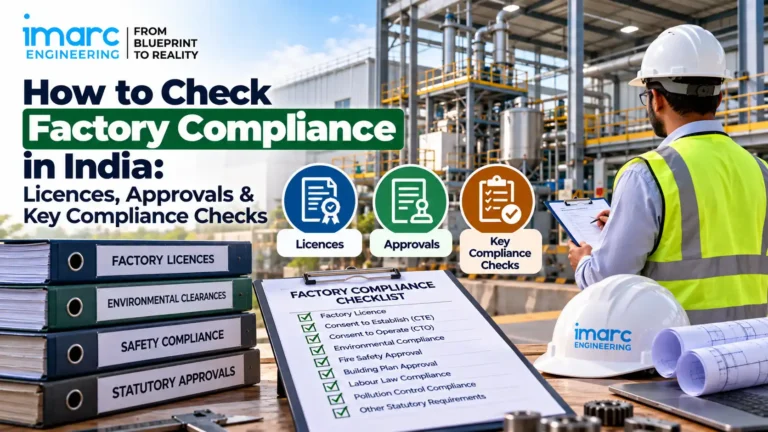
Licences and Regulatory Requirements
Starting a plastic pallet manufacturing unit in India requires several approvals:
- Business registration (Proprietorship, LLP, or Private Limited Company)
- Factory Licence under the Factories Act
- Environmental Clearance from the State Pollution Control Board
- GST Registration
- Fire Safety NOC
- Hazardous/chemical compliance for storage and handling of polymer granules and masterbatch
- Effluent Treatment Plant (ETP) operational clearance
- Occupational Health and Safety compliance
Key Challenges to Consider
High Capital Requirements. Establishing a fully equipped plastic pallet manufacturing plant- with high-tonnage injection molding machines, cooling systems, material handling equipment, and an ETP- requires significant upfront capital investment. Accessing term loans from scheduled banks or NBFC financing, or applying for PLI or MSME credit-linked subsidy schemes, can help bridge the funding gap.
Raw Material Price Volatility. HDPE/PP recycled or virgin granules, which account for 70–80% of OpEx, are directly linked to global crude oil prices and domestic polymer production cycles. Price fluctuations in these materials can compress margins significantly without proactive hedging strategies and long-term supply contracts.
Regulatory Compliance. Manufacturing facilities in India must comply with factory safety norms, the Plastic Waste Management Rules issued by the Ministry of Environment, Forest and Climate Change, and state-level pollution control requirements. Navigating multi-agency approvals adds time and cost to the pre-production phase.
Competition from Global Players. Established global manufacturers such as CABKA Group, Orbis Corporation (Menasha Corporation), Greystone Logistics, Monoflo International, and Allied Plastics Inc. set high benchmarks for product quality, pricing, and service levels. Indian producers must compete on localisation, rapid delivery, and the ability to customise pallet specifications for domestic buyers.
Sustainability and Circular Economy Pressure. Global trends toward circular supply chains- such as the Cabka–Renewi Eco CP3 pallet made from 100% recycled polyethylene- are creating increasing pressure on manufacturers to integrate recycled content into their product lines. Indian producers who do not invest in recycled granule capabilities may face growing resistance from ESG-committed customers.
Skilled Manpower. Operating high-tonnage injection molding machines, cooling systems, and quality testing instruments requires technically trained personnel. Recruiting, training, and retaining qualified machine operators and quality control technicians in a competitive industrial labour market is an ongoing operational challenge.
Frequently Asked Questions
1. How much does it cost to set up a plastic pallet manufacturing plant in India?
The total setup cost depends on plant capacity, location, technology selection, and automation level. Key cost components include land and site development, civil construction, molding machinery, cooling and handling equipment, and pre-operative expenses. A detailed feasibility study is recommended to generate project-specific cost estimates.
2. Is plastic pallet manufacturing profitable in India in 2026?
Yes. The project delivers healthy financial performance, with gross profit margins of 25–35% and net profit margins of 10–20% under normal operating conditions. The global plastic pallet market is projected to grow from USD 7.14 billion in 2025 to USD 10.54 billion by 2034 at a CAGR of 4.4%, and India’s domestic demand is aligned with this global trajectory.
3. What machinery is required for a plastic pallet plant in India?
Key equipment includes resin feeding systems, dryers, injection molding or structural foam molding machines, cooling systems, trimming tools, material handling equipment, and quality testing instruments.
4. What licences and approvals are required to start a plastic pallet plant in India?
Required approvals include business registration, Factory Licence, Environmental Clearance from the State Pollution Control Board, GST Registration, Fire Safety NOC, hazardous material compliance for polymer storage, ETP operational clearance, and Occupational Health and Safety compliance.
5. What raw materials are needed for plastic pallet manufacturing?
The primary raw materials are HDPE/PP recycled or virgin granules and color masterbatch. HDPE/PP granules account for 70–80% of total operating expenses and are the dominant cost driver in this manufacturing process.
6. What are the environmental compliance requirements for a plastic pallet plant in India?
The plant must obtain Environmental Clearance, operate an approved Effluent Treatment Plant, and comply with the Plastic Waste Management Rules and applicable state pollution control board norms. Regular environmental monitoring and record-keeping are mandatory throughout operations.
7. What is the best location to set up a plastic pallet plant in India?
Locations offering proximity to polymer raw material suppliers, established logistics infrastructure, and end-use industrial clusters are preferred. States such as Gujarat, Maharashtra, Haryana, and Tamil Nadu are strong candidates given their petrochemical supply chains, warehousing density, and pharmaceutical and food processing industries.
8. What is the break-even period for this type of plant in India?
The break-even period depends on plant capacity, capital investment, selling price, and capacity utilisation rate. A full financial feasibility report covering NPV, IRR, and payback period analysis is the most reliable tool for project-specific break-even estimation.
9. What government incentives are available for manufacturers in India?
Indian manufacturers in the plastics and packaging sector can access the Production Linked Incentive (PLI) scheme for key sectors, MSME credit-linked capital subsidy schemes, state industrial investment promotion subsidies, and export promotion benefits under schemes administered by the Ministry of Commerce and Industry.
Key Takeaways for Investors
A plastic pallet manufacturing plant in India offers a well-grounded investment opportunity anchored by expanding demand across logistics and warehousing, food and beverage, pharmaceuticals, chemicals, retail and e-commerce distribution, and the automotive sector. The project is financially viable across the 500,000 to 2 million unit annual capacity range, with gross margins of 25–35% and net margins of 10–20% providing a robust return framework for investors of varying capital sizes. According to IMARC Group estimates, the global plastic pallet market is expected to grow from USD 7.14 billion in 2025 to USD 10.54 billion by 2034 at a CAGR of 4.4%, with Asia-Pacific- and India specifically- positioned as one of the fastest-growing regional markets within this trajectory. As Indian supply chains deepen their investment in automation, hygiene compliance, and export-oriented packaging standards, demand for domestically manufactured plastic pallets is set to remain structurally strong well into the next decade.
About the Author