Setting up a MIG welding wire manufacturing plant in India represents a compelling investment opportunity driven by rapid industrialization, infrastructure expansion, and the surging global demand for reliable welding consumables. As manufacturing sectors modernize and automation adoption accelerates, MIG welding wire with its versatility, high deposition rates, and broad applicability across metals has become an indispensable consumable in welding operations worldwide, This growth trajectory, combined with expanding end-use sectors such as automotive, construction, shipbuilding, and renewable energy, creates a highly favourable environment for new MIG welding wire manufacturing entrants.
What is MIG Welding Wire?
MIG (Metal Inert Gas) welding wire is a consumable electrode wire used in the MIG/GMAW (Gas Metal Arc Welding) process. It is manufactured from mild steel, stainless steel, aluminum, or other alloys and serves as the filler material that joins base metals together during welding. The wire is fed continuously through a welding gun into the weld pool, shielded by an inert or semi-inert gas mixture to prevent oxidation and contamination of the weld.
MIG welding wire is universally valued for its high deposition rates, clean welds with minimal spatter, ease of automation, and suitability for a wide range of base metals and applications. It is extensively used across automotive manufacturing, shipbuilding, construction, pipeline fabrication, aerospace, and heavy engineering sectors. Key product types include solid carbon steel wire (ER70S-6), stainless steel wire (ER308/316L), aluminum wire (ER4043/5356), and flux-cored wire variants, each designed for specific welding environments and base material specifications.
Cost of Setting Up a MIG Welding Wire Manufacturing Plant
The total cost of establishing a MIG welding wire manufacturing plant is influenced by several key parameters: production capacity, product mix (carbon steel, stainless steel, aluminum, specialty alloys), level of automation, plant location, raw material sourcing strategy, and applicable regulatory and quality certification standards. Below is a structured breakdown of all major cost components.
1. Capital Expenditure (CapEx)
Total capital investment in a MIG welding wire manufacturing plant covers the following major heads:
Land and Site Development
This includes land acquisition or lease, site preparation, boundary development, land registration, and utilities connectivity. Site selection should prioritize proximity to steel rod and wire rod suppliers, reliable power infrastructure (essential for wire drawing operations), logistics corridors for raw material inbound and finished goods outbound, and access to a skilled industrial workforce. Compliance with industrial zoning regulations and environmental standards for metal processing facilities is essential from the outset.
Civil Works and Construction
Building costs encompass the main production facility (wire drawing hall, annealing section, copper coating and spooling area), raw material warehouse, finished goods warehouse, a quality control and testing laboratory, administrative block, utility area (transformer yard, compressed air, cooling water systems), effluent and waste management infrastructure, and worker amenities. Construction must comply with applicable industrial safety standards, fire safety requirements, and environmental regulations.
Machinery and Equipment
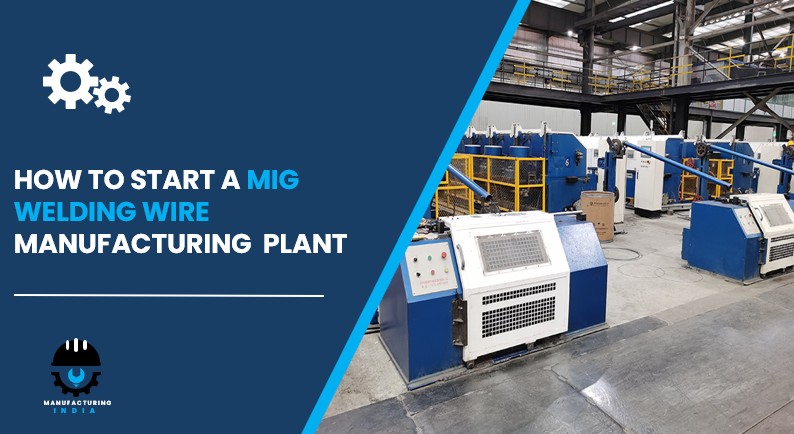
Machinery represents the single largest component of CapEx. Key equipment required for a MIG welding wire manufacturing plant includes:
- Wire Rod Pay-Off Reels and Coil Handling Systems
- Multi-Pass Wire Drawing Machines (wet and dry, intermediate and finishing blocks)
- Annealing Furnaces (continuous strand annealing for softening drawn wire)
- Copper Electroplating Lines (for copper coating of carbon steel MIG wire)
- Precision Spooling and Winding Machines (plastic spools, drums, layer-wound coils)
- Straightening and Cut-Length Machines (for cut-length wire products)
- Wire Cleaning and Surface Treatment Lines (pickling, phosphating, lubricating systems)
- In-Line Diameter Measurement and Quality Control Systems (laser gauges)
- Tensile Testing Machines and Hardness Testers (laboratory equipment)
- Chemical Analysis Equipment (optical emission spectrometer, XRF analyzer)
- Packaging Lines (spool wrapping, carton sealing, shrink-wrapping, palletizing)
- Overhead Cranes and Material Handling Equipment
- Effluent Treatment Plant (for copper plating and pickling wastewater)
- PLC/SCADA Process Control and Automation Systems
Other Capital Costs
These include pre-operative expenses, commissioning charges, import duties on specialized wire drawing and annealing equipment, staff training costs, initial chemical and consumable inventory for commissioning, and regulatory compliance setup including environmental clearances and factory licensing.
Request a Sample Report for In-Depth Market Insights: https://www.imarcgroup.com/mig-welding-wire-manufacturing-plant-project-report/requestsample
2. Operational Expenditure (OpEx)
Once the plant is commissioned, the ongoing cost structure is driven by the following key components:
Raw materials primarily wire rod (carbon steel, stainless steel, or aluminum rod in various grades) constitute the dominant operating cost, typically representing 65–75% of total OpEx. Copper for electroplating, drawing lubricants, pickling chemicals, and packaging materials form additional material cost components. Energy costs, driven primarily by wire drawing motors, annealing furnaces, and electroplating rectifiers, account for 10–15% of OpEx and represent a significant area for efficiency optimization. Labor, maintenance, quality control, and overhead costs constitute the remainder of the operating cost base.
3. Plant Capacity
The proposed MIG welding wire manufacturing facility is designed with an annual production capacity of 5,000 MT, enabling economies of scale while maintaining operational flexibility. This capacity supports a diversified product portfolio of carbon steel solid wire, stainless steel solid wire, and aluminum wire products across standard spool, drum, and bulk coil packaging formats.
4. Profit Margins and Financial Projections
The project demonstrates healthy profitability under normal operating conditions. Financial projections should encompass capital investment, operating costs, capacity ramp-up schedule, pricing strategy by product grade and packaging format, and forward demand outlook. A comprehensive analysis should include sensitivity analysis, Net Present Value (NPV), Internal Rate of Return (IRR), and Payback Period calculations. Gross margins for standard carbon steel MIG wire typically range from 18–28%, while stainless steel and specialty alloy products command higher margins of 25–35%.
Why Set Up a MIG Welding Wire Manufacturing Plant?
Rapid Industrialization and Infrastructure Expansion
Accelerating industrialization across developing economies particularly in Asia-Pacific, the Middle East, and Africa is driving sustained demand for welding consumables. Investments in infrastructure development projects including bridges, roads, pipelines, industrial facilities, and transportation networks are fueling MIG welding wire consumption as an essential component in structural and fabrication welding applications.
Automotive Sector Growth and Lightweighting Trends
The global automotive industry is a major consumer of MIG welding wire, using it for welding body frames, chassis components, exhaust systems, and structural assemblies. The rising demand for lightweight materials including aluminum and advanced high-strength steel in automotive manufacturing is creating additional demand for specialized MIG wire formulations and driving innovation in wire metallurgy and surface treatment.
Renewable Energy and Green Infrastructure
The global transition to renewable energy is generating significant demand for MIG welding wire in the fabrication and assembly of wind turbine towers, solar panel mounting structures, transmission infrastructure, and energy storage systems. Large-scale renewable energy construction projects require high volumes of reliable, high-performance welding consumables, creating a structurally growing demand segment for MIG wire manufacturers.
Welding Automation and Robotics Adoption
The widespread adoption of automated and robotic welding systems across automotive, shipbuilding, and industrial manufacturing sectors is substantially increasing MIG wire consumption per production unit. Robotic welding accounts for approximately 30% of total welding wire consumption globally and is growing rapidly. MIG wire is the preferred consumable for robotic welding systems due to its consistent quality requirements, feedability characteristics, and suitability for high-speed continuous welding operations.
Repair, Maintenance, and MRO Demand
Ongoing repair and maintenance activities across manufacturing, infrastructure, energy, and agricultural sectors generate a stable and recurring demand base for MIG welding wire. Maintenance, Repair, and Overhaul (MRO) welding applications including fixing metal equipment, machinery, fences, agricultural implements, and industrial structures represent a resilient demand segment that is largely insensitive to economic cycles.
Strong Raw Material Supply Infrastructure
Well-developed wire rod production capacity from global steel majors provides a robust and diversified raw material supply base for MIG wire manufacturers. Competitive wire rod pricing, multiple global and regional suppliers, and established logistics infrastructure support a favorable input cost environment for new plant operators, particularly those located in proximity to steel production hubs.
Manufacturing Process Overview
The MIG welding wire manufacturing process is a precision metal forming and surface treatment operation that transforms hot-rolled steel wire rod (or aluminum/stainless rod) into dimensionally accurate, surface-treated, and packaged welding wire. The key process stages are:
- Wire Rod Inspection and Preparation: Wire rod is received, inspected for surface quality and dimensional conformance, and descaled (mechanically or chemically) to remove mill scale and surface oxides before entering the drawing process.
- Wire Drawing Intermediate Passes: The descaled rod is drawn through a series of tungsten carbide dies on multi-pass drawing machines, progressively reducing diameter while applying controlled work hardening. Lubricants are applied at each die to reduce friction and drawing force.
- Intermediate Annealing: Drawn wire undergoes strand annealing in continuous furnaces to relieve work-hardening stress, restore ductility, and achieve target mechanical properties (tensile strength, elongation) required for weldability.
- Finishing Drawing: Wire is drawn to final diameter specification (typically 0.6 mm to 1.6 mm for MIG wire) with tight dimensional tolerances (typically ±0.01 mm) to ensure consistent feedability through welding guns.
- Copper Electroplating (Carbon Steel Wire): Finished carbon steel wire is copper-coated in a continuous electroplating line to improve electrical conductivity, reduce friction during wire feeding, prevent corrosion, and enhance arc stability during welding.
- Surface Treatment and Lubrication: Post-plating, wire receives a controlled surface lubricant application to optimize feedability and reduce welding gun liner wear in end-use applications.
- Quality Control and Testing: Every production lot undergoes comprehensive testing including diameter measurement (laser gauge in-line), tensile strength and elongation testing, copper coating weight analysis, arc performance testing, chemical composition verification (OES), and surface inspection.
- Spooling, Winding, and Packaging: Approved wire is precision-wound onto plastic spools (0.8 kg to 15 kg), layer-wound onto metal drums (100–250 kg), or formed into bulk coils, then labeled for traceability and packaged for dispatch.
Key Applications of MIG Welding Wire
The MIG welding wire market serves several major end-use segments across industrial and commercial channels. Automotive and transportation manufacturing represents the largest application segment, consuming MIG wire for body-in-white assembly, chassis fabrication, exhaust systems, and component joining in both conventional and electric vehicle production. The construction and infrastructure sector is a major consumer, utilizing MIG wire in the fabrication of structural steel, bridges, pipelines, pressure vessels, and building frameworks. Shipbuilding and offshore industries represent a high-volume segment, requiring large quantities of MIG wire for hull fabrication, deck structures, and marine equipment assembly. The industrial machinery and equipment manufacturing sector consumes MIG wire for fabricating heavy equipment, agricultural machinery, mining equipment, and industrial plant structures. The energy sector including oil and gas pipelines, power generation equipment, and renewable energy infrastructure represents a growing and high-value application segment. Repair and maintenance (MRO) applications across all industry sectors provide a stable and recurring base demand for standard carbon steel MIG wire products.
Global MIG Welding Wire Market Outlook
Within this market, solid wires which include MIG/GMAW wire as the primary product account for approximately 45% of total market volume. The MIG welding wire segment specifically benefits from multiple structural demand drivers:
- Sustained growth in global automotive production and the shift to lightweight materials requiring specialized MIG wire formulations
- Rapid expansion of infrastructure investment in developing economies across Asia-Pacific, Middle East, and Africa
- Accelerating adoption of robotic and automated welding systems increasing per-unit wire consumption
- Large-scale construction of renewable energy infrastructure including wind towers, solar mounting structures, and transmission networks
- Ongoing repair and maintenance demand across industrial, energy, and transportation asset bases
- Increasing demand for stainless steel and aluminum MIG wire in premium manufacturing applications
Major global players in the MIG welding wire and welding consumables industry include Lincoln Electric Holdings, Illinois Tool Works (ITW Welding), ESAB Corporation, Voestalpine Bohler Welding, Hyundai Welding, Kobe Steel (Kobelco Welding), Victor Technologies, and Gedik Welding, serving automotive, construction, shipbuilding, and industrial end-use sectors across all major markets.
Licenses and Regulatory Requirements
Establishing a MIG welding wire manufacturing unit requires a range of approvals and certifications, which may vary by country and jurisdiction, including:
- Business registration and company incorporation
- Factory License under applicable labor and manufacturing laws
- Pollution Control Board Clearances Consent to Establish (CTE) and Consent to Operate (CTO)
- Environmental Impact Assessment (EIA) and Environmental Clearance for metal processing operations
- Effluent Treatment Plant authorization (for copper electroplating and pickling wastewater)
- Fire Safety Certificate and NOC from local fire authority
- Bureau of Indian Standards (BIS) Certification or equivalent national quality standard (IS 6419 for MIG wire)
- ISO 9001 Quality Management System Certification
- ISO 14001 Environmental Management System Certification
- AWS (American Welding Society) Classification Compliance (ER70S-6, ER308L, ER4043, etc.) for export markets
- CE Marking for European market compliance
- Hazardous Materials Handling License (for pickling acids and copper plating chemicals)
- Export-Import Code (IEC) for international market access
- Electrical Inspector Approval for high-amperage rectifier and annealing furnace installations
Key Challenges to Consider
Raw Material Price Volatility
Wire rod prices for carbon steel, stainless steel, and aluminum rod are subject to significant cyclical movements driven by global steel market dynamics, energy costs for steel production, trade policy changes, and supply-demand imbalances. Managing raw material costs through long-term procurement contracts, strategic inventory management, and supplier diversification is critical for protecting plant economics and maintaining stable product pricing.
Energy Intensity of Wire Drawing and Annealing
MIG welding wire production is an energy-intensive process, with wire drawing motors and annealing furnaces representing the primary energy consumers. Energy costs typically account for 10–15% of operating expenditure, making energy price fluctuations a meaningful variable in plant profitability. Investment in energy-efficient annealing technology, heat recovery systems, and variable frequency drives for drawing machines provides meaningful operating cost reduction over the plant lifecycle.
Dimensional Precision and Quality Consistency
MIG welding wire is a precision product with tight dimensional tolerances (±0.01 mm) and stringent surface quality, mechanical property, and chemical composition specifications. Maintaining consistent quality across high-volume continuous production requires sophisticated process control systems, in-line measurement technology, and rigorous quality management practices. Wire that fails to meet feedability, arc stability, or mechanical property specifications creates warranty exposure and customer attrition risk.
Copper Electroplating Compliance and Wastewater Management
The copper electroplating process used for carbon steel MIG wire generates copper-bearing wastewater, sludge, and chemical byproducts that are subject to stringent environmental regulation. Investment in compliant effluent treatment infrastructure, copper recovery systems, and proper hazardous waste disposal procedures is a non-negotiable operational requirement and represents a meaningful capital and operating cost component.
Customer and Distributor Qualification
New MIG welding wire manufacturers must undergo formal supplier qualification processes with welding equipment OEMs, industrial distributors, and direct industrial buyers. These processes include product specification approval testing, wire feedability trials on customer welding equipment, weld performance validation, and quality documentation review. Achieving preferred supplier status with major industrial buyers can require 6–18 months from initial qualification to volume purchase orders.
Competitive Market Dynamics
The MIG welding wire market features established multinational players with significant brand equity, certified product portfolios, global distribution reach, and scale-driven cost advantages. New entrants must develop a clear competitive positioning strategy through regional market focus, private-label manufacturing for established welding brands, niche product specialization (specialty alloys, premium surface quality), or cost leadership in standard carbon steel grades to build a sustainable competitive position.
Frequently Asked Questions (FAQs)
1. How much does it cost to set up a MIG welding wire manufacturing plant?
The investment depends on plant capacity, product mix (carbon steel, stainless steel, aluminum), automation level, and location. Costs cover land, civil construction (wire drawing hall, annealing section, electroplating line), machinery (drawing machines, annealing furnaces, spooling equipment), utilities, effluent treatment, working capital, and regulatory compliance. A comprehensive feasibility study from IMARC Group provides detailed, capacity-specific cost estimates covering all CapEx and OpEx components.
2. Is MIG welding wire manufacturing a profitable business in 2026?
Yes. Strong and structurally growing demand from automotive, construction, infrastructure, and industrial sectors combined with gross margins of 18–35% depending on product grade and customer segment makes MIG welding wire manufacturing financially attractive. Break-even periods of 3–5 years are achievable with disciplined capacity ramp-up, effective product quality management, and targeted market development in high-margin stainless and specialty wire grades.
3. What machinery and equipment are required for a MIG welding wire plant?
Key equipment includes wire rod pay-off reels, multi-pass wire drawing machines (intermediate and finishing), continuous strand annealing furnaces, copper electroplating lines, spooling and winding machines, in-line laser diameter gauges, tensile testing and hardness testing equipment, optical emission spectrometers for chemical analysis, and automated packaging lines.
4. What licenses and approvals are required?
Required approvals generally include company registration, factory license, Pollution Control Board clearances (CTE and CTO), effluent treatment authorization, fire safety NOC, BIS or equivalent national quality certification, ISO 9001 certification, and AWS classification compliance for export market access. Environmental and hazardous materials handling permits are required for copper electroplating operations.
5. How long does it take to commission a MIG welding wire manufacturing plant?
Typically 12–18 months from project initiation to commercial production launch, depending on project scale, machinery procurement lead times (specialized drawing and annealing equipment), civil construction timeline, regulatory approvals, and customer qualification requirements for key accounts.
6. What are the key raw materials for MIG welding wire manufacturing?
Primary raw materials include wire rod in applicable grades: carbon steel (SAE 1008/1010 for ER70S-6), stainless steel rod (AISI 308/316L), and aluminum rod (AA4043/5356). Additional materials include copper (for electroplating), drawing lubricants (soap and oil-based), pickling chemicals (sulfuric or hydrochloric acid), phosphating chemicals, and packaging materials (plastic spools, cartons, stretch film, labels).
7. What is the break-even period for a MIG welding wire manufacturing plant?
The break-even period generally ranges from 3–5 years for well-positioned plants, depending on capacity utilization ramp-up, product mix between standard carbon steel grades and premium stainless/specialty products, operating efficiency, energy cost management, and market demand development trajectory.
8. What are the main types of MIG welding wire and their applications?
The primary categories include solid carbon steel wire (ER70S-6: general-purpose structural and automotive welding), stainless steel wire (ER308L/316L: food processing, chemical, and sanitary applications), aluminum wire (ER4043/5356: automotive, aerospace, and marine applications), nickel alloy wire (high-temperature and corrosion applications), and flux-cored wire (heavy fabrication, shipbuilding, and out-of-position welding), each serving distinct industrial and commercial welding segments.
9. What government incentives are available for welding wire manufacturers?
Manufacturers may benefit from state industrial investment incentives, capital subsidies, PLI (Production Linked Incentive) schemes for specialty metals and manufacturing, infrastructure support in designated industrial parks, export promotion benefits for internationally certified products, and technology upgrade fund schemes for modernizing wire drawing and annealing equipment.
10. How does MIG welding wire compare to other welding consumables in terms of setup?
Compared to flux-cored wire or covered electrodes, solid MIG wire production requires fewer chemical additive formulation steps but demands higher precision in wire drawing (tighter diameter tolerances), copper electroplating capability, and rigorous surface quality control. The manufacturing infrastructure for carbon steel MIG wire can be adapted to produce stainless and aluminum wire with product-specific drawing dies, lubricants, and annealing parameters, enabling multi-product manufacturing flexibility from a common plant platform.
Key Takeaways for Investors
The MIG welding wire manufacturing industry represents a well-established, high-demand, and financially attractive investment opportunity with strong and durable growth dynamics globally. Key investment highlights include. The industry benefits from diversified demand across automotive, construction, infrastructure, renewable energy, and MRO markets, providing resilience against single-sector demand volatility. Long-term growth is supported by structural drivers including accelerating industrial automation, global infrastructure investment cycles, the energy transition driving renewable energy construction, and the continued substitution of manual welding by robotic MIG welding in high-volume manufacturing environments.
About the Author