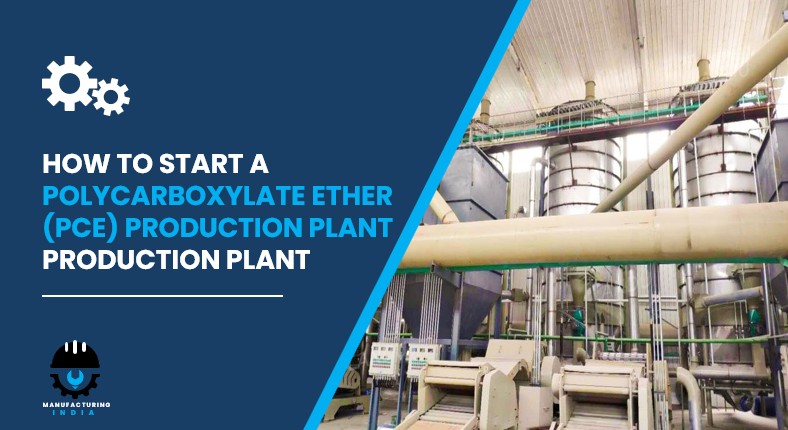
Setting up a polycarboxylate ether (PCE) production plant in India represents a compelling investment opportunity driven by accelerating global infrastructure development, rapid urbanization, and the surging demand for high-performance concrete admixtures. As construction standards advance and sustainability mandates intensify, PCE superplasticizers with their superior workability enhancement, water reduction efficiency, and compatibility with modern concrete systems have become indispensable chemical inputs in construction and civil engineering projects worldwide. This growth trajectory, combined with expanding end-use sectors such as ready-mix concrete, precast concrete, dry-mix mortars, self-leveling compounds, and oil and gas cementing, creates a highly favourable environment for new PCE production entrants.
What is Polycarboxylate Ether (PCE)?
Polycarboxylate ether (PCE) is a high-performance superplasticizer produced from comb-type polymer chains synthesized through polymerization of acrylic or methacrylic acid monomers with polyethylene glycol (PEG) or propylene oxide derivatives. Unlike earlier-generation plasticizers that rely solely on electrostatic repulsion, PCE functions through a dual mechanism of electrostatic repulsion and steric hindrance, delivering significantly superior dispersion capability and workability control in cementitious systems.
PCE admixtures are universally valued in modern construction for enabling high-workability, low-water-to-cement-ratio concrete mixes without compromising early or long-term compressive strength. They are foundational to the production of self-compacting concrete (SCC), high-performance concrete (HPC), ultra-high-performance concrete (UHPC), and green low-carbon concrete formulations. PCE finds broad application across ready-mix concrete plants, precast concrete manufacturers, dry-mix mortar producers, construction chemical companies, and oil and gas well cementing operations.
Cost of Setting Up a Polycarboxylate Ether (PCE) Production Plant
The total cost of establishing a PCE production plant is influenced by several key parameters: production capacity, product form (liquid concentrate or powder), degree of automation, plant location, raw material sourcing strategy, and applicable regulatory and safety compliance requirements. Below is a structured breakdown of all major cost components.
1. Capital Expenditure (CapEx)
Total capital investment in a PCE production plant covers the following major heads:
Land and Site Development
This includes land acquisition or lease, site preparation, boundary development, land registration, and utilities connectivity. Site selection should prioritize proximity to key raw material suppliers including ethylene oxide/propylene oxide (EO/PO) producers, methacrylic acid suppliers, and initiator/chemical distributors. Reliable power and water infrastructure, strong logistics corridors for both inbound raw materials and outbound finished goods, and access to a skilled chemical industry workforce are critical selection criteria. Compliance with industrial zoning regulations, hazardous materials handling requirements, and environmental standards for chemical manufacturing is essential from the outset.
Civil Works and Construction
Building costs encompass the main production facility (reactor hall, monomer preparation area, neutralization and filtration section), raw material storage (for both liquid and solid feedstocks), finished goods storage (bulk liquid tanks and bagging/drum filling area), quality control and testing laboratory, administrative block, utility infrastructure (boiler house, cooling towers, water treatment, compressed air), effluent treatment plant, and worker amenities. Construction must comply with applicable chemical plant safety standards, fire and explosion safety requirements, and environmental regulations for chemical manufacturing facilities.
Machinery and Equipment
Machinery represents the single largest component of CapEx. Key equipment required for a PCE production plant includes:
- Stainless Steel or Glass-Lined Reactors (jacketed, with agitators, for controlled polymerization)
- Monomer Feed and Dosing Systems (metering pumps, flow controllers, initiator feed systems)
- Temperature Control Systems (heat exchangers, cooling coils, steam/cooling water jackets)
- Neutralization Tanks (for pH adjustment of the polymer solution using NaOH or other alkalis)
- Filtration and Clarification Systems (membrane or bag filtration for impurity removal)
- Concentration or Drying Units (evaporators or spray dryers for liquid-to-powder conversion)
- Bulk Liquid Storage Tanks (for liquid PCE concentrate storage and dispatch)
- Drum and IBC Filling Lines and Bagging Machines (for packed product output)
- Laboratory Analytical Equipment (viscometers, refractometers, GPC/SEC for molecular weight analysis, pH meters, concrete flow test apparatus)
- Wastewater Treatment and Effluent Neutralization Systems
- PLC/SCADA Process Control and Automation Systems
- Material Handling Equipment (pumps, pipelines, valves, loading/unloading systems)
Other Capital Costs
These include pre-operative expenses, commissioning charges, import duties on specialized reactor and drying equipment, staff training costs, initial chemical and consumable inventory for commissioning, and regulatory compliance setup including environmental clearances, factory licensing, and hazardous materials handling permits.
Request a Sample Report for In-Depth Market Insights: https://www.imarcgroup.com/polycarboxylate-ether-manufacturing-plant-project-report/requestsample
2. Operational Expenditure (OpEx)
Once the plant is commissioned, the ongoing cost structure is driven by the following key components:
Raw materials — principally ethylene oxide/propylene oxide (EO/PO), methacrylic acid or acrylic acid, polyethylene glycol derivatives, initiators (persulfates), chain transfer agents, and neutralizing agents — constitute the dominant operating cost, typically representing 60–70% of total OpEx. Utility costs, driven primarily by reactor heating and cooling systems, spray dryers or evaporators, water treatment, and compressed air, account for 15–20% of OpEx and represent a significant area for energy efficiency investment. Labor, maintenance, quality control, packaging, transportation, and overhead costs constitute the remainder of the operating cost base.
3. Plant Capacity
The proposed PCE production facility is designed with an annual production capacity ranging between 20,000–50,000 MT, enabling economies of scale while maintaining operational flexibility. This capacity supports a diversified product portfolio of liquid PCE concentrate (typically 40–50% active content), powder PCE, and application-specific formulations for ready-mix concrete, precast, dry-mix mortar, and oil well cementing end-use segments.
4. Profit Margins and Financial Projections
The project demonstrates strong profitability under normal operating conditions. Financial projections should encompass capital investment, operating costs, capacity ramp-up schedule, pricing strategy by product grade and form (liquid vs. powder), and forward demand outlook. A comprehensive analysis should include sensitivity analysis, Net Present Value (NPV), Internal Rate of Return (IRR), and Payback Period calculations. Gross margins for PCE production typically range from 35–45%, supported by the value-added nature of the product and differentiated performance characteristics versus older plasticizer technologies. Net profit margins of 15–20% are achievable with disciplined cost management and optimal capacity utilization.
Why Set Up a Polycarboxylate Ether (PCE) Production Plant?
Essential Construction and Infrastructure Component
PCE superplasticizers are critical chemical admixtures in modern concrete technology, enabling high workability, substantially reduced water-to-cement ratios, and superior compressive strength development. Their role in bridges, tunnels, roads, high-rise buildings, precast elements, and marine structures positions them as an essential material in durable, high-performance construction. As concrete specification standards rise globally, PCE has become the admixture of choice for demanding structural applications, displacing older naphthalene sulfonate and lignosulfonate-based plasticizers.
Rapid Urbanization and Global Infrastructure Investment
Accelerating urbanization, particularly across Asia-Pacific, the Middle East, Africa, and Latin America, is driving sustained demand for PCE admixtures. According to the UNFPA, more than half of the world’s population now lives in cities, and by 2030, urban populations are projected to reach approximately 5 billion. Large-scale government investments in smart cities, highways, rail infrastructure, affordable housing, and renewable energy structures are directly translating into growing PCE consumption across all major construction markets.
Sustainability and Green Concrete Mandates
Tightening sustainability regulations and building codes are driving rapid adoption of PCE admixtures as a key enabler of green concrete production. PCE allows significant cement dosage reduction while maintaining concrete performance, directly lowering the carbon footprint of construction projects. Growing demand for low-carbon, supplementary cementitious material (SCM)-rich concrete mixes including those incorporating fly ash, slag, and silica fume is further expanding the technical performance requirements addressable only by advanced PCE formulations.
Growth of Precast and Ready-Mix Concrete Industries
The global precast concrete industry is expanding rapidly, driven by the industrialization of construction processes, demand for faster project delivery, and the requirement for superior dimensional and surface quality. Precast concrete production is among the largest per-unit consumers of PCE admixtures due to its requirement for high early strength, consistent workability, and reduced curing times. Simultaneously, the ready-mix concrete industry in emerging markets is growing rapidly, providing a large-volume, recurring demand base for PCE producers with established technical service capabilities.
Megatrend Alignment with High-Performance Concrete
The global construction industry is increasingly adopting self-compacting concrete (SCC), ultra-high-performance concrete (UHPC), and high-strength concrete systems, all of which are technically dependent on PCE superplasticizers. These premium concrete technologies are growing faster than the overall concrete market, supporting a structural upgrade in the quality and specifications of PCE admixtures demanded by advanced construction projects and creating opportunities for producers capable of delivering technically differentiated, application-specific PCE products.
Policy and Infrastructure Investment Push
Public expenditures in smart cities, national highway programs, rail networks, renewable energy infrastructure, and affordable housing schemes across major markets including India, China, Southeast Asia, and the Middle East are directly driving PCE consumption growth. Government policies encouraging domestic chemical manufacturing and import substitution in construction chemicals provide additional support for new PCE production investments in high-growth markets.
Supply Chain Localization Opportunity
EPC contractors, ready-mix concrete producers, and precast manufacturers are increasingly prioritizing local, reliable PCE suppliers to ensure consistent concrete performance, reduce lead times, avoid import dependency, and stabilize pricing. This localization trend is creating structural opportunities for domestic PCE producers with strong technical service capabilities and reliable supply chain management, particularly in markets currently dependent on imported PCE admixtures.
Manufacturing Process Overview
The PCE production process is a precision polymer synthesis operation that transforms liquid and solid chemical monomers into high-performance superplasticizer products through controlled polymerization, neutralization, and finishing operations. The key process stages are:
- Monomer Feedstock Preparation: Raw materials including methacrylic acid (MAA) or acrylic acid, polyethylene glycol methacrylate (PEGMA) or isoprenyl polyethylene glycol (IPEG) macromonomers, initiators (e.g., ammonium or sodium persulfate), and chain transfer agents are received, quality-tested, and prepared for reactor charging according to the target PCE molecular architecture.
- Polymerization: The reaction is conducted in jacketed stainless steel or glass-lined reactors under controlled temperature (typically 60–90°C), pH, and initiator dosing conditions. Free-radical polymerization produces the backbone polymer chain with the characteristic comb-structure side chains that give PCE its steric hindrance mechanism.
- Neutralization: The acidic polymer solution is neutralized with sodium hydroxide (NaOH) or other alkalis to achieve the target pH (typically 6–8) required for concrete compatibility and stability, converting the carboxylic acid groups to carboxylate salts.
- Filtration and Quality Control: The neutralized polymer solution undergoes filtration to remove any unreacted solids or gel particles. In-process quality control testing includes molecular weight measurement (GPC/SEC), active content determination, pH verification, viscosity measurement, and concrete performance validation.
- Concentration or Drying (Optional): For high-active-content liquid products, partial evaporation concentrates the solution to the target active solids level. For powder PCE products, spray drying converts the liquid concentrate into a free-flowing powder for dry-mix mortar and bagged product applications.
- Storage and Packaging: Approved liquid PCE is transferred to bulk storage tanks for tanker dispatch or drum/IBC filling lines for packed product. Powder PCE is bagged in multi-layer paper or PE bags. All products are labeled for traceability and dispatched to customers.
Key Applications of Polycarboxylate Ether (PCE)
The PCE market serves several major end-use segments across construction, infrastructure, and industrial channels. The ready-mix concrete (RMC) industry represents the largest single application segment, consuming PCE as the primary admixture for workability enhancement and water reduction in standard and high-performance concrete mixes supplied to residential, commercial, and infrastructure construction sites. Precast concrete manufacturing is a major high-value application, requiring PCE for consistent high early strength, superior surface finish, and reliable performance in automated production environments. The dry-mix mortar industry, encompassing tile adhesives, self-leveling compounds, floor screeds, and repair mortars, uses PCE in powder form as a key rheology modifier and water-retention agent. High-performance concrete applications including self-compacting concrete (SCC), high-strength concrete (HSC), and ultra-high-performance concrete (UHPC) for demanding structural projects are growing segments requiring technically advanced PCE formulations. The oil and gas industry uses PCE as a dispersant in well cementing operations where high fluidity, low water content, and stability under downhole conditions are required. Infrastructure construction including bridges, tunnels, marine structures, and nuclear containment uses premium PCE admixtures to meet stringent durability and performance specifications.
Global PCE Market Outlook
The India polycarboxylate ether (PCE) market size was valued at USD 324.39 Million in 2025. According to IMARC Group estimates, the market is projected to reach USD 554.59 Million by 2034, exhibiting a CAGR of 6.14% from 2026 to 2034. Globally, the PCE market benefits from multiple structural demand drivers:
- Accelerating urbanization and infrastructure development across Asia-Pacific, Middle East, Africa, and Latin America driving sustained ready-mix and precast concrete demand
- Mandatory adoption of high-performance concrete technologies and green building standards in major construction markets
- Rapid growth of precast concrete and industrialized construction methods increasing per-project PCE consumption
- Large-scale government infrastructure investment programs in highways, rail, smart cities, and affordable housing
- Technological advancement in PCE polymer chemistry enabling application-specific formulations for premium concrete systems
- Increasing demand for low-carbon concrete solutions requiring PCE as a cement-reduction enabler
Major global players in the PCE and construction chemicals industry include BASF SE, Sika AG, Arkema Group, MAPEI S.p.A., and Fosroc International, serving ready-mix concrete, precast concrete, dry-mix mortar, and specialty construction chemical end-use sectors across all major markets.
Licenses and Regulatory Requirements
Establishing a PCE production unit requires a range of approvals and certifications, which may vary by country and jurisdiction, including:
- Business registration and company incorporation
- Factory License under applicable labor and manufacturing laws
- Pollution Control Board Clearances — Consent to Establish (CTE) and Consent to Operate (CTO)
- Environmental Impact Assessment (EIA) and Environmental Clearance for chemical manufacturing operations
- Hazardous Chemicals Storage and Handling License (for ethylene oxide, propylene oxide, and other regulated chemical inputs)
- Effluent Treatment Plant authorization and wastewater discharge consent
- Fire Safety Certificate and NOC from local fire authority (mandatory for facilities handling flammable monomers)
- ISO 9001 Quality Management System Certification
- ISO 14001 Environmental Management System Certification
- Product performance certification compliance with EN 934-2 (Europe), ASTM C494 (USA), IS 9103 (India), or equivalent national concrete admixture standards
- Export-Import Code (IEC) for international market access
- Electrical Inspector Approval for high-capacity process equipment installations
- Occupational Health and Safety management compliance (e.g., ISO 45001) for chemical plant operations
Key Challenges to Consider
Raw Material Price Volatility and Supply Security
Key PCE raw materials including ethylene oxide, propylene oxide, methacrylic acid, and acrylic acid are petrochemical derivatives subject to significant price volatility driven by crude oil and natural gas price movements, global petrochemical supply-demand dynamics, and trade policy changes. Ethylene oxide and propylene oxide additionally carry substantial storage, handling, and transport hazard classifications that require specialized infrastructure and safety systems. Managing raw material cost and supply through long-term procurement contracts, strategic inventory management, and supplier diversification is critical for protecting plant economics.
Molecular Architecture Precision and Quality Consistency
PCE superplasticizer performance is highly sensitive to molecular weight, side chain length and density, backbone-to-sidechain ratio, and active content. Maintaining consistent polymer architecture across high-volume batch or semi-continuous production requires sophisticated process control systems, in-line analytical monitoring, and rigorous quality management practices. PCE products that fail to meet concrete performance specifications (slump retention, strength development, compatibility with different cements and SCMs) create warranty exposure and customer attrition risk in technically demanding markets.
Hazardous Raw Material Handling and Safety Compliance
Ethylene oxide (EO) and propylene oxide (PO), which are key raw materials in certain PCE macromonomer production routes, are highly reactive, flammable, and potentially explosive compounds classified as hazardous chemicals under most national regulatory frameworks. Facilities that process or store these materials require specialized reactor design, explosion-proof electrical systems, advanced leak detection and emergency response infrastructure, and dedicated regulatory compliance programs. Capital and operating costs for safety compliance are meaningful and non-negotiable.
Customer and Concrete Producer Qualification
New PCE producers must undergo formal technical qualification processes with ready-mix concrete plants, precast manufacturers, and construction chemical formulators. These processes include concrete trial mixes at target cement and SCM combinations, slump retention and compressive strength validation across different concrete grades, compatibility testing with locally available cements, and technical documentation review. Achieving approved supplier status with major concrete producers can require 6–18 months from initial qualification to volume purchase orders.
Competitive Market Dynamics and Technical Service Requirements
The PCE market features established multinational players with significant technical R&D capabilities, broad application portfolios, global supply chains, and integrated concrete chemicals platforms. New entrants must invest in strong technical service capabilities — including concrete testing laboratories, application engineering support, and field technical service — to differentiate from imported product competition and build trusted relationships with technically sophisticated concrete producer customers.
Wastewater Management and Environmental Compliance
The PCE production process generates aqueous effluent containing residual monomers, polymer fines, and chemical additives that require treatment before discharge or reuse. Investment in compliant effluent treatment infrastructure, including neutralization, biological treatment or advanced oxidation, and monitoring systems, is a non-negotiable operational requirement and represents a meaningful capital and operating cost component in jurisdictions with stringent environmental standards.
Frequently Asked Questions (FAQs)
1. How much does it cost to set up a polycarboxylate ether (PCE) production plant?
The investment depends on plant capacity (20,000–50,000 MT per annum), product form (liquid or powder), automation level, and location. Costs cover land, civil construction (reactor hall, storage, utilities), machinery (reactors, dosing systems, filtration, drying units), effluent treatment, working capital, and regulatory compliance. A comprehensive feasibility study from IMARC Group provides detailed, capacity-specific cost estimates covering all CapEx and OpEx components.
2. Is PCE production a profitable business in 2026?
Yes. Strong and structurally growing demand from ready-mix concrete, precast concrete, high-performance construction, and infrastructure sectors combined with gross margins of 35–45% and net profit margins of 15–20% makes PCE production financially attractive. Break-even periods of 3–7 years are achievable with disciplined capacity ramp-up, effective product quality and technical service management, and targeted market development in high-margin specialty and powder PCE segments.
3. What machinery and equipment are required for a PCE production plant?
Key equipment includes stainless steel or glass-lined jacketed reactors with agitators, monomer dosing and initiator feed systems, heat exchangers and temperature control systems, neutralization tanks, filtration and clarification units, evaporators or spray dryers (for powder products), bulk liquid storage tanks, drum and IBC filling lines, bagging machines, quality control laboratory instruments (GPC/SEC, viscometers, refractometers, concrete flow test equipment), and effluent treatment systems.
4. What licenses and approvals are required?
Required approvals generally include company registration, factory license, Pollution Control Board clearances (CTE and CTO), hazardous chemicals storage and handling license, effluent treatment authorization, fire safety NOC, ISO 9001 and ISO 14001 certification, and compliance with applicable concrete admixture standards (EN 934-2, ASTM C494, IS 9103). Environmental and hazardous materials handling permits are mandatory for facilities using ethylene oxide or propylene oxide.
5. How long does it take to commission a PCE production plant?
Typically 12–24 months from project initiation to commercial production launch, depending on project scale, reactor and specialty equipment procurement lead times, civil construction timeline, regulatory approvals, and customer qualification requirements for key accounts. Facilities incorporating spray drying for powder PCE may require additional commissioning time.
6. What are the key raw materials for PCE production?
Primary raw materials include methacrylic acid (MAA) or acrylic acid (AA), polyethylene glycol (PEG) derivatives or isoprenyl polyethylene glycol (IPEG) macromonomers, initiators (ammonium persulfate, sodium persulfate, or hydrogen peroxide), chain transfer agents (e.g., mercaptopropionic acid), neutralizing agents (sodium hydroxide), and water. Certain PCE synthesis routes additionally use ethylene oxide or propylene oxide as direct reactive inputs in macromonomer preparation.
7. What is the break-even period for a PCE production plant?
The break-even period generally ranges from 3–7 years for well-positioned plants, depending on capacity utilization ramp-up, product mix between standard liquid PCE and premium powder or specialty formulations, operating efficiency, raw material cost management, and market demand development trajectory.
8. What are the main types of PCE products and their applications?
The primary categories include liquid PCE concentrate (for ready-mix concrete, precast, and construction chemical formulators), powder PCE (for dry-mix mortar, tile adhesives, self-leveling compounds, and export markets), and application-specific PCE grades for high-slump-retention concrete, ultra-high-performance concrete (UHPC), and oil well cementing. Each product type serves distinct market segments with different molecular weight, side chain architecture, and active content specifications.
9. What government incentives are available for PCE manufacturers?
Manufacturers may benefit from state industrial investment incentives, capital subsidies, PLI (Production Linked Incentive) schemes for specialty chemicals and construction chemicals manufacturing, infrastructure support in designated chemical industrial parks, export promotion benefits for internationally certified products, and technology upgrade fund schemes. Domestic production of PCE aligns with import substitution objectives in markets currently dependent on imported admixtures from China and Europe.
10. How does PCE production compare to other construction chemical manufacturing in terms of setup?
Compared to naphthalene sulfonate-based or lignosulfonate-based plasticizer production, PCE manufacturing requires more sophisticated polymer chemistry expertise, precise molecular weight and architecture control, and greater investment in analytical quality control capabilities. However, PCE commands significantly higher price realizations and profit margins, reflecting its superior performance characteristics. The production infrastructure can support multiple PCE grades and formulations from the same plant platform, enabling product portfolio diversification as market experience and technical capability develop.
Key Takeaways for Investors
The polycarboxylate ether (PCE) production industry represents a well-established, high-growth, and financially attractive investment opportunity with strong and durable growth dynamics globally. Key investment highlights include: The industry benefits from diversified demand across ready-mix concrete, precast concrete, dry-mix mortar, high-performance construction, and oil and gas cementing markets, providing resilience against single-sector demand volatility. Long-term growth is supported by structural drivers including accelerating global urbanization, large-scale government infrastructure investment programs, the mandatory transition to high-performance and green concrete technologies, and the continued displacement of older plasticizer technologies by PCE across all major construction markets. India’s PCE market, valued at USD 324.39 Million in 2025, is projected to reach USD 554.59 Million by 2034 at a CAGR of 6.14%, reflecting the robust domestic growth opportunity available to well-positioned domestic producers.
About the Author