Sodium Silicate Production Plant
Setting up a sodium silicate production plant in India presents a compelling investment case at a time when the country’s detergent and cleaning products industry is scaling rapidly, its construction chemicals sector is booming on the back of government infrastructure investment, its water treatment infrastructure is being systematically expanded, and its paper, textile, and foundry industries collectively constitute one of the world’s largest and most stable industrial customer bases for inorganic specialty chemicals. Sodium silicate — commonly known as water glass — is an inorganic compound containing varying amounts of sodium oxide and silica that exists in both solid and liquid states, valued for its strong adhesive and binding properties, alkaline characteristics, chemical stability, corrosion protection, and high-temperature resistance. As India’s detergent manufacturing deepens, its construction and real estate sector expands, and its water treatment compliance obligations tighten with rising urbanisation, the domestic requirement for cost-competitive, specification-grade sodium silicate from reliable Indian producers is growing into one of the most commercially accessible and demand-stable specialty inorganic chemical investments available to new manufacturers.
India’s active domestic investment momentum in sodium silicate confirms the commercial confidence of the sector. In December 2025, Unison Metals reported an INR 30 crore investment toward a specialty chemicals division centred on sodium silicate at Dhamatvan, Ta-Daskroi, Ahmedabad — a 38,000 MT facility featuring full automation and environmental compliance, targeting commercial output by February 2026, with the expansion targeting approximately 250% revenue lift and stronger integration across detergents, paper, pharmaceuticals, rubber, dyes, and foundry castings. This domestic Indian investment — alongside PQ Corporation’s January 2025 acquisition of Sibelco Group’s specialty silicate business at the Lödöse plant in Sweden to expand European footprint and strengthen service to construction, mining, pulp and paper, and industrial detergents customers globally — confirms both the scale of commercial confidence in sodium silicate and the active consolidation and expansion dynamics in this specialty inorganic chemicals category that create opportunities for well-positioned new Indian producers.
Investing in a sodium silicate production plant in India today aligns India’s large and growing detergent manufacturing, construction chemicals, water treatment, and paper processing industries with a global sodium silicate market valued at USD 8.52 Billion in 2025 and growing to USD 12.02 Billion by 2034 at a CAGR of 3.9%. With gross profit margins of 25–35% and net profit margins of 10–18% at annual production capacities of 10,000–50,000 MT, the unit economics are commercially sound, and the investment’s broad multi-sector demand base across India’s most structurally growing industrial segments supports long-term revenue resilience.
What is Sodium Silicate?
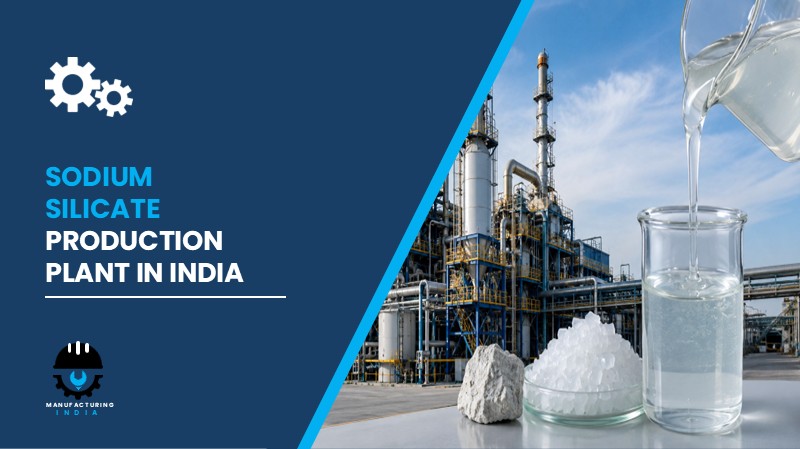
Sodium silicate, commonly known as water glass, is an inorganic compound that contains varying amounts of sodium oxide and silica. The substance exists in both solid and liquid states, which people use due to its strong adhesive and binding properties, as well as its alkaline characteristics. The chemical compound sodium silicate shows industrial usability because of its features, which include strong chemical stability, protection against corrosion, and the ability to withstand high temperatures.
The compound serves multiple purposes in detergents and cleaning agents because it functions as a builder, corrosion inhibitor, and emulsifier. The material functions as an essential component in construction materials — which include cement and concrete, and refractory products — because it improves both strength and durability. Sodium silicate finds applications in various industries including pulp and paper processing, water treatment, foundry moulding, textile processing, and silica gel manufacturing. The material maintains its industrial importance because of its ability to function in environmentally friendly products while remaining affordable and versatile across the complete spectrum of industrial applications it serves. Sodium silicate is produced in varying silica-to-soda ratios — expressed as the SiO₂:Na₂O molar ratio — to create product grades optimised for specific applications, from detergent builder grades through construction binder grades to refractory and foundry grades.
The primary production process covers silica sand and soda ash preparation, high-temperature fusion, dissolution and clarification, concentration adjustment, filtration, and packaging. End-use industries served include detergent manufacturing, construction chemicals, pulp and paper, water treatment, textiles, and foundry applications. Applications span detergents, adhesives, binders, fireproofing compounds, water treatment formulations, and industrial sealants.
Cost of Setting Up a Sodium Silicate Production Plant in India
The cost of establishing a sodium silicate production plant in India depends on plant capacity, product grade mix across liquid and solid sodium silicate and different SiO₂:Na₂O ratio grades, fusion technology selection between rotary and regenerative furnaces, geographic location — particularly proximity to silica sand and soda ash supply and industrial customer clusters — degree of automation, and the quality compliance requirements applicable to sodium silicate supplied to detergent, construction, water treatment, and food-contact applications.
1. Capital Expenditure (CapEx)
Land and Site Development forms a foundational component of total capital investment, covering land acquisition charges, site registration, boundary development, drainage infrastructure, and site utilities. The location must offer easy access to key raw materials such as silica sand and soda ash. Proximity to target markets will help minimise distribution costs. The site must have robust infrastructure, including reliable transportation, utilities, and waste management systems. Compliance with local zoning laws and environmental regulations must also be ensured. Chemical industrial estates in Gujarat — particularly in the Ahmedabad, Ankleshwar, and Dahej corridors — offer established inorganic chemical manufacturing infrastructure, silica sand supply chain proximity from Rajasthan, and soda ash supply from Tata Chemicals and GHCL’s Gujarat production facilities that together create a commercially advantaged operating environment for a new sodium silicate producer.
Plant Layout Optimisation is critical for a sodium silicate production facility. The layout should be optimised to enhance workflow efficiency, safety, and minimise material handling across the furnace, dissolution, clarification, evaporation, and packaging sequence. Separate areas for raw material storage for silica sand and soda ash, the fusion furnace area, dissolution and clarification tanks, evaporator systems for liquid concentration, filtration operations, quality control laboratory, liquid and solid finished goods storage, and dispatch must be designated. Space for future expansion should be incorporated to accommodate business growth.
Machinery and Equipment represent the largest single component of total CapEx for a sodium silicate production plant. Essential equipment includes:
- Rotary or regenerative furnaces
- Dissolvers
- Clarifiers
- Evaporators
- Filtration systems
- Storage tanks
- Packaging units
Other Capital Costs include an effluent treatment plant (ETP) to minimise environmental impact and ensure compliance with emission standards for alkaline process effluents and furnace combustion gas management, pre-operative expenses, quality certification costs for food-contact and detergent-grade product lines, commissioning charges, and any import duties on specialised regenerative furnace systems not available domestically.
Request a Sample Report for In-Depth Market Insights: https://www.imarcgroup.com/sodium-silicate-manufacturing-plant-project-report/requestsample
2. Operational Expenditure (OpEx)
Raw Material Cost is the dominant operational expense, accounting for approximately 50–60% of total OpEx. The primary raw materials are silica sand and soda ash. Silica sand — as the silicon dioxide feedstock consumed in the largest volumes in the fusion reaction — drives the majority of raw material cost and is widely available from domestic quarrying operations in Rajasthan, Andhra Pradesh, and Gujarat at competitive prices. Soda ash (sodium carbonate) is the sodium source for the fusion reaction and is produced domestically by Tata Chemicals and GHCL in Gujarat, providing cost-competitive domestic supply that reduces import exposure. Long-term contracts with reliable suppliers for both silica sand and soda ash must be negotiated to stabilise pricing and ensure a steady supply, with minimising transportation costs by selecting nearby suppliers essential given the bulk volumes required.
Utility Cost is the second-largest OpEx component, representing approximately 25–30% of total operating expenses — a notably high utility proportion reflecting the energy intensity of the high-temperature fusion furnace operations where silica sand and soda ash are fused at temperatures exceeding 1,000°C to form the sodium silicate melt. This elevated utility proportion makes site access to competitive industrial energy pricing — whether through gas supply agreements, coal-fired or gas-fired furnace optimisation, or industrial electricity tariff negotiations — a critical determinant of the overall cost competitiveness of the sodium silicate production facility. Fuel cost management for fusion furnace operations is the primary lever for improving facility economics relative to competitors.
Other Operating Costs include transportation and distribution to detergent manufacturers, construction chemicals companies, pulp and paper processors, water treatment chemical formulators, textile processors, foundry operations, and specialty chemical distributors, packaging materials for liquid sodium silicate in bulk tankers and IBC containers and solid sodium silicate in bags, salaries and wages for chemical process engineers and quality control analysts, routine machinery maintenance including furnace refractory upkeep and clarifier cleaning, depreciation on production equipment, and applicable taxes. By the fifth year, the total operational cost is expected to increase substantially due to factors such as inflation, market fluctuations, and potential rises in the cost of key materials. Additional factors, including supply chain disruptions, rising consumer demand, and shifts in the global economy, are expected to contribute to this increase.
3. Plant Capacity
The proposed production facility for sodium silicate is designed with an annual production capacity ranging between 10,000 and 50,000 MT, enabling economies of scale while maintaining operational flexibility across liquid sodium silicate grades of varying SiO₂:Na₂O ratios for detergent, construction, and water treatment applications and solid sodium silicate grades for foundry, textile, and specialty chemical applications. Plant capacity can be customised per investor requirements and scaled through additional furnace capacity and dissolution-evaporation train additions as market demand and customer relationships develop.
4. Profit Margins and Financial Projections
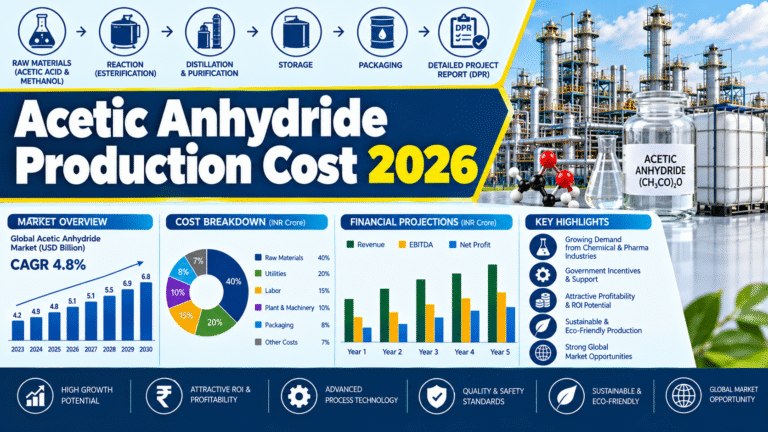
The financial projections for a sodium silicate production plant demonstrate healthy profitability potential under normal operating conditions. Gross profit margins typically range between 25–35%, supported by stable demand and value-added applications across detergent, construction, pulp and paper, water treatment, and industrial chemical customer segments. Net profit margins are projected at 10–18%. A comprehensive financial analysis covering NPV, IRR, payback period, and five-year projections is essential before committing capital, with projections developed based on realistic assumptions related to capital investment, operating costs, production capacity utilisation, pricing trends, and demand outlook.
Why Set Up a Sodium Silicate Production Plant in India?
Broad Industrial Demand Ensuring Stable Multi-Sector Revenue. The product maintains ongoing market demand because of its wide usage in detergents, construction, paper, and water treatment applications — a multi-sector demand profile that insulates producers from single-industry cyclicality and provides revenue resilience across different procurement cycles. An Indian sodium silicate producer can simultaneously serve detergent manufacturers in Mumbai and Ahmedabad, construction chemicals companies across India’s infrastructure projects, paper mills in Andhra Pradesh and Tamil Nadu, and water treatment chemical formulators across municipal and industrial customer segments.
Cost-Effective Production with Domestically Abundant Raw Materials. The combination of abundant raw materials — silica sand from domestic quarries in Rajasthan and Andhra Pradesh, and soda ash from Gujarat’s established domestic producers — with current manufacturing methods enables businesses to produce sodium silicate at affordable cost structures that support competitive pricing in both domestic and export markets. This raw material localisation advantage directly improves the economics of Indian sodium silicate production relative to producers in countries with less advantaged supply chain geography.
Infrastructure and Urban Development Growth Driving Construction Chemicals Demand. The increasing investments in construction and water treatment facilities result in persistent demand for sodium silicate. India’s construction sector — expanding at 6.8% in FY2024–25 toward USD 350 Billion by 2030 — is one of the world’s most active construction markets, with sodium silicate’s role as a concrete surface treatment, fireproofing agent, and moisture protection agent making it a beneficiary of every major construction programme including PM Awas Yojana, smart cities, and industrial corridor development.
Rising Compliance Standards in Water Treatment Expanding Institutional Demand. Rising environmental regulations in water treatment facilities are driving organisations to use sodium silicate for corrosion protection and system stabilisation. During 2024–25, over 4,650 wastewater treatment inspections were conducted in the UK, with nearly 25% of facilities found in breach of permits, highlighting compliance gaps across global water treatment infrastructure — a compliance pressure dynamic that is equally relevant to India’s expanding water treatment regulatory framework, where sodium silicate is an established solution for corrosion inhibition and system stabilisation in distribution networks.
Active Domestic Investment Confirming Commercial Confidence. In December 2025, Unison Metals reported an INR 30 crore investment toward a specialty chemicals division centred on sodium silicate at Dhamatvan, Ta-Daskroi, Ahmedabad — a 38,000 MT fully automated facility targeting commercial output by February 2026, with the expansion targeting approximately 250% revenue lift and integration across detergents, paper, pharmaceuticals, rubber, dyes, and foundry castings. This recent domestic Indian investment directly validates the commercial case for new sodium silicate production capacity in India and provides a benchmark scale and timeline for comparable investment decisions.
Scalable Manufacturing Model and Diverse Product Grade Opportunities. The process enables businesses to increase production capacity through additional capital expenditure as market demand grows, with manufacturers able to provide both liquid and solid product grades that meet different industrial needs. This scalability and product grade flexibility means that a new sodium silicate producer can start at 10,000 MT and expand incrementally to 50,000 MT as customer relationships, market penetration, and revenue justify capacity additions — without requiring proportional upfront capital commitment.
Production Process — Step by Step
The sodium silicate production process uses silica sand and soda ash preparation, high-temperature fusion, dissolution and clarification, concentration adjustment, filtration, and packaging as the primary production method. Each stage requires controlled temperature profiles, ratio management, and quality verification to produce sodium silicate of the target SiO₂:Na₂O ratio, concentration, purity, and colour required by detergent, construction, water treatment, and industrial chemical customers.
- Raw Material Preparation and Batching: Silica sand and soda ash are received from certified suppliers, quality-checked for purity and particle size, and batched in the specified SiO₂:Na₂O molar ratio for the target product grade — with higher ratios producing neutral grades for detergents and lower ratios producing more alkaline grades for construction and foundry applications.
- High-Temperature Fusion in Furnaces: The batched silica sand and soda ash mixture is fed into rotary or regenerative furnaces where it is heated to temperatures exceeding 1,000–1,200°C, causing the solid-state fusion reaction between sodium carbonate and silicon dioxide to produce molten sodium silicate glass — the primary intermediate product of the production process.
- Controlled Cooling and Solidification: Where solid sodium silicate is the target product, the molten glass is discharged from the furnace and allowed to cool and solidify into a glassy lumpy solid, which is subsequently crushed to the required particle size for bulk or packaged solid sodium silicate supply.
- Dissolution: Where liquid sodium silicate solution is the target product — the dominant commercial form for most end-use applications — the solidified sodium silicate glass is dissolved in water in dissolvers under elevated temperature and pressure conditions, with controlled water addition and dissolution time achieving the target solution concentration.
- Clarification: Dissolved sodium silicate solution is processed through clarifiers to remove undissolved silica, sand impurities, and particulate contamination from the dissolution liquor, producing a clear, homogeneous sodium silicate solution suitable for concentration adjustment and filtration.
- Concentration Adjustment: The clarified sodium silicate solution is processed through evaporators to adjust the final product concentration — expressed as Baumé or specific gravity — to the specification required for the target application grade, with different concentrations optimised for detergent, construction, water treatment, and foundry supply channels.
- Filtration: Concentrated sodium silicate solution is processed through filtration systems to achieve the final product clarity and remove any remaining fine suspended material, producing a specification-grade, visually clear liquid sodium silicate product.
- Quality Control Testing: Finished sodium silicate — both liquid and solid grades — undergoes comprehensive quality testing covering SiO₂:Na₂O ratio by analytical titration, concentration by Baumé or specific gravity measurement, colour and appearance, iron content, and pH, verifying compliance with customer or standard product specifications before packaging.
- Packaging and Dispatch: Specification-compliant liquid sodium silicate is loaded into storage tanks, IBC containers, or road tankers for bulk liquid supply, or filled into smaller containers using packaging units for distribution, while solid grades are bagged and palletised. Products are dispatched to detergent manufacturers, construction chemicals companies, pulp and paper processors, water treatment formulators, textile processors, and foundry operations.
Key Applications
Sodium silicate produced in India serves a commercially broad and structurally stable range of industrial applications across multiple end-use sectors:
- Detergent and Cleaning Products Industry: Sodium silicate serves as both a cleaning agent and a protection measure against equipment damage in laundry detergents and dishwashing formulations, functioning as a builder, corrosion inhibitor, and emulsifier that improves cleaning performance and protects washing machine components.
- Construction and Building Materials: The material functions as a surface treatment for concrete to improve hardness and moisture resistance, as a fireproofing agent in intumescent coatings and fire-resistant construction materials, and as a protective system in waterproofing applications.
- Pulp and Paper Industry: The compound enables the processes of bleaching, de-inking, and fibre stabilisation in paper manufacturing, where sodium silicate functions as a peroxide bleach stabiliser and de-inking aid in recycled paper processing.
- Water Treatment Sector: Sodium silicate functions as a solution for preventing corrosion and maintaining stability in water distribution systems, where it forms a protective mineral film on pipe interiors that reduces metal leaching and system corrosion rates.
Leading Producers
The global sodium silicate industry is served by a group of large multinational specialty chemical companies with extensive production capacities and diverse application portfolios. Key players in the global market include:
- Adwan Chemical Industries Co. Ltd.
- Evonik Industries AG
- FUJI CHEMICAL Co., Ltd.
- Kiran Global Chem Limited
- Merck KGaA
Timeline to Start the Plant
Establishing a sodium silicate production plant in India involves a structured multi-phase development sequence. Investors should plan for the following phases:
- Feasibility study and project report preparation
- Land acquisition and site development
- Regulatory approvals and environmental clearances
- Factory licence and fire safety compliance
- Machinery procurement and installation
- Raw material supplier agreements and supply chain setup
- Trial production and quality testing
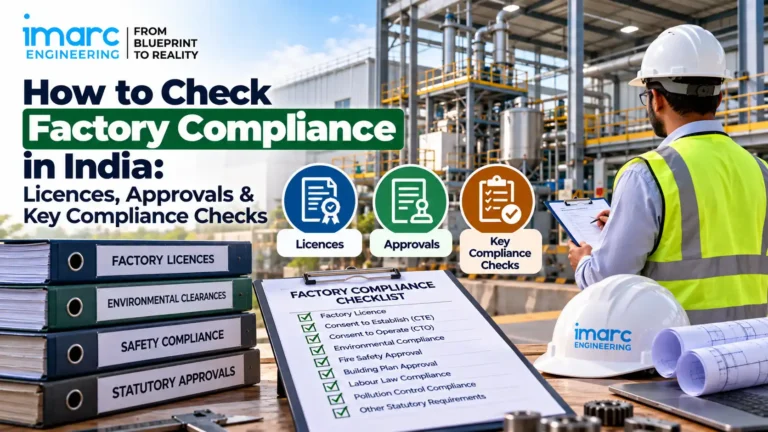
- Commercial production launch
Licences and Regulatory Requirements
Starting a sodium silicate production unit in India requires several approvals spanning business registration, chemical safety, environmental, and industrial compliance domains:
- Business registration (Proprietorship, LLP, or Pvt Ltd)
- Factory Licence under the Factories Act
- Environmental Clearance from the State Pollution Control Board
- GST Registration
- Fire Safety NOC
- Hazardous/Chemical compliance applicable to high-temperature fusion furnace operations and alkaline sodium silicate solution handling
- FSSAI compliance where sodium silicate is produced for food-contact or food processing applications
- Effluent Treatment Plant (ETP) operational clearance to minimise environmental impact and ensure compliance with emission standards for alkaline process effluents
- Occupational Health and Safety compliance including furnace area thermal safety measures and alkaline solution handling protocols
Key Challenges to Consider
High Utility Cost Proportion from Fusion Furnace Energy Intensity. Utility costs representing 25–30% of total OpEx — the highest utility proportion of any product category in this investment guide series apart from energy-specific processes — reflects the extreme energy intensity of high-temperature fusion at 1,000–1,200°C in rotary or regenerative furnaces. Managing this dominant utility cost requires competitive industrial gas or fuel supply agreements, optimised furnace refractory insulation, heat recovery from furnace off-gas, and continuous furnace efficiency monitoring to maintain the cost position required for competitive pricing across detergent and construction chemical market segments.
Silica Sand and Soda Ash Price Movements. Silica sand and soda ash together account for approximately 50–60% of total OpEx, with soda ash pricing tied to global natural and synthetic soda ash supply-demand cycles that can move 15–20% within a year. Managing this combined raw material cost exposure requires long-term supply contracts with domestic soda ash producers and silica sand quarry operators, along with customer contract pricing mechanisms that allow appropriate feedstock cost pass-through.
Product Grade Diversity and Quality Management. Serving detergent, construction, water treatment, and foundry customers simultaneously requires maintaining multiple product grades with different SiO₂:Na₂O ratios, concentration levels, and purity specifications — each requiring different fusion recipes and dissolution conditions. Robust quality management systems, batch traceability, and flexible production scheduling across grade changes are essential for multi-sector customer portfolio management.
Furnace Refractory Maintenance and Capital Lifecycle. Fusion furnaces operating continuously at temperatures above 1,000°C require systematic refractory lining inspection, repair, and periodic replacement — a capital maintenance obligation that must be planned into the facility’s lifecycle cost model. Furnace downtime for refractory maintenance or replacement represents the primary production continuity risk that requires careful preventive maintenance planning and strategic spare refractory inventory.
Competition from Established Domestic and Import Suppliers. The Indian sodium silicate market is served by established domestic producers including Kiran Global Chem Limited, alongside imports from established global producers including Evonik Industries and FUJI CHEMICAL. New producers must compete through product quality consistency, competitive pricing from efficient furnace operations and low-cost raw material procurement, logistics advantages, and customer service responsiveness.
Environmental Compliance for Furnace Combustion Emissions. High-temperature fusion furnace operations generate combustion gas emissions including particulate matter, sulphur dioxide from soda ash decomposition, and nitrogen oxides that must comply with state pollution control board air quality standards. Installing and maintaining stack emission monitoring and particulate collection systems requires ongoing investment in environmental compliance infrastructure.
Frequently Asked Questions
1. How much does it cost to set up a sodium silicate production plant in India?
The total capital investment depends on plant capacity, furnace technology, and location. Equipment costs — for rotary or regenerative furnaces, dissolvers, clarifiers, evaporators, filtration systems, storage tanks, and packaging units — represent a significant portion of capital expenditure. The December 2025 Unison Metals INR 30 crore investment for a 38,000 MT automated facility in Ahmedabad provides a recent domestic Indian benchmark for investment scale. A detailed project report with full CapEx and OpEx breakdowns is available on request.
2. Is sodium silicate production profitable in India in 2026?
Yes. The project demonstrates gross profit margins of 25–35% and net profit margins of 10–18% under normal operating conditions, supported by stable multi-sector demand from detergent manufacturing, construction chemicals, water treatment, pulp and paper, and foundry industries. The global sodium silicate market growing from USD 8.52 Billion in 2025 to USD 12.02 Billion by 2034 at a 3.9% CAGR confirms sustained commercial demand, and active domestic Indian investment confirms commercial confidence.
3. What machinery is required for a sodium silicate production plant in India?
Key machinery includes rotary or regenerative furnaces, dissolvers, clarifiers, evaporators, filtration systems, storage tanks, and packaging units. Rotary or regenerative furnaces are the most capital-intensive and energy-critical equipment, determining fusion capacity, product quality consistency, and the fuel efficiency that drives the facility’s utility cost structure.
4. What licences and approvals are required to start a sodium silicate production plant in India?
Required approvals include business registration, a Factory Licence under the Factories Act, Environmental Clearance from the State Pollution Control Board, GST registration, a Fire Safety NOC, FSSAI compliance for food-contact grades, ETP operational clearance for alkaline process effluents, and Occupational Health and Safety compliance including furnace thermal safety and alkaline handling protocols.
5. What raw materials are needed for sodium silicate production?
The primary raw materials are silica sand and soda ash. These inputs account for approximately 50–60% of total operating expenses, making silica sand and soda ash procurement strategy, supplier contracts with domestic quarry operators and soda ash producers, and raw material price risk management the most critical cost management levers for the investment.
6. What are the environmental compliance requirements for a sodium silicate production plant in India?
The unit must obtain Environmental Clearance from the State Pollution Control Board, operate a certified ETP to minimise environmental impact and ensure compliance with emission standards for alkaline process effluents, install stack emission monitoring and particulate collection for fusion furnace combustion gases, and maintain monitoring systems for air quality and wastewater discharge in line with applicable state pollution control standards.
7. What is the best location to set up a sodium silicate production plant in India?
Optimal locations offer proximity to silica sand supply from domestic quarries, soda ash from Gujarat-based domestic producers, competitive industrial fuel or gas supply for furnace operations, reliable transportation for distribution, and access to detergent manufacturing, construction chemicals, and water treatment customer clusters. Chemical industrial estates in Gujarat — particularly in the Ahmedabad, Ankleshwar, and Dahej corridors — are among the most strategically relevant options, as demonstrated by Unison Metals’ December 2025 investment in Ahmedabad.
8. What is the break-even period for this type of plant in India?
The break-even period depends on plant capacity, capacity utilisation rate, silica sand and soda ash pricing trends, utility cost management, and demand conditions across detergent, construction, water treatment, and industrial customer segments. A detailed financial analysis including payback period, NPV, and IRR projections is included in the full project report, available via the sample request link.
9. What government incentives are available for manufacturers in India?
Governments may offer incentives such as capital subsidies, tax exemptions, reduced utility tariffs, export benefits, or interest subsidies to promote manufacturing under various national or regional industrial policies. The Make in India initiative, specialty chemical manufacturing incentives, state-level industrial promotion policies in Gujarat and Maharashtra, and export promotion benefits for specialty inorganic chemicals provide financial and regulatory support for sodium silicate production investments.
Key Takeaways for Investors
A sodium silicate production plant in India represents a commercially accessible, demand-stable, and multi-sector diversified investment in the inorganic specialty chemicals segment — anchored by India’s large and structurally growing detergent manufacturing, construction chemicals, water treatment, pulp and paper, and foundry industries that collectively constitute one of the world’s largest and most consistent domestic customer bases for sodium silicate. The project demonstrates financial viability across annual production capacities of 10,000 to 50,000 MT, with gross profit margins of 25–35% and net profit margins of 10–18% confirming commercially sound unit economics supported by the availability of cost-competitive domestic raw materials — silica sand from domestic quarries and soda ash from Gujarat’s established producers — that provide a supply chain cost advantage relative to sodium silicate producers in raw-material-import-dependent countries. The global sodium silicate market, valued at USD 8.52 Billion in 2025, is projected to reach USD 12.02 Billion by 2034, growing at a CAGR of 3.9%, with India’s construction sector growth toward USD 350 Billion by 2030, water treatment compliance obligations expanding with urbanisation, and detergent consumption growing with rising incomes all sustaining a multi-vector domestic demand growth environment. With Unison Metals’ December 2025 INR 30 crore automated sodium silicate facility investment in Ahmedabad confirming domestic commercial confidence, and PQ Corporation’s January 2025 specialty silicates acquisition confirming global market consolidation momentum, demand sustainability for India-based sodium silicate production is structurally robust, domestically anchored, and commercially compelling across the full investment horizon.
About the Author