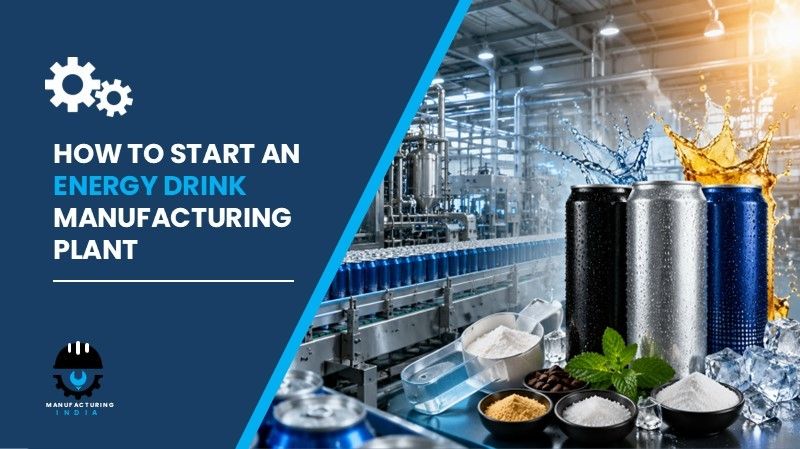
An energy drink manufacturing plant setup in India presents a compelling investment case for entrepreneurs entering one of the fastest-growing functional beverage segments. Demand is driven by sports & fitness, healthcare, retail, entertainment, and corporate sectors, where consumers seek beverages that boost energy levels, enhance mental alertness, and improve physical endurance. As lifestyles grow faster-paced and participation in sports and gaming rises, energy drinks have moved from a niche category to a mainstream functional beverage, making this an opportune moment to establish a dedicated production facility.
India’s broader economic momentum makes the country a strategically sound base for this type of unit. Rising urbanization, an expanding middle class, and growing fitness participation are positioning Asia-Pacific, led by markets like China and India, for robust growth in this category. Government focus on food processing and beverage manufacturing, along with MSME and food park initiatives, indirectly supports new capacity addition through improved infrastructure and compliance. For investors evaluating where to locate the next facility, India’s demand growth and cost-competitive inputs make a strong case for entry.
An energy drink manufacturing plant in India combines policy tailwinds, cost-competitive production, and demand from sports, fitness, retail, and corporate sectors into a financially sound investment. With gross margins of 25-35% and net margins of 8-12%, the project shows healthy profitability potential, with break-even achievable within a reasonable horizon depending on scale and capacity utilization.
What is an Energy Drink?
Energy drinks are functional beverages that help increase energy and concentration. They contain caffeine, sugar, vitamins, and ingredients like taurine and guarana that help consumers feel more energized and perform better. They come in different tastes and variants, with athletes representing a major demographic. Since the content contains high caffeine and sugars, these drinks give instant energy, while vitamin B helps renew the body’s nutrients.
The production process relies on ingredient mixing, carbonating, flavor formulation, and packaging, serving end-use industries including sports & fitness, healthcare, retail, entertainment, and corporate sectors, with applications spanning formulations, pre-workout supplements, recovery beverages, and ready-to-drink functional shots.
Cost of Setting Up an Energy Drink Manufacturing Plant in India
The cost of setting up this facility depends on capacity, technology, location, automation, and regulatory compliance.
1. Capital Expenditure (CapEx)
Capital investment covers land acquisition, site preparation, and infrastructure, with the total depending on capacity, technology, and location. Land and site development costs, including registration and boundary development, form a substantial part of the investment and can be evaluated against industrial estates or food parks. Civil works costs cover the production shed, quality control lab, storage, and administrative block.
Machinery costs account for the largest portion of total capital expenditure. Key machinery required includes:
- Water purification systems
- Mixing and blending tanks
- Carbonation units
- Pasteurizers
- Filtration systems
- Filling machines
- Capping equipment
- Packaging lines
Other capital costs include pre-operative expenses, installation and commissioning charges, and utility infrastructure for electricity, water, and steam. Production scale and automation level determine total machinery cost.
Request a Sample Report for In-Depth Market Insights: https://www.imarcgroup.com/energy-drink-manufacturing-plant-project-report/requestsample
2. Operational Expenditure (OpEx)
Raw materials form a major part of operating costs, with caffeine the largest share. Materials required include water, caffeine, taurine, B vitamins, sweeteners, flavors, and cans or bottles, along with herbal extracts, colorants, acidity regulators, and preservatives. Raw material costs account for approximately 60-70% of operating expenses, making long-term supplier contracts essential to mitigate price volatility.
Utility costs, covering electricity, water, and steam, account for approximately 10-15% of operating expenses. Other costs include transportation, packaging, salaries, depreciation, taxes, and maintenance. By the fifth year, total costs are expected to rise substantially due to inflation and market fluctuations.
3. Plant Capacity
The proposed facility is designed with an annual capacity of 40-60 million liters, enabling economies of scale while maintaining flexibility. Capacity can be customized per investor requirements, and profitability improves with higher utilization rates.
4. Profit Margins and Financial Projections
Financial projections are built on assumptions about capital investment, operating costs, capacity utilization, pricing trends, and demand outlook, giving a clear view of viability, ROI, and long-term sustainability. Gross margins typically range between 25-35%, while net margins range between 8-12%. The financial analysis also covers liquidity, payback period, net present value, and internal rate of return.
Why Set Up an Energy Drink Plant in India?
Strong Consumer Demand and Lifestyle Alignment: Energy drinks have become a staple for athletes, professionals, students, and fitness-conscious consumers, driven by fast-paced lifestyles and growing participation in sports and gaming.
Megatrend Alignment: Rising health awareness, demand for functional beverages, and premiumization are fueling sustained growth. Segments like sugar-free, natural caffeine, and fortified drinks are seeing double-digit growth in many markets.
Policy and Regulatory Tailwinds: The government’s focus on food processing and beverage manufacturing, along with MSME and food park initiatives, indirectly supports the sector through improved infrastructure and streamlined compliance.
Cost-Competitive Manufacturing: Entry barriers are moderate but defensible: capital requirements are lower than heavy industries, though strict food safety regulations and formulation expertise favor experienced manufacturers with strong compliance systems.
Active Industry Investment: In May 2025, PepsiCo announced a worldwide Formula 1 partnership covering Sting Energy, Gatorade, and Doritos. In February 2025, UFC and Monster Energy extended their collaboration, with Monster remaining UFC’s exclusive worldwide Official Energy Drink – signaling continued brand investment in the category.
Local Supply Chain Preference: Brands and distributors increasingly prefer local manufacturing to reduce logistics costs, ensure freshness, and manage input price volatility.
Energy Drink Manufacturing Process – Step by Step
The process uses ingredient mixing, carbonating, flavor formulation, and packaging as the primary production method.
- Sourcing and Preparing Raw Ingredients: Caffeine, taurine, B vitamins, sweeteners, flavors, herbal extracts, colorants, and acidity regulators are sourced and prepared.
- Mixing Ingredients to Desired Formulation: Mixing and blending tanks combine ingredients to the target formulation.
- Water Purification and Treatment: Water purification systems treat the base water.
- Pasteurization for Sterilization: Pasteurizers sterilize the product for safety and shelf stability.
- Carbonation of the Drink: Carbonation units carbonate the beverage per the formulation.
- Filling Bottles or Cans with Drink: Filling machines and capping equipment fill and seal cans or bottles.
- Labeling and Packaging for Distribution: Labeling machines and packaging lines prepare dispatch to end-use sectors.
- Quality Control and Testing: Analytical instruments monitor concentration, purity, and stability before dispatch.
Key Applications
This category of unit serves applications across ingredient processing, formulation, filling, and distribution.
- Ingredient Processing: Handling and blending of caffeine, vitamins, sweeteners, and flavor compounds.
- Formulation and Mixing: Batch mixing, carbonation, and homogenization shape the final product.
- Filling and Packaging: Can and bottle filling lines, sealing, and labeling prepare products for market.
- Quality Control and Distribution: Testing, storage, and distribution ensure product integrity.
- End-Use Sectors: Sports & fitness, healthcare, retail, entertainment, and corporate sectors consume the finished products.
Leading Manufacturers
Leading manufacturers in the global energy drink industry include several multinational companies with extensive production capacities. Key players include:
- Red Bull GmbH
- PepsiCo (Mountain Dew and Rockstar)
- The Coca-Cola Company (Monster Energy)
- Monster Beverage Corporation
- Glanbia Performance Nutrition
Timeline to Start the Plant
- Feasibility study and project report preparation
- Land acquisition and site development
- Regulatory approvals and environmental clearances
- Factory licence and fire safety compliance
- Machinery procurement and installation
- Raw material supplier agreements and supply chain setup
- Trial production and quality testing
- Commercial production launch
Licences and Regulatory Requirements
Starting this type of unit in India requires several approvals:
- Business registration (Proprietorship, LLP, or Pvt Ltd)
- Factory Licence under the Factories Act
- Environmental Clearance from State Pollution Control Board
- GST Registration
- Fire Safety NOC
- Effluent Treatment Plant (ETP) operational clearance
- Occupational Health and Safety compliance
Key Challenges to Consider
High Capital Requirements: Costs include land acquisition, construction, equipment, installation, and working capital, varying by capacity, technology, and location.
Raw Material Price Volatility: Caffeine, taurine, B vitamins, sweeteners, and flavors face price fluctuations; since raw materials are 60-70% of operating expenses, long-term contracts are essential to stabilize costs.
Regulatory Compliance: Securing environmental clearances, factory licenses, and permits requires sustained coordination, with rules varying by location.
Competition: Established players such as Red Bull GmbH, PepsiCo, The Coca-Cola Company, Monster Beverage Corporation, and Glanbia Performance Nutrition represent significant competitive pressure for new entrants.
Skilled Manpower: Recruiting skilled labor for formulation, quality control, and operations is an ongoing requirement for consistent quality.
Operational Risk Management: Managing risk across production and distribution requires robust monitoring and contingency planning.
Frequently Asked Questions
1. How much does it cost to set up an energy drink manufacturing plant in India?
Costs generally include land acquisition, construction, equipment, installation, pre-operative expenses, and working capital. The total varies with capacity, technology, and location; a detailed breakdown is available via a sample report request.
2. Is energy drink manufacturing profitable in India in 2026?
Yes, profitability depends on demand, manufacturing efficiency, pricing, and scale, with gross margins of 25-35% and net margins of 8-12% typical. Margins improve with capacity expansion and utilization.
3. What machinery is required for an energy drink plant in India?
A typical factory requires water purification systems, mixing and blending tanks, carbonation units, pasteurizers, filtration systems, filling machines, capping equipment, and packaging lines, plus storage tanks and quality control tools.
4. What licences and approvals are required to start an energy drink plant in India?
Requirements include business registration, environmental clearances, factory licenses, fire safety certifications, and industry-specific permits, varying by location.
5. What raw materials are needed for energy drink manufacturing?
This process requires caffeine, sweeteners, B vitamins, taurine, and water as the base, plus herbal extracts, flavorings, colorants, acidity regulators, preservatives, and packaging like cans or bottles.
6. What are the environmental compliance requirements for an energy drink plant in India?
Compliance includes clearances from the State Pollution Control Board, effluent treatment systems, and documentation for traceability throughout production.
7. What is the best location to set up an energy drink plant in India?
The location must offer access to key raw materials, proximity to target markets, robust infrastructure, and compliance with zoning and environmental regulations.
8. What is the break-even period for this type of plant in India?
Break-even typically ranges from 3 to 6 years, depending on scale, compliance costs, raw material pricing, and demand, with efficient manufacturing and exports helping accelerate returns.
9. What government incentives are available for manufacturers in India?
Governments may offer capital subsidies, tax exemptions, reduced utility tariffs, export benefits, or interest subsidies under various industrial policies, with additional support through MSME and food park initiatives.
Key Takeaways for Investors
This type of facility presents a strong opportunity supported by demand from sports & fitness, healthcare, retail, entertainment, and corporate sectors, alongside continued brand activity from global players. The project shows financial viability across capacities, with gross margins of 25-35% and net margins of 8-12% achievable as utilization improves. With India’s non-alcoholic beverages market valued at USD 30,846.6 Million in 2023 and projected to reach USD 64,248.9 Million by 2033 at a CAGR of 7.66%, and the global energy drink market expected to grow from USD 50.81 Billion in 2025 to USD 83.26 Billion by 2034, demand is set to stay on a sustained growth trajectory, making a well-planned investment a sound long-term proposition.
About the Author